
Sibiu vs Brasov: Which to Base In?
Sibiu or Brasov for your Transylvania base? An honest head-to-head on day trips, airports, trains and the old towns, so you pick the right one.
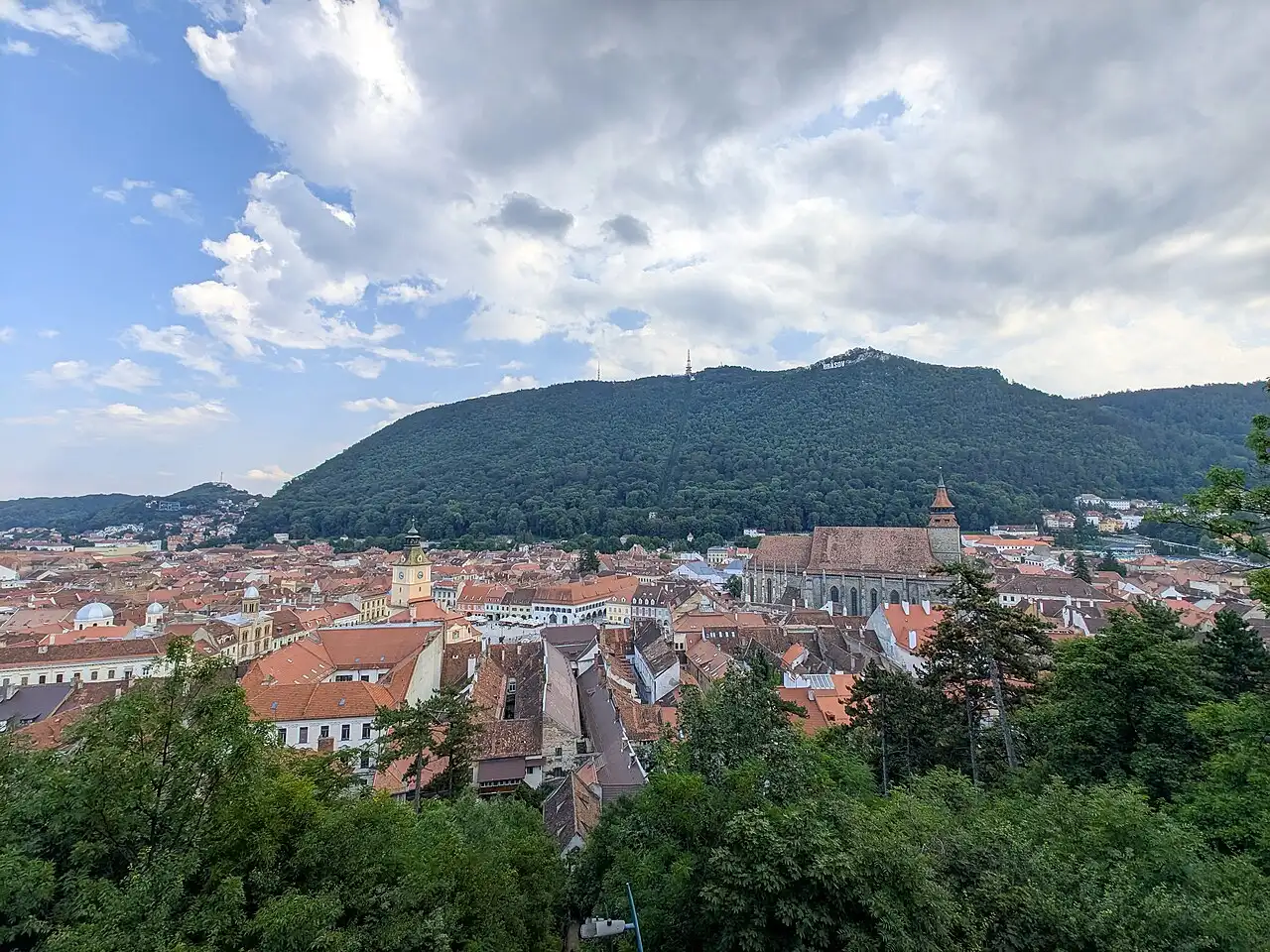
Base in Brasov if you’re here for the famous castles, the mountains and the least hassle getting in; base in Sibiu if you want the calmer, better-preserved old town with the Transfagarasan, Corvin Castle and the Saxon villages on its doorstep. The two are gorgeous Saxon towns about two hours and fifty minutes apart by train, so for a week in Transylvania the answer is a night or two in each. If you can only pick one, let the day trips decide, not the squares, because both centres are stunning and you will not lose that fight either way.
The mistake most people make is choosing on looks. Put the two main squares side by side and it’s a coin toss, so squares are the wrong way to settle it. What genuinely differs is the countryside each town opens up and how easy each is to reach. Brasov sits inside Romania’s castle-and-ski cluster and on the fast Bucharest railway; Sibiu is the launchpad for the high mountain roads, one spectacular castle and the shepherd country, with an older, more reliable airport but a slow, roundabout train to the capital. Work out which of those you came for and the decision makes itself.
What are the two towns actually like?
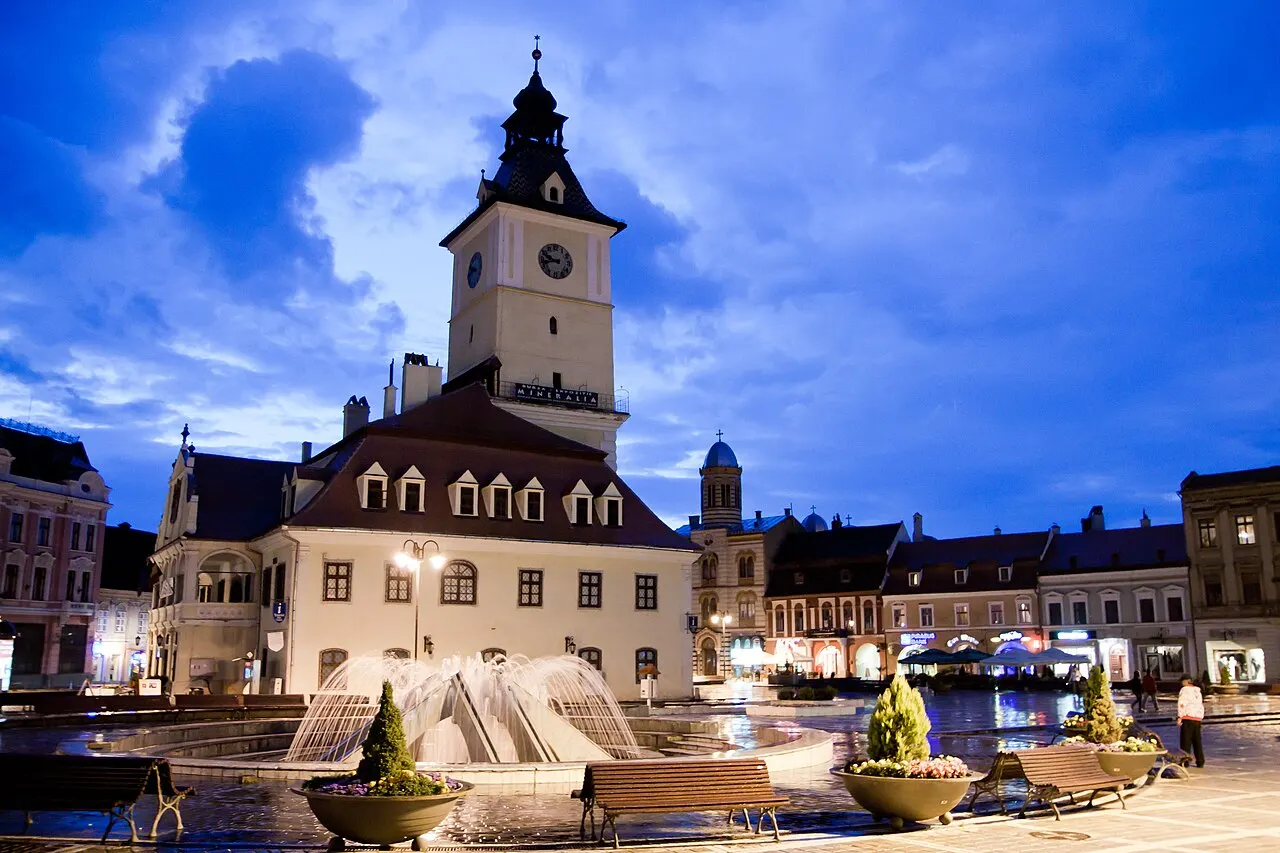
Brasov is the bigger, busier one: 237,589 people at the 2021 census, the country’s sixth-largest city and second only to Bucharest for tourist arrivals, sitting at 538 metres under the wooded cone of Mount Tampa. It has the buzz and the infrastructure of a resort town, the most hotels and restaurants of any Transylvanian base, and a Hollywood-style BRASOV sign on the hill to match. The old core is the wide Council Square (Piata Sfatului), the soot-darkened Black Church, the improbably thin Rope Street and a cable car up Tampa for the view back down.
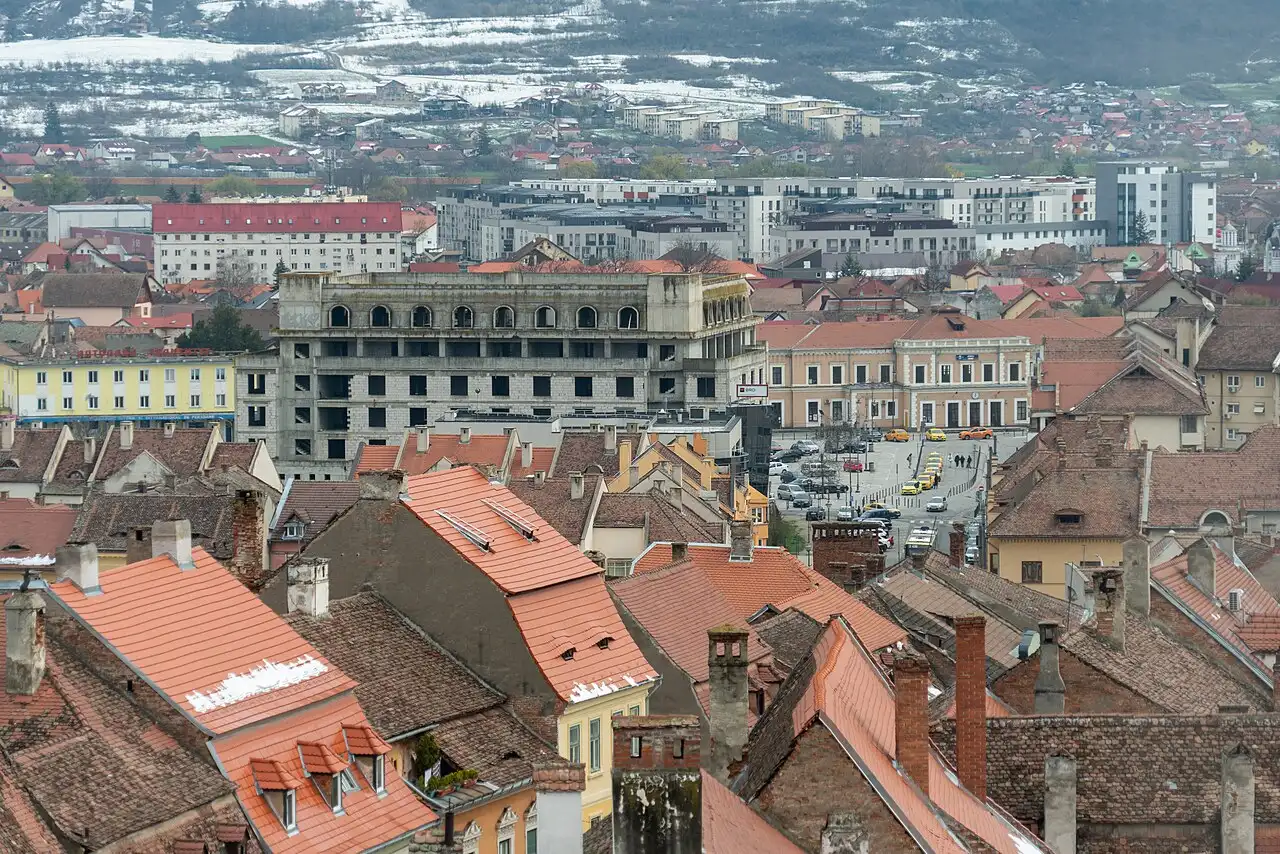
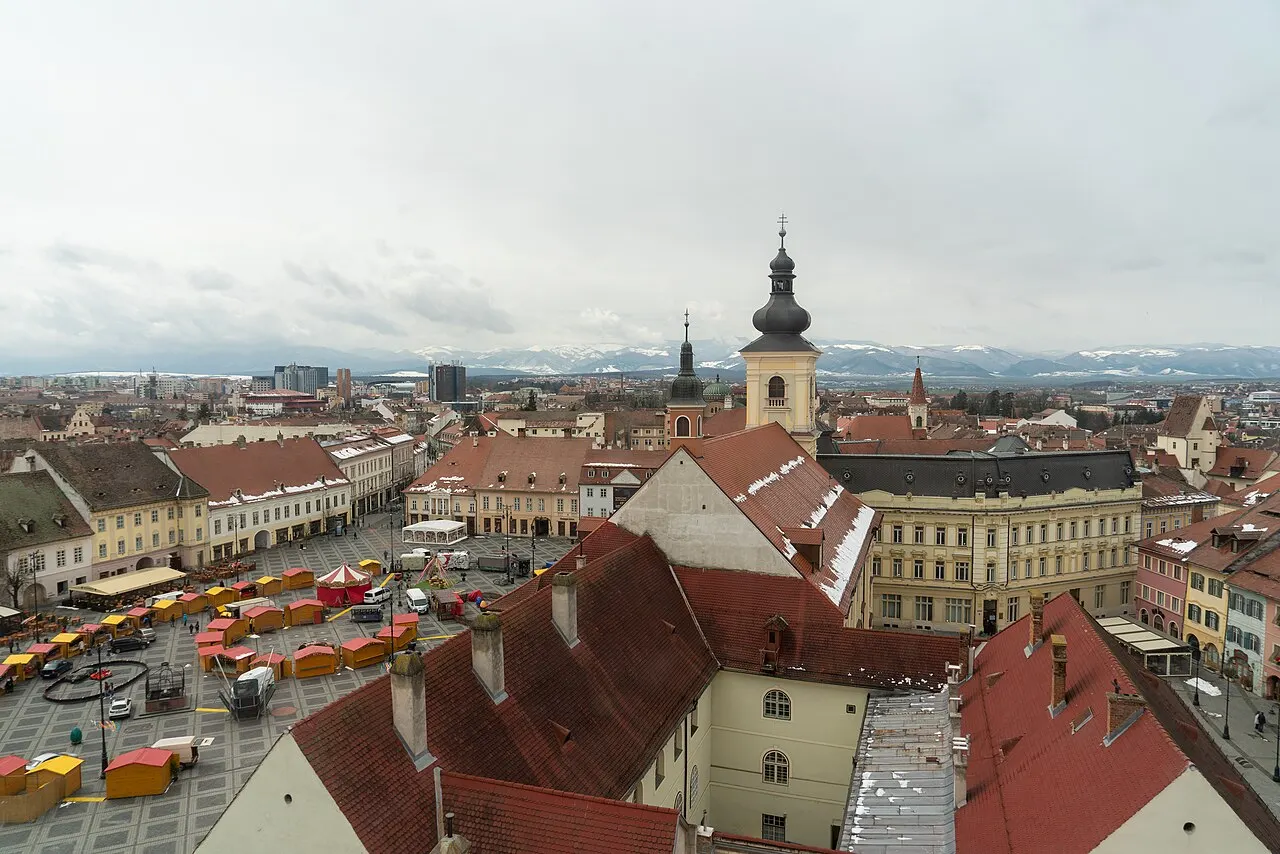
Sibiu is smaller and quieter, 134,309 at the last count, and it wears its history more lightly. It was European Capital of Culture in 2007, an award that paid for the restoration you now walk through, and it’s arguably the best-kept Saxon town in the country. Its two linked squares, the grand Piata Mare and the intimate Piata Mica, are joined by the little wrought-iron Bridge of Lies, and the whole upper town is watched over by the famous “eyes of Sibiu”, the half-closed eyelid dormers set into the old roofs. It feels more like a cultured provincial capital than a tourist machine, and outside its summer festivals it stays that way.
Which is the better base for day trips?
This is the question that should decide it, because the towns themselves are a wash and the surrounding country isn’t. They open up two different halves of Transylvania.
Brasov is the castle-and-mountain base. Bran, the Dracula-branded fort, is a 40-minute local bus away; Rasnov fortress sits on the same road; Sinaia and the royal Peles Castle are a short train hop south on the main line; the ski slopes of Poiana Brasov are about 25 minutes uphill; and the UNESCO fortified church at Prejmer and the bear sanctuary near Zarnesti are both close. If your Romania shortlist is Bran Castle, Peles and a mountain view, you’re describing a Brasov trip, and our Brasov guide covers the town itself.
Sibiu is the alpine-road-and-village base. The Transfagarasan, Romania’s most dramatic mountain road, climbs from just south of the city to Balea Lake; Corvin Castle at Hunedoara, the finest Gothic castle in the country, is an easy drive west; the Alba Iulia citadel, the Transalpina and the shepherd villages of Marginimea Sibiului are all in range; and the Saxon fortified-church country to the north is closer here than from anywhere else. If you want to drive a mountain pass and see one great castle rather than three medium ones, Sibiu is the pick, and the fuller picture is in our Sibiu guide.
One wrinkle in the middle: Sighisoara and the classic Saxon villages sit roughly between the two and can be reached from either, so they do not settle the argument. The castles-and-skiing cluster does, and so does the Transfagarasan. Pick the cluster you actually want.
Getting there: airports and trains
This is where Brasov has quietly pulled ahead, and where Sibiu still holds an old advantage. Brasov got its own airport, Brasov-Ghimbav (GHV), only in June 2023, the first international airport built in Romania since communism. For 2026 it runs a thin, low-cost network, roughly five carriers led by Wizz Air and Animawings serving about fourteen mostly Western-European cities, so check whether it actually flies from yours. Sibiu International (SBZ) is the smaller city but the more established airport, sitting five kilometres from the centre with steady direct links to Germany, Austria, the UK, Ireland and Spain.
The train is where the gap really shows. Brasov is on Romania’s main Bucharest line, so it’s a fast, frequent two-and-a-half to three hours from the capital, and Sinaia and Peles are stops along the way, which is why a first-timer flying into Bucharest almost always starts in Brasov. Sibiu’s rail link to Bucharest is a slow detour that most people skip in favour of the bus, a rental car or a flight into SBZ. Between the two towns themselves it’s straightforward: about six trains a day, with InterRegio at roughly 2h50 while slow Regios take longer (check the current timetable), frequent minibuses do the run in about 2h30, and the drive is about 145 kilometres and two and a half hours on the DN1 and E68. Train, bus and car on that hop are compared in Brasov to Sibiu.
For the day-trip clusters, and especially for Sibiu’s Transfagarasan and villages, a rental car earns its keep, though you should read up on the road vignette and the notorious DN1 weekend jams in our driving in Romania guide first. If you are still weighing which airport to fly into for the whole trip, our which airport for Romania guide sizes up all the options.
The old towns, head to head
If you do end up choosing on the centres alone, here is the scorecard.
| Brasov | Sibiu | |
|---|---|---|
| Population (2021) | 237,589 | 134,309 |
| Main square | Piata Sfatului | Piata Mare and Piata Mica |
| Signature sight | Black Church | Bridge of Lies and the “eyes” |
| Feel | busy mountain resort town | calmer, cultural, refined |
| Fast rail from Bucharest | yes | no, slow detour |
| Own airport | GHV, new and thin | SBZ, established |
| Best base for | castles, skiing, Bran | Transfagarasan, Corvin, villages |
Brasov’s headline act is the Black Church, begun in 1477 to replace an earlier church and blackened by the great fire of 1689 that gave it the name; it’s the largest Gothic church in Southeastern Europe, and inside it holds a well-known collection of Anatolian carpets. Add the narrowest street in the country and the Tampa cable car and Brasov gives you a satisfying half-day on foot before the buses to the castles. Sibiu counters with the two squares, the Council Tower climb, the Bridge of Lies and, out in the Dumbrava forest to the south, the ASTRA museum, a 96-hectare open-air collection of Romanian rural buildings that is one of the biggest of its kind in Europe. On pure prettiness Sibiu edges it for many people; on things to actually do the two are level.
Where to stay, and what it costs
Brasov has the deeper bench of places to sleep, from old-town guesthouses off Piata Sfatului to spa hotels toward Poiana Brasov, which is handy because it also fills up hardest, on summer weekends and through the ski season. Book early for July, August and the winter holidays. Sibiu has a smaller inventory but a lovely one; aim for a room inside or just off the two central squares so the old town is on your doorstep, and you’ll generally pay a little less than in Brasov for the equivalent spot. Both price in lei, not euro, so read rates in the local currency.
It is worth comparing hotels in both towns on your actual dates rather than assuming one is cheaper, because the gap swings with the season. For the detail on neighbourhoods and picks, our where to stay in Brasov and where to stay in Sibiu guides break each town down street by street.
So which should you pick?
Match it to your trip, not to the postcards.
- First time in Romania, here for the famous castles and an easy train in - Brasov, no contest.
- You want to drive the Transfagarasan or see Corvin Castle - Sibiu, they’re both far closer.
- Skiing or fast mountain access - Brasov, with Poiana Brasov about 25 minutes uphill.
- You want the calmer, better-preserved centre and fewer crowds - Sibiu.
- Flying in on a budget carrier - check which of GHV or SBZ actually serves your city; that one fact can outweigh everything else.
- One night only, arriving by rail from Bucharest - Brasov, because Sibiu by train from the capital is a long way round.
My own take after basing in both: Brasov is the easier, more obvious first trip and Sibiu is the one you fall for, so if you have the week, don’t choose. Two nights in Brasov for Bran, Peles and the old town, then the short hop to Sibiu for two more, adding the Transfagarasan in summer, is the trip that stops you having to pick a winner.
Can you base in both?
Yes, and it’s the answer I give most often. The towns are under three hours apart by direct train and roughly the same by car, so splitting a week between them costs you one easy travel morning and doubles what you can reach. How that morning actually works - train, bus or car - is in Brasov to Sibiu. Our Romania 7-day itinerary shows one way to string the two together, and the Transylvania road trip links them by car with the Saxon villages in between. If you’re still sketching the shape of the trip, how many days in Romania helps you carve up the time. Keep a few lei loose for tickets and buses wherever you land. And if it still reads like a coin toss, that’s roughly what it’s - book whichever town has the better room on your dates and put the saved argument into one more day trip.
Photos
Read also

Before you go · 8 min read
What to Pack for Romania: Seasons & Essentials
Verified · September 1, 2026What to pack for Romania by season: city heat near 30 C, Carpathian ridges near 10 C in July, Black Sea kit, and winter layers that work.

Before you go · 10 min read
Skiing in Romania: Resorts, Passes & Season
Updated · August 30, 2026Ski Romania: Poiana Brasov, Sinaia, Predeal and Straja day-pass prices in lei, the snow season window and which resort fits your trip.

Before you go · 9 min read
Best Day Trips from Cluj-Napoca
Verified · August 16, 2026Day trips from Cluj by effort: Salina Turda by bus, Rimetea by car, Alba Iulia citadel and Banffy Castle at Bontida, with times and prices in lei.

Before you go · 8 min read
Romania's Black Sea Resorts: Which One to Choose
Verified · August 11, 2026Mamaia, Eforie Nord, Costinesti, Neptun or Vama Veche? Pick the Romanian Black Sea resort that fits your trip, budget and noise tolerance.