
Sibiu Travel Guide: Old Town & Around
A practical Sibiu travel guide: the two squares, the Council Tower, the Bridge of Lies and Brukenthal, with real ticket prices in lei and how to get there.
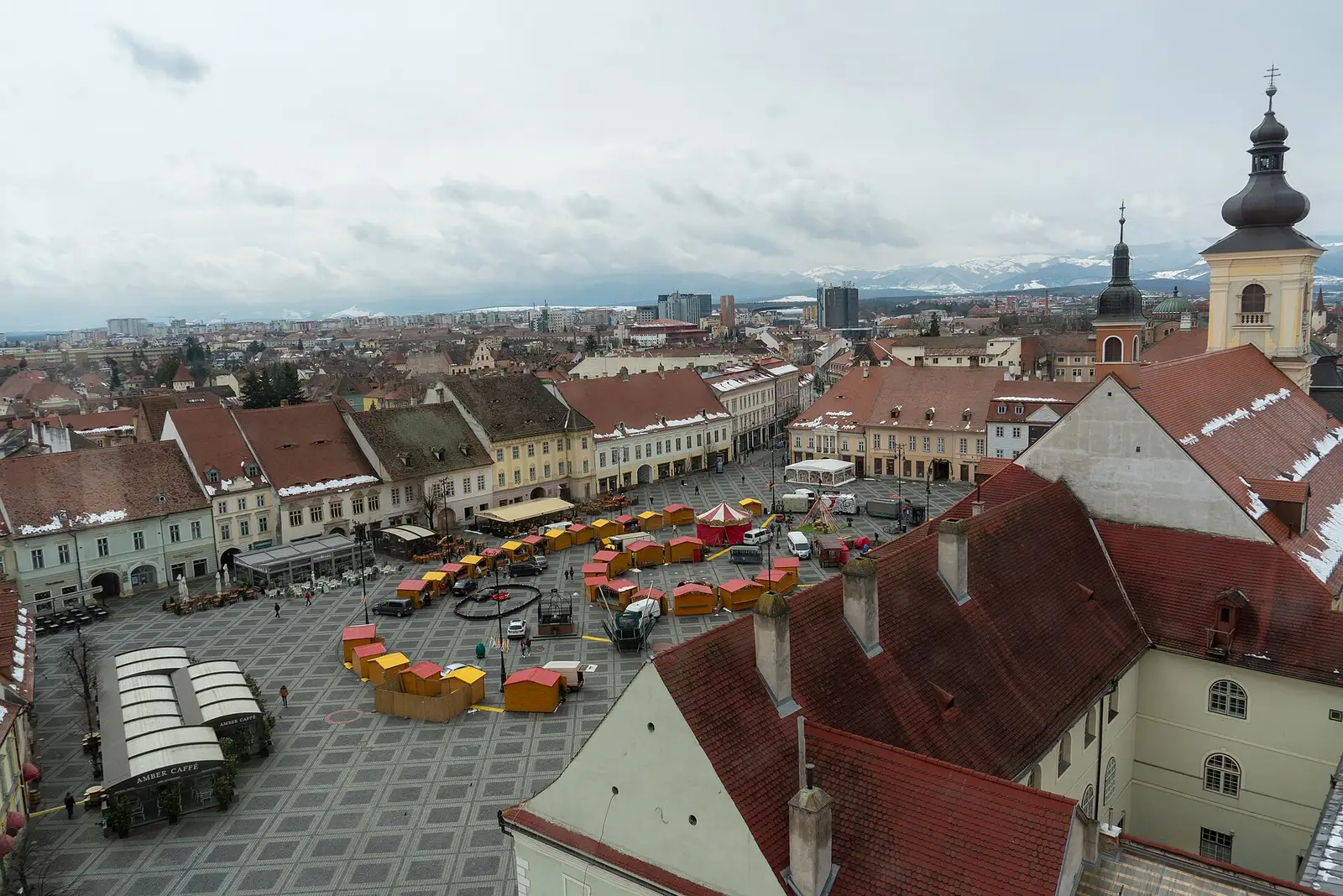
Sibiu is the most rewarding old town in Transylvania for a slow day on foot, and the good news is that almost everything worth seeing sits between two connected squares. Stand in Piata Mare (the Large Square), walk under the Council Tower into Piata Mica (the Small Square), cross the Bridge of Lies, and step into the Brukenthal Palace, and you’ve done the core in an afternoon. This guide groups it so you can walk it in order, with real prices in lei and the practical bits most write-ups skip.
The short version: give Sibiu a full day for the Upper Town and a second morning if you want the Lower Town and the ASTRA open-air museum, base yourself inside the old centre so it’s all on foot, and remember Romania uses the leu, not the euro, so carry a little cash for the small entry fees. Sibiu has its own airport three kilometres from the centre, which makes it one of the easier Transylvanian cities to reach without starting in Bucharest.
Is Sibiu worth visiting, and what’s it known for?
Yes, and not just for the postcard squares. Sibiu was a Saxon city called Hermannstadt, first recorded in 1191, and by 1376 its craftsmen were organised into nineteen guilds. It grew into the most important German town of the region the Saxons called Siebenbürgen, “seven fortresses”, and twice served as the capital of the Principality of Transylvania. That guild wealth is what you’re walking through: the merchant houses, the two market squares, the towers and the passages between the upper and lower town.
Two modern badges tell you how the town rates itself. Sibiu was European Capital of Culture in 2007, shared with Luxembourg, and it was named a European Region of Gastronomy in 2019. The first triggered a restoration of the centre that still shows, the second is your cue to eat well here rather than treating it as a photo stop. Sibiu also doubles as an event town: the Grand Square runs the earliest Christmas market in the country from mid-November, and the international theatre festival takes over the whole old town every June, both mapped out in our Romania events calendar. If you’ve read anything about Sibiu, you’ve probably seen it called “the town with eyes”, and that’s worth understanding, because you’ll spend a while looking up at the roofs.
What is there to see on the Large Square (Piata Mare)?
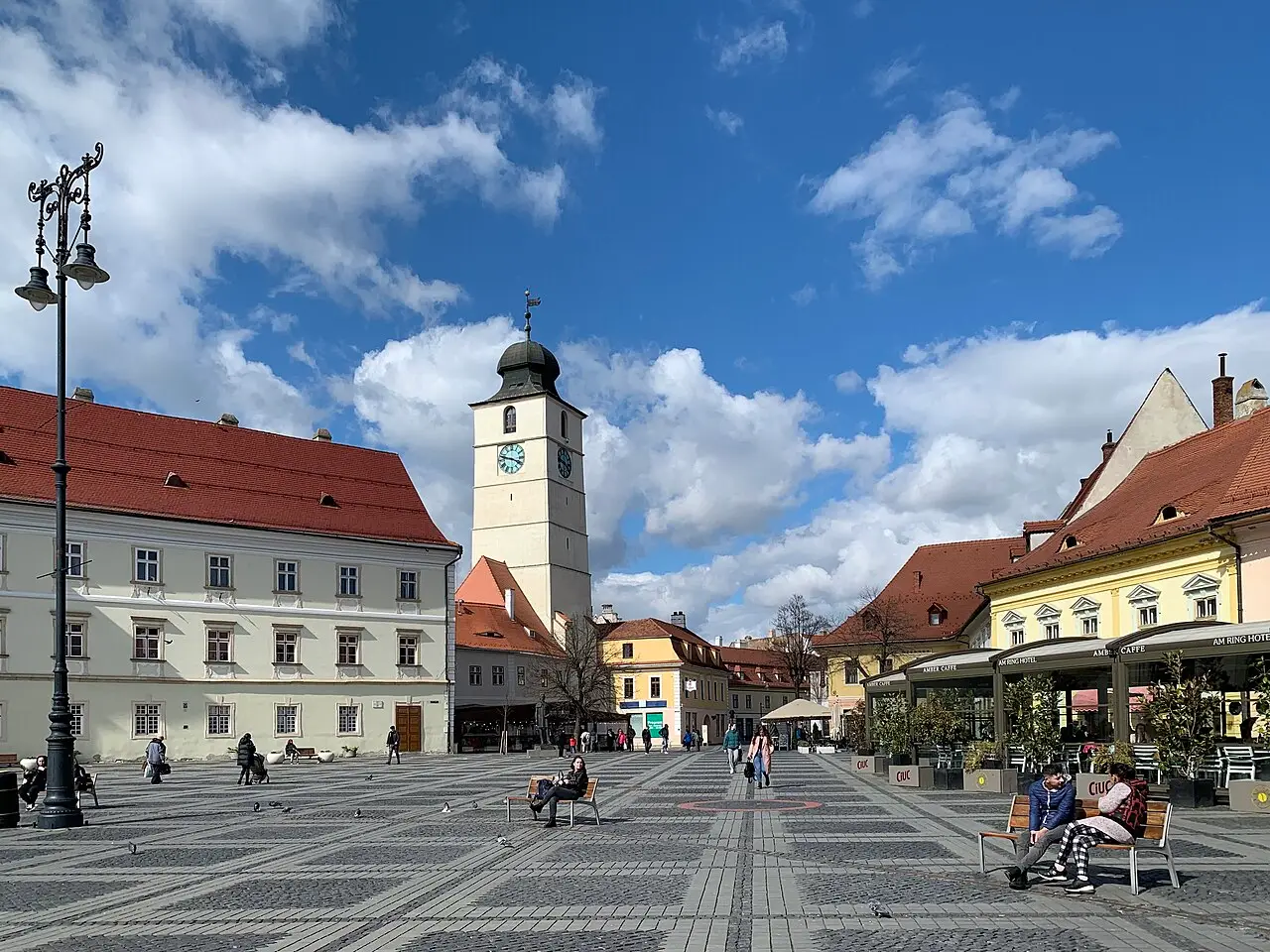
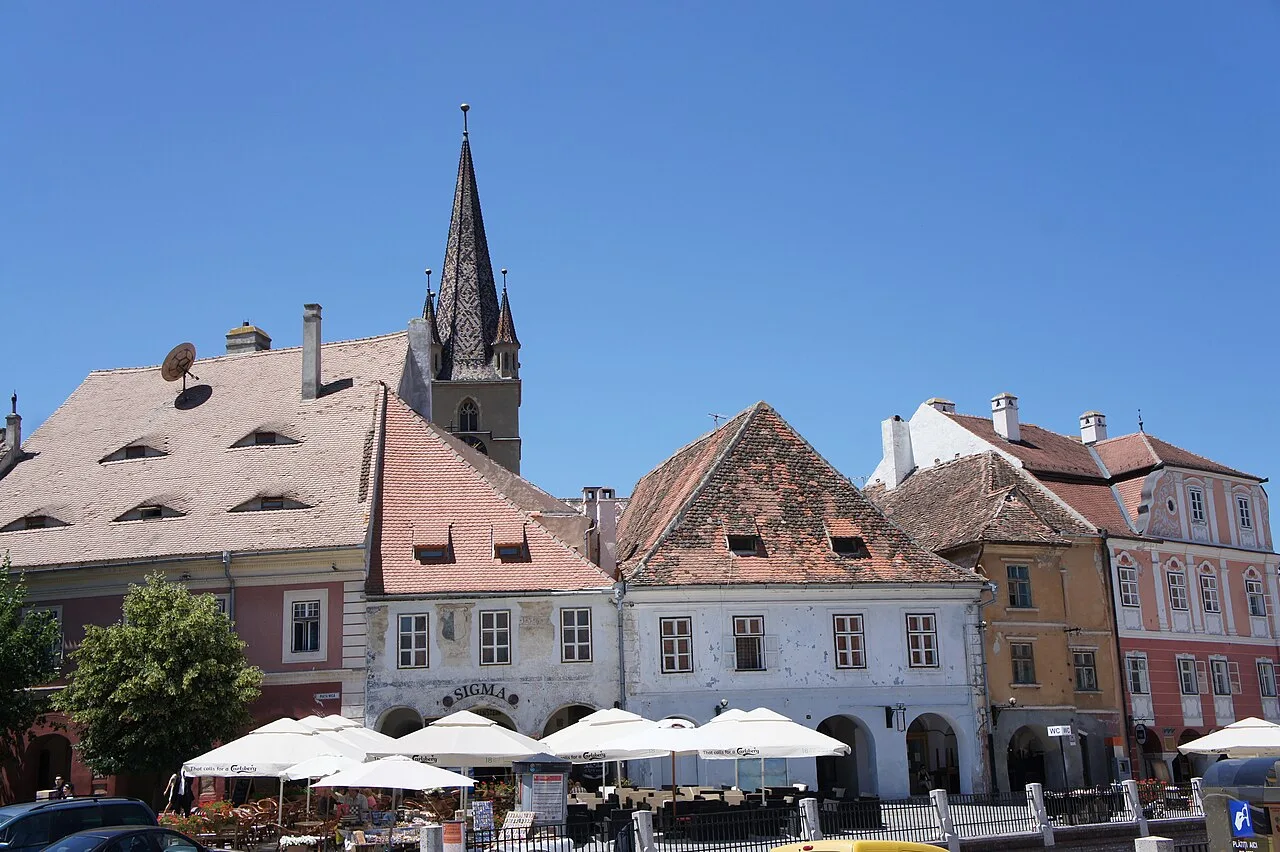
Start here. Piata Mare was the main market and the stage for public life in medieval Sibiu, and today it’s the town’s living room, ringed by tall pastel houses with cafe terraces spilling across the cobbles. Three buildings on and around it carry the square. On the west side stands the Brukenthal Palace, the grand Baroque townhouse of the man who ran Transylvania for the Habsburgs. Beside it’s the Blue House (Casa Albastra), an eye-catching Baroque facade in deep cobalt that everyone photographs. And on the north side, joining this square to the next, is the Council Tower.
The square is also where you feel the town’s German bones. The Roman Catholic church here, a former Jesuit church, is a reminder that after the Habsburgs took Transylvania this Lutheran-Saxon city gained a Catholic imperial layer on top. Give yourself a coffee here first, get your bearings, then work outward. A practical note for photographers: like most squares in Transylvania, it’s cleanest early or late, before the day groups arrive and after they leave.
Should you go inside the Brukenthal Palace?
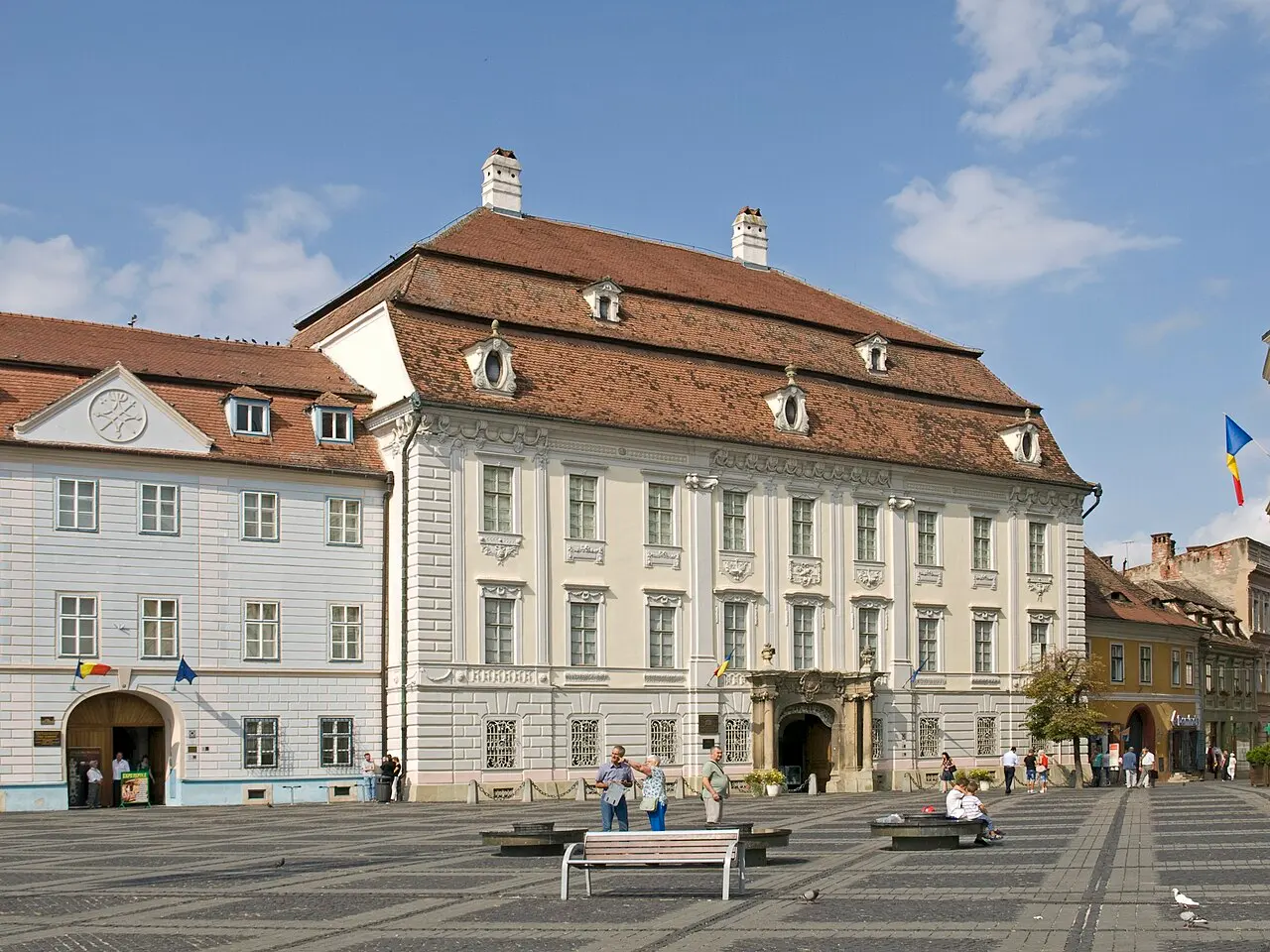
If you go inside one thing in Sibiu, make it this. Samuel von Brukenthal (1721-1803) was the Habsburg governor of Transylvania, and he built a European art collection that his palace opened to the public in 1817, which makes it the oldest museum in Romania and one of the older public galleries anywhere. The main draw is the picture gallery: around 1,200 works from the 15th to 18th centuries, spanning Flemish and Dutch, German, Austrian, Italian, Spanish and French schools. It’s a serious collection to find in a provincial Transylvanian town, and it’s the single most rewarding indoor hour here.
On the practical side, check what you’re actually buying. The Brukenthal isn’t one museum but several across the city, so the ticket you want depends on how deep you go. The palace galleries (the European and Romanian art) are 50 lei for adults and 12.50 lei reduced. If you plan to see more of the complex, the History Museum, the Pharmacy Museum, the Natural History Museum and the rest, a 48-hour combined ticket covering everything is 120 lei. The palace opens Wednesday to Sunday, 10:00 to 18:00, with the ticket office closing at 17:15, and it’s closed Monday and Tuesday, which catches a lot of people out, so don’t plan Sibiu’s museum morning for the start of the week. Prices and hours shift, so confirm on brukenthalmuseum.ro (checked July 2026).
Can you climb the Council Tower, and is the view worth it?
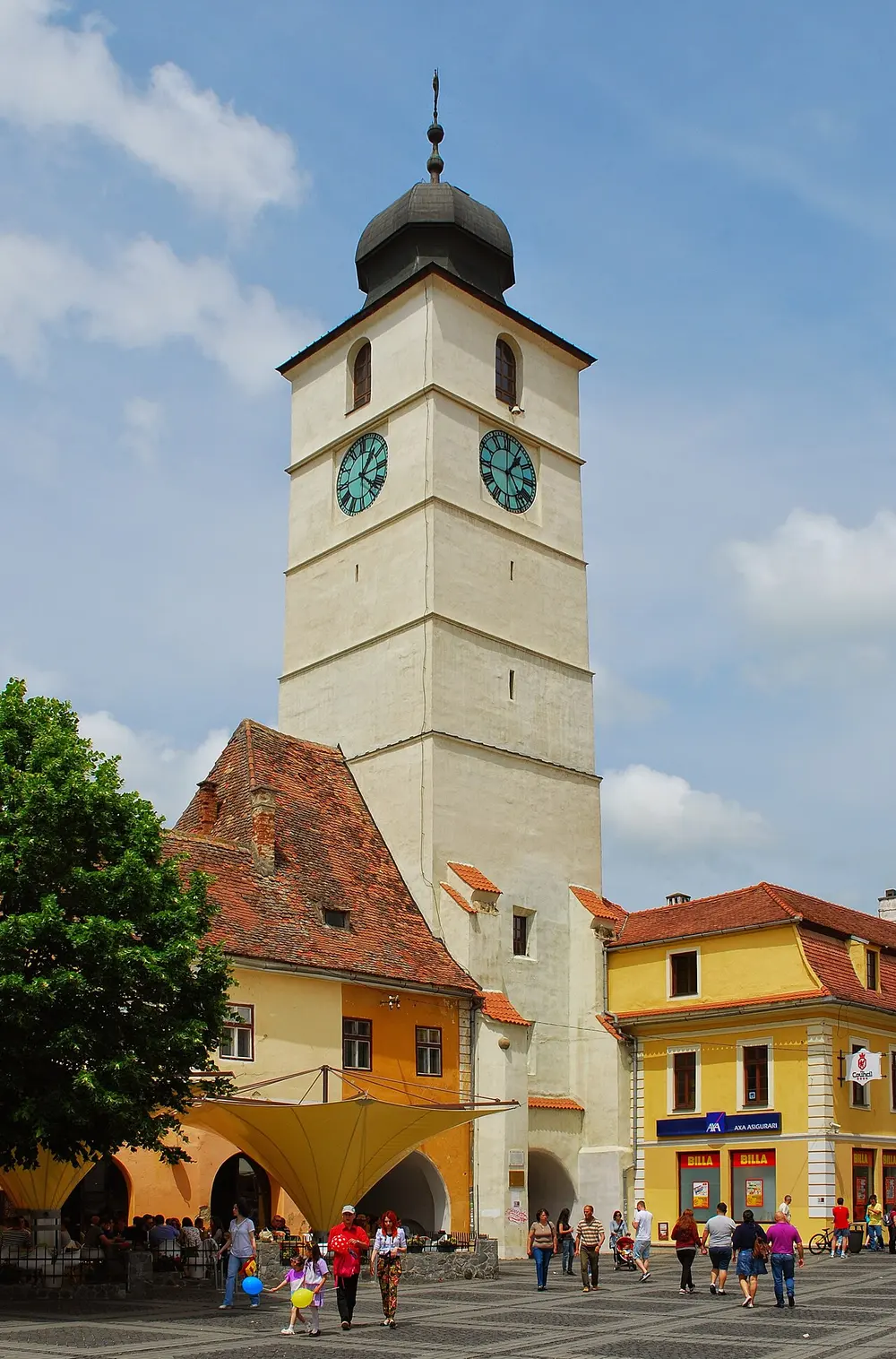
Yes, climb it, because it’s the best cheap view in town. The Council Tower (Turnul Sfatului) stands in the gap between the two squares, and it’s the town’s oldest fortification landmark: the likely first version went up with the second ring of walls between 1224 and 1241, when it rose no higher than four storeys. It has led several lives since then. In 1585 its upper floors collapsed and it was rebuilt between 1586 and 1588, and over the centuries it served as a grain store, a fire lookout, a gate and even a prison. It stands seven storeys today, and the top level is an open viewing gallery.
The payoff is the whole Upper Town from above: the red roofs, the two squares below you and, on a clear day, the Fagaras Mountains on the southern horizon. The entry is a token fee of a couple of lei, which is about as good value as sightseeing gets, though the exact price and opening hours are set locally and can change, so don’t trust an old figure online - check at the door. Climb it early in your visit, not late, because the aerial view is the best way to make sense of how the two squares and the lower town fit together.
How is the Small Square (Piata Mica) different?
Walk under the Council Tower and you drop into Piata Mica, and the mood changes. Where the Large Square is grand and open, the Small Square is lower, tighter and cosier, lined with arcaded houses that once belonged to the craftsmen and guilds. This is the prettier square to sit in if you’re choosing one, in my view, and the one that photographs best in the soft light of early evening. It curves rather than squares off, and its ground-floor arcades, where workshops and stalls once traded, now hold cafes and small museums, including the History of Pharmacy Museum in one of Europe’s older apothecary buildings.
The Small Square is also where the town’s two levels meet. From here the streets tip down toward the Lower Town and the Cibin river, and the most famous crossing point sits right on the square’s edge.
Why is the Bridge of Lies famous?
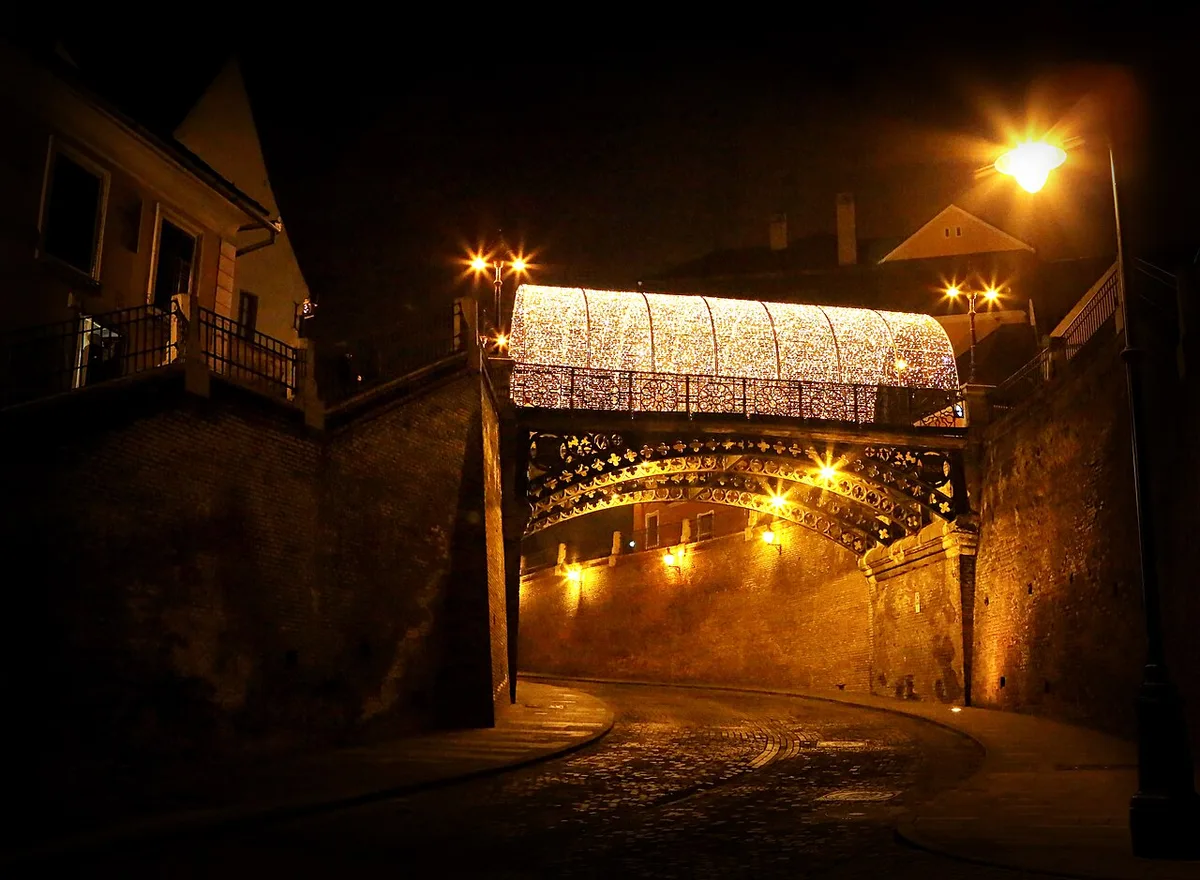
The Bridge of Lies (Podul Minciunilor) is a small iron footbridge on the edge of the Small Square, and its fame is a mix of real history and a good story. The history first: it was built in 1859 and 1860 and is the first cast-iron bridge in Romania, cast with four Neo-Gothic arches, about ten metres long, spanning the Ocnei street that drops toward the Lower Town. Look at the northern arch and you can still read “Friedrichshutte”, the foundry that supplied the ironwork. It’s a genuine early piece of industrial engineering hiding in a medieval square.
The name is where it gets fun, and where you shouldn’t believe everything you hear. The most likely origin is dull but honest: the German “Liegenbrucke”, a bridge to lean or recline on, sounds a lot like “Lugenbrucke”, the bridge of lies, and the nickname stuck. The legends came afterward and are better company: that the bridge will creak or collapse if you tell a lie standing on it, that merchants cheated customers here, that military cadets broke promises to their sweethearts on it, and that lovers swore false vows over it. None of it’s true, all of it’s worth a photo, and it takes five minutes. Treat it as a charming stop between the Small Square and the Lower Town, not a highlight in its own right.
What are the “eyes of Sibiu”?
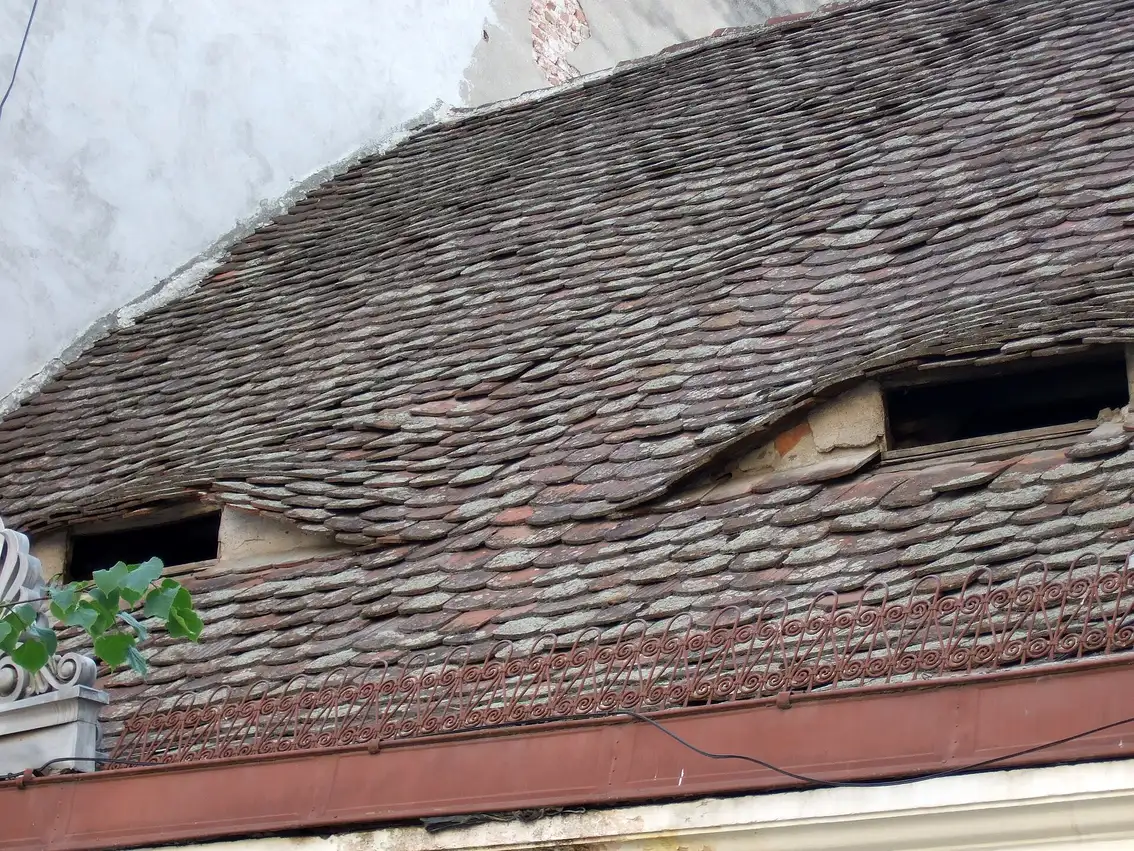
Look up at the roofs and you’ll see them: narrow, half-closed eyelid-shaped windows set low on the tiles, all over the old town. These are attic dormers, built to ventilate the storage lofts under the steep roofs, and from the square they look uncannily like drowsy eyes watching the street. That’s why Sibiu is nicknamed “the town with eyes”, and once you notice them you can’t stop, which is half the fun of wandering here. It’s the kind of small, specific detail that makes Sibiu stick in the memory more than a bigger, glossier city might.
There’s no ticket and no single spot for this, it’s just something to keep half an eye on as you walk, ideally from the Council Tower first so you can take in the whole roofscape, then at street level where individual “eyes” line up above you.
Is the ASTRA open-air museum worth the trip out?
If you’ve a second day or a spare afternoon, yes, and it’s the one thing outside the centre I would prioritise. The ASTRA Museum sits in the Dumbrava forest just south of the city and is the largest open-air museum in Romania: 96 hectares, around ten kilometres of paths, and more than 400 traditional buildings, windmills, watermills, workshops and farmhouses, brought here from across the country. You walk through a recreated village Romania among ponds and woodland, and it’s a genuine half-day if you do it properly, not a quick photo stop.
Getting there’s easy enough by taxi or a short bus ride toward Rasinari, and it pairs well with a relaxed afternoon since there’s a lot of walking on gentle paths. If you’re travelling with children, or you’ve had your fill of squares and museums, this is the change of pace that makes a two-day Sibiu stop feel varied rather than repetitive. Our ASTRA Museum guide has the ticket prices by visitor type, the gate-by-gate opening hours, and the three named households worth tracking down.
How long do you need in Sibiu?
One full day covers the essentials: the two squares, the Council Tower, the Bridge of Lies and the Brukenthal, with time for a long lunch in a town that takes its food seriously; our best food in Sibiu guide picks the cellars and modern kitchens worth booking. Add a second day if you want to slow down, walk the Lower Town and its old walls, and get out to the ASTRA museum. Sibiu also makes a strong base for the mountains, so many people stay two nights and use the second day for a drive rather than more town.
One scheduling warning worth repeating: the Brukenthal Palace is closed on Monday and Tuesday, so if those are your Sibiu days, front-load the outdoor sights and the tower and save the palace for a Wednesday, or accept you’ll only see it from the square.
How do you get to Sibiu?
The easiest surprise here’s the airport. Sibiu International (SBZ) sits just three kilometres west of the centre and, for a city this size, flies to a useful spread of Europe: Wizz Air runs routes to London-Luton, Madrid, Rome, Dortmund, Nuremberg and more, and Lufthansa and Austrian connect daily to Munich and Vienna. That makes Sibiu one of the few Transylvanian cities you can fly into directly rather than starting in the capital, which is worth pricing up if Sibiu and the mountains are your main target.
From Bucharest by car it’s roughly 275 kilometres and about four to four and a half hours over the Carpathians, a scenic but slow drive on the DN1 and A1. Our Bucharest to Sibiu guide weighs the bus, train and drive. If you’re coming from Brasov, the two cities are about 144 kilometres apart by road, roughly two and a half hours - not the quick hop it can look like on a map. An InterRegio takes about 2h50, almost matching the bus at 2h30; only the slow Regio runs well over three hours on the winding line. Train, bus and car compared: Brasov to Sibiu. If you’re still deciding which of the two to base in, our Sibiu vs Brasov guide compares them head to head. Since you’ll likely be seeing Sibiu as part of a wider Transylvania trip, base yourself centrally and walk: to compare rooms in or just off the two squares, look at hotels in the Sibiu Old Town early. Our where to stay in Sibiu guide breaks down the best areas.
What to see around Sibiu
Sibiu is the natural staging post for the most famous drive in Romania. The Transfagarasan mountain road begins its climb not far south of here, and Sibiu is where most people spend the night before tackling it and fill the tank first. Our Transylvania road trip guide uses Sibiu exactly this way, with real leg-by-leg distances, the rovinieta road tax, and the summer-only window when the high pass is open. For a wider loop that threads Sibiu together with the Saxon towns and the castles, our Romania 7-day itinerary sets out how the days connect.
The Saxon heartland around Sibiu is dotted with fortified churches and old villages, and the road east links you to the rest of the highlights. South and west of the city, the shepherd villages of Marginimea Sibiului show a different side of the same countryside: Romanian pastoral life rather than Saxon walls, with Rasinari and the glass-icons museum in Sibiel an easy loop by car, or a slower one by Tursib bus. Brasov, the other great Saxon town, is a couple of hours away by the mountain road, and our Brasov guide covers its old town and the castles beyond. On the way toward Brasov and Bucharest you pass Sinaia, home to the opulent Peles Castle, the 19th-century royal palace many travellers rate as Romania’s finest interior. West of Sibiu, an hour by road, the Alba Carolina citadel makes the easiest day trip of all: Romania’s largest star fort, free to walk into, with a costumed guard change on summer weekends. If you’re self-driving the region, a rental car is what unlocks the villages and the pass, or a fixed-price private transfer handles the airport run and longer hops without the timetable juggling. Our Bucharest guide has the capital’s shortlist if the trip starts or ends there. Sibiu itself, though, wants two nights rather than one.
Photos
On the map
The map loads on click - to keep the page lightweight.
The map didn’t load. Check your connection and refresh the page.
Admission and opening hours
- Admission price
- Brukenthal Palace galleries 50 lei (adults), 12.50 lei reduced; a 48-hour combined ticket for the whole Brukenthal complex is 120 lei; the Council Tower is a token fee of a couple of lei
- Opening hours
- Brukenthal Palace: Wed-Sun 10:00-18:00 (last tickets 17:15), closed Mon and Tue
Prices and hours change with the season - confirm on brukenthalmuseum.ro before you go. The Council Tower fee and hours are set locally; check at the door.
Details checked: July 4, 2026
Read also

Cities · 13 min read
Predeal: Romania's Highest Ski Town
Verified · September 3, 2026Predeal sits at 1,030-1,110 m on the Bucharest-Brasov line: Clabucet ski, the town itself, and how it stacks up against Sinaia and Poiana.

Cities · 10 min read
Suceava Travel Guide: Fortress & Bucovina Gateway
Updated · August 25, 2026Things to do in Suceava: Stephen the Great's fortress, the UNESCO Saint John monastery, village museums, and using the city as a base for Bucovina.

Cities · 9 min read
Where to Stay in Sighisoara: Citadel or Lower Town
Verified · August 24, 2026Where to stay in Sighisoara: citadel vs Lower Town, price bands in lei, parking, the medieval festival, and who should sleep inside the walls.

Cities · 11 min read
Where to Stay in Timisoara: Best Areas & Hotels
Verified · August 19, 2026Where to stay in Timisoara: Cetate vs Fabric vs Iosefin vs Circumvalatiunii - who each suits, walk times, prices in lei, and getting in from the airport.