
Romania's Black Sea Resorts: Which One to Choose
Mamaia, Eforie Nord, Costinesti, Neptun or Vama Veche? What a summer room costs, how to get there from Bucharest and which resort fits your trip.
Mamaia if you want the full resort machine - hotels on the sand, beach clubs and the loudest summer strip in the country. Eforie Nord if you’re travelling with kids or chasing mud treatments by Lake Techirghiol. Costinesti for a young, festival-heavy scene; Neptun and Olimp when you want shade and quieter evenings; Vama Veche if you’d rather have beach bars and a village than a hotel wall. The coast runs only a few dozen kilometres, but the wrong bed still wastes a weekend even when the “right” beach is a short drive away.
Romania prices the coast in lei (RON), not euro. On two three-star hotels’ own 2026 rate cards, a double in late July and August costs 390 lei (about €74) a night in Eforie Nord and 470 lei (about €89) in Mamaia, against 300-325 lei in June and September. The season also ends early: much of Mamaia winds down in the first half of September, so pick the resort for the dates you’re actually booking, not the brochure photo.
Quick pick by traveller type
| You want… | Base here | Why |
|---|---|---|
| Beach clubs, pools, nightlife | Mamaia (esp. Mamaia Nord) | Romania’s densest hotel strip; Constanta’s old town close by |
| Family beach + spa option | Eforie Nord | Calmer than Mamaia; Techirghiol mud and salt water next door |
| Student / party energy | Costinesti | ”Youth resort” reputation; Beach, Please! lands here in July |
| Quiet leafy hotels | Neptun / Olimp | Softer pace than Mamaia; still on sand |
| Spa, history and a real town | Mangalia (+ Saturn) | A working port with Greek-era roots and spa treatments, calmer than Mamaia |
| Bohemian bars, border vibe | Vama Veche (+ 2 Mai) | Village scale, live music, nudism on the quieter northern sand |
If Constanta itself is the draw - Casino, Roman mosaic, Ovid Square - sleep in the city or Mamaia and treat the southern resorts as day trips. Our Constanta and Black Sea guide covers the Peninsula sights; where to stay in Constanta and Mamaia sorts beds inside that pair.
Mamaia: the strip that defines the Romanian seaside
Mamaia is a spit about 8 km long and only 300 metres wide, with the Black Sea on one side and freshwater Lake Siutghiol on the other. It barely has year-round residents; it fills for summer and empties again. That geometry is the whole product: you walk out of a hotel onto sand, watersports sit on the lake behind, and a seasonal gondola (Telegondola) covers about 2 km of the central strip.
Central Mamaia suits families who want the water park and easier logistics. Mamaia Nord, toward Navodari, skews younger and louder - beach clubs and late nights. If you came for Roman ruins and a quiet evening promenade, Mamaia will feel like the wrong country. If you came to spend four days on a sunbed without thinking about transport, it’s the honest default.
Hotels on this coast publish their own seasonal rate cards, and two three-stars show what the peak does to a room. Hotel Flora on the Mamaia strip lists a standard double on its 2026 card at 470 lei a night from 21 July to 31 August, 400 lei from 1 to 20 July and 320-325 lei in June and September. Hotel Traian in Eforie Nord charges 390 lei a night for a double, room only, in July and August, against 300 lei in June and September. Those are two hotels’ own rack rates, not a coast average, so check the price for your own dates before you budget.
South of Constanta: Eforie and the mud lake
About 14 km south of Constanta, Eforie Nord is the balanced family pick: proper sandy beach, gentler evenings than Mamaia, and the spa story that makes this stretch different from a generic European resort. Lake Techirghiol sits just inland - Romania’s largest salt lake by local municipal description, with salinity over 90 g/l and the black sapropelic mud used for packs, baths and summer shore treatments since the nineteenth century. The Balneal and Rehabilitation Sanatorium in Techirghiol and hotel treatment bases in Eforie Nord still run the medical side; if you’re booking for therapy rather than Instagram, read the operator pages and contraindications, don’t invent a DIY mud day from a blog. Our dedicated Eforie Nord guide covers Baile Reci tickets, the beach cliff and how the mud day actually works.
Eforie Sud is the slightly quieter sibling in the same town. Neither matches Mamaia’s nightlife, and that’s the point. Use Eforie when the beach is the holiday but you still want restaurants within walking distance and a calmer night’s sleep.
The mud cure runs on its own calendar. The Techirghiol sanatorium is a state rehabilitation hospital that admits patients all year, by appointment, for courses of 12 or 18 days. Romanians come on a family-doctor referral, while patients outside the Romanian health-insurance system pay 500-600 lei per person a day for room, meals and treatment together, and the sanatorium asks for bookings at least 90 days ahead.
Costinesti: youth resort, wreck and festival weekends
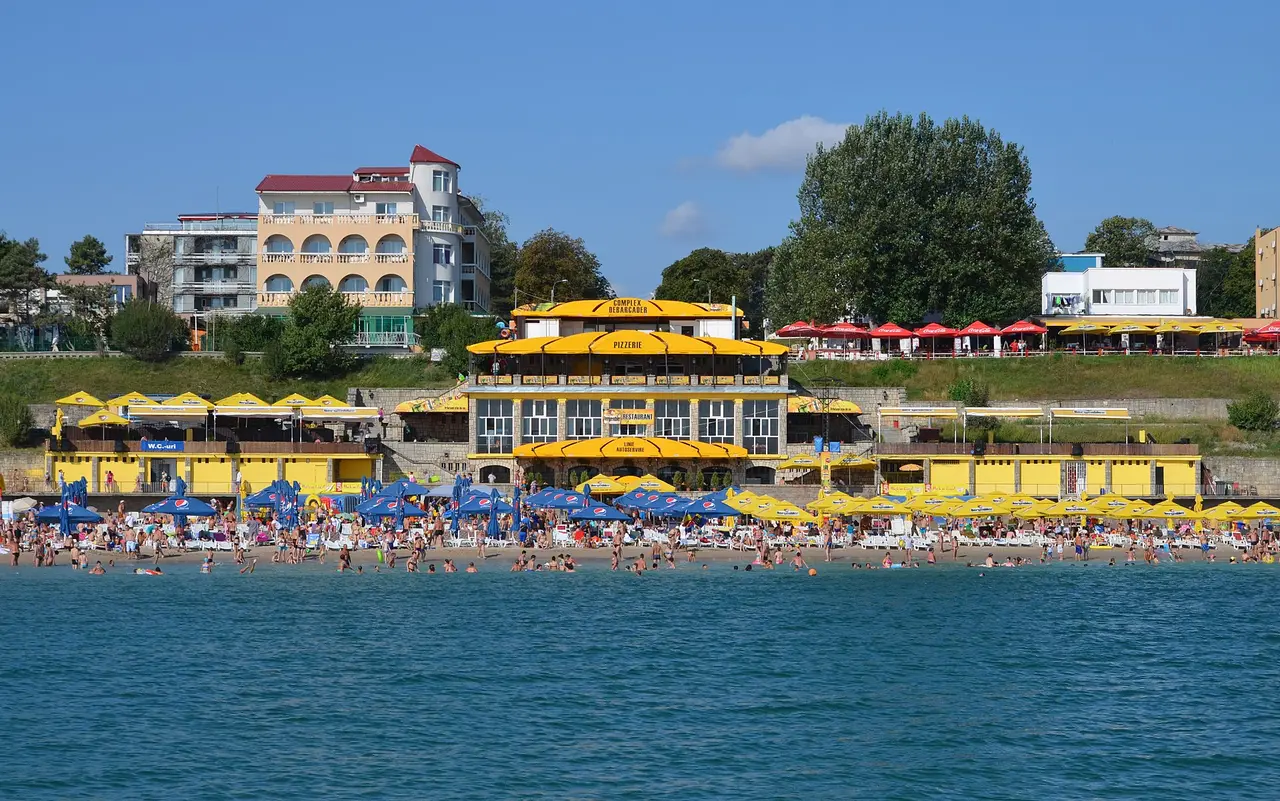
Roughly 30 km south of Constanta, Costinesti built its name as the student and youth resort - denser nightlife than Eforie, cheaper beds than Mamaia, and a beach that packs hard around the obelisk in high season. Off the northern sand sits the Ev Evangelia wreck, beached since 1968 and still the postcard detail that tells you you’re not in another generic hotel strip.
If your July dates collide with Beach, Please!, treat the town as a festival base, not a quiet swim break - rooms vanish and prices follow. The festival took over Costinesti on 8-12 July in 2026, and the organisers have already set 7-11 July 2027 for the next edition; the rest of the year’s festivals are in our events calendar. Outside festival weekends it’s still louder and younger than Neptun; bring earplugs or book further south.
Neptun to Mangalia: the quieter communist-era cluster
South of Costinesti the coast turns into a string of purpose-built resorts - Olimp, Neptun, Jupiter, Venus, Saturn - with Mangalia as the working port town at the end of that cluster. Neptun sits about 6 km north of Mangalia. Trees, older hotel stock, softer evenings: this is where Romanian families and couples go when Mamaia’s clubs aren’t the brief.
Mangalia adds spa treatments and Greek-era history for anyone who wants more than a sunbed. Don’t expect boutique design everywhere - expect shade, space and fewer basslines.
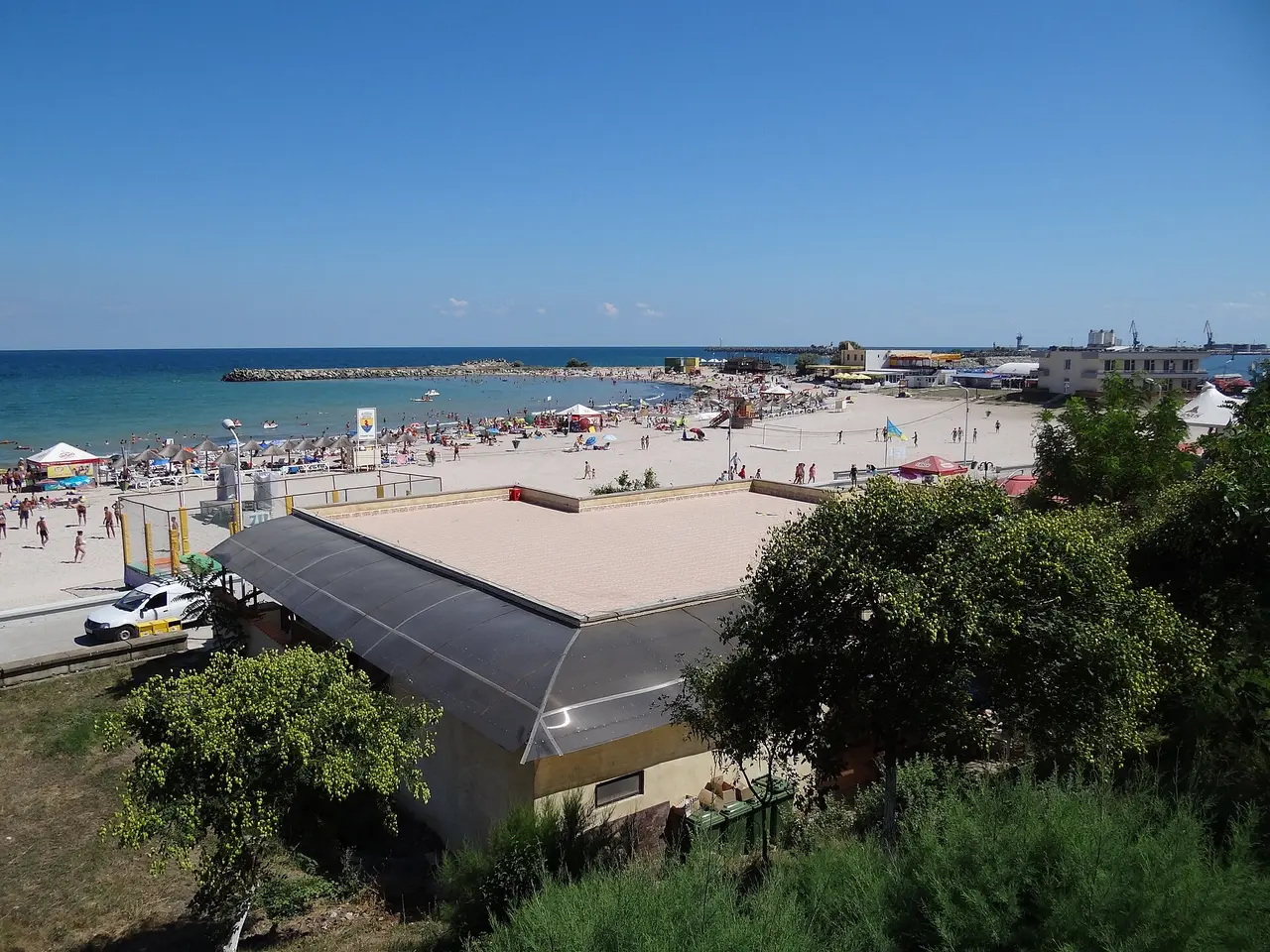
Vama Veche and 2 Mai: the end of the line
At the Bulgarian border, Vama Veche is still a village first - beach bars, live music, a countercultural reputation that survived communism and a wave of gentrification since. Nudism remains common on the quieter northern stretch of sand. 2 Mai, just north, is the lower-key neighbour. Neither is a Mamaia substitute; if you need a pool, kids’ club and room service, you’ll be frustrated by dusk.
Our dedicated Vama Veche guide goes deeper on the reserve, the border and where the village still holds its shape. The decision rule is simple: book Vama Veche when the scene is the holiday, not when you want Romania’s “nicest” beach infrastructure.
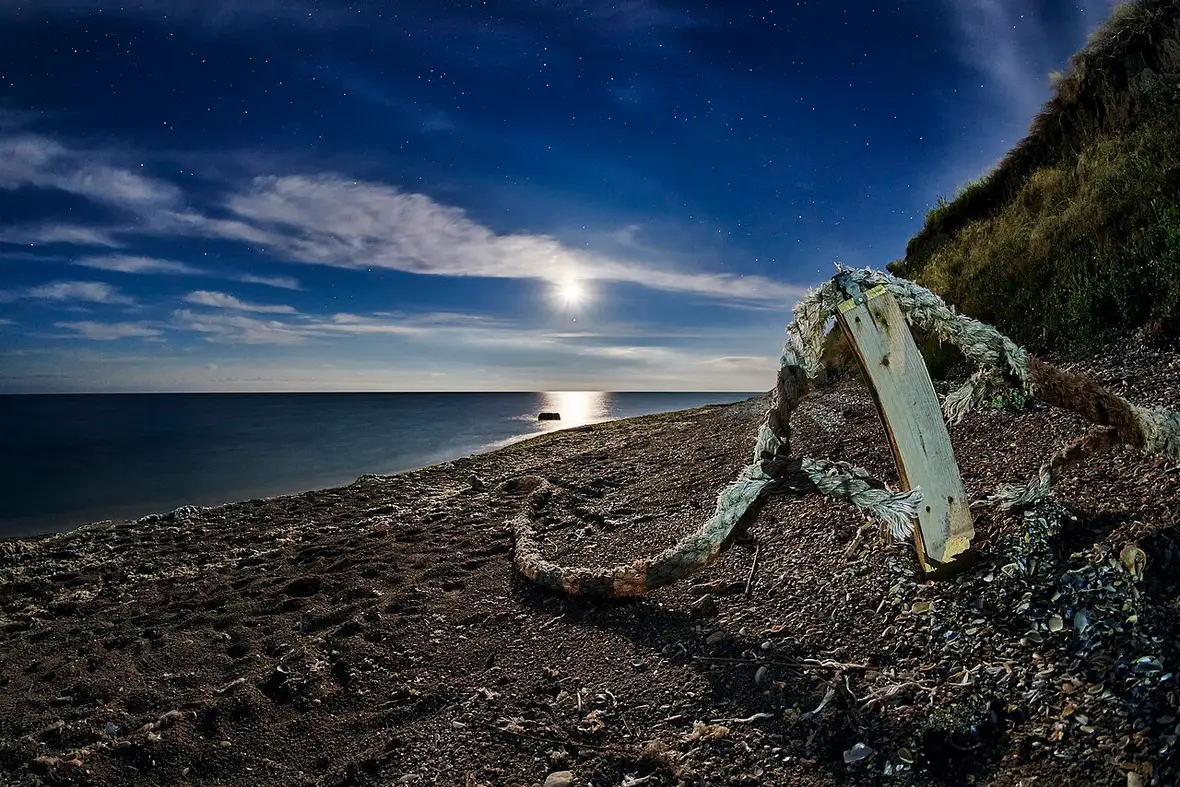
Getting there and when the season actually runs
Most visitors reach the coast via Bucharest. CFR’s InterCity trains from Gara de Nord cover the roughly 225 km in about two hours, the InterRegio in about two hours twenty minutes. A second-class ticket with a seat reservation costs 105 lei on the InterCity, 92 lei on the InterRegio and 48.50 lei on the slower Regio, and buying at least 11 days ahead on bilete.cfrcalatori.ro takes 10% off. FlixBus takes about three hours fifteen minutes, with three departures a day and fares from 41.98 lei on its Romanian site ($11.98 on the US one), so the bus is the cheaper ride, while the InterCity and InterRegio win on speed and on departures spread through the day. Driving the A2 takes about two and a half to three hours outside the weekend rush, which builds from Friday afternoon into Saturday morning towards the coast and from Sunday lunchtime on the way back. Our Bucharest to Constanta page breaks all four options down in full: train, bus, car and transfer. Constanta’s own airport (CND) lists only three destinations - Istanbul and London all year, plus Rome - so unless you’re flying from one of those, you’ll land at Bucharest’s OTP and take the train.
Official tourism guidance still frames most Black Sea hotels as open roughly 1 May to 10 September, with the densest season 10 July to 31 August, and the best window for the beach itself runs from mid-June to early September. Either side of it you’re trading crowds for a coast that’s still opening up or already packing away. July weekends plus festival dates are the opposite problem: book early or pay for it.
A rental car pays off the moment you want Mamaia by night and Eforie by day, or a Danube Delta add-on after the beach; buses and taxis link the resorts, but the timetable eats beach hours. The Black Sea to Danube route maps that eastward extension.
What’s still open once the beach season ends
Each spring and autumn FPTR, the federation of Romania’s tourism employers, runs “Litoralul pentru Toti” (“The Coast for Everyone”), a discount programme in which every participating hotel sets its own rate, inclusions and dates. The 49th edition’s official period is 1 to 30 September 2026, and after that only the hotels that extend their offer keep the rate. Its list names 70 hotels, villas and guesthouses in ten resorts. The cheapest offer in each resort ranged from 39 lei per person a night, room only, at one Eforie Nord hotel (30 August to 12 September) to 108 lei in Mangalia. The top of the list was all-inclusive in Mamaia at 490 lei per person. By 23 September, 45 of the 70 offers had already ended. Three hotels on the list run their rate well past September: Complex Coralis in Eforie Nord (90 lei per person a night, to 31 December), Sea Breeze in Costinesti (75 lei per person in a double, to 31 October) and Hotel Doina in Neptun-Olimp (155 lei per person with buffet breakfast, to 31 October). The list changes from one edition to the next: 24 of this autumn’s hotels hadn’t taken part in spring. Book direct - FPTR’s list gives phone and email contacts for most of them - and ask what’s actually running, from meals to the pool and the beach, before you pay.
If you’re landing in October, expect a different coast, not a quieter copy of the summer one. The season winds down in the first half of September - Mamaia’s Telegondola shut for the year on 13 September 2026 - and the seasonal beach bars and restaurants follow, resort by resort. What doesn’t close is the city and the cure. Constanta keeps a city’s calendar rather than a beach one: the Casino on the seafront, the Roman mosaic and the history museum on Ovid Square are all covered in our Constanta guide. The Techirghiol sanatorium by Eforie admits patients all year, uninsured visitors included, as long as you book at least 90 days ahead. If the trip is really about swimming, aim for mid-June to early September; if it’s the city and the cure you’re after, October works fine.
Match the resort to the holiday, then stop shopping
You don’t need to “see” every name on the map. One base done well beats three half-nights in resorts that answer different questions. For a first Romanian seaside trip with western flight logistics, Mamaia plus a Constanta culture day is still the clearest package; swap to Eforie Nord when noise and price matter more than beach clubs; keep Vama Veche for travellers who already know they want the village, not the strip.
Pay in lei, expect peak August to hurt, and read the cancellation rules before you lock a non-refundable July-August weekend in Mamaia. The sea is the same water; the nights are not.
Photos
Read also

Before you go · 8 min read
What to Pack for Romania: Seasons & Essentials
Verified · September 1, 2026What to pack for Romania by season: city heat near 30 C, Carpathian ridges near 10 C in July, Black Sea kit, and winter layers that work.

Before you go · 10 min read
Skiing in Romania: Resorts, Passes & Season
Updated · September 23, 2026Ski Romania: Poiana Brasov, Sinaia, Predeal and Straja day-pass prices in lei, the snow season window and which resort fits your trip.

Before you go · 9 min read
Best Day Trips from Cluj-Napoca
Verified · August 16, 2026Day trips from Cluj by effort: Salina Turda by bus, Rimetea by car, Alba Iulia citadel and Banffy Castle at Bontida, with times and prices in lei.

Before you go · 10 min read
Romania in Winter: Skiing, Christmas Markets, Castles
Updated · August 8, 2026A winter Romania trip planned right: Poiana Brasov ski dates, Sibiu and Brasov Christmas markets, and Peles and Bran castles under snow.