
Bran Castle: Visiting Dracula's Castle
Bran Castle, the famous Dracula castle: real ticket prices in lei, opening hours, how to get there from Brasov, and the honest Dracula truth.
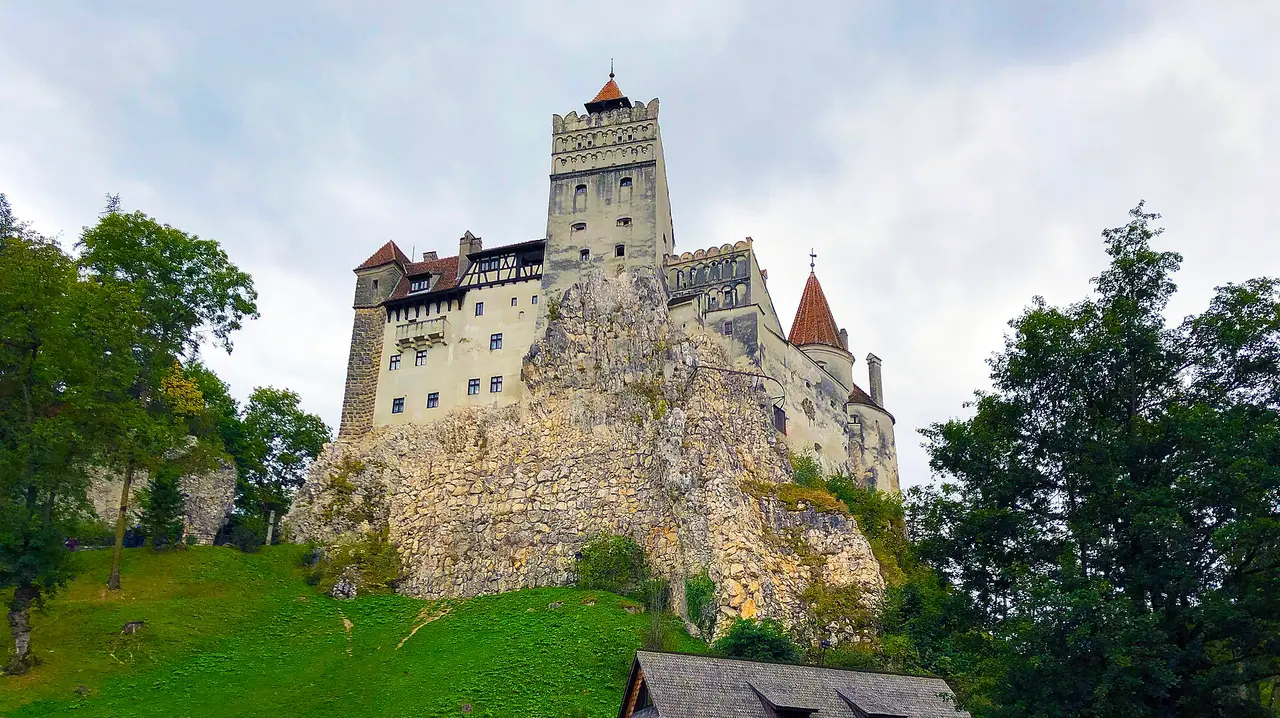
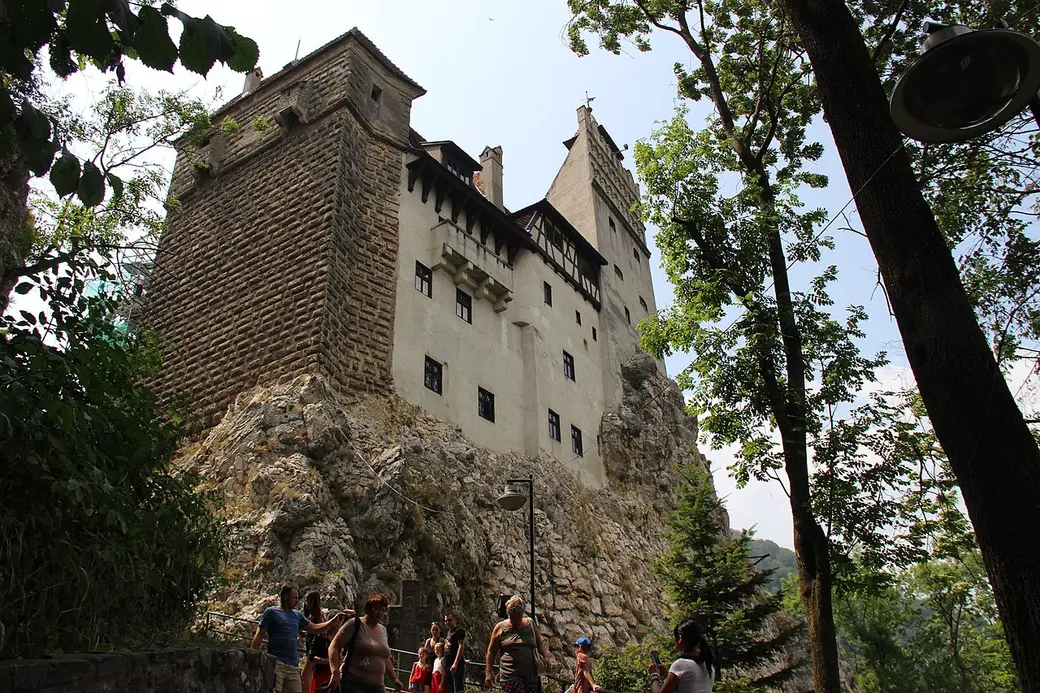
Bran Castle is the fortress everyone calls Dracula’s Castle, though the label is almost entirely marketing: Vlad the Impaler never owned it, and Bram Stoker never set foot in Romania. What you actually get is a real 14th-century border fortress on a rock, later the beloved summer home of Queen Marie of Romania, with a warren of white towers and tiled roofs that photographs beautifully. It sits about 30 km south of Brasov, tickets start at 120 lei, and it works best as a half-day trip rather than a whole day.
Go in the morning or late afternoon to dodge the tour-bus crush, take the bus from Brasov or drive, and set your expectations right. This is a compact, atmospheric castle-museum, not a vampire theme park. If you come for the Queen Marie story and the mountain-pass history, you leave happy; if you come expecting Stoker’s Castle Dracula, you leave a bit puzzled.
Is Bran Castle actually Dracula’s castle?
No, and it pays to know why at the ticket window, because the real story is more interesting than the myth. The two threads that supposedly tie Bran to Dracula both fray on a close look.
The first is Vlad III, voivode of Wallachia, better known as Vlad the Impaler and by the byname Draculea. Vlad never ruled or owned Bran. There’s an old story that he was held prisoner here for a couple of months after the Hungarians captured him in 1462, but historians now place that imprisonment in a fortress near Budapest, not in Bran. His real strongholds and campaigns were south of the Carpathians, in Wallachia. The most Bran can honestly claim is that Vlad may have passed through this trade-and-toll gap in the mountains at some point, like thousands of other travellers. If you want the man rather than the myth, our Dracula in Romania guide follows Vlad the Impaler’s real reign, how the legend formed and a map of the sites he actually used. The grave claim, such as it is, sits at Snagov Monastery on a lake island north of Bucharest, not in this fortress.
The second thread is the novel. Bram Stoker published Dracula in 1897, and his Castle Dracula stands on a rocky precipice guarding a Transylvanian pass. Bran also stands on a rocky precipice guarding a pass, so the resemblance is real. But Stoker never visited Transylvania, never mentions Bran by name, and there’s no evidence he knew the castle existed. The “Dracula’s Castle” branding came later, from the tourism trade, because Bran looked the part and needed a hook. Once you accept that, the visit gets more rewarding: you stop hunting for a coffin and start noticing a genuine medieval fortress. If it’s that fortress feel you’re really after, Corvin Castle in the west of Transylvania is the larger, more imposing Gothic pile and looks even more the part.
What is the real history of Bran Castle?
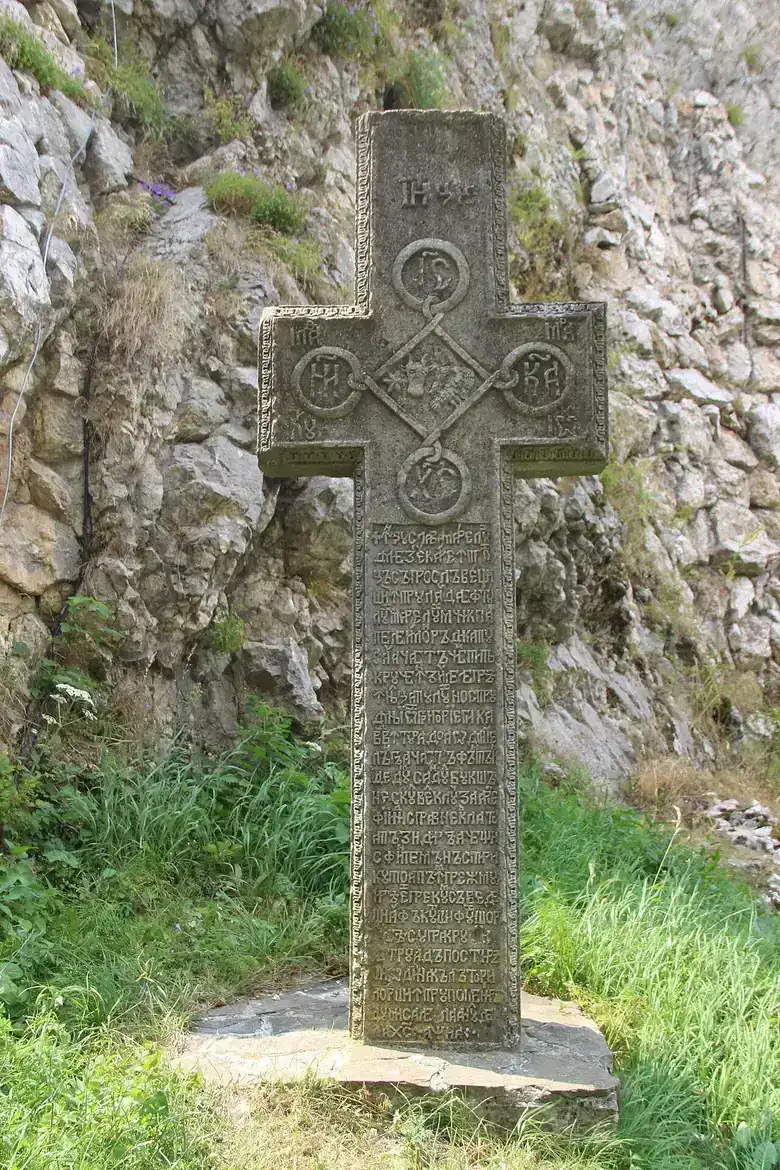
Bran started as a working piece of border infrastructure. The Saxons of Kronstadt (today’s Brasov) built the stone castle in 1377 under a charter from Louis I of Hungary, on the site of an earlier wooden fort the Teutonic Order had raised in 1212 and lost around 1225. Its job was blunt and practical: guard and tax the mountain pass between Transylvania and Wallachia. For centuries Bran was a customs post and a military checkpoint on one of the main routes through the Carpathians, and it stayed strategically useful into the mid-18th century.
The romantic chapter that most of the interior actually tells is the royal one. In 1920 the city of Brasov gave the castle to Queen Marie of Romania, and she made it her favourite home, redecorating the cramped medieval rooms into a comfortable summer residence with her own taste stamped all over them. She loved the place enough that in her will she asked for her heart to be kept near it. The communist regime seized Bran in 1948, it opened as a museum in the 1950s, and in 2009 it was returned to her descendants, the Habsburg heirs of Princess Ileana. So the furniture, the portraits and the cosy nooks you walk through are largely Marie’s world, not a warlord’s dungeon.
What is it like inside, and is it worth visiting?
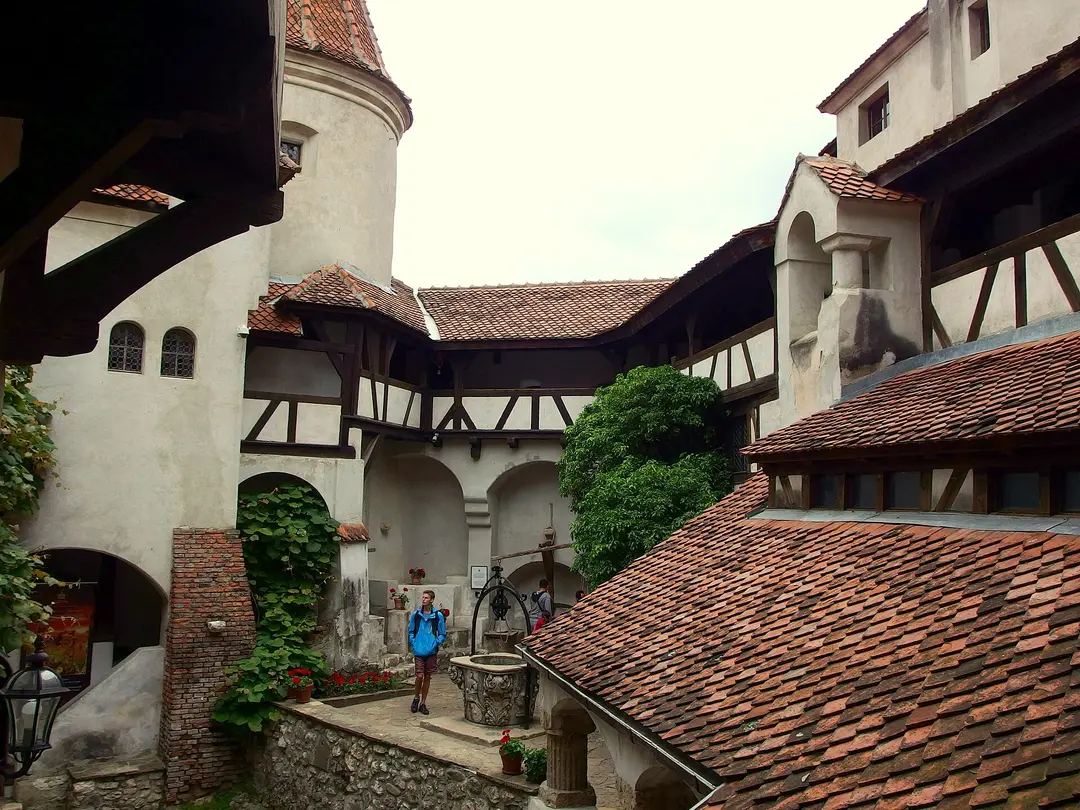
Yes, with the right expectations. Bran is small and the visit is short, but the building itself is genuinely lovely: a knot of narrow staircases, low doorways and irregular rooms wrapped around a tight inner courtyard with a well. It’s the opposite of a grand Loire chateau, and that’s the charm. You wind upward through Queen Marie’s furnished rooms, past painted stoves, carved furniture and hunting-lodge cosiness, then out onto balconies and rooftops with views over the valley.
The route is largely self-guided on a standard ticket, following a one-way loop, and in high summer it moves at the pace of the crowd in front of you. The courtyard, with its old well and the wooden galleries stacked above, is the single most photogenic corner. Look for the small themed add-ons too: there are extra exhibits including a “torture chambers” room and a “time tunnel”, each sold as a paid supplement rather than included in the base ticket.
A warning: the base of the hill is a gauntlet of souvenir stalls selling plastic fangs, “Dracula” wine and fridge magnets. It’s tacky, and some visitors find it deflating. Walk through it briskly, keep your eyes on the castle above, and you’ll be fine. Budget around an hour to ninety minutes inside; two hours if it’s busy and you queue for the add-ons.
How much are tickets and when is it open?
A standard adult ticket is 120 lei, with seniors 65 and over at 90 lei, students at 80 lei, and children aged 5 to 17 at 60 lei; under-fives go free (checked July 2026 on the official site). If you want more than the standard loop, the castle sells upgrade tiers: a Royal Tour with priority access that bundles the torture chambers and time tunnel runs 190 lei for adults and 130 for children, and a guided Royal Tour on top of that’s 230 and 170. If you only want one extra room, the torture chamber and the time tunnel are sold as 30-lei add-ons each on the standard ticket. In summer, buying online ahead of time is smart, because the queue at the gate can eat a chunk of your visit and popular slots sell out.
In peak season (roughly May 1 to October 31) the castle runs Tuesday to Sunday 09:00 to 19:00, with Monday a later start at 12:00 to 19:00; those times are the last entry, so don’t cut it fine at the end of the day. Off-season hours are shorter and there are special schedules around Christmas and New Year, so if you’re visiting in winter, confirm the current program on the official site (bran-castle.com) rather than trusting a blog. Prices and hours do change year to year, so the box above carries a “confirm on the day” note.
How do you get to Bran Castle?
Bran sits about 30 km south of Brasov, and Brasov is the natural base, so it pays to plan the things to do in Brasov around the castle day. The cheapest way is the local bus: services to Bran-Moeciu leave from Brasov’s Autogara 2 (Bus Station 2) roughly every half hour on weekdays and hourly at weekends, take about 50 minutes, and cost 13 to 15 lei each way, with the Bran stop right by the castle entrance. Buy the ticket on board. A taxi from Brasov runs closer to 150 lei, worth it only if you’re splitting it or short on time. Timetables and fares shift, so check the current schedule if the last bus back is part of the plan.
From Bucharest there’s no direct public transport to Bran. The standard route is a train or coach to Brasov (the train is roughly two and a half to three hours), then the Brasov to Bran bus, which makes for a long day by public transport. Driving from Bucharest is about two and a half hours, and having your own car makes the biggest difference here: it lets you pair Bran with nearby Rasnov fortress and, above all, with Peles Castle in Sinaia, which is the far grander palace most people rate higher than Bran. If you’re building a wider loop through Transylvania, our Romania 7-day itinerary threads Brasov, Bran and the mountains together, and you can base the whole thing out of the capital using our Bucharest guide for the start and finish.
When should you go, and what should you pair it with?
Time of day matters more than season. Tour buses from Brasov and Bucharest tend to descend late morning through early afternoon, so aim to be at the gate when it opens or in the last hour or two before closing, when the coaches have left. Weekdays beat weekends. Spring and autumn give you the fortress with autumn colour or fresh green and thinner crowds; midsummer is busiest, and a misty, drizzly day arguably suits the vampire legend better than blue sky anyway.
Don’t build a whole day around Bran alone, because it’s genuinely a one-to-two-hour visit. The strongest plan is Bran plus Peles Castle in Sinaia in a single day by car, since Peles is the opulent 19th-century royal palace that Bran isn’t, and the contrast is the point; our Peles to Bran guide covers the drive, the transfer options and the order that works, and if you can only fit one, our Bran vs Peles comparison helps you pick. Add Rasnov fortress on the same road if you’ve energy - a ruined hilltop citadel about 12 km away with the best panorama in the whole area, and our Rasnov and Bran day trip lays out the order, transport and timing for doing both in one day. With your own wheels you can do Bran, Rasnov and Peles as a loop and be back in Brasov by evening; a fixed-price transfer or a rental car both beat stitching together buses for that itinerary. And to see how Bran ranks against every other castle in the country, our Romania castles ranked guide scores fifteen by history, access and cost.
For a base, Brasov is the obvious choice: it’s a handsome medieval city in its own right, close to all three castles, and full of places to stay and eat. Summer weekends fill the centre fast, so weigh hotels in Brasov early. One practical note for the castle itself: the ticket desk takes cards, the local bus and the stalls at the bottom of the hill often don’t. And go in expecting a steep Saxon fortress rather than Dracula’s lair - held to that standard, Bran comfortably beats what most people came for.
Photos
On the map
The map loads on click - to keep the page lightweight.
The map didn’t load. Check your connection and refresh the page.
Admission and opening hours
- Admission price
- Standard adult ticket 120 lei; seniors 65+ 90 lei; students 80 lei; children 5-17 60 lei; under-5 free
- Opening hours
- In season (May 1 - Oct 31): Tue-Sun 09:00-19:00, Mon 12:00-19:00 (times = last entry). Off-season shorter.
Prices and hours change and winter has special schedules - confirm on the official site (bran-castle.com) before you go.
Details checked: July 4, 2026
Read also

What to see · 11 min read
Marginimea Sibiului: Shepherd Villages Near Sibiu
Verified · September 5, 202618 shepherd villages west of Sibiu: Rasinari, Sibiel glass icons, Saliste, Paltinis bus fares, and how a day out of town works.

What to see · 9 min read
Prejmer Fortified Church: UNESCO Near Brasov
Verified · September 3, 2026Prejmer fortified church 15 km from Brasov: Greek-cross plan, 275 wall rooms, UNESCO hours for 2026 and how a visit actually works.

What to see · 11 min read
ASTRA Museum Sibiu: Romania's Great Open-Air Village
Verified · August 29, 2026ASTRA Museum near Sibiu: 50-lei tickets, hours by season, how to get there, and which of the 400+ buildings across 96 hectares to see first.

What to see · 10 min read
Bucegi Sphinx & Babele: Cable Car from Busteni
Updated · August 26, 2026Ride the Busteni cable car to the Sphinx and Babele: 2026 return fare 199 lei, hours from 08:30, and how to pair it with Peles or Cantacuzino.