
Which Airport to Fly Into for Romania
Bucharest OTP or a regional airport? How Cluj, Timisoara, Sibiu and Iasi map to Romania regions, plus how to get from each airport into the city.
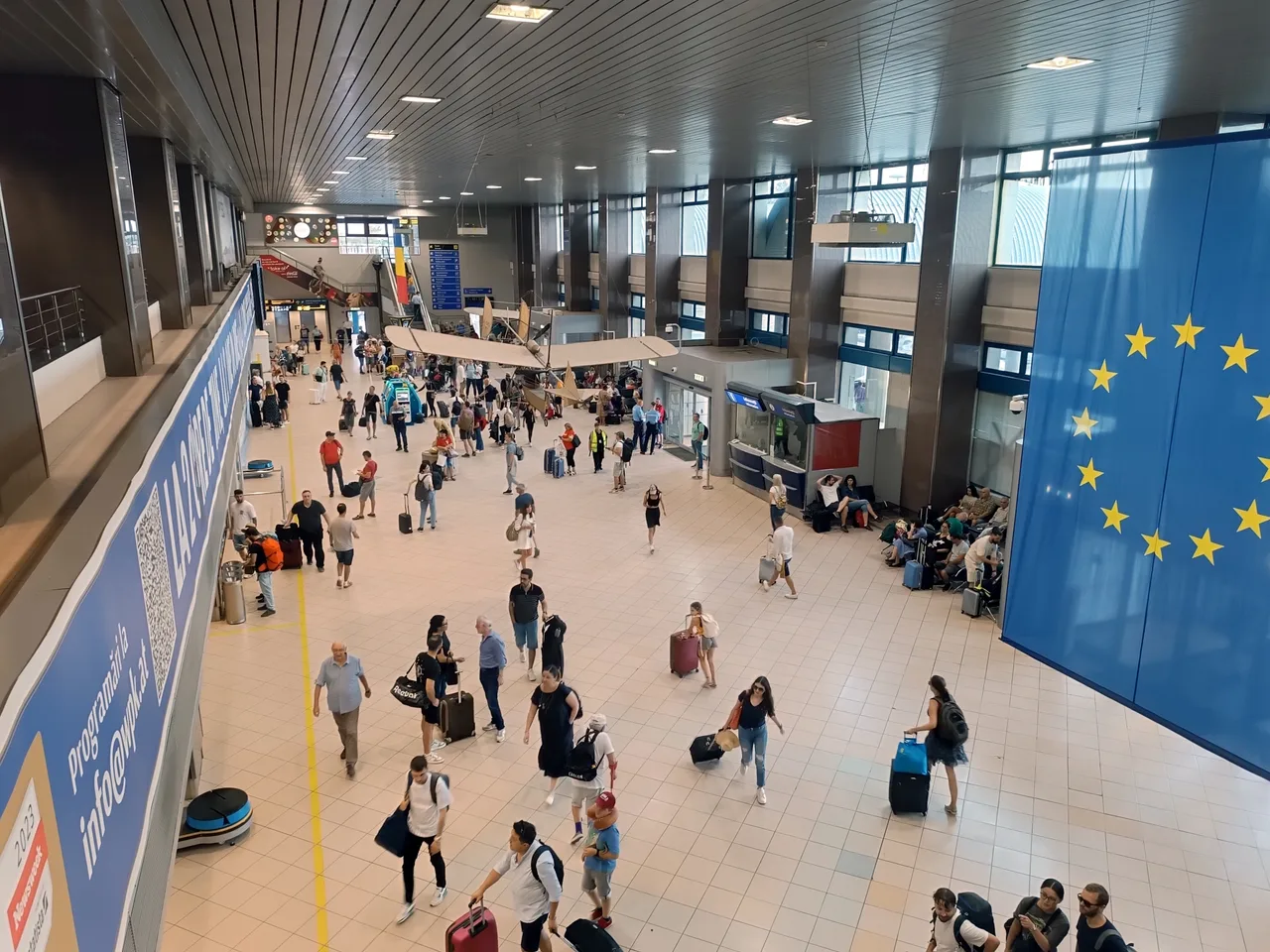
For most trips, fly into Bucharest Henri Coanda (OTP): it has by far the widest choice of flights and it sits next to the capital and the castle belt. But if your Romania is really Transylvania, flying into Cluj (CLJ) instead can save you a six-hour transfer up from Bucharest, and there are three smaller airports that beat OTP for their own corner of the country. The right answer depends less on price and more on where you actually want to wake up on day one.
Romania has five airports worth a foreign visitor’s attention, and they line up neatly with the regions. Here is which one fits which trip, roughly how busy each is (so you know how likely a direct flight from your city exists), and how you get from the terminal into town once you land. Once you’re moving between cities, our getting around Romania guide compares the trains, buses, car and domestic flights.
Which airport should you fly into?
Match the airport to your first few days, not to the cheapest fare, because a 40-euro saving evaporates the moment you add a long drive or an extra domestic hop.
- Bucharest, Wallachia and the castle loop (Peles, Sinaia, Brasov, Bran, the Transfagarasan): fly OTP for the widest choice, or Brasov-Ghimbav (GHV) when a direct flight exists and your first nights are in Brasov or the nearby mountains - GHV opened in June 2023 and sits about 12 km from town.
- Transylvania proper and Maramures (Cluj, the wooden churches of the north, road-trip country): fly Cluj (CLJ). It’s the second-busiest airport in the country and puts you in the region instead of a long way south of it.
- Sibiu and the Saxon south of Transylvania: Sibiu (SBZ) if a direct flight exists from your city; the airport is almost in town. If not, Cluj or Bucharest.
- The west (Timisoara, the Banat), or arriving overland from Serbia or Hungary: Timisoara (TSR).
- The northeast, Moldavia and the painted monasteries of Bucovina: Iasi (IAS), the third-busiest airport, or the smaller Suceava field closer to the monasteries themselves. Already in Bucharest and heading this way? Bucharest to Iasi compares the hop.
The single most useful trick is the open-jaw: fly into one airport and out of another. Land at OTP, tour the castles and Transylvania west to east, then fly home from Cluj (or the reverse) and you never backtrack the length of the country. Multi-city fares are often barely more than a return, and you save a whole day of driving or a train back to where you started.
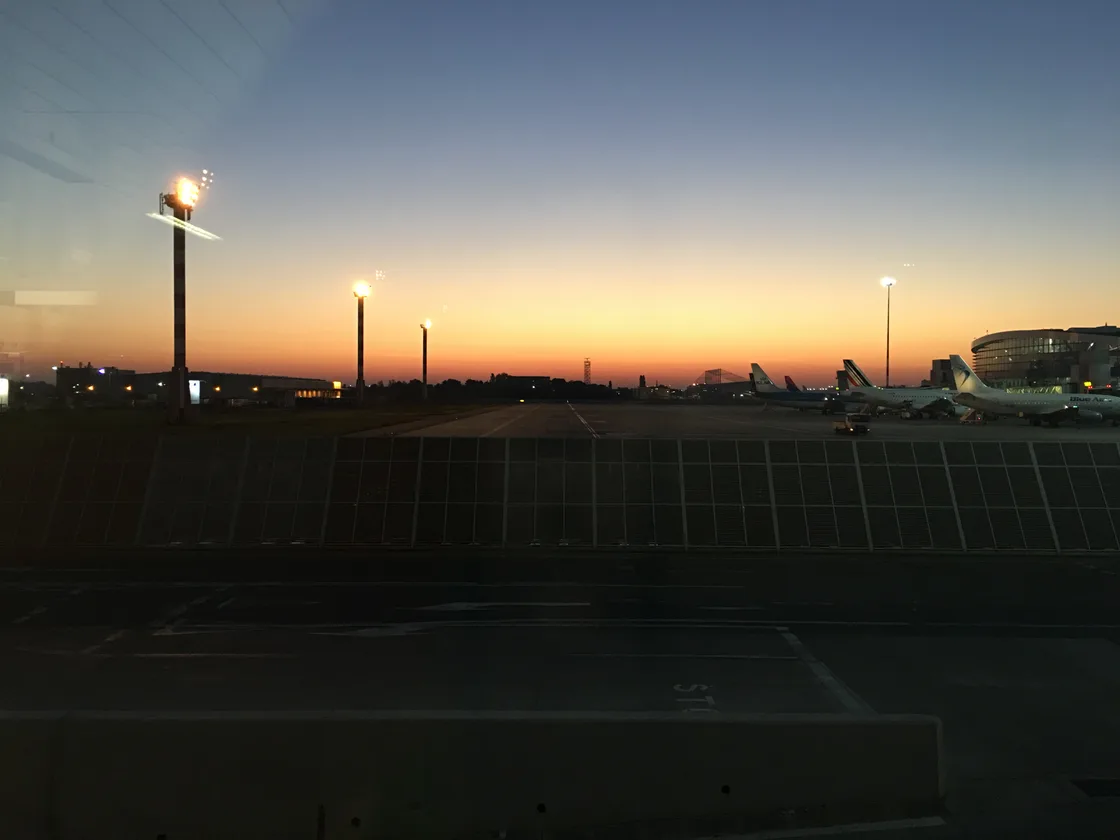
Bucharest Henri Coanda (OTP): the hub
If you’re unsure, this is your airport. OTP handled just over 17 million passengers in 2025 (up about 6.6% on the year), which makes it comfortably Romania’s busiest and the one most likely to have a direct flight from wherever you’re starting. It sits in Otopeni, 16.5 km north of the city centre, and a new terminal is on the drawing board to lift capacity toward 30 million a year.
The important practical detail people get wrong: there’s no metro to the airport yet. The M6 line that will connect OTP to Gara de Nord is under construction, with the full run to Otopeni not expected until around 2028. Until then, ignore any advice that tells you to take the metro from the airport, because it doesn’t exist. Here is what actually works:
- Express bus (STB line 100, the old 783). It leaves from right outside arrivals and runs across the city through the main squares (Piata Victoriei, Piata Romana, Piata Universitatii, Piata Unirii), each of which sits on the metro. The ticket is only about 3 lei, buses go roughly every 15 to 20 minutes and run 24 hours, and the ride takes 40 to 60 minutes depending on traffic. Buy the ticket from the machines at arrivals. This is the cheapest way in, and if your hotel is near a central square it can be the simplest too.
- Train to Gara de Nord. A shuttle-plus-train link reaches the main railway station in about 25 minutes, roughly every 40 minutes, around the clock, for well under 10 lei. Handy if you’re heading straight onward by train, say up to Brasov, or even across the border - the daily Bucharest to Sofia train leaves from Gara de Nord too.
- Ride-hailing (Bolt or Uber). Expect roughly 60 to 130 lei and 30 to 50 minutes to the centre. This is the least stressful option after a long flight, with a fixed in-app price and card payment.
One warning worth taking seriously: OTP has a long-running taxi-touting problem. Ignore anyone who approaches you inside the terminal offering a ride, use the yellow touch-screen taxi machines in the arrivals hall if you want a metered cab, and walk away from any driver who wants to “agree a price” rather than run the meter. The airport bus, the train and the ride-hailing apps all sidestep this entirely, which is why most seasoned visitors never take an airport-rank taxi at all. For the full rundown of every route from OTP into town, with exact fares in lei and where to catch each one, see our guide to getting from Bucharest airport to the city.
Cluj-Napoca Avram Iancu (CLJ): the Transylvania gateway
If the words on your itinerary are Cluj, Sighisoara, the Apuseni mountains or Maramures, fly here, not Bucharest. CLJ is the country’s second-busiest airport, with 3.58 million passengers in 2025 (up nearly 10% on the year), and it has crossed the three-million mark two years running. That volume matters to you as a traveller, because it means a real spread of budget routes: Wizz Air runs a heavy network to Western Europe (Barcelona, London, Milan, Madrid, Vienna), Ryanair adds London, Dublin and Paris, and Lufthansa and Turkish feed their Munich and Istanbul hubs for connections from further afield.
The airport is only about 8 to 9 km east of the centre, so the last mile is short and cheap - this is the transfer most visitors flying in actually want when Transylvania is the point of the trip.
CLJ to the city centre, side by side (confirm on the day):
- CTP buses A1E (express), 5 and 8 leave from in front of the terminal and reach the central area in about 26 minutes (airport site timing). Tickets are a few lei - CTP app, kiosk, contactless where available, or SMS to 7479 on current listings. Daytime frequency is solid; evenings and weekends thin out, and overnight coverage isn’t OTP-style 24/7, so a late Wizz arrival may push you to a taxi.
- Official taxi from the touchscreen kiosk in arrivals (same idea as OTP’s machine system): metered, usually about 30 to 50 lei and 15 to 25 minutes to the centre.
- Bolt / Uber: often in the same band or a little under the taxi, card payment, needs data on landing.
- Pre-booked transfer: fixed price, name board, useful with luggage or a festival-week landing when the city is slammed.
For the full last-mile detail - CTP ticket prices, the A1E PDF vs flight-correlated schedule, and the arrivals taxi totem - see Cluj Airport to the city centre. For what to do once you’re there, our Cluj-Napoca guide covers the city; where to stay in Cluj maps neighbourhoods against that short airport hop. If you’re picking up a hire car, CLJ is one of the three main rental bases in the country.
The reason to weigh CLJ against OTP is simple geography. Cluj to Bucharest is the better part of a full day by road or rail, so flying into the wrong end of the country for a Transylvania trip costs you a day at each end. Fly into Cluj and you’re already there.
Timisoara Traian Vuia (TSR): the west
For the Banat and Romania’s western edge, Timisoara is your airport. It handled 1.46 million passengers in 2025 and opened a new Schengen departures terminal in 2024, and it’s the main hub for the western part of the country, about 12 km northeast of the centre. The route map is smaller than Cluj’s but useful: around 30 flights a day, with regular links to Bucharest, London, Munich, Milan and Brussels.
Timisoara is a genuinely handsome city in its own right (the 2023 European Capital of Culture), so this isn’t just a transit point. It’s also the sensible entry if you’re combining Romania with Serbia or Hungary, since Belgrade and the Hungarian border are close by - and Belgrade’s own big airport is a genuine backup when TSR has no good fare, as our Timisoara to Belgrade guide explains. For the capital-to-capital options once you’re done in Romania, Bucharest to Budapest covers the night train, FlixBus and flights. From the terminal, express bus lines run into the centre, or a taxi is roughly 50 to 70 lei for the short hop. If your trip is anchored in the west, flying here beats landing in Bucharest and driving 500 km across the country.
Sibiu (SBZ) and Iasi (IAS): the two that fit a specific trip
These two are smaller, but each one is the obvious choice for its own region, so they’re worth a look rather than defaulting to Bucharest.
Sibiu (SBZ) is a compact airport for the south of Transylvania, and its best feature is how close it is: only 3 to 5 km west of the old town, so you’re in one of Romania’s prettiest medieval centres within minutes of landing. It carried about 695,000 passengers in 2025. The network is modest and mostly Wizz Air (London, Nuremberg, Memmingen, Dortmund and more), plus Austrian to Vienna and Lufthansa to Munich, so whether Sibiu works for you comes down to one question: is there a direct flight from your city? If yes, it’s the shortest possible route to Sibiu, Sighisoara and the Saxon villages. If no, Cluj or Bucharest will have far more options. See the Sibiu travel guide for what the region holds.
Iasi (IAS) is the surprise on this list: it’s actually the country’s third-busiest airport, with 2.24 million passengers in 2025, ahead of both Timisoara and Sibiu. It sits about 8 km east of Iasi, the cultural capital of Moldavia, and it’s the natural gateway to the northeast, including a run up toward the painted monasteries of Bucovina (though the small Suceava airport lands you closer to the monasteries themselves). Unless your trip is built around eastern and northeastern Romania, though, Iasi won’t be on your radar, and that’s fine: it’s a regional gateway, not a substitute for OTP.
What about the castle towns and the Danube Delta?
Some of Romania’s headline sights have no airport of their own, so know which hub they hang off.
Brasov, Sinaia and Bran (the castle belt) still hang off OTP for most international arrivals, because Otopeni has far more long-haul and connection options. But since 15 June 2023 Brasov has its own field: Brasov-Ghimbav (IATA GHV) in Ghimbav, about 12 km from the city, with a Wizz-led network plus seasonal charters and 337,353 passengers in 2025. The route map is still thinner than OTP or Cluj, so check whether your city has a workable GHV flight that week before you commit. Flights, the RATBV A1 bus into town and taxi/transfer options are in Brasov Airport (GHV).
You do not have to sleep in Bucharest first if you land at OTP with Brasov as night one: shared airport shuttles and private transfers run Otopeni to Brasov in roughly 2 to 3 hours, or you take the airport train to Gara de Nord and continue north by InterCity. Full last-mile options from OTP are in Bucharest airport to the city (including the OTP-to-Brasov section); the corridor once you’re comparing train vs bus vs car is Bucharest to Brasov. Budget for the DN1 to jam on summer Sundays. The things to do in Brasov guide covers the base for that whole region.
The Danube Delta is the other special case. There’s no airport in the delta itself, and even Tulcea, the gateway town, is reached by road or the smaller Suceava-side routes rather than a big airport. You fly into Bucharest, drive or take a train and bus to Tulcea, and then everything is by boat, so a hire car just sits in a car park. Our Danube Delta guide explains how to reach it properly.
Should you rent a car at the airport, or take a transfer?
That depends on your first day. All three big airports (OTP, Cluj, Timisoara) have on-site rental desks, and picking up at the airport gives you the most choice and copes with a late flight; you pay a slightly higher rate plus an airport fee. If you’re spending your first night in the city anyway, a downtown branch the next morning can be cheaper. The full picture on deposits, insurance excess and one-way drop fees is in our Romania car rental guide, and the one-way drop fee is the line that decides whether an open-jaw plan (into OTP, out of Cluj) pays off.
For anyone not driving on arrival, a fixed-price transfer booked in advance is the low-stress route from any of these airports to your hotel, with a known fare and no meter to argue over. It’s often the easiest call for the first night, especially after a long flight into OTP where the taxi rank is best avoided.
The short version
Fly into Bucharest (OTP) for a first trip, the castles and Wallachia; it has the most flights and the fewest gaps. Fly into Cluj (CLJ) if your trip is really Transylvania or Maramures, and save the long transfer from the capital. Reach for Timisoara (TSR) for the west, Sibiu (SBZ) for the Saxon south when a direct flight exists, and Iasi (IAS) for the northeast and Bucovina. Whatever you pick, remember there’s no metro to OTP yet, the airport express bus and the ride-hailing apps beat the taxi touts (so it pays to land already online, which our best eSIM for Romania guide sorts out), and the smartest itineraries fly in one end of the country and out the other. Get the airport right and the rest of the trip, as laid out in our Romania 7-day itinerary, arranges itself around it. Get it wrong and you spend a day of the holiday on the DN1.
Photos
Read also

Transport · 14 min read
Bucharest to Budapest: Night Train, Bus & Flights
Verified · September 4, 2026Bucharest to Budapest 2026: CFR night train from 27 EUR, FlixBus from 36.98 EUR in 13h, or a 1h45 flight. Fares, times, border, Oradea stop.

Transport · 9 min read
Bucharest to Sinaia Train 2026: ~1.5h, from 32.5 lei
Verified · August 31, 2026Bucharest to Sinaia by train in about 1.5 hours: fares from 32.5 lei, Peles timing and its 16:00 last entry, and when a transfer wins.

Transport · 10 min read
Cluj to Brasov 2026: Bus 3h40 from 81 lei
Verified · August 28, 2026Cluj-Napoca to Brasov: bus about 3h40 from 81 lei, CFR InterCity about 6h35 from 126,50 lei, drive 275 km in about 4h20. Check before you go.

Transport · 9 min read
Brasov Airport (GHV): Flights & Getting to Town
Verified · August 21, 2026Brasov-Ghimbav (GHV) opened in 2023: who flies, the RATBV A1 bus at 5 lei, taxi and transfers into town. Check the live board.