
Driving in Romania 2026: Rovinieta, Rules & Speed Limits
How to drive Romania in 2026: the rovinieta prices since 1 October, speed limits, the zero-alcohol rule, winter tyres and the DN1 trap.
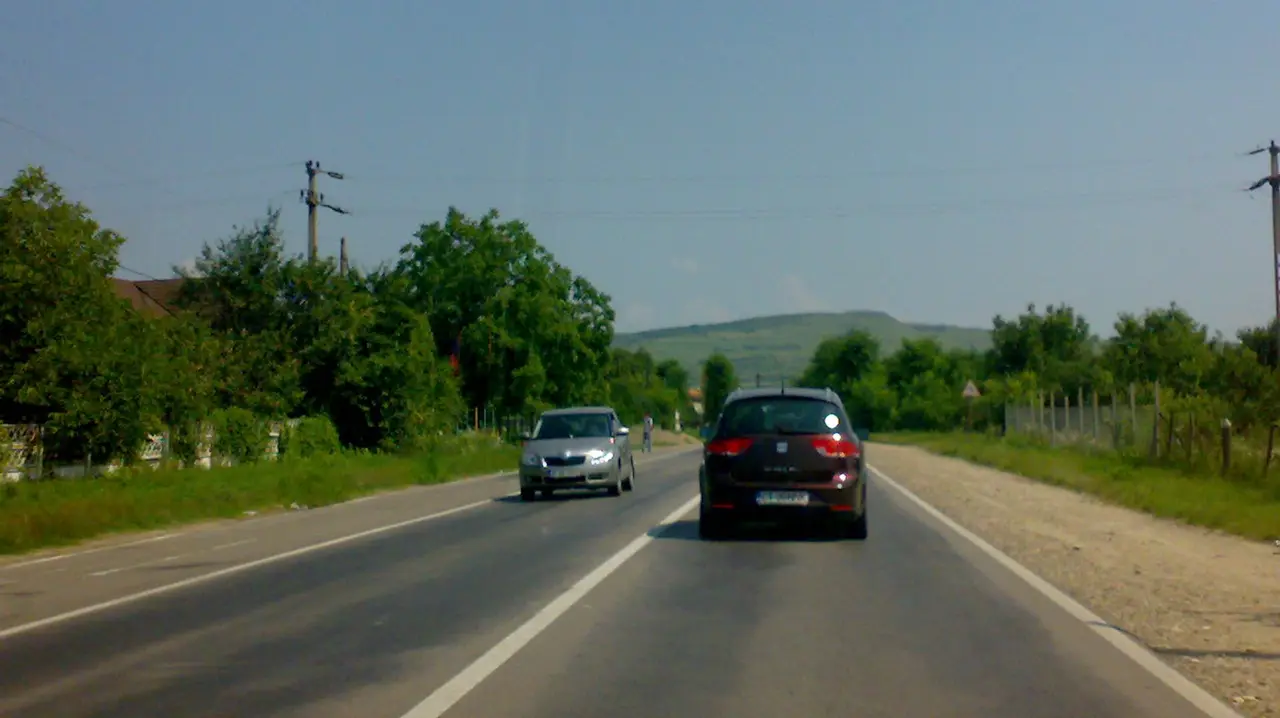
Driving in Romania is safe and rewarding once you get past three things that catch foreigners out: the road vignette (the rovinieta) that you buy separately and that has been priced in lei and graded by emission class since 1 October 2026, an absolute zero-alcohol limit that means not one beer, and the fact that the motorway map still has big gaps, so the pretty mountain legs are two-lane roads that jam on summer weekends. Sort those and the rest is ordinary European driving on the right, with familiar signs and, honestly, better road manners than the country’s reputation suggests. The one serious caveat is the crash statistics, Romania runs one of the worst road-death rates in the EU (68 per million in 2025, second only to Bulgaria), which is why the drive, not crime, is the biggest real risk we flag in is Romania safe for tourists.
This is the how-to-drive guide: the rules, the vignette in full, winter tyres, and the roads you actually meet. If your question is where to get the car, the deposit and the credit-card catch, that lives in our car rental in Romania guide; if it is where to point the car, the Transylvania road trip covers the classic loop; and if the wheel isn’t for you, our getting around Romania guide compares the trains, buses and flights. Planning the twin high passes? See the Transfăgărășan and Transalpina loop.
Do you drive on the left or right, and is it hard?
You drive on the right, overtake on the left, and give way to the left at unmarked junctions and on roundabouts. If you have driven anywhere in continental Europe, nothing here will surprise you. The signage follows the standard European system, distances and speeds are in kilometres, and the big roads are well surfaced.
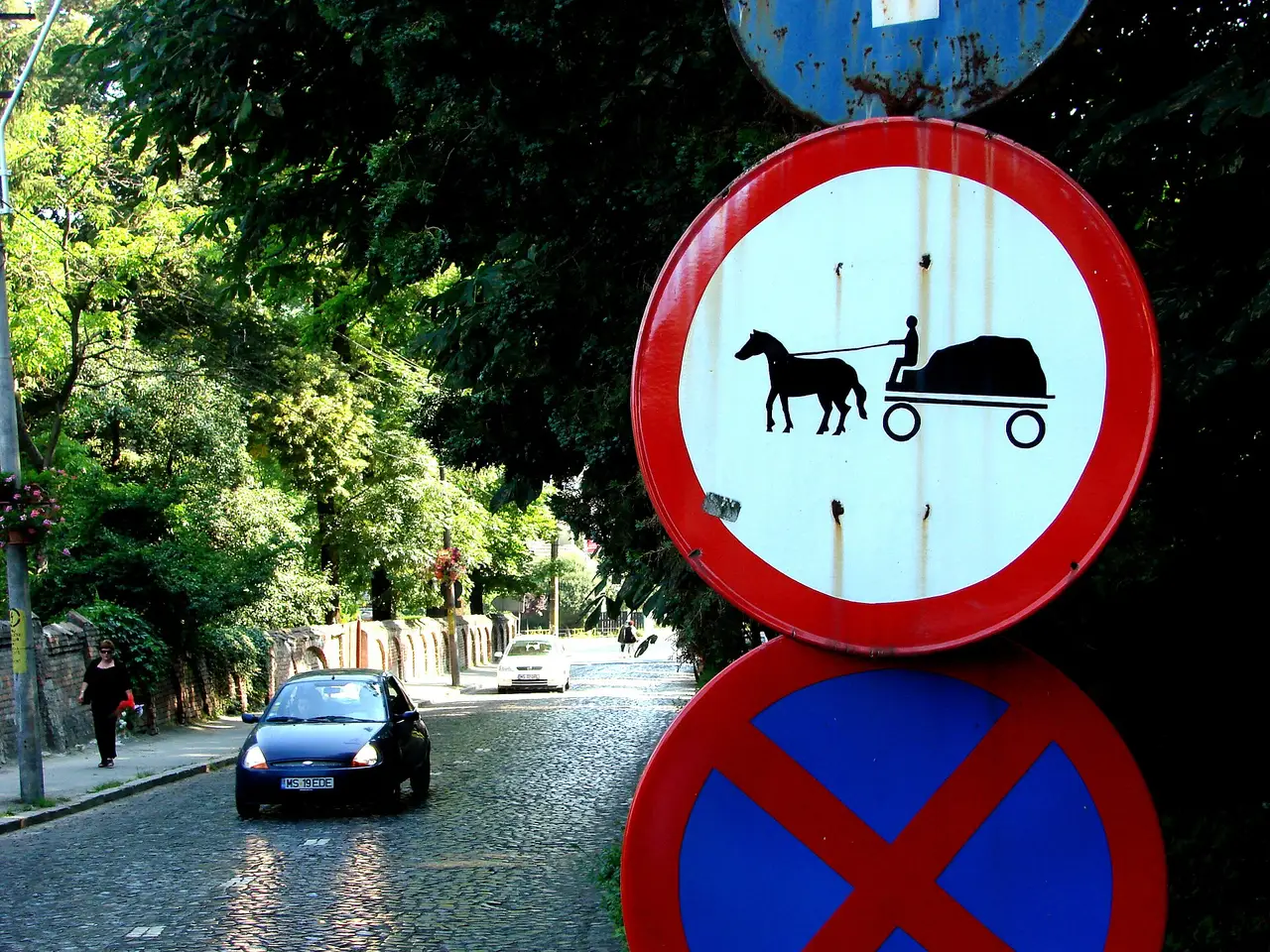
Where Romania has a reputation, it’s for rural driving rather than the rules. On a country road you share the tarmac with things a Western driver rarely sees: a horse cart pulling out of a field, a cyclist with no lights at dusk, a dog, and a Dacia parked half on the shoulder while its owner chats. None of that is dangerous if you expect it and keep your speed down; it becomes dangerous only if you drive a rural DN like it is a motorway. Treat the open road as a place where something slow could appear around the next bend, and Romania drives easily.
What is the rovinieta, and what does it cost in 2026?
The rovinieta is Romania’s electronic road vignette, and it is the single admin task most visitors get wrong. You need it not only on motorways but on all national roads (DN), expressways (DEx), European routes (E) and motorways (A) - which is most of the network outside towns. It’s fully electronic and camera-enforced by number plate; there’s no windscreen sticker to buy and no toll booth to stop at. You’re exempt only on national-road stretches inside the larger cities (municipalities), between their entry and exit signs; in smaller towns and villages the rovinieta still applies. You buy it online, which is another reason to have mobile data via eSIM from day one.
Since 1 October 2026 the vignette has been priced directly in lei and graded by the car’s emission class, on the “polluter pays” principle. That’s the day the road-charging law (Law 226/2023) took over, after its start date had been pushed back more than once, most recently from July by Law 103/2026; before it, the vignette was priced in euro and charged in lei at a rate CNAIR, the national roads company, fixed month by month. The prices aren’t a draft any more: the transport ministry approved them by Order 888 of 22 September 2026, published in the Monitorul Oficial on 25 September, for every vignette whose validity starts on 1 October 2026 or later. For a car they are:
- Euro VI (what almost every rental is): 22 lei for 1 day, 30 for 10 days, 48 for 30 days, 76 for 60 days, 254 for a year.
- Electric: 20 / 27 / 43 / 68 / 228 lei for the same periods. The May draft had put electric cars on the Euro VI level; the final order gives them their own, cheaper column.
- Euro IV-V: 26 / 35 / 55 / 87 / 292 lei.
- Euro III or older: 29 / 39 / 62 / 99 / 330 lei. A car whose emission class can’t be established is charged as Euro 0, so it pays this highest rate.
The same order indexes these prices to inflation every year, with the new figure applying from 1 January, so the price that counts is the one CNAIR’s etoll.ro or the TollRo app charges on the day you buy. A car vignette bought under the old system stays valid until the date on it, so if your car already has one, you don’t need a new one.
There’s no 7-day vignette for a car, so a week’s trip takes the ten-day one and a fortnight needs the 30-day one: 48 lei for a Euro VI car. In real money that’s loose change. Since 00:00 on 1 October 2026 new vignettes come only through CNAIR’s TollRo system: the etoll.ro portal, the free TollRo app, CNAIR sales points and border crossings, and authorised distributors, who also sell it by SMS, but only for cars registered in Romania and from a Romanian mobile number. The old e-rovinieta portal is gone: when we checked on 2 October 2026, erovinieta.ro simply forwarded to portal.etoll.ro. If you drive in from abroad, the border post sells it too, but sorting it in the app before you set off is the calmer option. Driving without a valid one risks a fine of two to four times the price of a 12-month vignette, which for a Euro VI car (254 lei a year) comes to 508 to 1,016 lei. Because it’s camera-enforced, you can’t talk your way out of it at the roadside.
The one thing that saves most travellers: rental cars usually come with the rovinieta already included. Don’t assume it - it varies by supplier - but do ask at the counter, and if it is included you can forget the whole subject. One catch: the rovinieta covers Romania only. If you plan to drive across the Danube to Bulgaria you need a separate Bulgarian e-vignette too, which our Bucharest to Sofia guide walks through along with the rental cross-border rules and the Giurgiu-Ruse bridge toll: each country used to charge for its own direction, but Romania dropped its toll on 1 October 2026 along with its other Danube bridge tolls, so only Bulgaria’s fee as you leave Ruse is left.
How fast can you go, and how strict are the fines?
Speed limits for a car are 50 km/h in built-up areas, 90 on open national roads (100 on some European-grade DN where signed), 120 on expressways and 130 on motorways. The mountain passes are signed far lower - obey the plate on the bend, not the national-road default.
One rule to know if you hold a licence issued less than a year ago: novice drivers must go 20 km/h below the limit outside towns (so 70 on the open road, 110 on the motorway) and 30 in town. Most rental firms won’t hand a car to an under-one-year driver anyway, but it’s the law if you qualify.
Enforcement is by fixed and mobile camera, and it’s real. Speeding runs on a points system - the fine point rose to 216.25 lei on 1 July 2026 (it’s set at 5% of the minimum wage, which went up that day) - and the penalty climbs with how far over you were. The part that stings is not the cash but the licence: going more than 50 km/h over the limit brings a 90-day suspension, and more than 70 over a 120-day one. Two more rules foreigners forget: handheld phones are banned (hands-free is fine), and seatbelts are compulsory front and rear, with child seats mandatory. Overtaking on a solid line is heavily penalised and, on a two-lane DN, genuinely dangerous.
The zero-alcohol rule you cannot bend
This one deserves its own line because the tolerance isn’t low, it is zero: 0.0. There is no “one small beer with lunch” allowance, for any driver, professional or not. Being over the limit at all is a contravention in the top fine class (9-20 penalty points, so roughly 1,946 to 4,325 lei after the July 2026 point rise) plus a licence suspension of around 90 days; above 0.80 g/l in the blood it stops being a fine and becomes a criminal offence with prosecution and a possible prison sentence. The practical rule is the simple one: if you are driving, you don’t drink, full stop. If you want the wine with dinner, that’s a night to take a Bolt: our Bucharest nightlife guide assumes you are not driving home.
Do you need winter tyres, and when?
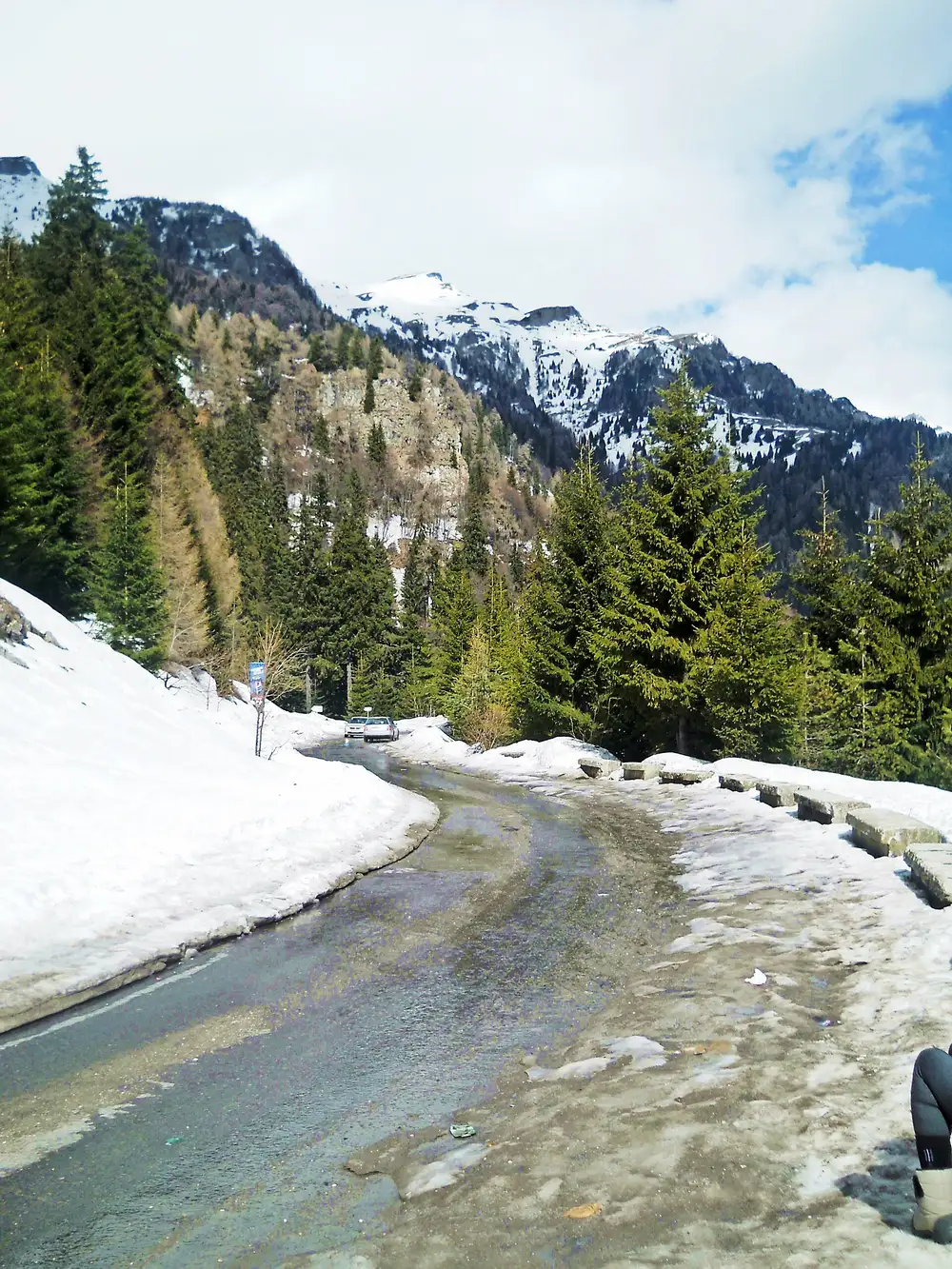
Yes, in the colder half of the year, but the law itself is written around road conditions rather than the calendar - Romania’s traffic code (OUG 195/2002) requires winter tyres whenever a public road is covered with snow, ice or slush, full stop, with no fixed start or end date. In practice, treat 1 November to 31 March as the safe window to have proper winter rubber fitted, because Carpathian weather turns fast, the police can and do check, and “it wasn’t officially winter yet” isn’t a defence. The tyres must carry the M+S mark and/or the Alpine (three-peak) symbol, be fitted on all wheels, and driving on summer tyres in winter conditions is a top-class offence, 9-20 penalty points (about 1,946 to 4,325 lei at the July 2026 point value) - and the police can seize your registration document until you prove you have changed them.
If you are renting over winter, the car should already be on winter tyres - but confirm it at pickup rather than discovering bald summer tyres on an icy pass. The exclusion that bites here is one from the rental side: standard insurance excess usually does not cover tyres, wheels or the underbody - the three things a snow-hidden pothole ruins - our car rental guide explains that excess and how to cover it.
What are the roads actually like?
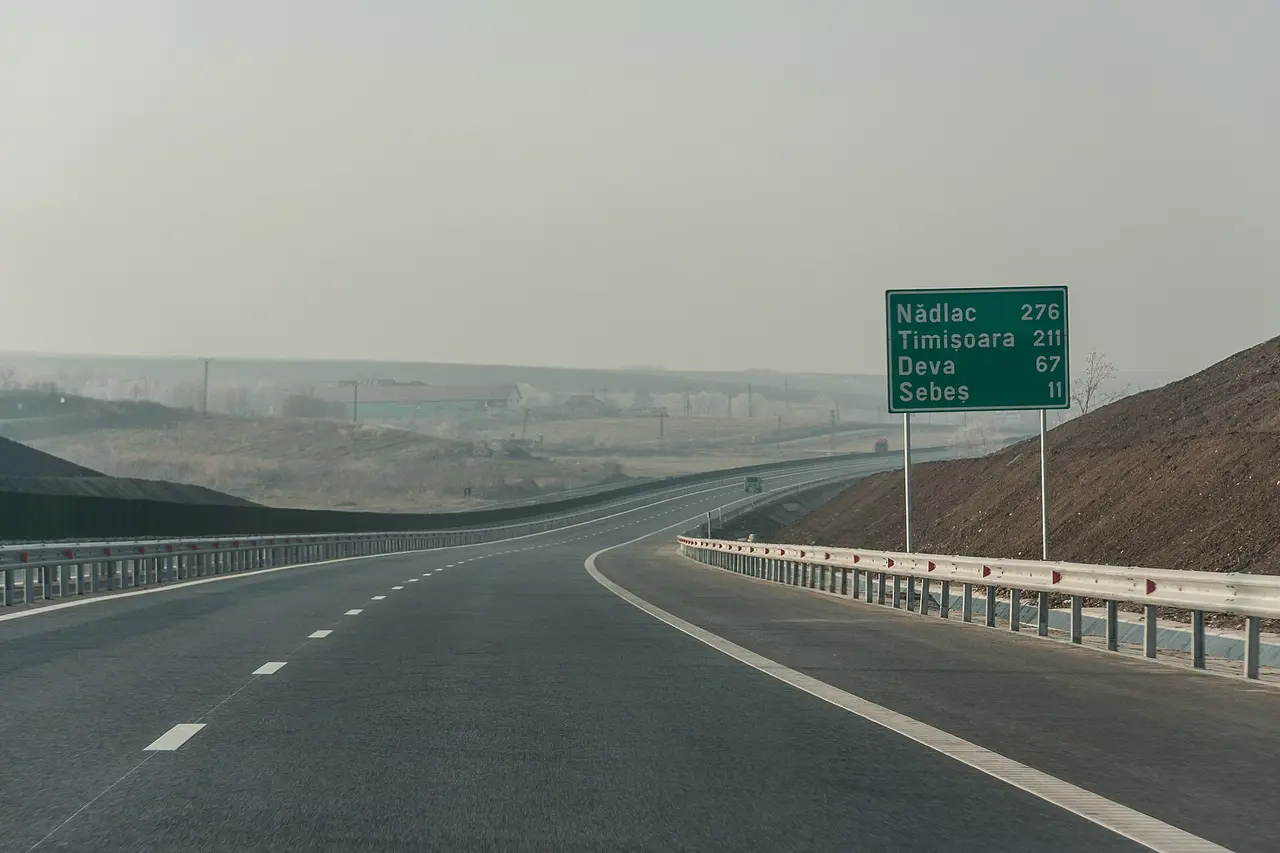
Better than you expect where the motorways exist, and slower than you expect where they do not. Romania has been building fast - a record 200 to 250 km of new motorway is due to open across 2026, mostly the A3 in Transylvania and the A7 in Moldova - but the network is still a work in progress with gaps mid-route. The A1 (west, towards Arad and the Hungarian border), the A2 (Bucharest to the coast) and the finished stretches near Cluj are proper 130 km/h motorways. The A2 is the run most visitors drive, and our Bucharest to Constanta guide covers it alongside the train and bus, with where to stay in Constanta at the other end. On the long inland hauls the maths is less obvious: Bucharest to Cluj and Bucharest to Sibiu compare the drive against the train and the plane.
The catch every road-tripper meets is the middle. There’s still no continuous motorway between Bucharest and Brasov: the A3 crossing of the Carpathians over the Prahova Valley is unbuilt, so through traffic funnels onto the two-lane DN1. On a summer Friday evening heading up, and a Sunday afternoon coming back to Bucharest, that road crawls - budget far more time than the distance suggests, or travel at odd hours. It’s the single biggest timing trap in Romanian driving, and it is worth planning your castle days around.
Fuel is easy and cheaper than the West because Romania uses the leu, not the euro: in early August 2026, petrol 95 runs around 9.40 lei a litre and diesel around 10.60-10.80, and prices move weekly. Petrom, OMV, Rompetrol and MOL stations line the A1 and DN1, but thin out badly on the high passes - fill the tank in the last town below the Transfagarasan or Transalpina, because there’s no petrol at the top. Those two roads have their own timing quirks; the Transfagarasan guide covers when it actually opens. Where a car stops being optional is the north: the wooden churches and back lanes of our Maramures loop route don’t work on public transport. Where it earns you nothing is the Danube Delta, because the roads run out at Tulcea. The full picture across modes is in our transport section.
What must your car carry, and what do you show the police?
By law your car must have two warning triangles, a first-aid kit and a working fire extinguisher; a hi-vis vest is legally required only for vehicles over 3.5 tonnes, though carrying one is sensible. A rental will normally have the mandatory kit in the boot - glance in and check while you’re still on the lot. Miss any of it and the fine runs to a few hundred lei.
If you’re stopped, have ready your driving licence, ID or passport, the vehicle registration and the insurance (RCA), plus proof the rovinieta is paid (it’s on the plate, so this is automatic). The emergency number is 112 for police, ambulance or fire, and it works in English. Dipped headlights or daytime running lights, remember, must be on outside built-up areas in daylight - a small thing that catches out first-timers used to driving with lights off by day.
Can foreigners drive on their own licence?
If you hold an EU or EEA licence, yes - drive as you are. For a non-EU licence the picture improved recently: under a 2025 government decision (No. 795/2025, in force since around late September 2025), citizens of a listed set of countries - including the US, Canada, Australia and New Zealand - may drive on their valid national licence plus passport for up to six months, no International Driving Permit needed (Chile is three months). Because this is a rules-can-change area and the country list is set by decree, check your own embassy’s current advice, and note that individual rental desks may still ask for an IDP as their own house policy. Our car rental guide goes into the licence and IDP detail from the renting side, and it is worth checking that your travel insurance covers you as a driver before you sign for the excess waiver at the desk.
The short version
Drive on the right, keep to a genuine zero on alcohol, and buy or confirm the rovinieta (30 lei for ten days on a Euro VI car, sold since 1 October 2026 on etoll.ro and in the TollRo app; camera-enforced everywhere except national-road stretches inside the larger cities). Fit winter tyres whenever the road is snow-, ice- or slush-covered - treat 1 November to 31 March as the safe window, keep your lights on outside towns, and treat rural DN roads as places where a horse cart could be around the bend. Above all, plan around the missing Bucharest-Brasov motorway and the DN1 weekend jams. Do that and Romania is one of the more enjoyable countries in Europe to drive - the roads are the point, from a 7-day loop to a single day on a mountain pass.
Photos
Admission and opening hours
- Admission price
- Rovinieta (electronic road vignette) for a car. Since 1 October 2026, lei prices by emission class approved by transport ministry Order 888/2026 (Monitorul Oficial 818 of 25.09.2026), for 1 day / 10 days / 30 days / 60 days / 12 months: Euro VI 22 / 30 / 48 / 76 / 254 lei, electric 20 / 27 / 43 / 68 / 228 lei, Euro IV-V 26 / 35 / 55 / 87 / 292 lei, Euro III or older 29 / 39 / 62 / 99 / 330 lei. No 7-day option for cars. Fuel early August 2026: petrol 95 around 9.40 lei a litre, diesel around 10.60-10.80 (peco-online.ro live tracker; prices rose over the summer).
- Opening hours
- Winter tyres are required whenever the road is covered with snow, ice or slush - the rule is condition-based, not calendar-based, but treat 1 November to 31 March as the safe window to have them fitted. Dipped headlights or daytime running lights are compulsory outside built-up areas, day and night.
Prices, fines and rules change and are enforced by camera. Since 1 October 2026 the rovinieta is sold only through CNAIR's TollRo system: the etoll.ro portal (the old erovinieta.ro address forwards there), the TollRo app, authorised distributors (by SMS only for cars with Romanian plates and from a Romanian mobile number), CNAIR sales points and border crossings. A rental usually includes it, but confirm at pickup. On 2 October 2026 rovinieta prices, sales channels and the fine were checked with CNAIR's etoll.ro portal and the texts of the law and Order 888, other rules in July 2026 - on the day you buy, the price CNAIR's sales channel charges is the one that counts.
Details checked: October 2, 2026
Read also

Transport · 14 min read
Bucharest to Budapest: Night Train, Bus & Flights
Verified · September 4, 2026Bucharest to Budapest 2026: CFR night train from 27 EUR, FlixBus from 36.98 EUR in 13h, or a 1h45 flight. Fares, times, border, Oradea stop.

Transport · 9 min read
Bucharest to Sinaia Train 2026: ~1.5h, from 32.5 lei
Verified · August 31, 2026Bucharest to Sinaia by train in about 1.5 hours: fares from 32.5 lei, Peles timing and its 16:00 last entry, and when a transfer wins.

Transport · 10 min read
Cluj to Brasov 2026: Bus 3h40 from 81 lei
Verified · August 28, 2026Cluj-Napoca to Brasov: bus about 3h40 from 81 lei, CFR InterCity about 6h35 from 126,50 lei, drive 275 km in about 4h20. Check before you go.

Transport · 9 min read
Brasov Airport (GHV): Flights & Getting to Town
Verified · August 21, 2026Brasov-Ghimbav (GHV) opened in 2023: who flies, the RATBV A1 bus at 5 lei, taxi and transfers into town. Check the live board.