
Things to Do in Brasov: Complete Guide
What to do in Brasov: Council Square, the Black Church, Rope Street and Tampa, with real ticket prices in lei and how to get there from Bucharest.
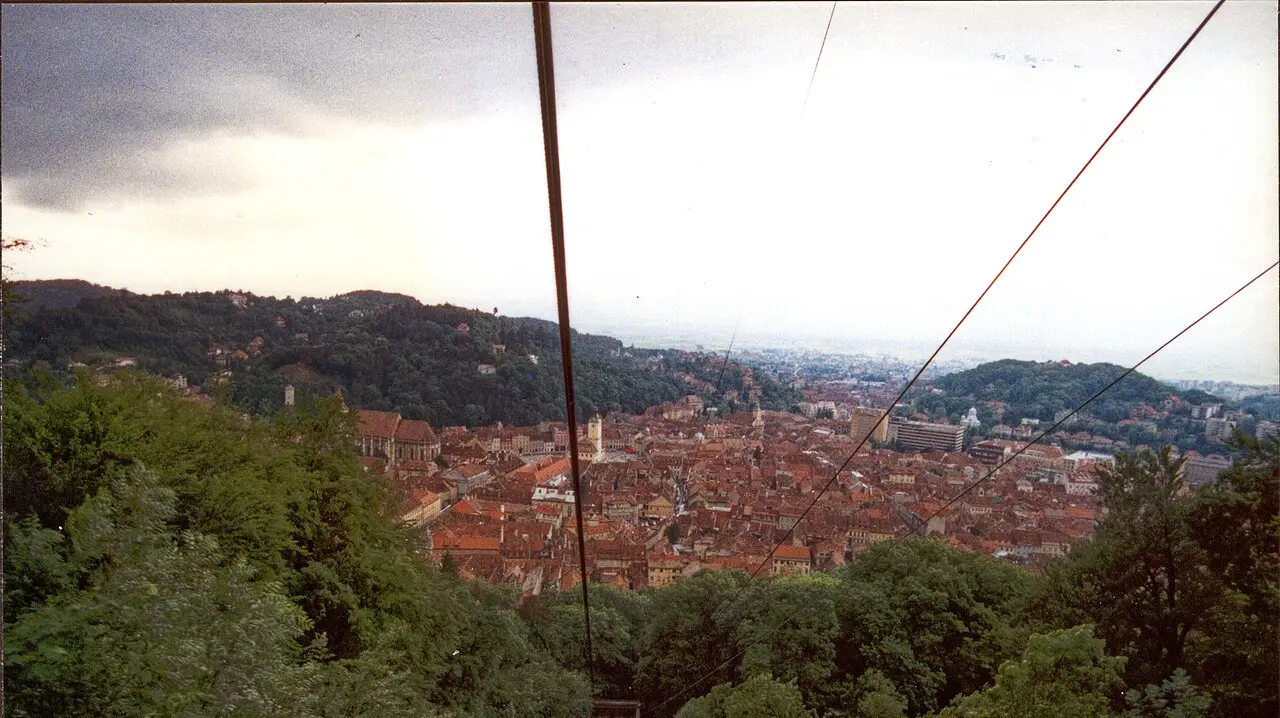
Brasov rewards a slow day and a half in the old town plus a day for the castles nearby. The core sights sit inside a ten-minute walk of one square: stand in Piata Sfatului (Council Square), step into the Black Church, squeeze down Rope Street, and ride or hike up Tampa for the view over the red roofs. Everything below is grouped so you can walk it in order, with real ticket prices in lei and the practical details most guides skip.
The short version: base yourself in the old town (our where to stay in Brasov guide breaks down the areas) so you can do the centre on foot, give the Black Church and the cable car a morning, and keep a full day free for Bran and Peles by car or bus. Brasov sits 166 km north of Bucharest, about two and a half hours by direct train, and Romania uses the leu, not the euro, so carry a little cash for the bus and the small entry fees.
What are the top things to do in Brasov?
If you’ve one full day, the shortlist is four things, all in the old town: Council Square, the Black Church, Rope Street and Tampa. They cluster so tightly that you can see all four in an unhurried day with time for lunch and coffee in between. Add Catherine’s Gate and a wander into the Schei quarter if you have longer, and save a second day for the castles that everyone actually comes to Transylvania for.
Brasov itself is a former Saxon town. The Teutonic Knights fortified this corner of the Carpathians from 1211, the Transylvanian Saxons built it into a rich trading city on the road between Austria and the Ottoman lands, and they called it Kronstadt, “Crown City”. That German-Saxon backbone is what you’re looking at: the guild square, the fortress church, the medieval gates and towers. Knowing that turns a pretty old town into a readable one.
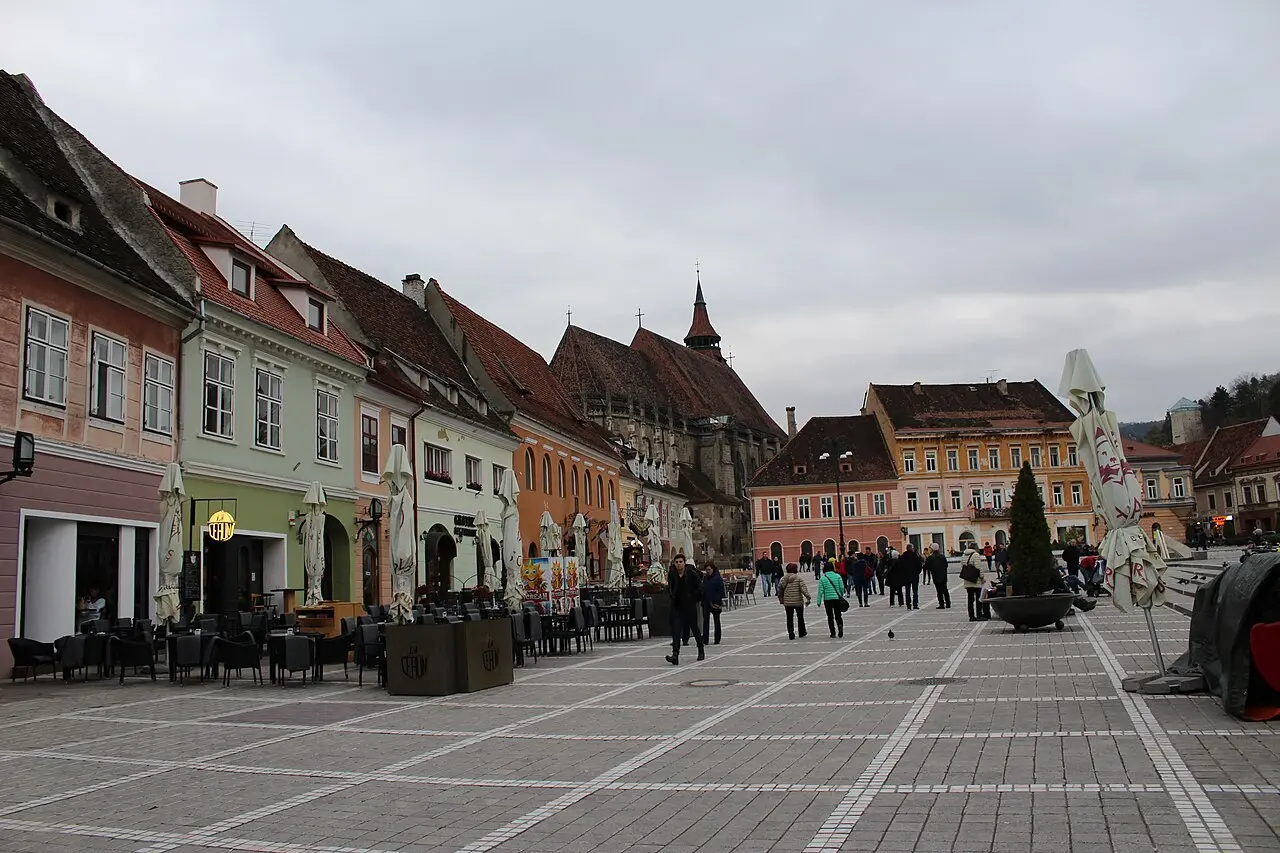
What is there to see on Council Square (Piata Sfatului)?
Start here, because everything else radiates from it. Piata Sfatului was the marketplace and the heart of medieval Brasov, and the mayor’s office stood on this square for more than five hundred years. It’s ringed by pastel merchant houses, and today it’s the town’s living room: cafe terraces spill across the cobbles, and it’s the natural spot for a first coffee before the walking starts. For a full meal, though, our best food in Brasov guide steers you a street off the square, where the kitchens are better and the bill smaller.
The building in the middle is the Council House (Casa Sfatului). A structure has stood on this exact spot since at least 1420, when the district assembly and the furriers’ guild agreed to build a chamber for justice and town business above the guild’s vault. The tower on top earned the nickname “Trumpeter’s Tower”: from the early 1600s a trumpeter stood up there to sound the hour over the roofs. The Council House now holds the Brasov County History Museum, so you can go inside for the town’s story rather than just photographing the facade.
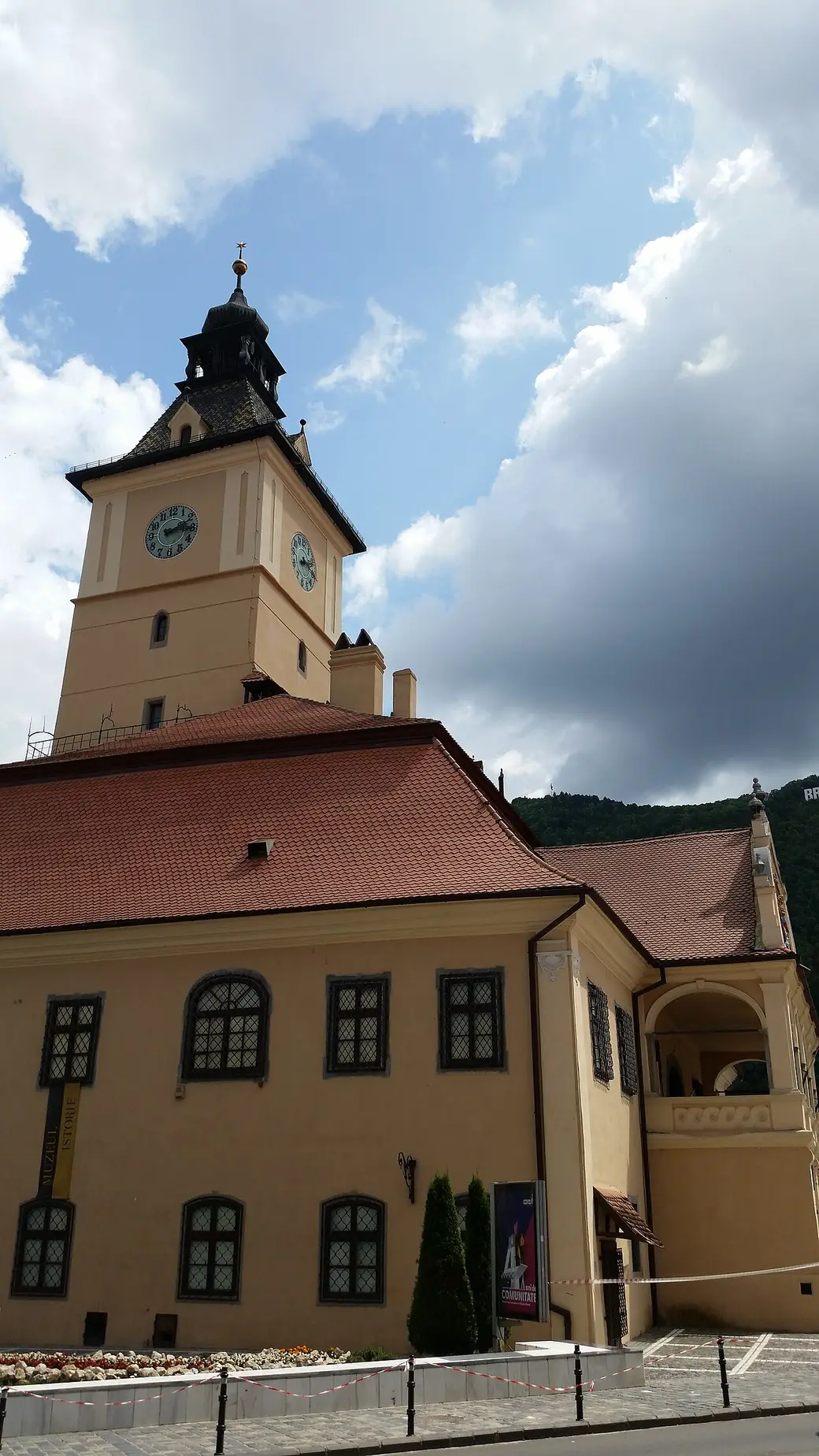
One practical tip: the square is at its best early or late. By late morning in summer the terraces are full and the tour groups arrive, so if you want the clean, quiet version for photos, come before nine or after the day-trippers leave.
Why is the Black Church worth going inside?
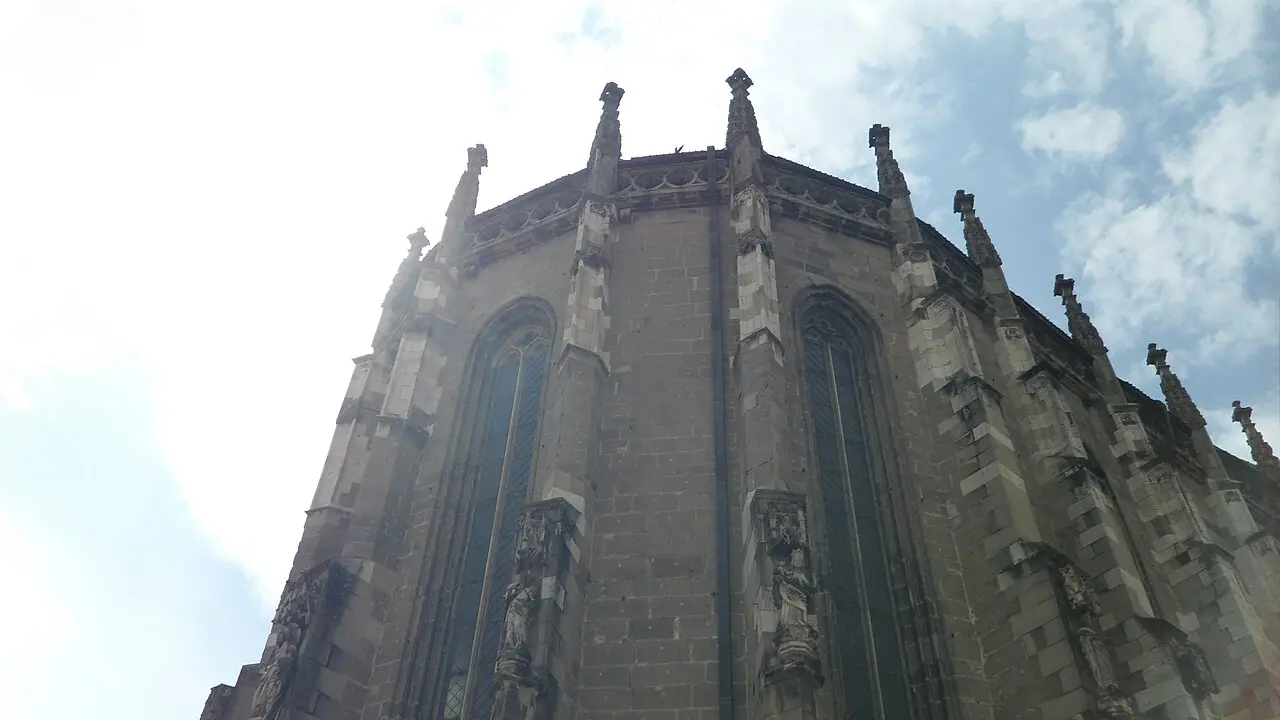
The Black Church (Biserica Neagra) is the single most important building in town, and it is worth paying to go in rather than only circling it. It’s the largest Gothic church between Vienna and Istanbul: roughly 89 metres long, with the vaulted ceiling about 42 metres up. The Saxon community built it between 1385 and 1477, and it has been the main Lutheran church here ever since.
The name comes from disaster. In 1689 a great fire, set off during a Habsburg bombardment, tore through Brasov and scorched the church so badly that its pale limestone walls turned black with smoke; the blaze also brought down the Gothic spire, which is why the tower looks stubbier than the church’s scale would suggest. The ticket is justified by what is inside. First, the organ: a huge Buchholz instrument from 1836-1839 with roughly 4,000 pipes, still played at summer concerts. Second, and more unusual, the walls and galleries are hung with more than a hundred Anatolian carpets, brought back by Saxon merchants from the Ottoman trade over centuries - one of the richest such collections anywhere, and not something you expect in a Lutheran church.
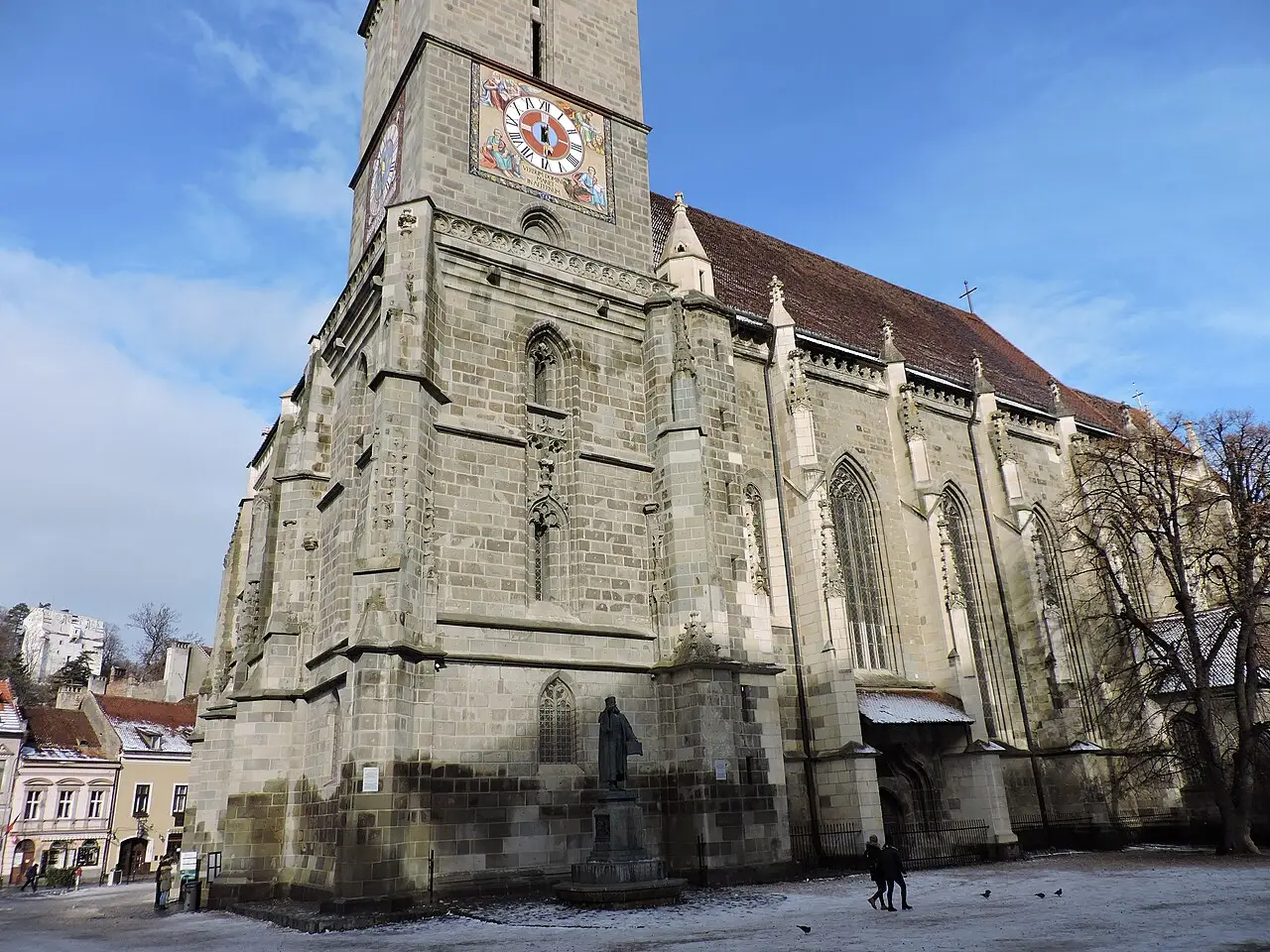
On the practical side: the standard adult ticket is 30 lei, with reductions to 25 lei for students and pensioners and 20 lei for pupils, and children under seven go free (checked July 2026 on the official site). In summer (April to mid-October) it opens Tuesday to Saturday 10:00-19:00 and Sunday and Monday from noon, with shorter winter hours. One quirk to know: tickets aren’t sold inside the church but at the tourist information point across the square by the main entrance. Confirm the current program on bisericaneagra.ro, since both prices and hours shift with the season.
Is Rope Street (Strada Sforii) worth the detour?
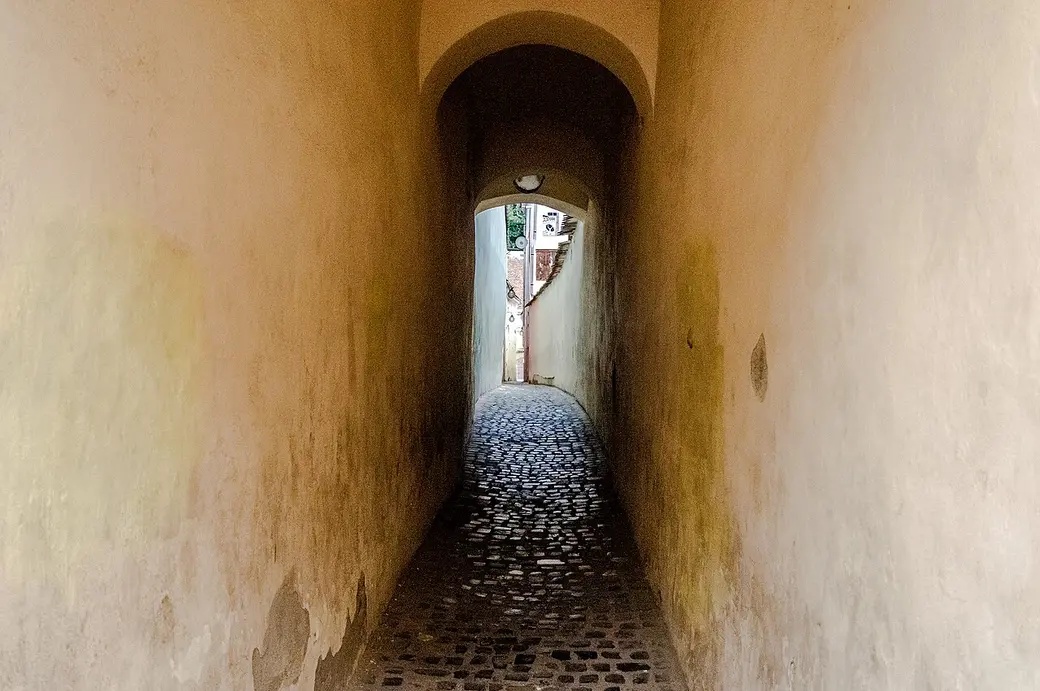
Rope Street (Strada Sforii) is a two-minute walk off the Black Church, and it rewards the short detour if you set expectations right: it’s a novelty, not a highlight, and it takes five minutes to enjoy. The street is 80 metres long and its width wobbles between 111 and 135 centimetres, so in places you can touch both walls at once. The name comes from the ropemakers whose workshops once stood nearby, and it began life as a fire-service corridor between two rows of houses, first noted in 17th-century records.
You’ll see it billed as “the narrowest street in Europe”. That’s a stretch - a handful are narrower, including the record-holding Spreuerhofstrasse in Germany - so treat it as one of the narrowest, walk through, take the obligatory photo where you touch both sides, and move on. It’s genuinely fun for two minutes, and it links two parts of the old town, so it costs you nothing to include.
Should you take the Tampa cable car or hike up?
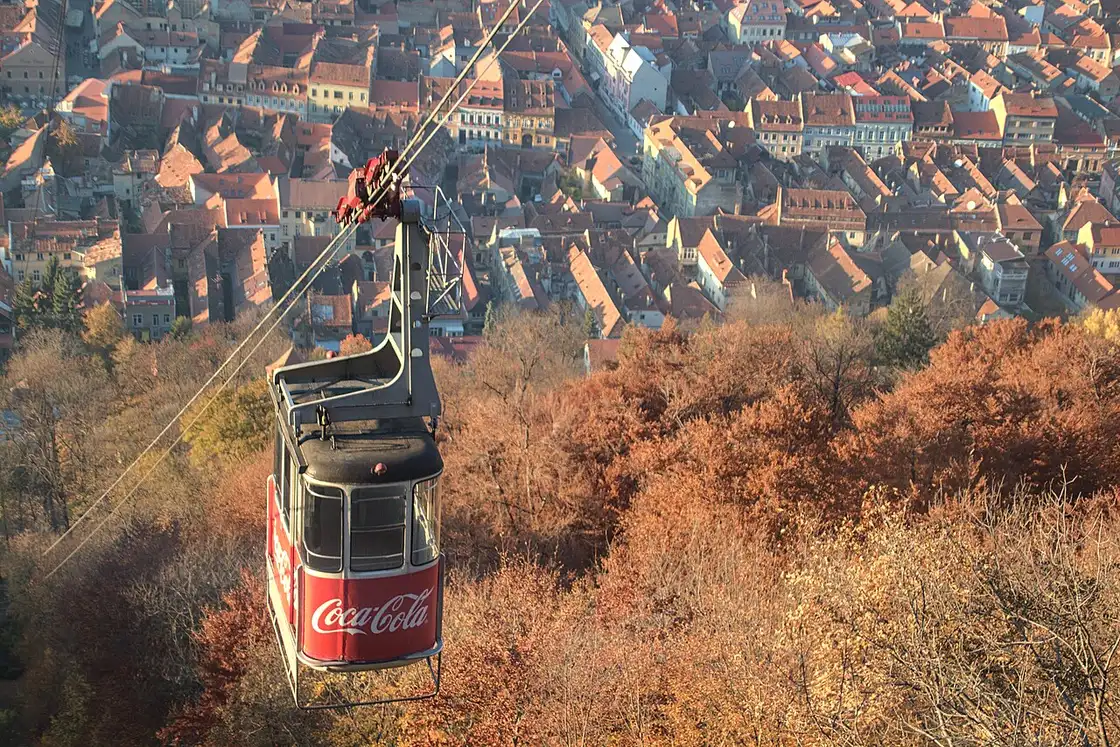
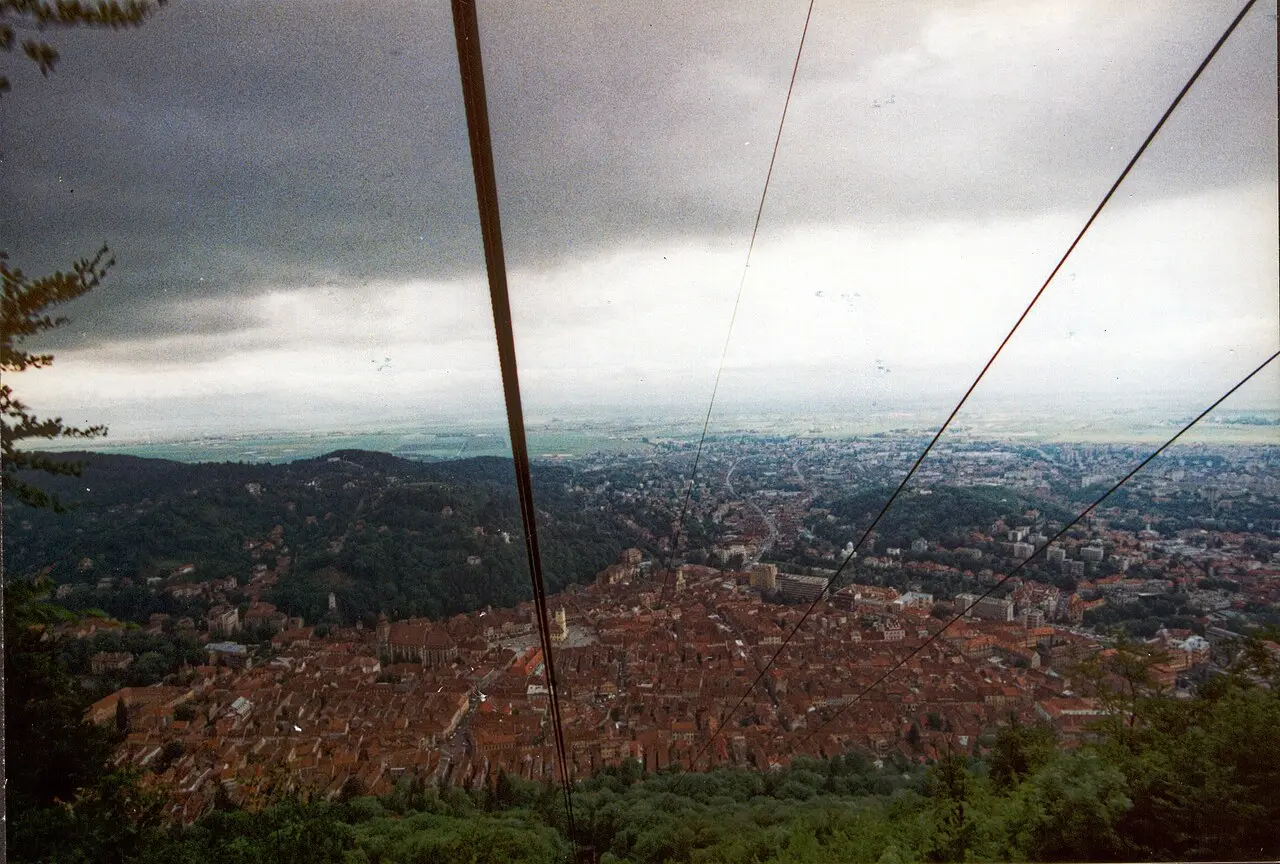
Tampa is the forested mountain that rises almost straight out of the old town, about 960 metres high and nearly 400 metres above the streets, with the Hollywood-style BRASOV letters spelled out across its slope. Getting to the top is the best view in the city, and you have two ways up: ride or walk.
The cable car (telecabina) is the quick option - a 573-metre run that takes a little over two minutes and drops you near the top with the panorama laid out below. A return ticket runs around 45 lei; check the current fare and running days at the lower station, since the schedule and price change. The walk is free and takes about an hour on foot: the main route is the Serpentine trail (red triangle), a set of switchbacks cut back in 1837, or the steeper Gabony’s stairs (yellow triangle). My steer: hike up if the weather is good and you have decent shoes, since the forest climb is pleasant and the view is the same, and save the cable car for the way down or a hot day. Either way, the reward is the full sweep of the red roofs and the Black Church from above, which is the shot on every Brasov postcard.
There’s history up there too, not just a viewpoint. The ridge once held the Brassovia fortress, one of the seven citadels that gave Transylvania its German name Siebenbürgen, “seven fortresses”, thought to date to the Teutonic Knights around 1212. Most of the mountain is now a nature reserve, home to bears and, oddly, more than a third of all the butterfly species in Romania - so stick to the marked trails. For rescued bears you can actually visit, the Libearty bear sanctuary near Zarnesti runs morning tours, an easy half day out.
What else is worth seeing in the old town?
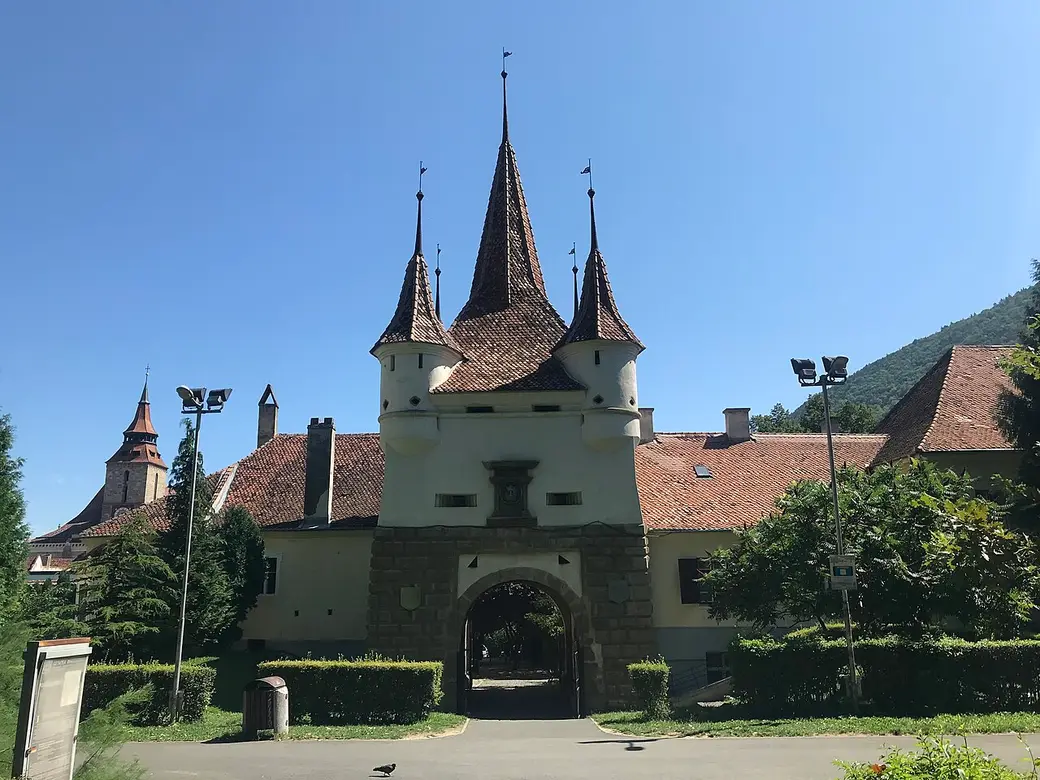
With more time, walk the medieval edges. Catherine’s Gate (Poarta Ecaterinei), built by the tailors’ guild in 1559, is the only original city gate still standing, easy to spot by the four little pointed turrets around its tower. Those turrets were not decoration: in Transylvanian towns they signalled that the city held the right of judgment, including the death penalty. The gate marks the way into the Schei quarter, and there’s a hard social history behind it. Under Saxon rule, Romanians weren’t allowed to own property inside the walls, so they settled outside in Schei and entered the fortified town through this gate. Walk through it and up into Schei for a completely different, quieter neighbourhood, with the Orthodox St Nicholas Church and the first Romanian-language school as anchors.
Round it out with the town’s defences: the surviving stretches of wall, and the White Tower and Black Tower on the slopes above, both short uphill walks that give you another angle over the roofs. None of these needs a ticket beyond the odd small fee, and together they fill a relaxed second morning before you head out to the castles.
How do you get to Brasov, and how long do you need?
Give Brasov itself a day and a half to two days: one day for the old town on foot (Council Square, Black Church, Rope Street, Tampa), a half-day for Catherine’s Gate, Schei and the towers, and a separate full day for the castles. The town is the natural base for all of it, and if you’re torn between here and Sibiu, our Sibiu vs Brasov guide weighs the two. Once you do move west, train, bus and car are in Brasov to Sibiu. Coming down from Cluj-Napoca instead, Cluj to Brasov compares bus, train and car on that longer Transylvania hop.
From Bucharest, the train is the easy choice: it’s a direct run of roughly two and a half hours (the fastest are a bit over two), with around thirty departures a day, and a second-class seat is on the order of 60 lei, though fares vary, so check the current times and price on the national railway (CFR). Our Bucharest to Brasov guide compares the train, bus and car in detail if you’re weighing up the options. Landing at Otopeni with Brasov as night one? You can skip the capital entirely - shared airport shuttles and private transfers run OTP to Brasov in about 2 to 3 hours; the airport last-mile (and that Brasov skip) is spelled out in Bucharest airport to the city. Since 2023 Brasov also has its own airport at Ghimbav, the first new airport built in Romania in about fifty years, now served by Wizz Air and a handful of smaller carriers from a growing list of European cities - worth checking if you’re flying in specifically for Transylvania rather than starting in the capital. If you’re giving Bucharest its own days on either side, our Bucharest guide covers the shortlist there.
For where to stay, book a room in or just below the old town so you can walk to everything on day one; the centre fills up on summer weekends, so compare hotels in central Brasov early.
What day trips should you plan from Brasov?
This is why Brasov works as a base: three of Romania’s headline castles sit within an hour. Bran Castle, marketed as Dracula’s castle, is about 30 km south and reachable by a local bus from Brasov’s Bus Station 2 (roughly 50 minutes, 13 to 15 lei) or by car; our full Bran Castle guide covers the ticket tiers, the Dracula story and the Queen Marie history that most visitors find more interesting than the vampire myth. Rasnov fortress sits on the same road, and it is worth a stop in its own right rather than a photo from the car park: our Rasnov fortress guide covers the funicular and the ticket, and the Rasnov and Bran day trip pairs the two in a single day. Peles Castle in Sinaia, the opulent 19th-century royal palace, is the one many people rate above Bran, and Peles to Bran has the connections if you want both in one go. Further out, the walled Saxon town of Sighisoara is about 120 km northwest and makes an easy onward stop if you’re carrying on across Transylvania rather than a same-day round trip, and so does Sibiu, a couple of hours west. If fortified churches interest you more than another castle, our Saxon villages route starts the car right here in Brasov and turns that onward drive into a two-day loop through Viscri, Rupea, Biertan and Malancrav. The closest UNESCO fortress-church is Prejmer, 15 km east.
The strongest plan by far is to combine them in a single day. With a car you can loop Bran, Rasnov and Peles and be back in Brasov by evening; without one, the Brasov-Bran bus handles the Dracula castle but the wider loop is a stretch by public transport. If you would rather not stitch together timetables, a rental car for the day pays off here, or a fixed-price private transfer covers the run from Bucharest or the airport. In winter there’s one more easy day out: skiing at Poiana Brasov, the country’s biggest ski resort, is just 12 km up the hill and reachable on city bus 20 in about 25 minutes. To fold Brasov into a bigger trip, our Romania 7-day itinerary uses the city as a two-night base and threads the castles and the mountains together.
Photos
On the map
The map loads on click - to keep the page lightweight.
The map didn’t load. Check your connection and refresh the page.
Admission and opening hours
- Admission price
- Black Church 30 lei (adults); Tampa cable car about 45 lei return; both cheaper for students and seniors
- Opening hours
- Black Church summer (Apr 1 - Oct 15): Tue-Sat 10:00-19:00, Sun-Mon 12:00-19:00, shorter in winter; closed Jan 1 and Dec 25
Prices and hours change with the season - confirm on the official sites (bisericaneagra.ro) before you go.
Details checked: July 4, 2026
Read also

Cities · 13 min read
Predeal: Romania's Highest Ski Town
Verified · September 3, 2026Predeal sits at 1,030-1,110 m on the Bucharest-Brasov line: Clabucet ski, the town itself, and how it stacks up against Sinaia and Poiana.

Cities · 10 min read
Suceava Travel Guide: Fortress & Bucovina Gateway
Updated · August 25, 2026Things to do in Suceava: Stephen the Great's fortress, the UNESCO Saint John monastery, village museums, and using the city as a base for Bucovina.

Cities · 9 min read
Where to Stay in Sighisoara: Citadel or Lower Town
Verified · August 24, 2026Where to stay in Sighisoara: citadel vs Lower Town, price bands in lei, parking, the medieval festival, and who should sleep inside the walls.

Cities · 11 min read
Where to Stay in Timisoara: Best Areas & Hotels
Verified · August 19, 2026Where to stay in Timisoara: Cetate vs Fabric vs Iosefin vs Circumvalatiunii - who each suits, walk times, prices in lei, and getting in from the airport.