
Transylvania Road Trip: Route, Stops & Driving Times
How to actually drive Transylvania: real leg-by-leg distances and times, the rovinieta, fuel, parking and the Transfagarasan season, Brasov to Sibiu.
A Transylvania road trip is best driven as a compact loop out of Brasov: Bran, Sighisoara, Sibiu and the Transfagarasan, roughly 550-580 km of actual driving over three or four unhurried days. This page is about the driving itself, not what to photograph at each castle: the real distances and times between stops, the vignette you legally need, fuel, parking, and the one seasonal fact that can quietly ruin the plan. For the day-by-day version with sights and bases, see the companion 7-day Romania itinerary.
The version for people in a hurry: rent a car in Brasov, buy nothing at the border because the rental almost always comes with the road vignette, and time the Transfagarasan for July to September, when the high section is reliably open. The legs are short - none of them is more than about two and a half hours - so the driving is easy in principle. The traps are the unglamorous ones: there’s no motorway on the classic Bucharest approach, the mountain pass is shut for half the year, and there is no fuel at the top.
What is the route, leg by leg?
Here are the real driving numbers, not the map’s straight-line distances. Times assume clear conditions; add a buffer for summer weekends and roadworks.
- Brasov to Bran Castle: ~28 km, ~30 min on the DN73 through Rasnov. The shortest leg of the trip.
- Bran to Sighisoara: ~136 km, ~2 h, cutting north-west across the Saxon land.
- Sighisoara to Sibiu: ~92 km, ~1 h 35 on the E60/DN14.
- Sibiu to the foot of the Transfagarasan (Cartisoara): ~50 km, ~1 h.
- The Transfagarasan (DN7C) itself: about 151 km end to end, summit at 2,042 m by Balea Lake, and a genuine full day if you stop for the views.
Drive it clockwise from Brasov and every leg stays under three hours, which is why four days is comfortable and three is doable. If you are starting from Bucharest airport instead, note the gateway leg below - it’s the single most misjudged drive in the country.
Do I need a rovinieta, and does the rental include it?
Yes, you need one, and it covers more than motorways. Romania’s road vignette, the rovinieta, is required on all national roads (the DN network) and expressways and motorways alike - not just the A-roads. Since your whole Transylvania loop runs on DN roads, you’re on vignette-required tarmac almost the entire time. The DN73 to Bran, the DN14 to Sibiu, the DN7C over the pass: all of it needs a valid rovinieta.
The good news for most travellers: rental cars in Romania almost always come with the rovinieta included, so you rarely buy it yourself. Confirm it at pickup rather than assume - ask the desk directly, “is the rovinieta included?” - and you’re covered. If you are driving your own car in from abroad, buy it online before you reach the border: since 1 October 2026 it’s sold through CNAIR’s new TollRo system, on etoll.ro or in the TollRo app (the old erovinieta.ro address now forwards there, and Romanian border crossings sell it too). The vignette is fully electronic, with no sticker. Your plate is registered in the CNAIR database and roadside cameras check it automatically. Since 1 October 2026 a transport ministry order has set the price in lei and scaled it by emission class, so a cleaner car pays less: a passenger car (Category A) with a Euro VI engine pays 30 lei for 10 days, 48 lei for a month and 254 lei for a year, an electric car a little less, and older cars up to 39 for 10 days and 330 a year. There’s no 7-day option for cars, so a week-long trip means the 10-day vignette. Driving without a valid one risks a fine of two to four times the 12-month price: with a Euro VI car’s year at 254 lei, that’s 508 to 1,016 lei. Prices and rules change, so check the price CNAIR charges on the day you buy. This page is about the driving; for the booking side - minimum age, the credit-card deposit, insurance excess and where to pick up - see our guide to renting a car in Romania.
One money note that trips up first-timers: Romania uses the leu (RON), not the euro. It’s in the EU and now fully in Schengen, but not the eurozone, so budget and pay in lei and treat euro figures as a rough guide only.
How bad is the drive up from Bucharest?
This is the part people get wrong. If you fly into Bucharest and drive up to start the loop, you take the DN1 up the Prahova Valley - about 171 km to Brasov, and in clear traffic roughly two and a half to three hours. The trap is that there is still no motorway on this stretch. The long-promised A3 Comarnic-Brasov motorway remains unbuilt as of mid-2026, stuck in the feasibility stage, so the two-lane DN1 through the mountains carries all of it: trucks, tour buses, and every Bucharest family heading to the hills.
The practical consequence is timing. The DN1 clogs badly on summer weekends, and the worst of it’s Sunday afternoon and evening southbound, when the capital drives home. Head up on a weekday morning if you can, or accept a slow crawl through Comarnic and Busteni. If you would rather skip the drive entirely on arrival day, a fixed-price airport transfer to Brasov takes the stress out of a jet-lagged first evening, and you pick up the car the next morning. When you do rent, Localrent lists local suppliers in Brasov and Sibiu, which is where a Transylvania loop actually starts and ends - handy if you want a one-way pickup rather than dragging back to Bucharest.
Driving the Transfagarasan: the season is everything
The Transfagarasan is the reason to make this a driving trip rather than a train tour, and it comes with one hard rule: the high section is closed for roughly half the year. Snow shuts the alpine stretch between Balea Cascada in the north and Piscu Negru in the south from autumn until early summer. It typically opens in June and, by rule, can be shut any day from 20 October, depending on the weather, though the exact dates shift every year - in 2026 the road authority reopened the top on 12 June, and in 2024 the pass stayed open until 12 November. Don’t trust a fixed date. Check the CNAIR or DRDP Brasov road authority first, and if you’re travelling in June or after mid-September, have a backup. For the pass on its own - the season mechanics in detail, what you see stop by stop, the cable car when the top is shut and how to drive the hairpins - see our dedicated Transfagarasan driving guide.
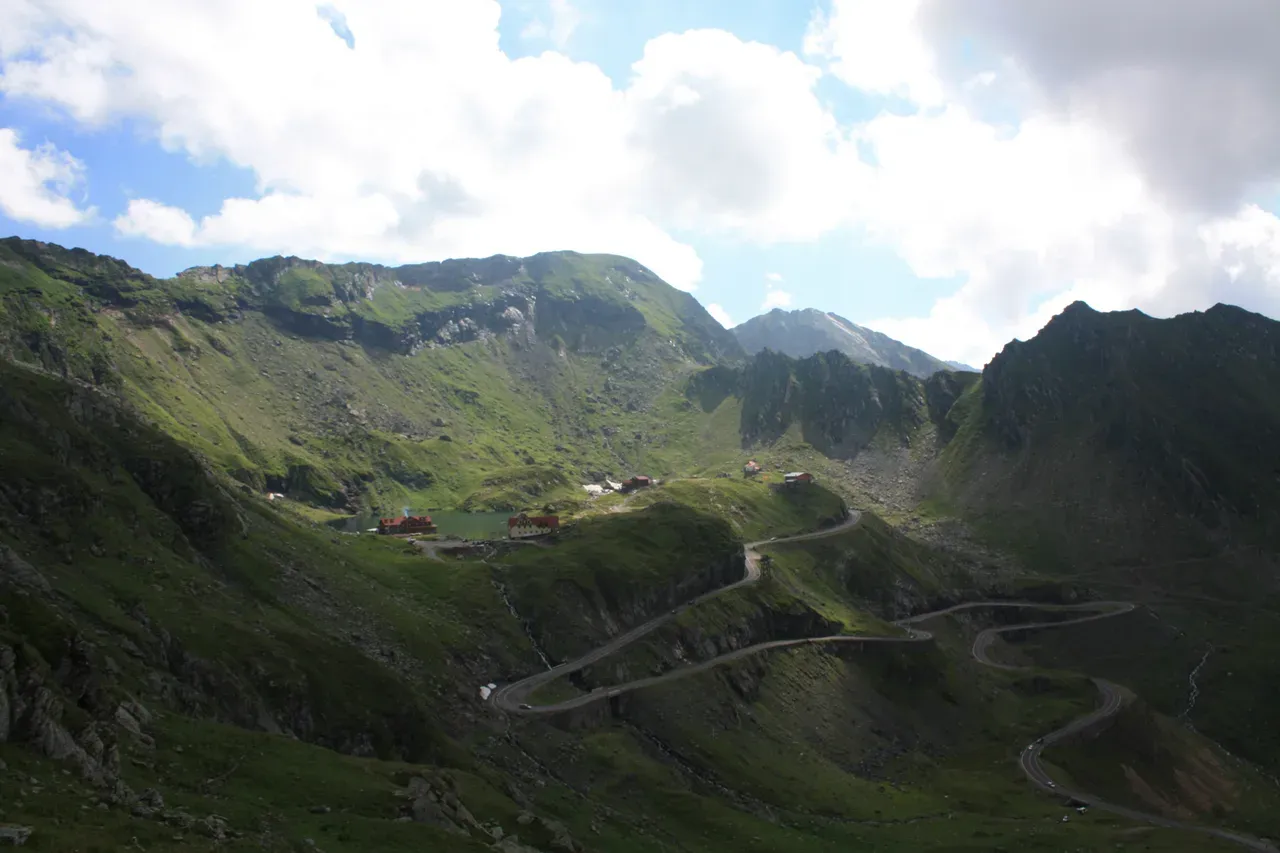
When it is open, the pass runs daily between 7:00 and 21:00, and the gates close at those times, so an early start beats the coach traffic to the top. Drivers come unstuck on two counts. First, fuel: there’s nothing at the summit, so fill the tank in Sibiu or at the latest in Cartisoara at the foot of the climb - the next reliable pumps are a long way down the other side. Second, speed: forget the national 90 km/h limit up here. The switchbacks are signed far lower, often 40 km/h or less, and you’ll share them with cyclists grinding uphill, pedestrians wandering across for photos, and the occasional bear near the treeline. Drive it slowly on purpose; the whole point is the road, not the finish line.
The rest of the loop: Bran, Sighisoara, Sibiu logistics
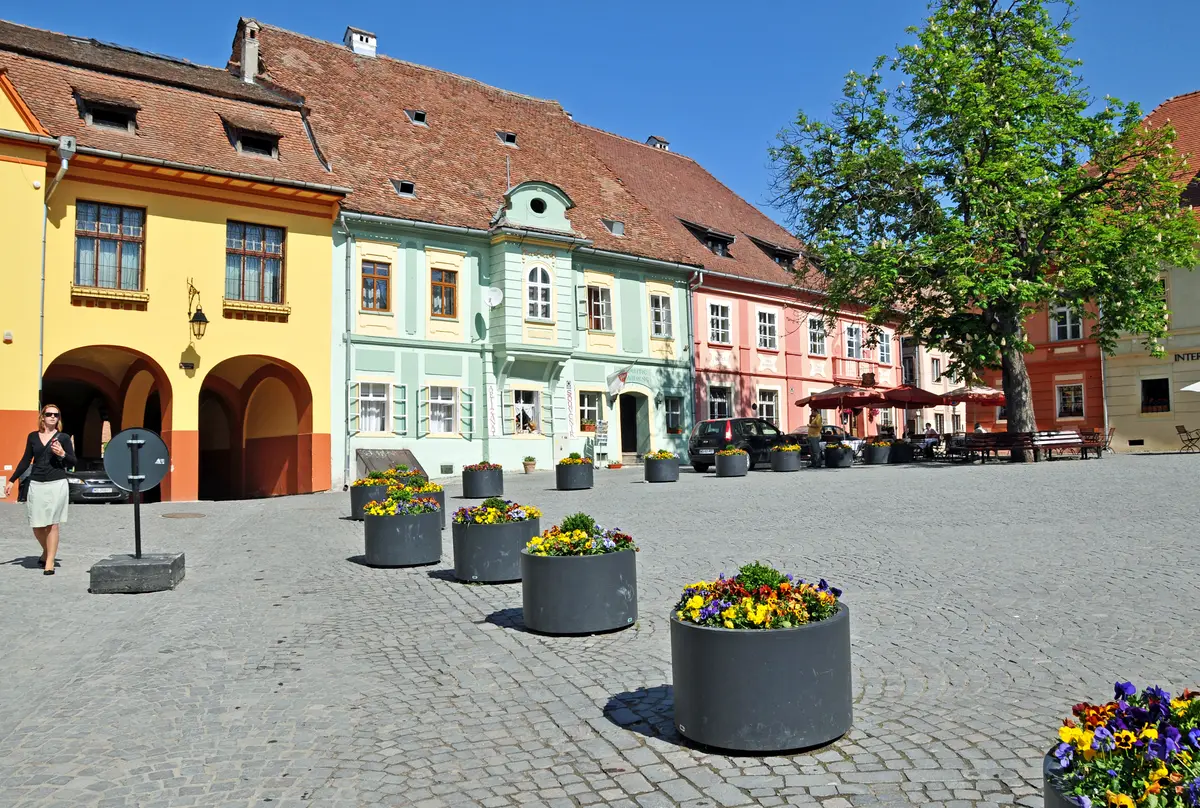
Between the headline drives, the mechanics are simple, and the smart moves are all about where you leave the car. At Bran, park in one of the paid lots a short walk below the castle rather than circling the village; the castle detail, tickets and queue-skipping are covered in our Bran Castle guide, so here it is enough to say buy tickets online and arrive early. At Sighisoara, the citadel is a walled hill town with steep, cobbled lanes - leave the car in the lower town and walk up rather than attempting the gates, and it’s the handiest base for a detour to the Saxon fortified-church villages at Viscri and Biertan - or, if you want to give those churches a full day or two rather than a quick detour, our Saxon villages route turns them into their own two-day drive out to Rupea and Malancrav as well. At Sibiu, park at the edge of the historic centre and go on foot; it’s the most polished of the Saxon towns and the natural overnight before the pass, and our Sibiu travel guide lays out the two squares, the Council Tower and the Brukenthal for the evening you have there.
A word on the cars and rules that apply the whole way. Speed limits are 50 km/h in towns, 90 on the DN national roads, and up to 130 on motorways. The drink-drive limit is a flat zero - not “one small beer”, but absolute zero - and dipped headlights or daytime running lights are mandatory outside built-up areas even in bright sun. Fuel in mid-2026 runs around 8.65 lei a litre for petrol and 9.57 for diesel, though it moves week to week; Petrom, OMV, Rompetrol and MOL stations are dense on the DN1 and A1 and thin on the mountain roads. None of this is hard, but the zero-alcohol rule and the “lights on outside town” habit are the two that catch visiting drivers.
One-way or a full loop?
Because the classic route is a loop, you finish where you started, in Brasov, and that shapes how you rent. If Brasov is both your pickup and drop-off, you avoid one-way fees and the drive is a clean circle: Brasov, Bran, Sighisoara, Sibiu, the pass, and back over or around it to Brasov. If you’re tied to Bucharest airport for the flight home, you have a choice on the last day. Cross the pass southbound and continue toward Bucharest, sleeping en route, or keep Sibiu as a base and take the A1 motorway back - about 278 km and four hours via the DN7 to Pitesti and then the A1, which is the faster, duller road when you just need to make a flight.
Either way, this is a driving trip first. The legs are short, the surface is good, and the scenery does the work. Sort the vignette at pickup, watch the Transfagarasan dates, fill up before the mountains, and the Transylvania loop drives itself. If you want the sightseeing schedule to hang on this route, our things to do in Brasov guide sets up the start city, and the 7-day itinerary turns these same roads into a day-by-day plan. And if you bookend the loop with the livelier north, our Cluj-Napoca travel guide and where to stay in Cluj-Napoca cover the other main Transylvanian base. Push west from Sibiu instead and the free star fort of the Alba Carolina citadel comes first, an hour down the road, on the way into Hunedoara country, where the great Gothic Corvin Castle and the Dacian mountain capital of Sarmizegetusa Regia reward an extra day for anyone after castles and ancient ruins beyond the loop. Leaving the province eastward instead, the loop’s natural continuation is the DN12C through Bicaz Gorge and Lacu Rosu, which drops you out of Transylvania and into Moldavia in ten kilometres of limestone.
Route day by day
- Days on the road
- 4
- Distance
- ≈560 km
- Budget from
- 1400 RON
- Best season
- July, August, September
The route at a glance
-
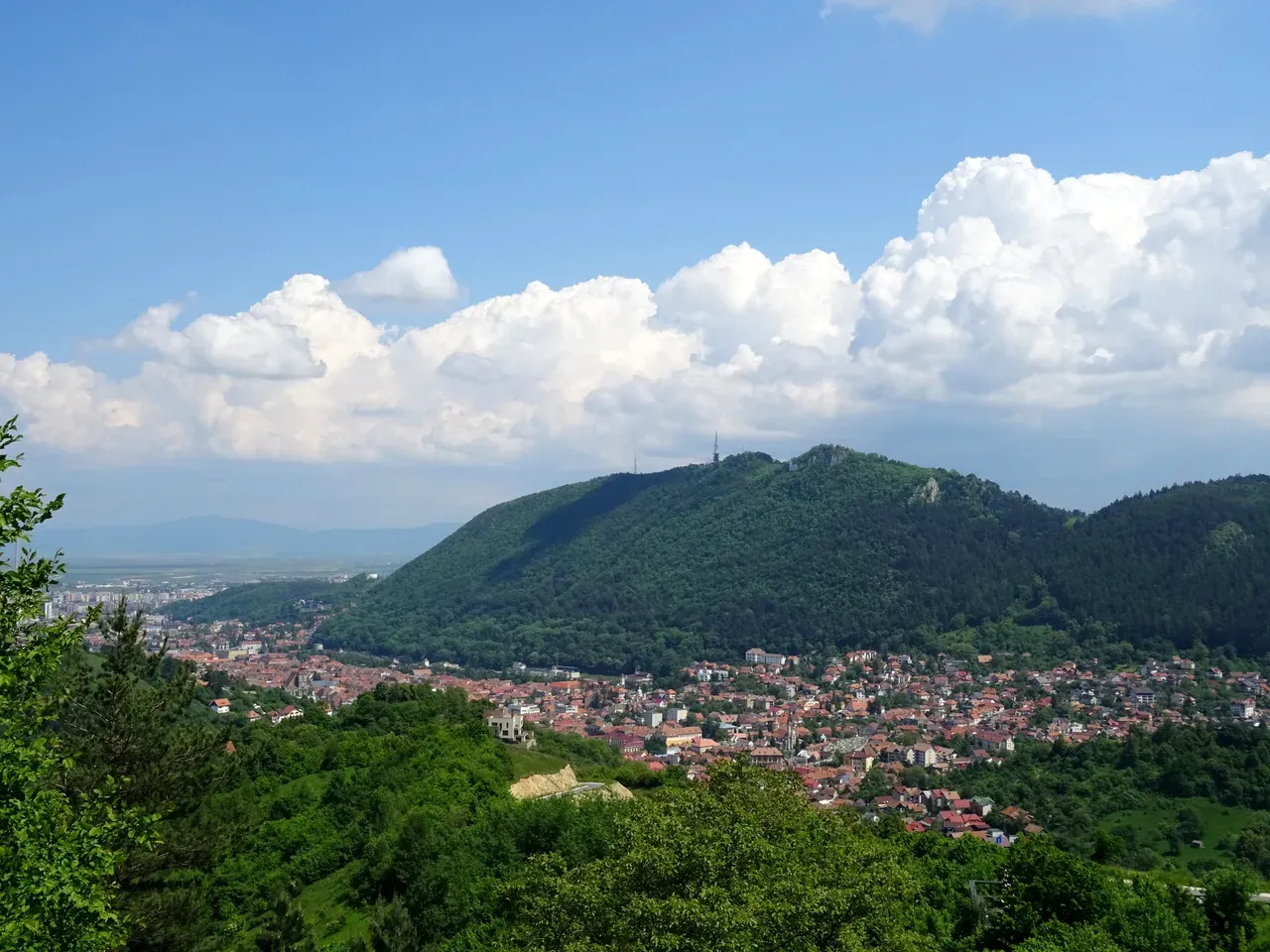
Brasov (start)
Route startstop ≈120 min
Pick up the car here. Park at the edge of the old town - the centre is pedestrianised and metered.
Photo: Whitepixels / Wikimedia Commons, CC0 ( source) -
Bran Castle
28 km from the startstop ≈120 min
About 30 min on the DN73 via Rasnov. Paid car parks sit a short walk below the castle.
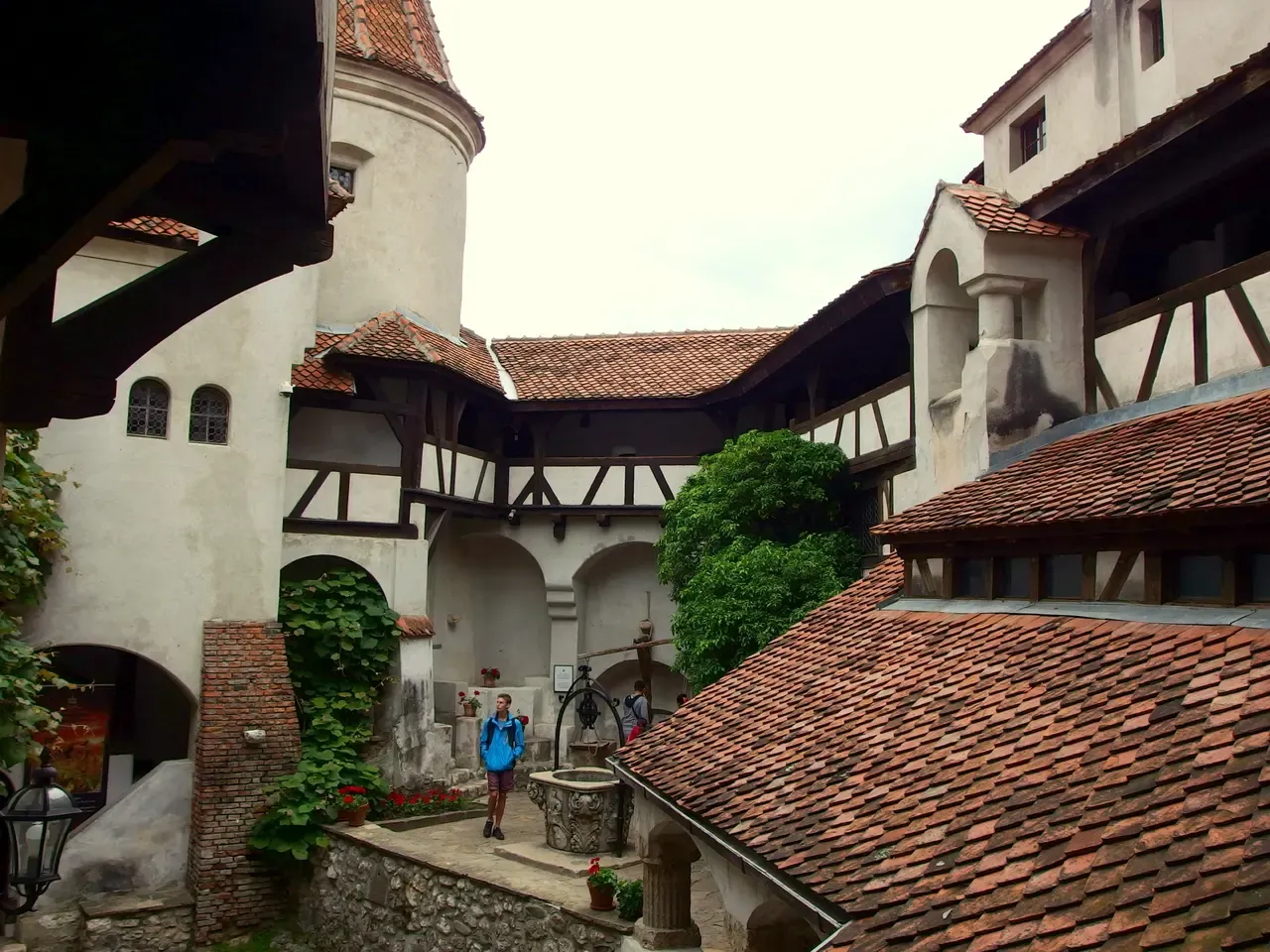
Photo: Mark Ahsmann / Wikimedia Commons, CC BY-SA 4.0 ( source) -
Sighisoara
164 km from the startstop ≈150 min
Roughly 2 hours from Bran. Leave the car in the lower town - the citadel lanes are steep and cobbled.
Photo: Dennis G. Jarvis / Wikimedia Commons, CC BY-SA 2.0 ( source) -
Sibiu
256 km from the startstop ≈180 min
About 1 hour 35 from Sighisoara, ~92 km. Base here the night before the pass and fill the tank.
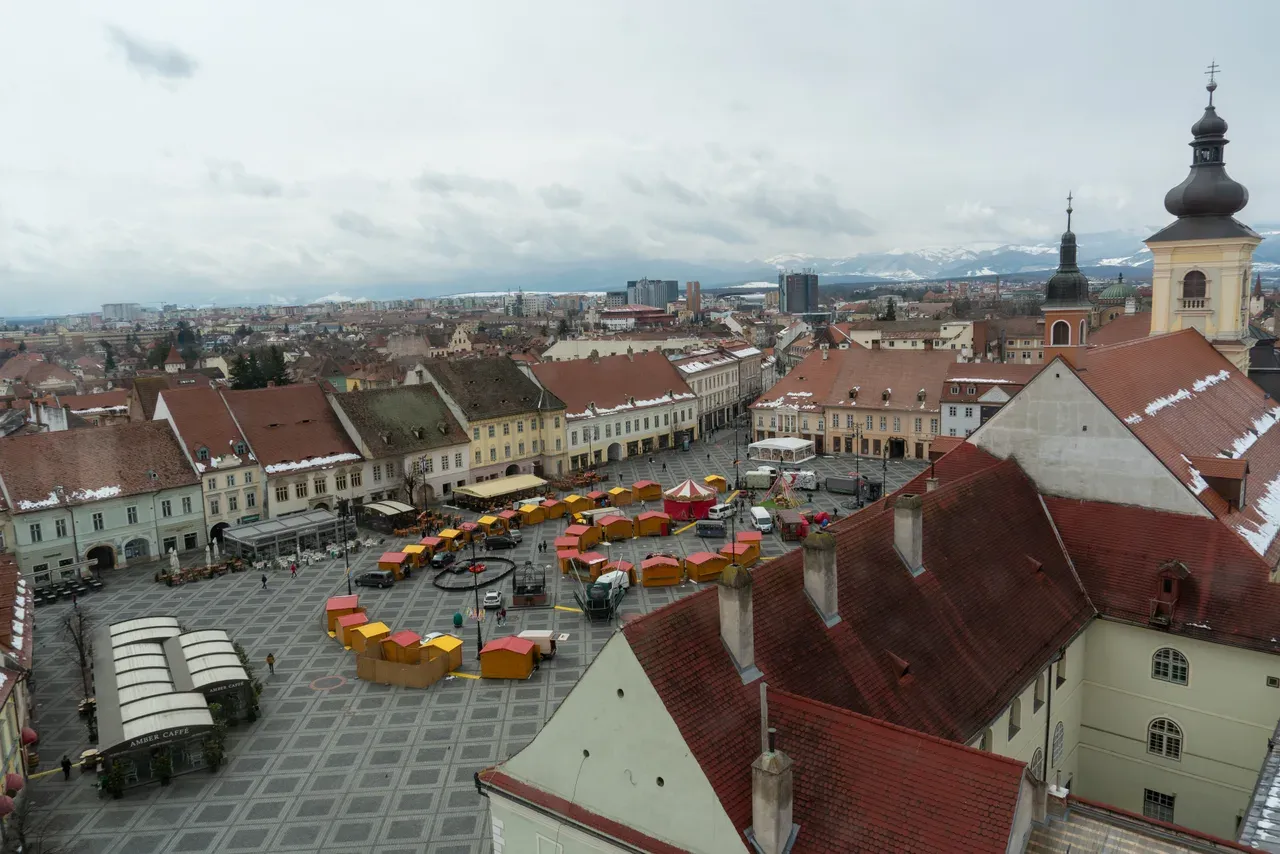
Photo: Paul Colin Hennig / Wikimedia Commons, CC BY-SA 4.0 ( source) -
Transfagarasan (Balea Lake)
420 km from the startstop ≈300 min
North foot at Cartisoara is ~50 km from Sibiu; the DN7C runs about 151 km in full and the crossing is a genuine full day. High section open from June; by rule it can close for winter any day from 20 October.
Photo: Mercy / Wikimedia Commons, CC BY-SA 3.0 ( source)
Route map
The map with stops loads on click - to keep the page lightweight.
The map didn’t load. Check your connection and refresh the page.