
Romania 10-Day Itinerary: The Grand Northern Loop
A 10-day Romania road trip beyond Transylvania: the castles plus Maramures wooden churches, Bucovina painted monasteries and the drive home.
Ten days in Romania is the trip that finally reaches past the castles. A week gets you the Transylvania greatest hits; a second few days buys the north, which is where the country turns strange and wonderful: the wooden churches and painted crosses of Maramures, and the frescoed monasteries of Bucovina, linked by a high mountain pass and rounded off with a drive back through the Bicaz Gorge. This is a clockwise loop of roughly 1,300 km from Bucharest, and it’s emphatically a driving trip.
The short version: rent a car, do the Transylvania core fast in the first three days (the castles and Brasov), then commit the back half of the week to Maramures and Bucovina, which most visitors never see. Below is the day-by-day, a straight word on why you need wheels, and how this differs from the classic seven-day loop so you can pick the right one.
Do you need a car, or can you train it?
For this itinerary, a car isn’t optional. The whole reason to spend ten days rather than seven is to reach Maramures and Bucovina, and the best of both is scattered across villages, timber churches and hillside monasteries that the railway simply doesn’t serve. You can reach the regional hubs by train or a short flight, but once there you would be stuck without wheels. Renting is the spine of the plan, so rent a car through a local supplier and, for the driving mechanics (the rovinieta vignette, fuel, parking, road types), read our Transylvania road trip guide, which breaks down the same kind of loop.
One money note for the road: Romania uses the leu (RON), not the euro, and out in the northern villages, monasteries and the Merry Cemetery you’ll pay small entry fees and buy lunch in cash, often with no card machine in sight. Carry notes in lei. Budget-wise this loop starts around 3,600 lei per person for a frugal-to-mid ten days excluding flights, though it climbs fast with nicer hotels; our Romania trip cost breakdown puts daily and full-trip figures in lei next to this route’s own number.
How this differs from the classic seven days
On a week, don’t attempt this. Our Romania 7-day itinerary is a tighter Transylvania loop (Brasov, the castles, Sighisoara, Sibiu and the Transfagarasan mountain pass) and it’s the better use of seven days, because it keeps the driving sane and still hits the headline sights. This ten-day version deliberately trades the Transfagarasan and a second Saxon town for the long haul north, which is a completely different half of Romania.
So the two plans aren’t rivals; they’re different trips. The seven-day loop is Transylvania done well. The ten-day loop is Transylvania done quickly plus the north done properly. If you’ve the time and you want the folk Romania of timber and fresco rather than only the castle-and-cobbles Romania, the extra three days are the best you’ll spend here.
Days 1-3: Bucharest and the Transylvania castles
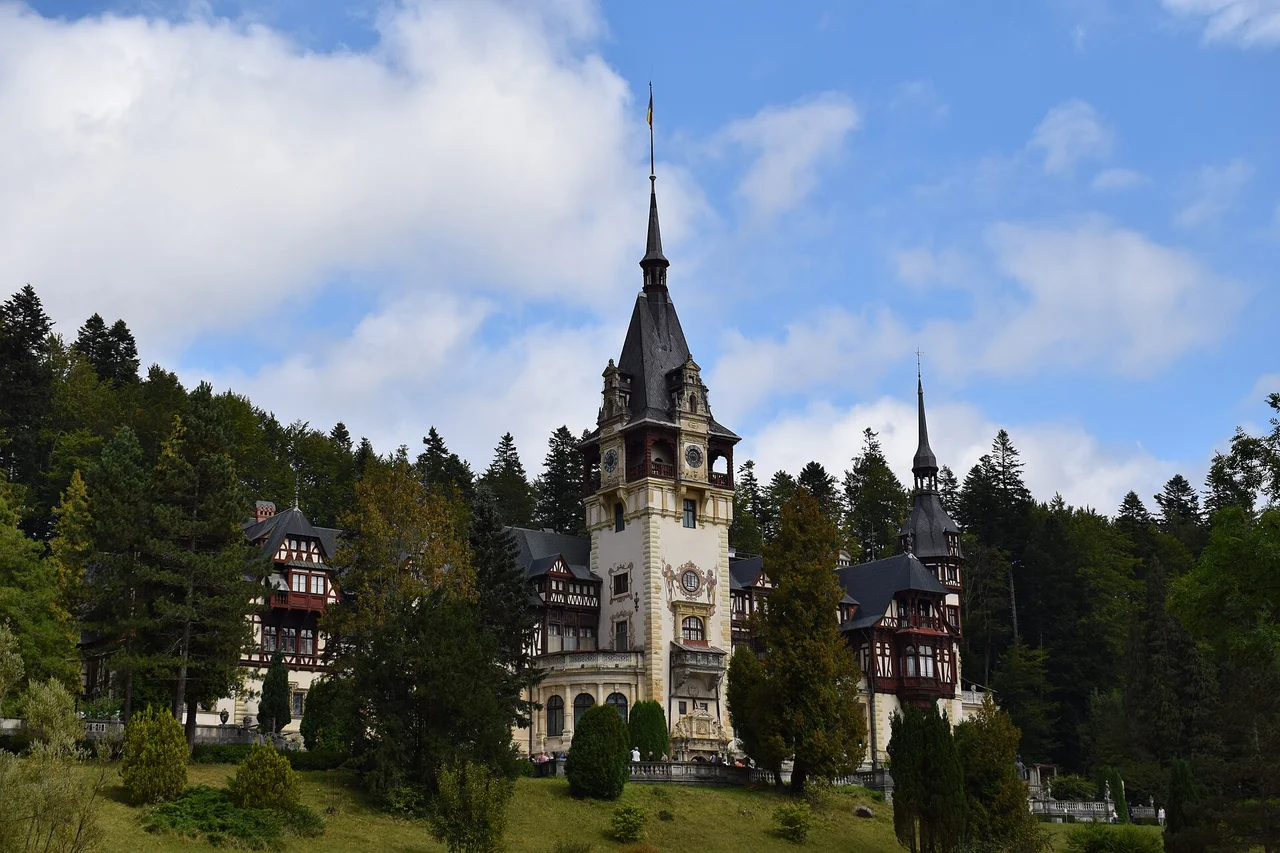
Day one is Bucharest. Land at Henri Coanda (OTP), give the capital an afternoon (the Old Town lanes around Lipscani, the absurd bulk of the Palace of the Parliament) and pick up the hire car so you’re not fighting city traffic tomorrow. Day two heads north up the Prahova Valley to Peles Castle at Sinaia, the fairy-tale royal residence, then on to Brasov for a two-night base. Watch the trap: Peles is closed Monday and Tuesday, so flip the order if your day two lands on one of those.
Day three is the castle day from Brasov: Bran Castle, the one marketed as Dracula’s (adult ticket 120 lei, opens late at 12:00 on Mondays, buy online to skip the queue), plus the hilltop Rasnov fortress nearby, with the evening back in Brasov’s handsome Council Square. This is the stretch our other guides cover in depth, so travel light on detail here and lean on the things to do in Brasov, the where to stay in Brasov areas guide, and the castle pages; the point of this trip is to keep moving so the north gets its due.
Day 4: Sighisoara, then Cluj-Napoca
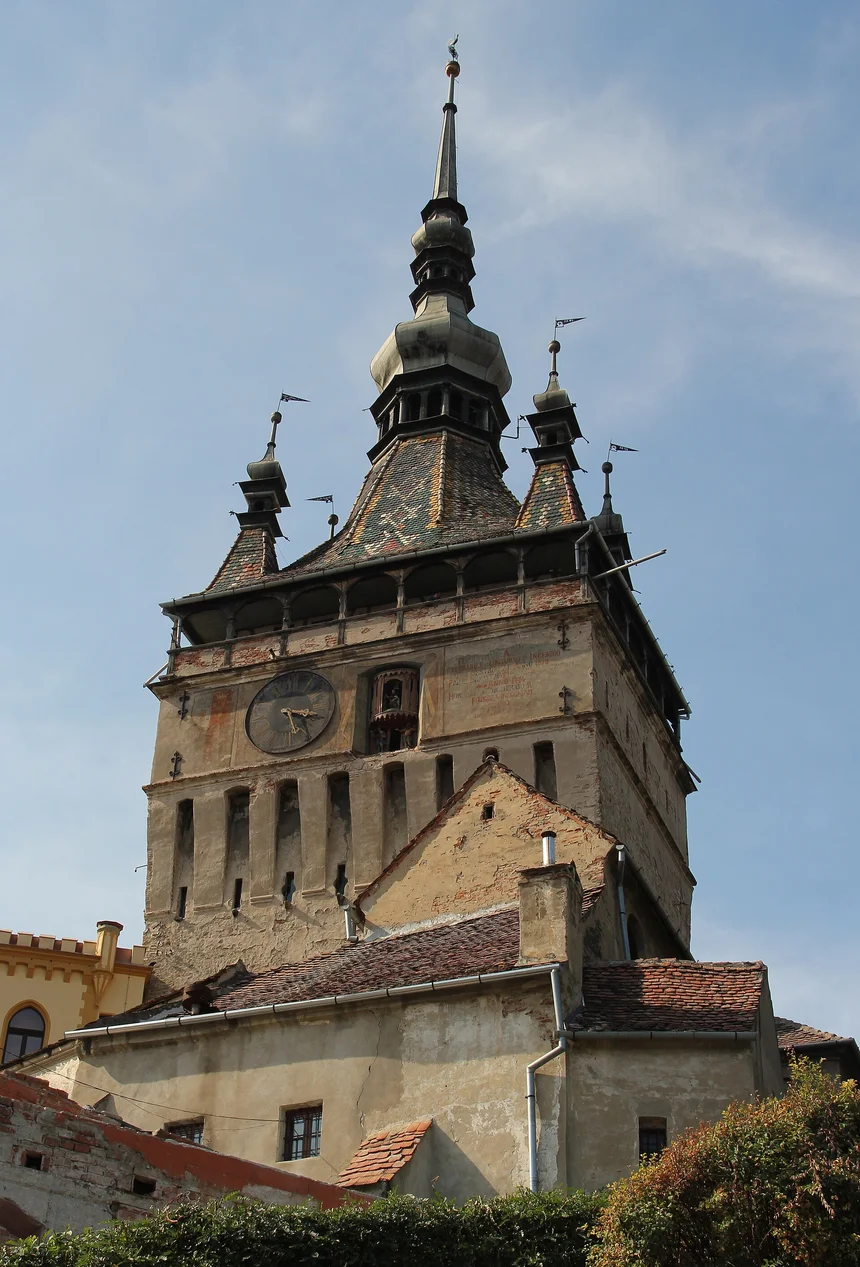
Drive west and climb into the citadel of Sighisoara, a still-inhabited medieval hill town and a UNESCO site, where the 64-metre Clock Tower guards the gate and the cobbled lanes hold the supposed birthplace of Vlad the Impaler. Give it a couple of hours and lunch inside the walls, then push on northwest to Cluj-Napoca, Transylvania’s biggest and liveliest city, for the night.
Cluj is a student city with a big-square energy, worth an evening for its terraces and the Gothic St Michael’s Church on Piata Unirii. If you’ve an hour to spare on the way in or out, Salina Turda, the vast underground salt mine turned surreal theme park, sits about 30 minutes south of the city and makes an easy, weatherproof detour. Cluj also has its own airport, so if you would rather start or end the loop here than in Bucharest, our guide to which airport to fly into for Romania covers the trade-off.
Days 5-6: Maramures, the timber north
From Cluj it’s a half-day drive north into Maramures, and the moment you cross into it the register changes: this is rural, deeply traditional Romania, where villages still build tall shingled wooden churches and life runs to a slower clock. Base yourself around Sighetu Marmatiei or a village like Breb for two nights and let it unfold. Our Maramures guide has the full picture; on a two-day stop, prioritise a few things.
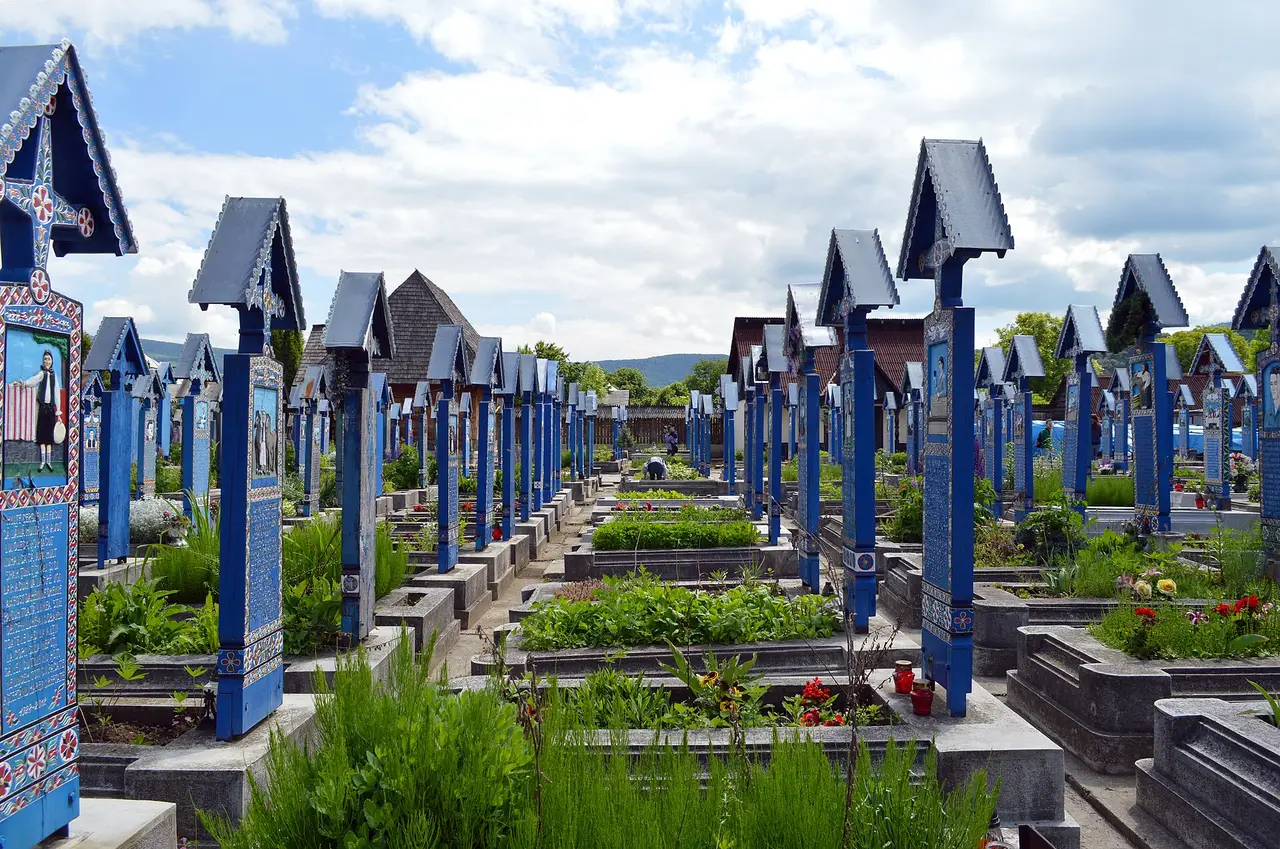
The unmissable one is the Merry Cemetery at Sapanta, where the graves are marked by carved, brightly painted blue crosses bearing cheeky verses and little scenes from each person’s life, a folk-art take on death found nowhere else (around 10 lei to enter, cash at the gate). Add the tall wooden monastery at Barsana, a couple of the UNESCO-listed timber churches in the Iza valley, and if you can spare a morning, the Mocanita, a narrow-gauge steam train that chuffs up the forested Vaser valley from Viseu de Sus (around 136 lei, departs 09:00, book ahead in summer). None of this is on a rail line. This is the stretch where you’re glad of the car.
Days 7-8: over the Prislop Pass into Bucovina
Day seven is one of the best drives of the trip. Leave Maramures eastward and climb the Prislop Pass, the DN18, which tops out at 1,416 metres as the highest road pass in the Eastern Carpathians and drops you into Bucovina on the far side. It’s fully paved and gloriously scenic, but note it can close after snow, so it’s a late-spring-to-autumn proposition and worth a quick check first. Base near Gura Humorului or Suceava for two nights.
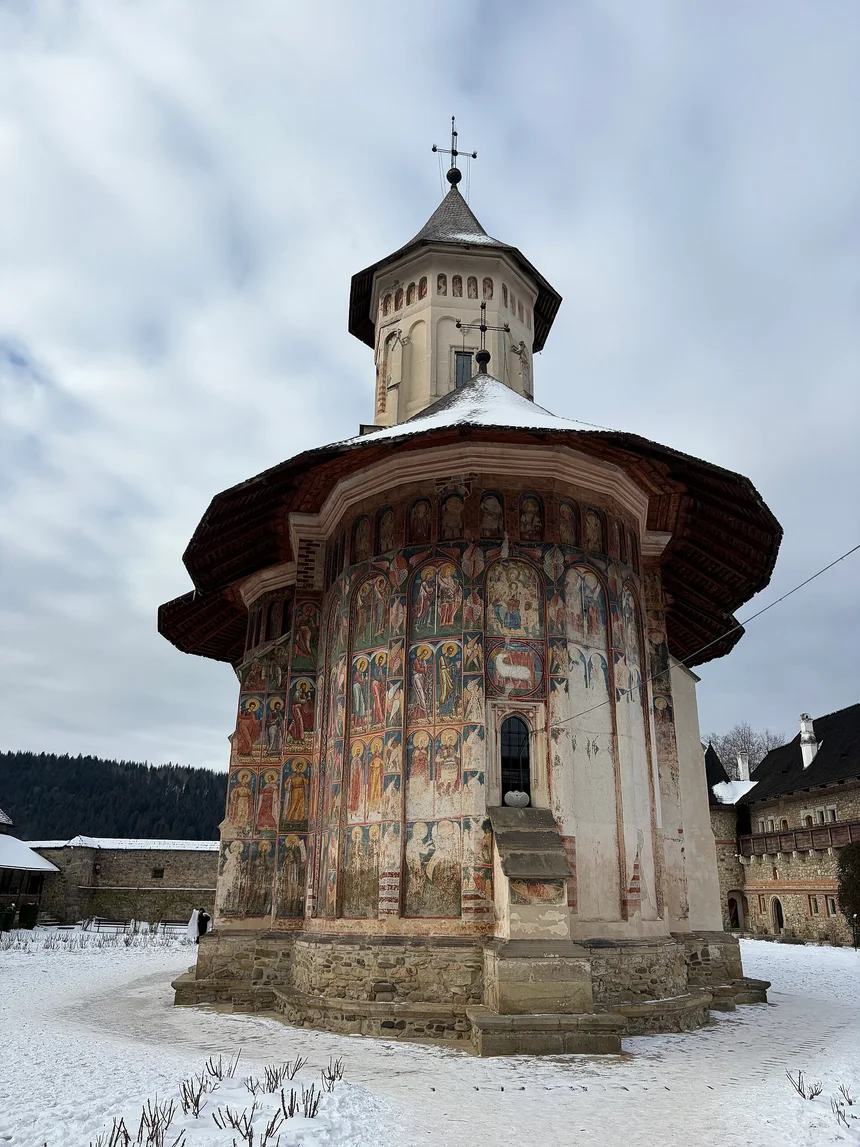
Day eight is the painted monasteries themselves, and they’re the reason people drive this far. The churches of northern Moldavia are wrapped, inside and out, in vivid 16th-century frescoes, whole biblical cycles painted across the outer walls to teach a mostly illiterate congregation. The classic circuit is four: Voronet (famous for its deep “Voronet blue” and its Last Judgement), Humor, Moldovita and Sucevita, all UNESCO-listed and all a short drive apart. Entry is a few lei each with a small photo permit, paid in cash, and there are no online tickets, so just turn up. Our painted monasteries guide walks the four with fees and the story behind the frescoes.
Days 9-10: the drive south and back to Bucharest
Bucovina to Bucharest is a long way, so break it rather than blast it. The scenic route south runs through the Bicaz Gorge (Cheile Bicazului), a dramatic limestone canyon where the DN12C squeezes between sheer cliffs on tight hairpins, with the natural dam lake of Lacu Rosu (the Red Lake) just above it. Reckon on about three and a half hours from Gura Humorului to the gorge, then a spectacular hour or two of driving through it, and a good place to stretch your legs among the souvenir stalls before the run continues toward the Carpathian passes. Our Bicaz Gorge and Red Lake guide has the park ticket, the current state of the DN12C and where it’s actually safe to stop.
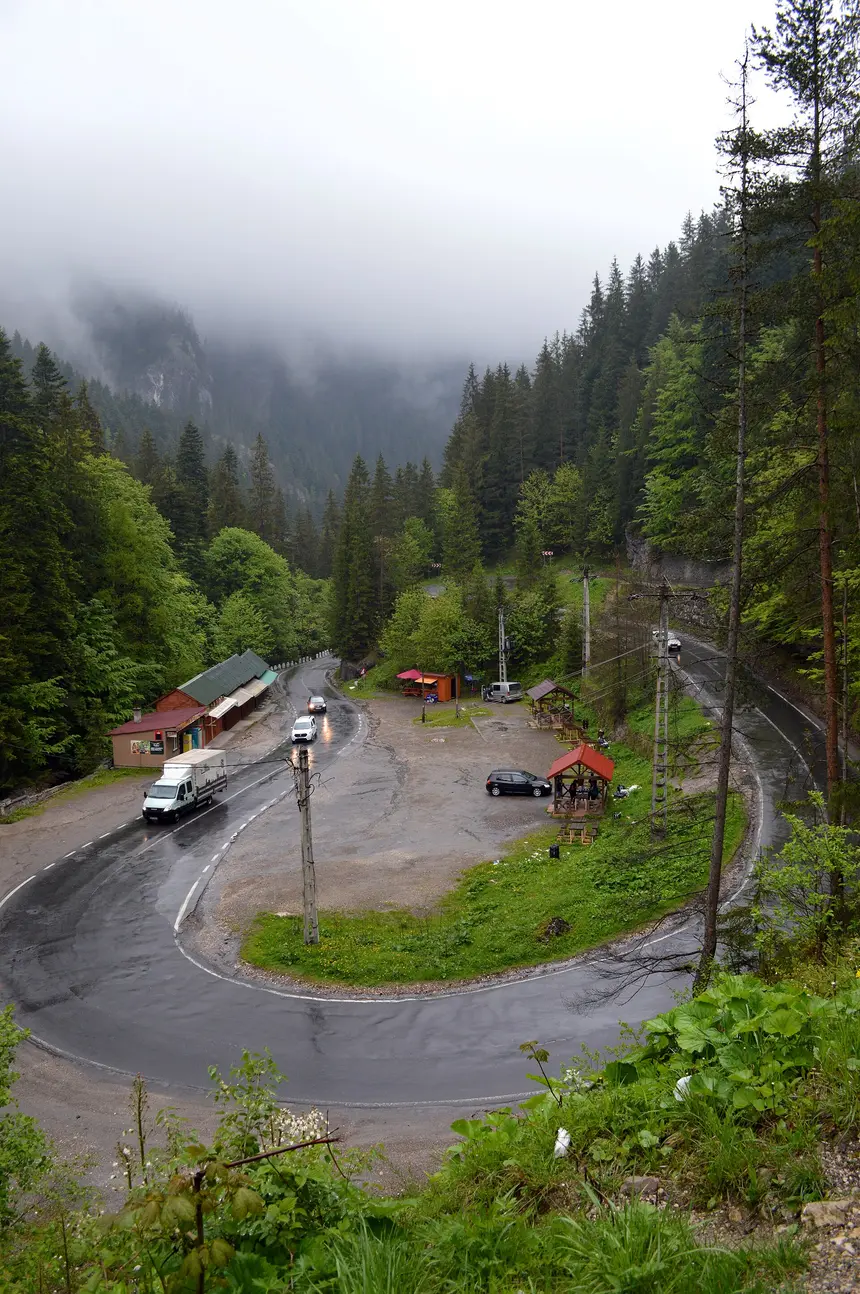
Depending on your flight, either push through to Bucharest on day nine (a long day, so start early) or sleep somewhere en route, around Brasov or Sinaia, and finish the run on day ten with time to return the car and fly out. Either way you close a loop that has taken you from the capital through the castle belt and out into the two most distinctive regions in the country, which is about as much of Romania as ten days can honestly hold. Book your bases along the way ahead in summer, when Brasov and the Bucovina towns fill up.
When to go, and the Danube Delta alternative
Aim for late May to October. The Prislop Pass and the northern roads are at their best then, the monasteries and villages are green and open, and you avoid the winter closures that can sever the loop. High summer is busiest and hottest; September is arguably the sweet spot, with quieter sights and softer light on the frescoes.
One caveat: you can’t do everything in ten days, and this loop makes a choice. It goes north, to Maramures and Bucovina, and leaves out the Danube Delta in the far southeast, which pulls in the opposite direction. If wetland wilderness, pelicans and boat villages appeal more than timber and fresco, swap the north for an eastern arm instead, running from the Transylvania core out to the coast and the delta; our Danube Delta guide covers that end of the country. Trying to cram both into ten days just means seeing neither properly, so pick your Romania and give it the time it deserves.
Route day by day
- Days on the road
- 10
- Distance
- ≈1300 km
- Budget from
- 3600 RON
- Best season
- May, June, July, August, September, October
The route at a glance
-
Bucharest
Route startstop ≈720 min
Start and finish: airport (OTP), Old Town lanes, Palace of the Parliament.
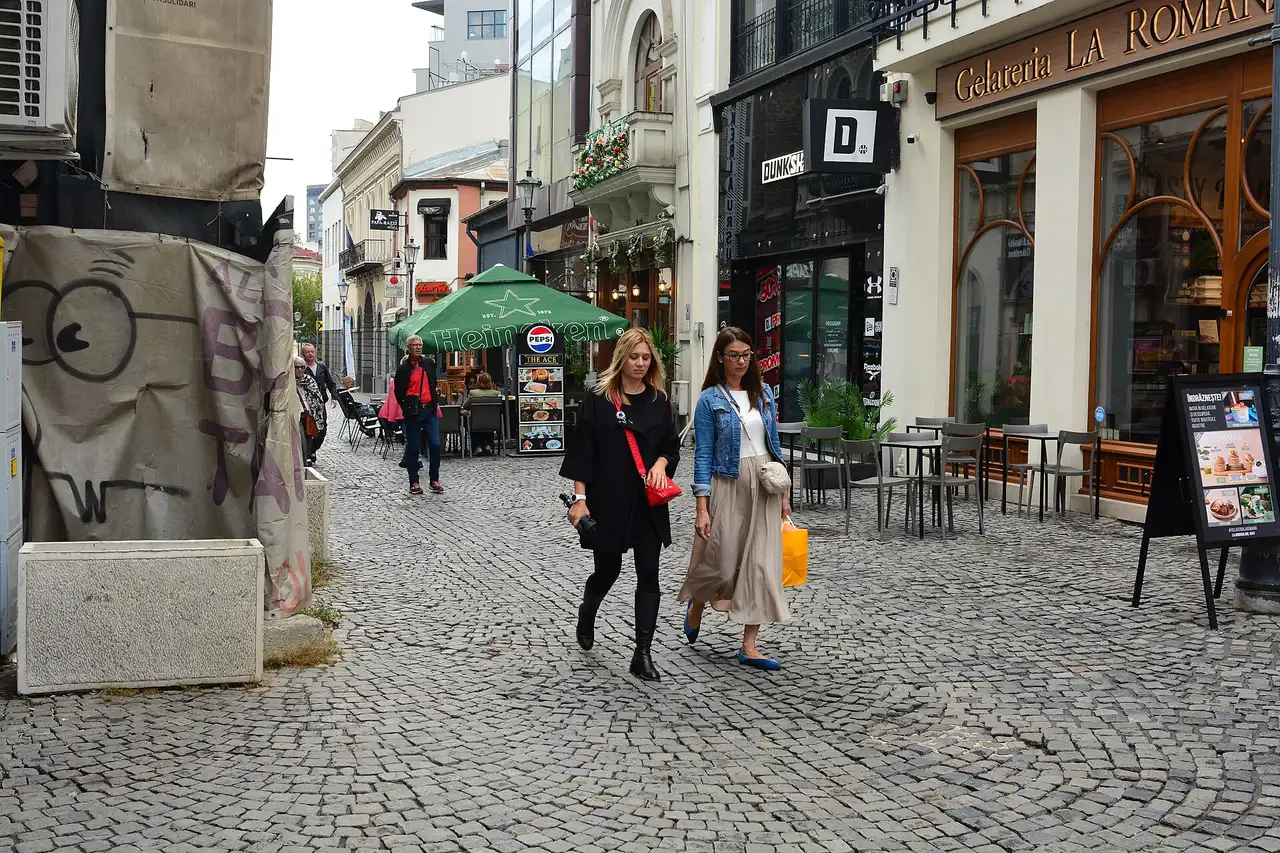
Photo: Joe Mabel, CC BY-SA 4.0 -
Sinaia (Peles Castle)
122 km from the startstop ≈180 min
Peles Castle - closed Monday and Tuesday, so plan around it.
Photo: Anto.cast, CC BY 4.0 -
Brasov
166 km from the startstop ≈1440 min
Two-night base for the castles: Council Square, Bran and Rasnov.
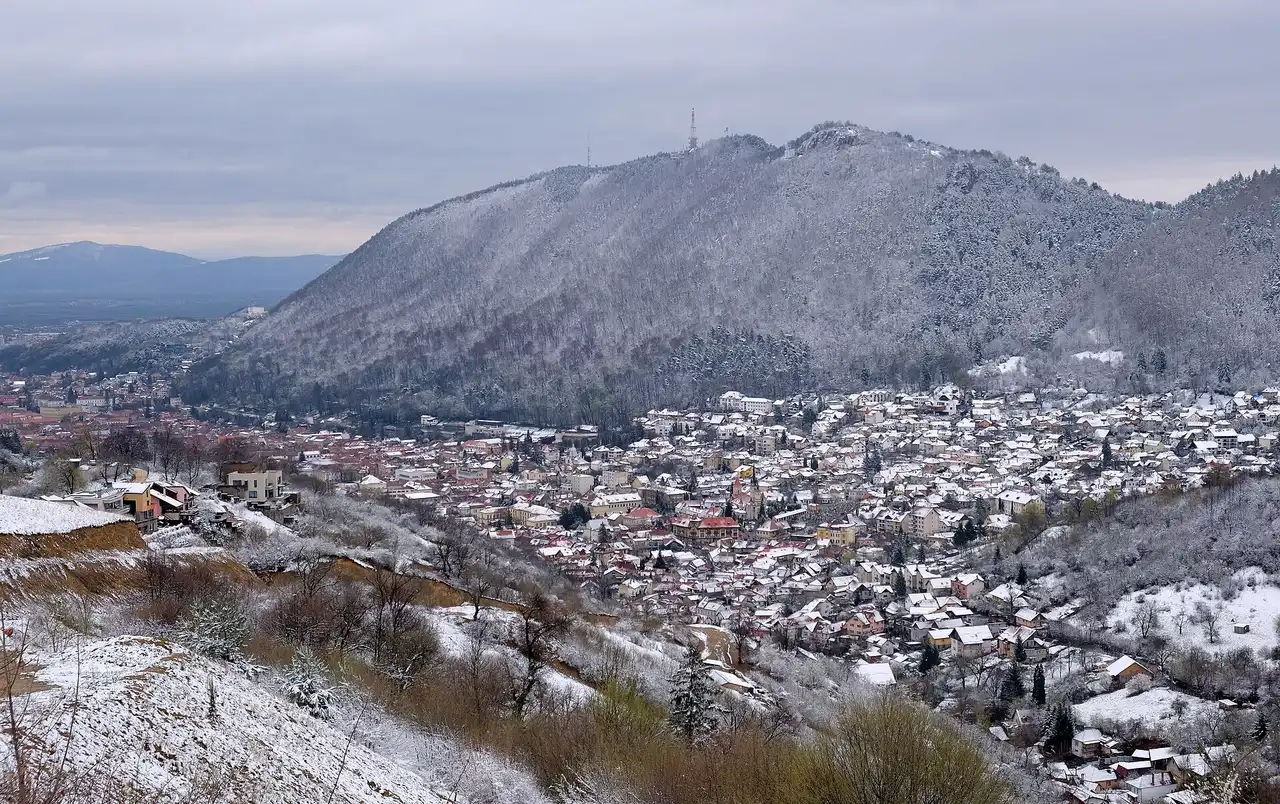
Photo: kallerna, CC BY-SA 4.0 -
Sighisoara
286 km from the startstop ≈240 min
UNESCO-listed inhabited citadel; the Clock Tower is the main gate.
Photo: Antony Stanley, CC BY-SA 2.0 -
Cluj-Napoca
440 km from the startstop ≈1080 min
Transylvania largest, liveliest city; Salina Turda salt mine nearby.
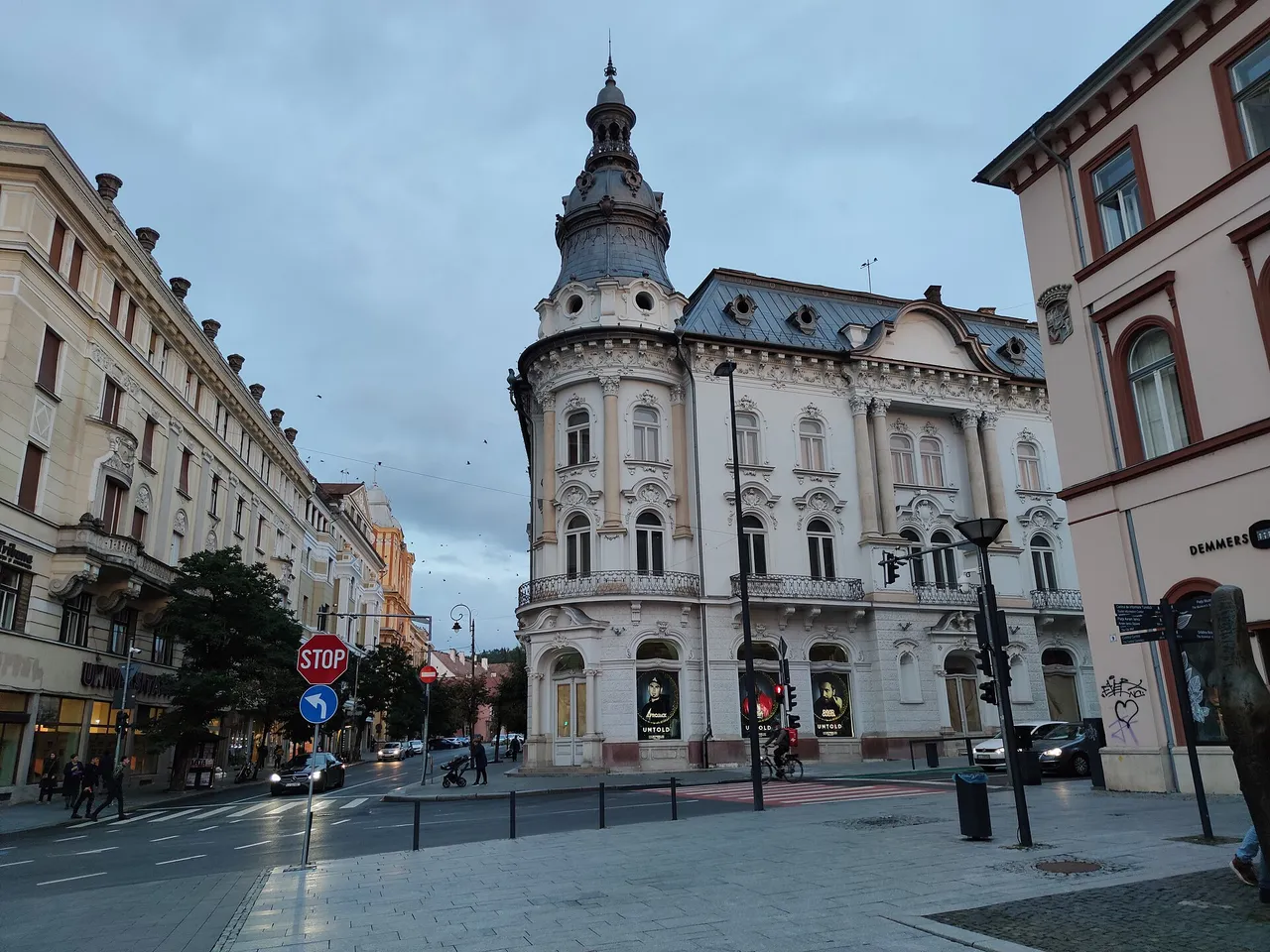
Photo: Marcmiquel, CC BY-SA 4.0 -
Maramures (Sighetu Marmatiei)
610 km from the startstop ≈1440 min
Wooden churches, Barsana, and the Merry Cemetery at Sapanta.
Photo: DimiTalen, CC0 -
Bucovina (Gura Humorului)
800 km from the startstop ≈1440 min
Painted monasteries: Voronet, Moldovita, Sucevita and Humor.
Photo: Antonio.cenusa, CC BY-SA 4.0 -
Bicaz Gorge (Lacu Rosu)
920 km from the startstop ≈150 min
The dramatic Bicaz Gorge and Red Lake on the drive south.
Photo: DimiTalen, CC0
Route map
The map with stops loads on click - to keep the page lightweight.
The map didn’t load. Check your connection and refresh the page.