
Painted Monasteries of Bucovina: Visiting Guide
The UNESCO painted monasteries of Bucovina - Voronet, Sucevita, Moldovita and Humor: what to see, fees in lei, and how to reach them.
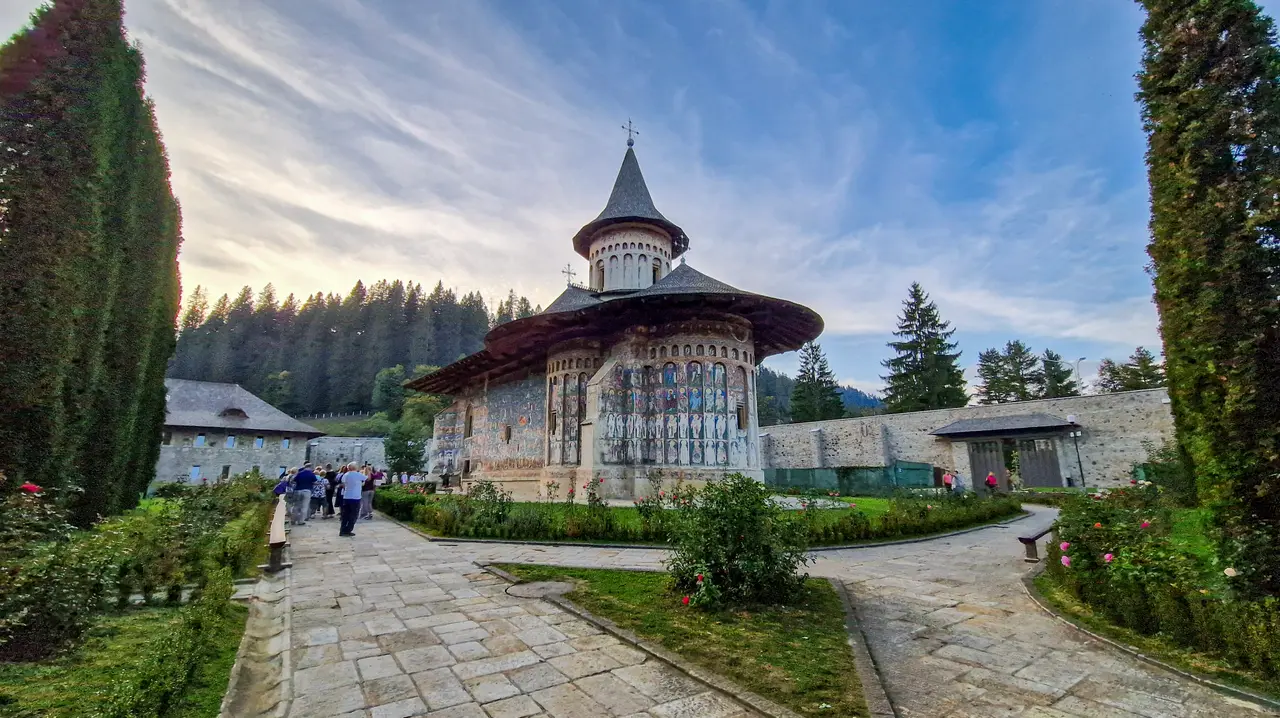
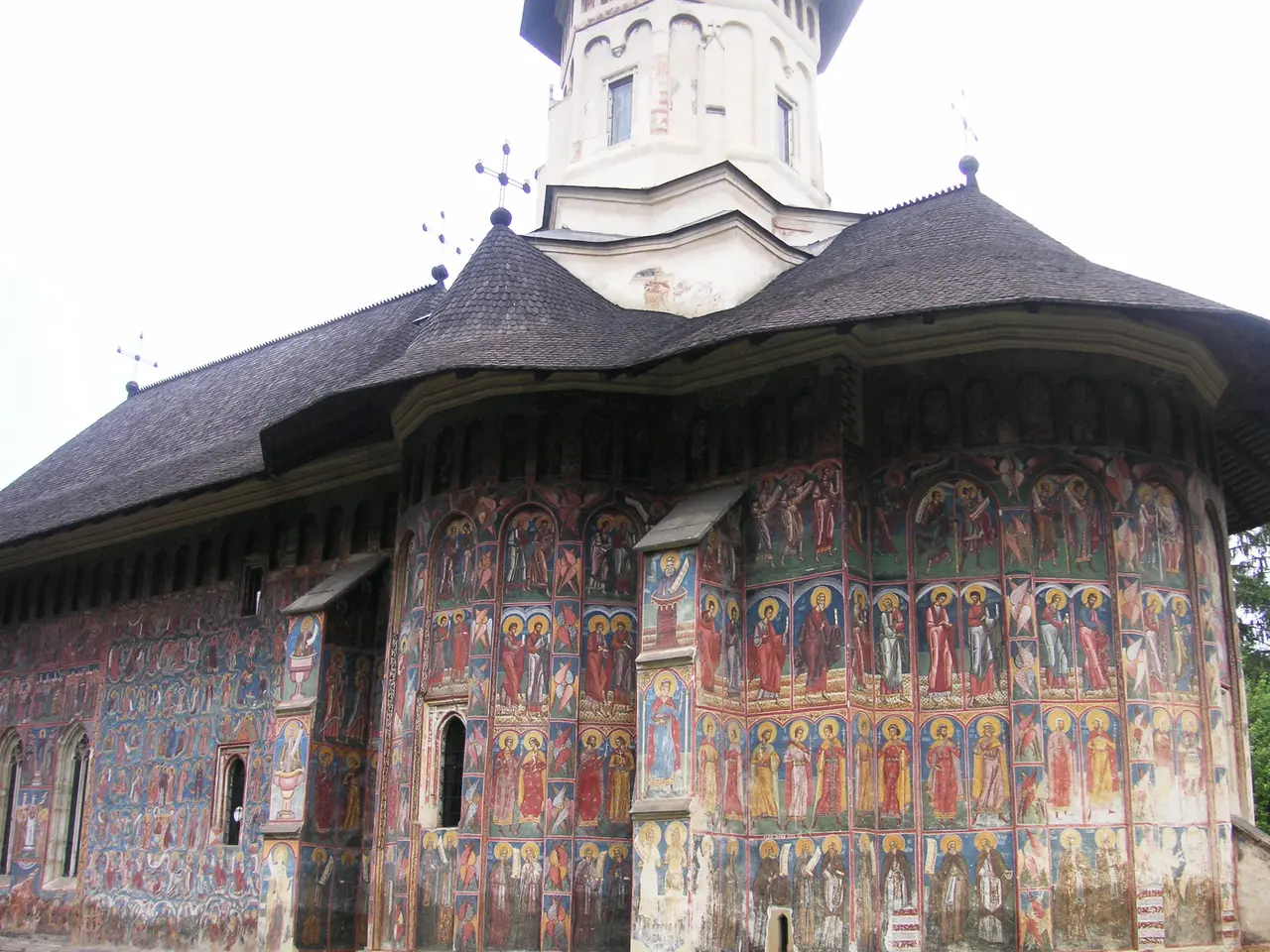
The painted monasteries of Bucovina are a cluster of 15th and 16th-century Orthodox churches in northeastern Romania whose outer walls are covered, top to bottom, in medieval frescoes that have survived 500 years of open weather. Eight of them are on the UNESCO World Heritage List, and the four everyone comes for are Voronet, Sucevita, Moldovita and Humor. They sit in the hills of southern Bukovina, around the towns of Suceava and Gura Humorului, and the practical way to see them is with a car over one or two unhurried days.
Base yourself in Gura Humorului or Suceava, plan on about 10 lei entry per church (5 for children and students) plus a photo fee of 10 to 20 lei paid in cash at the gate, and don’t try to cram all four into a rushed afternoon. Each church has one signature fresco worth slowing down for, the distances between them are 20 to 40 km of winding road, and a car (or an organized day tour) is close to essential because public transport out here’s thin.
What exactly are the painted monasteries?
They’re Moldavian Orthodox churches whose exterior walls were plastered and painted with full fresco cycles in the 1500s, turning the outside of each building into an open-air Bible for a mostly illiterate population. That’s the thing to grasp: the paintings are on the outside, exposed to rain, sun and snow, and the fact that so much colour has held up is the difference between extraordinary and merely pretty.
Seven of the churches of northern Moldavia were inscribed on the UNESCO World Heritage List in 1993, with Sucevita added to the group in 2010, making eight in total. The full list is broader than the famous four and includes Arbore, Patrauti, Probota and the Church of St George in Suceava, so if you’ve real time you can go well beyond the headline stops.
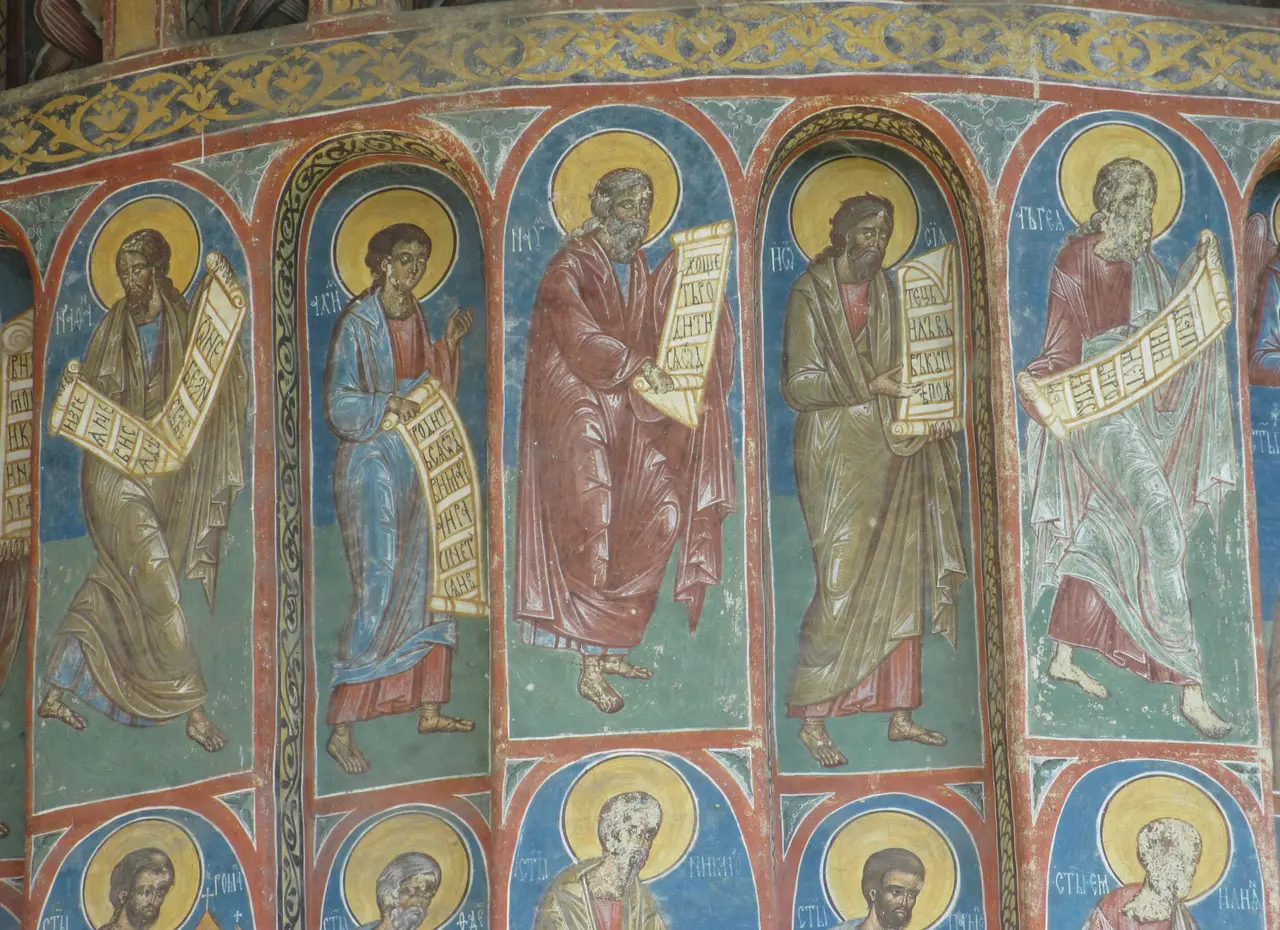
Voronet: the “Sistine Chapel of the East”
If you see only one, make it Voronet. Stephen the Great founded the church in 1488, reputedly built in three months and three weeks, to mark his victory at the Battle of Vaslui; the exterior frescoes came later, added in 1547 under Metropolitan Grigorie Rosca. Its fame rests on two things: a colour and a scene.
The colour is “Voronet blue,” an intense azurite blue that dominates the walls and has its own name in Romania. Restorers still can’t fully reproduce how it has stayed so vivid after five centuries in the open, and standing in front of it you’ll understand why the “Sistine Chapel of the East” nickname is doing real work, not just tourist-brochure duty. The scene is the Last Judgment, which fills the entire western wall in registers: rows of saints and apostles on one side, a river of fire and tumbling sinners on the other. Give it ten minutes and you start reading it like a comic strip.
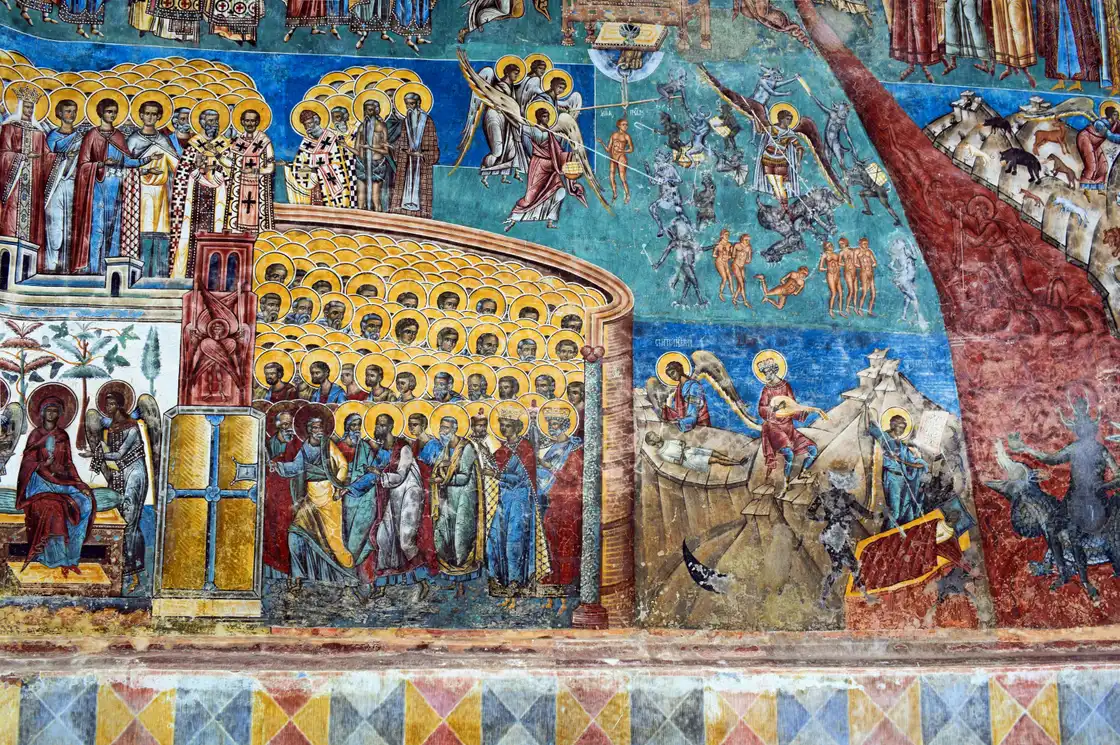
Voronet sits about 6 km from Gura Humorului, which makes it the easiest of the four to reach and the natural anchor you’ll want for a day out here.
Sucevita: the green fortress-monastery
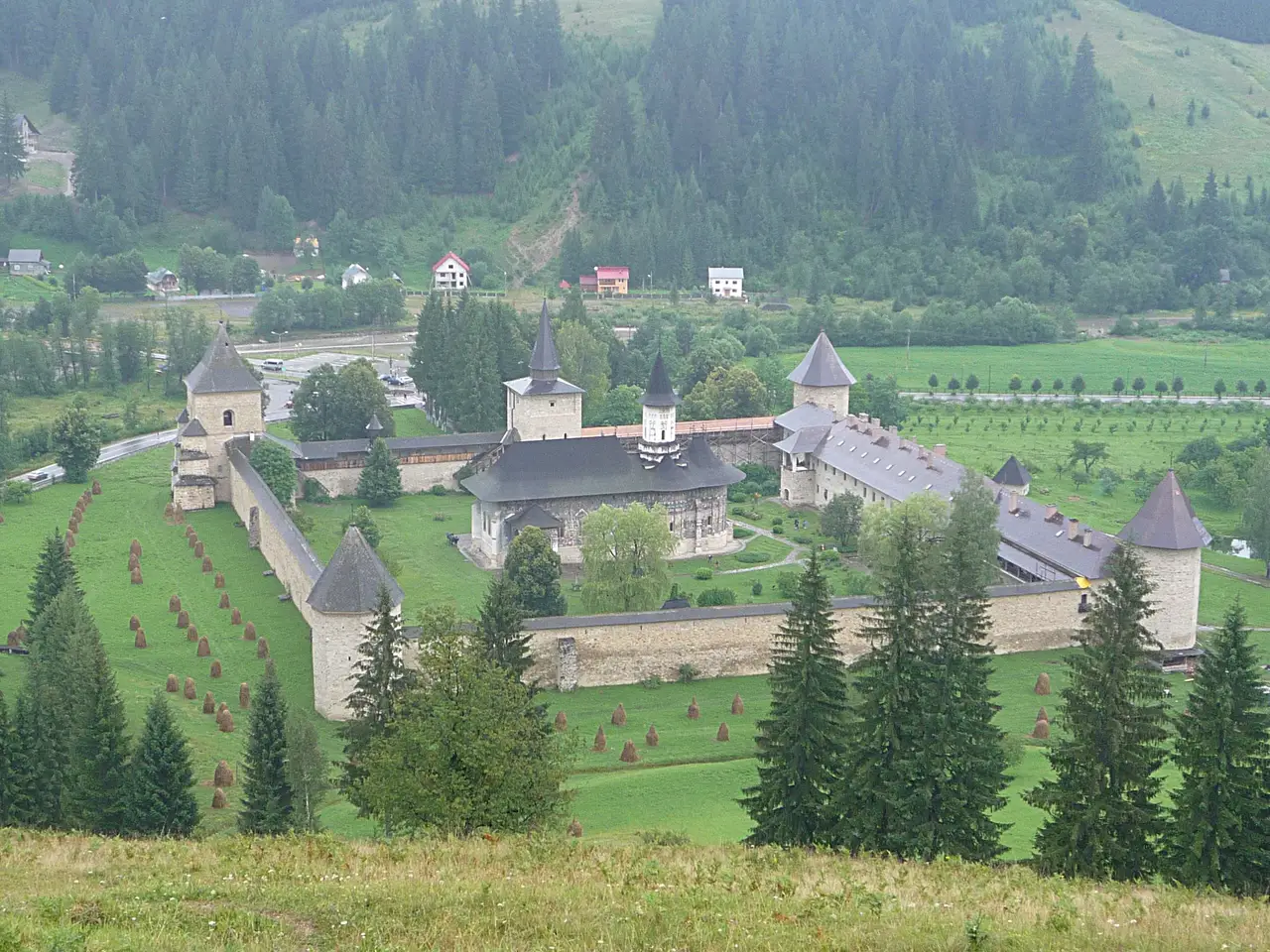
Sucevita is the outlier and, for many people, the most atmospheric. It was founded in 1581 by Gheorghe Movila, then expanded by his brother Ieremia into something that looks less like a church and more like a small castle: high buttressed walls, four corner towers, a proper defensive courtyard. The exterior frescoes were painted in the early 1600s and are the last great cycle in the Moldavian tradition, which is part of why it took until 2010 to be added to the UNESCO group.
Where Voronet is blue, Sucevita is green, its frescoes set on a deep emerald ground. Its signature scene is the Ladder of Virtues on the north wall, a Mount Athos theme showing a 30-rung ladder from earth to heaven: angels help the righteous climb while devils drag the failed monks off into the dark. It was, quite literally, a visual rulebook painted for the monks who lived here. This is the northernmost of the big four and the farthest to drive, so you’ll usually pair it with Moldovita on the same loop.
Moldovita and Humor: the quieter pair
Moldovita, in the village of Vatra Moldovitei, was founded by Petru Rares in 1532 and painted by Toma of Suceava in 1537. Its walls run to warm yellows and gold over blue, and its famous panel is the Siege of Constantinople - officially a depiction of a 626 siege, but painted so soon after the 1453 fall of the city that it clearly carries that trauma. It’s a bigger, taller church than Humor and the frescoes here are among the best preserved of the group.
Humor is small, low and quietly beautiful, and it’s the one that feels least like a stop on a tour. Founded in 1530 by the chancellor Toader Bubuiog, its faded reddish-brown frescoes wrap a modest church with a shingled roof, and it sits close enough to Gura Humorului that with good legs you can reach it on foot. Two useful practical notes: entry at Humor is 10 lei for adults and 5 for children and students, with a 10-lei camera fee if you want to shoot, and beside it stands a stout stone watchtower, raised by Vasile Lupu in 1641 as part of the monastery’s old defences and the one part of them still standing.
How do you get to Bucovina?
The gateway is Suceava, the regional capital, and Gura Humorului is the smaller town closest to Voronet and Humor. Suceava has an airport (Stefan cel Mare, code SCV) with a daily TAROM flight from Bucharest of about an hour and ten minutes; Wizz Air serves Suceava too, but only on international routes. The train from Bucharest to Suceava is a long haul at roughly five and three-quarter hours. From Suceava it’s around 36 km west to Gura Humorului on the DN17, about 45 minutes (from the airport itself count on roughly 53 km), so either base works, with Gura Humorului putting you a little closer to the churches. If you want a proper city with museums and restaurants as your base and don’t mind a longer drive in, Iasi sits a couple of hours south-east and has the busier airport, which makes it a common springboard for combining the monasteries with the old Moldavian capital.
Once you’re here, a car does most of the heavy lifting. The monasteries are spread across 20 to 40 km of good but winding country roads, and public transport between them is patchy and slow. Non-drivers have a straightforward option: an organized day tour from Suceava or Gura Humorului is the sensible alternative and takes the route-planning off your plate. For flexibility over two days, a rental car gives you the freedom to chase good light and skip the tour-bus rhythm.
How many can you do in a day, and in what order?
Two monasteries in a morning is comfortable; four in a single day is possible but tiring, and you’ll end up glancing at frescoes instead of reading them. The relaxed version is two days: pair Voronet and Humor on one (both near Gura Humorului), then Moldovita and Sucevita on the other, since those two sit closer together to the north over the Ciumarna pass. If you truly only have one day, prioritise Voronet plus one other and accept that you’re sampling, not completing, the set.
Timing within the day matters more than the season. The frescoes are outdoors, so you want dry weather and soft, angled light; harsh midday sun flattens the colours and rain simply keeps you under the eaves. Summer, June to September, brings the reliable weather and the crowds; autumn adds forest colour behind the churches; spring lands near Orthodox Easter, when Bucovina’s painted-egg traditions are in full swing. Go early or late in the day at Voronet in particular, before or after the coach tours from Suceava roll through.
What does it cost, and what should you know first?
Entry to each monastery is small, about 10 lei per adult (5 lei for children and students), and there’s a separate photo fee of 10 to 20 lei charged at the gate - Voronet and Moldovita ask 20, Humor 10. These are working monasteries, not a ticketed attraction like Peles Castle in Sinaia, so there’s no single official website selling advance tickets and no unified price list - you pay in cash, per church, when you arrive. Because Romania uses the leu rather than the euro, keep a stack of small notes on you; card machines out here aren’t a given.
A few things smooth the visit. Dress modestly, as these are active religious sites with monks and nuns in residence: covered shoulders and knees, and a scarf is handy for women at some churches. Check the photo rules at each gate, since a few interiors forbid cameras entirely even when the exterior is fair game. And build the day around a wider Bucovina plan rather than treating the monasteries as an isolated errand - many travellers fold them into a longer loop, so our Romania 7-day itinerary is a good frame if you’re still deciding how the north fits with the castles and cities further south, using the Brasov guide for the Transylvania leg. Seven days won’t stretch to both northern regions, though, which is what our 10-day Romania itinerary exists for: it buys the days Bucovina and Maramures actually need. Bucovina also pairs naturally with Maramures, the wooden-church region just over the mountains to the west, if you want to link both corners of the north in one loop, and our Maramures loop route is the drive that stitches the two together over the Prislop Pass. Heading south instead of west, the usual exit from Bucovina is Bicaz Gorge and Lacu Rosu, about three and a half hours from Gura Humorului and the most spectacular stretch of road on the way back toward Brasov. For a different monastery register entirely - Brancovenesc courtyards and a royal necropolis rather than exterior frescoes - the southern Wallachia monasteries route out of Bucharest covers Curtea de Arges, Cozia and UNESCO Horezu over two days; don’t try to glue it onto the same week as Bucovina unless you accept a long diagonal across the country.
Photos
On the map
The map loads on click - to keep the page lightweight.
The map didn’t load. Check your connection and refresh the page.
Admission and opening hours
- Admission price
- Entrance is about 10 lei per adult per monastery (5 lei for children and students); a separate photo fee is 10-20 lei depending on the monastery (Voronet and Moldovita charge 20, Humor 10), paid on site. No advance online tickets for the churches.
- Opening hours
- Opening runs 08:00-09:00 and summer closing 18:00-20:00 depending on the monastery; winter roughly 09:00-17:00. Published times disagree between sources, so confirm locally.
Fees are collected at the gate and change without notice; photo rules vary by church. Confirm locally and carry small cash in lei.
Details checked: August 20, 2026
Read also

What to see · 11 min read
Marginimea Sibiului: Shepherd Villages Near Sibiu
Verified · September 5, 202618 shepherd villages west of Sibiu: Rasinari, Sibiel glass icons, Saliste, Paltinis bus fares, and how a day out of town works.

What to see · 9 min read
Prejmer Fortified Church: UNESCO Near Brasov
Verified · September 3, 2026Prejmer fortified church 15 km from Brasov: Greek-cross plan, 275 wall rooms, UNESCO hours for 2026 and how a visit actually works.

What to see · 11 min read
ASTRA Museum Sibiu: Romania's Great Open-Air Village
Verified · August 29, 2026ASTRA Museum near Sibiu: 50-lei tickets, hours by season, how to get there, and which of the 400+ buildings across 96 hectares to see first.

What to see · 10 min read
Bucegi Sphinx & Babele: Cable Car from Busteni
Updated · August 26, 2026Ride the Busteni cable car to the Sphinx and Babele: 2026 return fare 199 lei, hours from 08:30, and how to pair it with Peles or Cantacuzino.