
Danube Delta: How to Visit (Tulcea, Boats & Birds)
How to visit the Danube Delta: getting to Tulcea, the ferry vs a private boat, when to go for pelicans and birds, and what a first trip looks like.
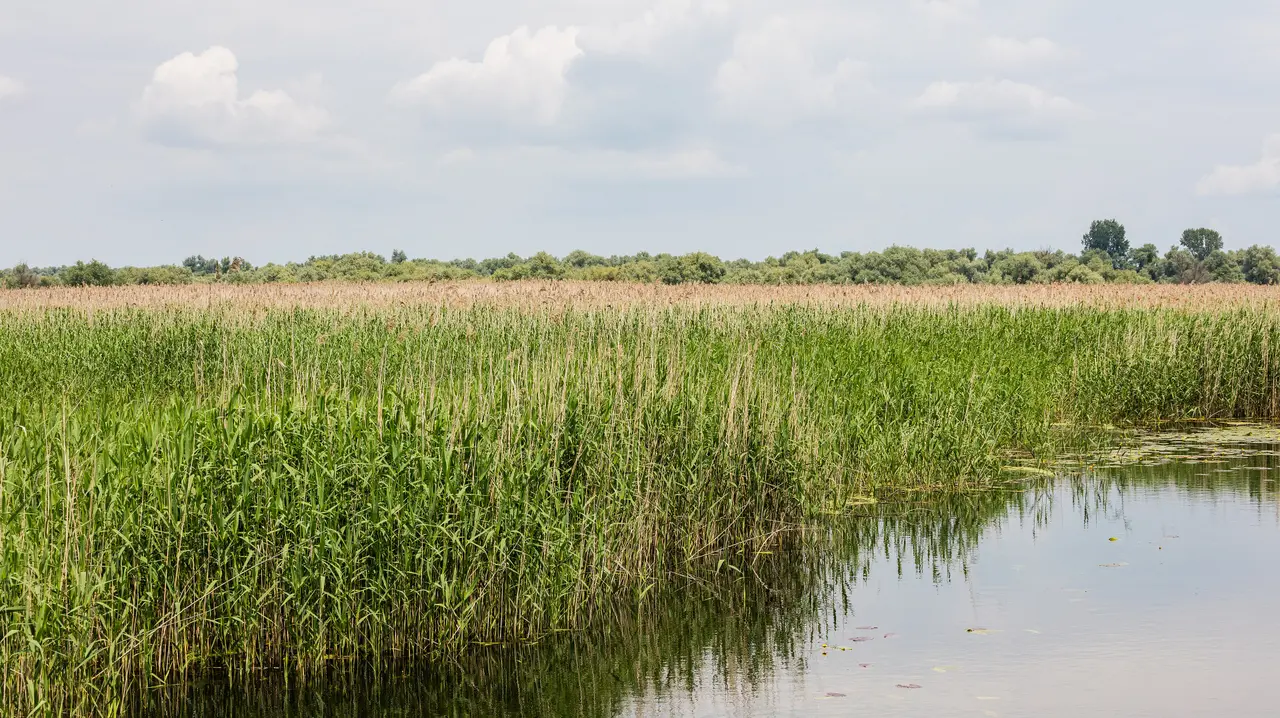
The Danube Delta is where Europe’s second-longest river fans out into hundreds of channels, lakes and reed islands before it reaches the Black Sea, and it’s the wildest thing you can do in Romania: over 300 bird species, the continent’s largest colony of white pelicans, and villages you can only reach by boat. You visit from Tulcea, the port city at the delta’s edge, roughly 300 km east of Bucharest. From there you either take the cheap public ferry or, far better for a first trip, hire a small boat with a guide who knows where the pelicans are. On “when”: spring and early autumn for birds, high summer if you also want a beach.
The overview, before the detail. This is not a place you “see” in a couple of hours from a bus, and it rewards a bit of planning. The big public ferries run in straight lines down the main arms; the wildlife lives in the narrow side-channels a ferry can’t enter. So the way most people actually experience the delta is a small motorboat, either for a day out of Tulcea or as part of a two-to-four-day trip staying in the villages. Get that one decision right and everything else falls into place.
What exactly is the Danube Delta?
The point where the Danube ends. After nearly 2,900 km the river splits into three main arms and dumps its water and silt into a vast wetland that is still growing seaward every year. The three distributaries are the Chilia in the north (which carries the most water, right along the Ukrainian border), the Sulina in the middle (the straightened shipping channel, and the one the ferry to the sea follows), and the Sfantu Gheorghe in the south. Between and around them sit thousands of square kilometres of reeds, floating islands, willow forest and shallow lakes.
The numbers are genuinely big. The Romanian part of the delta covers around 3,446 square kilometres, and it’s often called the best-preserved delta in Europe and home to the continent’s largest reed bed. It has been a UNESCO World Heritage Site since 1991 and a Ramsar wetland since the same year; the wider biosphere reserve, managed jointly with Ukraine, was extended in 1992 to about 580,000 hectares. What that protection means for you on the ground is the reserve authority (the ARBDD, based in Tulcea) and a small access permit, which I will come back to.
How do you get to Tulcea?
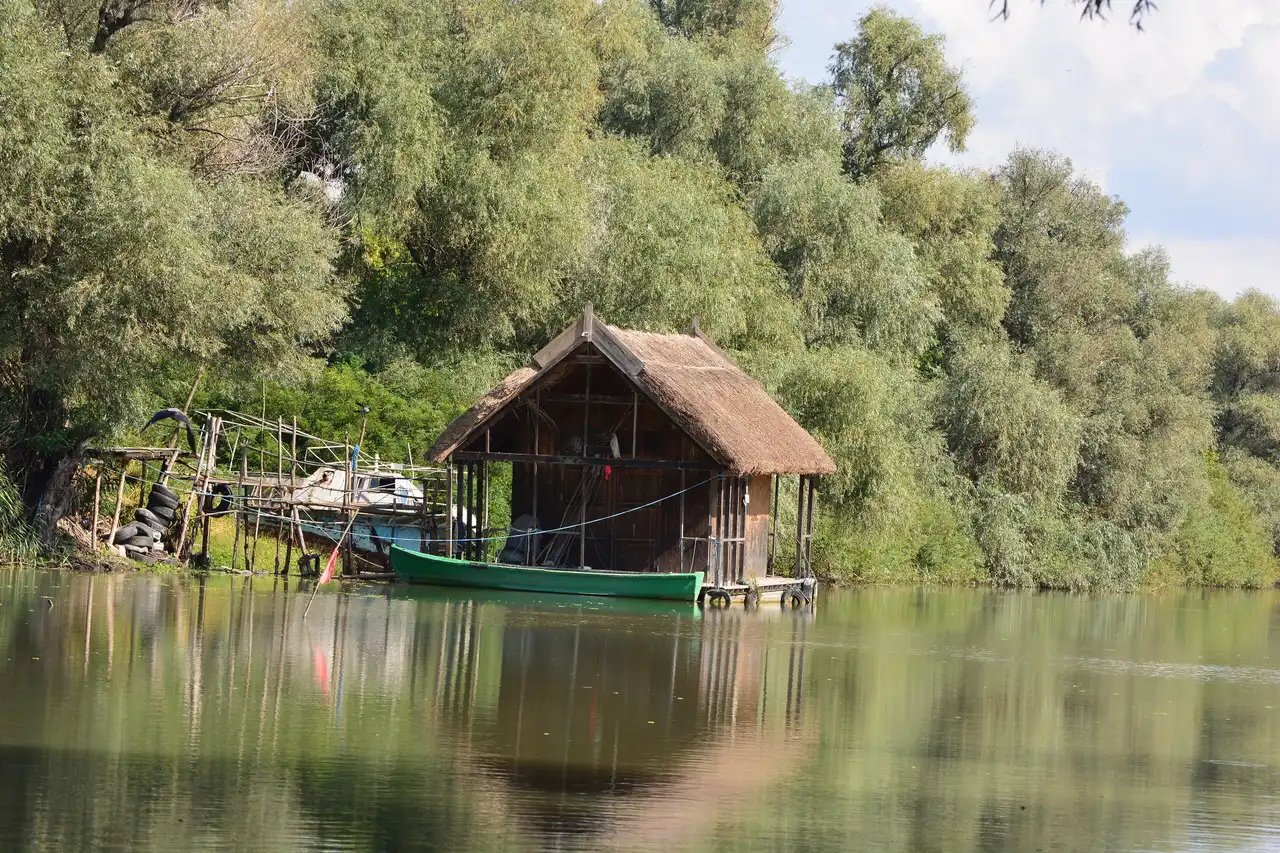
Everything starts in Tulcea, so getting there’s the first job. It sits about 300 km east of Bucharest, on the last stretch of the river before the delta proper.
By car is the most flexible. It’s roughly four to four and a half hours from Bucharest, taking the A2 motorway toward Constanta and then turning north. A car doesn’t help you inside the delta (there are almost no roads once you’re on the water), but it makes the run out here painless and lets you fold in the rest of Dobrogea on the way. By train takes around five and a half hours from Bucharest, usually with a change at Medgidia, with roughly two departures a day; check current times with the railway (CFR) if a day depends on it, because the connection is the fiddly part. Intercity coaches also run from Bucharest and are often the quickest public option door to door. To skip both the driving and the timetable, a fixed-price private transfer takes you straight from the city or the airport to your Tulcea hotel, which makes sense for a group splitting the cost or anyone arriving on a late flight.
Wherever you come from, aim to arrive the evening before: the good boats leave in the morning, the light for birds is best early, and a full day of travel is not how you want to spend your first morning in the reeds. Tulcea itself is a working port rather than a resort, but it has enough hotels and guesthouses along the waterfront to sleep the night and grab an early coffee before you cast off.
Ferry or private boat: which should you take?
This is the decision that defines your trip, so it is worth understanding the two options properly.
The public ferry is run by Navrom, the state passenger line, from Tulcea port. Scheduled boats head down each of the three arms: to Sulina (via Maliuc and Crisan), to Sfantu Gheorghe (via Mahmudia), and to Periprava on the Chilia arm. It’s cheap and it’s a real slice of local life, since this is how delta residents actually get to town. The classic slow ferry to Sulina takes roughly four hours and costs around 45 to 55 lei one way; a faster private speedboat on the same route is roughly 90 minutes and around 50 to 60 lei (some skippers charge foreigners the higher end). The catch is that the ferry runs a fixed line down the main channel and doesn’t detour into the quiet backwaters where the wildlife is. Treat these times and fares as a guide and confirm the current timetable on navromdelta.ro, because Navrom changes vessels and schedules by season.
A private guided boat is what turns a nice river trip into a delta trip. A small motorboat can slip off the main arm into the narrow, reed-lined channels and out onto the shallow lakes where pelicans, herons and cormorants feed, and a local skipper knows which lakes are worth the fuel that week. You can do this as a day trip out of Tulcea, or as a two-to-four-day tour that overnights in villages like Crisan, Mila 23 or Sfantu Gheorghe and gets you out at dawn and dusk when the birds are busiest. It costs more than the ferry, obviously, but for a first visit it’s the money that actually buys you the delta.
My rule of thumb: if you have one day, book a small guided boat and don’t think twice. If you have several days and a sense of adventure, take the ferry out to a village, base yourself there, and hire local boatmen for the early-morning runs. If all you want is to say you stood where the Danube meets the sea, the slow ferry to Sulina and its beach will do it on a budget. For a worked two-day version of the village-based trip - Tulcea to Crisan, Mila 23, Letea and Sulina - our Danube Delta by boat route lays it out pier by pier.
When is the best time to visit for birds?
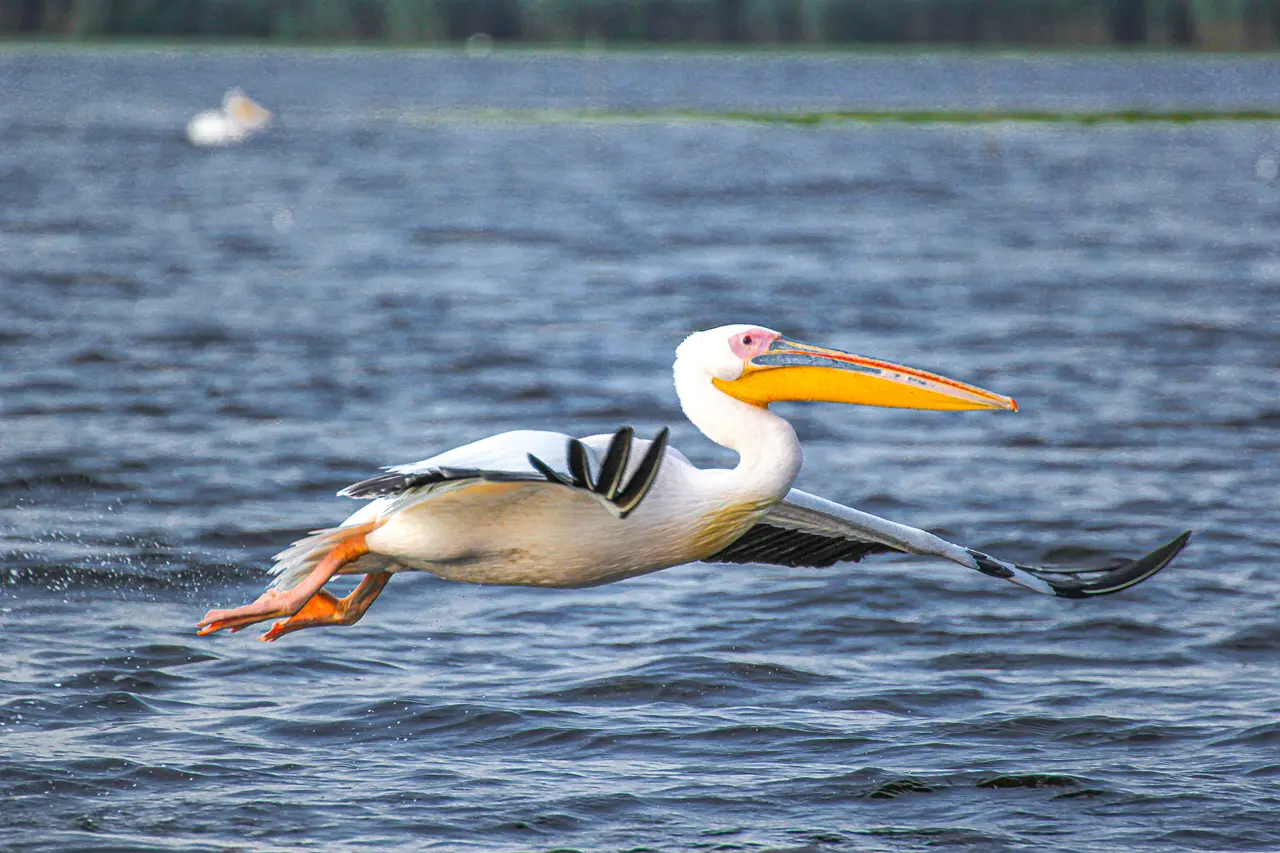
The delta is a birdwatching site of world rank, so the calendar matters more here than at most attractions. Over 300 species have been recorded, and the star is the great white pelican: the delta holds Europe’s largest breeding colony, joined by the rarer Dalmatian pelican. Add white-tailed eagles over the flooded forest, huge numbers of pygmy cormorants, herons, egrets and glossy ibis, and in a good spot you lose count.
Roughly, late April to September is the fullest window - warm, green, and busy with birdlife. May is the peak for pelicans and for the breeding season generally, when the colonies are at their loudest. Spring and autumn also catch the migration, when the delta becomes a motorway for birds moving between Europe and Africa. If your interest is the rarities, late October into November brings wintering Arctic species down from the north, including the striking red-breasted goose. The exact peak weeks shift year to year with the weather, so think in seasons rather than fixed dates. If you’re slotting the delta into a wider trip, our guide to the best time to visit Romania lines the delta window up against the mountain roads, ski season and the coast.
You’re balancing the usual two things. High summer (July and August) is hot, has the most mosquitoes, and draws the most visitors, but it’s also the easiest for logistics and the time you can swim off Sulina’s beach. Spring and early autumn give you fewer people, gentler heat and, frankly, better birds. Whenever you come, pack long sleeves and repellent for the reed channels, and bring binoculars - the birds are the point.
What is there to see beyond the birds?
Plenty, and it is worth building a day or two around the highlights rather than just cruising.
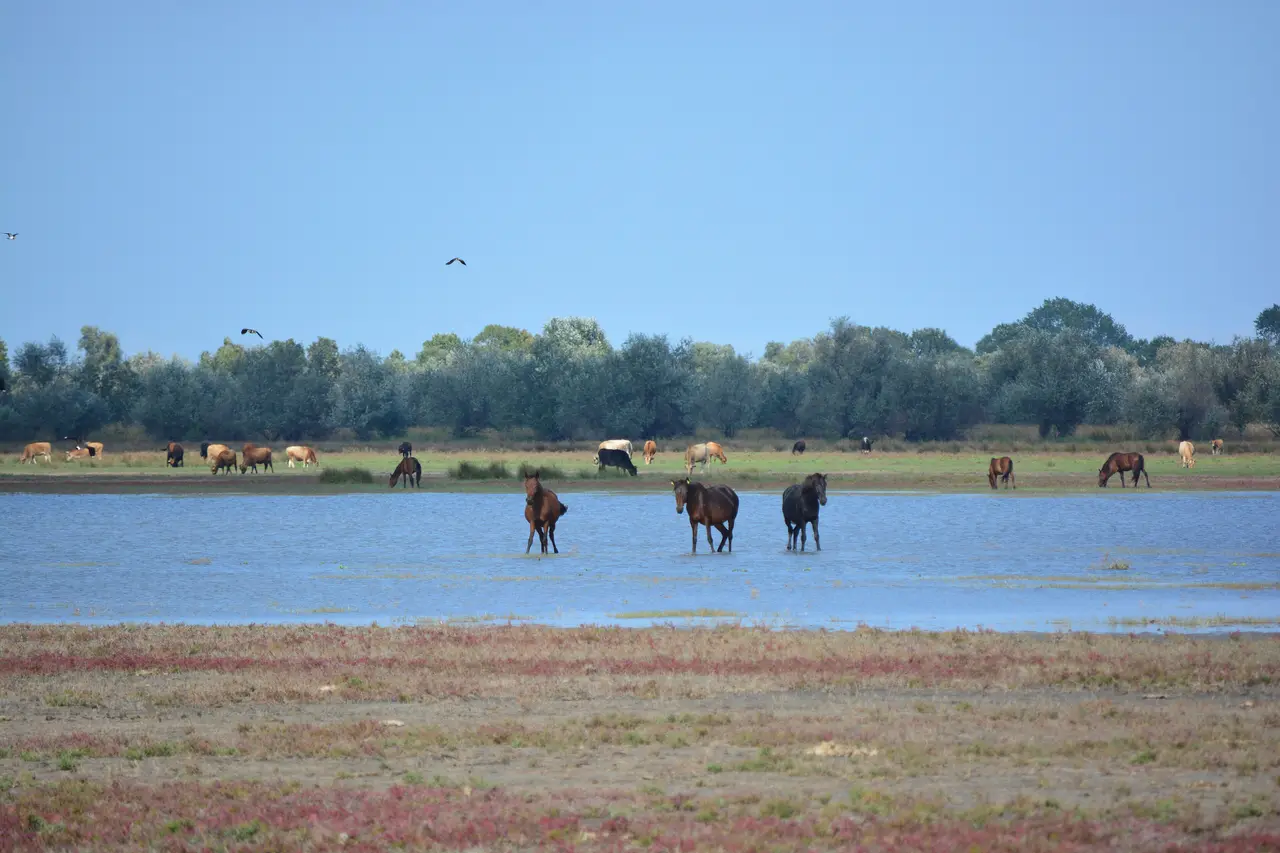
Letea Forest is the strange one. On sand dunes in the north of the delta grows a band of ancient oak and ash, some trees said to be more than 500 years old, tangled with wild vines and creepers so that it looks almost subtropical - it is often called the northernmost forest of its kind in Europe. Wandering among the oaks are herds of semi-feral horses, descended from animals let loose over the generations, along with foxes, boar and white-tailed eagles overhead. Caraorman, further south, is the delta’s other dune forest. Reaching Letea is a mini-expedition (boat to a village, then a local ride). The difficulty is what keeps it wild.
Sulina is the delta’s odd little town at the end of the middle arm, the easternmost point in Romania, once a booming free port and now a quiet place with a sandy Black Sea beach and a lighthouse that used to stand on the shoreline before the delta grew past it. Sfantu Gheorghe is a fishing village on the southern arm with a wilder beach. Between them lie the inner-delta villages - Mila 23, Crisan - where life still runs on boats and fish, and where you sleep if you want the dawn chorus outside your window.
Do you need a permit, and what does it cost?
Yes, but it’s a small thing rather than a hurdle. Because the delta is a protected biosphere reserve, everyone entering it needs an ARBDD access permit. The fees are tiny - reported at roughly 5 lei for a day and about 15 lei for a week per person, with small extra charges for a car or a private boat. You can buy one at the ARBDD office in Tulcea, at SelfPay kiosks around the country, or through hotels and agencies, and if you go on an organised tour the operator almost always folds it into the price so you never handle it yourself. These are official reserve fees and they do change, so treat the figures here as a ballpark and check the current tariff with the ARBDD rather than assuming.
The bigger money question is the boat, not the permit. Budget for the guided-boat cost (or the ferry fare if you’re going the cheap route), a night or two in a village or in Tulcea, and meals - fresh fish is the thing to eat out here. And remember Romania runs on the leu, not the euro, so carry cash: card machines are scarce once you leave Tulcea, and a village boatman is not going to take a tap-to-pay.
How does the delta fit into a Romania trip?
It sits off to the east, on its own, which is both the appeal and the catch. This isn’t a quick detour from the Transylvanian castles - it’s a full two or three days in the opposite corner of the country, and it works best as a deliberate add-on rather than an afterthought. The closest pairing is with the coast: Tulcea is only a couple of hours north of Constanta and the Black Sea beaches, so many people do the Roman ruins and Mamaia first, then swap the sunbeds for a boat into the reeds. Most first-timers loop the mountains and medieval towns; if you want wilderness to balance all that history, the delta is where you get it. The other detour that rewards the drive out of the tourist core is up north to the painted monasteries of Bucovina, a very different kind of Romania again - medieval frescoes on church walls rather than pelicans over the reeds - and the two make a natural pair for a traveller willing to go beyond the castles.
The natural way to slot it in is to start or end in the capital. Bucharest is the gateway to the whole east of the country, and our guide to things to do in Bucharest covers the city you’ll most likely fly into on the way here. If you’re mapping the country as a whole, our Romania 7-day itinerary lays out the classic castle-and-Carpathians loop, and the delta is the obvious wild extension to tack onto either end if you can spare the days. For a sense of the sights that loop is built around, the Bran Castle guide covers the “Dracula” castle everyone asks about - the opposite of a silent dawn among the reeds, and a good reminder of how much range this one country packs in.
Photos
On the map
The map loads on click - to keep the page lightweight.
The map didn’t load. Check your connection and refresh the page.
Admission and opening hours
- Admission price
- ARBDD reserve access permit is a few lei per person (reported around 5 lei for a day, 15 lei for a week); organised boat tours usually include it. Public Navrom ferry Tulcea-Sulina is roughly 45-55 lei one way; a fast private speedboat is roughly 50-60 lei.
- Opening hours
- The delta is open year-round; the Navrom passenger ferries run to a seasonal timetable from Tulcea port. Best birdwatching is roughly late April to September, with May the peak for pelicans.
Permit fees, ferry fares and departure times change and vary by season - confirm the ferry timetable on navromdelta.ro and the current permit tariff with the ARBDD office in Tulcea before you travel. Prices checked July 2026.
Details checked: July 4, 2026
Read also

What to see · 11 min read
Marginimea Sibiului: Shepherd Villages Near Sibiu
Verified · September 5, 202618 shepherd villages west of Sibiu: Rasinari, Sibiel glass icons, Saliste, Paltinis bus fares, and how a day out of town works.

What to see · 9 min read
Prejmer Fortified Church: UNESCO Near Brasov
Verified · September 3, 2026Prejmer fortified church 15 km from Brasov: Greek-cross plan, 275 wall rooms, UNESCO hours for 2026 and how a visit actually works.

What to see · 11 min read
ASTRA Museum Sibiu: Romania's Great Open-Air Village
Verified · August 29, 2026ASTRA Museum near Sibiu: 50-lei tickets, hours by season, how to get there, and which of the 400+ buildings across 96 hectares to see first.

What to see · 10 min read
Bucegi Sphinx & Babele: Cable Car from Busteni
Updated · August 26, 2026Ride the Busteni cable car to the Sphinx and Babele: 2026 return fare 199 lei, hours from 08:30, and how to pair it with Peles or Cantacuzino.