
Maramures: Wooden Churches & the Merry Cemetery
A guide to Maramures, Romania: UNESCO wooden churches, the Merry Cemetery at Sapanta, the Mocanita steam train, and how to get there.
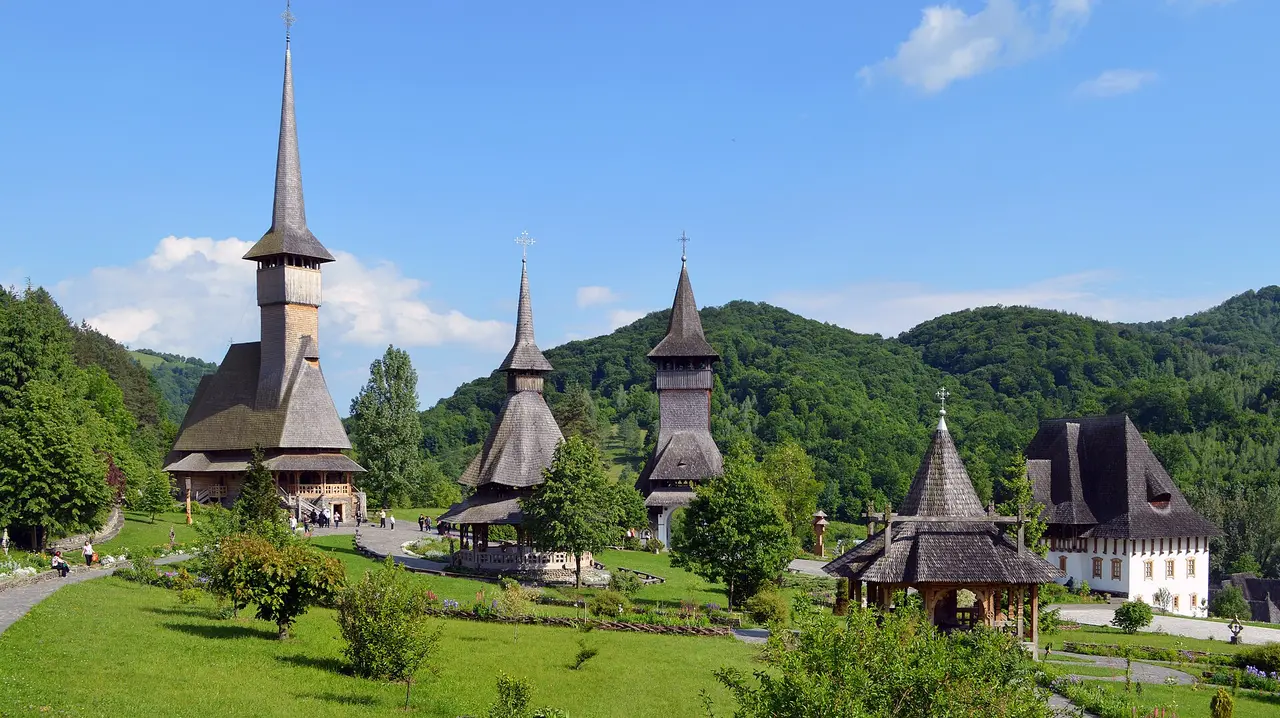
Maramures is the far north of Romania, tucked against the Ukrainian border, and it’s the one region where the old rural world is still the everyday one. Come here for three things above all: the tall wooden churches, eight of which are on the UNESCO World Heritage List; the Merry Cemetery at Sapanta, where the graves are painted bright blue and the epitaphs make jokes about the dead; and the Mocanita, a working steam train that hauls you up a forest valley. It’s spread out and short on public transport, so plan on a car and two or three days.
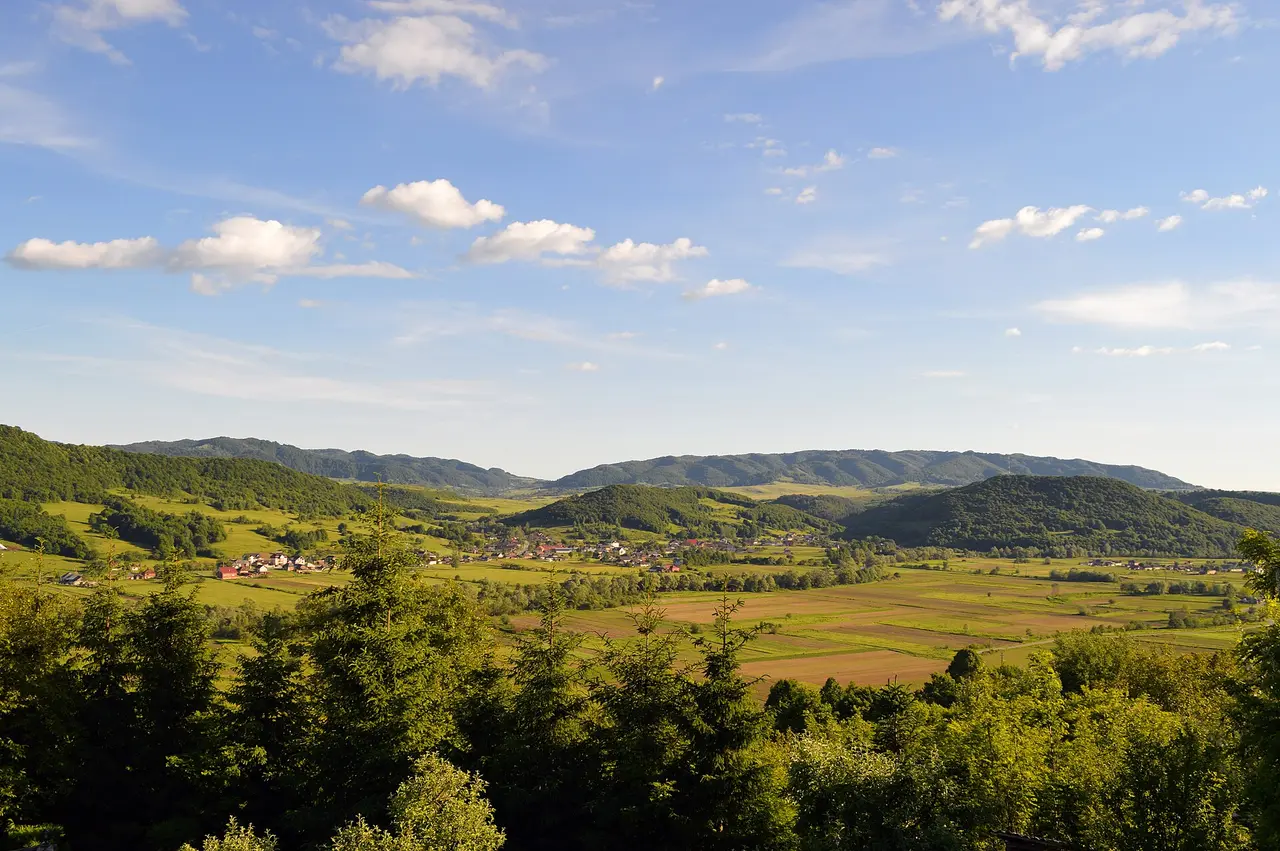
A Maramures trip works like this. You base yourself in Sighetu Marmatiei in the north or use Baia Mare, the county town, as the gateway, and you drive between villages along the Iza and Mara valleys. Nothing here is a single ticketed sight the way Peles Castle is; the churches are working parishes, often locked, and the pleasure is as much the hay meadows, carved gates and slow pace as any one monument. It pairs naturally with the painted monasteries of Bucovina next door.
Why go to Maramures?
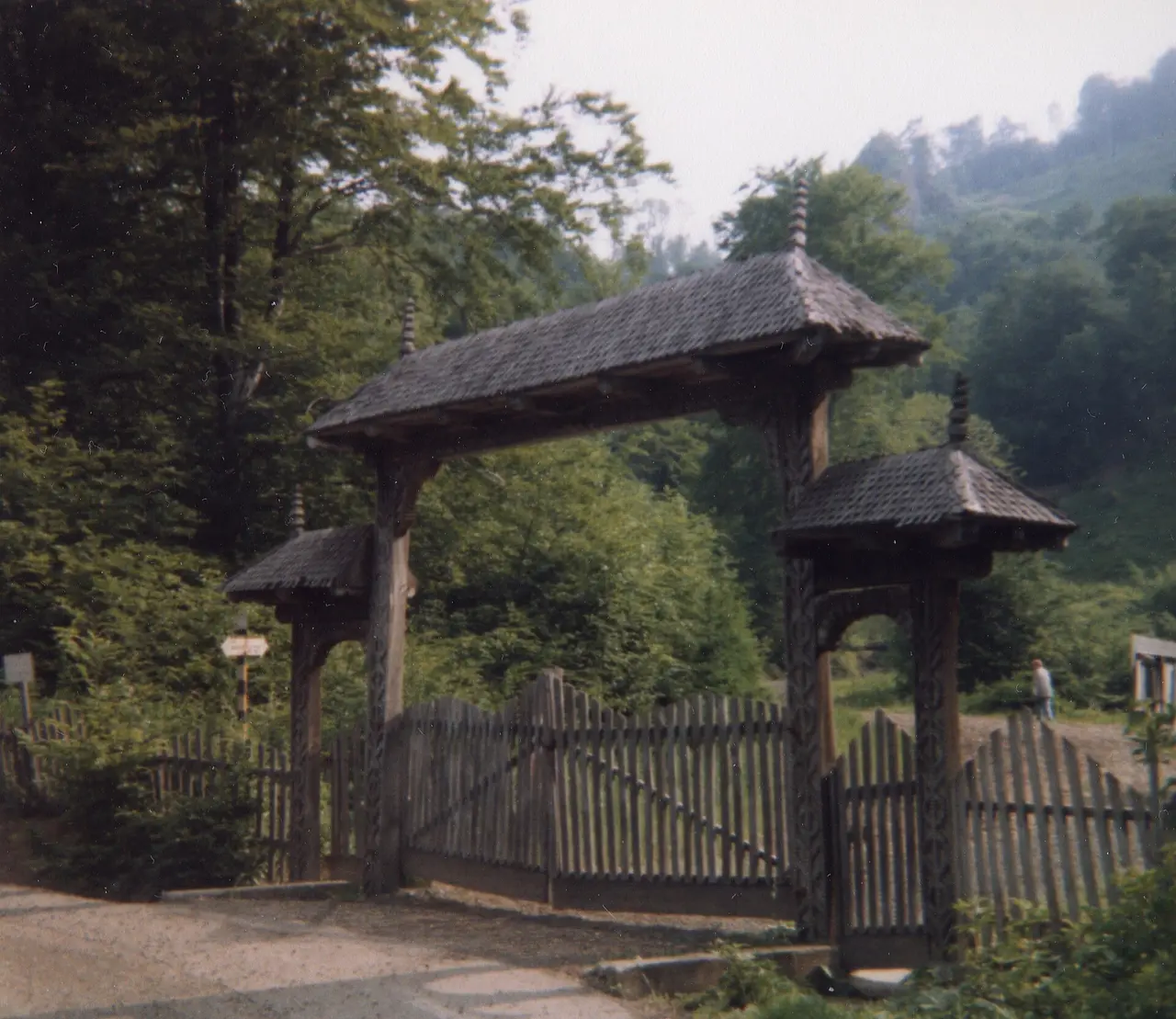
Because it’s the least polished and most traditional corner of the country, and that is the whole point. While much of Romania has modernised fast, the Maramures valleys have kept their timber houses, their horse carts at harvest, and a craft tradition you see the moment you arrive: every farmyard is fronted by a monumental carved wooden gate, its posts worked with rope-twist braids, rosettes and sun symbols. These are not museum pieces but the actual front gates people use.
The region rewards a certain kind of traveller. If you want big-ticket castles and citadels, Transylvania to the south does those better. If you want to watch a way of life that has mostly vanished elsewhere in Europe, drive quiet lanes between wooden churches, and stand in front of a cemetery that treats death with a grin, this is unmatched. Most people give it two or three days on a wider northern loop.
What are the wooden churches of Maramures?
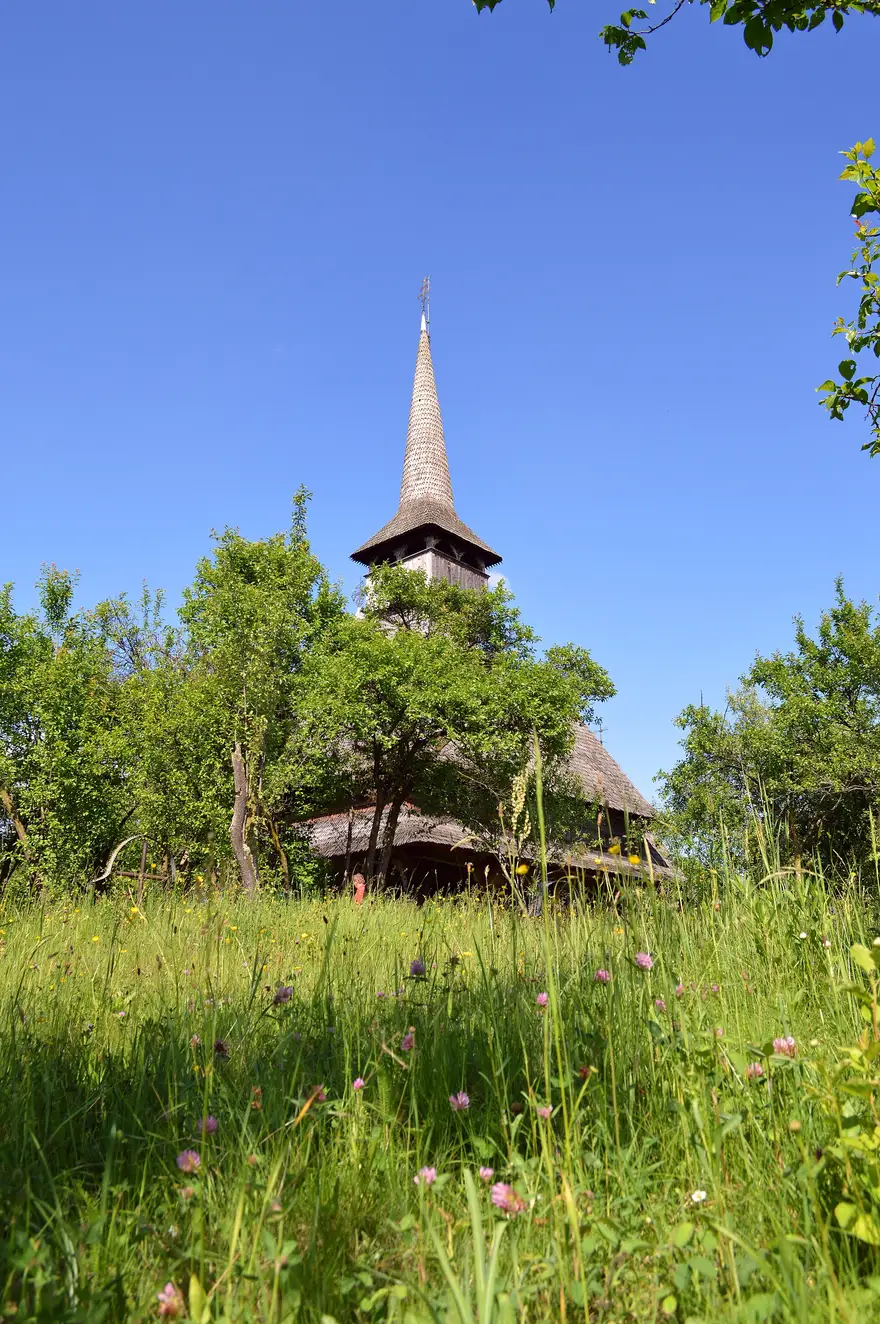
They’re tall Orthodox churches built entirely of timber, and eight of them were inscribed on the UNESCO World Heritage List in 1999: Barsana, Budesti Josani, Desesti, Ieud Hill, Plopis, Poienile Izei, Rogoz and Surdesti. They went up between the 17th and 19th centuries, and there’s a pointed reason they’re wood rather than stone. Under Catholic Austro-Hungarian rule the local Orthodox population was forbidden from raising stone churches, so village carpenters answered with timber, and then, almost in defiance, made the timber reach for the sky.
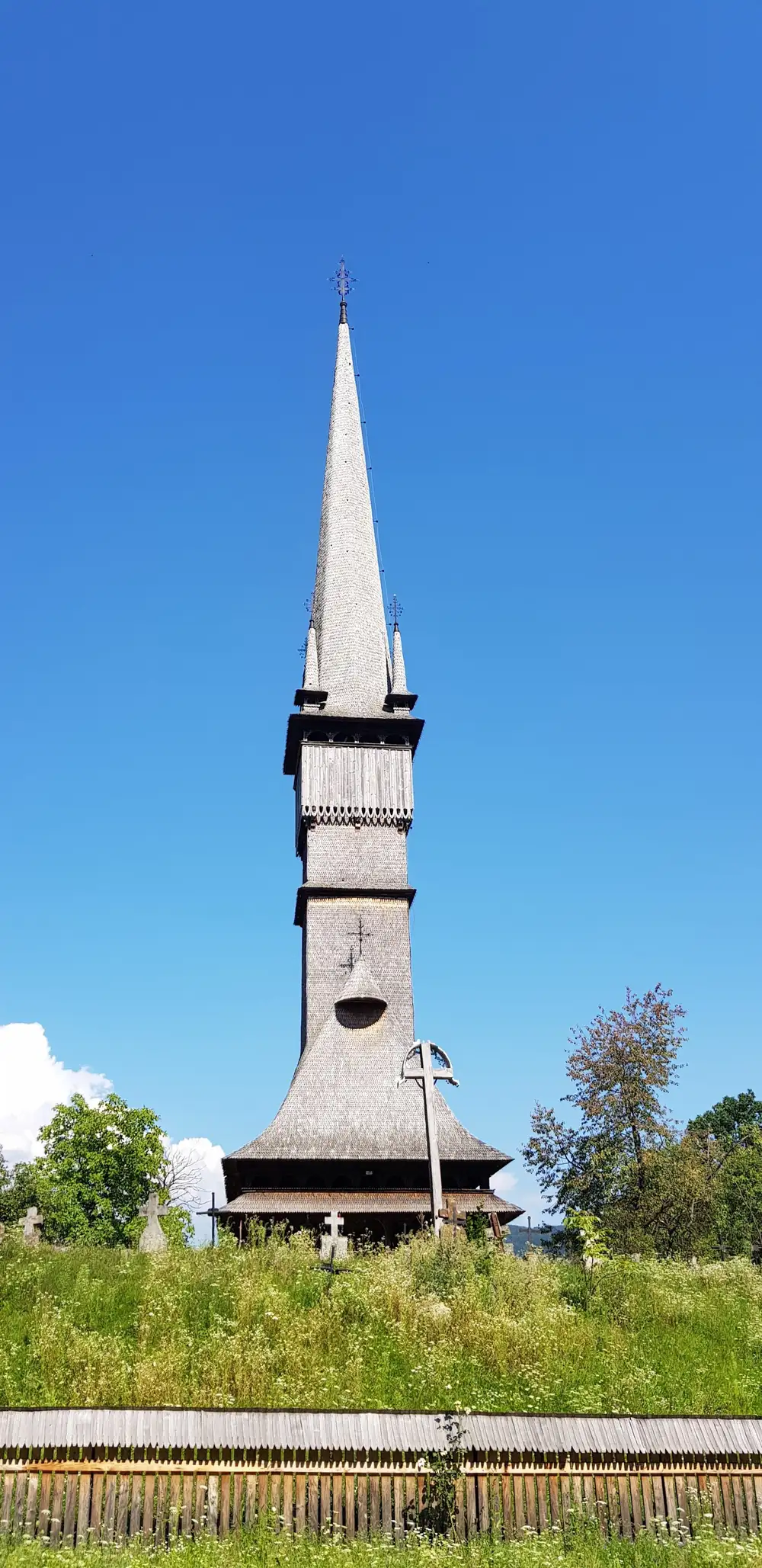
That reaching is the signature. Each church is a fairly small log building topped by a single very tall, slim clock tower at the west end, a shape borrowed from Gothic spires further west and carried out in oak and shingles. The best of them are genuinely record-breaking. The church at Surdesti, built in 1721, stands about 72 metres to the tip and is counted among the tallest wooden structures in Europe; Barsana’s old church, from 1720, reaches around 57 metres. They were raised by joinery alone, fitted together without the nails or metal fasteners you might expect.
One practical warning that trips up a lot of visitors: these are living parish churches, not staffed attractions, and many are simply locked. The doors are often opened for Sunday liturgy or by a keyholder who lives nearby, so if you set your heart on seeing the painted interior of a specific church, ask in the village or time your visit around a service. Even locked, they’re worth the stop for the carpentry and the setting.
Which churches should you actually visit?
You can’t sensibly do all eight, so pick by cluster. Barsana is the easiest headline stop, and it comes with a bonus of confusion worth clearing up. The UNESCO church is the modest old village church of 1720; a short way off sits Barsana Monastery, a large wooden monastic complex built in the 1990s, with an enormous shingled spire and manicured gardens. The monastery is newer and not the UNESCO site, but it’s the most photographed thing in Maramures and a genuinely beautiful place to walk, so most people see both.
For the older, quieter churches, Desesti and Budesti sit along the Mara valley on the road between Baia Mare and Sighet and make an easy pairing; Ieud, Poienile Izei and Rogoz lie deeper in the Iza valley and reward anyone with a full day and a good map. Cut it to two and take Barsana (for the monastery and the UNESCO church together) plus Desesti or Budesti for a real, weathered village church.
What is the Merry Cemetery at Sapanta?
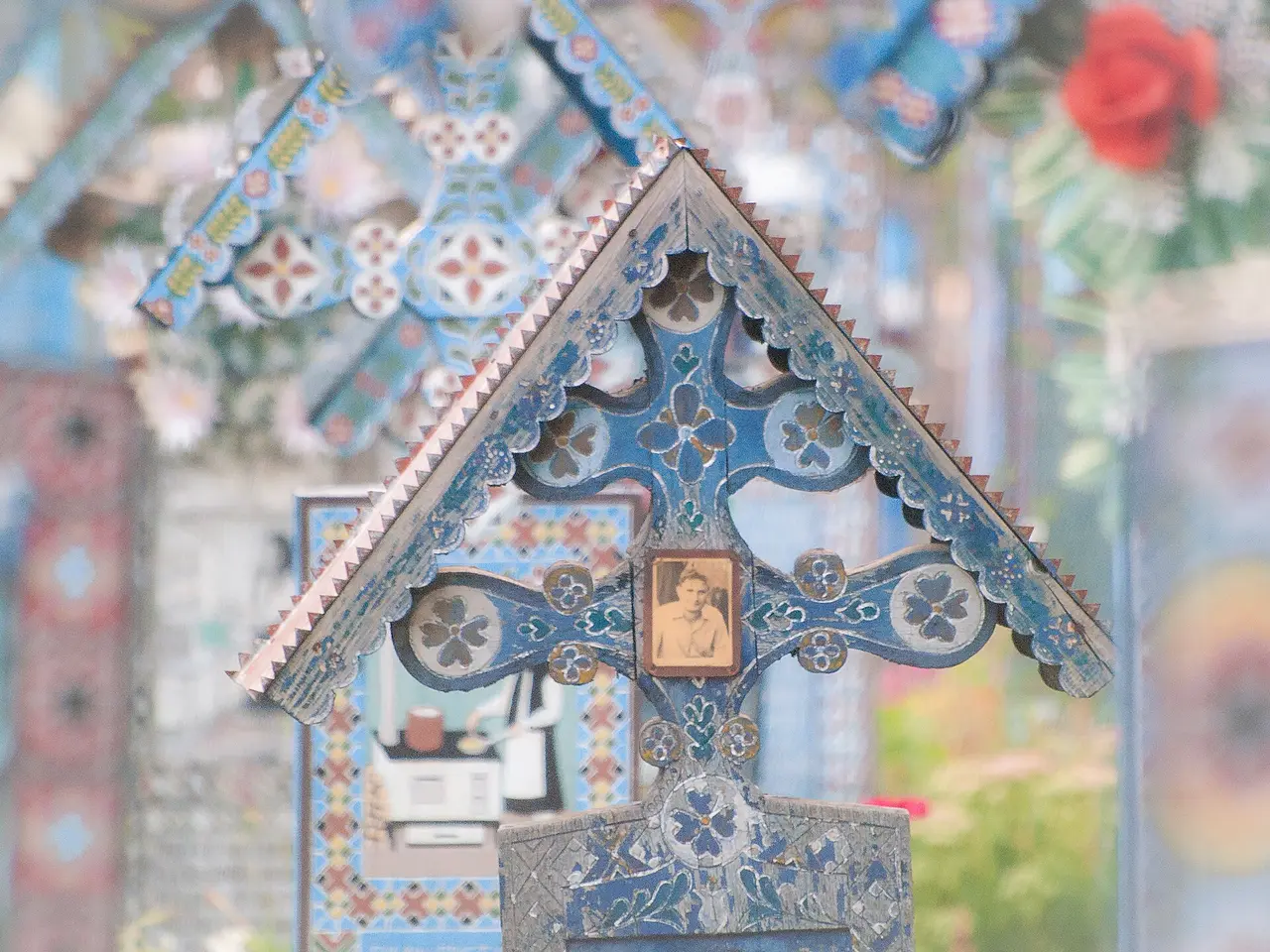
It’s the one sight everyone knows Maramures for, and it lives up to the billing. In the village of Sapanta, close to the Ukrainian border, the graveyard beside the church is a field of tall oak crosses painted in vivid colour, each with a naive little picture of the person buried below and a rhyming epitaph in the first person. The tone is the shock: instead of solemn grief, the verses are frank and often funny, poking gentle fun at the dead for their drinking, their trade, their temper, or telling bluntly how they died.
The whole thing began with one man. The local woodcarver Stan Ioan Patras carved the first painted cross in 1935 and kept going for decades, and by the 1960s there were more than 800 of them. He chose a strong sky blue for the backgrounds, now known as Sapanta blue, precisely to push back against the grey and black gloom usually attached to death. When Patras died in 1977 his apprentice, Dumitru Pop Tincu, took over the workshop in Patras’s own house and carried it on for decades; after Tincu died in 2022, his own trainees kept the chisels going, which is why the cemetery isn’t a frozen relic but a working graveyard that keeps growing.
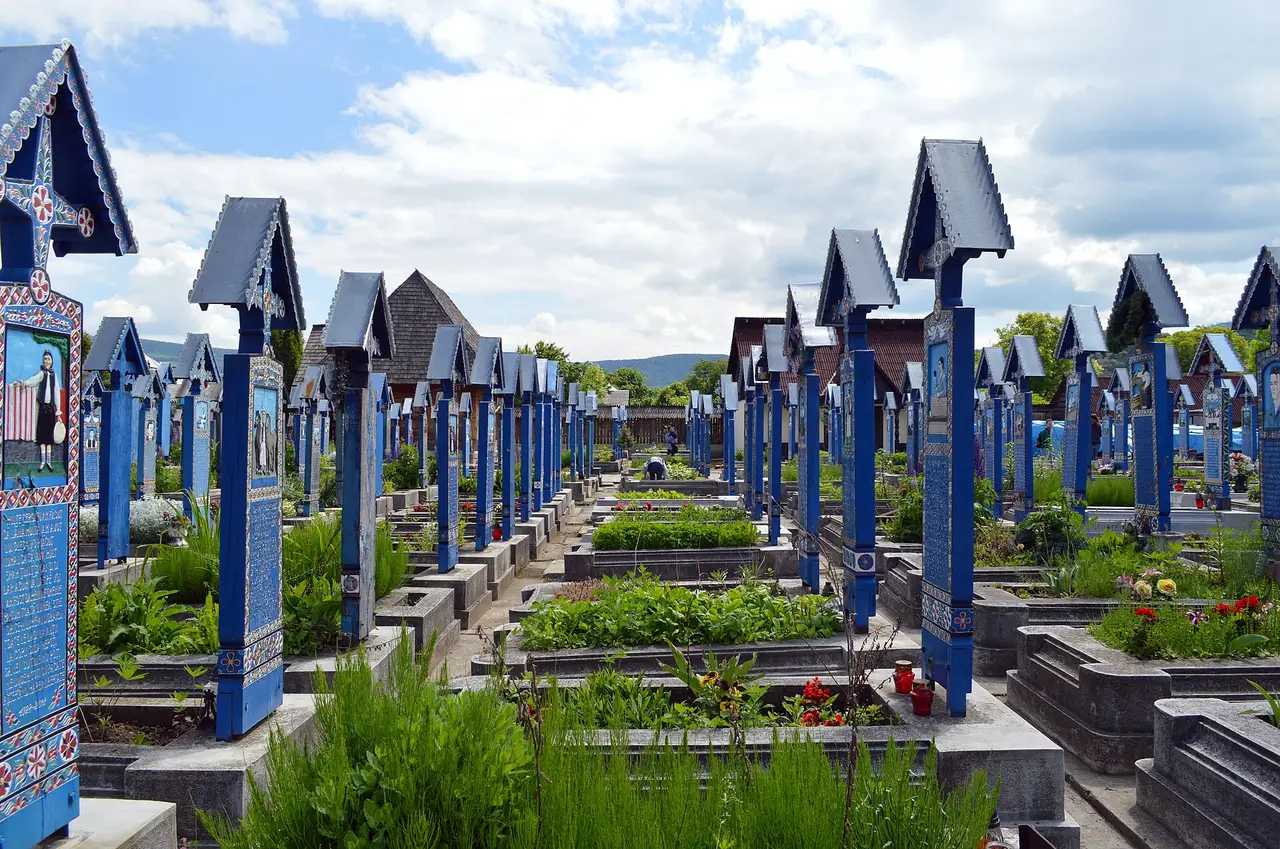
Entry is small, on the order of 10 lei for adults and about 5 for children, paid in cash at the gate. It’s genuinely worth reading a few crosses rather than just photographing the mass of colour: the ones that describe an accident, or a life spent behind a bar, or a mother-in-law nobody misses, are what make the place stick. Give it an unhurried hour.
Should you ride the Mocanita steam train?
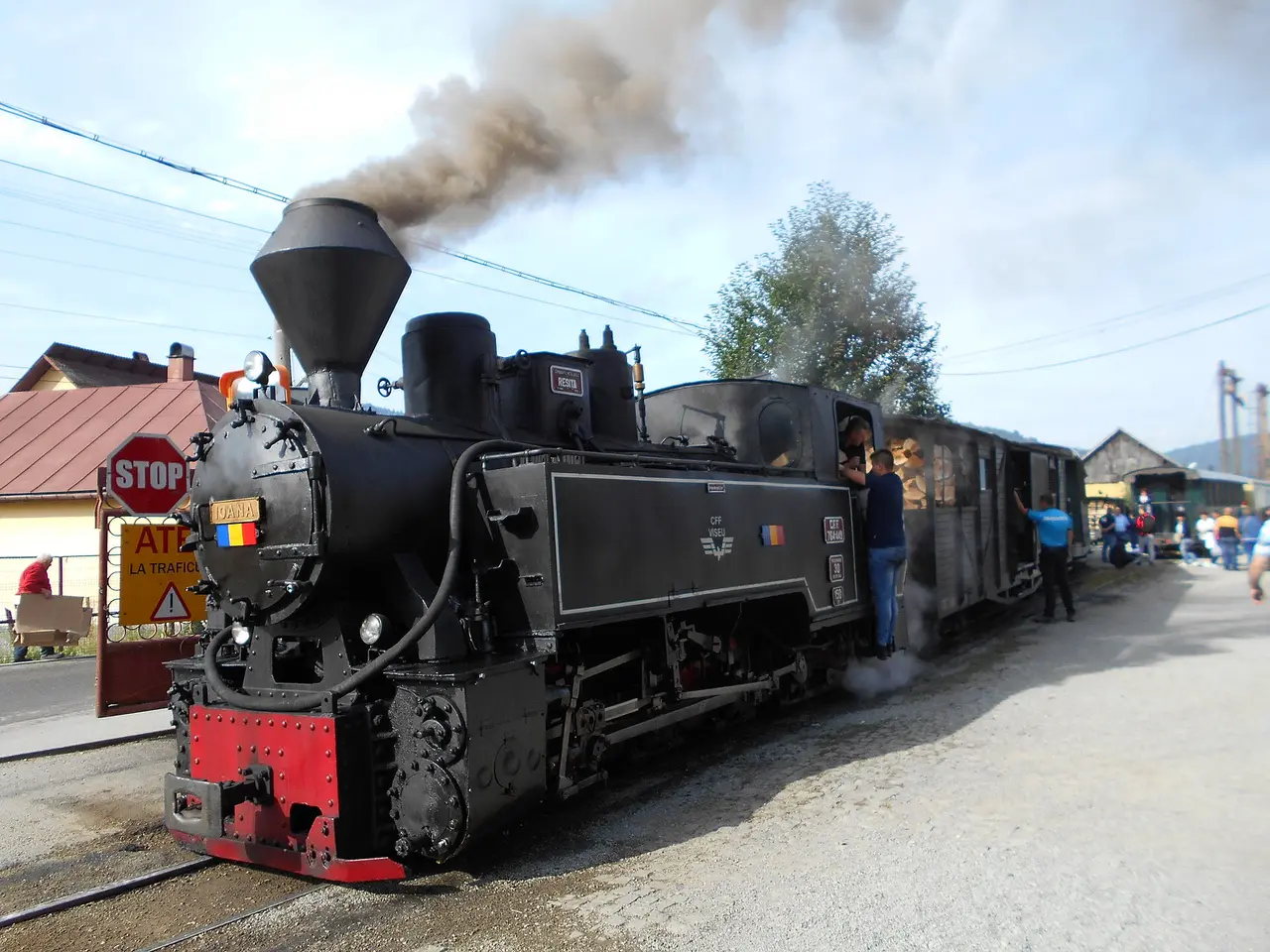
Yes, if you like your travel slow and smoky. The Mocanita is a narrow-gauge forestry railway that still runs on steam out of Viseu de Sus, in the east of the region, and it’s the last working forest line of its kind in Romania. It was built to haul timber down the Vaser Valley, a roadless gorge along the Vaser river, and it now carries passengers roughly 40 km into that forest and back, a round trip of about five to six hours with stops to take on water and let you stretch.
Departures start in the morning - the operator publishes the exact times only in its online ticket shop, so check them when you book. In peak season, April to October, it runs daily; in January, February, November and December it runs Thursday to Sunday, and in March only Friday to Sunday, so check the current days rather than assuming. A standard adult ticket is around 136 lei, children pay less, and there is a pricier package that throws in a grilled lunch at a valley clearing. Two bits of practical advice: book online ahead in summer, because it genuinely sells out, and dress for cool, damp forest even on a warm day, since you spend hours in shade beside a river. It’s touristy now, no question, but the scenery and the working locomotives earn it.
What else is worth your time?
Two stops round out the region. In Sighetu Marmatiei, the Memorial to the Victims of Communism and to the Resistance is set inside a former communist prison where, between 1950 and 1955, the political and cultural elite of pre-war Romania was locked up and many died. It opened as a museum in 1997, fills around 60 cells with exhibits, and in 1998 the Council of Europe named it alongside Auschwitz-Birkenau and the Caen Memorial in Normandy as a key site of European memory. It is sobering and important, the sharpest possible contrast to the cheerful graveyard an hour away.
The other thing is simply the villages. Slow down for the carved gates, watch for the hayricks built by hand in late summer, and if you’re here around Orthodox Easter you land in the middle of Maramures at its most traditional. This is a place where the drive is the attraction, so leave gaps in the plan.
How do you get to Maramures, and how long do you need?
The region has its own small airport, Maramures Airport (BAY) near Baia Mare, but it’s small: Tarom’s hop from Bucharest (about an hour and twenty minutes, most days), a HiSky link to Paris Beauvais three times a week in the autumn programme, and summer-season charters to Antalya, Heraklion and Hurghada. In practice many travellers fly into Cluj-Napoca instead, which has far more connections, and drive up from there; the Cluj guide covers that gateway. Another western entry is to fly to Budapest and start from Oradea on the border, an easy first night before the drive north. From Baia Mare it’s around 60 km north to Sighetu Marmatiei over the scenic Gutai pass, roughly an hour by road.
Once you’re here, a car does all the heavy lifting, because the churches, Sapanta and Viseu de Sus are scattered across the valleys and public transport between them is thin and slow. Sighetu Marmatiei makes the best northern base for the Merry Cemetery and the churches; villages like Breb are lovely if you want to stay somewhere truly rural. If you’d rather not drive the whole way yourself, a transfer from Cluj or Baia Mare will get you into the region, though you’ll still want a local car or taxi once you’re out among the scattered villages; our Maramures loop route lays out the whole drive stop by stop, including where that pickup fits.
Two or three days covers it properly - enough for the churches and Sapanta, the Mocanita, and a slower morning around Sighet, but not enough to also fit Bucovina into the same trip without rushing one or the other. Exactly how to split those days, and in what order, is what our Maramures loop route works out stop by stop, driving from Baia Mare through Sapanta, Barsana, Sighet and the Vaser Valley. Most people fold Maramures into a bigger northern trip: Bucovina’s painted monasteries sit just over the mountains to the east as a natural next stop, our Romania 7-day itinerary shows how the region connects with the castles and cities to the south, and the Transylvania road trip covers the drive up from Cluj. A week won’t hold Maramures properly on top of the castles; the 10-day Romania itinerary is the version that gives this region and Bucovina two nights each instead of a rushed afternoon.
Photos
On the map
The map loads on click - to keep the page lightweight.
The map didn’t load. Check your connection and refresh the page.
Admission and opening hours
- Admission price
- Merry Cemetery at Sapanta is around 10 lei for adults and about 5 lei for children, paid in cash at the gate, with a small extra fee for a pro camera. The Mocanita steam train from Viseu de Sus runs roughly 136 lei for adults, 95 lei for children (3-18), with a pricier package that adds a grilled lunch.
- Opening hours
- Merry Cemetery is open daily, roughly 08:00-20:00 in summer and daylight hours in winter. The Mocanita runs daily April to October, Thursday to Sunday in January, February, November and December, and Friday to Sunday in March; departures start in the morning, with exact times published only in the operator's online shop.
Fees, timetables and seasons change without notice. Book the Mocanita online in advance in summer, as it sells out, and confirm the cemetery details locally. Carry small notes in lei; card machines out here are not a given.
Details checked: July 5, 2026
Read also

Cities · 13 min read
Predeal: Romania's Highest Ski Town
Verified · September 3, 2026Predeal sits at 1,030-1,110 m on the Bucharest-Brasov line: Clabucet ski, the town itself, and how it stacks up against Sinaia and Poiana.

Cities · 10 min read
Suceava Travel Guide: Fortress & Bucovina Gateway
Updated · August 25, 2026Things to do in Suceava: Stephen the Great's fortress, the UNESCO Saint John monastery, village museums, and using the city as a base for Bucovina.

Cities · 9 min read
Where to Stay in Sighisoara: Citadel or Lower Town
Verified · August 24, 2026Where to stay in Sighisoara: citadel vs Lower Town, price bands in lei, parking, the medieval festival, and who should sleep inside the walls.

Cities · 11 min read
Where to Stay in Timisoara: Best Areas & Hotels
Verified · August 19, 2026Where to stay in Timisoara: Cetate vs Fabric vs Iosefin vs Circumvalatiunii - who each suits, walk times, prices in lei, and getting in from the airport.