
Car Rental in Romania: Tips & Where to Book
Renting a car in Romania: minimum age, the deposit and credit-card catch, insurance and excess, licence and IDP rules, where to pick up, and honest tips.
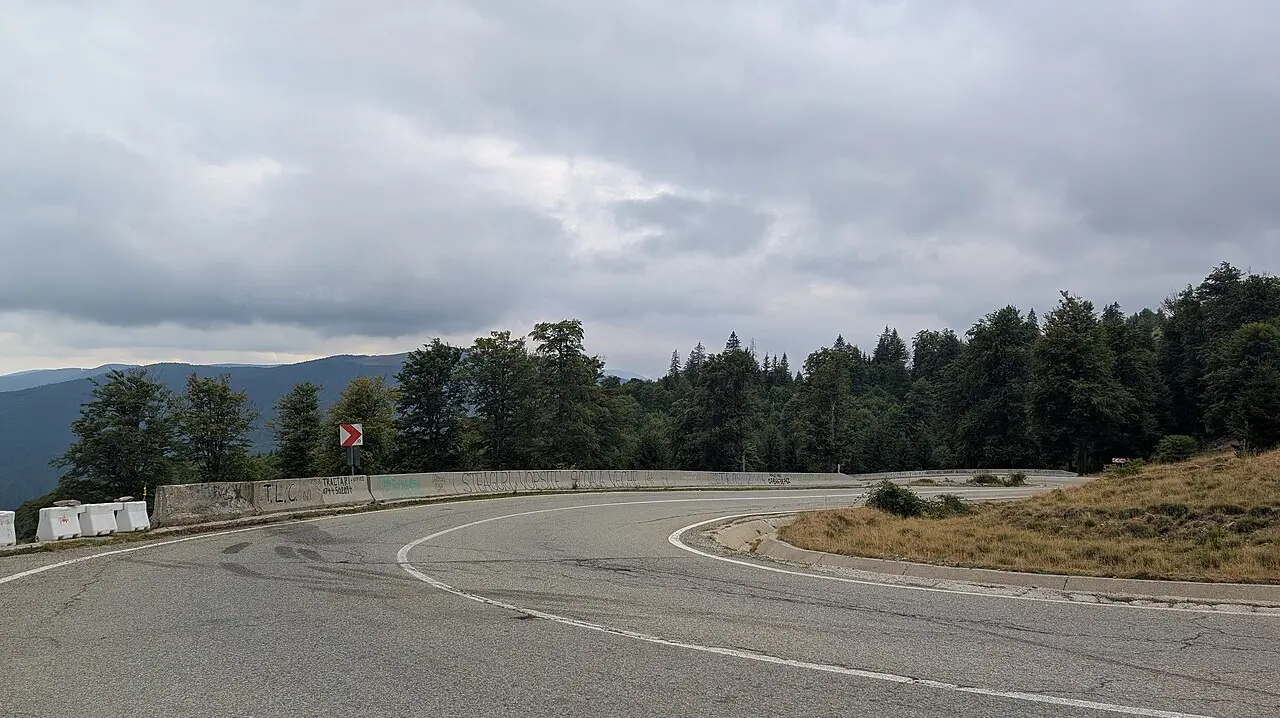
Renting a car in Romania is the single best thing you can do to actually see the country, and the process is straightforward as long as you know three things up front: you usually need to be 21 with a licence held a year, you almost certainly need a real credit card for the deposit hold, and the insurance that comes bundled leaves an excess that doesn’t cover tyres or glass. Get those right and the rest is easy. The medieval towns of Transylvania, the castles, the Transfagarasan, and above all Maramures are spread out and thin on public transport, so a car is what unlocks the version of Romania people fly in for. Driving on into the Western Balkans? Crossing Balkan borders in a hire car covers the permission letter and where a Green Card is still required.
Here is the framing before the detail. The big cities are well connected by train and bus, and you don’t need a car to see Bucharest or to hop between Brasov, Sibiu and Cluj. Where a car pays for itself is the countryside and the mountain roads: the villages with no timetable, the two castles you want to do in one afternoon, the high passes that are the whole point of a Romania road trip. If your plan is city-to-city, you can skip this and take the train. If it involves the word “Transylvania” in any real sense, read on.
Do you actually need to rent a car in Romania?
Sibiu is the natural start for the Transfăgărășan and Transalpina route - book a car with enough ground clearance.
It depends entirely on your itinerary, so look hard at yours. For a city break in Bucharest, no: the metro and taxis (use the Bolt app to avoid airport-taxi games) cover everything, and a car is just a parking headache. For the classic castle-and-mountains loop, a car turns a stressful chain of buses and day-tours into a trip you control.
The clearest case for renting is anywhere the buses barely reach. Maramures in the far north, with its wooden churches and carved gate villages, is genuinely hard to do without your own wheels; the same goes for stringing together the painted monasteries of Bucovina or reaching trailheads in the Carpathians. The clearest case against is the Danube Delta: you can drive to Tulcea, but the delta itself is water, so the car sits in a car park while you take a boat. Match the tool to the trip.
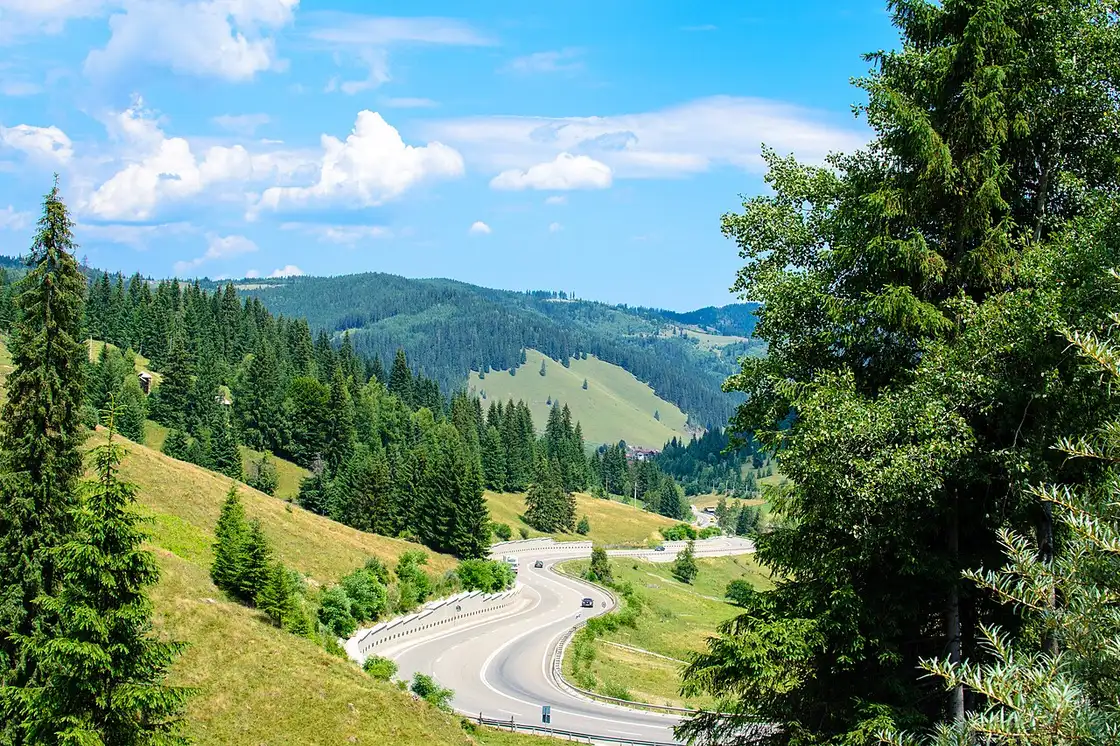
How old do you have to be, and what will young drivers pay?
The usual minimum is 21 years old, with your licence held for at least a year, though some local agencies set the bar at 23. If you’re under 25, budget for a young-driver surcharge on top of the daily rate, and expect to be steered away from larger or premium cars. As a real example, Hertz Romania charges a young-driver fee for the 21-24 bracket (on the order of nine to ten euros a day, capped), and other suppliers price it their own way.
These numbers are supplier-specific and they move, so treat “21, sometimes 23, under-25 pays extra” as the shape of it rather than a promise. The practical move is to filter for your age when you compare, because a car that looks cheap can gain a chunk once the surcharge is added, and the gap between two suppliers on that one line can be bigger than the difference in the headline price.
Licence and the International Driving Permit: what do you need?
If you hold an EU or EEA driving licence, you’re fine as you’re - hand it over and drive. The question that trips people up is the non-EU licence.
Here the rules recently changed in visitors’ favour. Under a 2025 government decision (No. 795/2025, in force since late 2025), citizens of a set of countries - including the US, Canada, Australia and New Zealand - may drive in Romania on their valid national licence plus passport, without an International Driving Permit (IDP), for up to six months (Chile is three). So an American on a two-week trip is legal on a state licence alone, which was not clearly the case before. For stays beyond six months, or once you become resident, you have to convert to a Romanian licence - an IDP doesn’t cover that.
Two caveats. First, this is a YMYL area and the list of eligible countries and the exact terms are set by government decision and can move, so check your own embassy’s current advice. Second, the law is one thing and a rental company’s house rules are another: some desks still ask non-EU drivers for an IDP as their own policy. Since an IDP is cheap, issued in your home country before travel, and always carried with your original licence rather than instead of it, many drivers still get one purely to avoid an argument at the counter. If your licence isn’t printed in the Latin alphabet, treat the IDP as effectively required.
The deposit and the credit-card catch (read this one twice)
This is the mistake that strands people at the desk, so it gets its own section. When you collect the car, the supplier pre-authorises a security deposit on a credit card and releases it after you return the car undamaged. The amount depends on the vehicle and the cover you take, and it ranges widely - anywhere from around a hundred euros on a small car to several thousand on a premium one. Because that hold ties up real headroom on your card, it is worth reading how money in Romania works, from the leu-not-euro basics to card and cash habits.
The catch is the card. Most mainstream suppliers won’t accept a debit card, prepaid card, Revolut, Maestro or Visa Electron for the deposit - they want a real credit card, usually in the main driver’s name, with enough available limit to cover the hold. Where a debit card is accepted at all, the blocked money can take up to about 30 days to come back. So the single most common way to get stung is to fly in with only a debit or Revolut card and discover the counter can’t give you the keys. Sort this out at home: bring a credit card with headroom, and on a debit card alone, confirm in writing that your specific supplier and car will accept it, in writing if you can.
What does the insurance actually cover?
Romanian rentals come with RCA, the mandatory third-party liability cover, included by law - but RCA only pays for damage you do to other people and their property, not to your own rental car. For your car you rely on CDW (collision damage waiver) and theft protection, and here is the part worth understanding: CDW isn’t really insurance, it’s a waiver that caps what the company can charge you. It leaves an excess - a deductible you still pay on any damage - and that excess almost always excludes the windscreen and glass, the tyres, the wheels and rims, the underbody and the interior.
That exclusion list isn’t academic in Romania. Those are exactly the parts that suffer on a gravel-edged mountain pass, a pothole on a country road, or a stray stone on the Transfagarasan. You have two sensible options: buy the supplier’s “super” or full cover to knock the excess down to zero (simplest, but priced at the desk), or buy a standalone excess-reimbursement policy in advance (usually cheaper, but you pay the damage first and claim it back). Zero-excess cover also tends to shrink the deposit hold, which ties back to the card problem above. Whatever you choose, photograph the car all the way round at pickup and flag every existing scratch on the sheet.
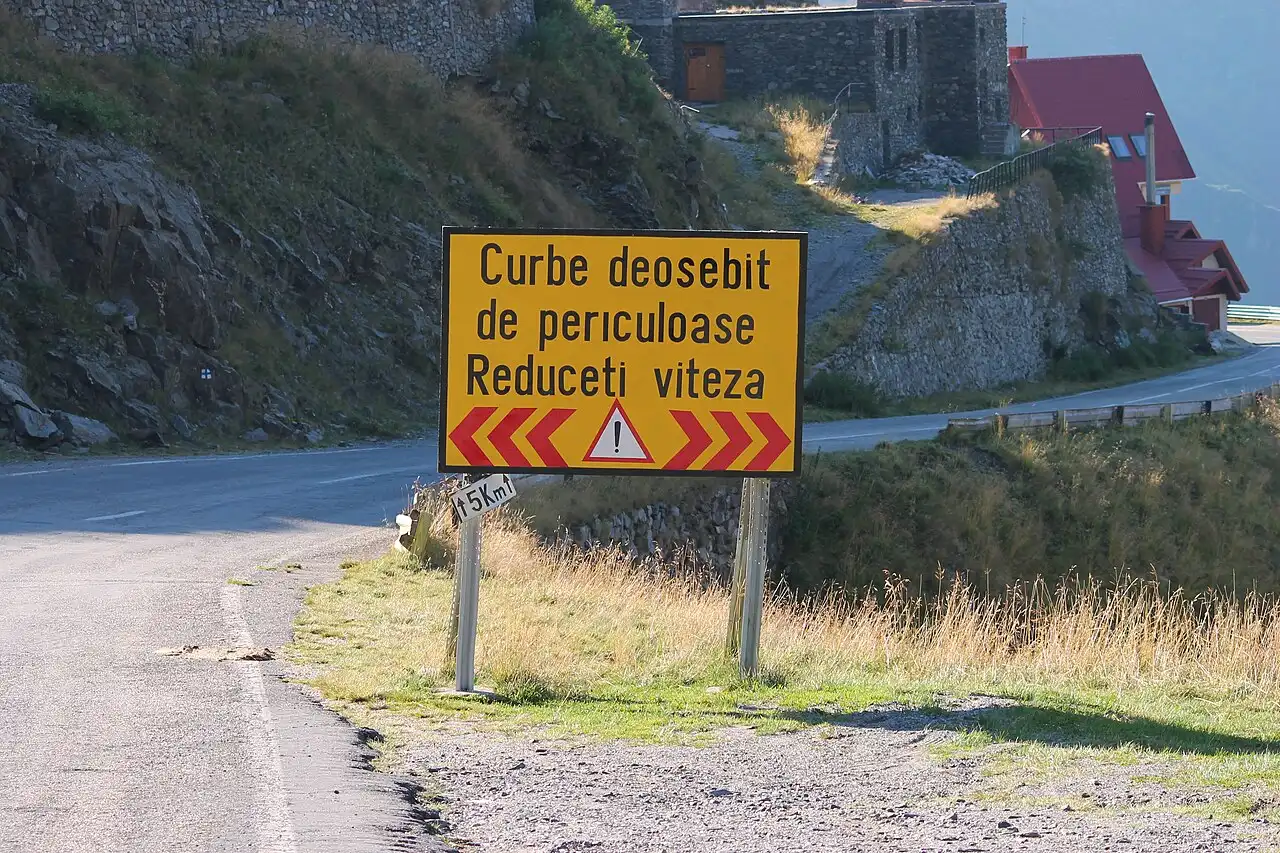
Where should you pick the car up?
Your default is the airport, and for most trips that’s the right call. Bucharest Henri Coanda (OTP, Otopeni) has by far the biggest line-up of suppliers, with regional desks at Cluj-Napoca (CLJ) and Timisoara (TSR) if you’re starting in Transylvania or the west. If you have not settled on where to land yet, our guide to which airport to fly into for Romania maps each one to its region, which is the decision that sets up your pickup point. Airport pickup gives you the most choice and it copes with a late flight, but it usually carries a higher rate plus an airport fee.
A downtown branch can be noticeably cheaper if you don’t need the car on arrival day - handy if you’re spending your first night in the city anyway and only want wheels when you head for the hills. The other decision is one-way: picking up in Bucharest and dropping in Cluj (or vice versa) is possible and can save a long backtrack, but it comes with a one-way drop fee, so price the one-way and the round-trip side by side; the neat routing isn’t automatically the cheap one. If you land late or only want a single castle day, skipping the rental entirely and taking a fixed-price transfer can work out simpler than a half-day car.
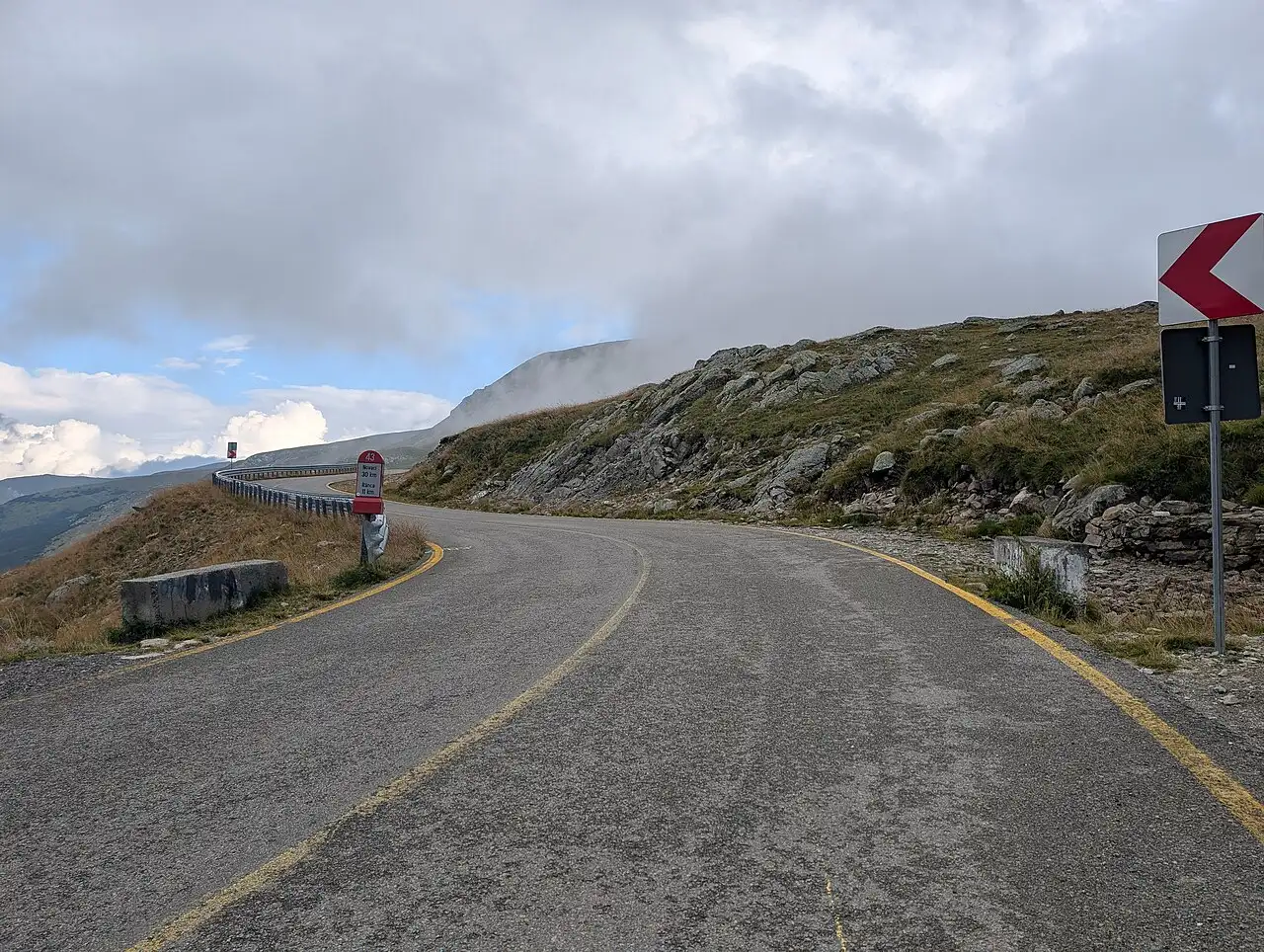
What does it cost to run, beyond the rental price?
Two running costs matter, and both are cheap by Western standards because Romania uses the leu (RON), not the euro. First, the rovinieta, the electronic road vignette, which you need on national roads (DN), expressways and motorways - not only motorways. Since 1 October 2026 a transport ministry order has set it in lei and scaled it by the car’s emission class, so a cleaner car costs less: a Euro VI car, which almost every rental is, pays 22 lei for a day, 30 lei for 10 days, or 48 lei for a month, an electric car a little less, and older, dirtier cars up to 29 lei a day and 62 a month. There’s still no 7-day option for a car, it’s fully electronic and camera-enforced, and driving without one risks a fine of two to four times the price of a 12-month vignette, 508 to 1,016 lei for a Euro VI car (254 lei a year). The good news: rental cars usually come with the rovinieta already included - just confirm that at pickup rather than assuming, because it varies by supplier.
Second, fuel. In mid-2026 petrol 95 runs around 8.65 lei a litre and diesel around 9.57, though prices move week to week, so check the day you fill up. Stations from Petrom, OMV, Rompetrol and MOL are dense along the A1 and DN1, but sparse on the passes themselves - fill up in Sibiu or Cartisoara for the Transfagarasan, because there’s no petrol at the top.
What should you know about driving in Romania?
A few rules catch out first-timers. The blood-alcohol limit is an absolute zero - not “one small beer”, zero. Dipped headlights or daytime running lights are mandatory outside built-up areas even in daylight. Speed limits are 50 in towns, 90 on national roads and 130 on motorways, though the switchback passes are signed far lower, so obey the posted number and watch for cyclists, walkers and the occasional stray animal. In winter, winter tyres are required whenever the road is covered in snow, ice or slush - the rule follows the road, not the calendar, though 1 November to 31 March is the safe window to plan around, with a heavy fine (into four figures in lei) for summer tyres in winter conditions - a winter rental should already be fitted, but check. Our guide to driving in Romania walks through all of this - the rovinieta, the fines, the licence rules and the roads - in full.
One thing to plan around rather than a rule: the motorway between Bucharest and Brasov still doesn’t exist, so the mountain-bound DN1 is a two-lane road that jams badly on summer weekends, especially heading back to Bucharest on a Sunday afternoon. For the leg-by-leg driving times, the vignette in full, the pass opening dates and the road surfaces you’ll actually meet, our Transylvania road trip guide covers the driving itself in detail. To plan what the car is for, the Romania 7-day itinerary lays out the classic loop day by day, and things to do in Bucharest covers the city you’ll most likely fly into and collect the car from.
The short version
Rent if your trip leaves the big cities; take the train if it doesn’t. Come with a credit card that has room for the deposit, get an IDP if your licence is non-EU, and either buy full cover or an excess policy so a cracked windscreen on a mountain road doesn’t ruin the holiday. Book a little ahead in summer when cars get scarce, confirm the young-driver surcharge and the rovinieta at the desk, and remember the whole thing is billed in lei, not euros. Do that, and the car becomes the best money you spend in Romania - the difference between watching the country through a bus window and actually driving into it.
Photos
Admission and opening hours
- Admission price
- Rovinieta (electronic road vignette, Category A car): since 1 October 2026 priced in lei by emission class under transport ministry Order 888/2026, a Euro VI car (what most rentals are) 22 lei for 1 day, 30 lei for 10 days, 48 lei for 30 days, an electric car 20 / 27 / 43 lei, older cars up to 29 lei a day and 62 a month. No 7-day option. Fuel mid-2026: petrol 95 around 8.65 lei/litre, diesel around 9.57 lei/litre. A rental is usually quoted per day plus the deposit hold.
- Opening hours
- Airport rental desks at Bucharest (OTP), Cluj (CLJ) and Timisoara (TSR) generally run to flight times; downtown branches keep shop hours. Winter tyres are required whenever roads are snow, ice or slush covered - the rule is condition-based, not calendar-based, but 1 November to 31 March is the safe window to have them fitted.
Prices, fees and rules change and vary by supplier. Confirm the deposit, insurance excess, young-driver surcharge and whether the rovinieta is included at pickup; check fuel and vignette prices before you travel. Prices checked July 2026; the rovinieta rechecked with CNAIR's etoll.ro portal and the texts of Order 888 and the road-charging law on 2 October 2026.
Details checked: July 5, 2026
Read also

What to see · 11 min read
Marginimea Sibiului: Shepherd Villages Near Sibiu
Verified · September 5, 202618 shepherd villages west of Sibiu: Rasinari, Sibiel glass icons, Saliste, Paltinis bus fares, and how a day out of town works.

Transport · 14 min read
Bucharest to Budapest: Night Train, Bus & Flights
Verified · September 4, 2026Bucharest to Budapest 2026: CFR night train from 27 EUR, FlixBus from 36.98 EUR in 13h, or a 1h45 flight. Fares, times, border, Oradea stop.

Cities · 13 min read
Predeal: Romania's Highest Ski Town
Verified · September 3, 2026Predeal sits at 1,030-1,110 m on the Bucharest-Brasov line: Clabucet ski, the town itself, and how it stacks up against Sinaia and Poiana.

What to see · 9 min read
Prejmer Fortified Church: UNESCO Near Brasov
Verified · September 3, 2026Prejmer fortified church 15 km from Brasov: Greek-cross plan, 275 wall rooms, UNESCO hours for 2026 and how a visit actually works.