
Best eSIM for Romania 2026: Prices, Data & Phones
Best eSIM for Romania: Airalo 10 GB from $17.50, Yesim 10 GB $19.20 (checked 6 Aug 2026), vs $12/day US roaming.
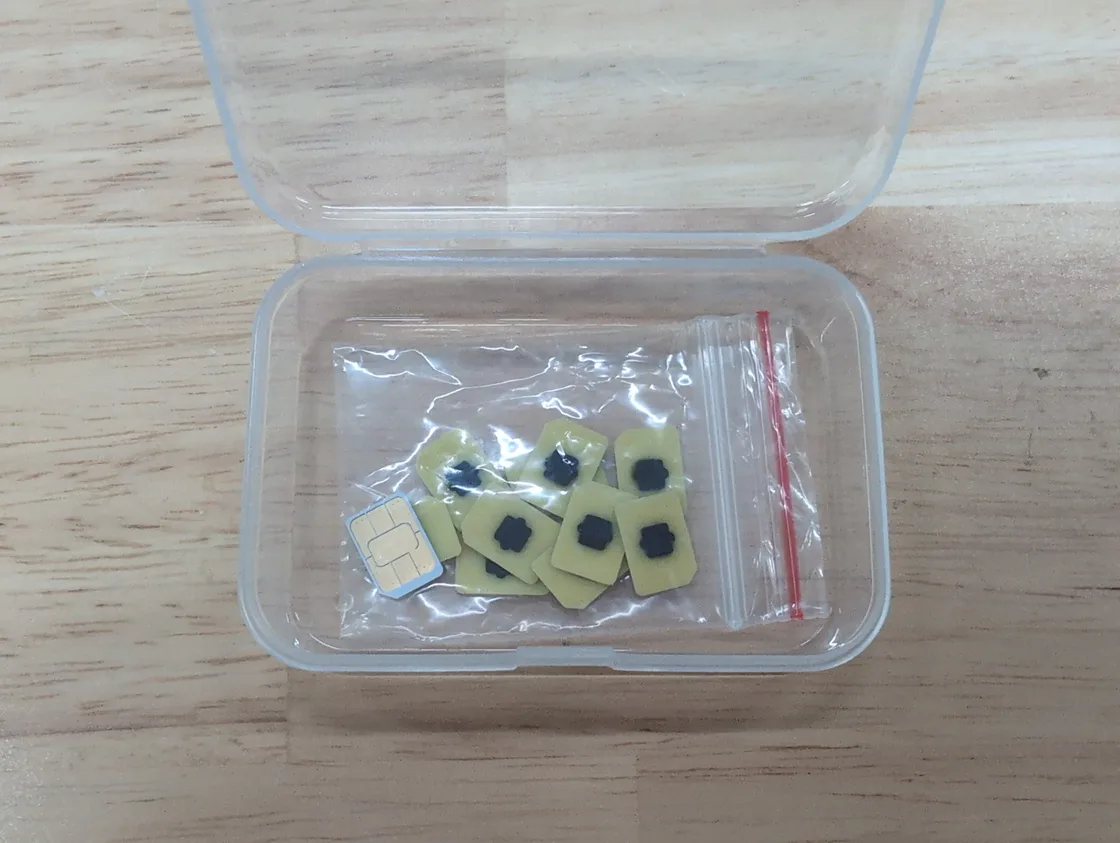
On an EU or EEA phone plan you almost certainly don’t need an eSIM for Romania at all: “Roam Like At Home” lets you use your normal allowance here with no surcharge. Flying in from the US, the UK, Canada or Australia, an eSIM bought before departure is the cheap answer, and the gap isn’t small: Verizon and AT&T both charge 12 dollars a day for your home plan abroad, while Airalo’s 10 GB Romania pack for 15 days is 17.50 dollars and Yesim’s matching 10 GB (30 days) is 19.20 dollars. The one hard requirement is a 4G or 5G phone, because Romania has switched its 3G off. Romania is inside EU roaming, so a home SIM works here; the regional roaming map shows where that stops being true.
Every price below was checked on 6 August 2026 on the provider’s or carrier’s own site, and eSIM prices are in USD because that’s how they sell. They move with promos, so confirm the live price in the app.
Do you even need an eSIM for Romania?
For a big chunk of visitors, no. Romania is in the EU, so “Roam Like At Home” applies: with a SIM from any EU or EEA country (the EEA adds Iceland, Liechtenstein and Norway) you use your domestic minutes, texts and data here at no extra cost, within a fair-use policy. A German, French, Polish or Irish plan works in Cluj exactly as it does at home, and buying an eSIM on top is money down the drain.
Two cases make even an EU traveller think again:
- Your home data allowance is small. Fair use lets operators cap the data portion of roaming, not calls or texts, so a bargain domestic plan with a couple of gigabytes may give you less roaming data than two weeks of maps and messaging need. Don’t assume - check your tariff’s roaming data limit.
- You’re staying for months, not weeks. Operators monitor roaming over a four-month window, and if you spend more time abroad than at home and use more data abroad than at home, they can eventually add a surcharge (capped at 1.10 euro per GB since 1 January 2026, falling to 1 euro from 2027). A fortnight’s holiday never trips this. A three-month remote-work stint does.
Everyone outside the EU and EEA, US and UK plans included, gets no such protection and pays roaming rates on the home SIM. That’s who a travel eSIM is for.
What your US or UK carrier charges instead
Most people never run these numbers, and they decide the whole question.
United States. Verizon’s TravelPass is 12 dollars a day in 210-plus countries, billed on each day you use the phone abroad; AT&T’s International Day Pass matches it, extra lines 6. Ten days in Romania is 120 dollars per line. T-Mobile is the exception: Experience More includes up to 5 GB of high-speed data abroad and Experience Beyond up to 15 GB, then unlimited at a throttled 256 kbps, so the right T-Mobile plan needs nothing extra. Otherwise it sells a 30-day, 30 GB pass for 75 dollars.
United Kingdom. Free EU roaming didn’t survive Brexit at most networks, and the small print differs sharply. Three charges 2.75 pounds per 24 hours if you joined or upgraded on or after 18 December 2025, a rate that took effect on 1 April 2026; older connections still pay 2 pounds. Vodafone doesn’t sell a flat daily rate any more but European Roaming Passes, 16 pounds for 8 days or 21 for 15, with a 25 GB fair-use ceiling and 3.84 pounds a GB beyond it. EE sits around 2.50 a day, and its own pages quote both 2.47 and 2.59, so check what your account shows.
“Free roaming” isn’t one thing either. O2 includes a generous 25 GB. giffgaff includes a maximum of 5 GB, and past that data costs 10p per megabyte, roughly 100 pounds a gigabyte, so a fortnight of maps and messaging can run out and then bite hard. SMARTY caps at 12 GB. Check your own tariff, not the network’s headline: plans signed before July 2021 often kept the old free roaming.
The test, then: on T-Mobile Experience More or Beyond, on O2, or on a decent EU plan, skip the eSIM. On Verizon or AT&T at 12 dollars a day, a 10 to 20 dollar eSIM pays for itself on day one. On EE, Three or a Vodafone pass, at roughly 3.30 to 3.70 dollars a day, it pays for itself around day three or four. And on giffgaff, buy the eSIM for anything longer than a couple of days, because 5 GB is less than you think.
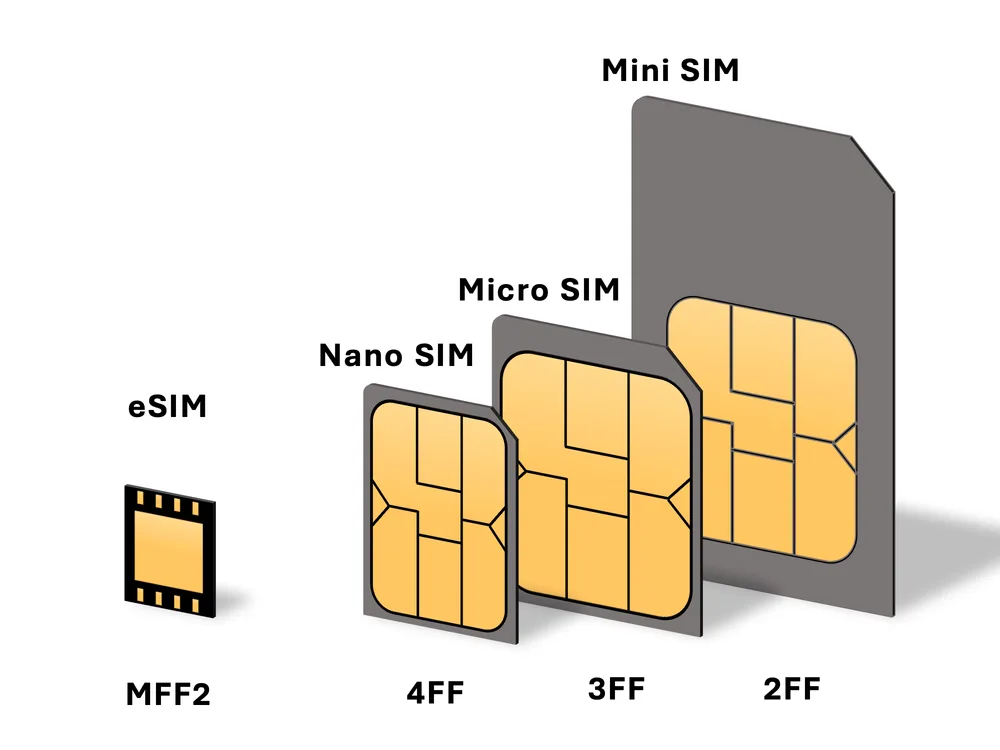
What is an eSIM, and will your phone take one?
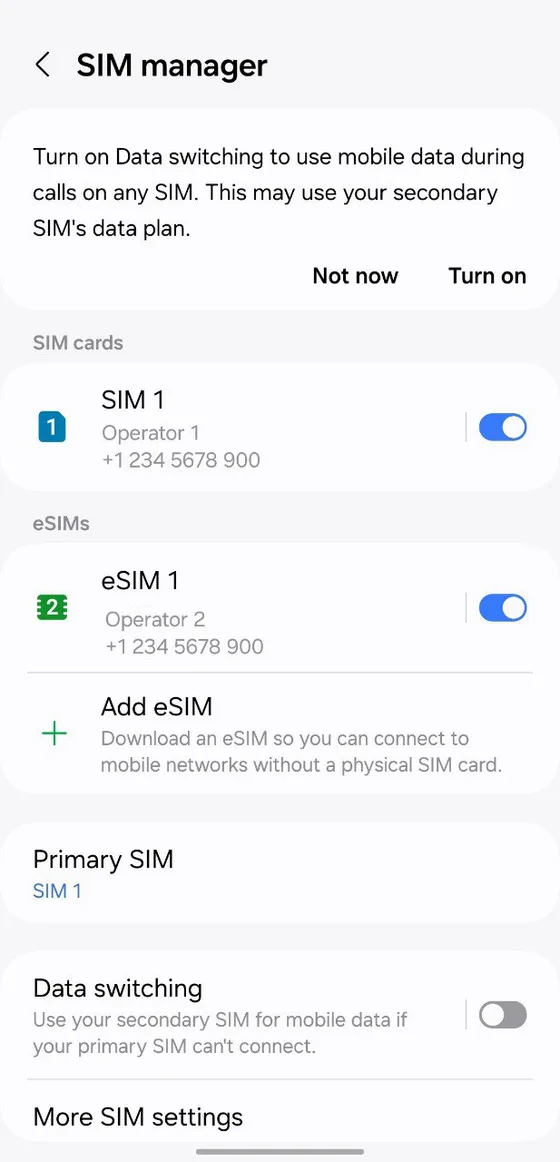
Your usual home SIM stays put, keeping your number for WhatsApp and bank codes, while the eSIM becomes a second line carrying data in Romania.
The catch is compatibility, and it’s worth two minutes of checking up front. Your phone must support eSIM and be carrier-unlocked. As a rough map:
- iPhone: every model from the iPhone XR and XS (2018) onward; the 13 and newer run two eSIMs at once. US iPhone 14 and later are eSIM-only, with no physical slot; models sold elsewhere keep both.
- Samsung Galaxy: the S20 and newer, plus the Z Flip and Z Fold range, Note 20, and some A-series (A35, A54, A55, A56).
- Google Pixel: Pixel 3 and newer.
Two catches here: phones bought in mainland China and some Hong Kong variants often ship without eSIM hardware, and a locked handset will refuse a foreign profile. If in doubt, dial *#06# and see whether an EID shows up alongside the IMEI.
The one hard requirement: a 4G or 5G phone
Get this one wrong and nothing works at all. Romania has shut down its 3G networks: Digi and the old Telekom closed theirs in 2023, Vodafone finished by 1 July 2025, and Orange phased 3G out through the end of 2025. The 2G network survives for basic calls and texts until around 2030, but it’s useless for internet. So you need a 4G or 5G phone, full stop. Any handset new enough to run an eSIM qualifies; an old 3G spare won’t pull data here, eSIM or not.
Which network does the eSIM actually use?
A travel eSIM rents capacity on a Romanian network rather than building its own. After Vodafone bought Telekom Romania Mobile (completed 1 October 2025), three operators remain: Orange, Vodafone and Digi (RCS-RDS), each covering roughly 97 to 98 percent of the population. Vodafone posted the fastest median 5G in early 2026, around 180 Mbps; Digi leads on 4G availability and latency; Orange and Vodafone tend to have the edge in remote and mountain corners.
Don’t agonise over it. Airalo’s Romania eSIM runs on Orange, Yesim switches between partner networks, and all three are fine in a city or on a main road. Coverage thins on every network deep in the Carpathians, so download offline maps before a hiking day.

Best eSIM for Romania 2026: Airalo vs Yesim plans compared
Plans come in two shapes: country-specific (Romania only) and regional (a “Europe” pack that includes Romania). Prices below were checked on each provider’s own site on 6 August 2026:
| Option | Coverage | Price checked 6 Aug 2026 | Best for |
|---|---|---|---|
| Airalo Romania, fixed GB | Romania only (Orange) | 5 GB / 7 days $10.00 · 10 GB / 15 days $17.50 · 10 GB / 30 days $18.00 · 20 GB / 30 days $28.00 | The best value for a normal holiday |
| Airalo Romania, unlimited | Romania only (Orange) | $11.50 / 3 days · $18.50 / 5 days · $27 / 7 days · $48 / 15 days · $69 / 30 days | Heavy streaming, or you hate counting |
| Yesim Romania or Europe & UK | Romania only, or 33 countries | 5 GB $11.52 · 10 GB $19.20 · 20 GB $26.40 · 30 GB $33.60 (all 30 days) · Europe unlimited $25.20 / 7 days | Romania-only, or Romania plus neighbours |
| Local prepaid SIM | Romania (Orange/Vodafone/Digi) | a few tens of lei | Long stays; needs ID and a shop or kiosk |
Airalo is still the volume default: a Romania eSIM on Orange, data-only, with fixed packs from 4 dollars (1 GB / 3 days) and unlimited tiers beside them. That pairing is where the money quietly goes, because unlimited for a fortnight costs 48 dollars against 17.50 for 10 GB. Watch the validity too: 10 GB runs 15 days for 17.50 or 30 days for 18, so the longer one wins if your dates are loose. A new 5-day unlimited tier at 18.50 sits between the 3-day and 7-day options if you only need a long weekend.
Yesim (the option in the box above) now lists a Romania-only catalogue and a Europe and UK regional pack of roughly 33 countries at the same prepaid prices on the day we checked: 5 GB for 11.52, 10 GB for 19.20, 20 GB for 26.40, 30 GB for 33.60, all valid 30 days. So if your trip might touch Hungary, Bulgaria or Serbia, take the regional profile and get the border hop at no extra cost; if you’re staying inside Romania only, either SKU works and the Romania deep link lands on the country page. Unlimited Europe sits at 25.20 for 7 days; promo strikethroughs on the site change often, so treat the live checkout as the truth.
One caveat on “unlimited”: everywhere it means full speed to a fair-use point and then throttling, which Yesim states plainly in its own terms. You’re buying the right not to think about the meter, and that right costs more than the gigabytes would.
How many gigabytes do you actually need?
Almost everyone overbuys - don’t. On Yesim’s own consumption figures, maps and light browsing burn about 80 MB an hour, email and cloud work about 250 MB an hour, social media with photos and 480p video calls about 450 MB an hour, and video at 1080p about 1.5 GB an hour.
Put that against a real day here. Two hours of navigation on the Transfagarasan, an hour of messaging and photo uploads, some menu-checking over dinner: well under 1 GB. On that pattern a week needs 3 to 5 GB and a fortnight 7 to 10 GB, with hotel Wi-Fi taking the heavy evening use. Double it if you’re tethering a laptop.
Now price it. A 10 GB Airalo pack costs 17.50 dollars; unlimited over the same fortnight costs 48, and ten days of TravelPass costs 120. Unless you stream on mobile data nightly, buy gigabytes and top up in the app if you run dry.
What about a local Romanian SIM?
For a long stay, a local prepaid SIM from Orange, Vodafone or Digi deserves a mention: a starter with a data bundle runs a few tens of lei, and Digi is the aggressive one on price. You have to find an operator shop or airport kiosk, show ID at purchase, and you lose the “already online when I land” benefit, so for a two-week holiday you’ll find the eSIM simpler. Note that Romania pays in lei (RON), not euros; our guide to money in Romania covers cards and cash.
So which should you buy?
Match the choice to the trip:
- EU or EEA plan, T-Mobile Experience More/Beyond, or O2: buy nothing.
- Verizon, AT&T, EE, Three, Vodafone UK or giffgaff, one week here: a 5 GB Romania pack, about 10 dollars. It undercuts one day of TravelPass.
- Two weeks in Romania: 10 GB, around 17.50 dollars.
- Romania plus neighbours: a regional Europe eSIM, so one profile covers Hungary, Bulgaria or Serbia too.
- Heavy data or laptop tethering: the biggest fixed-GB pack going, 20 or 30 GB, rather than a throttled “unlimited”.
- Long stay or remote work: a local prepaid SIM, to sidestep the four-month roaming rule; our Romania digital nomad guide covers the fibre, visa and cost picture.
Whatever you pick, the moves are the same: confirm the phone takes an eSIM and is unlocked, install it before departure so you land connected (useful the minute you want a taxi app at arrivals), and download offline maps for the mountains. Everything downstream, starting with driving in Romania, runs on working navigation.
Photos
Read also

Before you go · 8 min read
What to Pack for Romania: Seasons & Essentials
Verified · September 1, 2026What to pack for Romania by season: city heat near 30 C, Carpathian ridges near 10 C in July, Black Sea kit, and winter layers that work.

Before you go · 10 min read
Skiing in Romania: Resorts, Passes & Season
Updated · September 23, 2026Ski Romania: Poiana Brasov, Sinaia, Predeal and Straja day-pass prices in lei, the snow season window and which resort fits your trip.

Before you go · 9 min read
Best Day Trips from Cluj-Napoca
Verified · August 16, 2026Day trips from Cluj by effort: Salina Turda by bus, Rimetea by car, Alba Iulia citadel and Banffy Castle at Bontida, with times and prices in lei.

Before you go · 12 min read
Romania's Black Sea Resorts: Which One to Choose
Verified · September 23, 2026Mamaia, Eforie Nord, Costinesti, Neptun or Vama Veche? What a summer room costs, how to get there from Bucharest and which resort fits your trip.