
Bucharest to Chisinau 2026: Train, Bus, Flight & Border
Bucharest to Chisinau: flights from 26 EUR, the 19:06 sleeper, buses 8h from 36 EUR, plus documents and the EES biometric border at Albita-Leuseni.
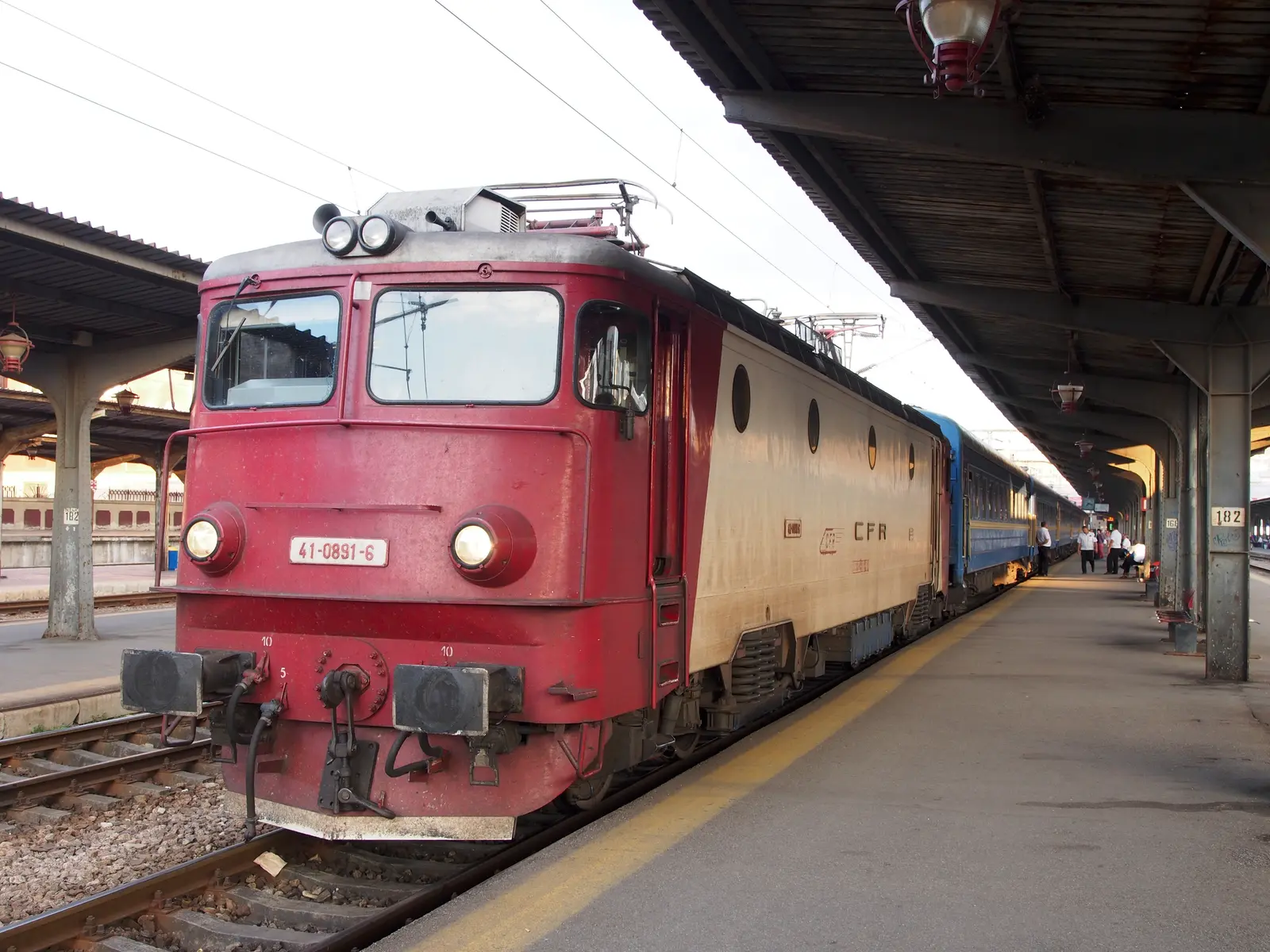
The two capitals sit about 360 km apart in a straight line, and the cheapest way across is now the one that used to be the splurge. Wizz Air flies Bucharest Otopeni to Chisinau every day, and its lowest one-way fares sat at 139 lei (about 26 EUR, 30 USD or 23 GBP) through September and November when we pulled the airline’s own timetable on 1 August 2026. The night sleeper leaves Bucharest Nord at 19:06 and reaches Chisinau at 08:44, so one fare buys the journey and a bed: 852 MDL (about 42 EUR) through Moldovan Railways, or 182 lei (about 35 EUR) for the same second-class bunk at the Romanian tariff. The bus is the workhorse at 188 lei with FlixBus, eight hours at best, at least eight departures a day.
The visa side is the easy part for most people reading this: Moldova takes US, UK, Canadian, Australian and EU passports with no visa for up to 90 days in any 180. The part that changed in 2026 is the exit side. Romania has been a full Schengen member since 1 January 2025, which makes this an EU external border, and the EU’s Entry/Exit System has been running at Leuseni-Albita, Sculeni and the Ungheni-Iasi rail crossing since 2 March 2026. If you hold a non-EU passport you’re now photographed and fingerprinted the first time you cross, and the stop takes longer than the guidebooks say.
| Time | From | Departures | |
|---|---|---|---|
| Flight | about 1 hour in the air | 139 lei / 26 EUR | daily, doubling to 14 a week from 25 Oct 2026 |
| Night train | 13h 40, 19:06-08:44 | 182 lei / 35 EUR | one each way, daily |
| Bus | 8 hours minimum, 442 km | 188 lei / 36 EUR | at least 8 a day with FlixBus alone |
| Car | about 6h 30, 460 km | fuel plus vignette | Albita-Leuseni or Sculeni |
Every price came off a carrier’s own site on 1 August 2026, converted at the National Bank of Romania reference rate of 31 July. If you’re still shaping the Romanian half of the trip, our 7-day Romania itinerary and things to do in Bucharest cover the days before you head east, and how many days you need in Romania helps decide whether a Moldova leg fits at all.
Flying: the cheap option nobody expects
Everyone assumes the plane is the extravagance here. It isn’t. Wizz Air’s published timetable has a departure every single day of September, October and November 2026, and the cheapest seat of the day bottomed out at 139 lei again and again, with a September median of 159 lei (about 30 EUR). Coming back, fares are quoted in Moldovan lei and start around 419 MDL, roughly 21 EUR. Wizz said in July it will double the route to 14 flights a week from 25 October 2026; HiSky, Moldova’s own carrier, keeps the route in its summer 2026 network, and TAROM sells the hop too.
Two honest catches. The headline fare buys a seat and one small bag that fits under it, so hold luggage can push the total past the train. And a one-hour flight is never a one-hour trip: add Otopeni, security and the ride from Chisinau airport into town, and half a day is gone. Our Bucharest airport guide covers the city end, and which airport for Romania has the wider comparison.
The night train: the Prietenia, and why people still take it
One train runs each way per day, and it has a name: Prietenia, Romanian for “friendship”. Moldovan Railways sells it as trains 105 and 106; Romanian listings number the same service 401 and 402. Northbound it leaves Bucharest Nord at 19:06 and arrives Chisinau at 08:44; southbound it goes at 16:50 and reaches Bucharest at 06:38. That’s a shade under fourteen hours, because the rails go the long way round through Iasi, 666 km in all. If Iasi is the stop rather than a through station, Bucharest to Iasi has the daytime trains and coaches. Nearly all of it is overnight, which is the point: you go to bed in one capital and wake up in the other, and you don’t pay for a hotel.
Where you buy changes what you pay. Booked through Moldovan Railways at railway.md, a second-class four-bed berth is 852.04 MDL and a first-class two-bed is 954.44 MDL, roughly 42 and 47 EUR. The Romanian standard tariff for the same second-class bunk is 182 lei, about 35 EUR, with 207 lei for a two-berth and advance online fares near 131 lei. So start with CFR if its international booking site is behaving. When we checked on 1 August 2026 it wouldn’t load at all, which is why the Moldovan site is worth knowing: it opens sales 30 days out, against 60 on the Romanian side, and takes international Visa and Mastercard.
Book early anyway, and here’s the reason nobody tells you: the online allocation is small. Moldovan Railways says outright that its website offers a limited number of seats and that the bulk go through station ticket offices. On the August dates we checked it showed single figures left in each sleeping car weeks out. That doesn’t mean the train is full, it means the internet quota is, so if the screen says sold out, try the international booking office at Bucharest Nord.
The carriages are classic ex-Soviet sleepers, two-bed compartments in first class and four-bed in second, plus a buffet counter selling simple snacks and drinks. Bedding is fresh, but heating comes from radiators with no air conditioning, so a summer cabin gets stuffy in the small hours. Bring water, something to eat and a plug adapter.
The border at Ungheni: they change the wheels
Here’s the part that makes this train unlike almost any other in Europe. Romania runs on Europe’s standard track gauge; Moldova, like the rest of the former Soviet Union, runs on a wider one. So at Ungheni, in the small hours, the whole train is shunted into a shed and the carriages are jacked up one by one and their bogies swapped for ones that fit Moldovan track, with you on board throughout.
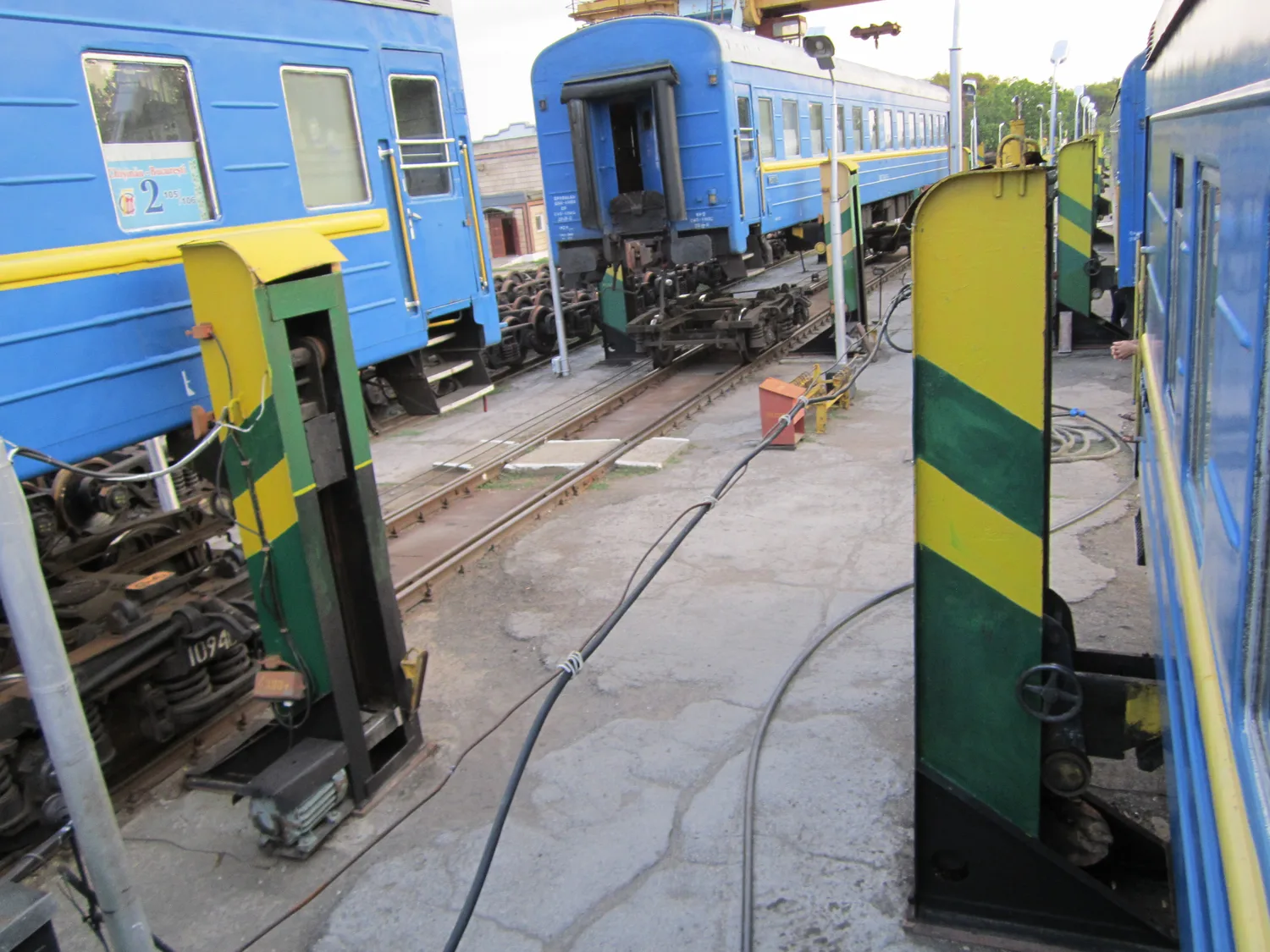
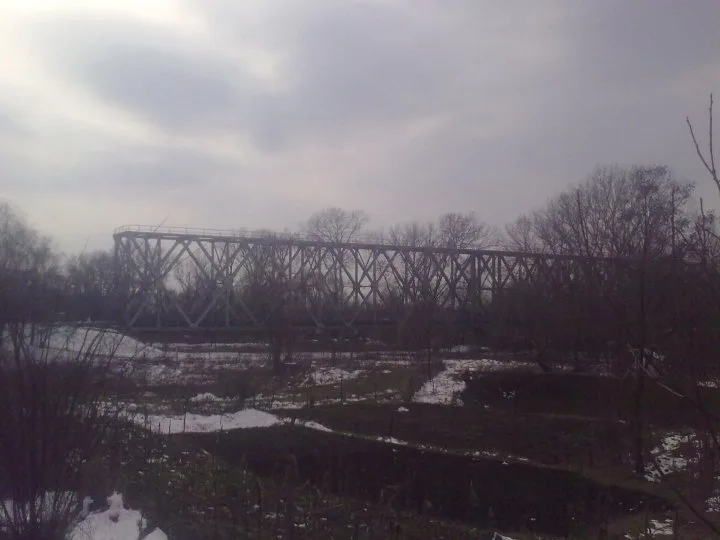
Don’t underestimate how long it takes. The scheduled stop is 04:08 to 06:03 northbound and 19:58 to 21:35 southbound: between the bogie change and two passport checks, that’s up to two hours parked, and travellers report the odd longer night. The Ungheni-Iasi rail crossing has been an EES point since 2 March 2026, so a non-EU passport now means a photo and, on your first registration, fingerprints, taken in the carriage at four in the morning. Keep it within reach rather than buried in a bag on the top bunk. Ungheni has history beside the line, too: locals call it the Eiffel Bridge, but despite the name the 1877 structure over the Prut is usually credited to the Russian engineer Nikolai Belelubsky rather than Gustave Eiffel; it was blown up in 1941 and damaged again in 1944, so the span the train crosses today is largely a Soviet-era rebuild from 1944-46.
The bus: eight hours, eight a day
If a night in a bunk isn’t your idea of fun, the bus is the practical answer, and this is a busy corridor. FlixBus alone lists at least eight departures a day, first at 03:00, last at 23:59, over a road route of 442 km with a minimum running time of eight hours; local minibus operators add more. Fares start at 188.11 lei (about 35.85 EUR, 41.26 USD, 30.67 GBP), one hold bag and one piece of hand luggage included.
Check which station you leave from before you order a taxi: FlixBus uses Autogara Militari on the western edge of Bucharest and Autogara Filaret south of the centre, and in Chisinau it drops at the Nord bus station, at Hotel Chisinau on Negruzzi, or at Rompetrol. Payment takes international cards, PayPal and Google Pay.
Timing hangs on the crossing, and that is now the single biggest variable on this route. The upside of the bus over the train is real: daylight, countryside, no commitment to an overnight. The downside is that a long daytime bus is a long daytime bus, and the border stop is out of the driver’s hands.
The road border at Albita-Leuseni: documents and how long it takes
Nearly everything that isn’t a plane crosses at Albita on the Romanian side and Leuseni on the Moldovan, a single road post on the E581 handling cars, coaches and freight. Buses stop and everyone gets off with their bags; cars queue in lanes. Either way you pass two sets of officers, Romanian then Moldovan, a few hundred metres apart.
What you need in your hand:
- Passport, valid at least three months beyond the day you plan to leave Moldova. Airlines have refused boarding under six months, so treat six as the safe number. A blank page helps.
- Return or onward ticket, which the UK Foreign Office says you should be able to show.
- Driving your own or a rental car: vehicle registration, a green card (the international insurance extension, sold at kiosks by the crossing if your policy doesn’t include Moldova) and Moldova’s road vignette, from evinieta.gov.md or the post itself.
- No visa for US, UK, Canadian, Australian and EU passports, up to 90 days in any 180.
- Cover that works outside the EU. A European policy or an EHIC/GHIC card stops at the Prut: Moldova is not in the EU, so check your policy names it. Our travel insurance for Romania page covers what to look for.
What changed on 2 March 2026. Leuseni-Albita, Sculeni and the Ungheni-Iasi rail line switched on the EU’s Entry/Exit System, joining Costesti-Stanca, Giurgiulesti-Galati, Cahul-Oancea and Lipcani-Radauti Prut, which went first between October 2025 and January 2026. EES replaces the passport stamp with an electronic record: name, document, facial image and four fingerprints, plus the date and place of every entry and exit. It applies to non-EU nationals only, so a UK, US, Canadian or Australian passport goes through it and an EU one does not. Under-12s are exempt from fingerprints. The first registration is the slow one; after that the checks read your stored record.
Two consequences worth planning around. First, budget more time than the old advice suggests: queues across the EU external frontier ran long through the first summer of full EES operation, and a coach full of first-time registrations does not clear in ten minutes. Don’t build a same-day connection out of Chisinau on the eight-hour minimum.
Second, and this one catches long-stay visitors: because Romania is inside Schengen, days in Romania count against the 90-in-180 Schengen allowance, and EES now counts them automatically rather than relying on an officer’s stamp. Days in Moldova do not, because Moldova is outside the EU. So a week in Chisinau is a genuine pause in the Schengen clock, and an overstay is much harder to talk your way out of than it used to be. Our Romania entry requirements page goes through the rules in more detail.
Transnistria: the one place to think twice about
Staying longer than 90 days in Moldova is a residence-permit matter rather than a border formality. The one destination that needs a separate decision is Transnistria, the breakaway strip along the eastern border. It is not under the control of the Moldovan government, and as of 2 August 2026 the UK Foreign Office advises against all travel there, which on its own can void your insurance. None of the routes here pass through it. If you go anyway, carry your passport, expect a migration card at the de facto checkpoints, and understand that consular help is thin. Advisories change: confirm the current position with your own foreign ministry close to departure. This page is a summary written on 2 August 2026, not legal advice.
Driving it, and the rental-car catch
Driving suits you if you want to explore rather than just arrive: roughly 460 km and about six and a half hours from Bucharest, across at Albita-Leuseni or Sculeni if you’re coming from Iasi. Your own car is the only real way to reach the wine estates and villages that make Moldova worth the trip.
The paperwork is the green card and the Moldovan vignette listed above, plus a catch specific to rentals: most Romanian rental companies either forbid taking the car into Moldova or want written permission first, some refusing outright because Moldova sits outside the EU. Sort it at the counter rather than at the barrier, the kind of thing our car rental in Romania guide flags, and read driving in Romania for the rovinieta on the Romanian side.
Break the journey in Iasi
Here’s the move that turns a transfer into a trip. Iasi, Romania’s cultural capital and the historic seat of Moldavia, sits right on the way east, a short hop from the Sculeni crossing, and deserves a day rather than a glimpse through a train window at midnight. Our Iasi travel guide lays out a day and a half there, and it pairs with the painted monasteries of Bucovina further north-east.
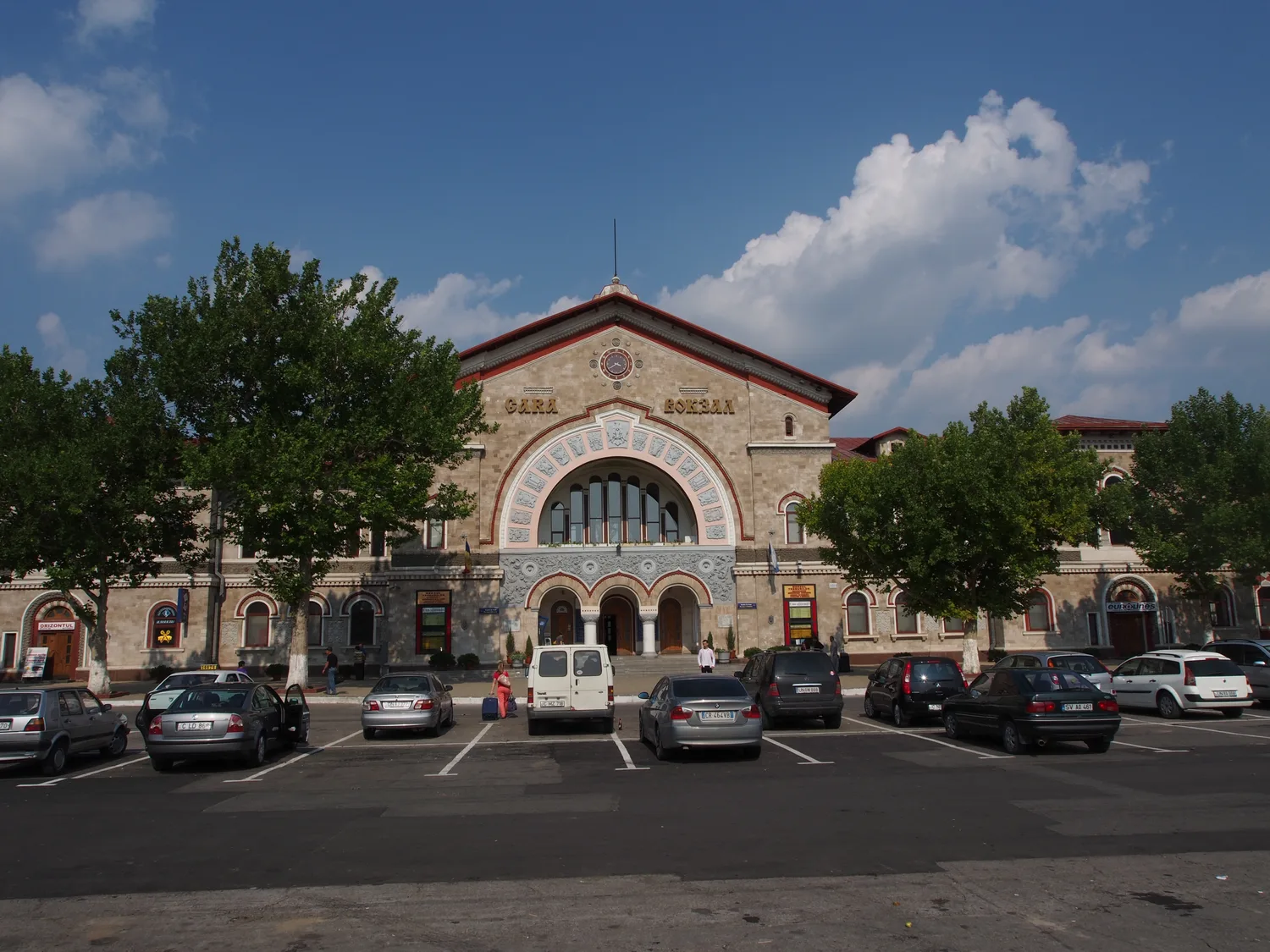
A common budget plan is a night in Iasi, then the bus on to Chisinau: you take the Prietenia because you want the sleeper, not because it’s the only link.
Money: a different leu
Moldova uses the Moldovan leu (MDL), a completely separate currency from the Romanian leu (RON) you’ve been spending: same name, different money, and your Romanian notes are not legal tender across the border. One Romanian leu buys just under four Moldovan lei. Draw enough for a taxi from an ATM at Chisinau airport on arrival; cards work fine in most restaurants and shops.
So which should you take?
If money decides it, fly, and book far enough out to catch the fare that starts with a one. Flying also gives you the cleanest border: the EES desk at Otopeni is an airport desk, not a coach park in a field. If the crossing is part of the appeal, take the night train: you save a hotel and the wheel change at Ungheni is worth staying awake for once. Take the bus for a daytime departure at short notice, and build in real slack for Leuseni. For a different border, our Bucharest to Sofia guide covers the run south, getting around Romania explains the domestic trains and buses that feed this route, and the what-to-eat guide plus where to eat in Bucharest sort out the sarmale and mici before you go.
Photos
Admission and opening hours
- Admission price
- One way, checked 1 August 2026 on carrier sites. Flight: Wizz Air Otopeni-Chisinau from 139 lei (about 26 EUR / 30 USD / 23 GBP); the Chisinau-Bucharest leg prices in Moldovan lei, from 419 MDL (about 21 EUR). Night train: second-class 4-berth 852.04 MDL (about 42 EUR / 49 USD / 36 GBP) buying from Moldovan Railways, or 182 lei (about 35 EUR / 40 USD / 30 GBP) at the Romanian standard tariff, advance fares near 131 lei; first-class 2-berth 954.44 MDL or 207 lei. Bus: FlixBus from 188.11 lei (about 35.85 EUR / 41.26 USD / 30.67 GBP). Currency conversions at the National Bank of Romania reference rate of 31 July 2026 (1 EUR = 5.2473 lei, 1 USD = 4.5595, 1 GBP = 6.1332).
- Opening hours
- Train: one each way daily. Bucharest Nord dep 19:06, Chisinau arr 08:44; Chisinau dep 16:50, Bucharest Nord arr 06:38 (about 13h40). Bus: FlixBus alone runs at least 8 a day, first 03:00, last 23:59, 8 hours minimum over 442 km. Flights: Wizz Air daily, doubling to 14 a week from 25 October 2026; HiSky and TAROM also fly the route; about an hour in the air.
Moldova needs no visa from US, UK, Canadian, Australian and EU passport holders for up to 90 days in any 180-day period (Moldovan MFA visa-exempt list; Moldovan Border Police). Passport must be valid at least 3 months beyond your planned departure and you may be asked for a return or onward ticket; airlines may refuse boarding under 6 months validity. Romania is a full Schengen member, so this is an EU external border: the EU Entry/Exit System (EES) has been live at Leuseni-Albita, Sculeni and the Ungheni-Iasi rail crossing since 2 March 2026 and fully operational EU-wide since 10 April 2026. Non-EU travellers are photographed and give four fingerprints on first registration; under-12s are exempt from fingerprints; EU passport holders are outside EES. This is a summary, not legal advice: confirm on the official Moldova e-visa portal, the Romanian Border Police site and your own foreign ministry close to departure. Rail border stop at Ungheni is scheduled 04:08-06:03 northbound for the gauge change and two passport checks. Prices and times move: check railway.md, CFR Calatori or the carrier before travel. Checked 2 August 2026.
Details checked: August 2, 2026
Read also

Transport · 14 min read
Bucharest to Budapest: Night Train, Bus & Flights
Verified · September 4, 2026Bucharest to Budapest 2026: CFR night train from 27 EUR, FlixBus from 36.98 EUR in 13h, or a 1h45 flight. Fares, times, border, Oradea stop.

Transport · 9 min read
Bucharest to Sinaia Train 2026: ~1.5h, from 32.5 lei
Verified · August 31, 2026Bucharest to Sinaia by train in about 1.5 hours: fares from 32.5 lei, Peles timing and its 16:00 last entry, and when a transfer wins.

Transport · 10 min read
Cluj to Brasov 2026: Bus 3h40 from 81 lei
Verified · August 28, 2026Cluj-Napoca to Brasov: bus about 3h40 from 81 lei, CFR InterCity about 6h35 from 126,50 lei, drive 275 km in about 4h20. Check before you go.

Transport · 9 min read
Brasov Airport (GHV): Flights & Getting to Town
Verified · August 21, 2026Brasov-Ghimbav (GHV) opened in 2023: who flies, the RATBV A1 bus at 5 lei, taxi and transfers into town. Check the live board.