
Timisoara to Belgrade: Bus vs Train (2026)
Timisoara to Belgrade in 2026: the bus is ~3.5-4h from ~16 EUR, the train is cheaper but over 4h with a change at Vrsac, no direct service.
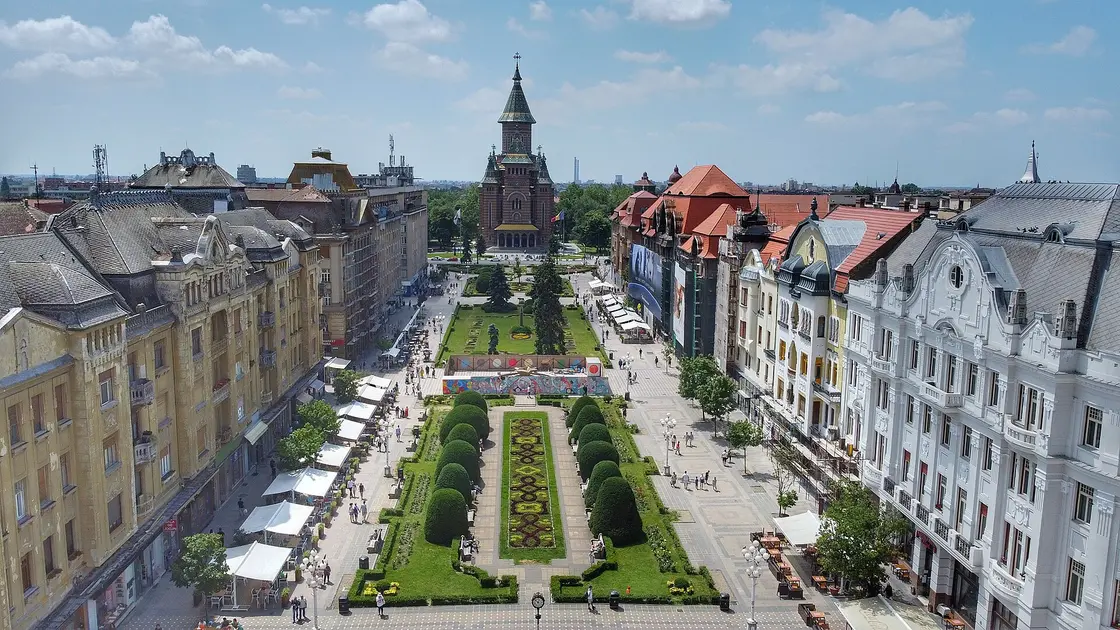
The short version: take the bus. FlixBus and a couple of smaller lines run Timisoara to Belgrade in roughly three and a half to four hours for about 16 euros and up, and they drop you in the Serbian capital without you having to think about the route. The catch is the border. Unlike the trip down to Sofia, this one crosses out of the EU: Serbia isn’t in Schengen and not in the Union, so at Moravita-Vatin there’s a genuine passport check, sometimes a customs one, and the queue that comes with it. That is why the “2 hours” you might see on a booking site is fiction - the driving distance is short, but the crossing isn’t a formality.
The other thing first-timers get wrong is the money: you start the day paying in Romanian lei and finish it in Serbian dinars, and neither country is on the euro, so the cash and cards you lined up for the rest of your trip may be no use here. Sort the border and the money and the journey itself is short and simple. If you’re still working out western Romania, our Oradea travel guide covers the region’s other great border city, and the Romania 7-day itinerary lays out the days before Serbia. Haven’t picked a base in Timisoara itself yet? Where to stay in Timisoara breaks the city into its four areas.
The bus: cheapest and simplest, about 3.5 to 4 hours
For almost everyone the bus is the answer. FlixBus runs the route with around two departures a day, the first leaving Timisoara late morning (around 11:00) and the last in the early evening (around 20:00), though the timetable thins out or fills up with the season, so check the day you want rather than trusting a fixed slot. Fares start low, from about 16 euros one way if you book ahead, and the coaches are the usual modern FlixBus fit: wifi, power sockets, a toilet, luggage in the hold.
Don’t kid yourself about the time. The booking page may flash a headline duration of two hours, but that’s the road distance talking, not the trip you’ll take. Real-world journeys come in at three and a half to four hours once the border is in the mix - Omio and Rome2rio both put it around 3h28 to 3h40, and that assumes the crossing behaves. So don’t book anything tight on the Belgrade end for the same afternoon.
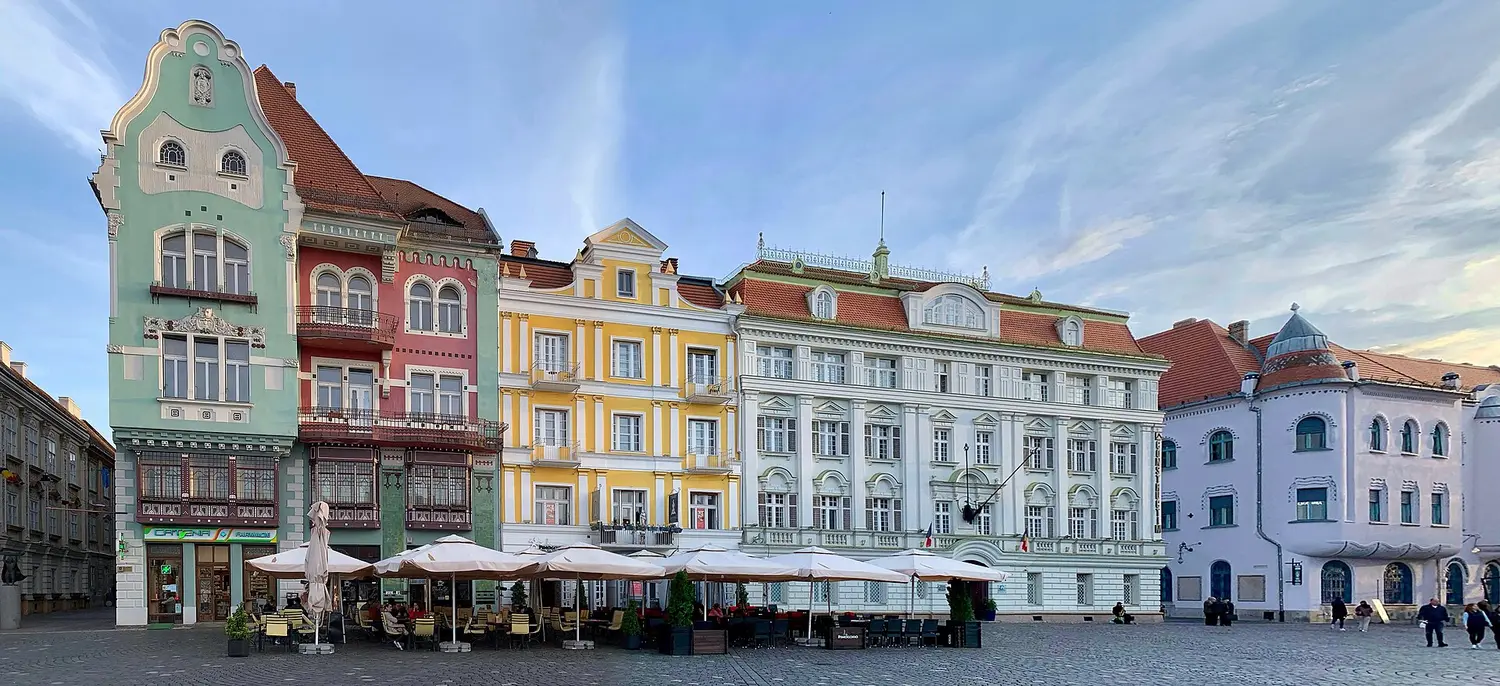
One practical thing to get right: which stop your bus uses at each end. In Timisoara, FlixBus and the smaller operators don’t all leave from the same place - your ticket names it, whether that’s Autogara Normandia on Calea Stan Vidrighin, the OMV filling station on Calea Aradului, or another terminal - so read the ticket rather than guessing. Belgrade is the same story on arrival: buses land at the main BAS bus station (Blok 42, near the river), at Autokomanda, or occasionally elsewhere, all a short taxi or bus ride from the old centre. Smaller Serbian and Romanian lines sell this route too, sometimes undercutting FlixBus, so it is worth a price compare on a site like Omio first.
The private transfer: door to door, worth it for groups
If you’re travelling with luggage, a couple of people, or an early flight to catch, a private transfer sidesteps the whole autogara puzzle. Gea Tours is the established name on this corridor: a daily door-to-door minibus that picks you up at any address in Timisoara and drops you at any address in Belgrade (and the reverse), via Vrsac and Zrenjanin. There’s no fixed timetable - you book, they schedule it - and reservation is required.
The delicate bit is price: Gea Tours doesn’t publish a set fare, and reports from past passengers land near 50 euros for a pair, but that’s an anecdote, not a quote - ask for one for your date and party size. Where a private car earns its money is the door-to-door convenience and a driver who knows the border routine, which on a non-Schengen crossing isn’t nothing. For a fixed price you can lock in ahead, a transfer to Belgrade or just to the border is the low-stress option.
The border: this is the part that is different
Here is where the trip to Belgrade parts ways with the easy hop to Sofia. Romania and Bulgaria both joined Schengen in 2025, so that southern crossing is now barely a pause - our Bucharest to Sofia guide explains just how painless the Danube crossing has become. Serbia is a different world: it’s outside Schengen and outside the EU altogether. At the Moravita-Vatin crossing on the E70 - the road the bus, the transfer and your own car all use - there’s a real border. Expect a passport check on both sides and, at least in principle, the possibility of a customs look at your bags. Off-peak in a car this is often quick, but a busy bus or a truck backlog can turn it into the longest single stretch of the day.
The paperwork is simple as long as you know it in advance. Most travellers get 90 days visa-free in any 180-day period: that covers EU and EEA citizens, US, UK, Canadian and many other passports, and anyone holding a valid Schengen, US or UK visa can also enter visa-free regardless of nationality. EU and EEA citizens can cross on a national ID card; everyone else needs a passport, ideally with a few months of validity left. One quirk that trips people up: Serbia asks every foreign visitor to register with the local police within 24 hours of arrival. Stay in a hotel and it’s done for you at check-in; stay in a private apartment and you may have to sort the registration (“white card”) yourself. Rules can shift, so check Serbia’s foreign ministry site (mfa.gov.rs) for your nationality - I verified this in July 2026.
Driving it yourself
Driving is a genuinely good option here, because the distance is short - about 150 km and two and a half to three hours of actual road time before you add the border - and it frees you to stop or detour. You head southwest out of Timisoara on the E70 to Moravita, cross at Vatin, and roll into Belgrade past the flat Vojvodina farmland.
Two admin points are worth sorting first. Tolls work differently on each side. Romania runs on the rovinieta, an electronic vignette for the main roads that you buy online from CNAIR (from 1 October 2026 on etoll.ro or in the TollRo app) - our driving in Romania guide explains it in full. Serbia has no vignette at all: its motorways use old-style toll plazas, so you take a ticket where you join the motorway and pay at the exit, in cash or by card. Carry a few dinars just in case, though card usually works.
The bigger issue, as ever, is a rental car. Taking a hire car into Serbia almost always needs the rental company’s written cross-border permission, and there’s often a cross-border fee, commonly in the 20 to 50 euro range. A useful thing to know, and a common misconception: a Green Card isn’t required for Serbia - the Green Card is only mandatory for countries like North Macedonia, Albania, Ukraine or Turkey - but individual rental firms may still demand one or their own equivalent, and some big brands flatly ban Serbia. Sort all of this at the counter rather than at the border, the kind of thing our car rental in Romania guide flags. Don’t turn up at Vatin assuming your standard rental agreement covers you.
The train: cheap, slow, and not direct
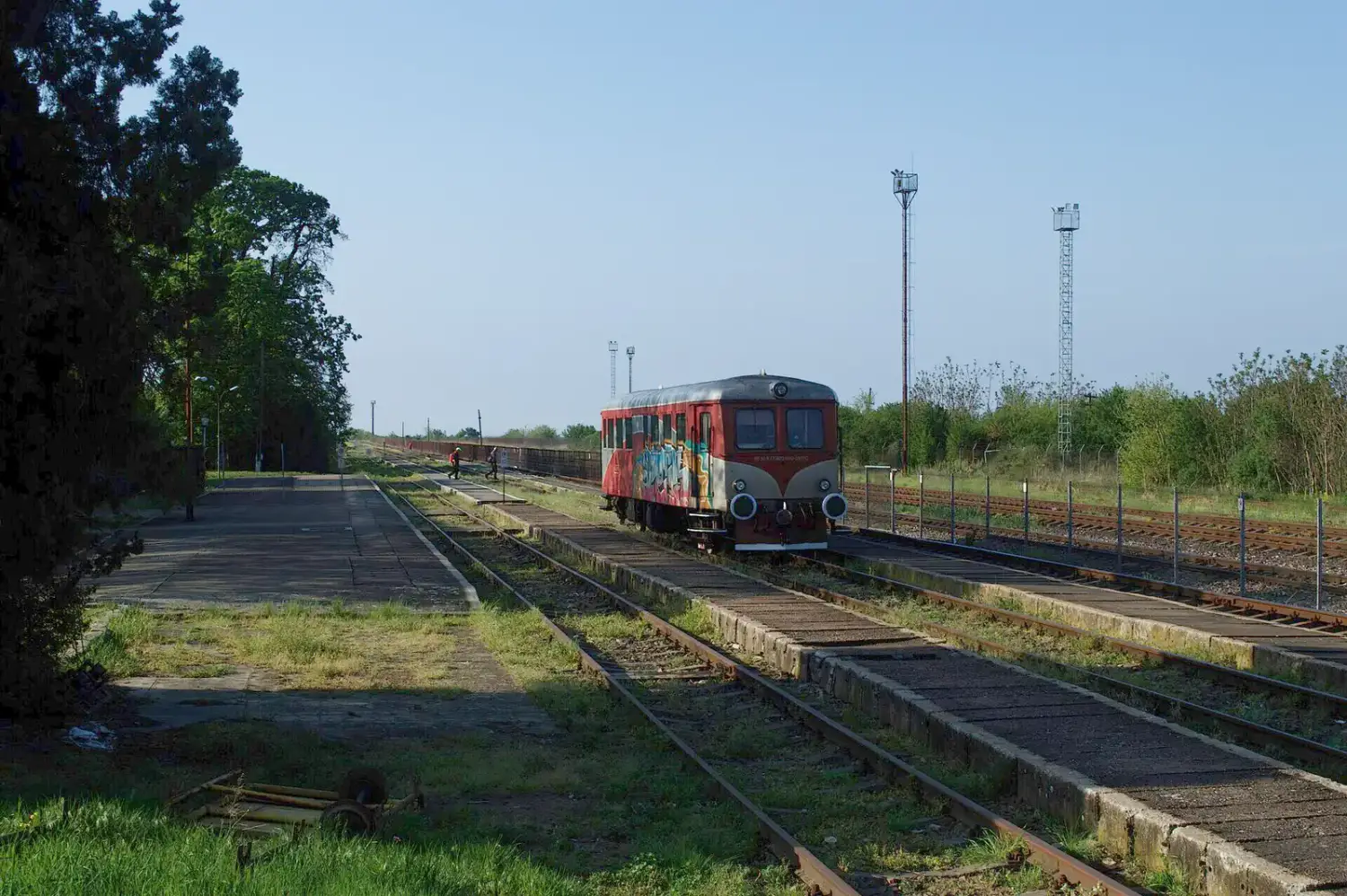
If you love trains, temper your expectations: there’s no direct Timisoara-Belgrade train, and there has not been for years. What survives is a corridor with a change. You take a local train from Timisoara Nord to the border and on to Vrsac in Serbia, then change onto a Serbian service down to Belgrade. Rome2rio clocks the full run at a bit over four hours, and a bus-and-train combo (bus to the border, then train) at around 3h44, for single digits in dollars - so it’s the cheapest way of all, if the timings line up.
The reasons to be cautious are timing and reliability. The local Timisoara-Vrsac trains are few - historically a couple a day - and schedules on this corridor change often; the old cross-border line via Kikinda and Jimbolia lost its passenger service years ago. Fares are genuinely cheap, but the anecdotes online quoting a handful of lei or dollars are from 2015 to 2019 and are not a current price. If you want to try the train, buy at the international counter at Timisoara Nord and verify the live times with Srbija Voz (srbvoz.rs) or the station for your date. In Belgrade, note that trains now use Beograd Centar (Prokop) south of the centre, or suburban stops like Vukov Spomenik, not a grand old central terminus - the historic main station closed in 2018.
What about flying?
Skip it. Unlike the Bucharest-Sofia corridor, where a short hop makes some sense, there’s no nonstop flight between Timisoara (TSR) and Belgrade (BEG) - the only air options route through another city with at least one stop, from around 250 dollars return, which is absurd for two cities 150 km apart. The bus or a transfer beats it on every measure.
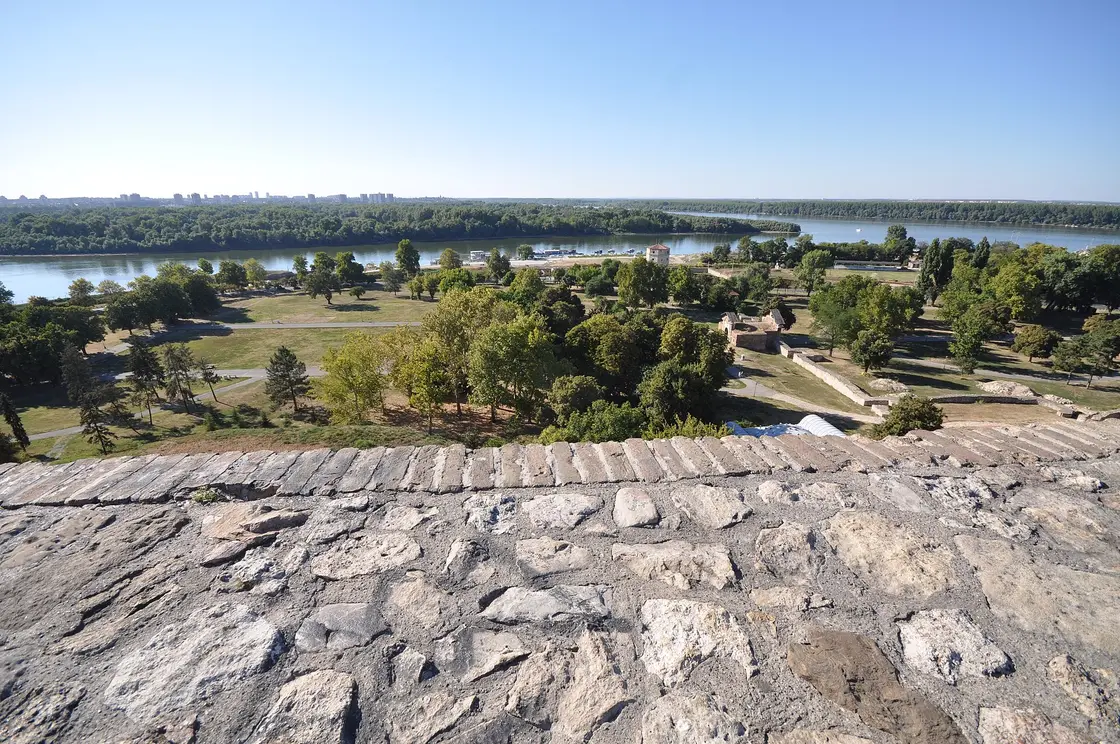
There’s a flip side worth knowing, though. Belgrade Nikola Tesla (BEG) is a real airport option for western Romania, about two hours fifty by car from Timisoara. Timisoara’s own airport (Traian Vuia, TSR, roughly 12 km from the centre) has a decent but limited network of around 38 destinations, so if you can’t find a good fare or route out of TSR, a drive or transfer down to Belgrade opens up a much bigger airport - a trick locals in the Banat use, and one our which airport for Romania guide gets into.
Money: two currencies, neither of them the euro
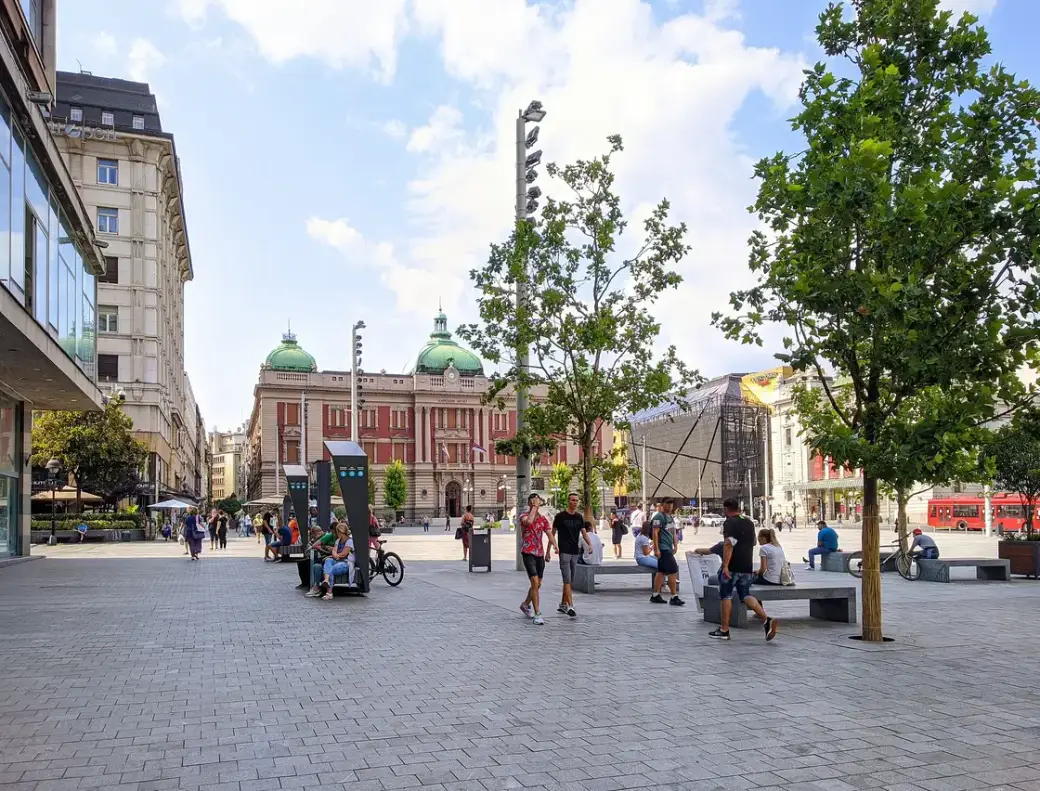
One detail that catches first-timers: you cross a currency line, and it isn’t the simple one. Romania uses the Romanian leu (RON, lei) - not the euro - so your Timisoara coffee, taxi and bus ticket are in lei. Serbia uses the Serbian dinar (RSD), also not the euro. So this is a leu-to-dinar trip, with the euro useful mainly as a reference. Cards are fine on both sides for buses, transfers and hotels; you rarely need much cash, though a handful of dinars is handy for a Serbian motorway toll booth or a small purchase on arrival. Euros are sometimes accepted informally in Serbia, but you’ll get your change in dinars.
So which should you take?
If you just want to reach Belgrade cheaply and without fuss, book the bus - three and a half to four hours with the border, from about 16 euros, straight into the city. If you’re a group or have luggage, a private transfer is money well spent for the door-to-door convenience and a driver who handles the crossing. Drive if you want the freedom to stop, but sort the rental’s cross-border permission and the two toll systems first. Consider the train only if you love rail and have time to spare, and verify the volatile timetable first. Whatever you choose, the real variable isn’t the 150 km - it’s the border. Carry your passport, keep some patience for Moravita-Vatin, and remember you’re leaving the EU on the way there and re-entering it on the way home.
Photos
Admission and opening hours
- Admission price
- Bus (FlixBus and smaller lines) from about 16 EUR one way, roughly 3.5 to 4 hours with the border. Private minibus transfer (e.g. Gea Tours, door to door) is quote-on-request, not a fixed fare. Driving is about 150 km. Train is cheap but slow and involves a change at Vrsac. All prices move with date and demand.
- Opening hours
- Bus: about 2 FlixBus departures a day plus other operators; first around 11:00, last around 20:00, but frequency shifts by season - check the operator. Transfer: several a day both directions, by reservation. Train: very few and volatile - verify at the station.
Serbia is NOT in the Schengen Area or the EU, so there is a real passport and possible customs check at the Moravita-Vatin crossing - carry your passport (EU/EEA may use a national ID card). Visa-free stays are 90 days in any 180 for EU, US, UK, Canada and many others; register with the local police within 24 hours (hotels do this for you). Romania uses the leu (RON); Serbia uses the dinar (RSD) - neither is the euro. Prices, times and rules change: confirm with FlixBus, the operator and Serbia's foreign ministry (mfa.gov.rs) before you travel. Checked July 2026.
Details checked: July 6, 2026
Read also

Transport · 14 min read
Bucharest to Budapest: Night Train, Bus & Flights
Verified · September 4, 2026Bucharest to Budapest 2026: CFR night train from 27 EUR, FlixBus from 36.98 EUR in 13h, or a 1h45 flight. Fares, times, border, Oradea stop.

Transport · 9 min read
Bucharest to Sinaia Train 2026: ~1.5h, from 32.5 lei
Verified · August 31, 2026Bucharest to Sinaia by train in about 1.5 hours: fares from 32.5 lei, Peles timing and its 16:00 last entry, and when a transfer wins.

Transport · 10 min read
Cluj to Brasov 2026: Bus 3h40 from 81 lei
Verified · August 28, 2026Cluj-Napoca to Brasov: bus about 3h40 from 81 lei, CFR InterCity about 6h35 from 126,50 lei, drive 275 km in about 4h20. Check before you go.

Transport · 9 min read
Brasov Airport (GHV): Flights & Getting to Town
Verified · August 21, 2026Brasov-Ghimbav (GHV) opened in 2023: who flies, the RATBV A1 bus at 5 lei, taxi and transfers into town. Check the live board.