
Saxon Villages of Transylvania: Viscri & Biertan
Romania fortified-church villages: Biertan, Viscri, Prejmer and the rest - what they are, which to pick, and how to reach them by car.
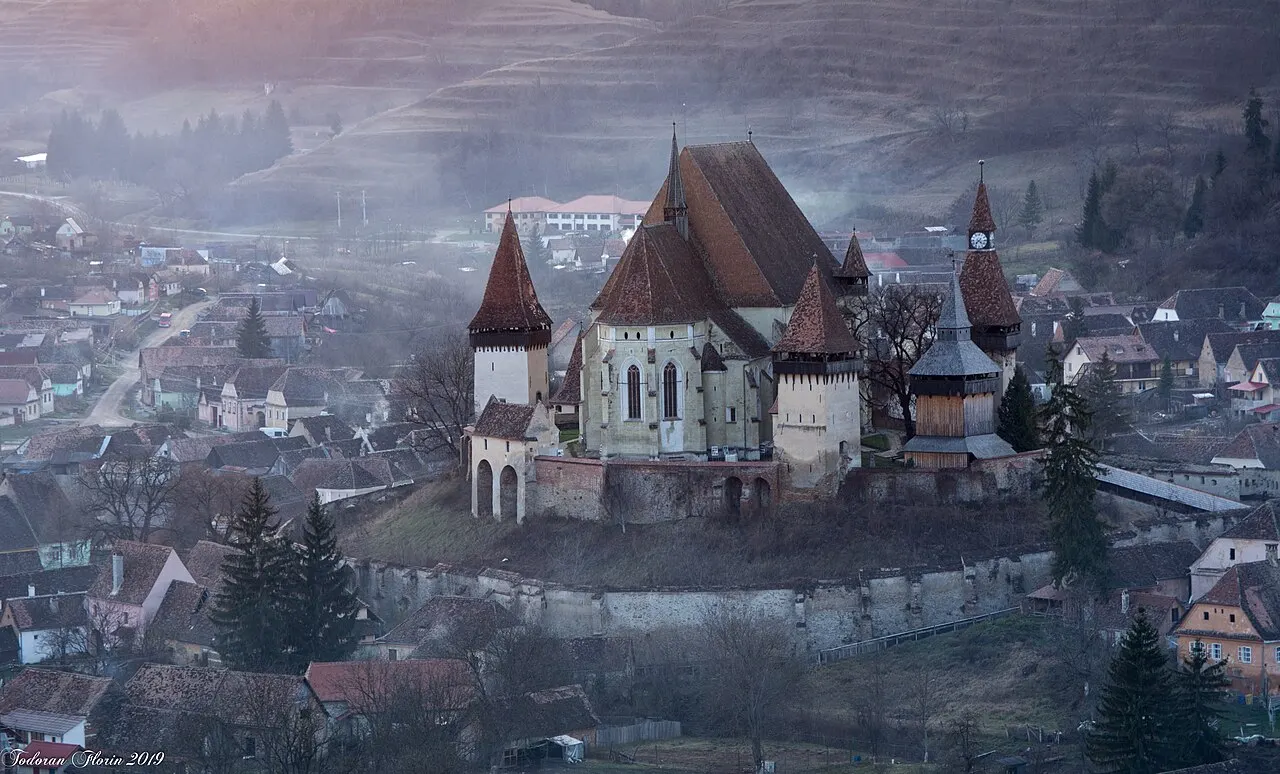
The Saxon villages of southern Transylvania are the “peasants’ castles” of Romania: farming settlements where German colonists turned the parish church into a fortress because they had no lord’s castle to hide in. Seven of them are a single UNESCO World Heritage Site, and the three you actually plan a trip around are Biertan for the grandest church, Viscri for the atmosphere and its royal fan, and Prejmer for sheer defensive scale. They sit in the countryside off the main roads between Sighisoara, Sibiu and Brasov, and the practical truth is that you need a car, or a tour, to string them together.
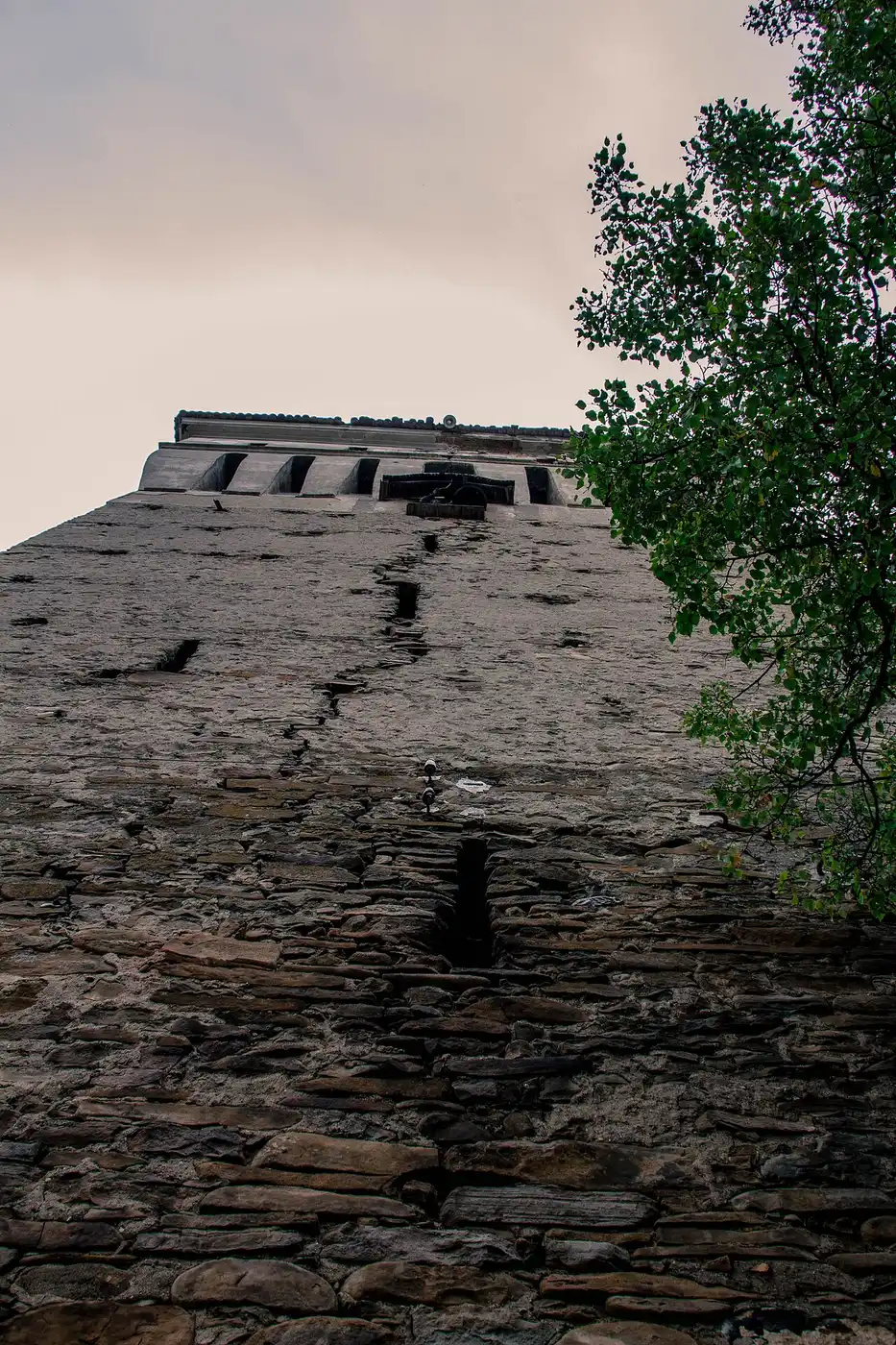
Picture what a “fortified church” actually is and the whole region clicks into place. From the 12th century the Transylvanian Saxons farmed this land under constant threat of Ottoman and Tatar raids, and being commoners they had no castle. So they took the one big stone building every village owned, the church, and wrapped it in rings of high walls, watchtowers and store-rooms, turning it into a refuge the whole community could bolt into when the raiders came. That is why these look like nothing else in Europe: a Gothic nave inside a circular fortress, with bacon lofts and grain stores built into the ramparts. Once you have seen one you read the rest instantly.
Who were the Transylvanian Saxons?
They were German settlers, invited by the kings of Hungary from the 1100s to colonise and defend the southern frontier of Transylvania, and they built a distinctive world of tidy villages, guild crafts and Lutheran churches that lasted eight centuries. At its height the community raised something like 150 fortified churches across the region; only seven make up the UNESCO listing, but you pass dozens of lesser ones, many crumbling, as you drive the back roads. The Saxon towns of Sighisoara, Sibiu and Brasov were the urban end of the same culture.
The melancholy note under any visit is that the people who built all this are mostly gone. Emigration to Germany, a trickle under communism that became a flood after 1990, emptied the villages of their Saxon families, and many houses now stand shuttered or in other hands. What you’re looking at is a living culture that largely left. The preservation work at places like Viscri matters for that reason. For the town side of the story, our Sighisoara guide covers the best-preserved inhabited Saxon citadel.
Biertan: the grandest of them all
If you see one, make it Biertan. Its church crowns a hillock in the middle of the village inside three concentric rings of defensive wall, and it’s the most theatrical of the seven, the kind of place that stops you in the road as you arrive. Biertan was important beyond its size: from 1572 to 1867 it was the see of the Transylvanian Saxon Lutheran bishops, the spiritual capital of the whole Saxon community, and their tombstones are gathered in the tower.
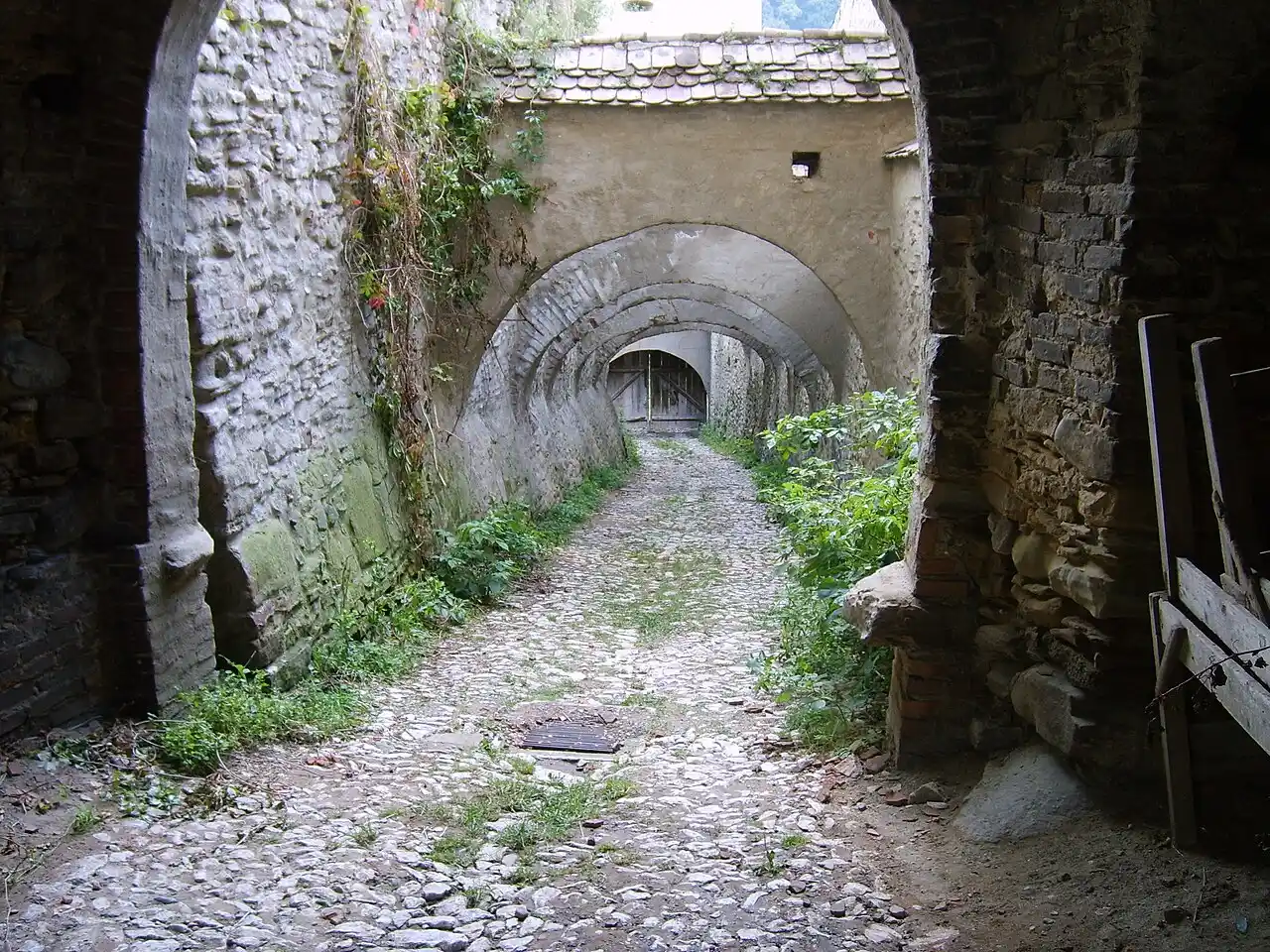
The detail everyone remembers is the sacristy door. Made in 1515 by a master craftsman from Sighisoara, its lock shoots nineteen separate bolts from a single key-turn, an anti-theft mechanism so clever it won a prize at a Paris world exhibition. It guarded the valuables the villagers stored inside the walls, and it still works. Give Biertan an hour: the walls, the covered stairways between the rings, the great hall church and that door. Our Biertan fortified church guide goes deeper on the altarpiece, the marital prison and visiting hours.
Viscri: the famous one, and the hardest to reach
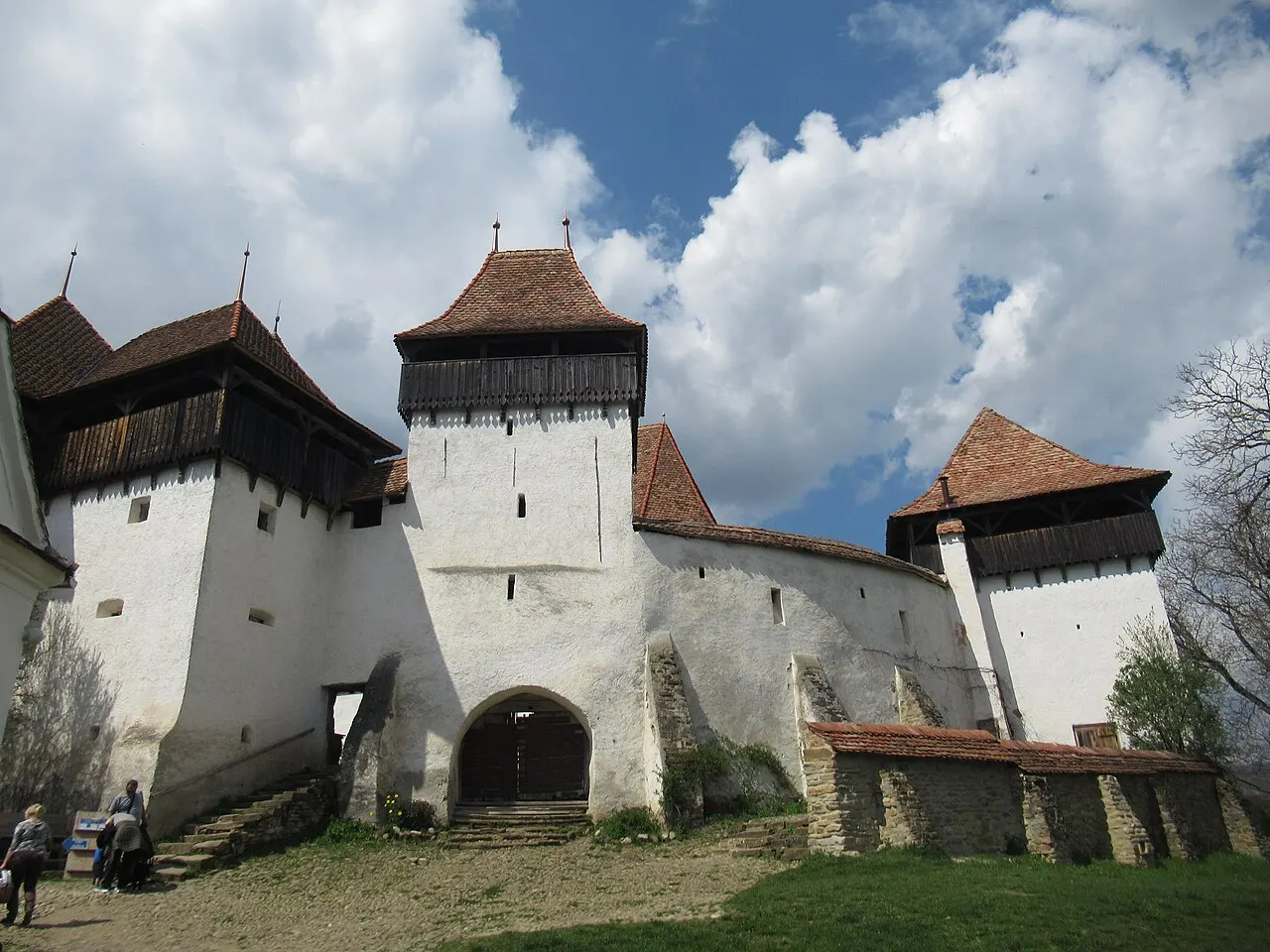
Viscri is the name most travellers arrive with, and it earned its fame twice over. Its stubby whitewashed church, parts of it 13th-century, sits behind plain white ramparts at the top of a single unpaved street lined with pastel Saxon houses, geese and the odd horse cart. It’s the most complete picture of a working Saxon village you can still walk into. Then there’s the royal connection: King Charles III fell for Viscri, bought and restored an old Saxon house here, and has channelled years of support into preserving the village’s crafts and buildings, which is a large part of why it looks as cared-for as it does.
That fame has a flip side worth planning around. Viscri lies down a long minor road off the Brasov-Sighisoara route, the last stretch rough, and there’s almost no useful public transport, so a day-tripping crowd arrives by car and tour van in the middle of the day and the one street gets busy. Come early or late, and if you can, stay a night in a village guesthouse to have the place to yourself at dawn. Its charm is fragile and real, and it rewards the effort of getting there.
Prejmer: the biggest fortress-church in the region
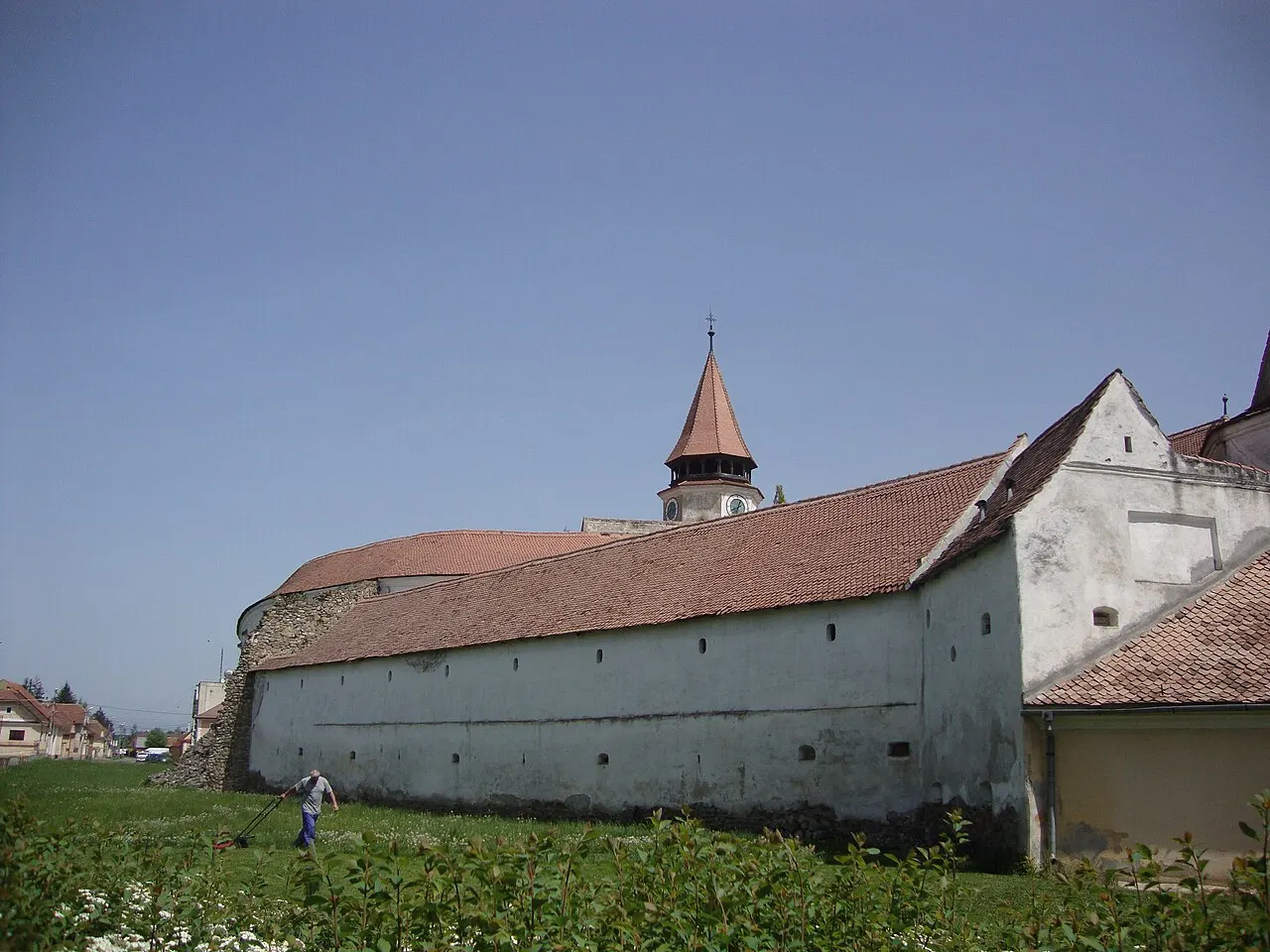
Prejmer is the one that shows what these places were built to survive. Just outside Brasov, it’s the best-preserved fortress-church in Romania, and its operator claims it as the largest fortification in Eastern Europe - Romania’s national tourist board stretches the same claim to southeastern Europe. The curved white ring wall gets quoted at anywhere from 10 to 14 metres depending on which page you read, including across the operator’s own site; the church was begun by the Teutonic Knights in 1218 and finished by the community over the following centuries. The village was attacked more than fifty times between the 13th and 17th centuries. How often the church itself fell is genuinely disputed - the Kirchenburgen foundation says it was taken only a few times, Wikipedia says only rarely, and the familiar “captured once, in 1611” rests on a single tourist-board page.
The inside is the revelation. Built into the ring wall are over 270 small rooms on three to four timber-galleried storeys, one assigned to each village family, where they stored grain and sheltered through a siege - shelter for some 1,600 people, a vertical village folded inside the ramparts. It’s the clearest illustration anywhere of how a fortified church actually worked as a refuge, and because it sits right by Brasov it’s also the easiest of the great three to reach. Hours, wall rooms and tickets: Prejmer fortified church. Our Brasov guide covers basing there, with Prejmer and the fortified church at Harman both a short hop out.
Saschiz, Valea Viilor and the rest of the seven
The other four fill out the set and make good stops rather than destinations in their own right. Saschiz is the easiest of all to see, sitting right on the DN13 Sighisoara-Brasov road with a big hall church and a freestanding clock tower that deliberately echoes the one in Sighisoara, a quick and rewarding roadside pull-in. Valea Viilor, near Medias, is a compact, complete little fortress-church that rarely sees a crowd. Calnic, over near Sebes, is the odd one out in form: it began as a lesser noble’s fortified residence before the villagers took it over.
Darjiu is the real curiosity, and a good fact to carry: it’s the one village of the seven that’s not Saxon at all but Szekely, a Hungarian community, and its church is Unitarian, complete with medieval frescoes and, by old tradition, bacon still stored in the tower. So the “Saxon villages” label, handy as it is, has one exception baked into the UNESCO list itself.
How to visit the Saxon villages
Settle the transport question first, because it decides the whole trip. These villages are rural, spread out and poorly served by buses, so the realistic ways to see several in a day are a rental car or an organised tour from Sighisoara or Brasov. If you’re driving the region anyway, they slot straight into the classic loop in our Transylvania road trip guide, and you can rent a car in Sibiu, Brasov or Cluj to reach them; read our car rental and driving in Romania guides first for the deposit, the rovinieta road tax and the rough final stretch into Viscri. If you’d rather build a trip around the churches themselves instead of folding them into a castle loop, our Saxon villages route lays out a dedicated two-day drive through Viscri, Rupea, Biertan and Malancrav, with real leg-by-leg distances and where to sleep.
A few practicalities save a wasted detour. Prices split on staffing, not just village to village: Viscri runs its own ticket desk (20 lei for adults, 10 lei for children over six, students and seniors over 65, last admission 17:30, per the church’s own 2026 site), Biertan and Prejmer also sell fixed tickets in the 10-20 lei range, and the smaller, unstaffed churches, Malancrav among them, still run on a cash donation in roughly the same range. Carry lei either way, as card is rarely an option in the villages. Opening hours are short and seasonal, and out of season the church is often locked with a keyholder living nearby whose number is pinned to the door, so build in slack and don’t turn up at dusk expecting a tour. For where to sleep, a village guesthouse in Viscri is the atmospheric choice, while Sighisoara or Brasov make practical bases with the most rooms and restaurants; compare guesthouses and hotels before summer weekends fill.
Down to one, take Biertan for the drama or Prejmer for the scale and the easy access from Brasov; if you want the feeling of a living village and have a car and a spare morning, make it Viscri. To fit the villages into a wider trip, our Romania 7-day itinerary shows where they land across a week, and if you’re combining them with the great Gothic castle to the west, our Corvin Castle guide covers that side of Transylvania. Bring notes and a bit of patience for the back roads either way. And notice what those three recommendations actually split on - drama, access, and whether anyone still lives there. Pick for the one you want from a village, not for the best photograph.
Photos
Admission and opening hours
- Admission price
- Prices vary church to church, not just donation vs ticket: Viscri runs its own ticket desk at 20 lei adult / 10 lei for children over six, students and seniors over 65, per the church's own 2026 site; Biertan and Prejmer also sell fixed tickets, in the 10-20 lei range; the smaller, unstaffed churches, Malancrav among them, still run on a cash donation, roughly 10-15 lei on recent reports - carry cash in lei, as card is rarely an option in the villages.
- Opening hours
- Opening hours are seasonal and short, and out of season some churches are opened by a keyholder who lives nearby - a sign on the door usually gives the phone number or house. Viscri: 10:00-18:00 summer (1 Apr-25 Oct, last admission 17:30), 10:00-16:00 winter, per the church's own site.
Prices and hours change and vary village to village - confirm locally or at the Sighisoara or Brasov tourist office before a long detour. Romania uses the leu, not the euro.
Details checked: August 20, 2026
Read also

What to see · 11 min read
Marginimea Sibiului: Shepherd Villages Near Sibiu
Verified · September 5, 202618 shepherd villages west of Sibiu: Rasinari, Sibiel glass icons, Saliste, Paltinis bus fares, and how a day out of town works.

What to see · 9 min read
Prejmer Fortified Church: UNESCO Near Brasov
Verified · September 3, 2026Prejmer fortified church 15 km from Brasov: Greek-cross plan, 275 wall rooms, UNESCO hours for 2026 and how a visit actually works.

What to see · 11 min read
ASTRA Museum Sibiu: Romania's Great Open-Air Village
Verified · August 29, 2026ASTRA Museum near Sibiu: 50-lei tickets, hours by season, how to get there, and which of the 400+ buildings across 96 hectares to see first.

What to see · 10 min read
Bucegi Sphinx & Babele: Cable Car from Busteni
Updated · August 26, 2026Ride the Busteni cable car to the Sphinx and Babele: 2026 return fare 199 lei, hours from 08:30, and how to pair it with Peles or Cantacuzino.