
ASTRA Museum Sibiu: Romania's Great Open-Air Village
ASTRA Museum near Sibiu: 50-lei tickets, hours by season, how to get there, and which of the 400+ buildings across 96 hectares to see first.
Three different gates lead into ASTRA Museum, south of central Sibiu, and they don’t behave the same way: the 50-lei adult ticket costs the same at each, but only Gate 1 has the Cultural Cafe, the craft shop and the shortest walk to the lake. Behind all three lies 96 hectares of forest holding more than 400 windmills, watermills, churches and farmhouses dismantled elsewhere in Romania and rebuilt here, linked by 10 km of paths. It runs year-round, but full closures do happen: 24-25 December and 31 December-1 January in the 2024/25 and 2025/26 holidays, and at least Holy Saturday at every Orthodox Easter since 2024. The museum posts holiday hours only days ahead, before Easter as much as Christmas. Half a day is the minimum.
Our Sibiu travel guide names ASTRA as the one stop outside the centre worth a half-day. This article is the layer underneath: three named households worth tracking down, a shed of horse-drawn carts and wagons, and the gate system that decides how much you actually see.
What a ticket costs
An adult ticket is 50 lei, a pensioner’s is 20 lei, and pupils and students pay 10 lei. A group of 20 or more from the same category gets a discount, though not a flat one: 40 lei per adult, 15 per pensioner, 5 per pupil or student, so the cheaper the ticket, the bigger the percentage cut. Season passes run 40 lei for a student, 150 for an adult and 300 for a family, plus a 100-lei tier for pensioners and workers earning no more than the minimum wage, proof required. Buy at the machines at each gate or online at muzeulastra.funticket.app.
Pay by card if you can - the museum recommends it for the gate machines. The December 2025 rise landed unevenly: adults went from 35 to 50 lei, a 43% step after four frozen years, while pupils and students moved 9 to 10 and school groups actually dropped from 7 to 5. Passes weren’t raised at all, and the director says they won’t move for another two or three years. So do the arithmetic: at 50 lei a visit the 150-lei adult pass covers itself on the third trip, where before the rise it took five.
Which gate, and what hours does it keep
The site runs on two seasons. From May to September it’s open 08:00 to 20:00, the main gate at the Multicultural Museum Pavilion selling its last ticket at 19:45. Gate 2, by the Carciuma din Batrani tavern near the windmills, and the Zoo gate at Etno Tehno Parc both run 10:00 to 17:45, the Zoo gate only Wednesday to Sunday. October to April, the hours page drops everything to 09:00-17:00 - but the museum’s visiting rules still count October as summer at 08:00-20:00 and give winter as 09:00-17:00 or 08:00-18:00. Two operator documents, two answers: check the day before if you’re going in October or midwinter. Paths stay open through the cold months, but don’t build a trip around a sleigh ride: the homepage still offers carriage and sleigh trips, yet the 2025 tariff struck the sleigh out over a changing climate, and neither carries a price today.
Use Gate 1 if this is your only visit: it has the Cultural Cafe and the Folk Art Galleries craft shop, and it puts you closest to the lake. The other two suit cyclists coming through the forest or anyone heading straight for a particular corner.
Getting there from central Sibiu
The museum gives its own address as about 6 km from central Sibiu, on the road toward Rasinari, and a taxi from Piata Mare rarely takes more than fifteen minutes. Driving, Sibiu hangs off the A1 with four exits into different parts of the city, so finding the road out is easy even in a rental you picked up an hour earlier. Our car rental in Romania guide covers deposits and the road vignette.
Public transport works fine too. Bus line 13 runs the Gara-Muzeul Astra route from the train station, about 18 minutes over a dozen stops, every day of the week. If the weather’s decent, the bike path is the nicer option: it starts near the Municipal Stadium, threads through Sub Arini park and keeps you under trees all the way to the gate. Ride it whenever you like. The 08:00-10:00 and 18:00-20:00 window the museum publishes governs cycling inside the grounds, not the road there, and racks wait in the car park; on busy days staff can wave bikes off even in that window. Trains, intercity buses and when to just rent a car are in our getting around Romania guide.
Why a folklore museum covers ninety-six hectares
The scale traces back more than a century. The Transylvanian Association for Romanian Literature and the Culture of the Romanian People, ASTRA for short, sketched out an open-air ethnographic exhibition in 1905 from a building in Sibiu’s own ASTRA Park. That first museum closed in 1950, its collections sat at the Brukenthal Palace until 1956, when the folklorist Cornel Irimie revived the idea, and the city handed over Dumbrava forest land in 1960. The Museum of Folk Technology opened to the public on 17 October 1967.
It took the ASTRA name in 1990 and became the ASTRA National Museum Complex in 2001, folding in three more collections. Only one is out here in the forest: the Museum of Transylvanian Civilization exhibits inside the Multicultural Museum Pavilion at Gate 1, the building where you’ll buy your ticket (temporary exhibitions there cost an extra 10 lei, 3 for pupils and students). The Emil Sigerus and Franz Binder museums, Saxon and universal ethnography, both sit on Piata Mica in the centre, the Binder closed for conservation, so check before you go. The open-air village is the fourth collection, and the one worth leaving the centre for.
The recognition tracks the scale: a European Museum Academy award in 2019, an Order of Cultural Merit from the Romanian presidency in 2020, three Michelin stars in the guide’s Romania volume in 2021. Which superlative to believe is another matter: English Wikipedia calls it the largest open-air museum in Romania and among the largest in Central and Eastern Europe; the museum’s own site drops the caveat and says largest in Europe.
Three households worth tracking down
Reading every information panel would take days, so if you’re going to remember three names, make them these. Two scheduling quirks first. The pavilion exhibitions open Wednesday to Sunday, so Monday leaves you the whole open-air site and, in season at least, the craft shop at Gate 1 - which the museum closes separately over Easter. And guided tours run solely in the off-season, November to April, booked by email two days ahead at 150 lei an hour in Romanian, 250 in a foreign language, ticket extra. A guide in July isn’t on offer however early you ask.
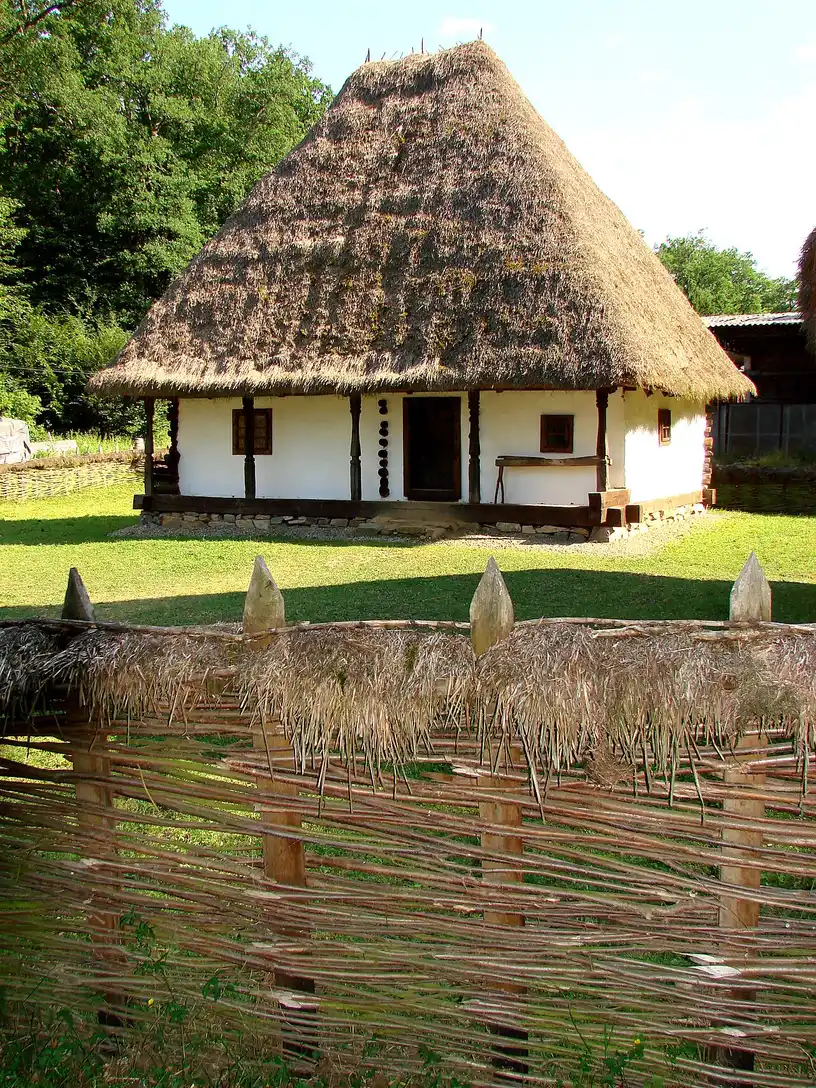
The pastoral household from Poiana Sibiului is painted a deep, saturated blue that locals call mandra marie, a shade the museum traces back to shepherd communities who picked it up on transhumance routes into the Balkans. The intensity of the paint was a status marker: inside, the unheated good room displays the family dowry laid out on a shelf above the beds, exactly as a wealthy shepherd household would have shown it off in the second half of the 19th century.
The second is a Lipovan Russian household brought from Mahmudia, in Tulcea county on the Danube Delta, and set up beside the museum’s lake so the fishing gear on display has water to look out on. Inside, old and new sit side by side: a samovar for tea, a lajanca (heated sleeping platform) and a bania (small sauna), next to icons painted on wood and set in metal from the 17th and 18th centuries. The museum calls it the most complete Danube Delta household in any Romanian open-air museum, delta included, and after the samovar beside a 300-year-old icon that’s easy to believe.
The third is a brick, two-storey potter’s house from Galesoaia in Gorj county, built in the early 20th century with a monumental wooden staircase, carved in lacework patterns unique to Gorj craftsmen, running across the whole facade up to the good rooms. A kiln and a full set of potter’s tools sit beside it, since pottery is still worked in that part of Gorj. The ground floor holds a food cellar and a heated bedroom; the good rooms and dowry chests are upstairs.
Windmills, a lake, and the machinery of an old village
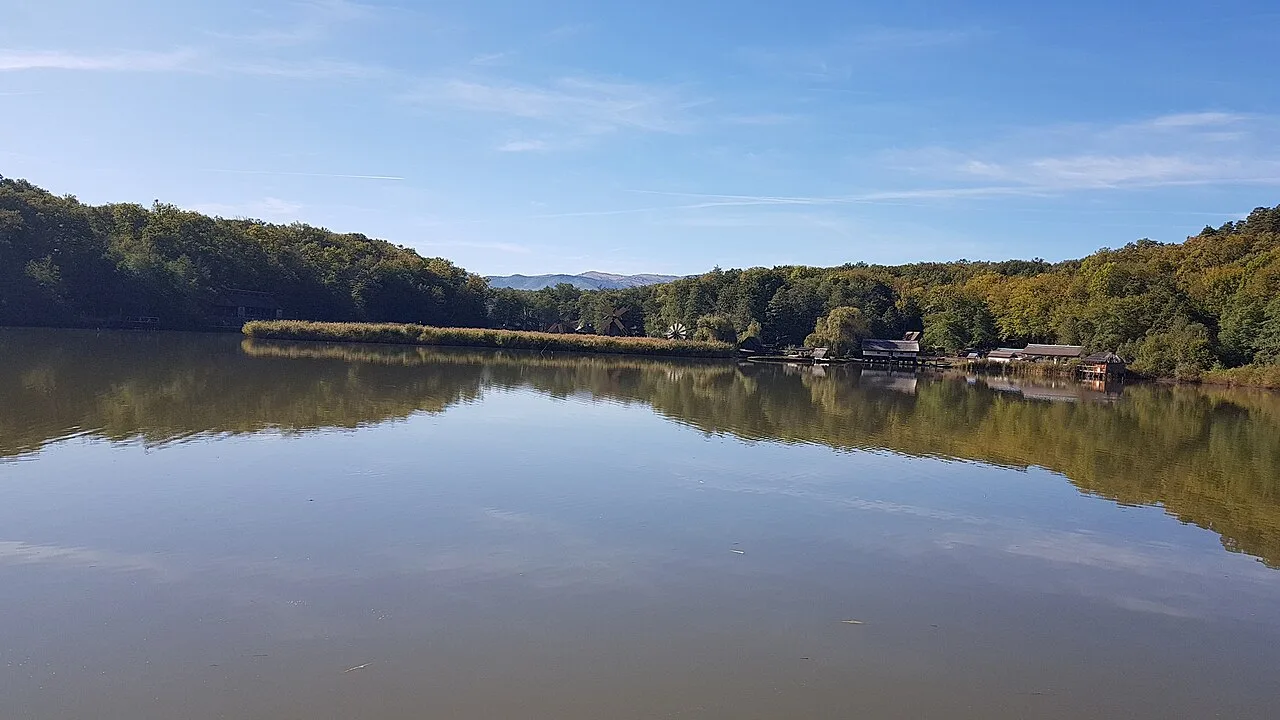
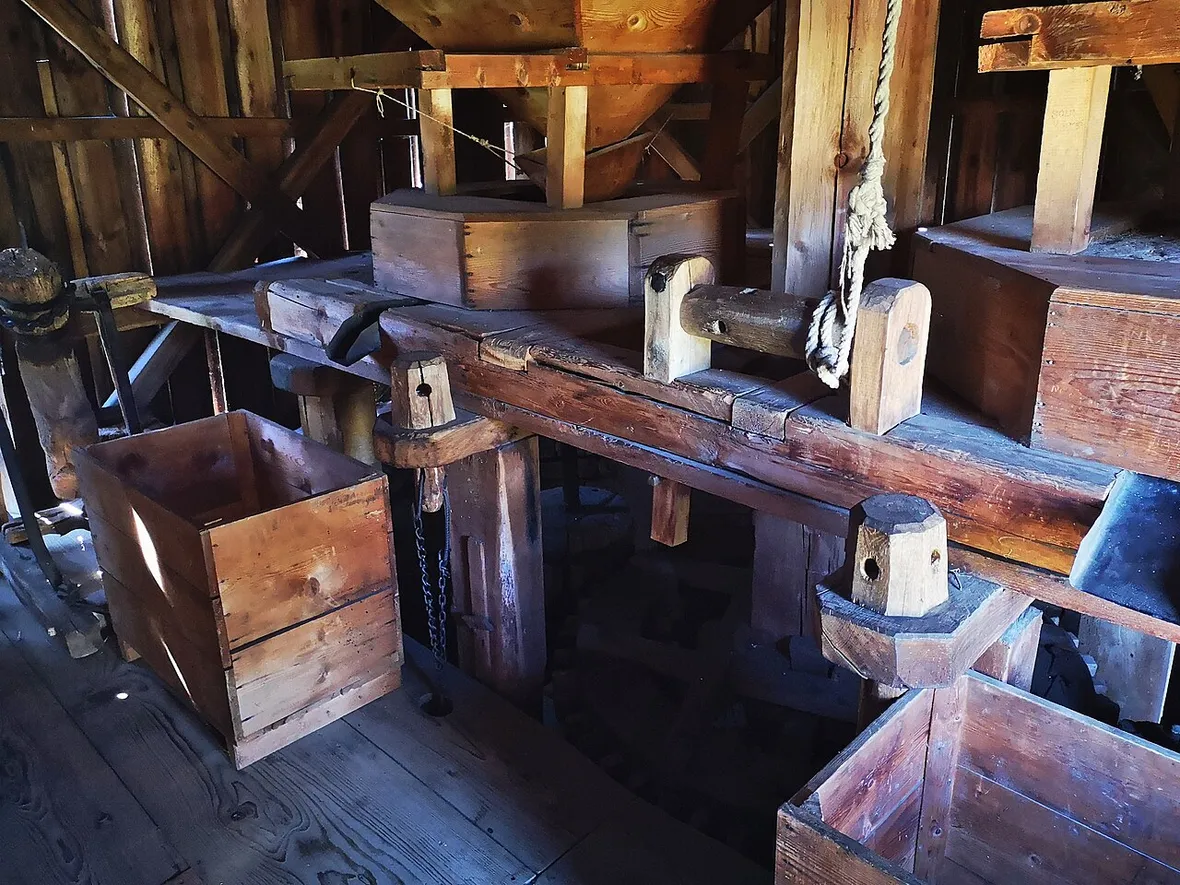
Water and wind power get their own corner. Windmills and watermills from Dobrogea and other grain-growing regions stand around the museum’s lake, and on a still morning their sails and the fishing sheds behind them show up twice, once real and once as a reflection. Get inside one that’s unlocked and the grinding mechanism is still there: hoppers, wooden gears and rope-and-chain lifts that ran on water or wind alone.
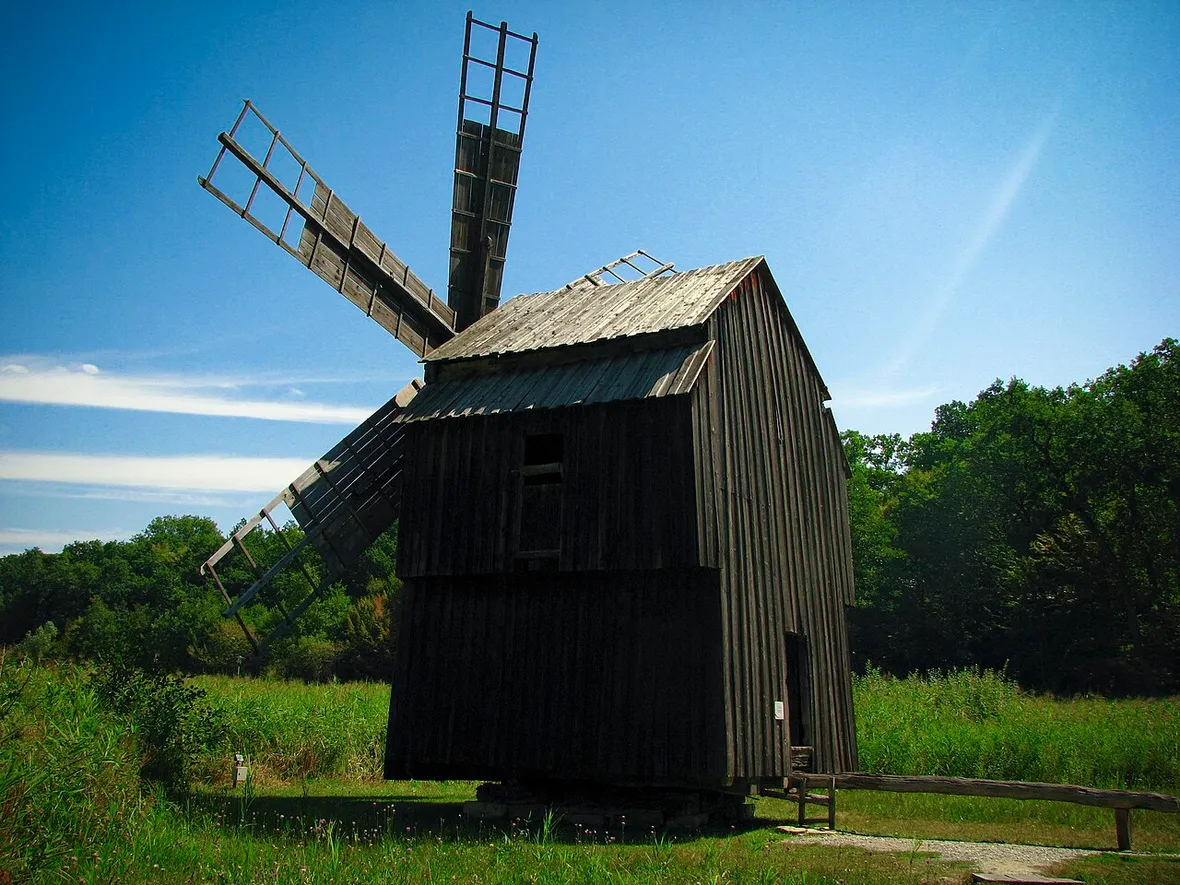
None of these buildings is a replica. They were dismantled in their home villages, numbered plank by plank and rebuilt here - worth remembering when a wooden gear looks too clean to be genuine: it’s a century old, just carefully kept. This technical side of the collection gave the museum its first name, the Museum of Folk Technology, long before ASTRA reached the sign.
Dozens of carts under one roof
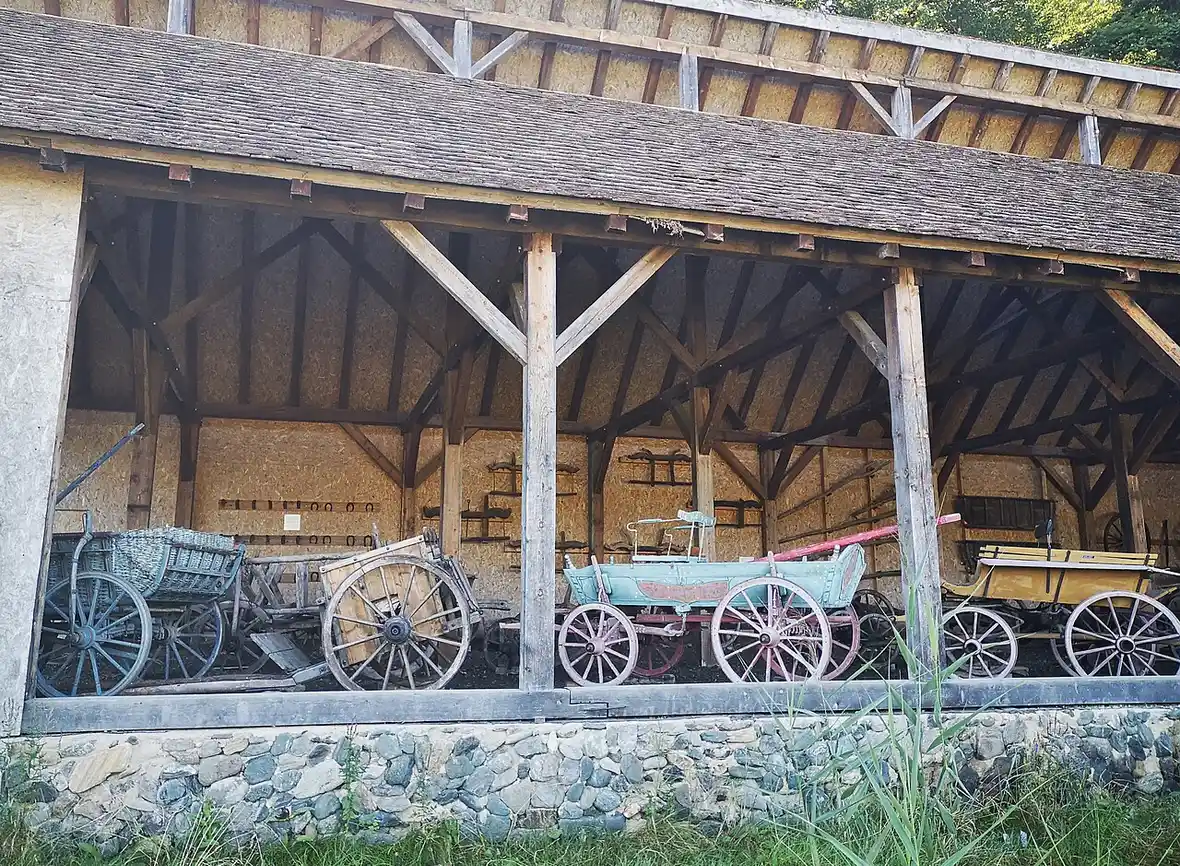
A roofed, open-sided shed holds the collection that gets least attention for what it is: dozens of horse-drawn carts, wagons and carriages, some still in the bright blues and reds Romanian villages favoured, tools and harness parts on the wall behind them. Nothing else here shows so plainly how a rural economy moved itself before anyone in these villages had seen a car.
Families are catered for elsewhere on site. The Etno Tehno Parc gives children a hands-on corner, and Bezded Church, the museum’s own, is still active: couples who want the real building instead of a stage set marry and christen children there. Add two working restaurants, Tulghes Inn near Gate 2 and Carciuma din Batrani, an 1850 monument rebuilt beside the mills, and a day here covers lunch too.
How much time should you set aside
Three to four hours covers the highlights if you keep moving: the lake and windmills, one or two of the named households, the cart shed. Enter through Gate 1 for a visit that length, and save the Zoo gate for a day with children. A full day suits all 10 km of paths, a proper look inside the technical buildings and a sit-down lunch; families with small children should lean that way.
Whatever you choose, go early if you can. The gap between an 08:30 arrival and an 11:00 one, once the coach groups and school trips have found their feet, is the difference between having a windmill to yourself and sharing it with fifty people and a guide’s microphone.
Where to stay for an early start at ASTRA
Base yourself in central Sibiu, not out by the forest; there’s very little to sleep in near the museum, and the Old Town puts you five minutes from a taxi rank and fifteen from the gate. Our where to stay in Sibiu guide weighs the Upper Town squares against the quieter, cheaper Lower Town; either works for an early start.
Pair the museum with the wider Sibiu stop; it doesn’t need a trip of its own. Our Sibiu travel guide covers the two main squares, the Council Tower and the Brukenthal Palace for what’s left of the day, and our best food in Sibiu guide is worth opening before dinner. If fortified towns interest you as much as folk architecture, our Sighisoara Clock Tower guide covers a different museum an hour up the road.
Photos
On the map
The map loads on click - to keep the page lightweight.
The map didn’t load. Check your connection and refresh the page.
Admission and opening hours
- Admission price
- Adult 50 lei, pensioners 20 lei, pupils and students 10 lei; a group of 20 or more from the same category pays 40/15/5 lei per person. Season passes run 40 lei (student), 150 lei (individual adult), 300 lei (family) and a 100-lei reduced tier for pensioners and low-income workers; individual passes are valid 12 months and cover 60 entries. One adult ticket is roughly 9.50 EUR or 11 USD at the August 2026 rate. A guide costs 150 lei an hour in Romanian, 250 in a foreign language, ticket extra.
- Opening hours
- May-September 08:00-20:00 (main gate sells tickets until 19:45; Gate 2 by the Carciuma din Batrani tavern and the Etno Tehno Parc/Zoo gate keep shorter hours, 10:00-17:45). October-April the museum's hours page gives 09:00-17:00, while its visiting rules still count October as summer season (08:00-20:00) and put winter at 09:00-17:00 or 08:00-18:00 - check the day before. Pavilion exhibitions run Wednesday to Sunday. Closed 24-25 December and 31 December-1 January in the 2024/25 holidays and again in 2025/26, when the museum opened 10:00-17:00 on 26 December and 2 January.
Ticket prices, guide fees and hours read off the museum's own Rates, Visiting Hours and Visiting Rules pages, not a reseller. The December 2025 revision that took the adult ticket from 35 to 50 lei is documented in the county council coverage listed under sources; confirm the current tariff before you go.
Details checked: August 29, 2026
Read also

What to see · 9 min read
Prejmer Fortified Church: UNESCO Near Brasov
Verified · September 3, 2026Prejmer fortified church 15 km from Brasov: Greek-cross plan, 275 wall rooms, UNESCO hours for 2026 and how a visit actually works.

What to see · 10 min read
Bucegi Sphinx & Babele: Cable Car from Busteni
Updated · August 26, 2026Ride the Busteni cable car to the Sphinx and Babele: 2026 return fare 199 lei, hours from 08:30, and how to pair it with Peles or Cantacuzino.

What to see · 9 min read
Fagaras Fortress: Transylvania's Moat Castle
Updated · August 23, 2026Fagaras Fortress on the DN1: moat citadel between Brasov and Sibiu. Tickets 30 lei, hours, the museum circuit, and a stop that needs no detour.

What to see · 10 min read
Snagov Monastery: Vlad the Impaler's Reputed Grave
Verified · August 17, 2026Snagov Monastery on Lake Snagov: the slab said to mark Vlad's grave, what the 1933 dig found, plus the 2009 footbridge, hours and boat.