
Sighisoara: Medieval Citadel & Old Town
A practical guide to Sighisoara: the UNESCO citadel, the Clock Tower, the Church on the Hill and the truth about the Dracula house, plus how to get there.
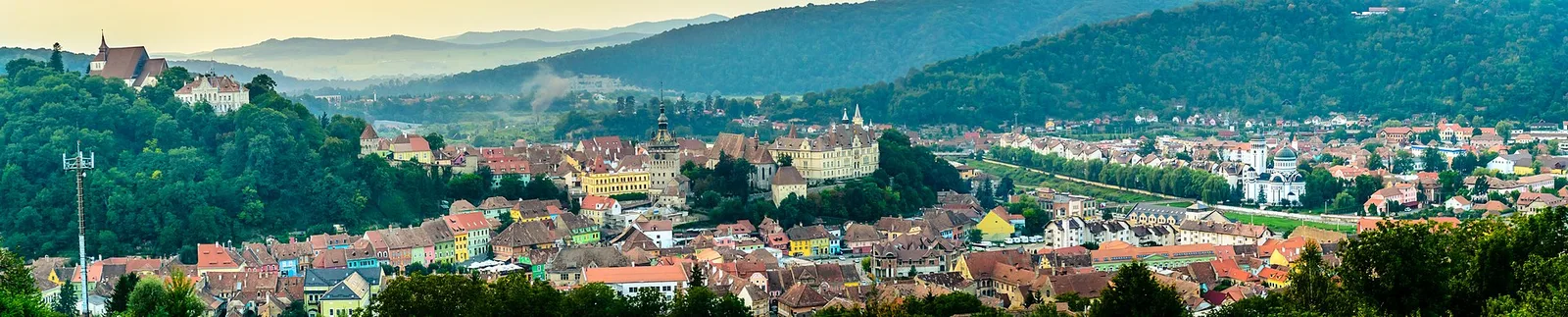
Sighisoara is a walled medieval town on a hill in Transylvania, and it earns the trip for one reason above the rest: it’s one of the very few Saxon citadels in Europe where people still actually live inside the walls, not a museum you tour behind a rope. You climb into it through the great Clock Tower, wander a knot of cobbled lanes and pastel houses, and end up on top of the hill at a Gothic church reached by a covered wooden staircase. It’s small enough to see the highlights in a few hours, and pretty enough that most people wish they had booked a night inside.
The short version: give the citadel half a day on foot, climb the Clock Tower first for the view and the History Museum inside it, walk the 176-step Covered Stairway up to the Church on the Hill, and treat the famous “Dracula birthplace” as a fun photo stop rather than gospel, because the story is shakier than the signs suggest. Sighisoara sits on the main Bucharest-Brasov-Cluj railway line and makes an easy stop between Brasov and Sibiu, so you rarely need to plan a whole day around it.
Is Sighisoara worth visiting, and what is it known for?
Yes, and the thing that makes it special is easy to miss until you understand it. Sighisoara’s historic centre is a UNESCO World Heritage Site, inscribed in 1999 as an inhabited medieval citadel and an “850-year-old testament to the history and culture of the Transylvanian Saxons”. Plenty of European towns have old walls; what UNESCO singled out here’s that the fortified upper town is still lived in, one of the few such surviving citadels in this corner of Europe. You’re not walking through a reconstruction, you’re walking down someone’s street.
It was a Saxon town, first recorded as a settlement in 1191 and granted urban status in 1367 as “Civitas de Segusvar”. The Germans called it Schassburg, the Hungarians Segesvar, and the Romanian name Sighisoara is first attested in 1435. Like Sibiu and Brasov, it grew rich on crafts, and its defences were run by the guilds: originally fourteen towers ringed the citadel, each maintained by a different craft, and nine of them still stand today, named for the tinsmiths, butchers, bootmakers, tailors, furriers, ironsmiths, ropemakers, tanners and, largest of all, the clockmakers. That guild logic is the key to reading the town.
What is the Clock Tower and can you go inside?
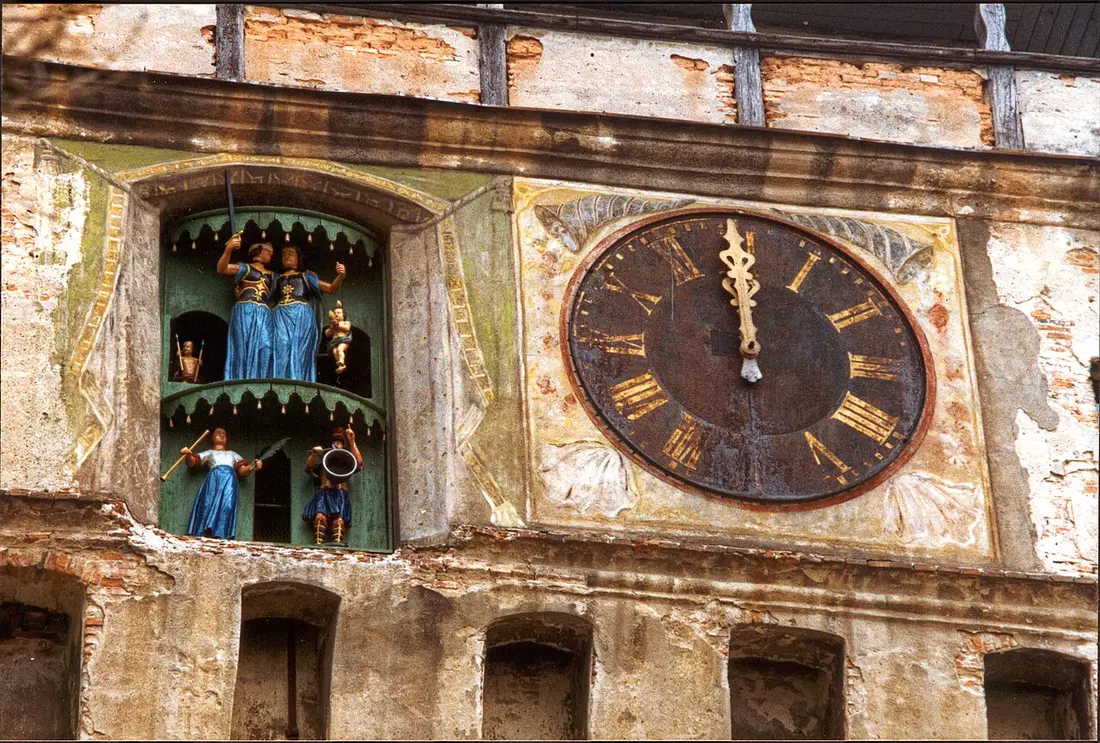
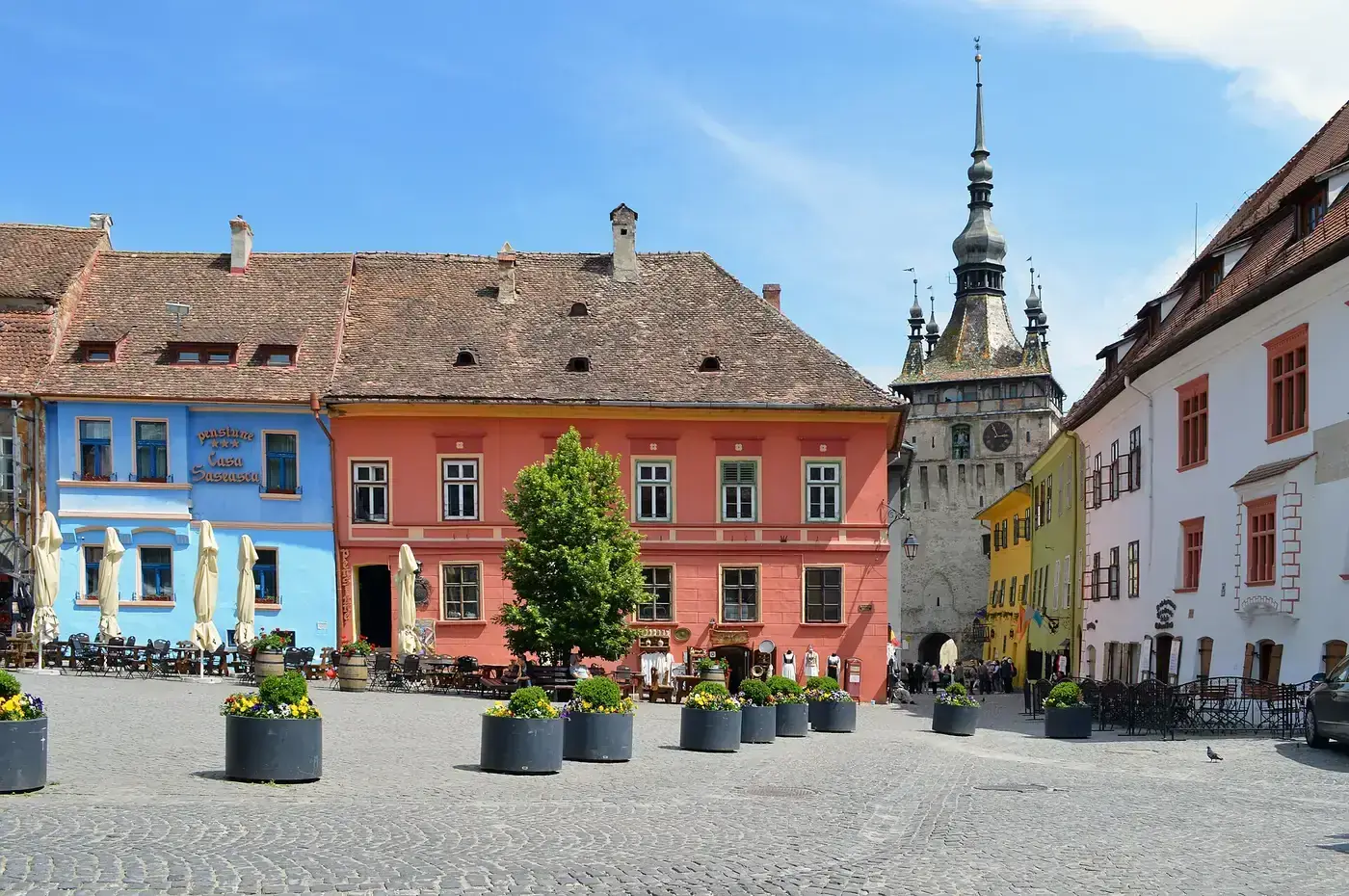
Start here, because the Clock Tower (Turnul cu Ceas) is both the front door and the best thing in town. It was begun at the end of the 13th century and finished in the 14th as the main gate tower of the upper citadel, and it grew into the landmark you see now: 64 metres tall, four floors plus an open viewing gallery, visible from nearly every lane. For centuries it doubled as the town hall, right up to 1656. The four little turrets on the corners of the roof weren’t decoration but a message, each one signalling that Sighisoara held judicial autonomy and its judge could pass and carry out a death sentence.
The roof you see is younger than the tower. A fire in 1676 set off the town’s gunpowder store, and the tower was rebuilt between March and September 1677 in the baroque shape it keeps today, with the colourful tiles added in 1894. The climb inside pays off twice. First, the clock itself: two faces about 2.3 metres across, driven by an old wooden mechanism and a newer metal one, with a set of seven carved wooden figures, one for each day of the week, that rotate into view on their little stage. Second, the tower now holds the History Museum of Sighisoara, so you climb through rooms of archaeology, old pharmacy and medical kit, furniture and craft tools on your way up to the gallery, where the whole red-roofed citadel and the hills beyond open up below you. Entry is 50 lei for an adult and 15 lei for pupils and students on the tariff the town hall’s museum service published for 2026, with a 70-lei combined ticket that adds the medieval weapons collection and the torture room; older listings still quote 15 to 20 lei, so trust the desk rather than a stale figure. Our Sighisoara Clock Tower guide takes the museum floor by floor, from the seven clock gods to the torture room’s six-kilo shame stone.
Was Dracula really born in Sighisoara?
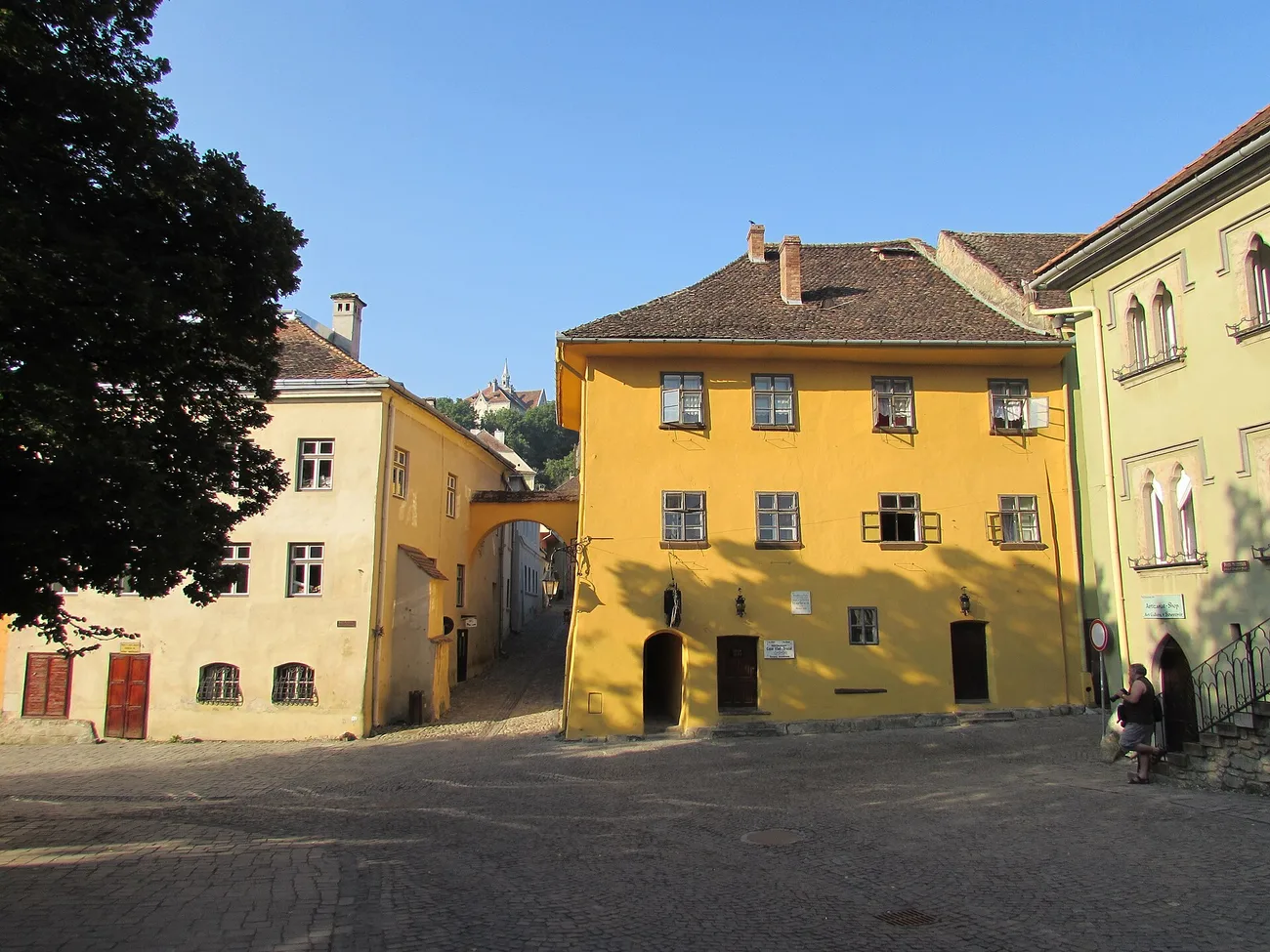
This is the headline everyone comes with, and it deserves a straight answer: probably not in the way the signs claim. The house on the citadel square, Casa Vlad Dracul, is marketed as the birthplace of Vlad the Impaler, the 15th-century Wallachian ruler whose byname Dracula, “son of the dragon”, Bram Stoker borrowed for his novel. The popular version says Vlad was born here in 1431, while his father, Vlad Dracul, sheltered in the town during a period of exile. It’s a good story and the house leans into it hard.
Here’s what the documents actually support. The records for this building show only that a mint operated in it between 1433 and 1436, which is why Dracul, who was minting coins in Sighisoara at the time, is linked to it at all. The plaque naming it Vlad’s birthplace went up only in 1976, and the idea that the family lived here was first floated in 1945 by a doctor, not a historian, who thought a portrait on the wall resembled Vlad’s father. A working mint is an odd place to house an exiled prince and his pregnant wife. So enjoy the house, which is genuinely one of the oldest stone buildings in the citadel, have a look at the little weapons museum upstairs or a meal in the restaurant below, but take the birthplace claim with a pinch of salt. And keep the two apart in your head: Vlad Tepes was a real and brutal ruler, not a vampire, and the caped count is pure fiction. If you want an actual castle with the Dracula marketing, that’s Bran Castle, a couple of hours south, which has its own thin thread to the legend. For the man behind the myth, from Vlad’s real reign to where the vampire came from, see our Dracula in Romania guide.
What is the Covered Stairway, and where does it go?
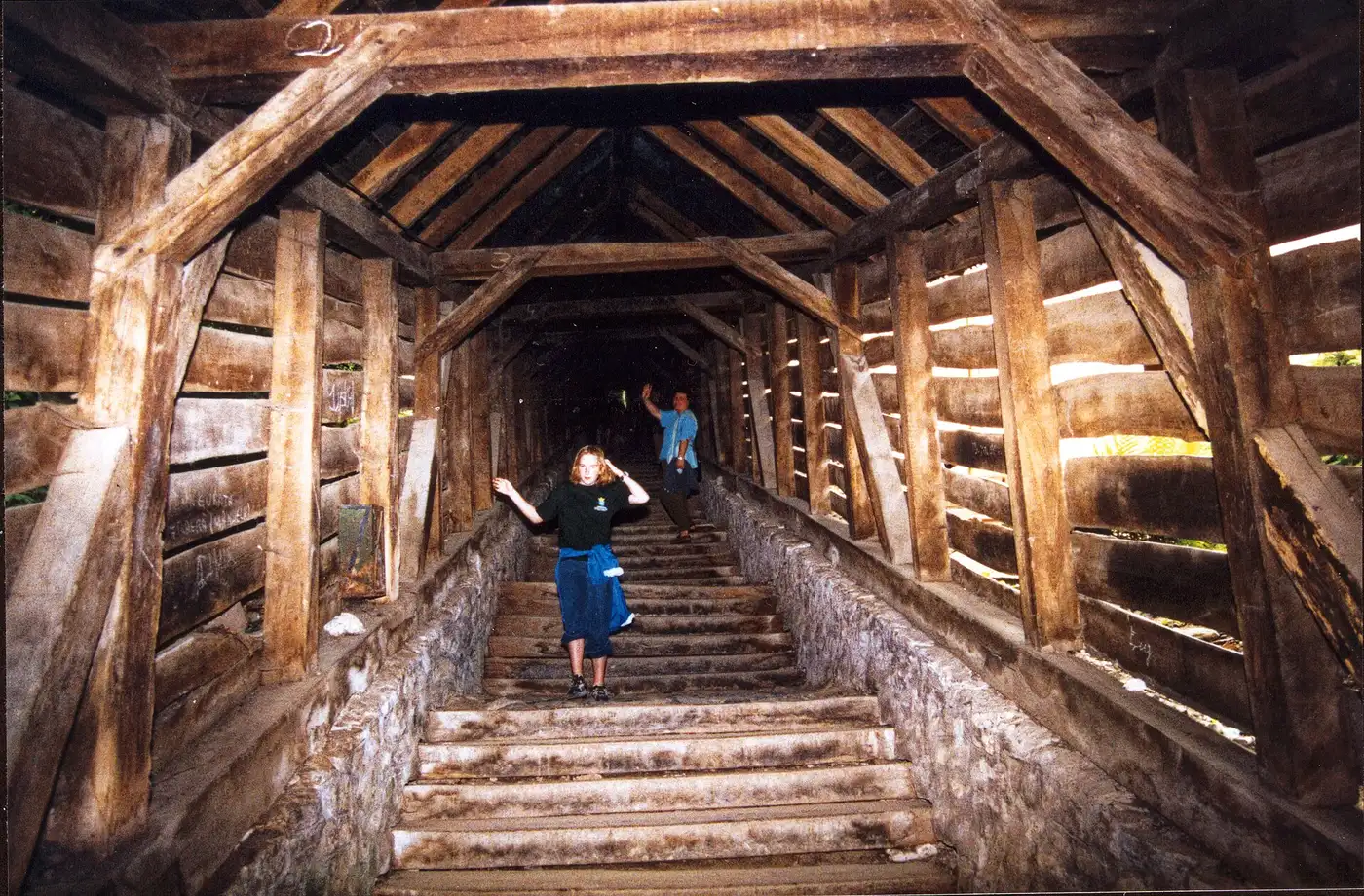
Near the top of the citadel the cobbles give way to one of Sighisoara’s most photogenic oddities: the Scholars’ Stairs (Scara Scolarilor), a long wooden tunnel of steps climbing the last stretch of the hill. It was built in 1642 to let children and churchgoers reach the school and the church at the summit without slipping on ice or mud in winter, which tells you how hard the Transylvanian weather could be. It once had 300 steps; 176 of them survive and are still the way up. Walking it’s free, it’s covered the whole way, and it’s the quiet, atmospheric part of the visit after the busier squares below.
At the top waits the Church on the Hill (Biserica din Deal), the Gothic Lutheran church that crowns the citadel. It was first mentioned in a document in 1345, keeps late-15th-century frescoes and a Gothic altarpiece dedicated to Saint Martin from 1520, and shares the hilltop with the old Saxon cemetery. It’s the highest point of the town and a natural place to pause before heading back down. Save it for last: the climb is the payoff, and the view back over the roofs from up here’s the one people remember.
What else is inside the citadel walls?
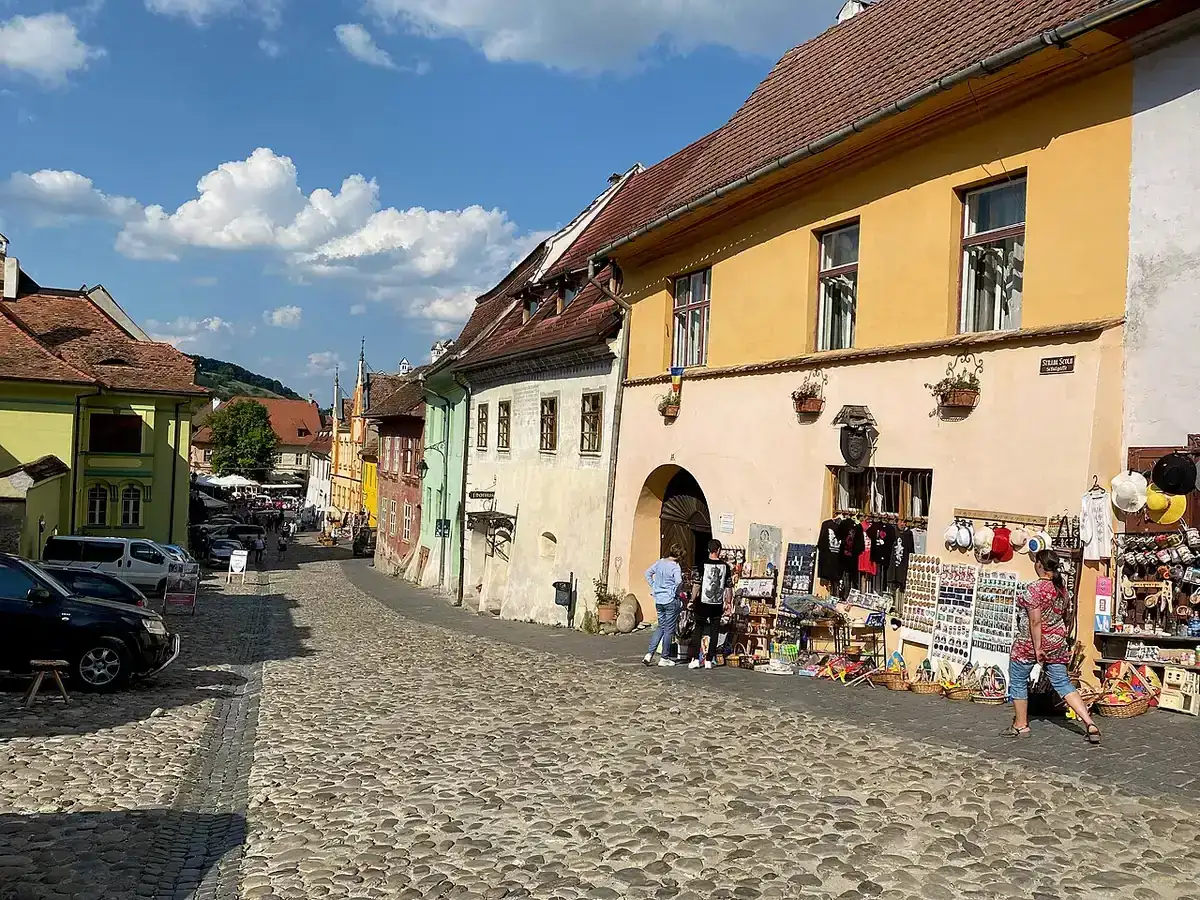
The pleasure of Sighisoara is that the whole upper town is the attraction, so once you’re through the Clock Tower gate the right move is to stop navigating and just wander. The citadel is a small grid of steep cobbled lanes and tightly packed houses painted in faded ochres, greens and blues, most of them centuries old; the town counts 164 houses more than 300 years old among its protected monuments. Every few corners you meet another guild tower, squat and defensive, a reminder that this pretty street plan was first and foremost a fortress.
Two more churches are worth knowing. On the citadel square stands the former Church of the Dominican Monastery, first attested in 1298, a late-Gothic hall church with a bronze font from 1440 and a baroque organ, now the Lutheran parish church of the town. And if your visit lands in the last weekend of July, you’ll hit the Festival of Medieval Arts and Crafts, when the citadel fills with costume parades, troubadour music and street performers; it’s the busiest and most theatrical time to come, for better or worse, so book a room early if those are your dates. Exact dates move slightly year to year, so check the current weekend in our Romania events calendar before you commit.
How long do you need in Sighisoara?
Half a day covers the citadel comfortably: the Clock Tower and its museum, the two squares, Casa Vlad Dracul, the Covered Stairway and the Church on the Hill, with time for lunch on the square. That is why most people fold Sighisoara into a Transylvania trip as a stop rather than a base, seeing it on the way between Brasov and Sibiu. Our Sighisoara to Sibiu guide covers that leg and the Saxon churches you can fold into it.
But there’s a real case for staying the night, and it’s the same case as in every walled town: day-trippers and coach groups own the citadel from late morning to late afternoon, and they leave. Book a guesthouse inside the walls and you get the lanes almost to yourself at dawn and after dusk, lit and empty, which is when the place is at its best. Our where to stay in Sighisoara guide breaks down the citadel versus the Lower Town with price bands in lei, and the short version is to aim for a room inside the walls so the whole old centre is on your doorstep.
How do you get to Sighisoara?
The easy answer is the train. Sighisoara sits on Romania’s main east-west railway between Bucharest, Brasov and Cluj, and the station is a short walk from the citadel, so you don’t need a car to visit. From Brasov the ride is roughly three and a half to four hours, from Bucharest around six to seven; both run several times a day, and tickets are cheap. These times are approximate and the connections change, so check the current CFR timetable when you plan, but the practical point holds: this is one of Transylvania’s most train-friendly stops.
By road, Sighisoara is about 120 kilometres from Brasov, roughly 90 from Sibiu and around 275 from Bucharest. A car makes most sense if you’re stitching together the Saxon countryside around it, the fortified-church villages that the railway skips, rather than for the town itself, where you’ll park below and walk up anyway. Our Saxon villages route uses Sighisoara as the overnight stop on a two-day drive out to Viscri, Rupea, Biertan and Malancrav, if that countryside is the point of your trip. If trains don’t fit your route, a fixed-price transfer from Brasov or the nearest airport takes the timetable juggling out of it. Wherever you’re coming from, remember Romania isn’t in the euro: bring a little cash in lei for the museum and the small fees.
What to see around Sighisoara
Sighisoara is a classic link in the Saxon chain, so it slots neatly into a wider Transylvania trip. Our Transylvania road trip guide runs the loop that ties Sighisoara to the fortified villages, the Saxon towns and the mountain road, with real leg-by-leg distances and the rovinieta road tax, and our Romania 7-day itinerary shows where a Sighisoara stop fits across a week.
The nearest big base is Brasov, about two hours away, the other great Saxon town with its own old centre and the castles beyond; our Brasov guide covers what to do there. On the way south you pass Sinaia and the opulent Peles Castle, the 19th-century royal palace many travellers rate as Romania’s finest interior, and the Dracula-branded Bran Castle sits in the same corner of the map. Our Bucharest guide covers the capital if that’s where you land. Sighisoara, though, is a place to sleep rather than to visit: the citadel belongs to residents and their guests once the last coach has gone.
Photos
On the map
The map loads on click - to keep the page lightweight.
The map didn’t load. Check your connection and refresh the page.
Admission and opening hours
- Admission price
- Clock Tower and History Museum: 50 lei adult, 15 lei pupil and student; a combined ticket with the medieval weapons collection and the torture room is 70 lei (tariff published by the town hall museum service, checked July 2026). Church on the Hill and the Covered Stairway are free to walk.
- Opening hours
- Clock Tower / History Museum in summer (15 May - 15 Sep): Tue-Fri from 09:00, Sat-Sun 10:00-17:30; listings disagree on the weekday closing time, so work to 17:30. Winter (16 Sep - 14 May): closes 15:30. Closed Mondays.
Older listings still quote 15-20 lei for the tower - that tariff has moved, so treat the ticket desk as final. Romania uses the leu, not the euro, so carry cash for the small fees.
Details checked: July 24, 2026
Read also

Cities · 13 min read
Predeal: Romania's Highest Ski Town
Verified · September 3, 2026Predeal sits at 1,030-1,110 m on the Bucharest-Brasov line: Clabucet ski, the town itself, and how it stacks up against Sinaia and Poiana.

Cities · 10 min read
Suceava Travel Guide: Fortress & Bucovina Gateway
Updated · August 25, 2026Things to do in Suceava: Stephen the Great's fortress, the UNESCO Saint John monastery, village museums, and using the city as a base for Bucovina.

Cities · 9 min read
Where to Stay in Sighisoara: Citadel or Lower Town
Verified · August 24, 2026Where to stay in Sighisoara: citadel vs Lower Town, price bands in lei, parking, the medieval festival, and who should sleep inside the walls.

Cities · 11 min read
Where to Stay in Timisoara: Best Areas & Hotels
Verified · August 19, 2026Where to stay in Timisoara: Cetate vs Fabric vs Iosefin vs Circumvalatiunii - who each suits, walk times, prices in lei, and getting in from the airport.