
Prejmer Fortified Church: UNESCO Near Brasov
Prejmer fortified church 15 km from Brasov: Greek-cross plan, 275 wall rooms, UNESCO hours for 2026 and how a visit actually works.
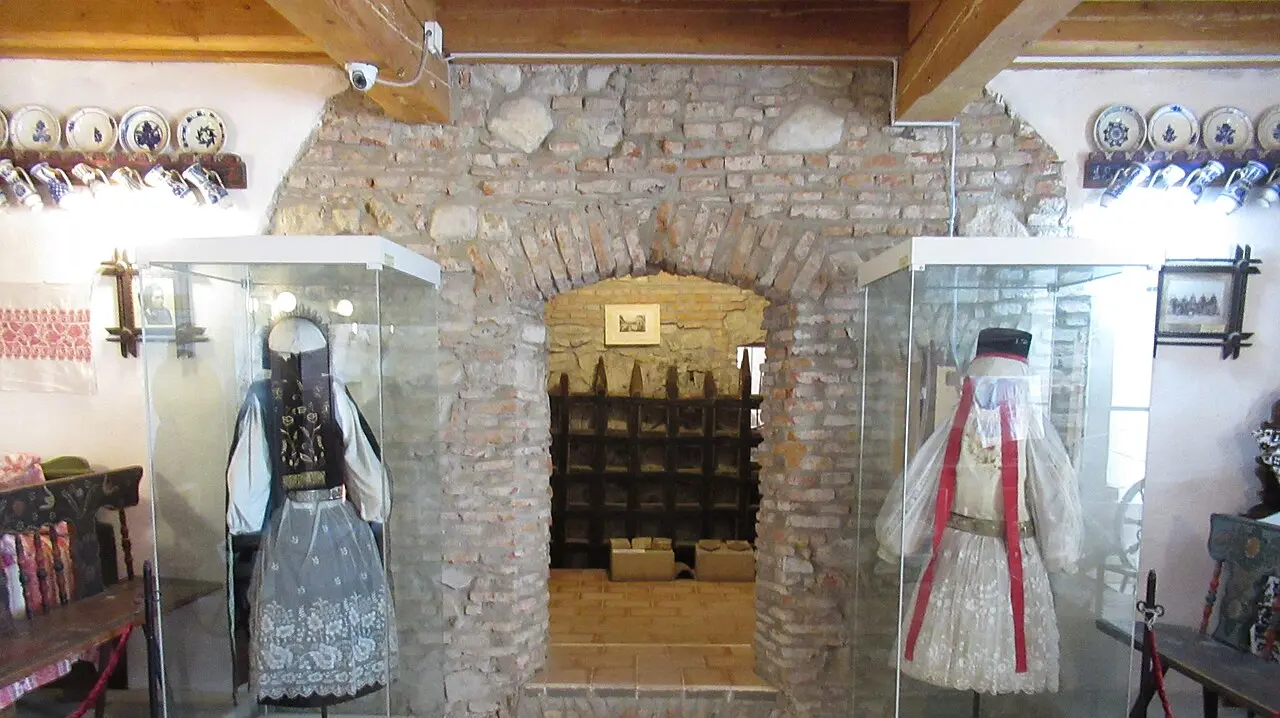
Prejmer is the fortified church you do as a Brasov half-day when you want defensive scale, not another castle queue - the operator claims it as the largest fortification in Eastern Europe, and the national tourist board stretches that to southeastern Europe. The Lutheran church sits inside an oval ring wall 3-4 metres thick, with roughly 270 to 275 storage and shelter rooms stacked on the inner face, about 15 km east of Brasov. UNESCO listed the village with the Transylvanian fortified churches in the 1999 extension of site 596.
Ninety minutes is the realistic minimum. The circuit is what eats it - the gate tunnel first, then the wooden galleries and the wall rooms stacked behind them - and none of that reads from the car park.
Why this village got walls this thick
Prejmer (German: Tartlau) sits in Tara Barsei, the low farming basin east of Brasov. Between the thirteenth and seventeenth centuries the village burned repeatedly, and the fortress held far more often than it fell.
How often it actually fell is less settled than most write-ups suggest. The Kirchenburgen foundation, which looks after the Saxon churches, says the fortified church was taken only a few times; Wikipedia’s page on the church says it was only rarely captured, and names no year at all. The familiar version - captured exactly once, in 1611, by Gabriel Bathory, after the defenders ran out of drinking water - traces back to the Romanian national tourist office, not to the church or the foundation. It is the thinnest-sourced of the three accounts, so treat “it fell only once” as one organisation’s version and not a settled fact.
That geography explains the build. Teutonic Knights began the church around 1218. After King Andrew II expelled the order in 1225, Cistercian builders finished the work toward 1240, leaving a Greek-cross plan that is unique among Transylvanian parish churches. A bell tower rose over the crossing in 1461. Between 1512 and 1515 the plan grew side aisles and a longer nave. The oval enceinte, towers, gate corridor and stacked rooms belong to the later medieval and early modern fortification campaigns that turned a parish church into a community stronghold.
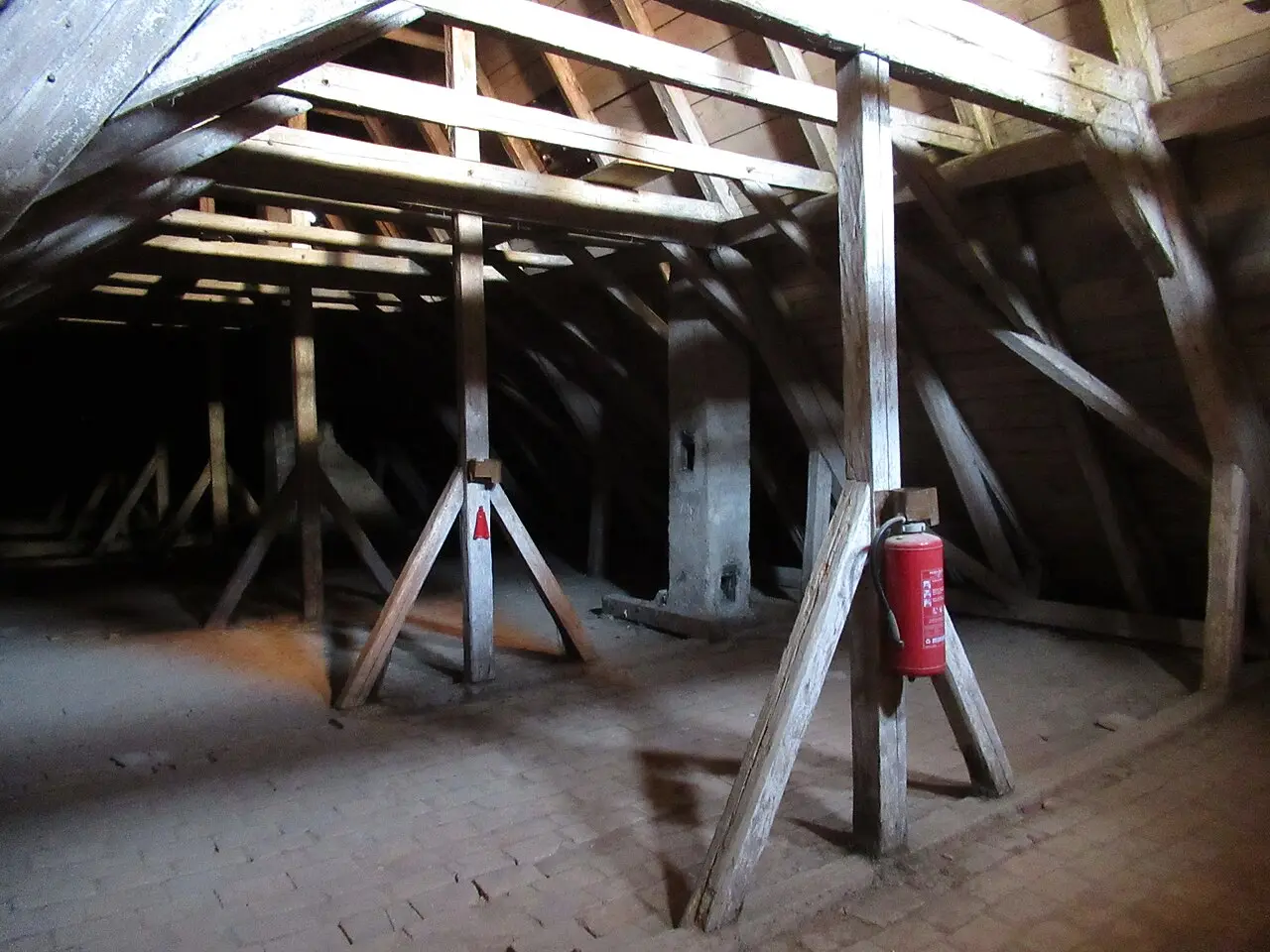
The church building itself was never turned into a keep. Protection came from the ring wall: 3-4 metres thick, with a gate corridor of 30 to 32 metres depending on whose measurement you take, a portcullis, a water moat outside it, and rooms piled three to four levels deep on the inner face. Five towers stood on the circuit historically.
Wall height is where the sources stop agreeing, which is worth knowing before you argue with a guide about it. The operator’s own history page gives 10-12 m; a badge on its homepage says 12 m; the historical text further down that same homepage says 14 m - and the Kirchenburgen foundation also says 14 m. Room count splits along the same seam: the operator says about 275, the foundation and Wikipedia both say more than 270. These are all current figures, not stale ones. What nobody disputes is the purpose - shelter and grain storage for a whole settlement, with space for something like 1,600 villagers inside the ring.
Inside the church: the old triptych and quiet detail
Step through the gate tunnel into the courtyard and the church fills the centre. The original Greek-cross core is still readable: equal arms around a square crossing, early Gothic arches, and a tower rebuilt during twentieth-century restoration that now rises about 39 metres. The operator calls the mid-fifteenth-century triptych the oldest in Transylvania (1450-1460), Passion scenes on a gilt ground - it is the piece carrying the artistic weight of the visit, and the one worth standing in front of longest.
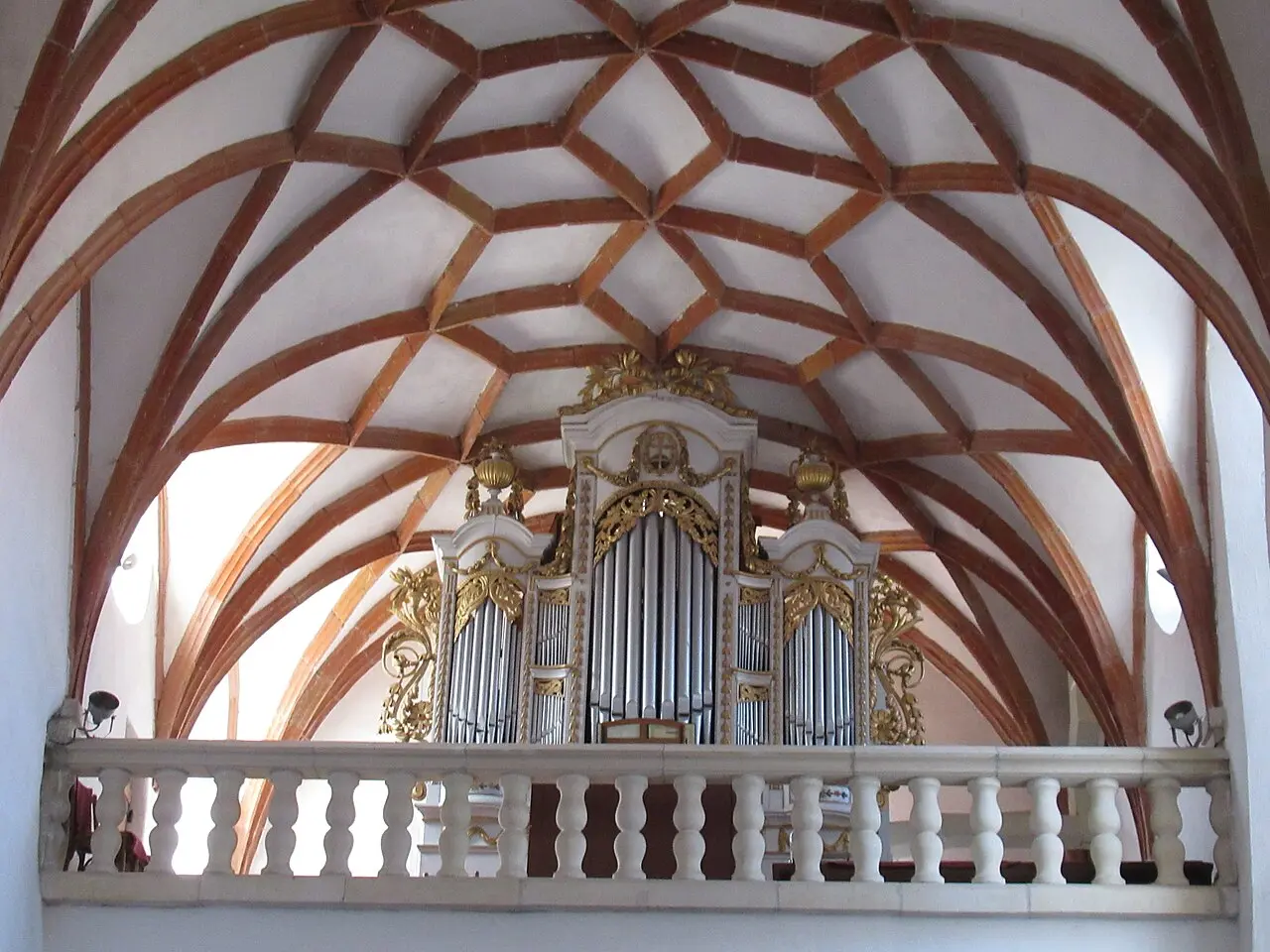
Look for the priest’s pew dated 1515 and the choir pew from 1526. The organ on the west gallery is a 1929 Wegenstein instrument standing in a 1788 classicist case, moved to that gallery during the 1970 restoration - those dates come from the organ register of the Evangelical Church in Romania, which owns it. You will see the instrument described as seventeenth-century; that traces to a 1676 purchase record for an organ which no longer exists.
Next to the south door stands the stone of shame, last used for public punishment in 1855 according to the parish history. Its weight comes with a catch worth flagging: the operator publishes both 50 pounds and 28 kg, and those are not the same weight - 50 pounds is nearer 23 kg. Take the object as real and dated, and the number as unsettled.
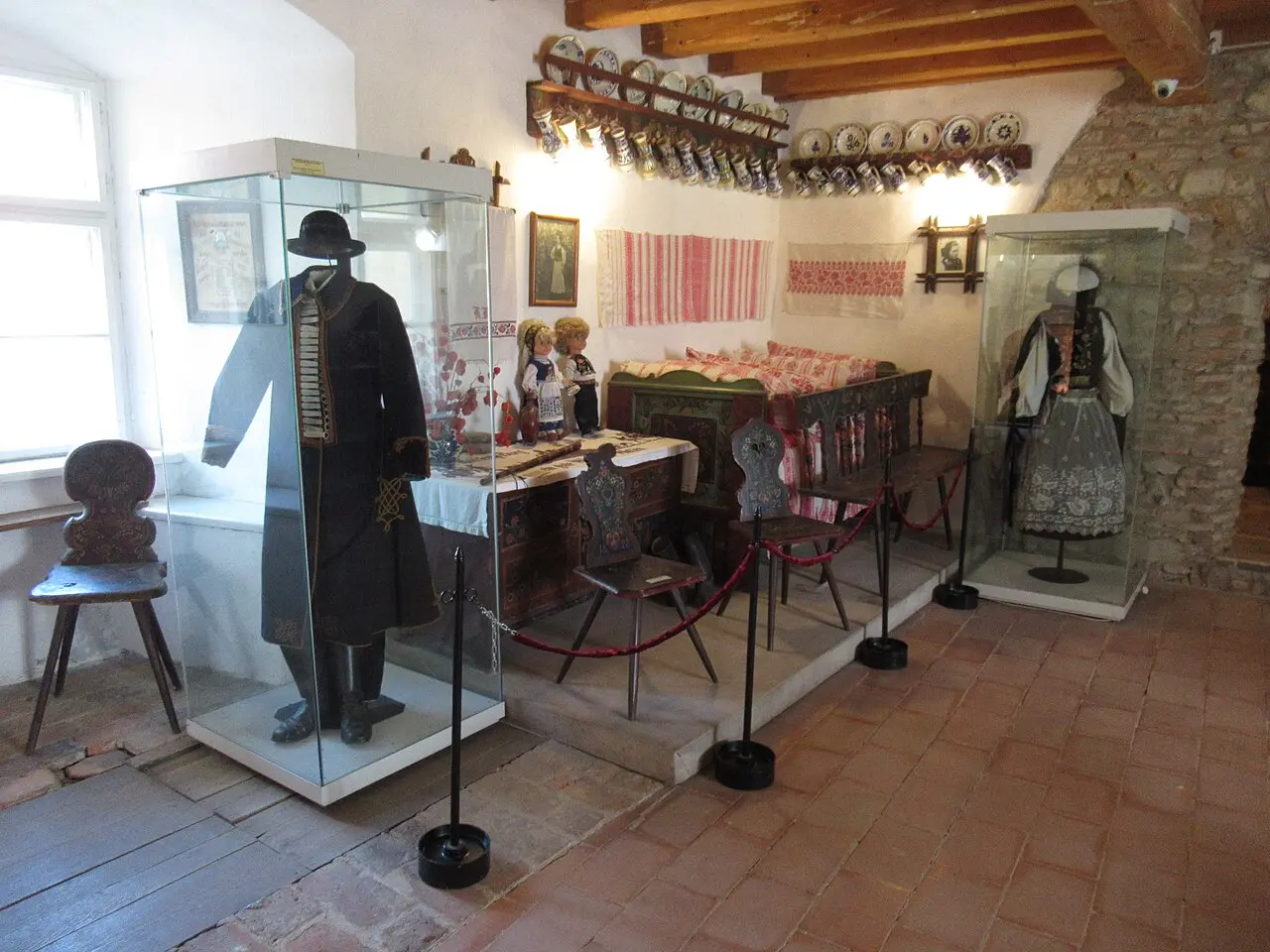
Winter services still happen in the old council / tax-warehouse space above the gate corridor, built in 1793 and now also a small museum of tools and local life. You’re visiting a working Lutheran parish as well as a monument.
Walking the walls: the circuit that is the visit
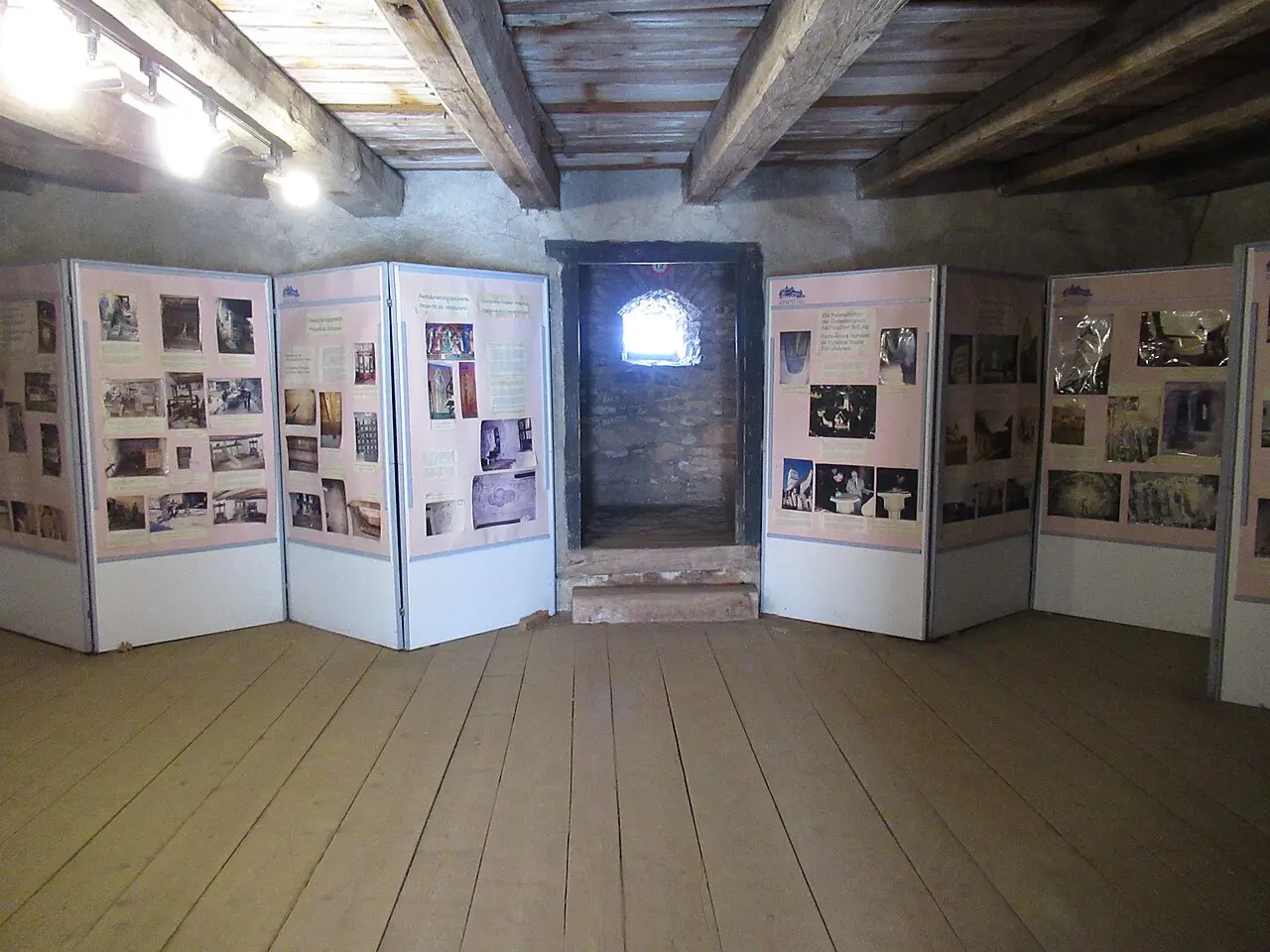
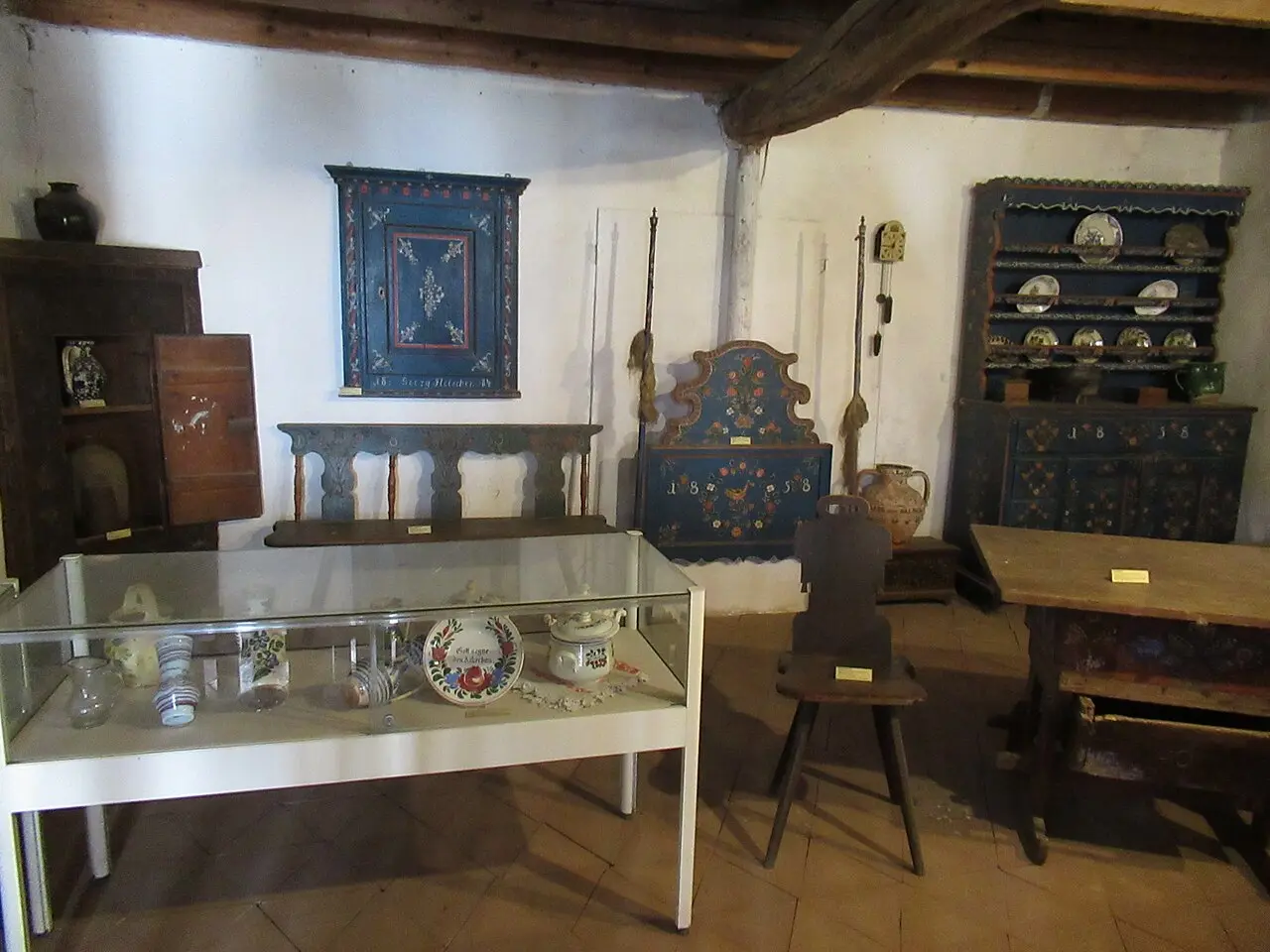
Buy a ticket, enter the long gate passage, and then slow down. The circuit of wooden galleries linking the wall rooms is the visit. Climb, duck, look into empty chambers that once held bacon and grain, and step out onto the wall-walk for the village roofs beyond. A small museum sits above the gate. You’re not here to rush the courtyard photo and leave.
Set the three best-known ones side by side and they divide cleanly. Biertan’s draw is a single object: the sacristy door whose one turn of the key throws nineteen bolts. Viscri’s is a silhouette - a white church on a green hill, plus the royal restoration that made the village famous. Prejmer has neither a star object nor a postcard profile. What it has is volume: room enough inside the ring for an entire village to fold into the wall and wait a siege out. How the seven compare as a set is laid out in Saxon villages in Transylvania, and Biertan has its own page at Biertan fortified church.
Hours, tickets and the 15 km from Brasov
Address: Strada Mare 2, Prejmer 507165. Phone on the operator site: +40 774 520 512. The drive from central Brasov is about 15 km / roughly fifteen minutes on a good road, with parking in front of the site.
Hours (official homepage, season labelled into 2026):
- 1 April - 15 October: Monday-Saturday 09:00-17:30 last entry; Sunday 11:00-17:30 last entry.
- 16 October - 31 March: open to 16:00 (same site; confirm Sunday opening if you go mid-winter).
The contact page on the same domain shows a slightly different season split (May-October / November-April). When two official pages disagree, check the board at the gate or call before a tight timetable. Last entry means what it says - arriving at 17:25 in summer is a bad plan.
Tickets are sold at the gate, and only at the gate. The church’s site shows “Buy ticket” buttons in Romanian, English and German, and its own copy promises you can buy online whenever you like. Every one of those buttons is dead, there is no shop anywhere on the domain, and nothing sits behind them. Plan on paying at the desk when you arrive.
On price, the church publishes no tariff at all. The Romanian national tourist office lists 15 lei for adults and 7 lei for students, but that figure has sat unchanged on its page since at least 2020, and recent visitor reports put the adult ticket nearer 20 lei. Budget 15-20 lei a head, carry cash in lei, and treat the board at the desk as the real number.
How to fit Prejmer into a Brasov day
Morning in Brasov’s Council Square and Black Church, afternoon in Prejmer, back for dinner - that is the cleanest shape. Reverse it for empty galleries: be at the gate at opening, walk the walls before day coaches arrive, then spend the afternoon in town. Bran and Rasnov sit on a different road west of Brasov; Prejmer is the eastern Burzenland option, so don’t try to force all three into a single rushed loop unless you have a driver and an early start.
The pairing that does work is Harman, the next fortified church on the same side of the city: the two stand roughly 8-10 km apart, both inside 20 km of Brasov, and together they fill one unhurried morning without a second drive. Harman is a national monument, not one of the UNESCO seven - some tourism pages say otherwise and they are wrong - which is part of why it stays quieter than its neighbour.
Public transport exists but is slower than the short drive. If you’re without a car, a taxi or a booked transfer from Brasov is the practical move for a timed visit; a rental car only pays off when Prejmer is one stop among several villages. Sleep in Brasov - hotel stock and restaurants are better than anything beside the fortress. Compare rooms with Trip.com in Brasov, then keep Prejmer as the morning or afternoon outing.
For a wider Saxon driving string that already includes Viscri, Biertan and related stops, the Saxon villages route is the planning page. For what else to do from the same base, open the Brasov city guide.
Prejmer is not Bran and it is not a Dracula set. It is the fortress a farming community built for itself and then actually used. Give the galleries their hour and that difference makes itself obvious.
Photos
On the map
The map loads on click - to keep the page lightweight.
The map didn’t load. Check your connection and refresh the page.
Admission and opening hours
- Admission price
- Tickets are sold at the gate only: the "buy ticket" buttons on bisericafortificataprejmer.ro are dead links and the domain has no checkout, despite the site's own text promising online sales. The church publishes no tariff at all. The Romanian national tourist office lists 15 lei adult / 7 lei student, unchanged on that page since at least 2020, while recent visitor reports say nearer 20 lei - budget 15-20 lei and carry cash.
- Opening hours
- Season 1 April-15 October 2026, then shorter winter hours: Monday-Saturday 09:00-17:30 last entry; Sunday 11:00-17:30 last entry. Extra season 16 October-31 March: to 16:00. Confirm before travelling: the contact page on the same domain carries two conflicting season blocks at once (01.05-31.10 in the body, 01.04-15.10 in the footer), and the national tourist office lists different hours again. Phone +40 774 520 512.
Hours are last-entry times on the operator site. Arrive before the cut-off, not at it. Checked 3 September 2026.
Details checked: September 3, 2026
Read also

What to see · 11 min read
ASTRA Museum Sibiu: Romania's Great Open-Air Village
Verified · August 29, 2026ASTRA Museum near Sibiu: 50-lei tickets, hours by season, how to get there, and which of the 400+ buildings across 96 hectares to see first.

What to see · 10 min read
Bucegi Sphinx & Babele: Cable Car from Busteni
Updated · August 26, 2026Ride the Busteni cable car to the Sphinx and Babele: 2026 return fare 199 lei, hours from 08:30, and how to pair it with Peles or Cantacuzino.

What to see · 9 min read
Fagaras Fortress: Transylvania's Moat Castle
Updated · August 23, 2026Fagaras Fortress on the DN1: moat citadel between Brasov and Sibiu. Tickets 30 lei, hours, the museum circuit, and a stop that needs no detour.

What to see · 10 min read
Snagov Monastery: Vlad the Impaler's Reputed Grave
Verified · August 17, 2026Snagov Monastery on Lake Snagov: the slab said to mark Vlad's grave, what the 1933 dig found, plus the 2009 footbridge, hours and boat.