
Carpathian Hiking: Best Trails & When to Go
Where and when to hike the Romanian Carpathians: the Fagaras ridge, the Bucegi plateau and Piatra Craiului, the July-September window, and the bear rule.
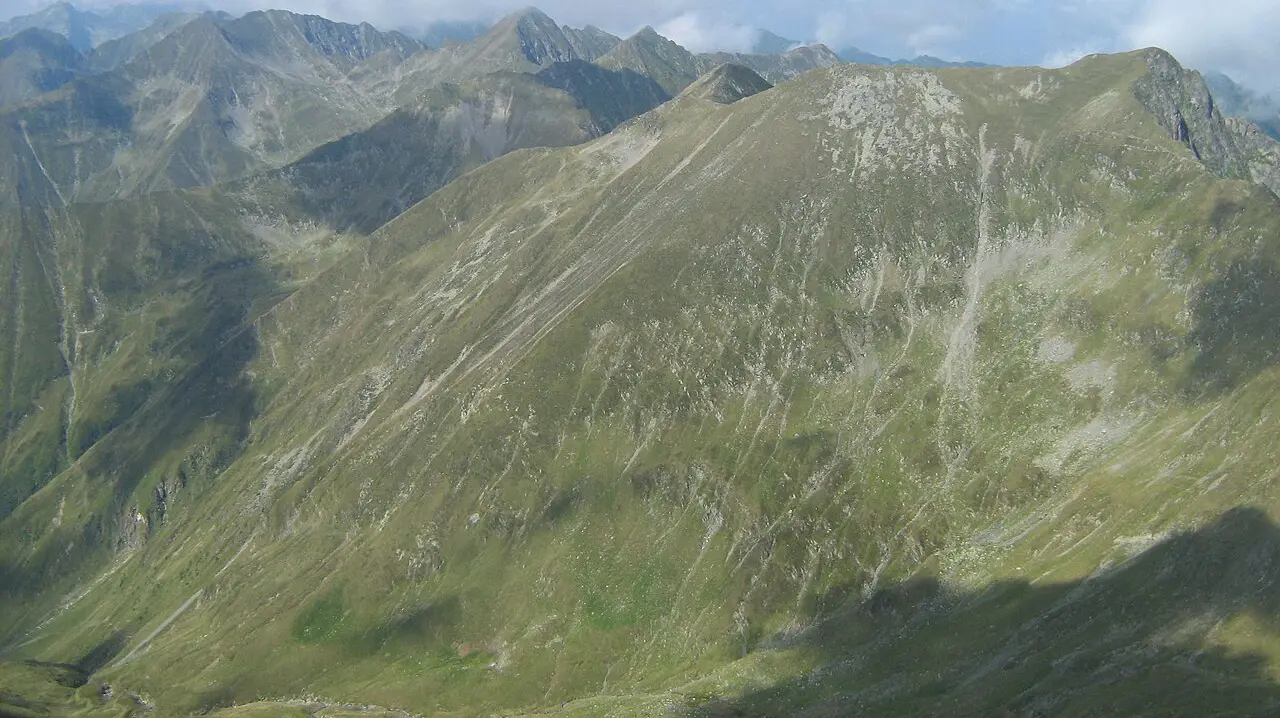
The Romanian Carpathians give you genuine 2,500-metre mountains for a fraction of Alpine prices, and the short answer to “where and when” is this: hike the high ridges between July and September, and pick your range by how much exposure you want. The Fagaras is the big serious one, the Bucegi is the easy way to touch 2,000 metres, and Piatra Craiului is the dramatic knife-edge for people who like a bit of a scramble. All three sit within a couple of hours of Brasov, so you can base yourself in one town and sample the lot.
This is a planning guide, not a step-by-step route book: which massif suits you, the season that actually works, how to reach the trailheads, and the one Carpathian hazard that catches Western hikers off guard. Bears. There are a lot of them, and the rule for staying safe is simpler than you would think.
When is the best time to hike the Carpathians?
Aim for July, August and September for anything up high. The Fagaras and Bucegi ridges sit above 2,300 metres and hold snow in their north-facing gullies well into June; by early October the first storms and fresh snow are back. That leaves a real window of about ten to twelve weeks when the high traverses are clear, the huts are staffed and the afternoons are (usually) dry. The Transfagarasan road, which is how most people reach the heart of the Fagaras, backs this up: it’s generally open only from June to September, and the highest section can close early in a bad year.
The lower stuff runs longer. Forest trails, the gorge walks around Zarnesti and the plateau paths on the Bucegi are comfortable from May to October. What you can’t do is treat these as gentle summer hills all year. Above the treeline the weather turns fast: a warm valley morning can become a thunderstorm with hail and a 15-degree temperature drop on the ridge by early afternoon. The mountain habit here is the same as the Alps, start early, be off the exposed ridge by mid-afternoon, and always carry a warm layer and a shell even in August. How that kit sits next to city and coast clothes is in what to pack for Romania.
The Fagaras Mountains: Romania’s high ridge
If you want the biggest, most serious mountains in the country, this is it. The Fagaras is a long east-west wall of grassy, rocky 2,500-metre peaks crowned by Moldoveanu at 2,544 metres, the highest point in Romania, with Negoiu (2,535 m) and Vistea Mare (2,527 m) close behind. The famous outing is the main ridge traverse, a multi-day, hut-to-hut alpine walk along the crest, and it’s genuinely demanding: the hardest stretch, between Serbota peak (2,331 m) and the Cleopatra saddle (2,355 m), has a steel cable bolted to the rock to help you across, and the section near Lake Capra carries the cheerful local name “the three steps from death”. This isn’t a casual day out. It’s for fit, experienced hikers with the right kit and a weather eye.
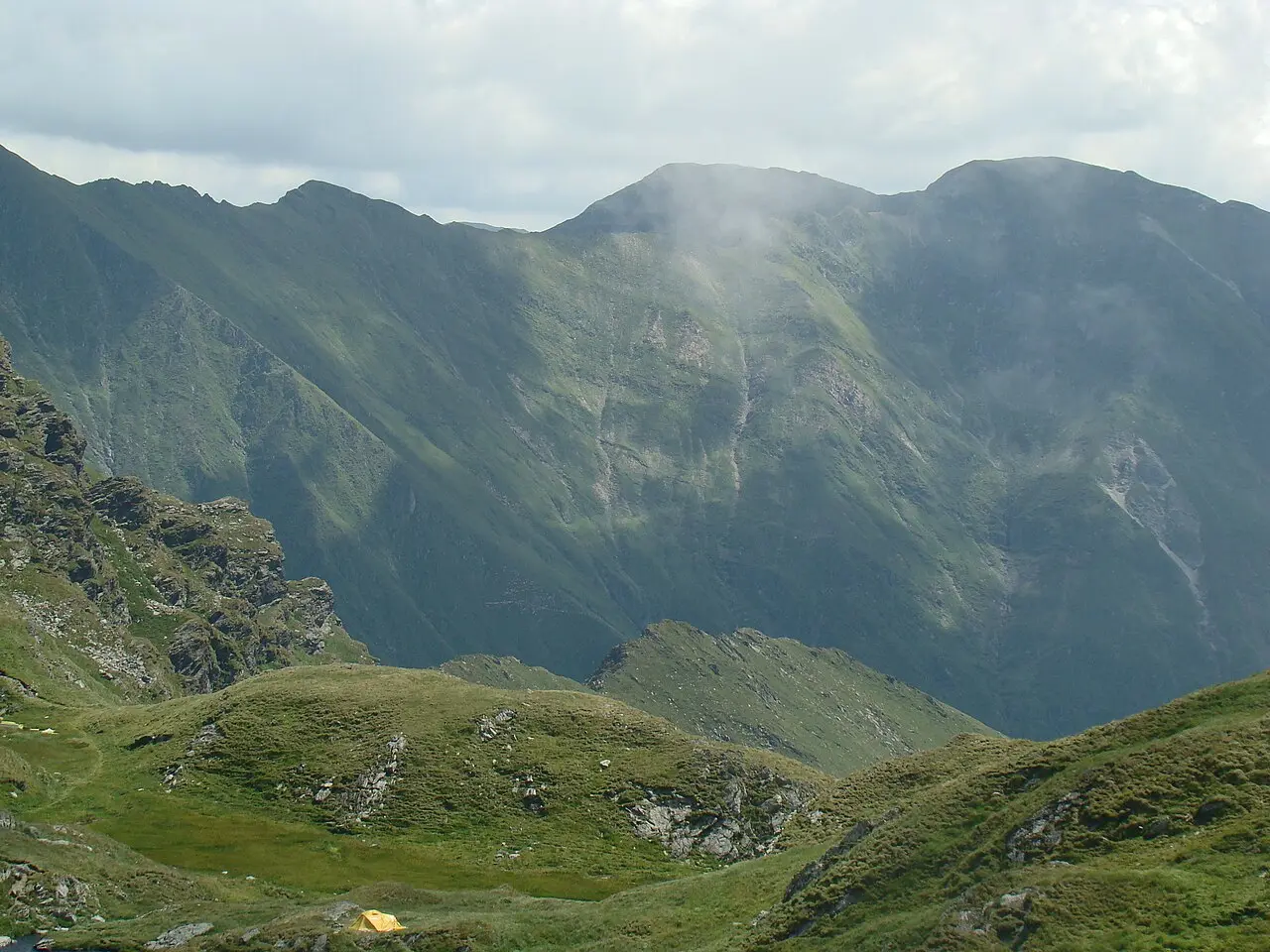
You don’t have to commit to the whole ridge to enjoy the Fagaras, and this is the part most guides skip. The range is dotted with glacial lakes, Balea (2,100 m), Podragu (2,140 m), Urlea (2,170 m) and Capra (2,230 m) among them, and several make cracking day hikes from a hut or from the road. The easiest entry point of all is Balea Lake: in summer you can drive to it on the Transfagarasan, park, and walk short loops around the cirque without any real climbing, then turn a longer day into a scramble up toward Negoiu or the ridge if you have the legs. Cabana Balea Lac and the Podragu and Capra huts give you somewhere to sleep and a hot soup partway up.
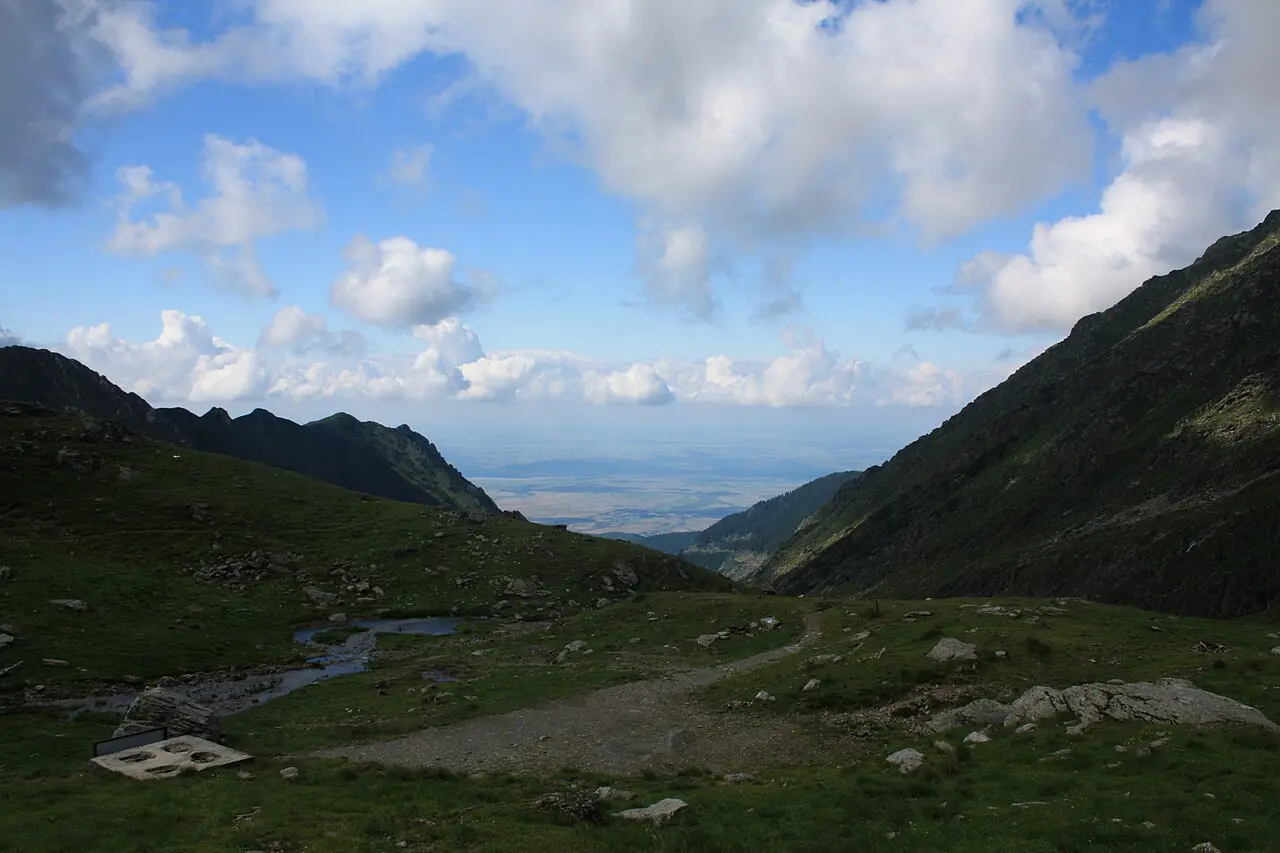
For how to actually drive up here, when the pass opens and where the bears gather, our guide to the Transfagarasan road covers the leg-by-leg detail.
The Bucegi: the easy way to 2,000 metres
The Bucegi is the mountain for people who want big-mountain scenery without a big-mountain effort, and it’s the range I send first-timers and families to. Its high point is Omu at 2,505 metres, but the clever thing about the Bucegi is that you can reach the plateau by cable car instead of climbing it. There’s a cable car from Busteni up to the Babele plateau, and a two-stage cable car and gondola from Sinaia to the Cota 1400 and Cota 2000 stations. Ride up, and you step out onto a broad, rolling high plateau where the walking is gentle and the views are enormous.
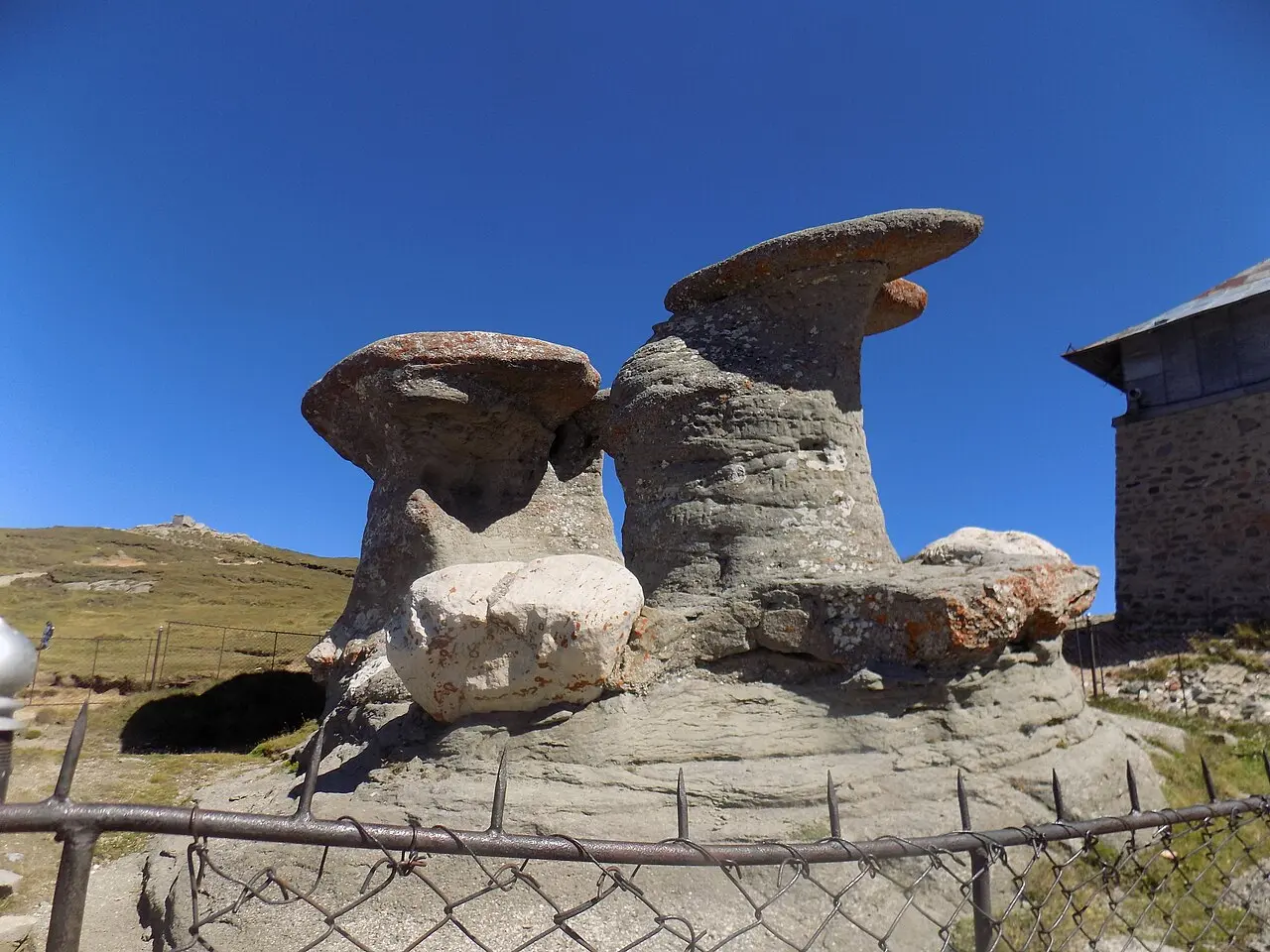
Up top you’ll find the two things everyone comes for: the Sphinx, a wind-carved rock that from one angle looks uncannily like a human face, and Babele, a cluster of mushroom-shaped rock pillars. Both are a short, flat walk from the top of the Busteni cable car, which is why the plateau gets busy on summer weekends. Walk twenty minutes past the crowds and you have the plateau largely to yourself; push on toward Omu and you’re on a proper mountain day. The whole area sits inside the Bucegi Natural Park, 32,663 hectares spanning three counties, and its position, right above the resort town of Sinaia and the Prahova Valley, makes it the most accessible high ground in the country. It’s also Romania’s main ski area in winter, which our Poiana Brasov skiing guide compares with the northern slopes if you’re weighing a cold-season trip.
Piatra Craiului: the knife-edge ridge
If the Fagaras is the endurance test and the Bucegi is the easy win, Piatra Craiului is the beauty, and the one that gets under experienced hikers’ skin. It’s a single narrow limestone crest, a saw-toothed ridge about 25 kilometres long rising to Vf. La Om at 2,238 metres, and standing on it feels completely different from the broad grassy Fagaras: pale bare rock, big drops on both sides, and a genuine sense of exposure. The full ridge traverse is a serious two-day undertaking, north to south, for people who are sure-footed and comfortable with scrambling and a bit of height.
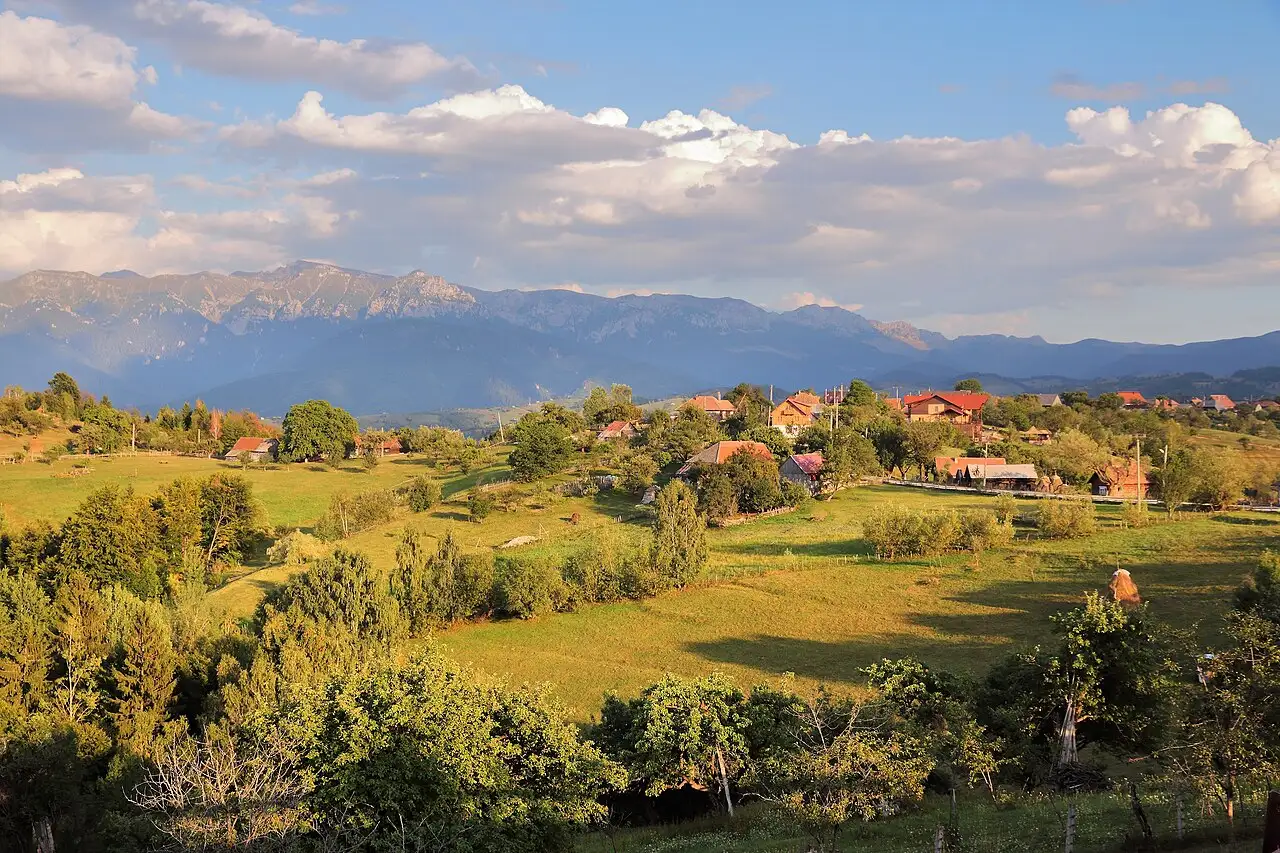
You don’t need to take on the whole ridge to see the best of it. The gateway is Zarnesti, 28 kilometres from Brasov, and the classic easy outing from there’s the Prapastiile Zarnesti gorge (Prapastiile Zarnestilor), a cool, shaded limestone canyon where the walls close in overhead, an easy and shady walk that’s one of the most visited spots in the whole 14,766-hectare national park. This is also some of the best wildlife country in Europe: the park holds wolves, lynx, brown bears and chamois, the sure-footed mountain goats you have a real chance of spotting on the high crags. Which brings us to the animal you need a plan for.
The bear question: the one real Carpathian hazard
This is rarely spelled out for first-time visitors. Romania has the largest brown bear population in the European Union, an estimated 10,400 to 12,800 animals (Environment Ministry preliminary study, April 2025), and they live right where you want to walk, all through the Carpathians. That sounds alarming, and the 2026 headlines have not helped: as of early June, nine people had been injured in bear attacks this year, eight of them foreign tourists, and in July 2025 a motorcyclist was killed by a bear on the Transfagarasan.
But read the detail and the risk flips from terrifying to controllable, because almost every one of those incidents happened because a person stopped to feed or photograph a bear, usually from a car on a mountain road. Bears that learn to associate people with food get bold, and a bold bear is a dangerous bear (and, sadly, usually a dead one, since it ends up shot). So the rules for hikers are short and they work: make noise as you walk so you never surprise one, keep your food sealed and away from your tent if you camp, keep your distance, and never, ever feed one or approach for a photo. On the trails you’ll see red enamel signs reading “Atentie! Ursi in zona!”, warning, bears in the area. Take them at face value.
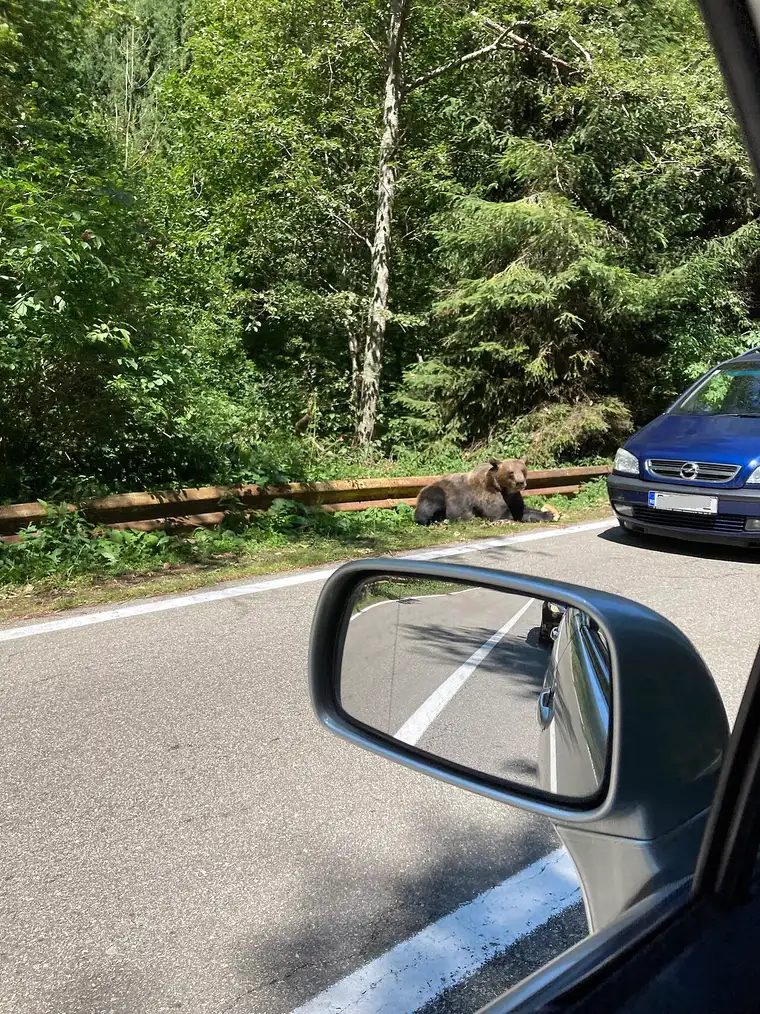
Do all that and a bear sighting becomes the highlight of the trip rather than a trip to the clinic, the risk here really is almost entirely self-inflicted. Our full guide to whether Romania is safe digs into the bear question alongside the duller, more likely hazards like driving and pickpockets.
Which range should you pick?
Short version, so you can decide tonight. Bucegi if you want the biggest reward for the least effort, are travelling with kids, or only have a day, ride the cable car up from Busteni or Sinaia and walk the plateau to the Sphinx. Piatra Craiului if you’re a keen hiker who wants drama and wildlife but not a multi-day epic, base in Zarnesti and do the gorge plus a stretch of ridge. Fagaras if you’re fit, experienced and want the real thing, the high traverse or a hard day up to a glacial lake and a summit off the Transfagarasan.
For a single base, Brasov is the smartest choice: the Bucegi and Piatra Craiului are both within an hour, and the eastern Fagaras is reachable for a long day. For a soft landing, a plateau walk on the Bucegi followed by a gorge day at Zarnesti gives you two very different mountains in one weekend without ever needing a rope or a hut booking. And if you want to fold some deep history into the mountains, the Dacian capital of Sarmizegetusa Regia sits on a forested terrace in the Sureanu (Orastie) range to the west, a very different kind of Carpathian day out. Over in the Eastern Carpathians the equivalent short-walk base is Bicaz Gorge and Lacu Rosu, where an hour round the lake or three hours up Suhardul Mic start from a road you can park on.
Getting to the trailheads
Public transport reaches the towns but not the mountains, so a car changes everything up here. Trains and buses will get you to Brasov, Sinaia, Busteni and Zarnesti easily, and from Busteni or Sinaia the cable cars do the climbing for you. But the Fagaras trailheads, the Transfagarasan and the quieter valleys are far simpler with your own wheels, and a rental car lets you chase the weather rather than the timetable. If you plan to drive the Transfagarasan into the Fagaras, remember it’s a seasonal, high-altitude road, check it’s open first.
One piece of admin worth sorting at home: proper travel and medical cover. Mountain rescue, a helicopter off a ridge, or a hospital visit after a slip are exactly the things a good policy is for, and it costs little against the price of the trip, SafetyWing is built for exactly this kind of active, moving-around travel.
The short version
Hike the Romanian Carpathians between July and September for the high ridges, May to October for the lower gorge and plateau walks. Pick the Bucegi for the easy cable-car-assisted plateau and the Sphinx, Piatra Craiului for the dramatic limestone ridge and the Zarnesti gorge, and the Fagaras for Romania’s highest, most serious mountains and its glacial lakes. Base in Brasov, start early, carry a warm layer whatever the forecast, and follow the one rule that actually keeps you safe up here: give the bears their space, make noise, and never stop to feed or photograph one.
On the map
The map loads on click - to keep the page lightweight.
The map didn’t load. Check your connection and refresh the page.
Admission and opening hours
- Admission price
- Hiking the trails is free. On the Bucegi you can shortcut the climb by cable car from Sinaia, sold in two separately ticketed sections on the way up to Cota 2000, and there is a separate cable car up from Busteni. Tariffs are reset every season and the older per-ride figures still circulating online are out of date, so confirm the current price and which line is running with the operator before you go.
- Opening hours
- Best window for the high ridges is roughly July to September. Cable cars run about 08:00-17:00, shift with the season and stop in high wind - Transport Urban Sinaia posts the actual start and finish for the day each morning. The Transfagarasan, the main road access into the Fagaras, is usually open only June to September.
Season, cable-car prices and road opening dates change every year with the snow - check the current status before you travel, and never rely on an old figure. Checked July 2026.
Details checked: July 16, 2026
Read also

What to see · 11 min read
Marginimea Sibiului: Shepherd Villages Near Sibiu
Verified · September 5, 202618 shepherd villages west of Sibiu: Rasinari, Sibiel glass icons, Saliste, Paltinis bus fares, and how a day out of town works.

What to see · 9 min read
Prejmer Fortified Church: UNESCO Near Brasov
Verified · September 3, 2026Prejmer fortified church 15 km from Brasov: Greek-cross plan, 275 wall rooms, UNESCO hours for 2026 and how a visit actually works.

What to see · 11 min read
ASTRA Museum Sibiu: Romania's Great Open-Air Village
Verified · August 29, 2026ASTRA Museum near Sibiu: 50-lei tickets, hours by season, how to get there, and which of the 400+ buildings across 96 hectares to see first.

What to see · 10 min read
Bucegi Sphinx & Babele: Cable Car from Busteni
Updated · August 26, 2026Ride the Busteni cable car to the Sphinx and Babele: 2026 return fare 199 lei, hours from 08:30, and how to pair it with Peles or Cantacuzino.