
Sarmizegetusa Regia: The Dacian Capital in the Mountains
Sarmizegetusa Regia, the Dacian capital in the Orastie Mountains: the great circular sanctuary, the ruins, and how to reach this UNESCO site by car.
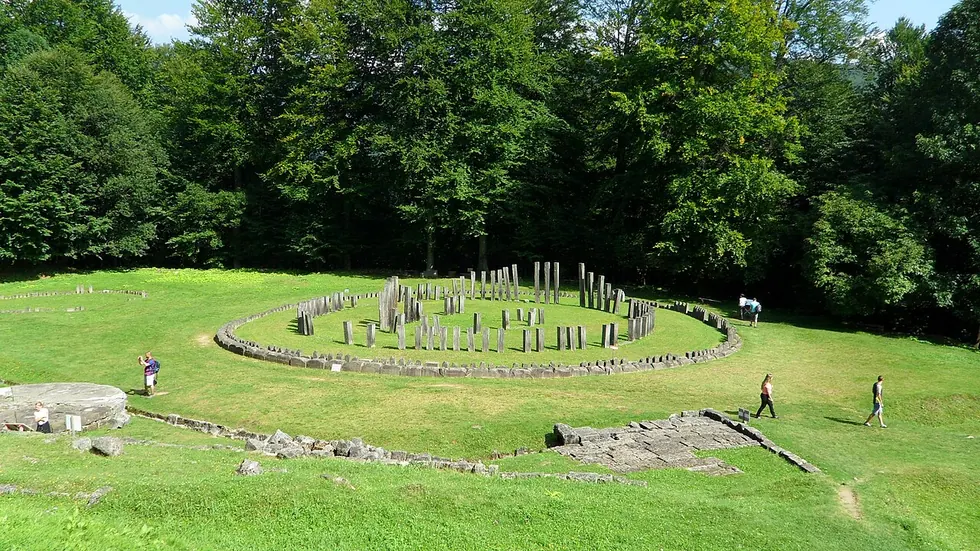
Sarmizegetusa Regia was the capital of the Dacians, the kingdom Rome fought two hard wars to conquer, and its ruins sit on a levelled mountain terrace above 1,000 metres in the Orastie Mountains of Hunedoara County. This isn’t a castle or a tidy citadel you photograph in an hour: it’s the sacred and political heart of a lost civilisation, a ring of temple foundations and the famous circular “calendar” sanctuary in a clearing deep in the forest. The catch is that it’s genuinely remote, you need a car or a tour to get there, and the last stretch of road is a mountain adventure in its own right.
What makes the effort worth it’s what the Dacians built here. This was a real capital with paved streets, workshops that worked iron on an industrial scale, and a ceramic-pipe system that carried running water to the nobles’ houses, which is a long way from the fur-clad barbarians of the Roman propaganda. It also comes with a name trap worth clearing up at the planning stage, because there are two Sarmizegetusas in these hills and most of the confusion about the place starts right there.
What exactly was Sarmizegetusa Regia?
It was the capital and the most important military, religious and political centre of the Dacian kingdom, a people whose lands covered much of modern Romania in the last century BC and the first century AD. The seat of power was moved up here by the great king Burebista around the middle of the first century BC, and the city reached its peak under Decebalus, the king who held off Rome longest. At its height this was a city of perhaps tens of thousands living on the surrounding hillsides, fed by farms and served by craftsmen, with the king’s citadel and the temple precinct at its core.
The site splits into three parts you can still read on the ground. There’s the fortress itself, walls built in the distinctive murus dacicus technique of dressed stone blocks packed with rubble and timber ties. There are the civilian terraces, dozens of them cut into the slopes where houses and workshops once stood. And there’s the sacred zone, the incinta sacra, a flat artificial terrace holding the temples and the circular sanctuaries that are the reason most people make the trip. Give yourself two to three hours to walk all three at a relaxed pace; this is a place to wander, not tick off.
The great circular sanctuary and the “Dacian calendar”
The image that pulls people up the mountain is the great circular sanctuary, and it earns the nickname of a Romanian Stonehenge. What you see is a large ring, marked out by the low bases of what were once wooden posts set inside a stone kerb, with a horseshoe-shaped setting inside it, all laid out with obvious care on the sacred terrace. Archaeologists have long argued that the arrangement encoded a calendar, the spacing of the posts tracking days and cycles of the year, and while the exact reading is debated, the astronomical intent behind these sanctuaries is widely accepted.
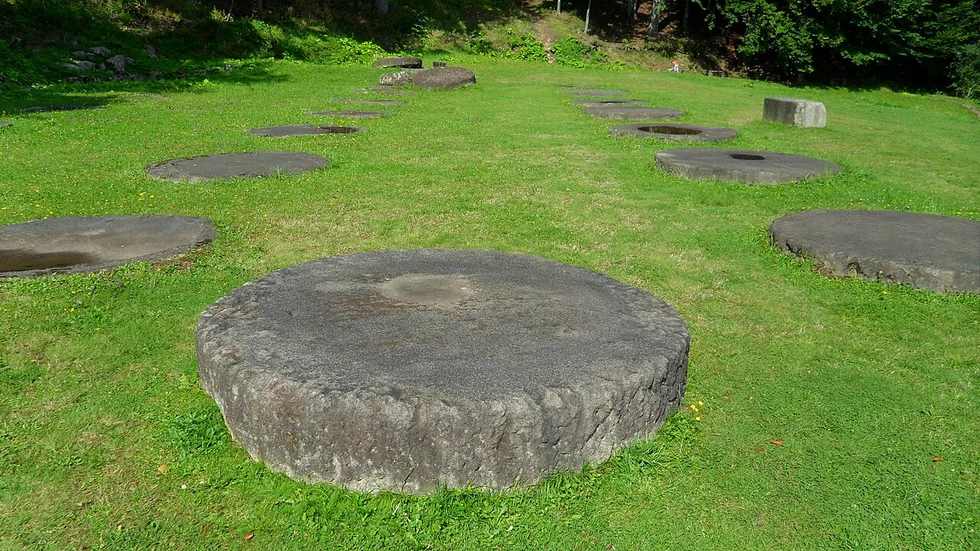
The single most famous object here’s the Andesite Sun, a disc carved from grey volcanic andesite with ten wedge-shaped rays fanning out from a central hub, set into the paving of the sacred zone. It’s thought to have worked as a sundial or a ritual solar marker, its rays roughly 2.76 metres long, and it hints at Greek astronomical knowledge reaching this far up the Carpathians. Stand on that terrace on a clear morning with the ridgelines stacked into the distance and it’s easy to feel why the Dacians chose this spot to talk to their gods. Don’t expect explanatory signs on the scale of a Western European site, though; come with a bit of background read, or a guide, and the stones say much more.
The name trap: this isn’t the Roman city
Here’s the confusion to get straight, because it catches out visitors and map apps alike. There are two Sarmizegetusas about 40 km apart. This one, Sarmizegetusa Regia, is the Dacian capital high in the mountains near the village of Gradistea de Munte. The other, Ulpia Traiana Sarmizegetusa, sits down on the plain and is a completely different place: the Roman provincial capital that Emperor Trajan founded after the conquest, deliberately borrowing the prestigious name for his new colony.
Type “Sarmizegetusa” into a navigation app and you may well be sent to the Roman town, an easy day out with a museum and a classic Roman street grid but nothing to do with Decebalus or the circular sanctuary. The Dacian capital you want is up the valley from Costesti, signed as Sarmizegetusa Regia or “Gradistea de Munte.” Getting the two mixed up is the single most common Sarmizegetusa mistake, so set your route to the mountain village, not the plain.
How Rome erased a capital
The story of the ruins is inseparable from their destruction. Dacia’s gold and its raids across the Danube made it a target, and Trajan launched two wars to finish it, the first in 101 to 102 AD and the second in 105 to 106. Roman armies fought their way up into these mountains, cut the aqueducts feeding the city, and stormed the capital. Decebalus fled rather than be paraded through Rome and took his own life, a moment carved onto Trajan’s Column in Rome for all to see.
Rome then did something thorough: it razed the Dacian sanctuaries, planted a garrison on the site, and shifted the province’s centre of gravity down to its own new Ulpia Traiana. That’s why so little stands here compared with the scale of what once existed, and why the temples survive as bases and footprints rather than columns. It also explains the emotional weight the place carries for Romanians, who trace their origins to the meeting of Dacian and Roman, with this mountaintop as the Dacian half of the national story.
What you actually see today
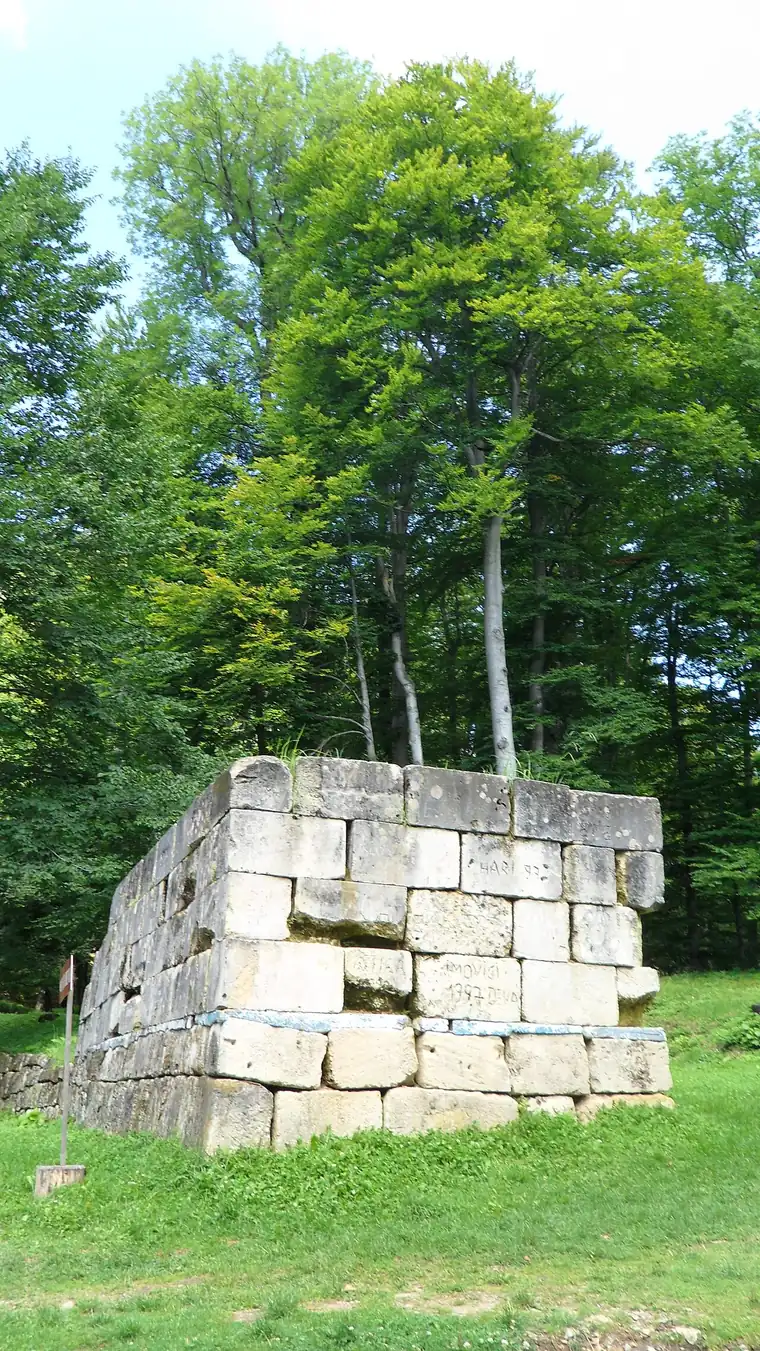
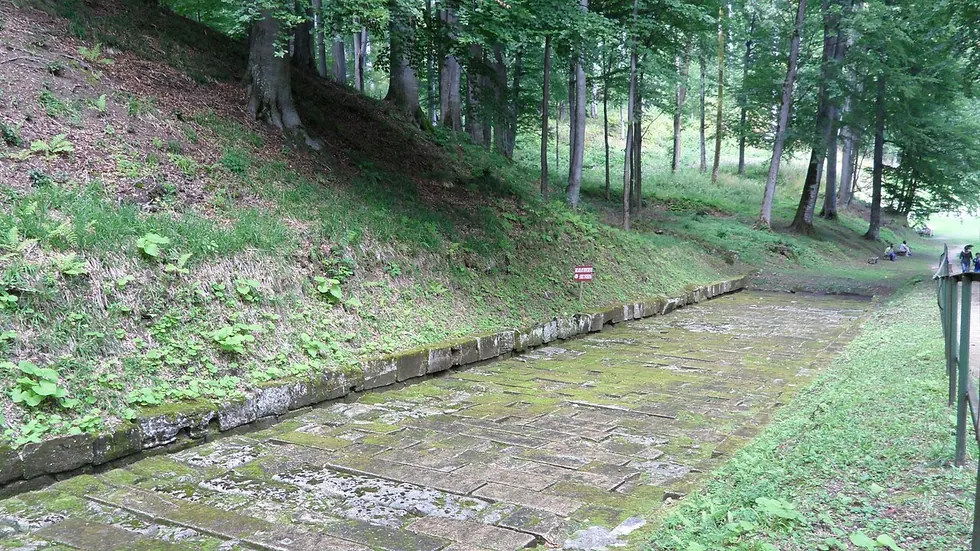
Set your expectations for atmosphere over grandeur. The star turns are the circular sanctuaries and the andesite temple bases in the sacred zone, the paved processional road of limestone slabs that still runs through the site, and the fortress walls with their murus dacicus courses. Dotted around are the column bases of the rectangular temples, the levelled house terraces, and the setting itself: a broad clearing ringed by dark spruce forest, quiet apart from birdsong and the odd tour group. Because it’s part of the UNESCO-listed Dacian Fortresses of the Orastie Mountains, inscribed in 1999 along with five sister citadels such as Costesti and Blidaru, purists sometimes string several together, though Sarmizegetusa Regia is the one to see if you pick only one.
The reward isn’t a skyline of ruins but a sense of place. This is one of the few major archaeological sites in Romania where you’re almost guaranteed forest, silence and space, and where the ancient stones aren’t fenced off behind ticket halls and gift shops. The flip side is that on-site interpretation is thin, so it repays a bit of homework. For a completely different, and completely intact, medieval monument in the same county, our Corvin Castle guide covers the great Gothic fortress at Hunedoara, an easy pairing on the same trip.
How to visit: getting there’s the hard part
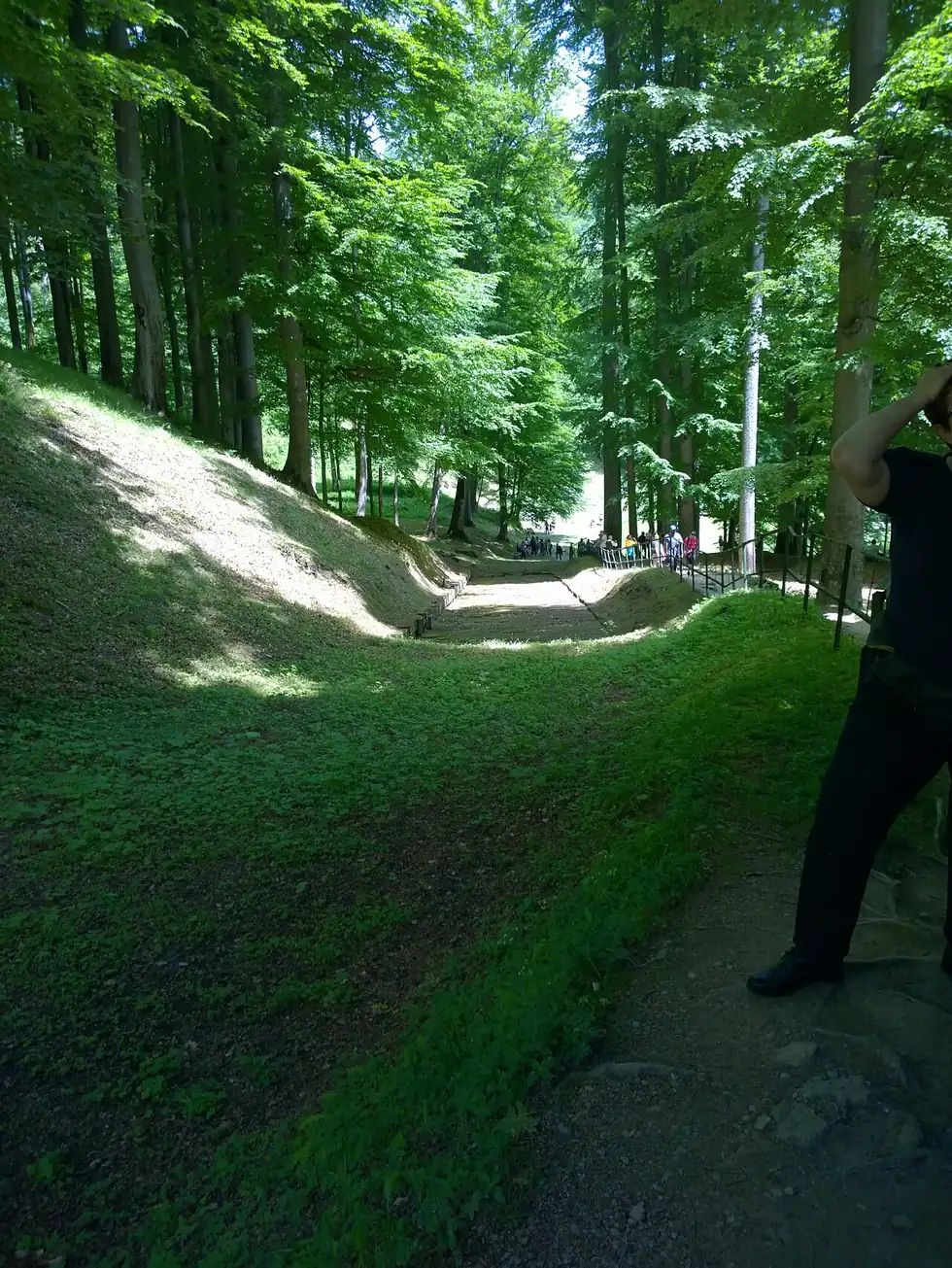
Think hard about the logistics, because they make or break the day. Sarmizegetusa Regia sits deep in the mountains and there’s effectively no useful public transport to the site, so the realistic options are your own car or an organised day trip from Deva, Sibiu or Timisoara. If you’re driving the region, you reach it from Orastie or Calan up through the village of Costesti, and the final climb is a narrow, winding mountain road that has been patchily resurfaced but still has rough sections. A missing bridge near the end has meant parking further out and walking in, so the last part is on foot up a paved forest track, anywhere from ten to forty minutes depending on where the road is open that season.
A few practicalities save a wasted trip. Entry is a token fee of a few lei, cash only, and a photo permit has sometimes been charged on top, so carry small notes in lei since cards are no use up here. Opening hours run long in high summer, roughly 09:00 to 20:00 from May to September, shorter in spring and autumn, and only a few hours in the depths of winter, when snow can shut the road completely. Come between late spring and early autumn, wear real shoes for muddy, uneven ground, and pack a layer even in July, because the mountain makes its own weather and fog can roll in fast. You can rent a car in Deva, Sibiu or Cluj to reach it under your own steam.
To fit the site into a bigger trip, our Transylvania road trip shows where the Hunedoara sights land on a wider loop, and if the mountain setting leaves you wanting more time on the trails, our guide to hiking in the Carpathians covers the ranges all around. Base yourself down in Deva or Hunedoara for the night, an hour or so from the site and handy for Corvin Castle too: compare hotels and guesthouses as you plan the drive up.
The short version
Sarmizegetusa Regia is the Dacian capital, a UNESCO-listed complex of temples, the famous circular “calendar” sanctuary and murus dacicus walls, set on a forest terrace above 1,000 metres in the Orastie Mountains. It’s remote and low on facilities, so it rewards travellers who want atmosphere, history and quiet over easy sightseeing. Take a car, set your app to the mountain village of Gradistea de Munte and not the Roman town of the same name, go between May and September, and bring notes, because there’s nothing to tap at the top. Pair it with Corvin Castle for a full history day, and then give the terraces longer than you planned: the site doesn’t perform for visitors, and the hour it takes to stop expecting it to is the hour it starts working.
Photos
On the map
The map loads on click - to keep the page lightweight.
The map didn’t load. Check your connection and refresh the page.
Admission and opening hours
- Admission price
- A token entry fee, on recent visitor reports a few lei per adult, cash only. A separate photo permit has been charged in the past. Carry small notes in lei.
- Opening hours
- Broadly 09:00-20:00 from 1 May to 30 September, 09:00-18:00 in spring and autumn, and short winter hours around 10:00-15:00. Snow can close the mountain road entirely.
Fees, hours and the state of the access road change - the last stretch has had a bridge under repair, which moves the car park. Confirm locally before a long drive up. Romania uses the leu, not the euro. Checked July 2026.
Details checked: July 21, 2026
Read also

What to see · 11 min read
Marginimea Sibiului: Shepherd Villages Near Sibiu
Verified · September 5, 202618 shepherd villages west of Sibiu: Rasinari, Sibiel glass icons, Saliste, Paltinis bus fares, and how a day out of town works.

What to see · 9 min read
Prejmer Fortified Church: UNESCO Near Brasov
Verified · September 3, 2026Prejmer fortified church 15 km from Brasov: Greek-cross plan, 275 wall rooms, UNESCO hours for 2026 and how a visit actually works.

What to see · 11 min read
ASTRA Museum Sibiu: Romania's Great Open-Air Village
Verified · August 29, 2026ASTRA Museum near Sibiu: 50-lei tickets, hours by season, how to get there, and which of the 400+ buildings across 96 hectares to see first.

What to see · 10 min read
Bucegi Sphinx & Babele: Cable Car from Busteni
Updated · August 26, 2026Ride the Busteni cable car to the Sphinx and Babele: 2026 return fare 199 lei, hours from 08:30, and how to pair it with Peles or Cantacuzino.