
Poiana Brasov Skiing 2026: Season, Slopes & Ski Pass
Skiing in Poiana Brasov: season mid-December to March, a day pass about 240 lei, the Postavaru slopes and how to get up from Brasov by bus.
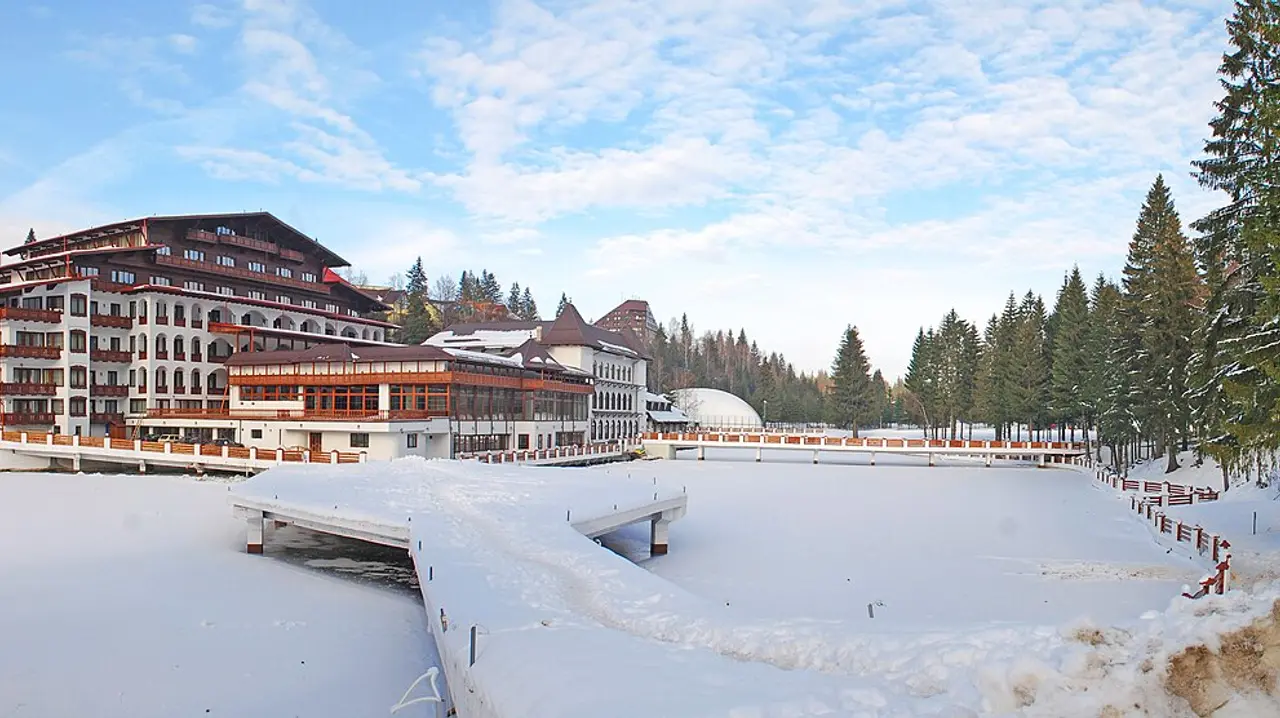
Poiana Brasov is Romania’s best-known ski base, and it sits only 12 km above the city of Brasov, and that proximity is the whole selling point. It isn’t a giant by Alpine standards, about two dozen kilometres of runs on the slopes of Mount Postavaru, but the lifts are modern, most pistes have snow cannons, and a day on the mountain costs a fraction of what you would pay in Austria or France. The single best thing about it is access: you can be sitting in a cafe on Brasov’s old town square and, 25 minutes later, be clipping into skis at about 1,020 metres.
The season runs roughly mid-December to March, sometimes into early April; a full adult day pass is 240 lei on the operator’s tariff; and the easiest way up is city bus 20 from the Livada Postei stop in Brasov, about 5 lei and 25 minutes. The resort skews friendly for beginners and intermediates, with a couple of proper black runs for stronger skiers. Go midweek if you can, because the weekend crowds from Brasov and Bucharest are the one real drawback.
Poiana Brasov ski pass prices and 2025/26 season dates
The 2025/26 season runs from roughly mid-to-late December 2025 into early April 2026, with the most reliable snow between mid-December and mid-March. The resort first floated an 18 December opening, but the real start slipped a little later once the snow arrived, so treat any published date as provisional. Prices are in lei because you can only pay in RON at the resort (checked July 2026 for the 2025/26 season):
| Lift pass | Price 2025/26 |
|---|---|
| Adult, 1 day | 240 lei (~46 EUR) |
| Child 6-12, 1 day | 140 lei |
| Adult, full season | 5,500 lei |
| RFID card | 20 lei, not returnable |
Multi-day passes work out cheaper per day, and rates ease off from March. Tariffs and season dates change every year with the snow, so confirm the current pass price and lift status on the resort’s own channels.
Is Poiana Brasov worth it for skiing?
Depends on what you’re after. If you want a serious ski holiday with hundreds of kilometres of interlinked pistes and glacier runs, this is not that, and it would be unfair to pretend otherwise. Poiana Brasov has about a dozen marked pistes and roughly 24 km of total run length after the 2010s upgrade, when the ski area grew from 50 to 80 hectares and the main descent was rebuilt. Older guides still quote around 14 km, so expect the resort to feel compact.
What it does well is everything around the skiing: ski schools, rental shops, snowmaking on most slopes, and a cluster of hotels and cabins right at the base. For a first-timer, a family, or anyone learning, that combination is hard to beat in this part of Europe, and it is genuinely cheap: a day pass here runs about 240 lei (roughly 47 euros) against 60 to 70 euros and up in the Alps. My read is that Poiana works best as a long weekend on snow bolted onto a Transylvania trip, not as a week-long destination in its own right.
When is the ski season in Poiana Brasov?
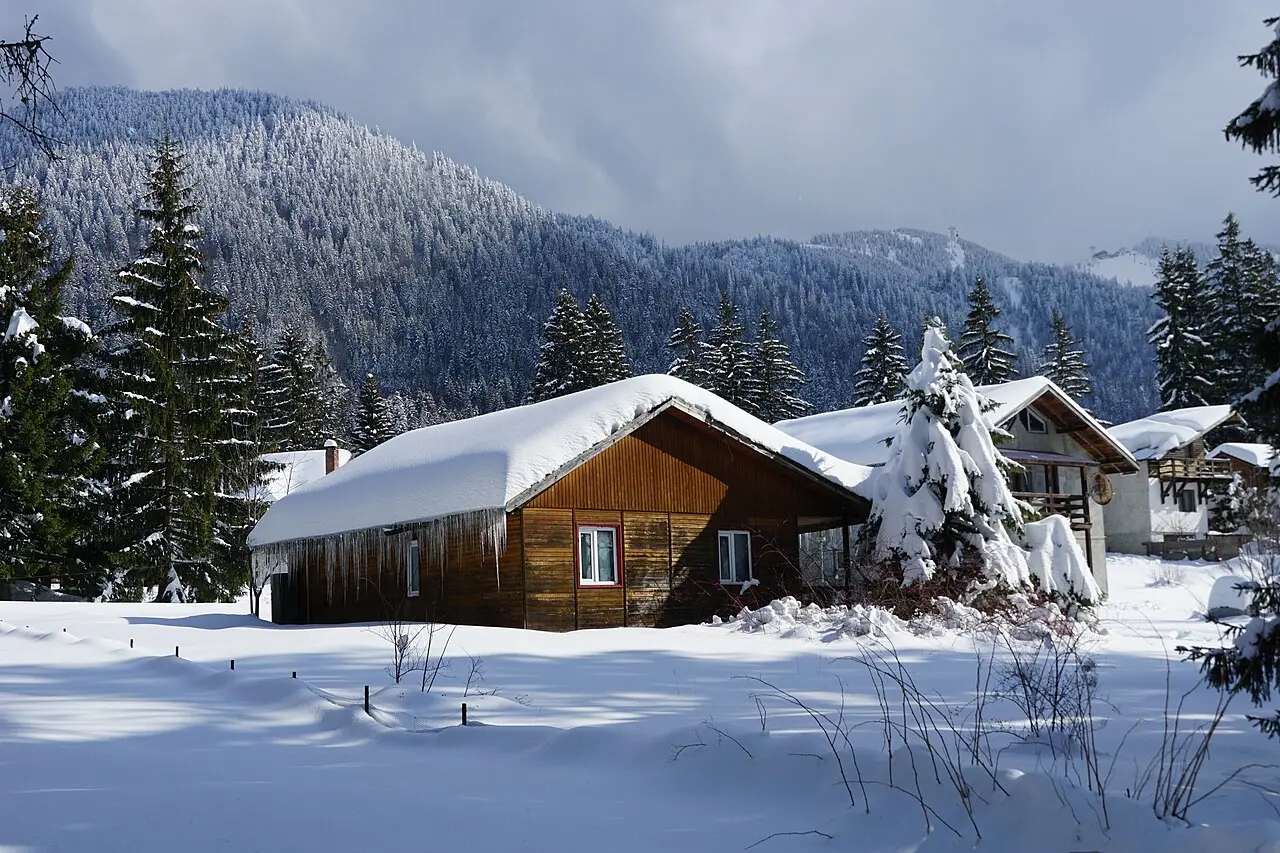
The dependable snow window is about mid-December to mid-March, when the resort holds a cover of roughly 50 to 60 cm for around 90 days. In practice the lifts usually start turning in the second half of December and often keep running into early April, but the exact opening and closing dates move every year with the weather and the snowpack. The 2025/26 season, for instance, was first announced for around 18 December but the real opening slipped later into the month once the snow arrived, with a tentative close in early April. Treat any published date as provisional and check the resort’s own channels first.
Snowmaking takes some of the guesswork out. Most of the slopes now have snow cannons, so the resort can open and hold a base even in a lean early-season week when the natural snow is thin. That’s a real advantage over smaller Romanian hills that live and die by the weather. Even so, the best conditions are usually January and February; December can be patchy at the very start, and by late March the lower slopes get slushy in the afternoon sun. Lifts generally operate from about 09:00 to 16:00, and there’s floodlit night skiing on part of the mountain when it is running.
What are the slopes like, and which runs should you pick?
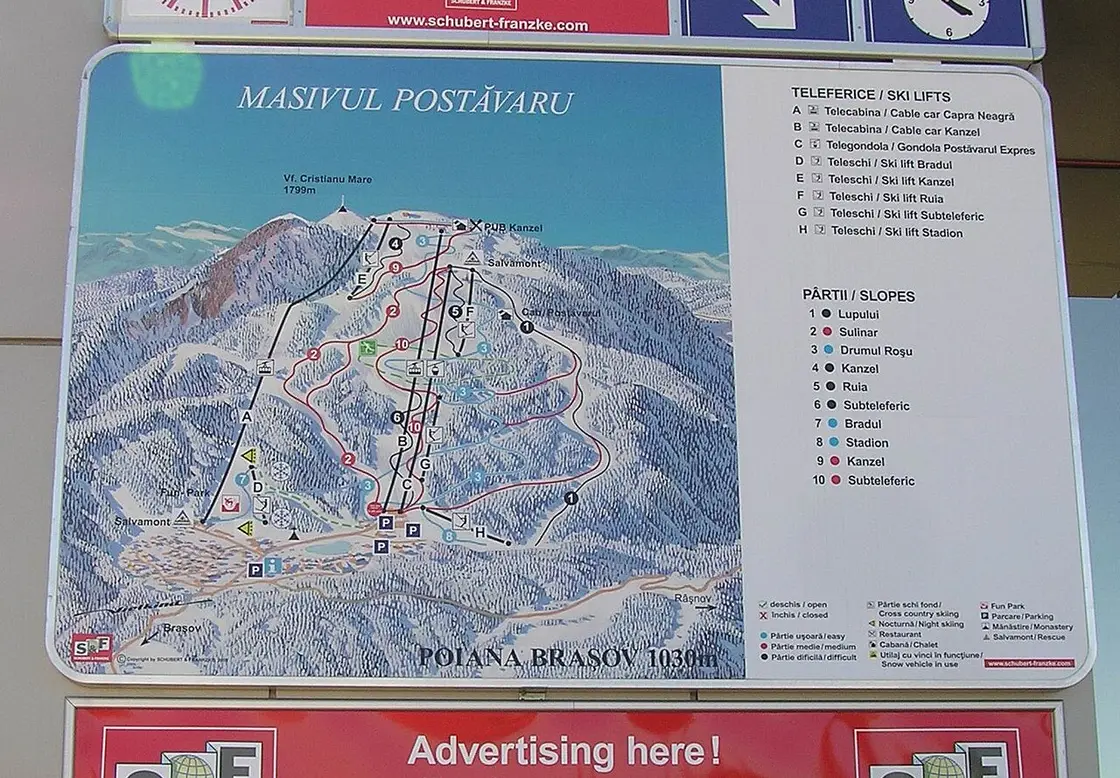
The mountain reads as roughly half easy, and split fairly evenly between intermediate and hard for the rest, so it favours people who are still finding their feet. Beginners get the gentle Bradul and Stadium slopes near the base, both short and forgiving, with the ski schools working right there. The run everyone remembers is Drumul Rosu (“Red Road”), a long, easy-graded cruiser of about 4.75 km that snakes down from near the top - a lovely, unhurried descent that’s the single best reason to buy a lift pass here even if you’re not an expert.
For stronger skiers, the challenge sits up top. Lupului (“the Wolf”) is the classic black run, steep and direct, and Sulinar is a solid red of about 2.8 km. Subteleferic, the pitch under the cable-car line, is another testing one. It isn’t a huge amount of advanced terrain, but it is real, and on a firm morning Lupului will keep a confident skier honest. The map at the lift stations lays it all out, and it is worth a photo before your first run so you know which lift feeds which piste.
How do the lifts work?
The resort has around ten lifts in total, and the backbone is the aerial network up Postavaru: the Postavarul Expres gondola, plus the Capra Neagra and Kanzel cable cars, backed by a couple of chairlifts (including the Wolf and Ruia) and several drag lifts on the lower slopes. One lift pass, a bank-card-sized RFID tag, covers all of them; the card itself costs 20 lei on top of the pass and, in the operator’s own words, is rechargeable but not returnable, so keep it for the next trip rather than queueing to hand it back. Note that you can only pay in lei at the resort, so bring cash or a card that works in RON.
The gondola is the workhorse and the quickest way from the base up towards the peak. The cable cars matter for a specific reason too: at least one of the aerial lifts is usually kept running outside the ski season, which is how summer hikers and sightseers get up the mountain when the snow is long gone. If you’re skiing, the practical tip is to ride up early - the gondola and cable-car queues are the resort’s main frustration on a busy Saturday, and they build fast from mid-morning.
Where to base yourself
Brasov is the base, and a car is optional: RATBV city bus 20 leaves Livada Postei about every half hour, takes roughly 25 minutes and costs around 5 lei, with the resort itself as the last stop. Sleeping in Brasov is usually cheaper than sleeping on the mountain, and where to stay in Brasov sorts out which districts sit near that bus stop. Driving is a 12 km climb, about 20 to 25 minutes, and it earns its keep mainly if you want to pair the slopes with Bran and Peles in Sinaia, or if you’re carrying on down the Prahova Valley to Sinaia, the other big ski town, which our Sinaia guide weighs up. Day-pass prices against Sinaia, Predeal and Straja are on Skiing in Romania. Everything else about arriving - the winter station bus, the car park shuttle, parking tariffs inside the resort, the two airports and the sightseeing prices on the cable cars - is in our Poiana Brasov transport guide.
Coming from Bucharest, do it in two steps: take the train to Brasov, a direct run of about two and a half hours with roughly thirty departures a day, then bus 20 up the hill. Driving the whole way is about 180 km, on the A3 as far as Ploiesti and the DN1 after that and takes two and a half to three hours in normal traffic - but the DN1 through the Prahova Valley is notorious for weekend jams in ski season, so a train-plus-bus combo is often faster and far less stressful. If you would rather be dropped at the door, a fixed-price private transfer handles the run from Bucharest or the airport. One thing to sort before you click book: most standard policies exclude skiing, so check that your cover names winter sports - our travel insurance for Romania page explains what to look for.
How much does a day cost?
The headline number is the lift pass: an adult one-day pass is 240 lei on the operator’s tariff, with children 6-12 at 140 lei (read 23 September 2026 for the 2025/26 season). Multi-day passes work out cheaper per day, and a full-season adult pass is 5,500 lei on the city’s published table, with the 6-12 child version at 3,300. On top of the pass, budget for rentals if you don’t have your own kit, a lesson if you are learning, and lunch at one of the mountain cabanas. Even adding it all up, a ski day here lands well under what the Alps charge, which is a big part of the appeal.
Because prices and dates shift each season, the visit box above carries a “check the current tariff” note for a reason. Resorts revise their tariffs annually, snow decides the opening and closing, and the odd lift can be out for maintenance. Check the current rates and lift status on the resort’s own channels close to your trip rather than trusting a figure from an old blog post.
Can you visit Poiana Brasov in summer?
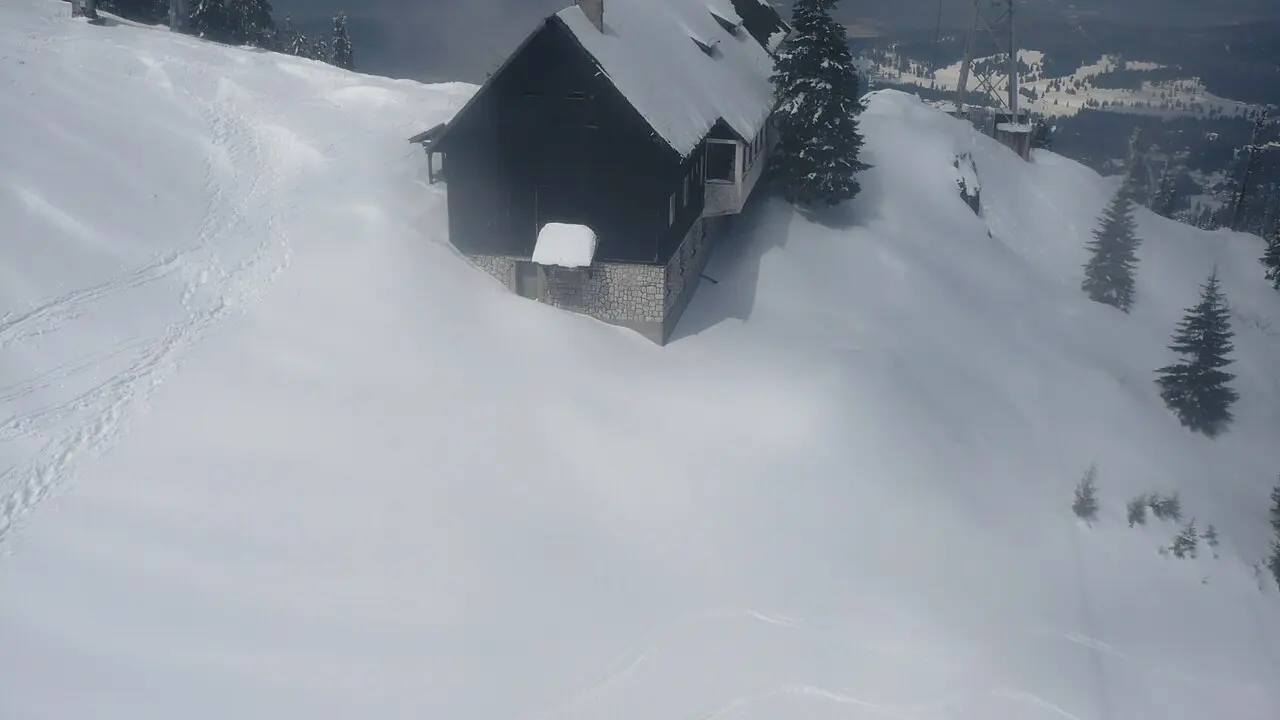
Yes, and plenty do. When the snow melts the resort turns into a green mountain base for hiking, mountain biking and paragliding, and this is where that year-round cable car earns its keep. The Postavarul Expres gondola (or one of the cable cars) usually runs through the warm months, lifting walkers up towards the peak of Postavaru at 1,799 metres for a sweeping view over Brasov and the Bucegi mountains beyond. From the top you can walk the ridge or hike back down through the forest.
The classic summer outing is the loop up to Cabana Postavaru, the old mountain chalet near the top, and on to the peak itself - a couple of hours of walking on marked trails, rewarded with one of the best panoramas in the Carpathians. If that whets the appetite, our Carpathian hiking guide covers the bigger ranges next door. It’s a completely different resort in July: wildflower meadows, cowbells, and families riding the gondola for the view rather than the skiing. If your trip lands outside the ski season, Poiana still earns a day.
Where should you stay, and how does it fit a trip?
You have two sensible options. Stay up in Poiana Brasov itself if skiing is the point of the trip: the hotels and cabins sit right at the base, so you roll out of bed and onto the snow, and you’re there for first lifts before the day-trippers arrive. Or stay down in Brasov and commute up on bus 20, which is what I would do if you want the old town, the restaurants and the castles as well as a day or two on the slopes. It is worth comparing places to stay in both early, since Poiana fills up fast on winter weekends.
Either way, Poiana slots neatly into a bigger Transylvania plan. It pairs with the Brasov old town and the headline castles for a mountains-and-history week, and our Romania 7-day itinerary uses Brasov as a two-night base you can extend with a ski day. If you’re building your own loop by car, the Transylvania road trip threads the region together, and the lift-card deposit and the cabana lunch both go easier with notes in your pocket. If you take one thing from this page, take the midweek advice - the same mountain on a Tuesday and on a Saturday isn’t the same mountain. For the wider picture, our Romania in winter guide sets a ski day against the Christmas markets and castle visits you could add to the same trip.
Photos
On the map
The map loads on click - to keep the page lightweight.
The map didn’t load. Check your connection and refresh the page.
Admission and opening hours
- Admission price
- Adult 1-day ski pass 240 lei, child 6-12 140 lei (operator tariff, 2025/26 season). The pass loads onto a plastic RFID card that costs 20 lei on top and, in the operator's own words, is rechargeable but not returnable; pay in lei at the resort.
- Opening hours
- Lifts usually run roughly 09:00-16:00 during the ski season. The reliable snow window is about mid-December to mid-March, with lifts often open into early April.
Season dates, opening hours and pass prices change every year with the snow - confirm the current tariff and lift status on the resort site before you travel.
Details checked: September 23, 2026
Read also

What to see · 11 min read
Marginimea Sibiului: Shepherd Villages Near Sibiu
Verified · September 5, 202618 shepherd villages west of Sibiu: Rasinari, Sibiel glass icons, Saliste, Paltinis bus fares, and how a day out of town works.

What to see · 9 min read
Prejmer Fortified Church: UNESCO Near Brasov
Verified · September 3, 2026Prejmer fortified church 15 km from Brasov: Greek-cross plan, 275 wall rooms, UNESCO hours for 2026 and how a visit actually works.

What to see · 11 min read
ASTRA Museum Sibiu: Romania's Great Open-Air Village
Verified · August 29, 2026ASTRA Museum near Sibiu: 50-lei tickets, hours by season, how to get there, and which of the 400+ buildings across 96 hectares to see first.

What to see · 10 min read
Bucegi Sphinx & Babele: Cable Car from Busteni
Updated · August 26, 2026Ride the Busteni cable car to the Sphinx and Babele: 2026 return fare 199 lei, hours from 08:30, and how to pair it with Peles or Cantacuzino.