
Is Romania Safe for Tourists in 2026? Crime & Bears
Yes, Romania is safe in 2026: a straight answer on crime, scams, solo travel, the airport-taxi trick, driving and the one real oddity - bears.
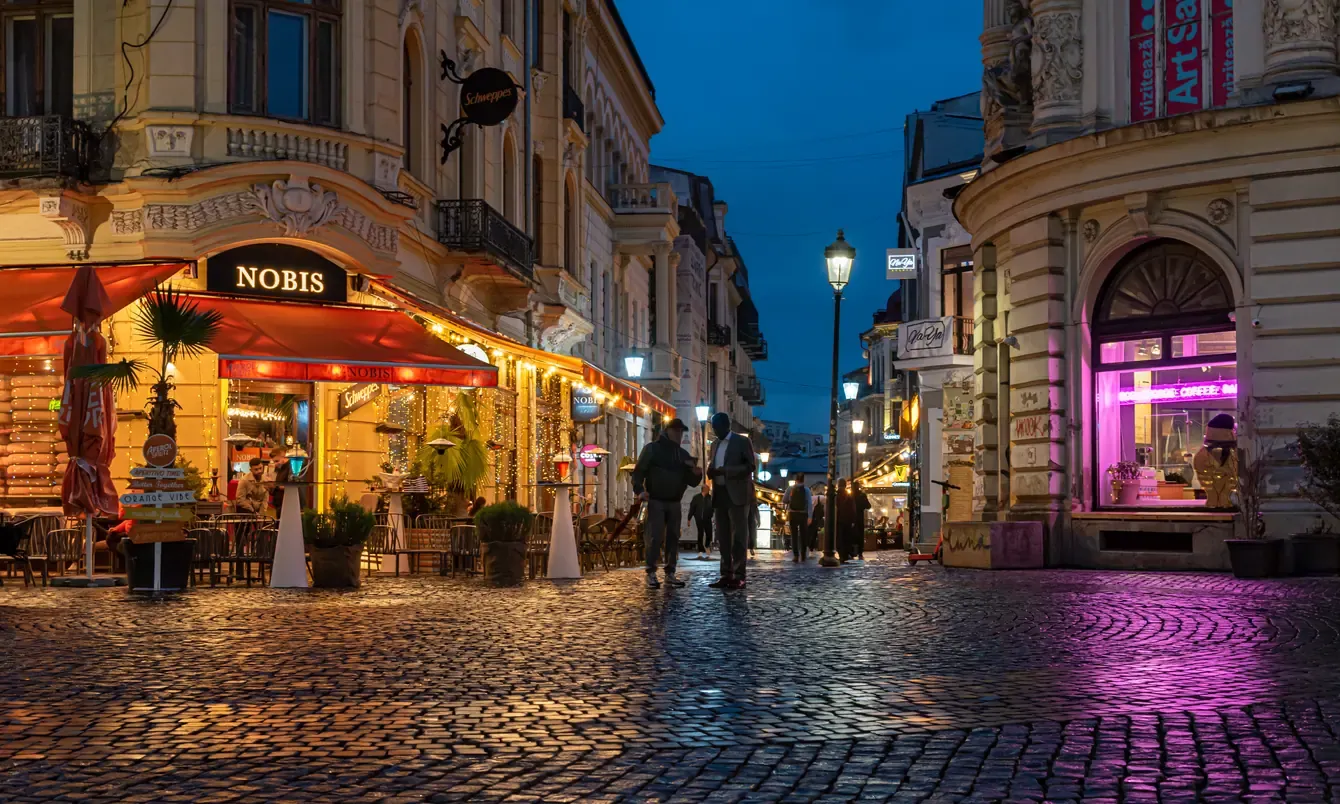
Yes, Romania is safe to visit. It’s an ordinary EU country, and the US State Department rates it Level 1, “exercise normal precautions”, the same lowest tier as Croatia, Greece or Japan (advisory last updated 14 October 2025). Violent crime against tourists is genuinely rare. What you actually need to watch is dull and avoidable: pickpockets in a couple of crowded spots, one well-known airport-taxi overcharge, one of the EU’s worst road-death rates if you drive, and one thing that surprises Western visitors more than anything else on this list: wild bears, but only if you stop to feed one.
Put plainly: Romania isn’t a place where you tiptoe around danger, it’s a place where a bit of ordinary sense goes a long way. Every risk below is boring, predictable and easy to head off with a little planning.
Is Romania safe to visit in 2026? The quick take
- Official rating: US State Department Level 1, “exercise normal precautions” (last updated October 2025), the lowest tier and the same as Poland, Portugal or Japan.
- Crime: low, and overwhelmingly petty - pickpockets and distraction crews in a few crowded spots, not violent crime against tourists.
- The risk that matters is the road: Romania runs one of the EU’s worst road-fatality rates, so drive defensively or lean on trains and transfers instead.
- The strange one is bears: a hazard on a handful of mountain roads only if you stop to feed or photograph one - feeding now carries a fine of up to 30,000 lei.
- Solo travellers, including women: widely reported as safe on the tourist trail, with the usual after-dark caution around two districts noted below.
So how safe is Romania, really?
Start with how the country sits on the usual yardsticks, because they line up. The Institute for Economics and Peace ranks 163 countries every year for its Global Peace Index - a peacefulness score built from militarisation, conflict and safety data, not a street-crime ranking, and that distinction matters. The 2026 edition puts Romania 45th globally (score 1.788). That is nine places worse than the 2024 figure this page used to quote (around 36th / 1.76), so the trend is not flattering - but the index still places Romania well ahead of the United States (134th) and in the same peaceful band as much of Europe. Bucharest, the city most visitors worry about, posts a crime index of about 28 on Numbeo (data snapshot June 2026), which is lower than London (~55), Paris or most big Western capitals. Numbeo is crowd-sourced perception rather than police statistics, so treat it as a mood reading, but the mood is clear: locals and residents rate walking alone in daylight as “very high” safety, and even walking alone at night comes out “high.”
The crimes that do get reported are the petty kind. The State Department’s own summary lists “robbery, pickpocketing, online relationship scams and credit card fraud” as the most common, and the UK Foreign Office echoes it: crime levels low, pickpocketing present in crowds. Nobody is warning about muggings on the average tourist street. That’s the frame for everything below, low baseline risk, a few specific traps.
What crimes and scams should I actually watch for?
Four things, in rough order of how likely you’re to meet them.
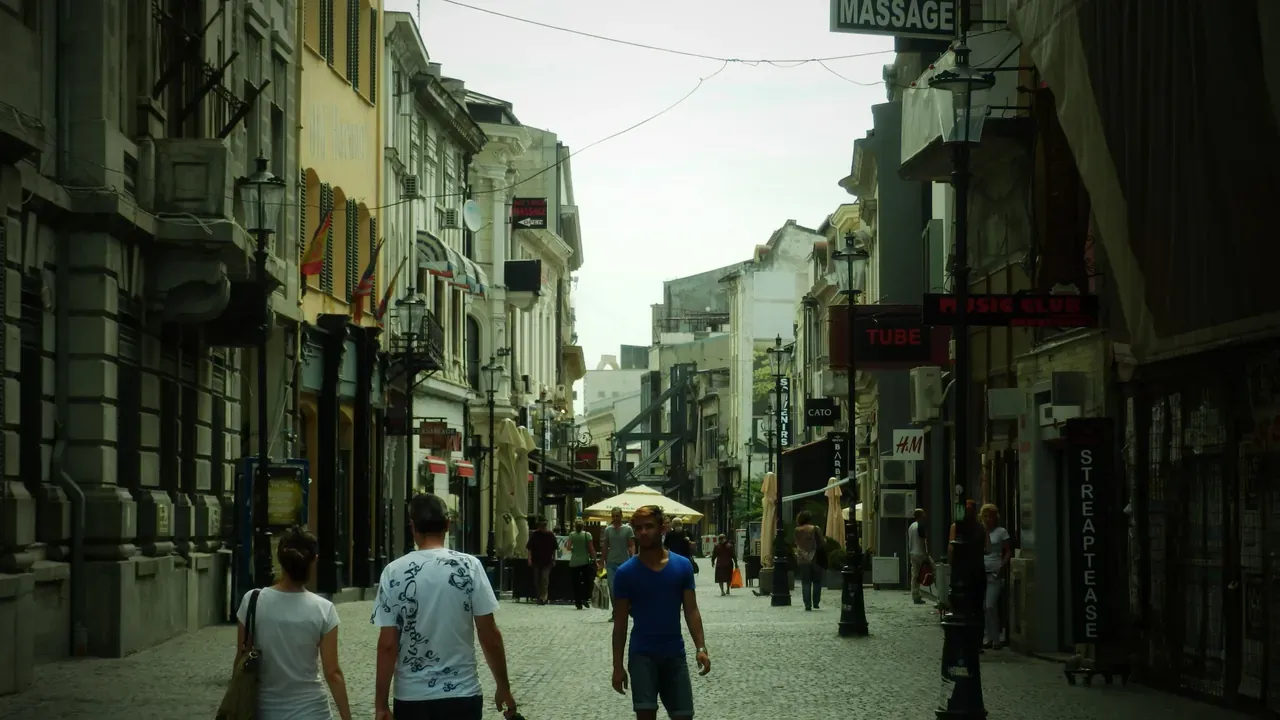
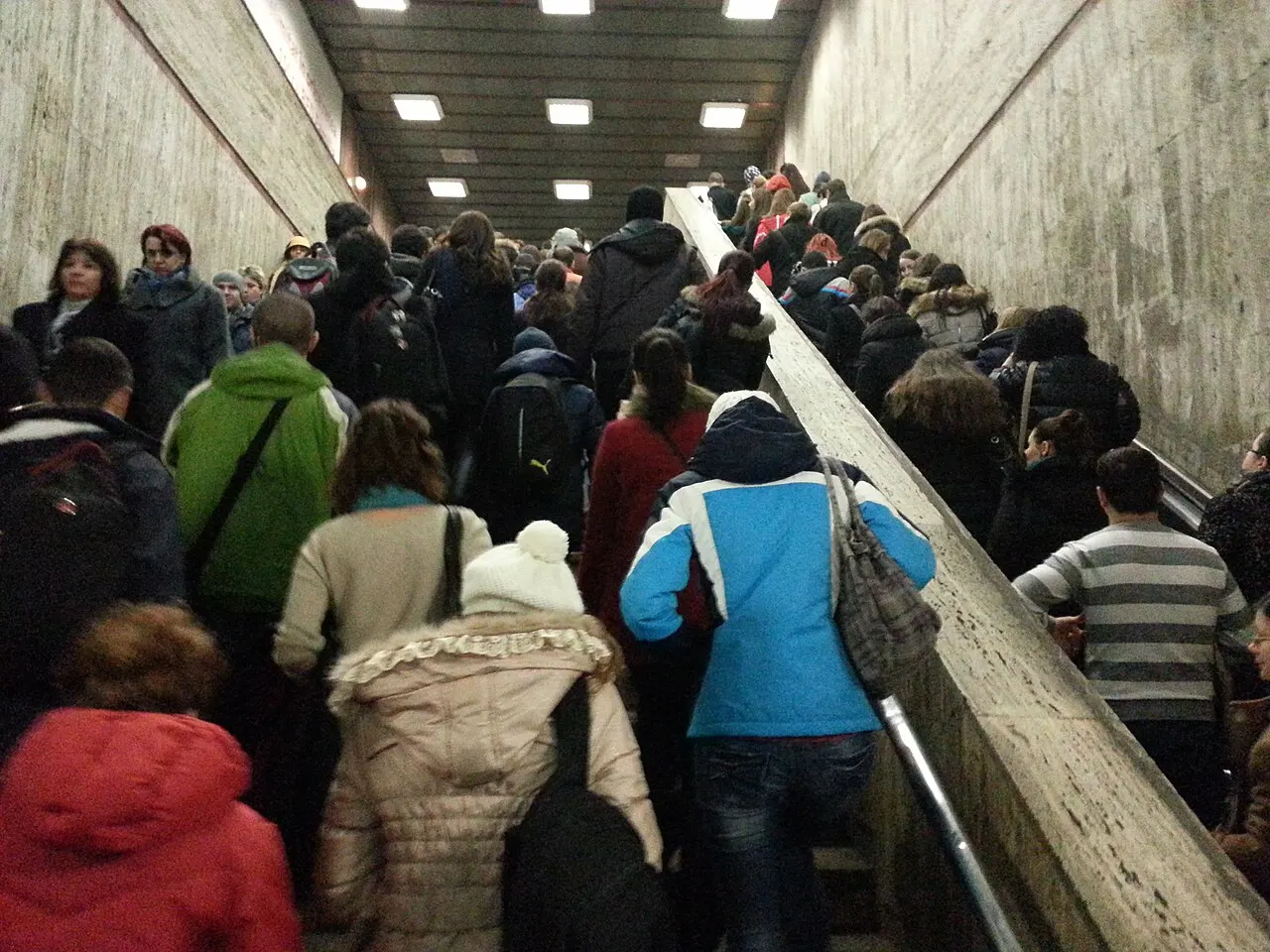
Pickpocketing and distraction theft. This is the big one, and it lives where crowds do: Bucharest’s Old Town, packed metro carriages, the area around Gara de Nord (the main train station), money-exchange counters and airport and station terminals. The UK Foreign Office specifically flags organised groups that work with distraction techniques. Rush hour on the metro is the classic setup, so wear a bag on your front, not your back, when a carriage fills up.
The airport taxi overcharge. The single scam most first-timers walk into. At Otopeni (OTP), touts and unmarked “TAXI” cars approach arrivals and quote foreigners wild prices, sometimes €30 or more (around 150 lei) for a ride into town. The fair rate to central Bucharest is roughly 60 to 100 lei (approximate, 2026). The fix is simple and total: ignore anyone who approaches you offering a ride, and use Bolt or Uber from the app instead. The price is fixed in-app before you get in, the driver is rated, and there’s a designated pickup point at the airport. Booking a fixed-price transfer in advance does the same job if you would rather not fumble with an app on landing. Our guide to which airport for Romania has the airport-by-airport detail.
Drink spiking and the “friendly bar” hustle. In Bucharest’s Old Town nightlife, be wary of strangers, however charming, who steer you to a specific bar for drinks. Some venues run inflated bills backed by heavy-handed bouncers, and drink spiking is a real risk in bars and clubs. Watch your drink, don’t accept one from a stranger, and if a bill looks absurd, that’s the scam, not a misunderstanding.
Card fraud. The Foreign Office notes cards have been cloned “in some bars and restaurants.” Use ATMs attached to actual banks rather than random machines in tourist lanes, keep your card in sight when you pay, and a tap-to-pay phone dodges the skimmers entirely.
None of this is exotic, it’s the same short list you would run in Rome or Barcelona. Run it and the odds of a bad day drop close to zero.
Is Romania safe for solo travellers, including solo women?
Broadly, yes. Romania consistently lands among the safer European countries in solo-travel write-ups, and Bucharest in particular gets warm reports, travellers describe walking central areas late at night without hassle and note a visible, reassuring police presence. (These are traveller and community accounts rather than hard statistics, so read them as experience, not a guarantee.) Catcalling happens but is reported as less full-on than in some larger Western European cities.
The caveats are geographic and after-dark. The Ferentari district has a rougher reputation and isn’t a place to wander. The Gara de Nord station area gets sketchy once it’s dark. Both are easy to simply avoid. The standard playbook covers the rest: stay somewhere central and well-reviewed, use apps rather than street-hailed taxis at night, and skip empty, unlit areas. Beyond the capital, the tourist trail through Transylvania, the castle towns, Brasov, Sibiu, Sighisoara, is calm and used to visitors. If you’re building your route, our 7-day Romania itinerary sticks to exactly that well-trodden belt.
What about driving, is that where the danger is?
If there’s one number in this article that deserves your attention, it’s this: Romania has one of the worst road-fatality rates in the EU. In 2025 it recorded 68 deaths per million inhabitants, against an EU average of 43 - only Bulgaria fared worse, at 71 (European Commission figures published March 2026; the rate has been falling since 2019 but remains near the bottom of the bloc). For comparison, Sweden sits at 20 per million. Statistically, the drive is the most dangerous part of a Romania trip, far more than crime.
That sounds alarming, but it’s manageable once you know what you’re dealing with. The hazards are specific: two-lane national roads with no motorway alternative, drivers who overtake into blind bends, cars that brake hard for potholes, double-parking in towns, and livestock or a horse-cart on rural roads. Defensive driving, not white-knuckle fear, is the answer, don’t overtake unless you can see the road is clear, and give yourself extra time rather than chasing a schedule. Two legal must-knows: winter tyres are required whenever the road is covered with snow, ice or slush - the rule is condition-based, not calendar-based, so treat 1 November to 31 March as the safe window to have them fitted - and you need a valid rovinieta (the electronic road vignette). We cover both in depth in driving in Romania and in the car rental guide. If the stats put you off driving at all, the castle belt and cities are perfectly doable by train, transfer and the odd tour.
Are the bears in Romania actually dangerous?
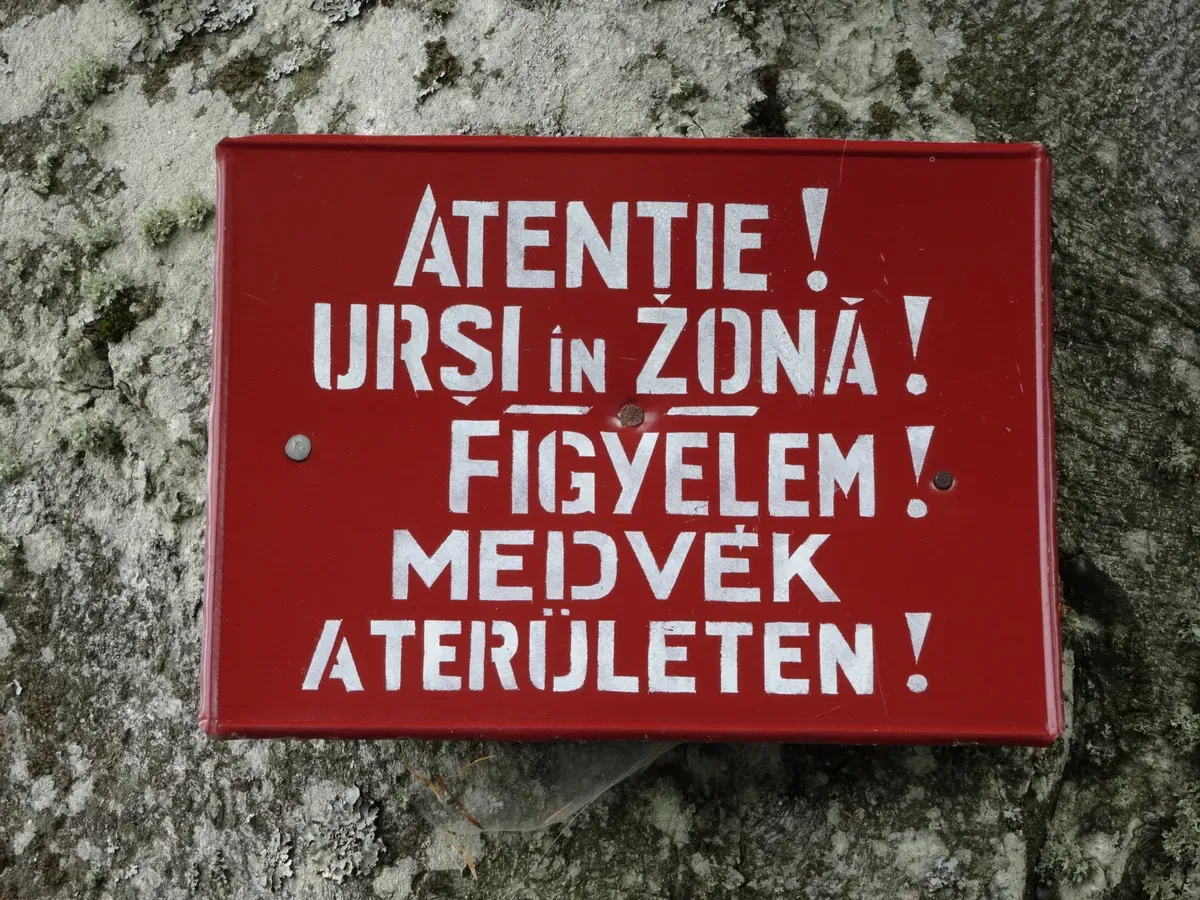
This is the genuinely unusual one, and it is worth getting right. Romania has the largest brown bear population in the EU, an estimated 10,400 to 12,800 animals (Environment Ministry preliminary study, April 2025), concentrated in the Carpathians. And in 2026 the headlines have been grim: as of early June, nine people had been injured in bear attacks this year, eight of them foreign tourists. In July 2025 an Italian motorcyclist was killed by a bear on the Transfagarasan.
Here is the part that matters, because it flips the risk from scary to controllable: almost every one of those incidents happened because a tourist stopped to feed or photograph a bear. On 8 June 2026 alone, three people were hurt in two separate incidents on the same mountain road, a Portuguese couple who leaned out of their car window to photograph a bear, and a young Ukrainian woman who is believed to have got out of her vehicle. Romanian authorities put it bluntly: “It is forbidden for tourists and drivers to stop and attempt to feed or photograph the bears.” Mountain-rescue crews add the ugly coda, a fed bear learns to approach people and usually ends up shot, so “the moment someone gives food to a bear, the bear is sentenced to death.” To drive the point home, in November 2025 the authorities raised the maximum fine for feeding a bear to 30,000 lei (around 5,700 euro).
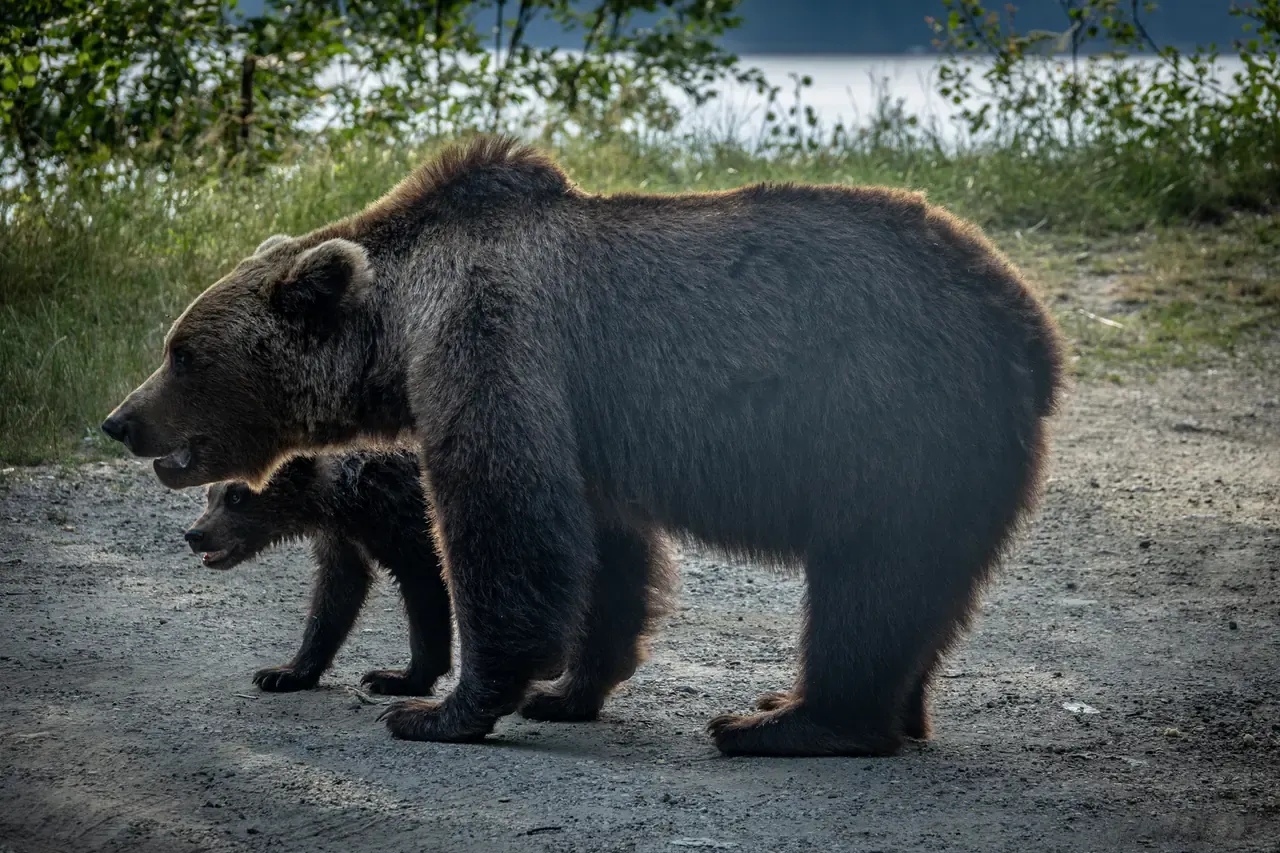
So the rule for the famous Transfagarasan road, where most roadside sightings happen, is short: if you see a bear, keep your windows up, don’t stop, don’t feed it, and never get out for a photo. If you’re hiking or camping in bear country, store food sealed and away from your tent, make noise so you don’t surprise one on the trail, and keep your distance. If you do meet one on foot, the official advice isn’t to run or make sudden movements but to back away slowly and calmly; our Carpathian hiking guide covers the trails and the bear rule in more depth. Do that, and a bear sighting becomes the highlight of the trip instead of a trip to the clinic. Ignore it, and you become the next statistic, the risk here is almost entirely self-inflicted.
Should I worry about earthquakes?
It’s a background risk worth knowing about, not a reason to change plans. Bucharest is one of the EU capitals most exposed to earthquakes, its quakes come from the deep Vrancea seismic zone. The last major one, on 4 March 1977, measured magnitude 7.5 and killed around 1,578 people in Romania, most of them in Bucharest. Big earthquakes here are decades apart, so the odds of feeling one on a short trip are low. If you do, the drill is the same as anywhere: drop, cover and hold on, and stay clear of windows. You’ll notice some older Bucharest apartment blocks carry a red dot marking high seismic risk, a quirk of the city rather than a daily danger.
What are the practical safety basics?
A few things that make everything smoother:
- Emergency number: 112. One free number across the EU for police, fire and ambulance, and it works from any phone, including a foreign SIM on roaming. Operators handle major international languages and answer in seconds. Save it now.
- Health cover. EU citizens should carry an EHIC for state healthcare; everyone else wants travel insurance, care isn’t wildly expensive here but private clinics still charge, and it covers the mountains and the drive too. Our travel insurance for Romania guide explains why the EHIC or GHIC alone isn’t enough.
- Stay connected. Ride apps, maps and the ability to call a transfer all depend on data, so an eSIM that works the moment you land is worth setting up in advance.
- Money sense. Romania uses the leu, not the euro. Draw cash from bank ATMs, decline “dynamic currency conversion” when a card machine offers to charge you in your home currency, and you won’t get quietly skimmed on the exchange rate. More on that in money in Romania.
The bottom line
Romania is a safe, normal, rewarding country to travel, and the data backs it up: lowest-tier advisories, a peaceful ranking, a capital safer on paper than most of Western Europe’s. The risks are specific and mostly in your hands. Don’t feed the bears and don’t get out of the car for them, drive defensively or let the train and transfers do the work, use Bolt or Uber from the airport, and keep a hand on your bag in the Old Town crush. Do that and the worst thing likely to happen is a slightly overpriced beer. Nail the timing too, with our guide to the best time to visit Romania, square away the entry requirements and ETIAS at the planning stage, and you can spend your energy on the castles and the mountains instead of looking over your shoulder. As always with safety, rules and figures move, so check the current position with your own government’s travel advice close to departure (this page was verified August 2026).
Photos
Read also

Before you go · 8 min read
What to Pack for Romania: Seasons & Essentials
Verified · September 1, 2026What to pack for Romania by season: city heat near 30 C, Carpathian ridges near 10 C in July, Black Sea kit, and winter layers that work.

Before you go · 10 min read
Skiing in Romania: Resorts, Passes & Season
Updated · September 23, 2026Ski Romania: Poiana Brasov, Sinaia, Predeal and Straja day-pass prices in lei, the snow season window and which resort fits your trip.

Before you go · 9 min read
Best Day Trips from Cluj-Napoca
Verified · August 16, 2026Day trips from Cluj by effort: Salina Turda by bus, Rimetea by car, Alba Iulia citadel and Banffy Castle at Bontida, with times and prices in lei.

Before you go · 12 min read
Romania's Black Sea Resorts: Which One to Choose
Verified · September 23, 2026Mamaia, Eforie Nord, Costinesti, Neptun or Vama Veche? What a summer room costs, how to get there from Bucharest and which resort fits your trip.