
Sighisoara to Sibiu: Buses, Trains & the Scenic Route
How to get from Sighisoara to Sibiu: why the bus beats the train, the 92 km drive, and the Saxon detour through Biertan and Valea Viilor.
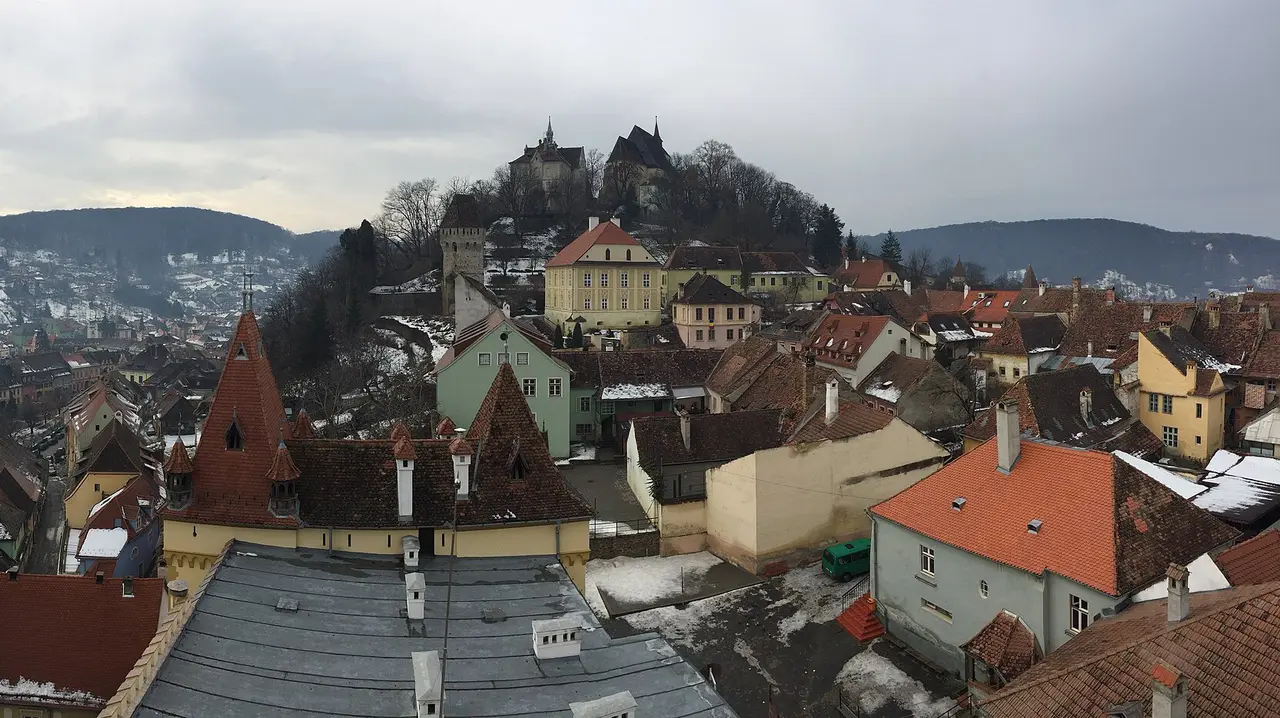
Take the bus, or drive. Sighisoara and Sibiu are only about 92 km apart, direct minibuses cover the gap in roughly an hour and three-quarters, several operators run it through the day, and a car does it in an hour and a half. The train exists and is much cheaper, but it runs only about twice a day direct and takes some two hours and a quarter, because the line swings west to Medias and the junction at Copsa Mica before turning south. Fares and times move, so confirm the day’s departures on cfrcalatori.ro or autogari.ro first.
The more useful question is what you do with the gap between the two towns. This 92 km strip holds the thickest concentration of Saxon fortified churches in Romania, with two UNESCO villages, Biertan and Valea Viilor, sitting a short detour off the main road. Treated as a transfer it’s ninety dull minutes; treated as a half-day drive it’s one of the finest stretches of Transylvania, and that difference should decide how you travel.
How long does the journey really take?
Reckon on a bit under an hour and a half behind the wheel, an hour and three-quarters to two hours on a direct bus, and about two hours and a quarter on the direct train. Add the walk down from the Sighisoara citadel and the wait at the far end, and even the quickest option eats a half-morning, so leave early enough to still get value from the day in Sibiu.
One route note explains the timings. The road runs west along the Tarnava Mare valley and then cuts south through the hills, while the railway has to follow the valley all the way to Copsa Mica, a junction town 12 km south-west of Medias, before it can turn south for Sibiu. The road takes the shortcut, the railway can’t, which is why the train loses here even over a short distance.
The bus: the practical default
Several small operators run the route, among them Olteanu Travel, Trans Olteanu Tour, UNESCO-Bus and Novum Travel, and between them they put roughly half a dozen departures a day across the morning and afternoon. Direct minivans cover the 92 km in about an hour and three-quarters; a few routings loop through other towns and take far longer, so read the timing before booking on price alone. Fares start at 80 lei with Olteanu Travel and run up to 100 with UNESCO-Bus (the carriers’ own listings, checked September 2026), which makes the bus the quick and frequent choice rather than the cheap one. FlixBus also shows up for the pair, but its four-and-a-half-hour timing gives it away as an indirect service through another city.
Two practical warnings. Check the exact pick-up point, because one operator, Olteanu, lists a stop by the Penny supermarket in Sighisoara rather than the bus station, which is a long haul with luggage if you assumed otherwise. And reserve ahead: Olteanu’s 80-lei service is sold by advance booking only, online or by phone, and the others are minibuses with a couple of dozen seats, not coaches with spare capacity. Ask where the drop-off in Sibiu actually is, too; it isn’t always the point the app shows.
Keep the last departure in mind as well. The service thins out by early evening, so an after-dark citadel visit isn’t something the timetable will bail you out of: once the last bus has gone you’re down to taxis and their prices. If you want Sighisoara until dusk, budget for a night there - our where to stay in Sighisoara guide covers citadel versus Lower Town - or book a car.
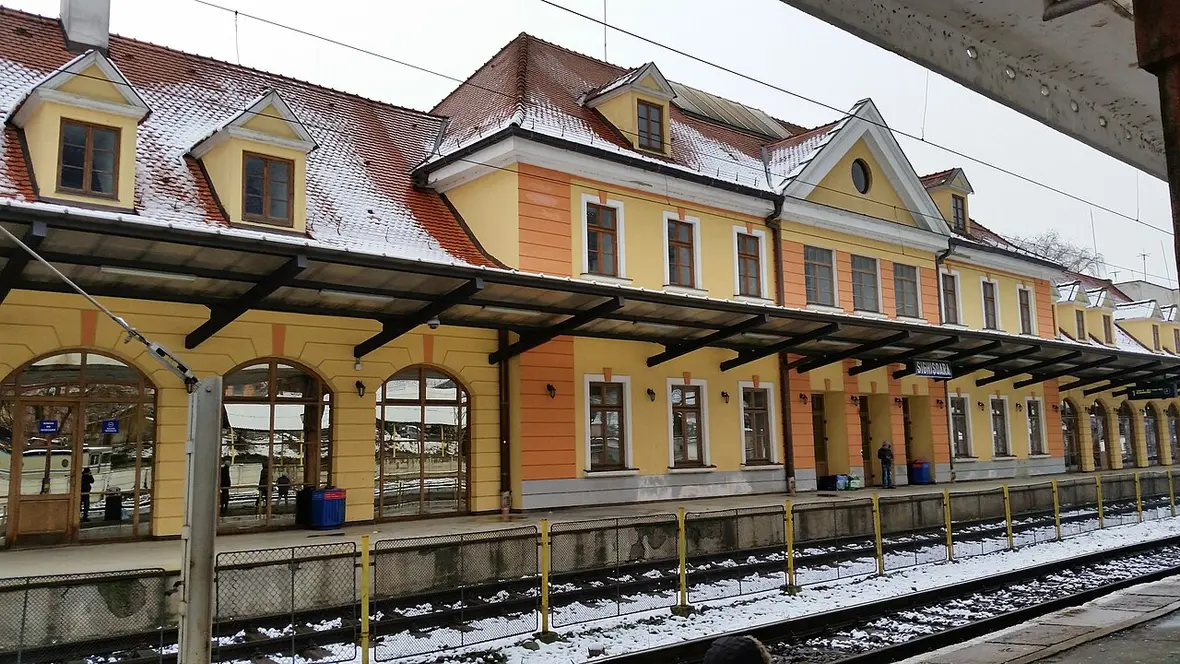
The train: cheap, slow, and twice a day
Rail is the budget option here, and the slow one. Two direct departures a day means the timetable runs your morning, and at about 2h10-2h20 it’s still the slowest scheduled way to cover 92 km, because the line detours west to Copsa Mica. What it has going for it’s the fare: a Regio train is cheap, 21 to 24 lei in second class on CFR’s 2025/26 tariff, well under a third of what the bus now costs, so the trade is real - you save money and spend time.
Where the train earns its place is as part of a bigger rail day. Sighisoara sits on the main Brasov to Cluj line, so if you’re arriving from Brasov by rail and continuing to Sibiu without a car, the through journey has a logic to it, and Romanian regional trains are cheap, calm and scenic in a slow way. Check the current CFR timetable rather than trusting a third-party listing, and keep a bus in mind as backup. Our Bucharest to Sibiu guide explains why the railway keeps losing to the road in this part of the country.
Driving the DN14: the version worth doing
With a car the direct run through Medias takes about ninety minutes, and every extra hour you spend on it buys something. Medias itself, roughly halfway, is a proper Saxon town with a fortified precinct around St Margaret’s church and a famously out-of-plumb Trumpeters’ Tower, and it makes an easy coffee-and-stretch stop.
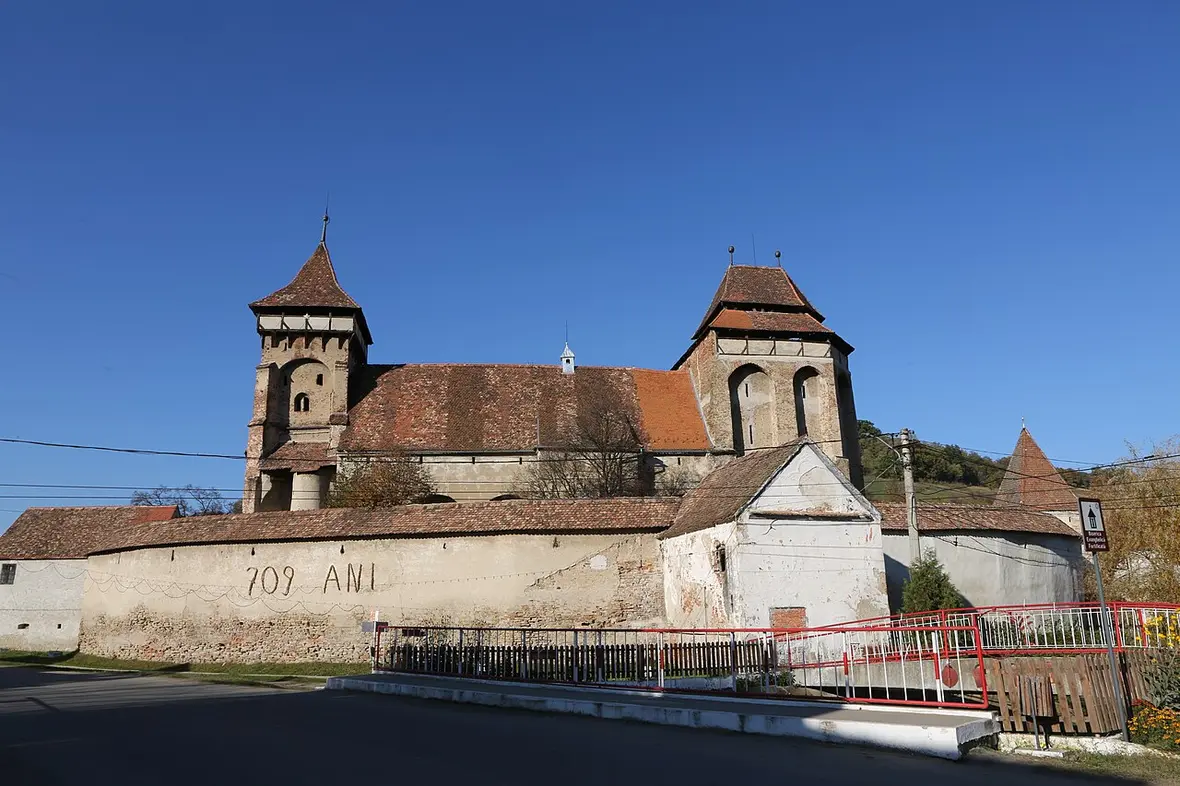
The prize is Biertan, 21 km east of Medias and 66 km north-east of Sibiu, a UNESCO site since 1993 and the grandest fortified church in the country. Valea Viilor, the other UNESCO village on this axis, sits close to Copsa Mica and is a quieter, more intimate take on the same idea. Do both and the transfer has become the day’s sightseeing, and you still reach Sibiu in time for dinner having seen more than many people manage in a week. Our Saxon villages guide covers the wider circuit. Want more than two villages? Our Saxon villages route turns this same corridor into a dedicated two-day drive out to Rupea and Malancrav as well, leg by leg.

You also pass Copsa Mica, and it helps to know what you’re looking at. This small town of about 4,500 people was one of the most polluted places in Europe in the 1990s, blackened by the Carbosin carbon-black works that ran from 1935 to 1993 and the Sometra smelter beside it. The soot is long gone and the hills are green again, but the industrial skeletons still line the road, and the contrast with a Gothic village church ten minutes away says more about Transylvania’s twentieth century than any museum caption.
One logistical tip if the drive appeals but you have no car yet: hire in Sibiu rather than Sighisoara. Sibiu has an international airport with the usual rental desks, while Sighisoara is a small town with very little rental infrastructure, so the workable plan is to pick up a car at one end of your trip and use it for the villages. Our car rental in Romania guide covers deposits, the rovinieta road vignette and what to check on the paperwork.
When a private transfer is the right answer
For two or more people with luggage, a booked car door to door can undercut the hassle of a once-a-day minibus, though no operator publishes a fixed fare for this leg: local drivers quote per car, and pre-booked transfer services price comparable Transylvania legs from about $260, so get two quotes and split the better one across the group. It also solves the awkward part of this route, which is that both towns are pedestrian in the middle: a driver takes you from your guesthouse gate in the Sighisoara citadel to your hotel door in the Sibiu old town, with a stop at Biertan on the way if you ask when booking.
The other case for a driver is timing. If you’re arriving on a late train into Sighisoara, or need to reach Sibiu airport for an early flight, the scheduled services are simply not there, and a fixed price beats bargaining outside the station.
How this leg fits a wider Transylvania trip
Almost everyone travels this direction rather than the reverse, and there’s a reason. The standard run comes up from Bucharest to Brasov, moves west to Sighisoara on the main line, then finishes in Sibiu, which has the airport, the strongest restaurant scene of the three and the road south to the Transfagarasan. Doing it that way means each town is bigger and busier than the last, and you end where the onward connections are.
That also affects how much time to give the middle of the day. If Sibiu is your final stop, take the slow version with the villages, because nothing is waiting for you at the far end but a hotel check-in. If you’re pushing on from Sibiu the same evening, take the bus and keep the churches for a separate day trip out of Sibiu; Biertan is close enough to work from there as well. For the wider decision about which of these towns to base in, our Sibiu and Brasov comparison sets out what each does best.
So which should you pick?
With a car, or the willingness to rent one, drive and take the detour: Biertan and Valea Viilor are the reason to be on this road at all. Without a car, the bus is the quick and frequent choice, so book it a day or two ahead and confirm where it leaves from; take the train instead if you’re counting lei and the timetable happens to suit, since it costs a fraction of the bus but only runs twice a day. Travelling as a pair or a group, price up a transfer rather than dismissing it.
Whichever you choose, do the citadel properly while you’re there, since our Sighisoara guide covers what deserves your morning and the Clock Tower guide covers the museum climb itself, and try to land in Sibiu with an evening in hand: the Large Square and the Bridge of Lies are at their best at dusk, and the Sibiu travel guide takes over from the station.
Photos
Admission and opening hours
- Admission price
- Bus from about 80 lei, up to 100, run by several small operators. The train is the budget option at 21-24 lei second class on the Regio tariff, but only twice a day direct. A private car or taxi is priced per vehicle and no operator publishes a fixed fare for this leg - get a quote. Driving: fuel plus the rovinieta road vignette; no tolls on this route.
- Opening hours
- Road distance about 92 km. Direct minibuses take about 1h45; some routings loop and run longer. Buses go roughly half a dozen times a day across the morning and afternoon. The two direct CFR trains take about 2h10-2h20 and leave Sighisoara at 07:02 and 15:50 (September 2026). Driving takes about 1h30 without stops, half a day with the Saxon villages.
Fares and timetables here are estimates from July 2026 and change often. Confirm trains on cfrcalatori.ro and buses on autogari.ro or with the operator, and check the exact pick-up point in Sighisoara when you book.
Details checked: July 23, 2026
Read also

Transport · 14 min read
Bucharest to Budapest: Night Train, Bus & Flights
Verified · September 4, 2026Bucharest to Budapest 2026: CFR night train from 27 EUR, FlixBus from 36.98 EUR in 13h, or a 1h45 flight. Fares, times, border, Oradea stop.

Transport · 9 min read
Bucharest to Sinaia Train 2026: ~1.5h, from 32.5 lei
Verified · August 31, 2026Bucharest to Sinaia by train in about 1.5 hours: fares from 32.5 lei, Peles timing and its 16:00 last entry, and when a transfer wins.

Transport · 10 min read
Cluj to Brasov 2026: Bus 3h40 from 81 lei
Verified · August 28, 2026Cluj-Napoca to Brasov: bus about 3h40 from 81 lei, CFR InterCity about 6h35 from 126,50 lei, drive 275 km in about 4h20. Check before you go.

Transport · 9 min read
Brasov Airport (GHV): Flights & Getting to Town
Verified · August 21, 2026Brasov-Ghimbav (GHV) opened in 2023: who flies, the RATBV A1 bus at 5 lei, taxi and transfers into town. Check the live board.