
Bucharest to Sibiu: Bus, Train & Driving Guide
How to get from Bucharest to Sibiu: why the bus and car beat the train here, real times, prices in lei, and the scenic Olt Valley route.
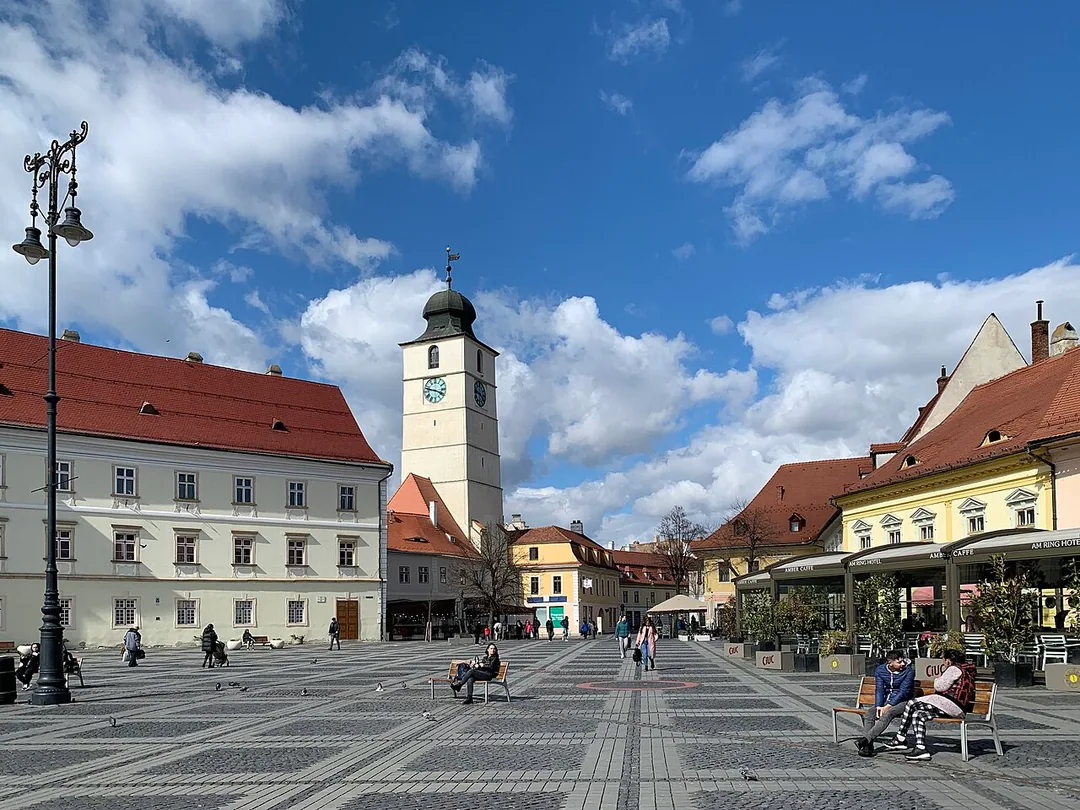
Take the bus or drive. Sibiu is the one big Romanian route where the train is the wrong answer: the railway has no direct line across the mountains, so trains crawl round through Brasov and take six to eight hours, while a bus does it in roughly four and a half and a car in about three and a half. Flying makes no sense on about 270 km. So the real choice is between a cheap direct coach and your own car up the Olt Valley.
This flips the advice you may have read for the Bucharest to Brasov run, where the train wins hands down. The difference is geography. There is no railway straight over the Fagaras mountains to Sibiu, so trains take a long dogleg north to Brasov, then west along the foothills to Sibiu, covering far more track than the road. The road, meanwhile, cuts through the mountains along a river gorge. Here is how the options really stack up, with current times and prices in lei.
What is the fastest way from Bucharest to Sibiu?
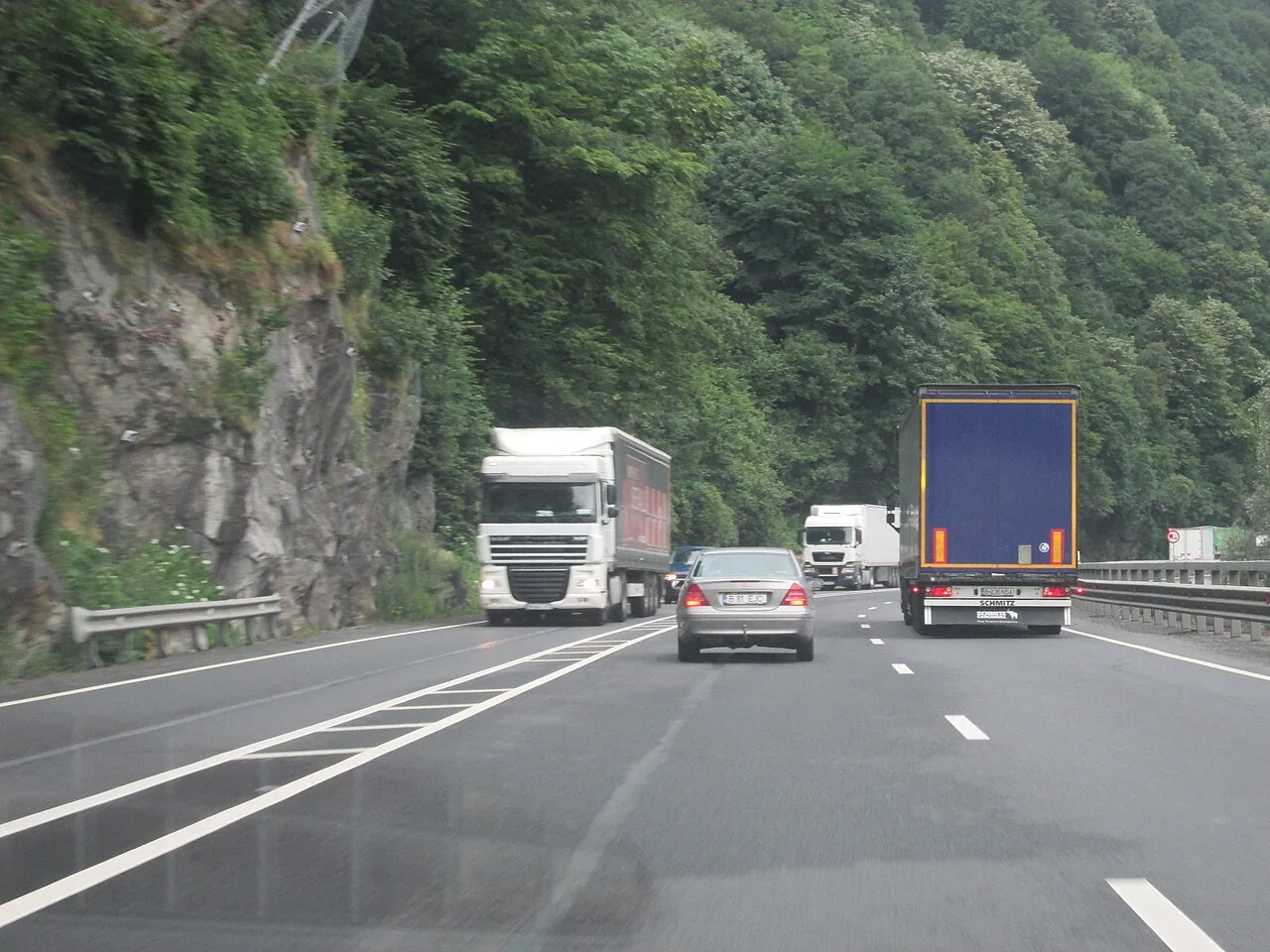
Your own car, at about three and a half to four hours for roughly 270 km. The route is simple in shape: the A1 motorway west to Pitesti, which is quick, then the DN7 national road up the Olt Valley through Ramnicu Valcea and over the mountains into Sibiu. There are no motorway tolls on this run, just Romania’s road vignette (the rovinieta), which you buy online or at a petrol station, plus fuel. The catch is the second half. The DN7 through the Olt gorge is a single carriageway squeezed between the river and the cliffs, gorgeous but slow, and it clogs on summer weekends and around Ramnicu Valcea. On a bad Sunday your four hours can become five or six.
A car only earns its keep, though, if you actually want one in Sibiu. The city sits at the gateway to some of Romania’s best driving: the Transfagarasan runs up into the mountains just to the east, the fortified Saxon villages scatter across the hills around it, and Sighisoara and Brasov are an easy onward loop. If that’s your trip, pick the car up in Bucharest or at the airport and treat the drive as the first scenic leg, not a transfer to be endured.
Is the bus better than the train to Sibiu?
Yes, and it’s not close. FlixBus and other operators run the route several times a day, and the quickest departures do it in about three hours fifty, with most scheduled at four and a half to six hours. That still beats every train. Fares start around 9 euros (roughly 45 lei) if you book ahead and typically land in the 100 to 210 lei range depending on the operator and date, so it’s usually cheaper than a fast train too. For a traveller without a car, the coach is simply the sensible pick for this corridor.
One thing to get right is the departure point. In Bucharest, buses to Sibiu generally leave from the Autogara Militari terminal out to the west of the centre, not from the main railway station, so read your ticket for the exact stop and factor in the time to get there. At the Sibiu end you arrive at the bus station right beside the train station, a short ride or a fifteen-minute walk from the old town. Book ahead on summer weekends and around festival dates, when seats on the popular departures fill up.
How slow is the train, really, and is it ever worth it?
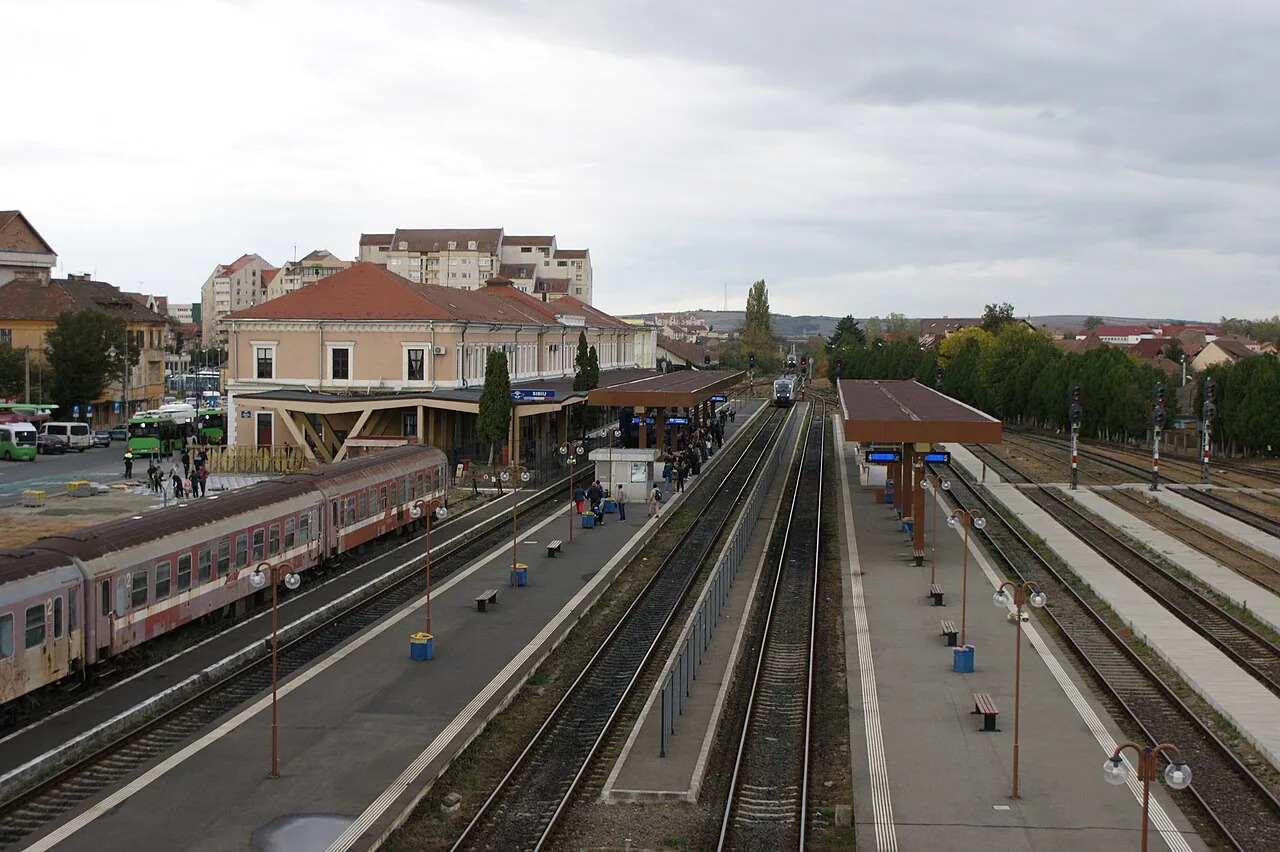
The train is the slow, scenic outlier. There are only a handful of services a day, the fastest sitting around four hours fifty and most taking five and a half to six and a half hours, with some requiring a change at Brasov or Podu Olt. It’s cheap, from about 40 lei in second class, but you pay for that fare in hours. The reason is the route: trains can’t cross the Fagaras range directly, so they run north up the Prahova Valley to Brasov, then west through Fagaras to Sibiu, a big arc that adds far more distance than the road.
So when does it make sense? Really only in two cases. If you love a slow train and want the scenery, the leg from Brasov to Sibiu through the Fagaras foothills is genuinely pretty, and the earlier stretch up the Prahova Valley past Sinaia is the same lovely mountain run you would take to Brasov. And if you were going to stop in Brasov anyway, breaking the journey there and continuing to Sibiu by train can tie two destinations together neatly. For anyone just trying to get from A to B, though, the train is the wrong tool here, which is unusual for Romania.
What about flying, and where does the airport fit?
Skip it. Sibiu has its own airport (SBZ), a handy few kilometres from the centre, but it’s built for international routes, mainly Wizz Air, Ryanair and Austrian to Western Europe, not for a domestic hop from Bucharest. Direct flights on the 260 km inland leg are scarce, pricey and often routed with a connection, and once you add getting to Otopeni, checking in and the transfer at the other end, you have spent longer than the bus for more money. Fly into Sibiu directly from abroad if you can, by all means, but do not try to fly there from Bucharest.
If you’re landing at Bucharest’s Henri Coanda airport (OTP) and Sibiu is your first stop, the smoother option is to skip the city centre entirely. A private transfer collects you at the terminal and drops you at your Sibiu hotel for a fixed price, no coach terminals and no working out which autogara your bus leaves from, in about the same time as driving yourself. It suits groups, anyone with heavy luggage, or travellers who just want to point at the mountains and go. If you have not booked your flights yet, our guide to which airport to fly into for Romania covers OTP and the regional alternatives, including whether flying straight into Sibiu or Cluj saves you a long transfer.
The Olt Valley: the drive is part of the trip
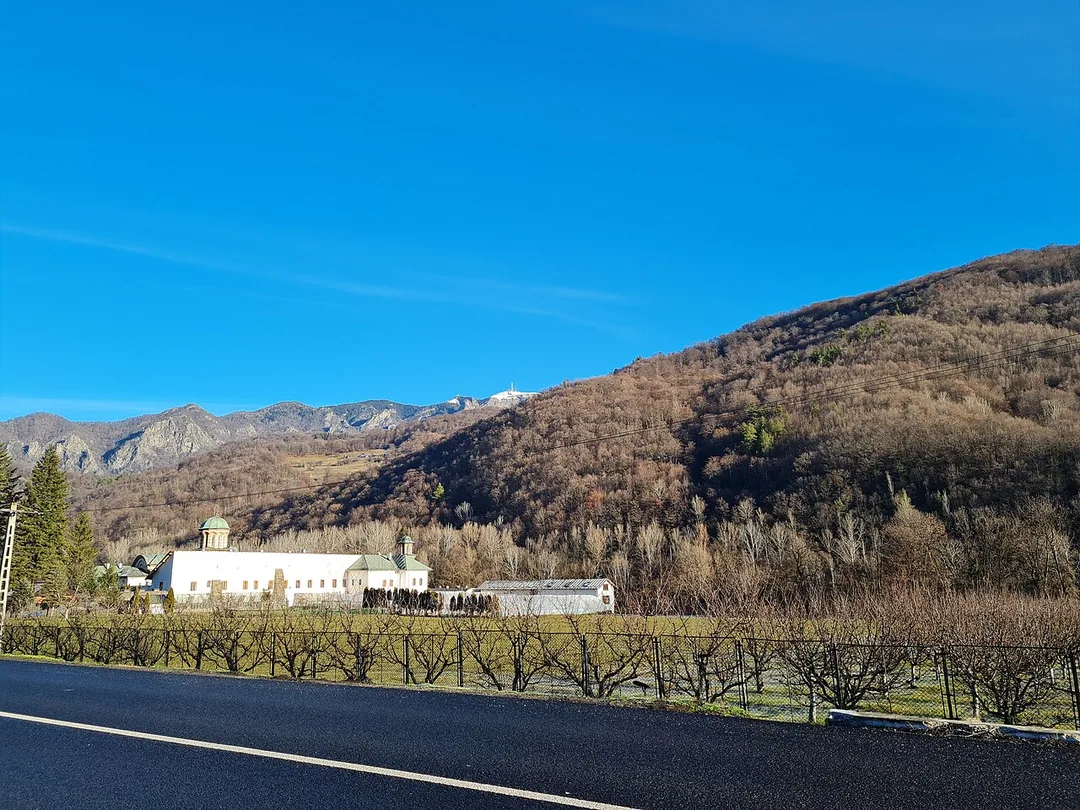
The DN7 up the Olt is worth a word on its own, because it turns the transfer into sightseeing. The river has carved a deep gorge through the Southern Carpathians, and the road threads along the water past wooded slopes, small spa towns and monasteries. The standout stop is Cozia Monastery, a late-14th-century foundation right beside the road near Calimanesti, one of the oldest and most important medieval monuments in the country and an easy leg-stretch on the drive. Break the journey here and the four hours feel like a day out rather than a slog.
This is the real argument for driving or, if you would rather not, for a private transfer that can pause where you like. A coach runs the same road but will not stop for the view, and the train never sees the Olt gorge at all. If scenery matters to you and you’re choosing between the options, that alone can tip the decision toward the road.
Arriving in Sibiu, and where next
However you come, you land within easy reach of one of Transylvania’s loveliest old towns, a set of linked squares under pastel facades with those distinctive eyelid dormer windows watching from the roofs. The bus and train stations sit together a short walk or ride east of the centre; a car is more hindrance than help inside the medieval core, where the streets are narrow and cobbled, so park up and walk. Get your bearings with our guide to things to do in Sibiu, from the Large and Small Squares to the Bridge of Lies and the view from the Council Tower.
Sibiu earns its reputation as a base less for the city itself than for what sits within two hours of it. The Transfagarasan and the Saxon villages are on the doorstep, and Sighisoara and Brasov close the Transylvanian loop; our Romania 7-day itinerary shows how Sibiu links to the castles and the mountains. If you brought wheels, compare a rental for the onward driving; if you would rather be driven door to door, a fixed-price transfer covers the airport run and beyond. Keep a few lei loose either way; the bus, the odd taxi and a coffee on the square still like exact change. Then give the Large Square one evening of your trip - Sibiu is a better city after dark than the daytime photographs let on.
Photos
Admission and opening hours
- Admission price
- Bus roughly 45-210 lei one way depending on operator and date (from about 9 euros). Train from about 40 lei second class, though fares climb on faster services. Driving: fuel plus a road vignette (rovinieta); no tolls on this route.
- Opening hours
- Bus: departures roughly every few hours, fastest about 3h50, typically 4.5-6 hours. Train: a handful a day, fastest around 4h50, usually 5.5-6.5 hours, some with a change. Drive: about 3.5-4 hours on the A1 and DN7, longer when the Olt Valley clogs.
Times and fares change and the DN7 up the Olt Valley backs up on summer weekends. Check CFR Calatori (cfrcalatori.ro) for live train times and the operator for buses before you travel. Checked July 2026.
Details checked: July 8, 2026
Read also

Transport · 14 min read
Bucharest to Budapest: Night Train, Bus & Flights
Verified · September 4, 2026Bucharest to Budapest 2026: CFR night train from 27 EUR, FlixBus from 36.98 EUR in 13h, or a 1h45 flight. Fares, times, border, Oradea stop.

Transport · 9 min read
Bucharest to Sinaia Train 2026: ~1.5h, from 32.5 lei
Verified · August 31, 2026Bucharest to Sinaia by train in about 1.5 hours: fares from 32.5 lei, Peles timing and its 16:00 last entry, and when a transfer wins.

Transport · 10 min read
Cluj to Brasov 2026: Bus 3h40 from 81 lei
Verified · August 28, 2026Cluj-Napoca to Brasov: bus about 3h40 from 81 lei, CFR InterCity about 6h35 from 126,50 lei, drive 275 km in about 4h20. Check before you go.

Transport · 9 min read
Brasov Airport (GHV): Flights & Getting to Town
Verified · August 21, 2026Brasov-Ghimbav (GHV) opened in 2023: who flies, the RATBV A1 bus at 5 lei, taxi and transfers into town. Check the live board.