
Bucharest to Budapest: Night Train, Bus & Flights
Bucharest to Budapest 2026: CFR night train from 27 EUR, FlixBus from 36.98 EUR in 13h, or a 1h45 flight. Fares, times, border, Oradea stop.
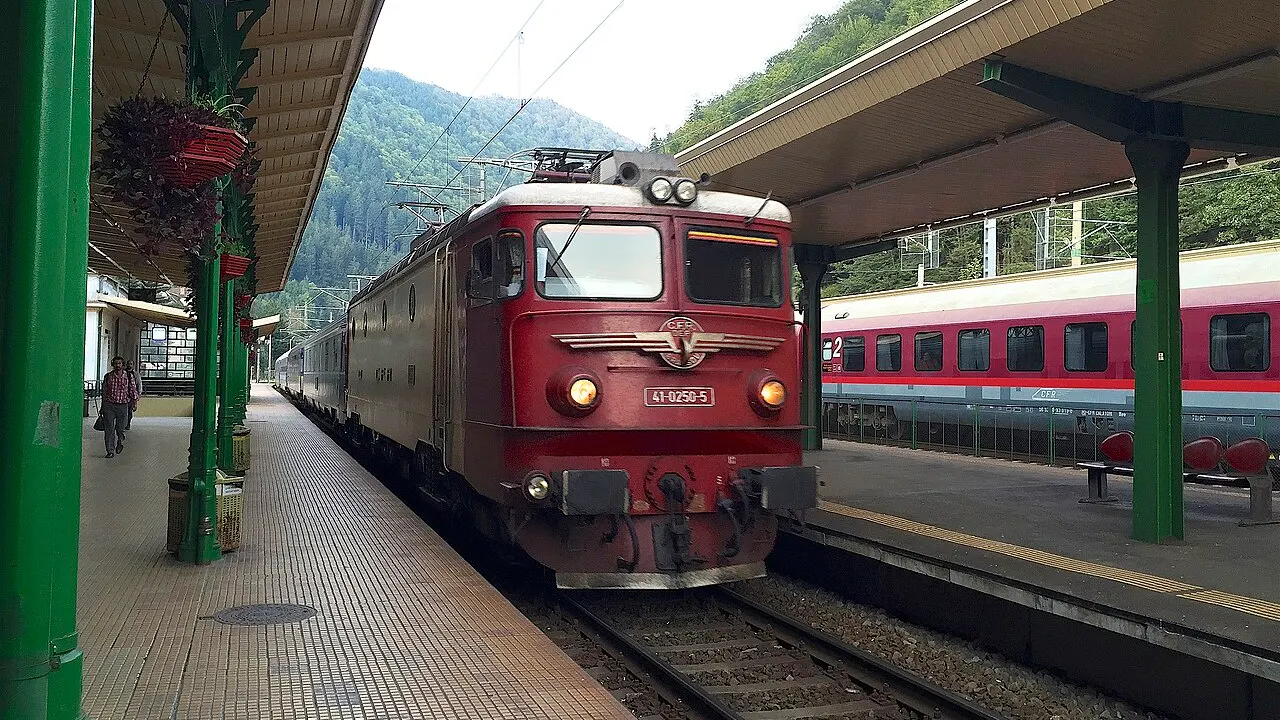
The short answer for most people: take the night train. The Ister (CFR with MÁV) leaves Bucharest Nord at 18:24 and rolls into Budapest Keleti at 08:50 the next morning, so you sleep through the long western haul and wake up in the centre. Romania and Hungary sit an hour apart on the clock all year, so that’s 15 hours 26 minutes on the rails, not the 14 and a half that subtracting the two clock faces suggests. CFR sells the corridor on two different offers: Smart NoFlex Ungaria from 27 EUR if your date is fixed and a seat is enough, Smart SemiFLEX Ungaria from 41 EUR if you want a refundable ticket or a berth. FlixBus starts at 36.98 EUR for 13 hours over 880 km. Flying looks like the time-saver: TAROM’s turboprop is about 1 hour 45 to 1 hour 50 gate to gate, but Otopeni and Budapest airport eat most of that advantage unless you’re connecting onward.
| Time | Cheapest published fare | Notes | |
|---|---|---|---|
| Night train (Ister) | 15h 26, 18:24-08:50 | 27 EUR NoFlex seat, 41 EUR SemiFLEX | Berth booked and paid separately |
| Bus (FlixBus) | from 13 h over 880 km | 36.98 EUR | Six stops in Budapest, read your ticket |
| Flight (TAROM OTP-BUD) | about 1h45-1h50 gate to gate | no published floor, fares move daily | Add airport time at both ends |
| Car | about 9-11 h driving | fuel plus two vignettes | Schengen land crossing, no booth |
The rail and bus numbers above were read on 4 September 2026 on the operators’ own pages: CFR Calatori for the two Hungary offers, MÁV for the Hungarian-side fares, FlixBus for the coach, and the Romanian timetable site infofer for train 472. The flight times come from a schedule aggregator, because TAROM’s own site answers automated requests with a captcha, so take them as a range and confirm with the airline. Fares on every mode move with the date, so re-check before you pay. Inside Romania the same rails and coaches sit in getting around Romania; this page is only the cross-border corridor west.
The Ister night train: sleep, don’t sit
This is the option that turns an awkward transfer into a hotel night you don’t pay for. The named overnight is the Ister - the ancient name for the Danube - listed as IC or IRN 472 westbound and 473 eastbound, run by CFR Calatori with MÁV on the Hungarian side. The official Romanian timetable puts 472 out of Bucharest Nord at 18:24 from platform 10A and into Budapest Keleti at 08:50, with stops that typically include Ploiești Vest, Brașov, Sibiu, Arad, Curtici and Szolnok.
Do the arithmetic properly and that’s 15 hours 26 minutes, not 14h26. Romania keeps EET/EEST, Hungary keeps CET/CEST, and the gap is exactly one hour in both summer and winter, so the hour you appear to save on the clock face is an hour you actually spend on the train. Several route compilations print the shorter figure and then contradict themselves two lines later with a speed of about 58 km/h over 870 km, which only works out at fifteen hours.
Eastbound, 473 normally leaves Keleti at 19:10 - but not this autumn. CFR’s international notice board carries word from the Hungarian railway that between 30 August and 3 November 2026 a list of international trains, 473 among them, departs Budapest Keleti five minutes earlier. For every date in that window the Ister goes at 19:05, reaching Bucharest Nord around 10:37, roughly fourteen and a half hours because the hour comes back to you. Five minutes sounds like nothing until you’re the one jogging down the ramp at Keleti with a rucksack.
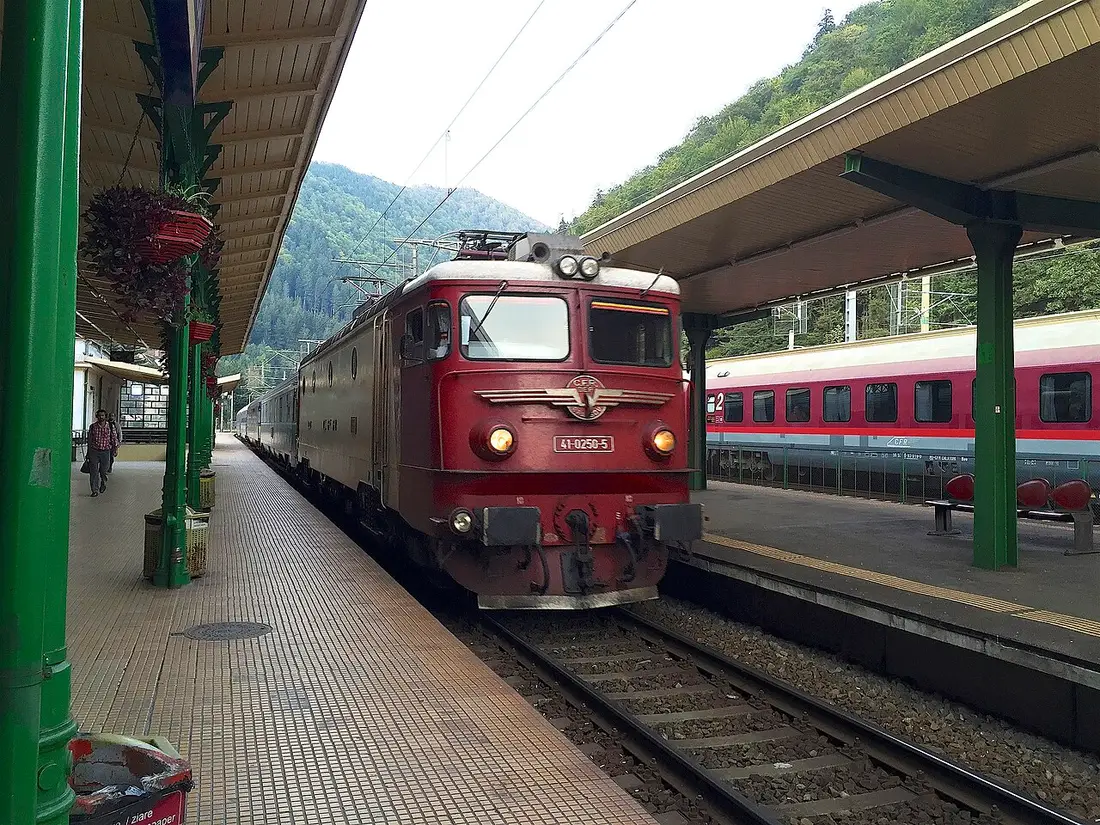
On price, start with CFR’s published offers rather than an aggregator screenshot, and know that there are two of them, not one. Smart NoFlex Ungaria lists Bucuresti Nord - Budapesta from 27 EUR. That’s the cheapest published seat on the whole corridor, under the bus, and it’s cheap for reasons CFR states plainly: the ticket allows neither exchange nor refund, it’s sold up to one day before travel, the seat reservation is paid separately, and it’s not valid in the sleeping car. Smart SemiFLEX Ungaria starts at 41 EUR in second or first class on limited quotas, stays valid for three days, can be refunded before the first day of validity for a 25% fee, and is the fare to buy when you want a bed. Both offers are written for individual travellers and small groups of up to five people, so a party of six or more prices differently.
The Hungarian railway sells the same pair from its own side, and it’s worth comparing: MÁV publishes Budapest to Bucharest from 36.30 EUR on the non-refundable START Europa fare and from 46.70 EUR on the refundable Plus fare, second class. So the ladder is honest and three-rung: 27 EUR upright with no flexibility, 41 EUR changeable and berth-eligible, and the berth itself on top of whichever ticket you hold. Neither railway publishes a fixed supplement for this train. MÁV’s own guide to international night travel gives an order of magnitude across its network - roughly 20 to 100 EUR in a seating car, 40 to 150 EUR in a couchette, 50 to 400 EUR in a sleeper, depending on train, class and how full it is. Book the ticket and the berth together on bileteinternationale.cfrcalatori.ro or at a station that sells international traffic; Hungarian sales go through MÁV Start.
One caveat the timetable itself makes explicit: infofer marks first class, couchettes and sleepers on 472 as running from the first station only as far as Arad, with second class the through class to Budapest. The composition published since December 2025 does show sleepers going the whole way, and the two don’t always agree, so before you plan on a bed and not a seat, confirm at booking that a berth is genuinely on sale through to Keleti on your date. Bring water and a snack either way - a bar car isn’t guaranteed for the whole run.
Track work deserves two minutes before you book. The summer 2026 window that bus-bridged some Timișoara-side services has closed. What’s actually in force now is a road transfer further east: CFR keeps international train 367 on buses between Miercurea Ciuc and Brașov from 25 May to 15 September 2026, with 366, 406 and 407 handled the same way until 16 September, while MÁV describes the same closure from its side as track renewal between Csíkszereda and Brassó from 25 May to 19 September 2026. That section isn’t the Ister’s own diagram, but it sits on the Transylvanian network many travellers connect through, and it’s the same notice board that carries the 19:05 change. Read it for your dates.
The bus: thirteen hours, no rail booking
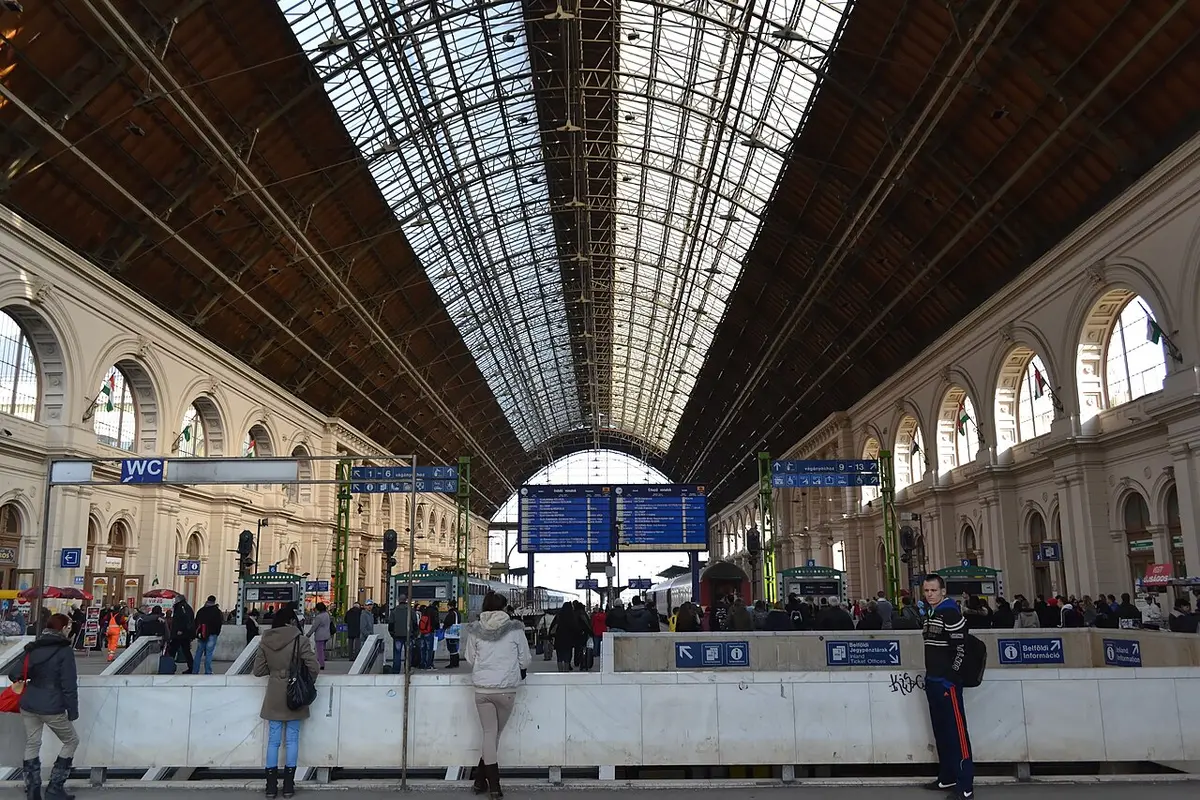
FlixBus is the volume product on this corridor. Its official Bucharest-Budapest route page, read on 4 September 2026, shows a minimum of 13 hours, 880 km, fares from 36.98 EUR, and 11 departures a day running from 03:45 to 23:00. The Bucharest end is named on the page: Autogara Militari, Strada Valea Cascadelor nr. 1, out on the western edge of the city. The Budapest end isn’t a single address at all. The same page counts six bus stops in Budapest, and the ones it names include Kelenföld bus station, Etele tér and a MOL filling station - which is exactly why the stop printed on your ticket is the only one that matters. Coaches are modern, wifi is hit-and-miss, and a neck pillow earns its place on a night departure.
What the bus isn’t is the cheapest way across, whatever the comparison sites imply: CFR’s NoFlex seat undercuts it by nearly ten euros. What the bus does buy is simplicity and choice of hour: eleven runs a day let you leave when it suits you rather than when the overnight goes, there’s no international rail booking to navigate, and there’s no berth to be sold out from under you. It wins when the sleeper is full, when you’re carrying a bag that will never fit a couchette, or when a 03:45 departure genuinely fits your plan. It loses the moment you count a hotel night at either end: thirteen hours upright costs you a day of energy even when the fare wins on paper. Build buffer before any same-evening flight out of Budapest - freight traffic and holiday peaks still slow the western motorway, Schengen or no Schengen.
Flying: when the timetable wins
On paper the plane is obvious, and on paper is where a lot of the numbers stay. TAROM flies OTP (Henri Coandă) to BUD nonstop, and RO231/RO232 are ATR 72-500 turboprops, not jets: corrected for the hour of time difference, the published pattern is roughly 1 hour 50 westbound and 1 hour 45 eastbound, gate to gate. That’s block time, not time in the air - pushback and taxi at two busy airports sit inside it, and no schedule breaks them out for you.
The 1 hour 25 figure that circulates for this route belongs to a different flight entirely: Wizz Air’s jet out of Băneasa (BBU), which Wizz keeps as a regular Budapest service. Different carrier, different aircraft, different Bucharest airport - so check the three-letter code on the booking before you order a taxi to the wrong side of town. Our schedule reference here’s an aggregator, not the airline, because tarom.ro answers automated requests with a captcha, which is one more reason to treat any single minute figure as a range and confirm with the carrier. For how Otopeni fits a wider Romania trip, see which airport for Romania.
Fares swing too hard to print a “from” number that stays true for a week, so compare on the airline site or a flight search the day you decide. The door-to-door arithmetic is what actually settles it. Leave central Bucharest two hours before departure, clear security, spend under two hours in the aircraft, then get from Budapest airport into Pest: BKK runs exactly two buses for that, the 100E Airport Express to Deák Ferenc tér, which needs its own airport ticket at 2500 HUF and doesn’t accept ordinary passes, and 200E, which does run on an ordinary ticket. Add it all up and half a day is gone on a hop the sleeper covers while you’re asleep. Fly when you’re connecting onward, when berths are gone, or when a sale undercuts the train by enough to buy back the airport ritual.
Driving the A1 west
A car makes sense if you’re touring western Romania on the way out - Arad, Timișoara, or a night in Oradea - and less sense as a pure capital-to-capital transfer. Expect roughly nine to eleven hours of driving once you count fuel and food stops, plus a Romanian rovinieta and a Hungarian e-vignette. The motorway border at Nădlac II / Csanádpalota is the busy one; since 1 January 2025 you normally roll through without a passport booth stop because both countries are in Schengen. Rental contracts often restrict or surcharge leaving Romania - sort written permission and a Green Card at pickup, not at the barrier.
The border: Schengen changed the feel of this trip
Older blogs still talk about hour-long queues at Curtici or Nădlac. That world ended for systematic checks when Romania joined the Schengen land border regime on 1 January 2025. The Romanian Border Police’s own 2025 half-year report and its September 2026 daily bulletins state the same rule: travel to Hungary and Bulgaria goes without stopping at Border Police booths, while random checks can still happen up to 30 km from the border. Carry documents anyway - a spot check is perfectly legal, and the sleeper conductor and any airline will ask for them regardless.
Two points matter more if you’re flying in from outside the EU. First, “passport or national ID card” is a European sentence: an American, British, Canadian or Australian traveller has only the passport, so that’s the document that lives in your day bag, not in the case on the luggage rack. Second, this is an internal Schengen crossing, so nobody stamps you in or out - and that cuts both ways. The nights you spend in Hungary keep counting against the same 90 days in any 180 that Romania is already drawing down, and no stamp means no paper trail proving otherwise on the way home. Plan the whole trip as one Schengen clock. This corridor is nothing like the Moldova or Serbia runs, where you’re genuinely leaving the external line.
Stop in Oradea if the journey is the trip
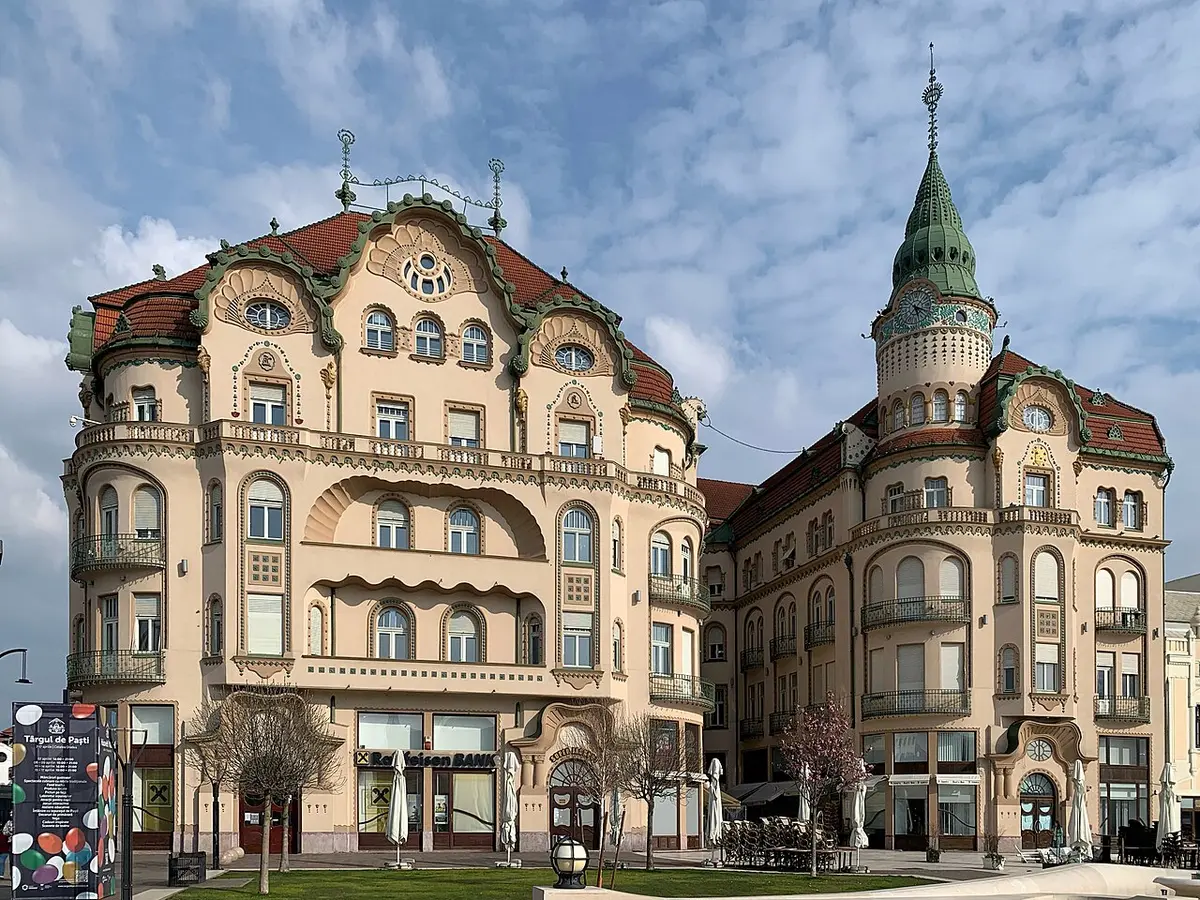
If you’re not racing a meeting in Pest, break the westbound haul in Oradea. It sits on the Hungarian frontier with a restored Art Nouveau centre - the Black Eagle Palace arcade, the Crisul Repede frontage, the Baile Felix spa resort a short ride outside town - and it turns a transfer into a proper two-capital itinerary. Getting there off this very train is easier than most people expect: the Ister detaches a group of coaches at Arad, and they run on as IRN 1743 to reach Oradea at 08:28. That’s a through carriage rather than a connection - you board in Bucharest and step off in Oradea without changing trains. Portions do move between timetable changes, so check the day’s diagram when you book. The city guide is here: Oradea travel guide.
Money and practical bits
You’ll leave a leu (RON) country and arrive in a forint (HUF) one; neither is the euro, even though both railways quote these international offers in euros. Cards work on FlixBus, CFR online sales, airlines and most Budapest transport, but keep a little cash for station snacks, and remember that the 100E airport ticket is its own product and not part of a travelcard. Phone data: Romanian SIMs usually roam in Hungary under EU rules if you’re on an EU plan - confirm with your provider before you rely on it. Station orientation: Gara de Nord for the sleeper, Autogara Militari for the coach unless your ticket says otherwise, OTP or BBU for flights, and Keleti on arrival by rail.
Pick your mode
Book the Ister and pick the fare that matches your risk: 27 EUR NoFlex when the date is fixed and a seat is enough, 41 EUR SemiFLEX when you want the ticket to stay changeable or you want a berth, with the reservation paid on top either way. Take FlixBus at 36.98 EUR when the berths are gone, when you want a departure hour the overnight can’t offer, or when you would rather skip international rail booking altogether - just don’t take it because somebody told you it was the cheapest, because at 27 EUR the train is. Fly when the diary is tight or a sale makes Otopeni worth the ritual, remembering the ATR is a two-hour block and not a 1h25 hop. Drive only if western Romania is part of the holiday rather than the transfer. Whichever you choose, the border itself is the easy part now: Hungary and Romania share Schengen, so the hard decision is the seat, not the stamp.

Photos
Admission and opening hours
- Admission price
- Night train, two CFR offers: Smart NoFlex Ungaria from 27 EUR (no exchange, no refund, not valid in the sleeping car) or Smart SemiFLEX Ungaria from 41 EUR (refundable before the first day of validity, berth allowed). Seat, couchette or sleeper reservation is paid on top of either. MÁV prices the same pair from 36.30 EUR (START Europa, non-refundable) or 46.70 EUR (Plus, refundable), 2nd class. Both CFR offers apply to individual travellers and groups of up to five. FlixBus: from 36.98 EUR one way, about 13 hours over 880 km. Flights OTP-BUD: fares move daily, check the airline. Rail and bus figures read on operator pages 4 September 2026.
- Opening hours
- Ister night train (IC/IRN 472): Bucharest Nord 18:24, platform 10A, into Budapest Keleti 08:50 next morning - 15h26, because Romania and Hungary are one hour apart. Eastbound 473 leaves Keleti at 19:05 between 30 August and 3 November 2026, five minutes earlier than the usual 19:10, and reaches Bucharest Nord around 10:37. Confirm on CFR, infofer or MÁV for your date. FlixBus: 11 departures a day, first 03:45, last 23:00. Flights: TAROM OTP-BUD about 1h45-1h50 gate to gate; other carriers and Băneasa vary by season.
Romania and Hungary are both in the Schengen Area. Systematic land border controls were dropped on 1 January 2025; random checks can still happen up to 30 km from the border. Visitors from outside the EU: carry your passport, and note this is an internal crossing with no stamp, so Hungarian days count against the same 90 days in any 180. Track work in force: international train 367 runs with a road transfer between Miercurea Ciuc and Brasov from 25 May to 15 September 2026, with 366, 406 and 407 handled the same way to 16 September. Prices and times change: check CFR Calatori, FlixBus and the airline before you travel. Checked 4 September 2026.
Details checked: September 4, 2026
Read also

Transport · 9 min read
Bucharest to Sinaia Train 2026: ~1.5h, from 32.5 lei
Verified · August 31, 2026Bucharest to Sinaia by train in about 1.5 hours: fares from 32.5 lei, Peles timing and its 16:00 last entry, and when a transfer wins.

Transport · 10 min read
Cluj to Brasov 2026: Bus 3h40 from 81 lei
Verified · August 28, 2026Cluj-Napoca to Brasov: bus about 3h40 from 81 lei, CFR InterCity about 6h35 from 126,50 lei, drive 275 km in about 4h20. Check before you go.

Transport · 9 min read
Brasov Airport (GHV): Flights & Getting to Town
Verified · August 21, 2026Brasov-Ghimbav (GHV) opened in 2023: who flies, the RATBV A1 bus at 5 lei, taxi and transfers into town. Check the live board.

Transport · 9 min read
Bucharest to Iasi 2026: Fly 1h, Train 6h18
Verified · August 18, 2026Bucharest to Iasi: fly 50 min to 1h10 on Tarom or Animawings, CFR from 6h18, coaches from 75 lei. Confirm before you go.