
Oradea Travel Guide: Art Nouveau on the Border
What to see in Oradea: Union Square, the Black Eagle Palace and Secession facades, the Moon Church, the fortress and Baile Felix spa, prices in lei.
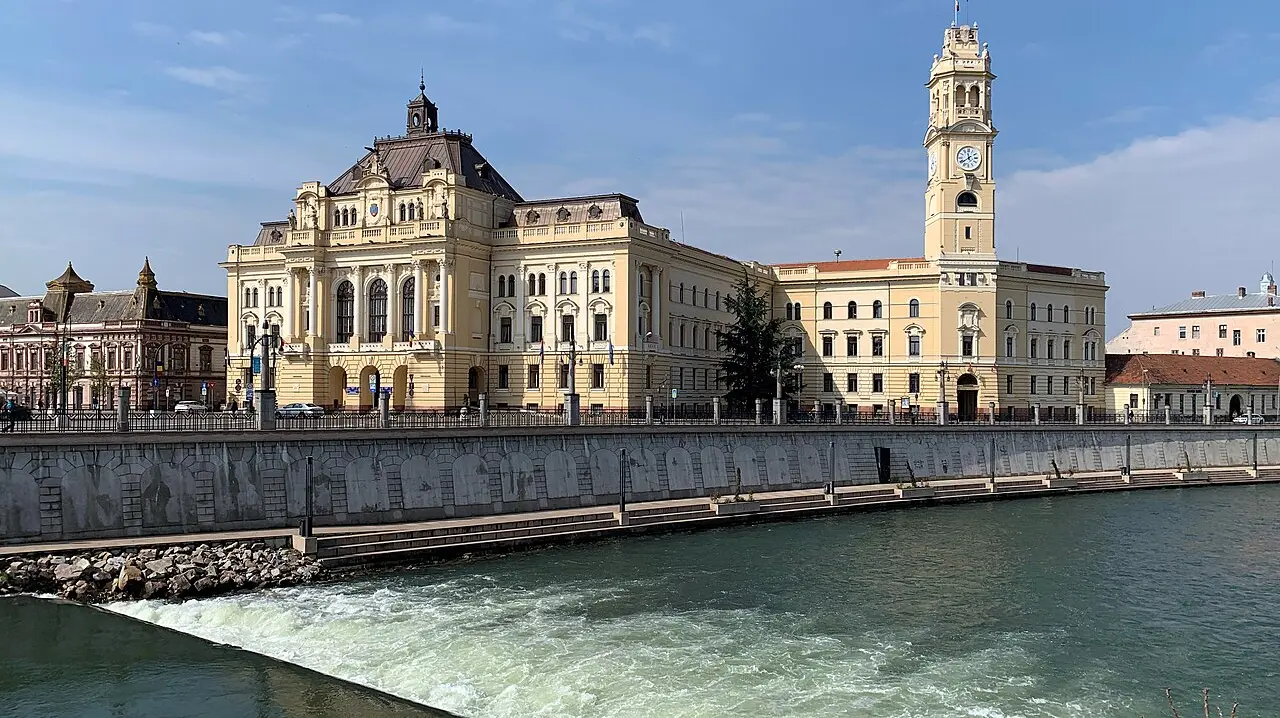
Oradea is Romania’s Art Nouveau town, a compact, pastel-coloured city right on the Hungarian border that almost nobody puts on a first trip and probably should. The pull is the architecture: a centre packed with Secession-era facades, the extravagant Black Eagle Palace with its stained-glass arcade, and a Baroque quarter with the biggest Baroque church in the country. Add the thermal spa at Baile Felix eight kilometres away and you have an easy day or two, and since Romania joined full Schengen in January 2025 you can now drive over from Hungary without stopping at all.
Oradea takes a predictable shape. It’s a looks town, not a checklist of blockbuster sights, so you come to walk Union Square, climb the City Hall tower, poke through the fortress and then eat and soak. One full day covers the centre; a second buys you the spa or a slower crawl of the facades. It works best as a first or last stop for anyone flying into Budapest, and as the natural western gateway if you’re heading on to Maramures or Cluj.
Many drivers finish the Apuseni loop from Cluj here - plan an overnight before the run back.
Is Oradea worth visiting?
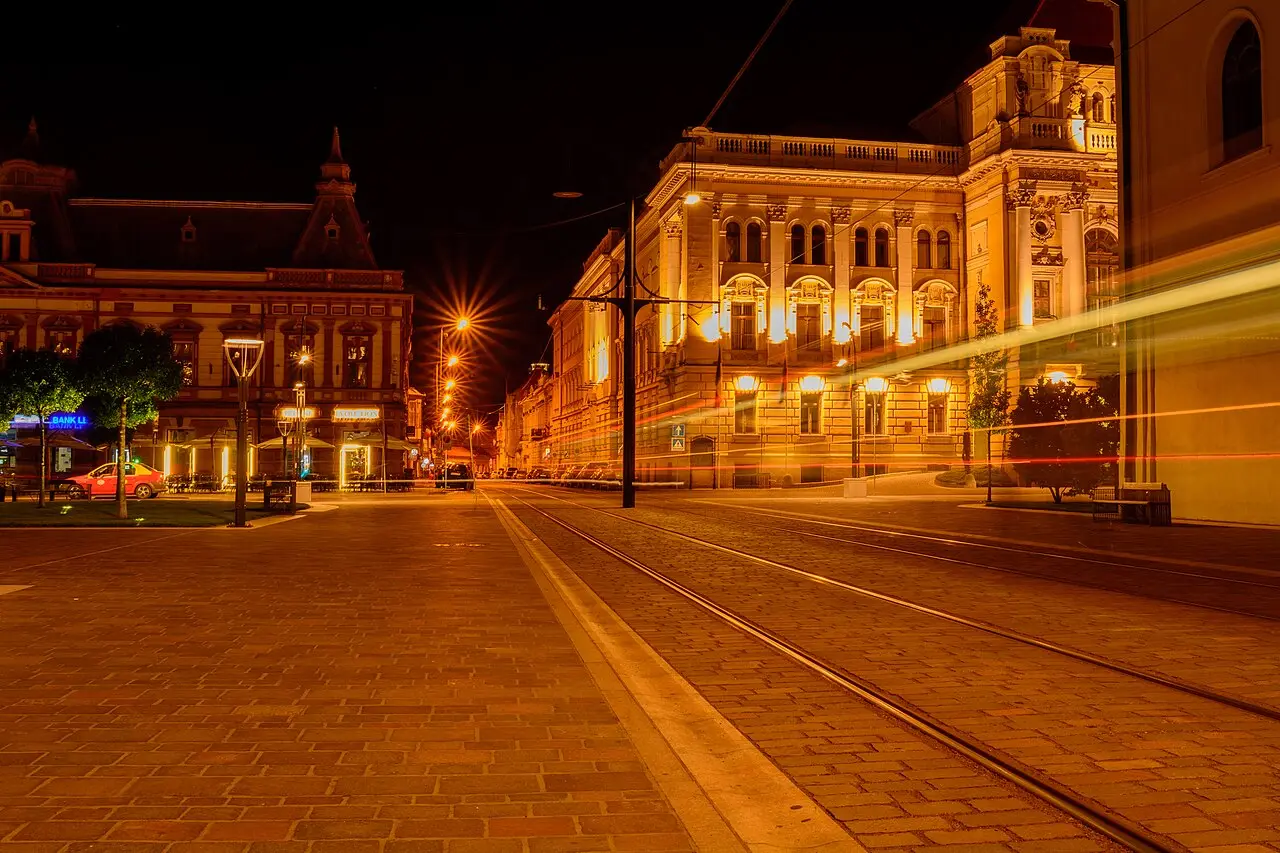
Yes, if you like architecture and hate crowds, and it’s one of the most under-visited good-looking cities in Romania. The centre was largely rebuilt around 1900, when Oradea was a wealthy town on the edge of the Austro-Hungarian empire, and the money went into Secession and eclectic buildings that have since been scrubbed back to their pale pinks, blues and greens. It’s a member of both the Reseau Art Nouveau Network and the Art Nouveau European Route, which is the polite way of saying it belongs in the same conversation as Vienna, Budapest and Riga for this style, without any of the queues.
What it’s not is a Transylvanian fairy tale. There’s no clifftop castle and no medieval old town of the kind you get in Sighisoara or Sibiu. Oradea sits in the flat Crisana plain, split by the Crisul Repede river, and its appeal is urban and elegant rather than dramatic. If you want turrets, go south. If you want to wander a beautifully restored belle-epoque city, drink good coffee under a stained-glass eagle and finish in a thermal pool, this is a genuinely rewarding stop that most itineraries skip.
What is the Black Eagle Palace, and can you go inside?
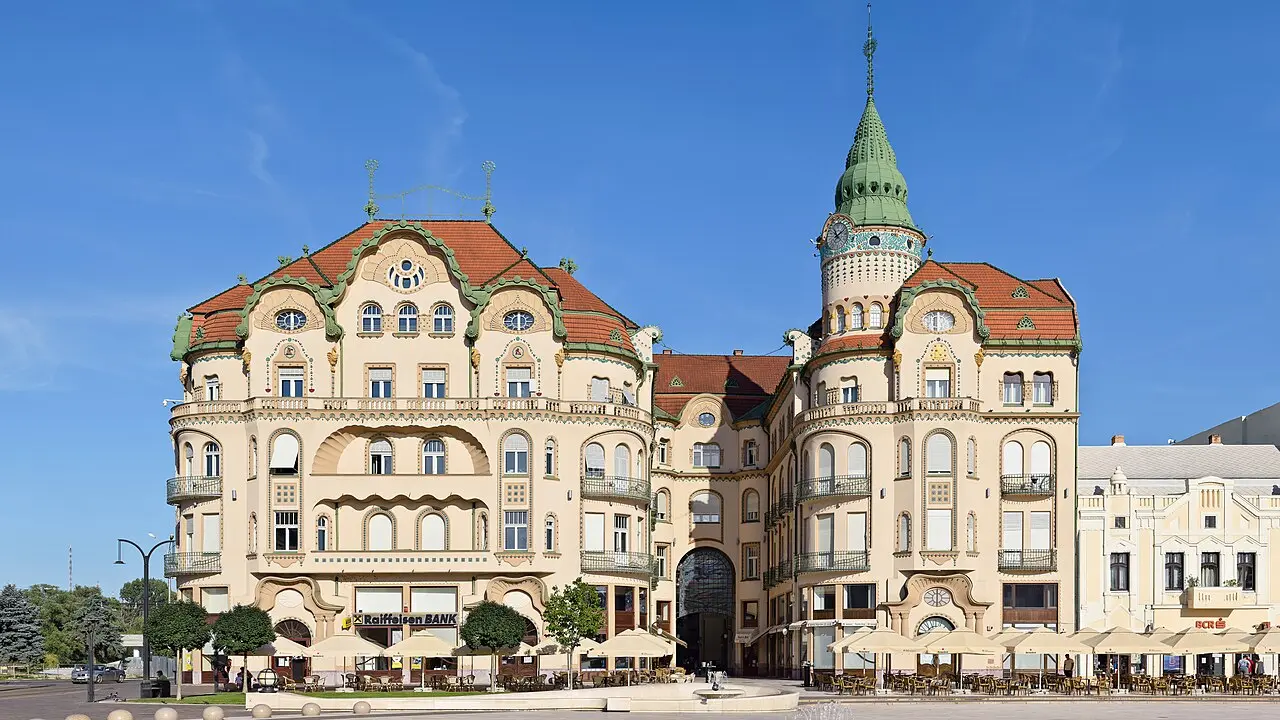
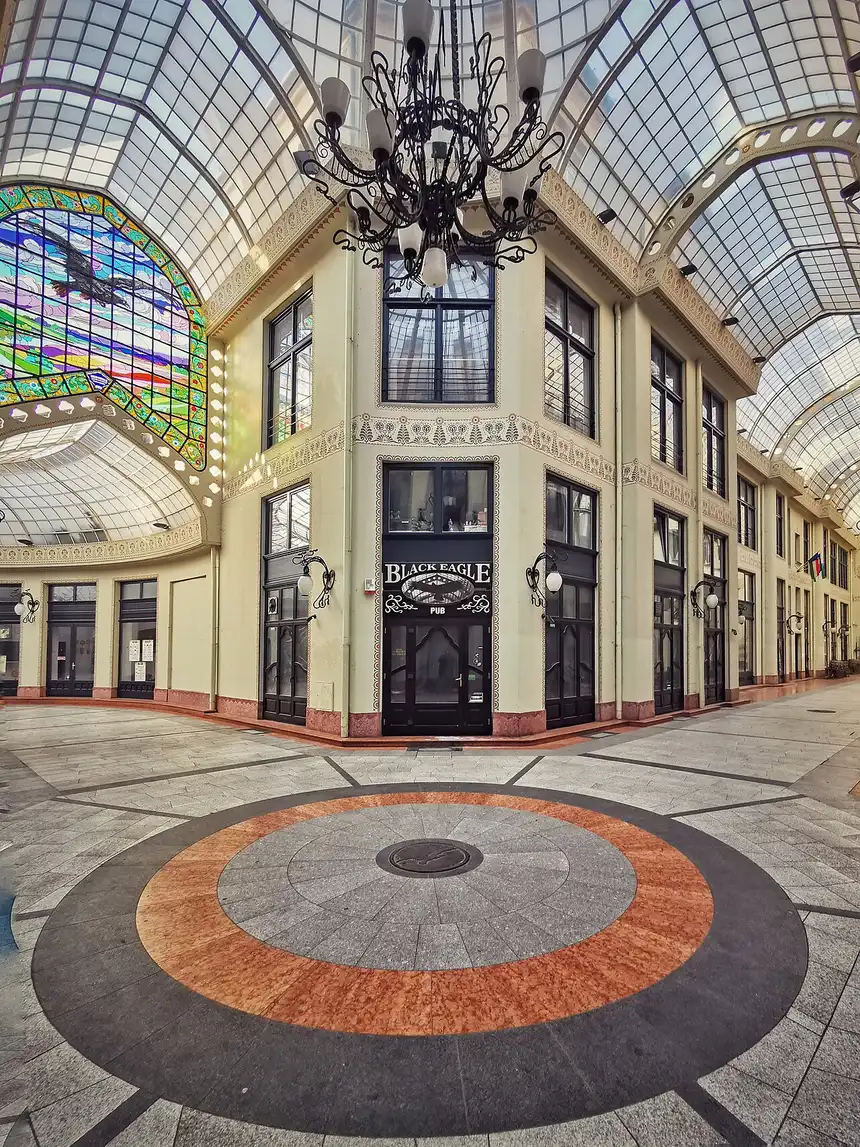
The Black Eagle Palace (Palatul Vulturul Negru) is the building people come to Oradea for, and yes, you can walk straight through it for free. It’s the city’s Secession showpiece, built between 1907 and 1908 and opened in 1909, designed by the Budapest architects Dezso Jakab and Marcell Komor for the entrepreneur team behind it. The trick of the place isn’t the street facades but what is hidden inside: a Y-shaped glazed arcade that cuts through the block and links three separate streets, roofed in glass and modelled on the Galleria Vittorio Emanuele in Milan.
The detail everyone photographs is overhead. Where the arms of the arcade meet, a stained-glass panel shows a black eagle flying over green hills, made in 1909 in the K. Neumann glass workshop as the emblem of the whole complex, and it still hangs there. The ground floor was built for 35 shops and today the passage is the city’s going-out hub, lined with cafes, bars and restaurants under that glass roof. Access is free and around the clock; only the offices and upper interiors are closed to the public, so treat it as a covered street to stroll rather than a ticketed museum.
What else is on Union Square?
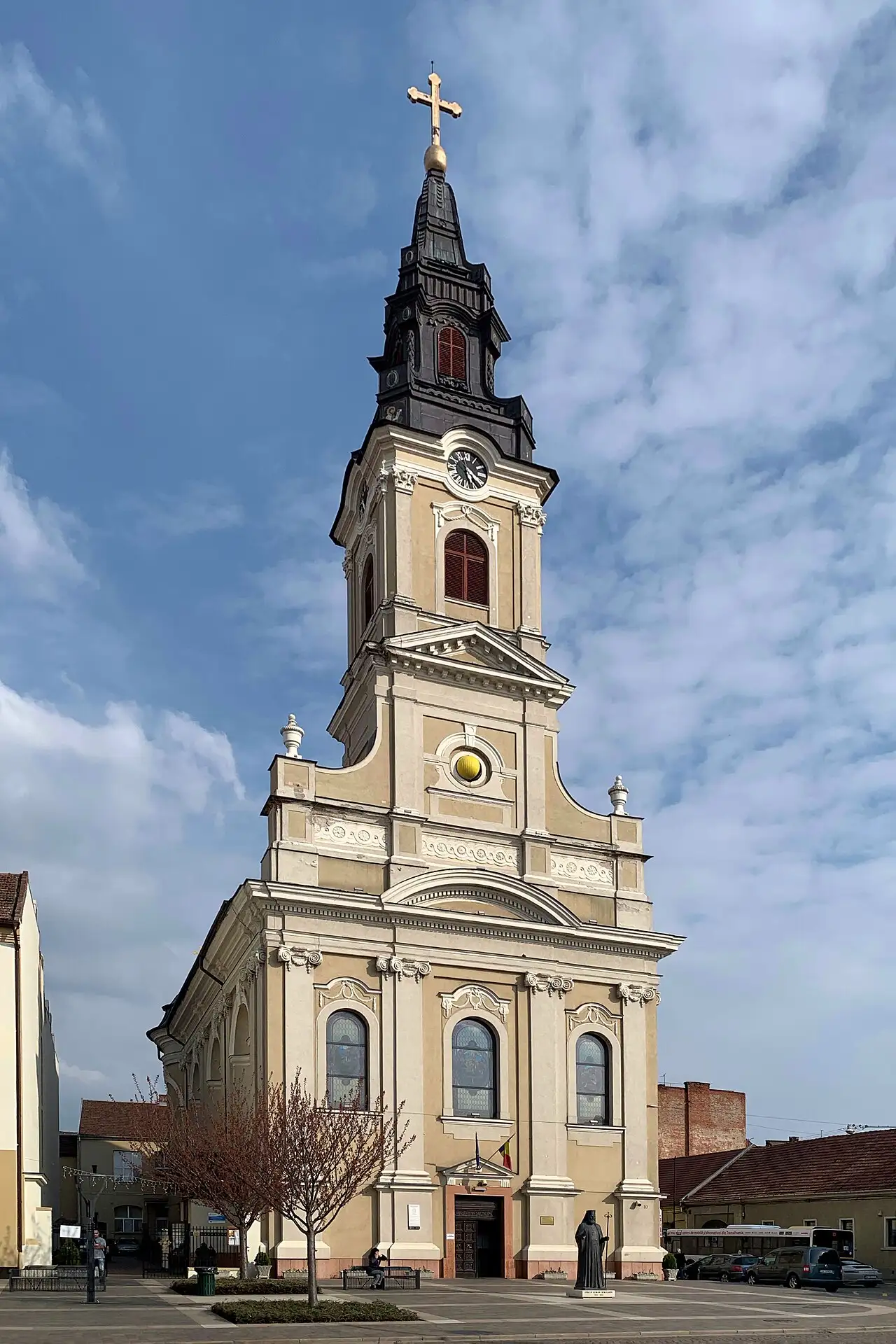
Union Square (Piata Unirii) is the set-piece, a wide riverside square that guidebooks like to say holds seven architectural styles at once, and the fun is just standing in the middle of it. The strangest building is the Moon Church (Biserica cu Luna), an Orthodox cathedral finished in 1790. Set into its tower is a mechanism from 1793, built by a local named Georg Rueppert, that turns a large sphere painted half gold and half black. It makes one full rotation every 28 days to show the phase of the moon, and there isn’t much else like it working on a church anywhere in Europe. Look up at the tower and you can read the moon at a glance.
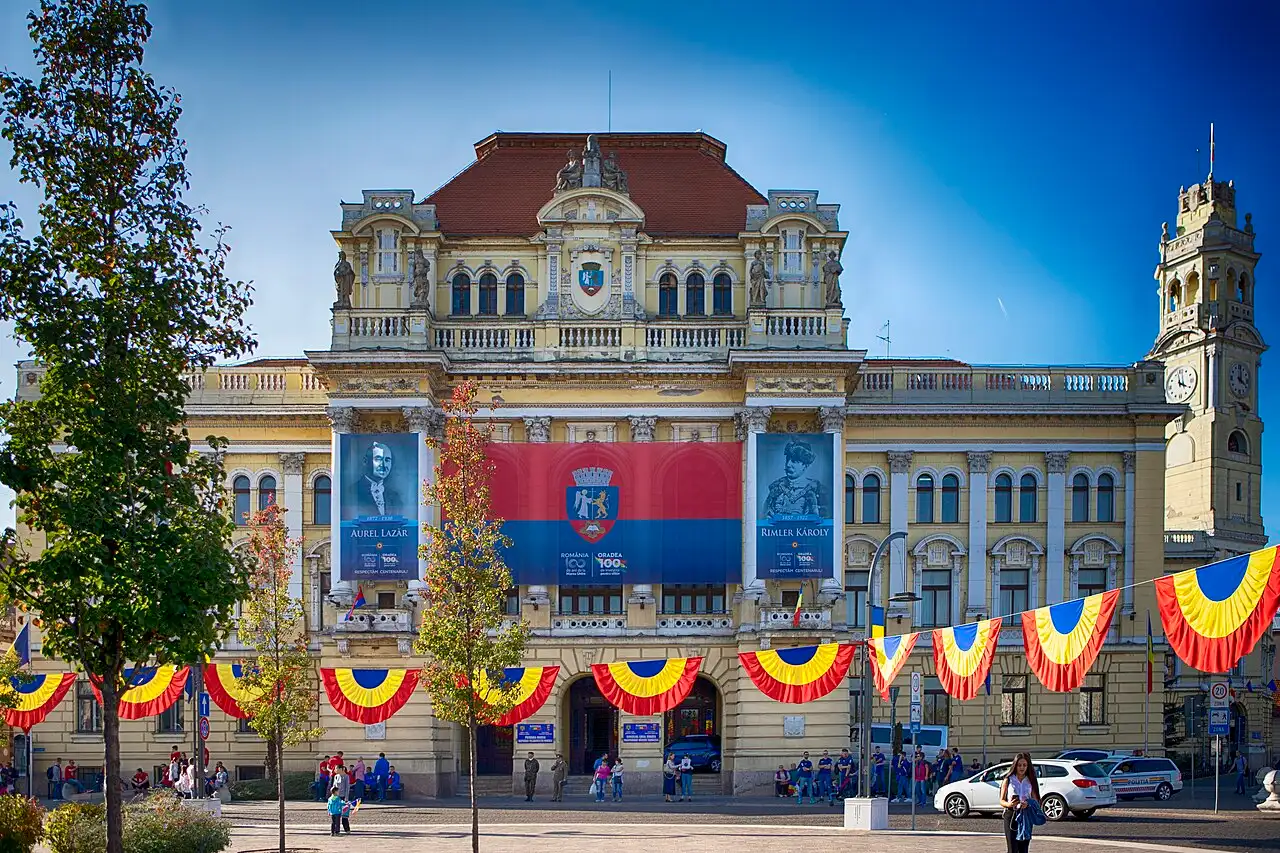
Around the square sit the rest of the cast: the Greek Catholic Bishop’s Palace of 1903, a wild mix of neo-Romanesque, neo-Gothic and neo-Byzantine, and the City Hall across the river with its tower. The best thing you can actively do here is climb that tower. It stands about 50 metres, and 250 steps take you up past the “mother clock” - which plays a snatch of an 1849 revolutionary march, Marsul lui Iancu, on the hour - to three panoramic levels looking over the centre and the Crisul Repede. It’s open Tuesday to Sunday, 10:00 to 18:00, and it’s the single best view in town.
Is the fortress worth an hour?
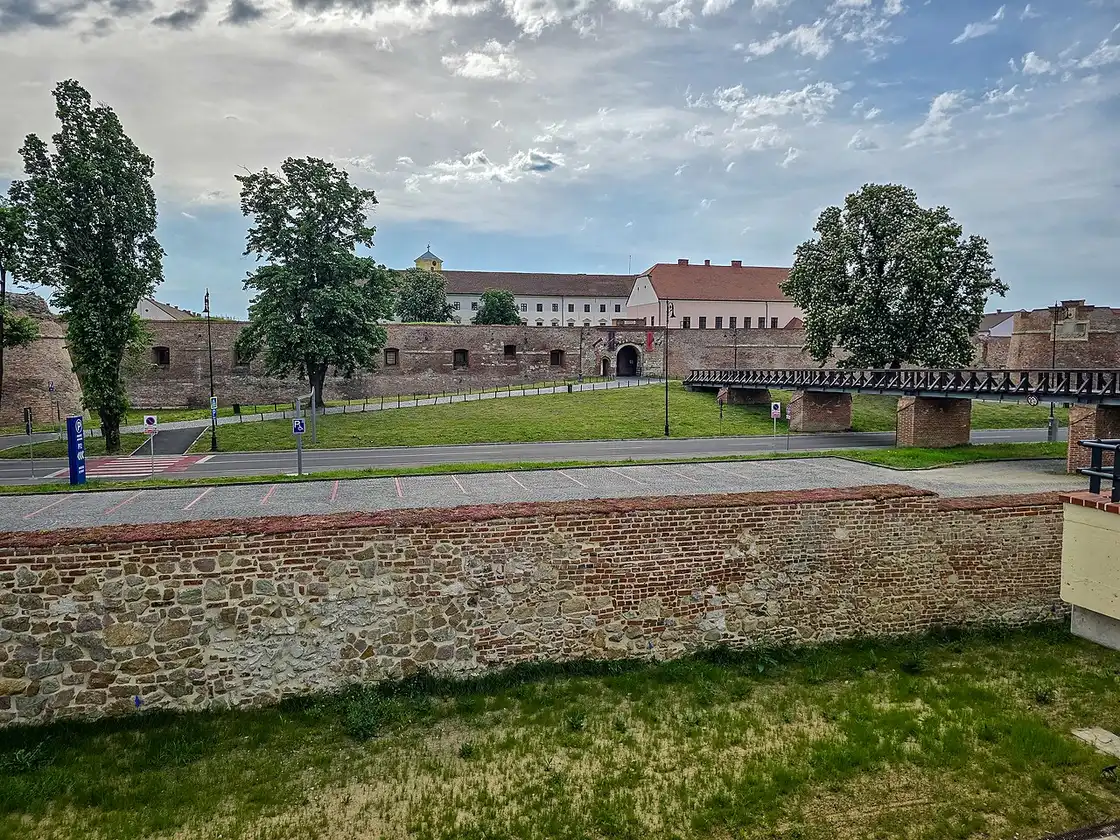
It is, as long as you know it’s a restored civic space and not a ruin to clamber over. Oradea Fortress (Cetatea Oradea) began in the 11th century as the fortified seat of a Catholic bishop, and over the centuries it was rebuilt into the pentagonal, five-bastion star you walk today. Most of what stands comes from a long building campaign between the 1560s and 1618, when Italian military engineers reshaped it against Ottoman attack; the individual bastions carry dates from 1569 to 1618. It’s one of the few star fortresses of its kind left in this part of Europe, and it sits oddly in the middle of the city rather than on a hill.
Inside, the Princely Palace now holds the Museum of Oradea City, which runs through the archaeology and history of the citadel, and there are smaller draws like a Bread Museum and a memorial to the victims of the communist repression in the region. Entry to the museum is cheap - 15 lei for adults and 5 lei reduced for children over four, students and pensioners - and it keeps the usual Romanian museum hours, closed Mondays, roughly 10:00 to 18:00 in summer and 09:00 to 17:00 in winter. The real pleasure, though, is free: the grassy inner courtyards and brick ramparts are open to wander, and on a warm evening locals drift through them.
Where is the Baroque side of the city?
A short way north of the centre, across the river, Oradea keeps its other great set of buildings, and they’re as heavy and grand as the Secession quarter is light. The Roman Catholic Basilica of St Mary is the headliner: a twin-towered church completed in the 18th century and counted as the largest Baroque church in Romania, all pale stone and space inside. Next to it curves the Baroque Palace, the former residence of the Roman Catholic bishops, a U-shaped building from around 1770 to 1780 with something on the order of a hundred rooms. It now houses the Museum of Cris Land (Muzeul Tarii Crisurilor), the big regional museum, so you can see both the outside and a good chunk of the inside.
This corner repays the twenty-minute walk even if you don’t go into the museum, because the scale is a genuine surprise in a city this size. Between the Baroque palace here and the Secession palace on Union Square, Oradea gives you two completely different high-water marks of European taste within a couple of kilometres of each other, which is really the whole argument for the place.
Should you go to Baile Felix?
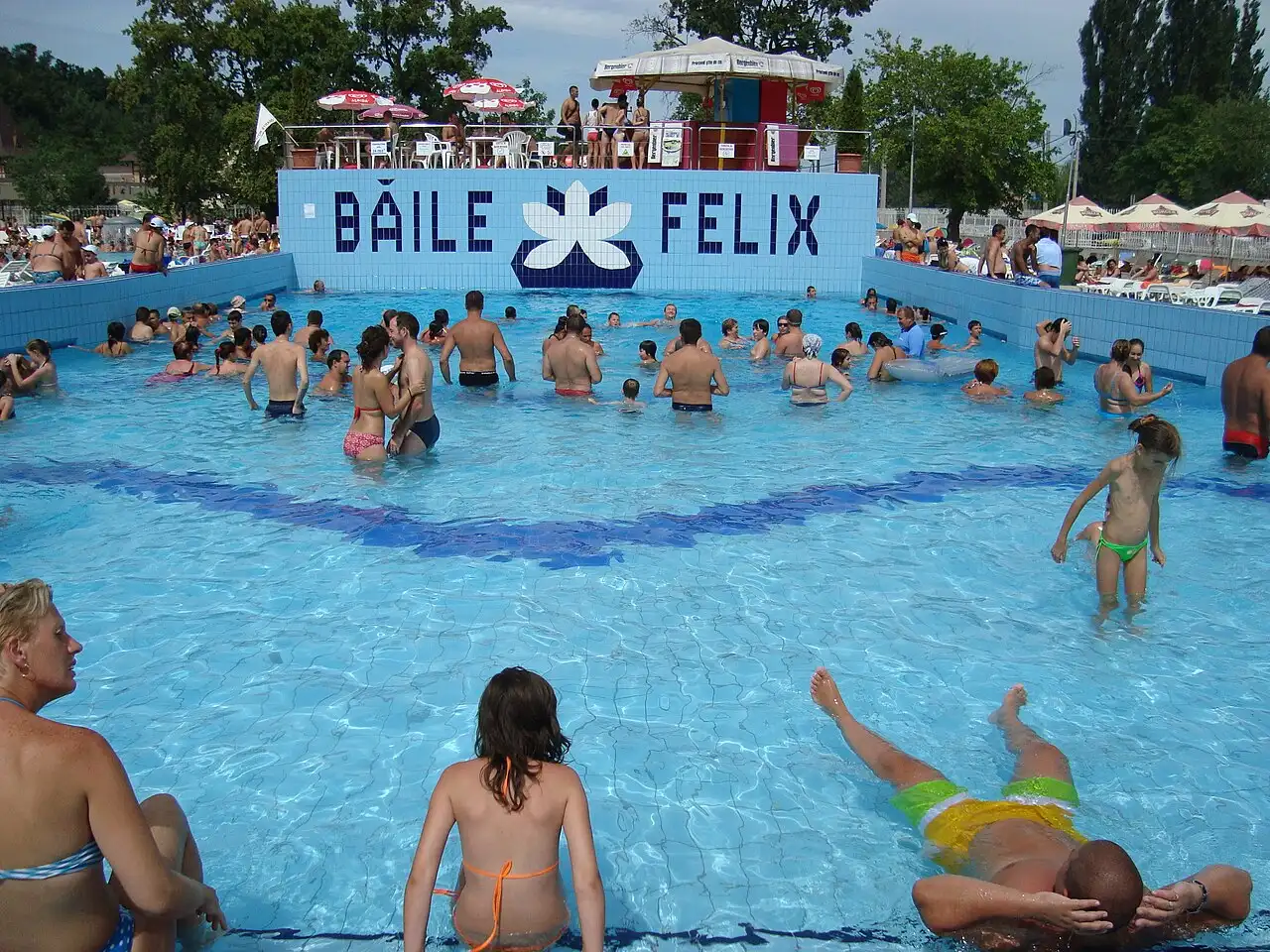
If you want to slow down for an afternoon or a full day, yes, and it’s the easiest add-on in the region. Baile Felix is Romania’s largest spa resort, sitting about eight kilometres south of Oradea, and it runs on genuine thermal water that comes out of the ground between roughly 20 and 48 degrees Celsius. The resort has a curiosity of its own: its thermal lakes grow a rare subtropical water lily, Nymphaea lotus thermalis, a relict species that survives here because the water stays warm all year. It’s a proper old-school cure town, more health resort than party pool, and locals go year-round.
For something splashier, the Nymphaea Aquapark on the edge of Oradea is fed by the same geothermal water and runs 15 pools, 10 slides, a wave pool and half a dozen saunas, open through the winter thanks to the warm supply. Between the two you can pitch the day at whatever pace you like: a quiet soak among the water lilies at Felix, or a full day of slides closer to town. One note on money - I am not quoting entry prices here because they change with the season and the package, so check the Nymphaea and Baile Felix websites for the current rates first.
How do you get to Oradea?
The quiet secret of Oradea is that its handiest airport isn’t even in Romania. The city sits about 10 km from the Hungarian border, and since 1 January 2025, when Romania joined full Schengen and land-border checks with Hungary were lifted, driving over from the Hungarian side is a non-event with no passport queue at the Bors crossing (checked July 2026 - the change is recent, so it is worth a quick look that nothing has shifted). That makes flying into Budapest, roughly 250 km and under three hours away by car, a real option, and there are trains on the corridor too, usually with a change on the Hungarian side. If you’re linking Bucharest with Hungary instead, Bucharest to Budapest covers the Ister night train, FlixBus and flights - and Oradea sits on some of those land routes.
Oradea does have its own airport (OMR), about 6 km from the centre, but the network is thin, so most foreign visitors arrive by road or rail from Hungary or from elsewhere in Romania. From Cluj-Napoca it’s around 150 km by road, a drive of a bit over two hours; take the car or the bus rather than the train, which crawls over the hills for five hours or more, the same slow-rail story you meet all over the country. Once you’re here the centre is flat and walkable, so a car earns its keep mainly for Baile Felix and for onward driving.
If you’re stitching Oradea into a bigger trip, it’s the classic western doorway. Head east and it links naturally to Cluj-Napoca and the Transylvania road trip; head northeast over the hills and you reach the wooden churches of Maramures, for which Oradea makes a sensible first night off the plane; and head south down the border and you reach Timisoara, the grand Habsburg capital of the Banat. To see where a western entry fits into a full week, our Romania 7-day itinerary lays out the standard loop through the castles and cities. And if you’re crossing the other way, over into Hungary, the border here is now as seamless as any inside the EU.
Photos
On the map
The map loads on click - to keep the page lightweight.
The map didn’t load. Check your connection and refresh the page.
Admission and opening hours
- Admission price
- Oradea Fortress museum (Museum of Oradea City) permanent exhibition 15 lei adults, 5 lei reduced (children over 4, students, pensioners); the courtyards themselves are free to walk. The Black Eagle Palace arcade is free and open around the clock. City Hall Tower charges a small ticket for the climb.
- Opening hours
- Fortress museum Tue-Sun (closed Monday), 10:00-18:00 from 1 April to 31 October, 09:00-17:00 from 1 November to 31 March; sources differ on last entry (30 to 60 minutes before closing), so do not cut it fine. City Hall Tower Tue-Sun 10:00-18:00 (ticket office closes 17:30).
Prices and hours change with the season - confirm on oradeaheritage.ro and the museum site before you go. For the Nymphaea aquapark and the Baile Felix pools, check the resort websites for current tickets, which I have not quoted here because they shift.
Details checked: July 5, 2026
Read also

Cities · 13 min read
Predeal: Romania's Highest Ski Town
Verified · September 3, 2026Predeal sits at 1,030-1,110 m on the Bucharest-Brasov line: Clabucet ski, the town itself, and how it stacks up against Sinaia and Poiana.

Cities · 10 min read
Suceava Travel Guide: Fortress & Bucovina Gateway
Updated · August 25, 2026Things to do in Suceava: Stephen the Great's fortress, the UNESCO Saint John monastery, village museums, and using the city as a base for Bucovina.

Cities · 9 min read
Where to Stay in Sighisoara: Citadel or Lower Town
Verified · August 24, 2026Where to stay in Sighisoara: citadel vs Lower Town, price bands in lei, parking, the medieval festival, and who should sleep inside the walls.

Cities · 11 min read
Where to Stay in Timisoara: Best Areas & Hotels
Verified · August 19, 2026Where to stay in Timisoara: Cetate vs Fabric vs Iosefin vs Circumvalatiunii - who each suits, walk times, prices in lei, and getting in from the airport.