
Best Food in Sibiu: Traditional & Modern Restaurants
Where to eat in Sibiu: cellar cooking at Crama Sibiul Vechi, neo-Romanian at Kombinat, the Marginimea cheeses and Sibiu salami, with prices in lei.
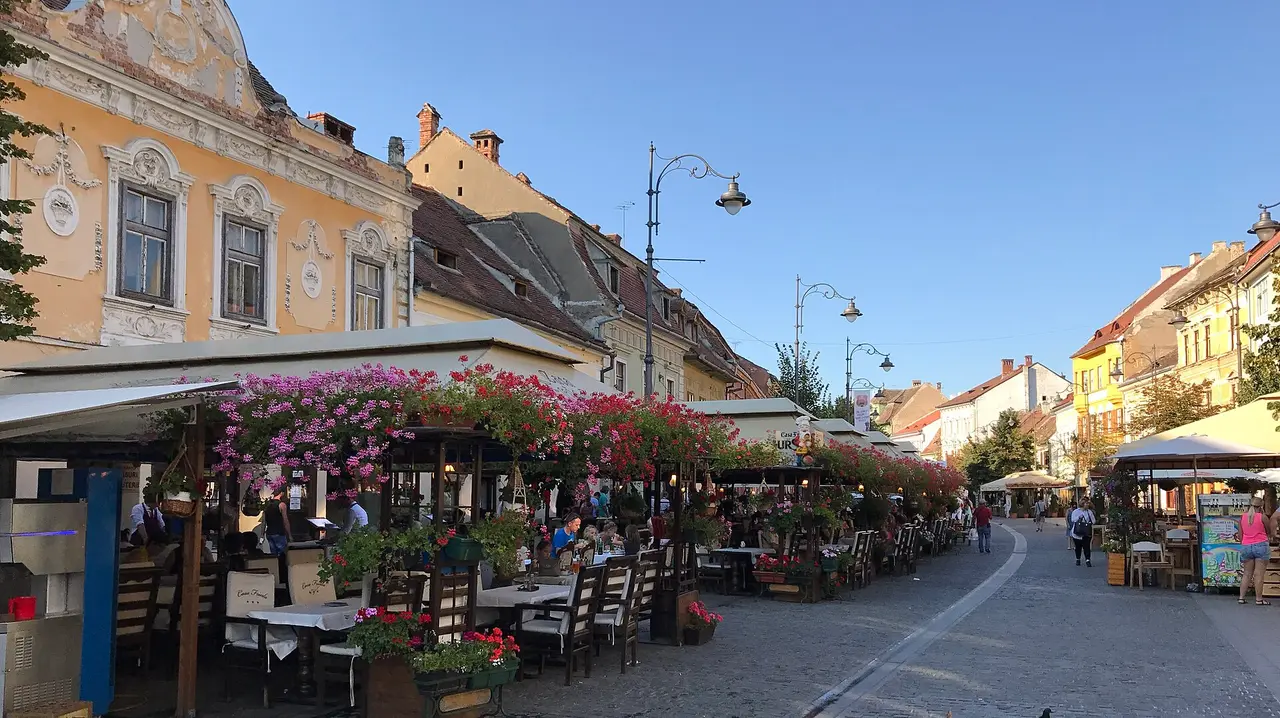
Eat one meal in a cellar and one above ground and you’ve Sibiu covered. Crama Sibiul Vechi is the traditional benchmark, a vaulted cellar doing tripe soup, smoked pork with polenta and chicken in mustard sauce; Kombinat is the modern counterpart, a gastro-brewery cooking neo-Romanian food from local suppliers. Kulinarium on the Small Square handles the middle ground, La Cuptor is the wood-fired name locals rate for an easy, high-quality meal, and the thing to actually order here comes from the hills west of town: sheep cheese from the Marginimea villages, in a soup, melted into bulz or sliced next to a plate of cured mutton.
Sibiu punches above its size because the county held the title of European Region of Gastronomy in 2019, and the effort didn’t evaporate afterwards. Two local products carry protected geographical status, Salam de Sibiu and Telemea de Sibiu, and the shepherd villages of the Marginimea keep a real supply chain of cheese and cured meat running into the city’s kitchens. What you get is a compact old town where traditional cellars, a strong brewery-restaurant scene and a couple of genuinely ambitious kitchens sit five minutes apart.
Crama Sibiul Vechi: the traditional benchmark
If you eat once in Sibiu, eat here. Crama Sibiul Vechi is an old cellar fitted out in rustic style, and it’s where locals send visitors who want Transylvanian home cooking without irony: ciorba de burta, the sour tripe soup that divides opinion and rewards the brave, bean soup, chicken in mustard sauce, smoked pork baked with polenta, sarmale. It carries a 4.3 rating across nearly 1,800 reviews, which in a heavily touristed old town is a solid consensus rather than a fluke.
Portions are generous, the room is warm and low-ceilinged, and it fills up. Book, or turn up before seven in the evening. Two steers: order the soups, because that’s where a Transylvanian kitchen shows its hand, and go easy on the house tuica, the plum brandy, which arrives stronger than the small glass suggests. For what all these dishes actually are, our what to eat in Romania guide is the primer; this page is about which door to walk through.
Kombinat: neo-Romanian, and the best modern cooking in town
Kombinat shows how far the city has moved. It’s a gastro-brewery, so the beer is brewed with intent rather than bought in, and the kitchen runs a neo-Romanian menu built on local sourcing: familiar Transylvanian ingredients handled with modern technique and plating. It holds one of the highest ratings in the city at 4.6, which in a town this size means locals are eating there, not only visitors.
Treat it as the counterweight to a cellar night. Where Crama Sibiul Vechi is heavy, wooden and traditional, this is lighter, more design-led and more interested in where Romanian cooking goes next. If you’ve two evenings in Sibiu, do one of each: the contrast tells you more about Romanian food in 2026 than any single restaurant can.
Kulinarium: traditional food, easier setting
On Piata Mica, the Small Square, Kulinarium does traditional Romanian cooking with a lighter, more international finish, and it has one of the prettiest addresses in the city. It sits at 4.1 across nearly a thousand reviews, which reads about right: not the most authentic table in Sibiu, but reliable, central and easy, with more vegetarian choices than the cellars offer, which matters when your group isn’t all in on pork and polenta.
This is the pick when you want something local without committing to a full traditional blowout, or when you would rather eat on a square than underground. In summer the terrace is the whole point. Bear in mind that square-side tables anywhere in Romania carry a small premium for the view, so treat the difference as rent on the setting.
La Cuptor: wood-fired cooking, and the local favourite
For a reliable, high-quality meal without the formality, La Cuptor is the name locals give first. The kitchen works around a wood oven, turning out Romanian dishes with a modern touch, and it’s consistently one of the best-rated tables in the city, holding a 4.5 across hundreds of reviews with a following that fills the room most nights. It’s casual rather than a special-occasion room. That’s the appeal, and why people go back.
Book ahead at weekends, because the wood oven and the reputation mean it runs at capacity, and go early if you want a table without a wait. If your trip pairs Sibiu with Brasov, our Brasov food guide covers the same traditional-to-modern spread in that town for comparison.
Breakfast, coffee and the in-between meal
Pardon Cafe & Bistro on Strada Nicolae Balcescu, the pedestrian street running down from the Large Square, is the default for a slow breakfast or brunch: a pretty room, an Italian slant to the menu and enough coffee culture to keep you past the second cup. Use it on a day when you’ve a train later and want somewhere pleasant to sit with a book.
Around it, Balcescu and the two main squares fill with terraces from late morning. The advice is the same as in any Romanian old town: use the square-side tables for a drink and a view, and walk a street back for the better cooking. Sibiu is small enough that “a street back” means ninety seconds, so there’s no excuse for settling for whatever is nearest.
Wine, beer and where the drinking happens
Weinkeller is the wine cellar with the serious list, several pages of Romanian producers with a few bottles from each, which makes it the easiest place in town to work out whether you prefer Feteasca Neagra to Feteasca Regala. Reviews of the food and service run mixed, so go for the wine and the vaulted room and eat properly elsewhere. If the cellar list gives you the bug, our Romanian wine guide maps the regions those bottles come from and how to visit them.
On the beer side, Kombinat covers craft brewing under the same roof as its kitchen, and the terraces handle everything else. Prices are gentle by Western standards, which makes an evening outside in one of Europe’s prettiest small squares one of the better-value pleasures in the country.
Lunch out in the Marginimea villages
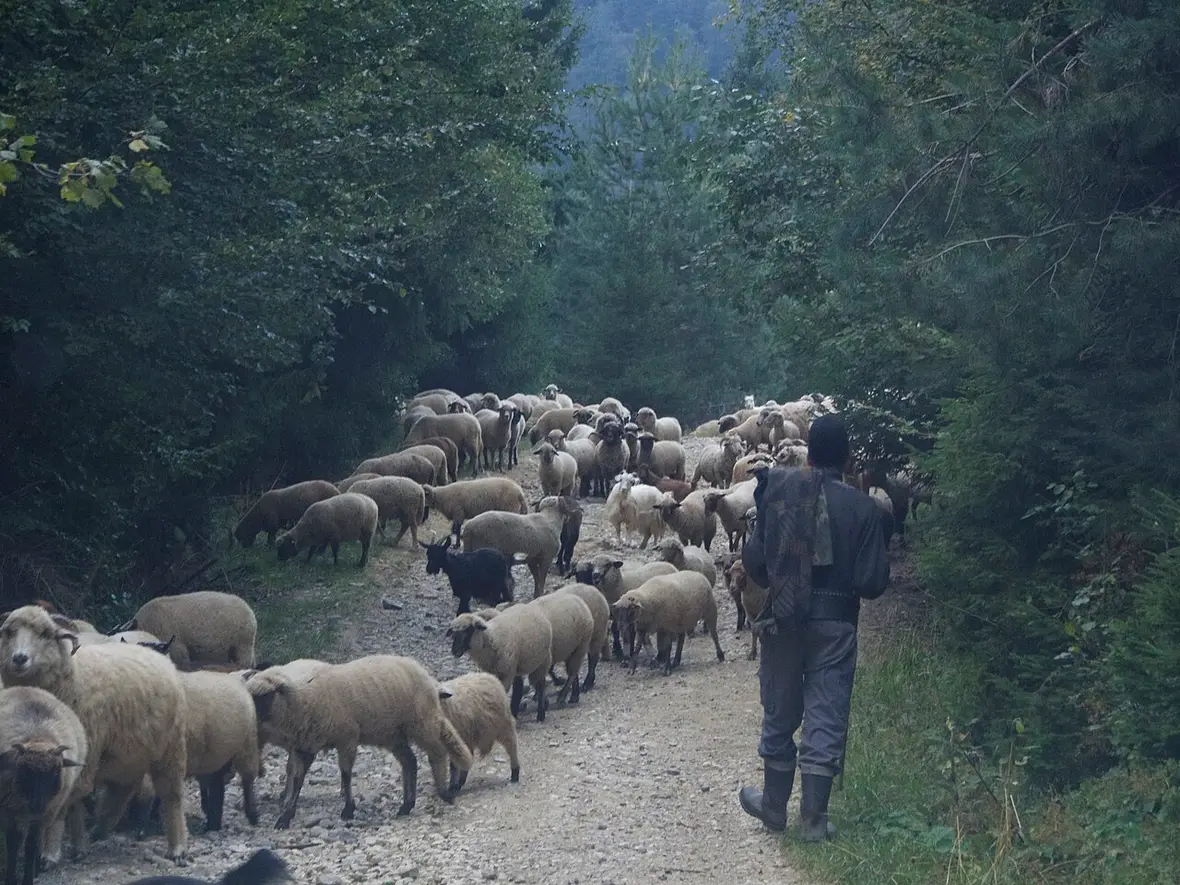
If you’ve a car for a day, the most memorable meal around Sibiu is often not in Sibiu. The Marginimea villages west of the city, Rasinari, Saliste, Sibiel and Gura Raului among them, are shepherd country, and a number of guesthouses there serve farmhouse lunches to visitors: soup, grilled meat, cheeses made a field away, and a jar of something homemade at the end.
The catch is that these are guesthouse kitchens, not restaurants with a door you push open at random. Many cook to order and want a phone call the day before, and plenty don’t run a menu at all: you eat what the household is cooking. Ask your accommodation in Sibiu to ring ahead, go hungry, and treat the drive out as part of the meal. It also puts the cheeses on your plate in the landscape they come from, which is a better argument for them than any tasting note. That same shepherd country gave ASTRA Museum its blue-painted pastoral house, brought in from Poiana Sibiului a little further into the hills - worth knowing once the cheese has you curious about the people who made it.
What to order, and what to take home
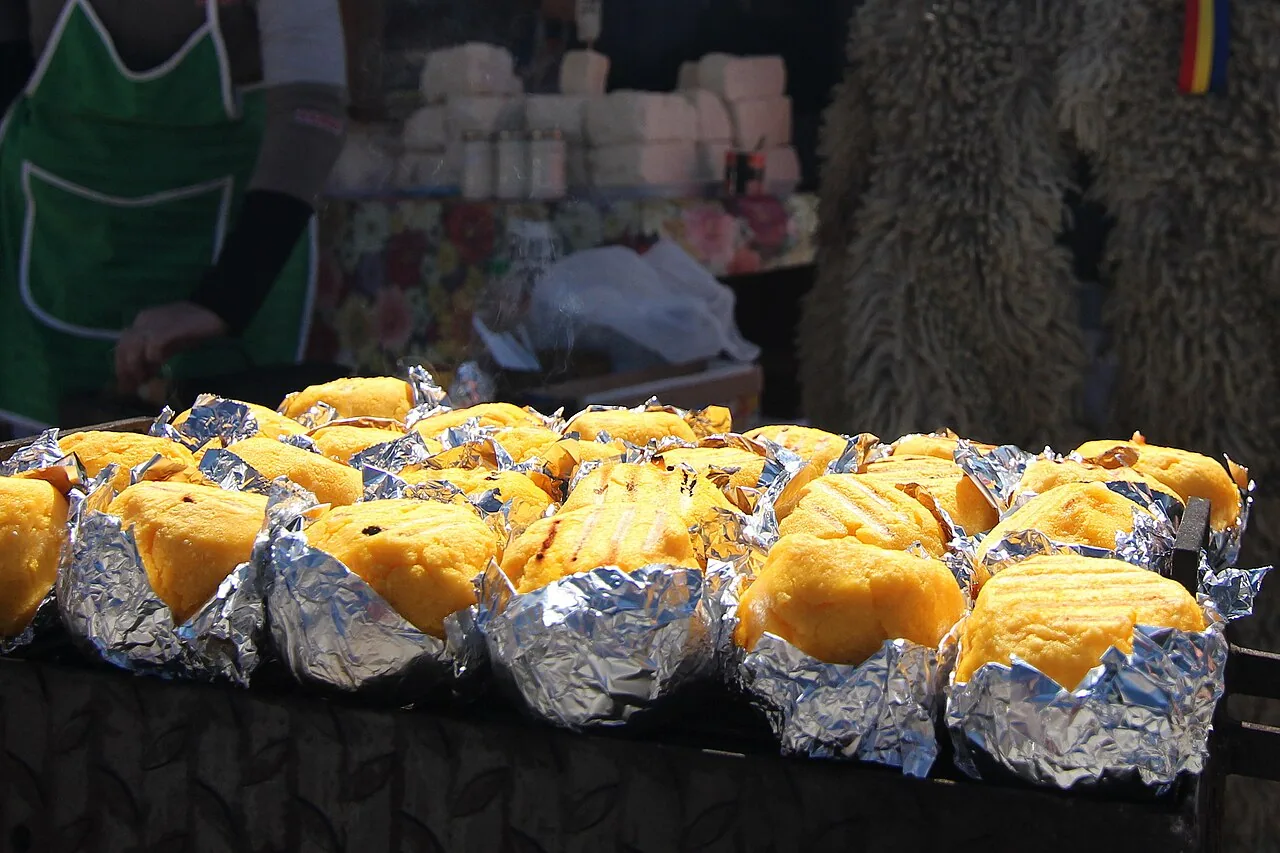
Three things belong on the list. Anything with sheep cheese from the Marginimea: telemea, the semi-hard sheep cheese that carries protected status, branza de burduf, sharper and traditionally matured in bark, or urda, the mild whey cheese. Bulz, the shepherd’s dish of polenta and cheese shaped into a ball and baked or grilled, which turns up at market stalls and on winter menus. And a soup, whether the tripe ciorba or a lighter vegetable version, because the sour-soup tradition is the real regional cooking here.
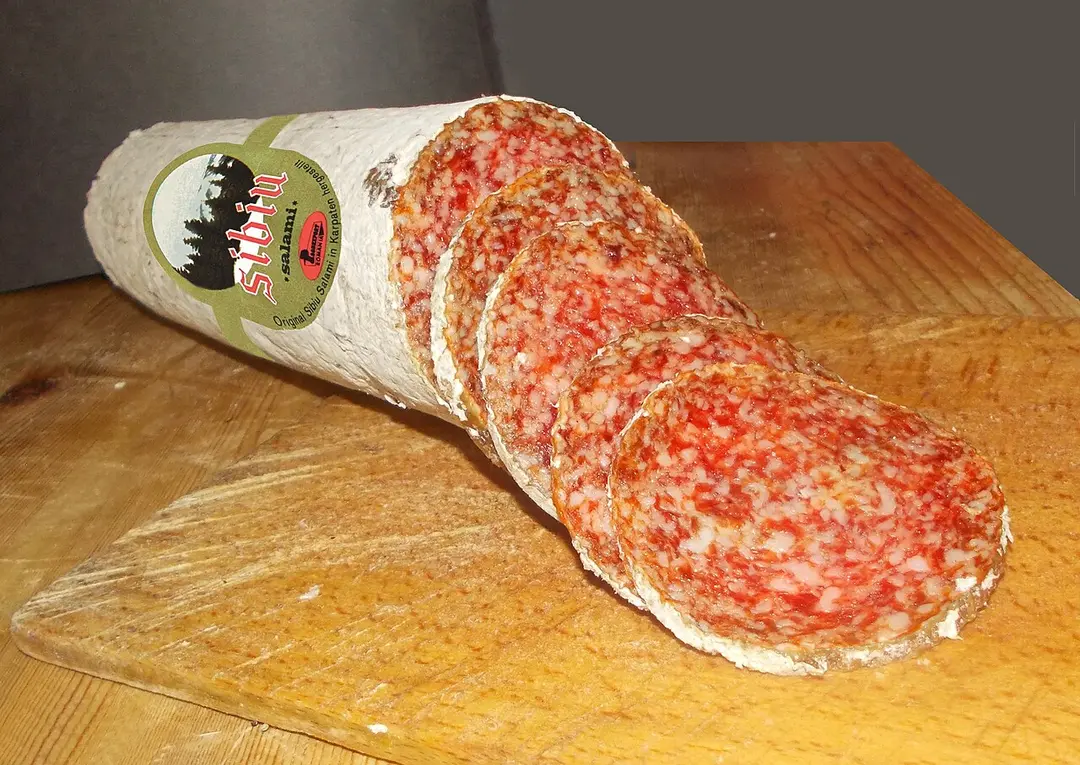
To take home, Salam de Sibiu is the obvious buy: a dry-cured salami with protected geographical status that survives a suitcase, sold at delis and supermarkets across the city. Add a vacuum-packed wedge of telemea and a bottle from a Transylvanian winery and you’ve a decent edible haul for less than the price of dinner.
What you’ll pay, and how to plan the eating
Sibiu sits in the middle of the Romanian price range, a touch under Bucharest and roughly level with Brasov. At a traditional restaurant, main courses run about 40 to 90 lei, soups 20 to 35, and a full sit-down meal with a drink usually lands between 90 and 150 lei per person, with the modern and fine-dining rooms climbing above that (checked July 2026, so confirm on the current menu). The value move is the midday meniul zilei, the set workers’ lunch from around 30 lei, which is how to eat well here on a budget.
Two nights is enough to do this properly: a cellar dinner, a modern one, a slow breakfast on Balcescu and an hour at a wine cellar table. Book weekend evenings, keep some cash in lei for market stalls even though cards work everywhere, and stay inside the old town so none of it needs a taxi. Our Sibiu travel guide covers what to do between meals, and a room inside the old town puts every table on this list within five minutes’ walk. Sibiu is small enough that you can eat the whole shortlist in two nights and never once get into a car.
Photos
Admission and opening hours
- Admission price
- At a traditional restaurant expect main courses of roughly 40-90 lei, soups 20-35 lei, and a full sit-down meal with a drink around 90-150 lei per person. The midday meniul zilei starts near 30 lei. Checked July 2026; confirm on the current menu.
- Opening hours
- Most old-town kitchens run from late morning to around 22:00-23:00, later on the main squares in summer. Book ahead for weekend evenings.
Prices are an orientation, not quotes, and move with the season and the venue. Romania uses the leu (RON), not the euro.
Details checked: July 23, 2026
Read also

Food · 10 min read
Best Food in Constanta & Mamaia: Seafood by the Sea
Verified · August 22, 2026Where to eat in Constanta and Mamaia: Bacaro Port, Muse Port, BonFish, Blue Acqua and Pirouette Bistro, all rated above 4 stars, checked August 2026.

Food · 11 min read
Romanian Wine: Regions, Grapes & Tasting
Updated · July 24, 2026Romanian wine regions explained: Dealu Mare reds, sweet Cotnari, Black Sea Murfatlar, the native grapes to order and how to book a cellar tasting.

Food · 9 min read
Best Food in Cluj-Napoca: Where to Eat
Verified · July 21, 2026Where to eat in Cluj-Napoca: Roata and Zama for Transylvanian classics, Baracca for fine dining, the veggie scene and Museum Square, prices in lei.

Food · 8 min read
Best Food in Brasov: Where to Eat in the Old Town
Verified · July 18, 2026Where to eat in Brasov's Old Town: Sergiana, La Ceaun, Pilvax and Bistro de l'Arte, the Saxon-Hungarian-Romanian food scene, with prices in lei.