
Fagaras Fortress: Transylvania's Moat Castle
Fagaras Fortress on the DN1: moat citadel between Brasov and Sibiu. Tickets 30 lei, hours, the museum circuit, and a stop that needs no detour.
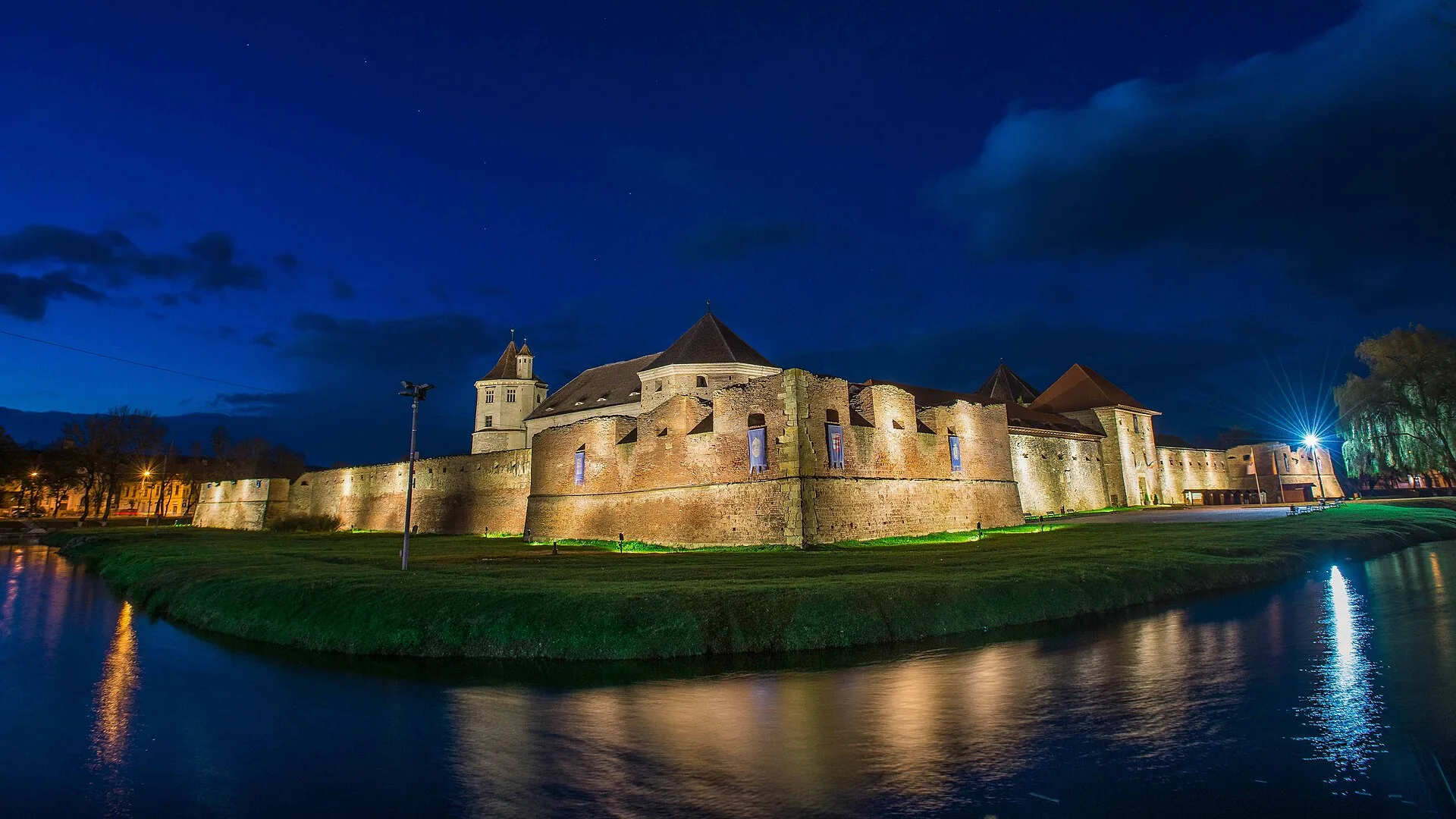
Fagaras Fortress is the squat, moated brick citadel you’ll pass on the DN1 halfway between Brasov and Sibiu - and it’s the castle stop that doesn’t need a detour. Adult tickets are 30 lei, the museum fills the upper floors of a fortress that grew from the 14th century into one of Transylvania’s heaviest defensive rings, and you’ll need about 90 minutes if you’re only stretching your legs or two to three hours if you actually read the displays. It won’t out-glamour Peles or out-Dracula Bran, but it’s cheaper, quieter, and sitting in the middle of the road you’re probably already driving.
That last point is why most visitors find it. Fagaras isn’t a pilgrimage site; it’s a practical break on the Brasov-Sibiu hop, about 66 km west of Brasov on National Road 1. Buses and trains rumble past the town whether you stop or not. A car lets you walk the moat, buy a ticket, and be back on the asphalt in under two hours. If you’re ranking Romanian castles for a longer trip, our Romania castles ranked list puts Fagaras at number eight - not because it’s the prettiest, but because the value-to-effort ratio on this corridor is hard to beat.
What survived, and what did not
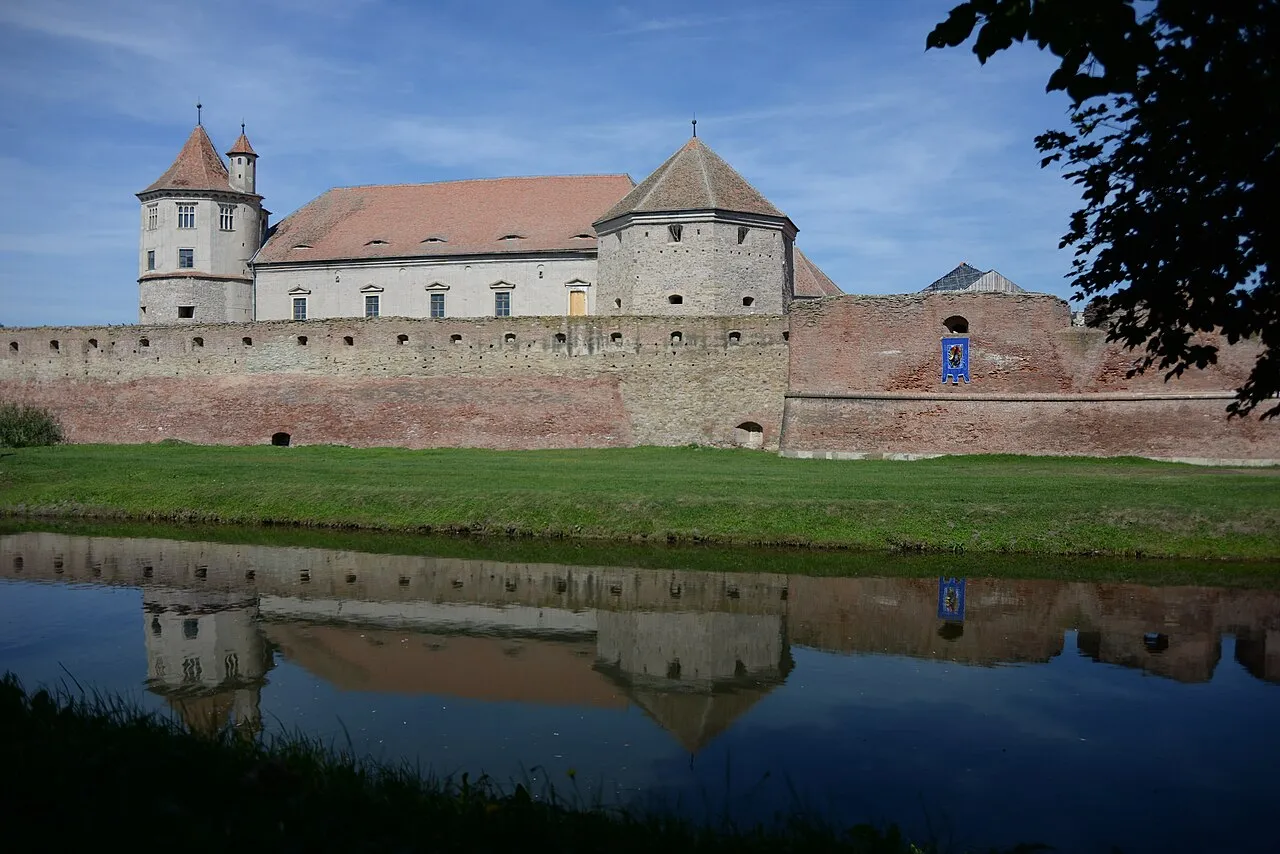
Forget fairy-tale turrets. Fagaras reads as a working fortress: a quadrilateral inner castle with corner towers and a thicker outer belt of bastions, all wrapped in a water-filled moat that still photographs like a postcard when the light is right. The Muzeul Tarii Fagarasului “Valer Literat” has run here since 1973, inside walls that began as timber and earth, burned in the Tatar invasion of 1241, and were rebuilt in stone over the following centuries. The outer bastion ring took shape after 1528, when the complex was pushed into a true artillery-age layout. The museum counts roughly 125 rooms across the ensemble; the permanent exhibition spreads through 21 rooms on the second floor, and the Throne Hall - also called the Grand Palace - sits on the south side of the third.
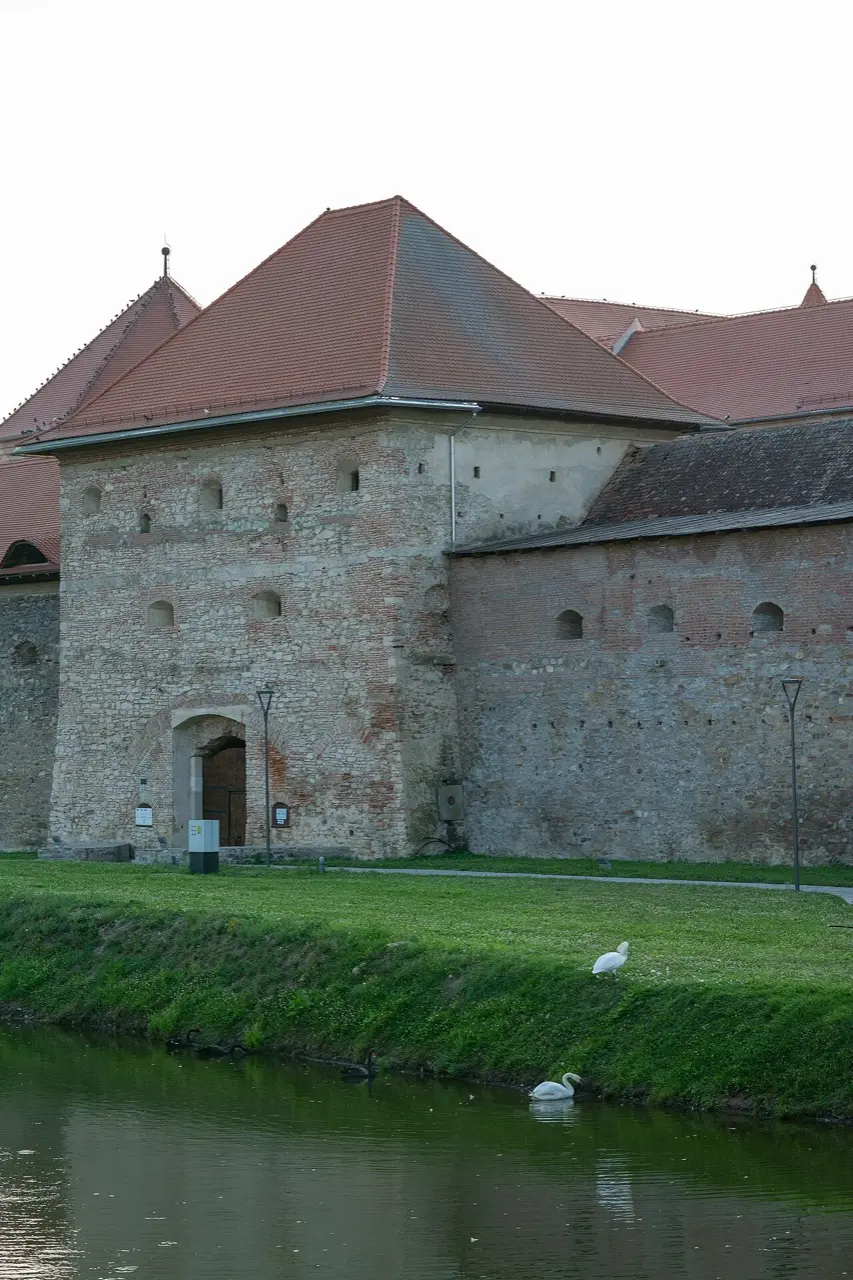
Locals like to say the fortress was never taken by siege. Treat that as town pride, not a footnote you can cite in an exam: the building’s real story is political rather than cinematic, a seat for Transylvanian princes and later a Habsburg garrison town in a valley that controlled movement between Wallachia and the Saxon cities. What survives today is restoration, museum display, and a surprisingly calm courtyard where school groups and a handful of foreign travellers mix without the souvenir siege of Bran.
Tickets, hours and the small print
Prices are modest and posted plainly on the official site. An adult pays 30 lei, pupils and students 10 lei with ID, retirees 15 lei, and entry is free for children under seven and for visitors with disabilities plus one companion. Buy at the ticket office inside the entrance on Strada Mihai Viteazul 1 - there’s no online purchase on the official page, so don’t arrive five minutes before closing assuming a QR code will save you.
Summer hours, from 4 April through 30 September, run Tuesday to Friday 08:00-18:00 and Saturday to Sunday 10:00-18:00. Winter shortens the day: 1 October to 3 April it’s Tuesday to Friday 08:00-17:00 and Saturday to Sunday 09:00-17:00. Mondays are closed year-round, and last admission is always one hour before the posted closing time. Organised groups of fifteen or more can get a free guided tour if they arrange it in advance.
Once you’re past the desk, expect disposable shoe covers over your street shoes for the museum circuit - it’s a conservation rule, not a quirk. Tripods are banned inside, food and drink stay outside, and photography for personal use is fine. Free WiFi broadcasts under the network name “Cetatea Fagarasului” if you need to message someone that you’re running late for Sibiu.
What to see inside
Budget time honestly. A moat lap and a walk through the inner courtyard takes 45 minutes and already justifies the stop if you’re road-weary. The full museum route on the second floor - regional history, ethnography, fortified-church models, the sort of material that rewards readers more than photographers - wants two hours minimum. The Throne Hall on the third floor is the interior highlight when it’s open: high ceilings and princely scale in a building that looks modest from the parking lot.
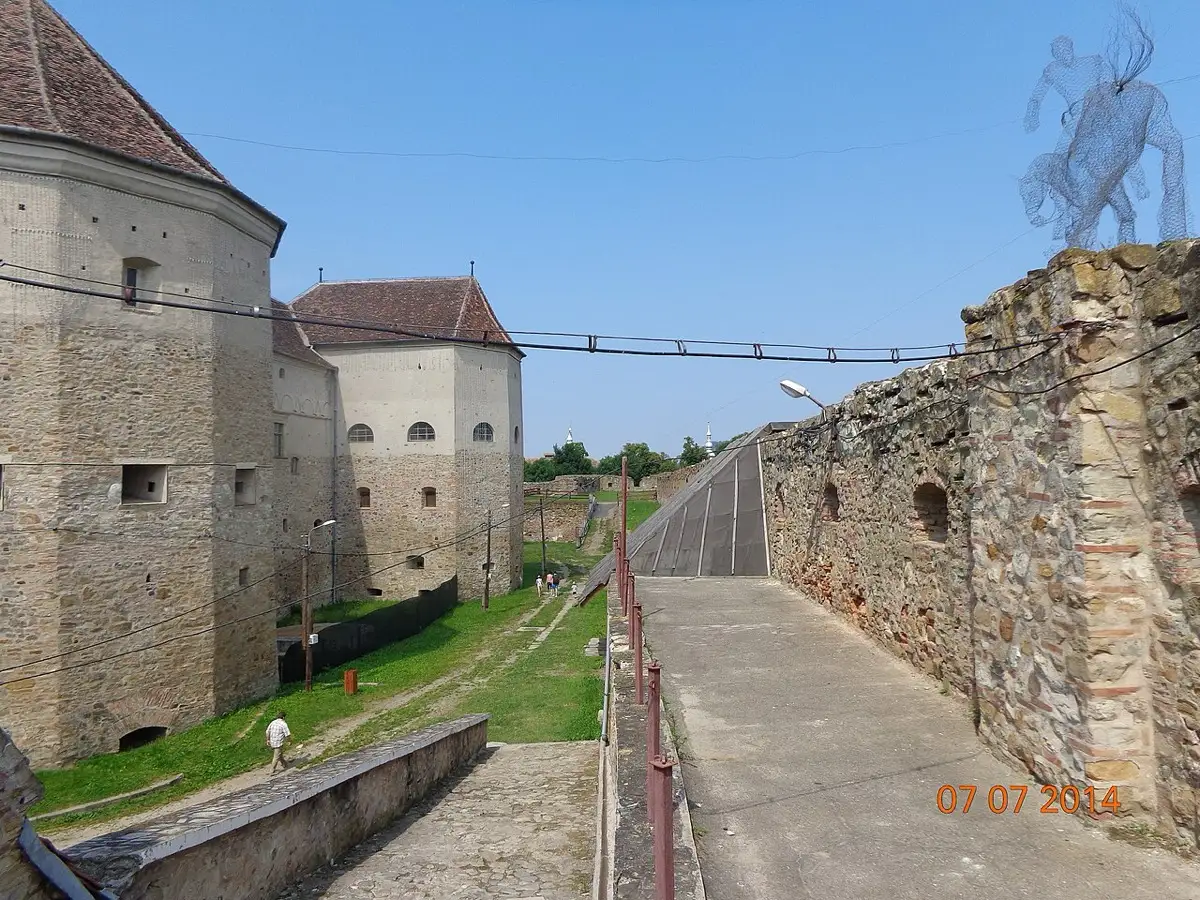
Don’t expect furnished royal apartments. This isn’t Peles, and it isn’t trying to be. The payoff is architectural: thick walls, bastion angles, the climb to a belvedere, and museum rooms that explain the Fagaras Country - Tara Fagarasului - a district that once mattered far more on maps than it does in today’s tourism brochures. The permanent collection spans medieval finds, local craft and church-fortress models that make sense of why this corner of Transylvania is thick with fortified churches. Temporary shows rotate through four dedicated rooms on the same floor; check the fortress news page if you’re travelling for a specific exhibition.
If you’ve already done Bran and want a fortress that still feels military, you’ll leave satisfied. If you need Instagram-ready salons, keep driving to Sinaia. With only one day between Brasov and Sibiu, allow 90 minutes for the moat and courtyard or three hours with the museum - less only makes sense if you’re locked to a bus connection.
When to go and what to skip
Weekdays outside school holidays are the sweet spot: the moat is quiet and the ticket queue is a single family, not two coaches. Saturday after lunch still works - locals stroll by the water, but the interior isn’t a crush yet. In summer (from 4 April) the gates shut at 18:00 on weekdays and weekends alike, so arrive before 17:00 for the full museum circuit. Winter lops an hour off the day - plan accordingly.
Mondays are dead: the fortress is closed, and several cafés in central Fagaras follow their own hours. Don’t confuse the town with the mountain range or the high road that shares the name - satnav loves to scatter “Fagaras” across different pins. The entrance address is Strada Mihai Viteazul 1; look for the anti-communist resistance monument by the moat and the blue-marked parking bays beside it.
Getting there on the DN1
Fagaras sits on the DN1/E68, the same road that links Brasov and Sibiu. By car it’s about 66 km and roughly an hour from Brasov in clear traffic, and you’ll hit the citadel in the town centre before the road climbs toward the Olt valley. Parking lots ring the moat; on weekdays some bays are paid through the tPark app, while weekends are often free - check the signs rather than assuming.
Without a car, CFR trains stop at Fagaras station, and the official site puts the walk at about twenty minutes. Buses on the Brasov-Sibiu corridor also pass through town: Axi Tours charges 25 lei for the Brasov-Fagaras segment on its dedicated line, and several through minibuses stop here on their way west. Timetables live with the operators, not with the fortress, so confirm the day before. Our Brasov to Sibiu guide compares bus, train and car times on this exact hop - Fagaras is the natural midpoint stop if you’re driving.
Renting wheels in Brasov or Sibiu is the flexible option when you want the fortress plus something after it - the Saxon villages north of Sibiu, or the southern approach to the Transfagarasan road once the pass opens for the season. The mountains share the name, but the town and the famous high road are different beasts: Fagaras the fortress is on the DN1 in the valley; the Transfagarasan climbs the Fagaras range to the south-west. Pair them only if you’re building a week, not if you only have an afternoon between two cities.
How it compares to the headline castles
Bran charges 120 lei and sells Dracula; Fagaras charges 30 lei and sells a moat. Corvin is the Gothic blockbuster, but it’s a western detour via Deva, not a pause on the Brasov-Sibiu line. Alba Carolina is free and vast, yet it’s an hour and twenty minutes north-west of Sibiu, not on your way if you’re heading west from Brasov today. Fagaras wins on friction: you were going to pass it anyway.
That positioning is exactly why it sits mid-table in our castles ranked list. It won’t be the only fortress you fly across the Atlantic for, but on a first Transylvania loop it’s the one you can slot between breakfast in Brasov and dinner in Sibiu without rewriting the itinerary. Go on a Tuesday morning if you can - you’ll share the ramparts with a local school group, not a coach park. Skip Monday entirely; the gates stay shut.
The logic works in reverse too: driving Sibiu to Brasov, it’s the same 66 km, the same 30 lei, the same moat. If you overnight in Fagaras, the centre is compact enough for an evening walk after the museum closes, and you can lap the outer walls for free in the morning before the ticket office opens. It’s not a substitute for basing in Sibiu or Brasov, but it’s a sensible DN1 sleep when you don’t want to roll into your final town after dark.
Photos
On the map
The map loads on click - to keep the page lightweight.
The map didn’t load. Check your connection and refresh the page.
Admission and opening hours
- Admission price
- Adult 30 lei; pupils and students 10 lei; retirees 15 lei; free for under-7s and visitors with disabilities (plus one companion)
- Opening hours
- Summer (4 Apr-30 Sep): Tue-Fri 08:00-18:00, Sat-Sun 10:00-18:00. Winter (1 Oct-3 Apr): Tue-Fri 08:00-17:00, Sat-Sun 09:00-17:00. Closed Mondays. Last entry one hour before closing.
Tickets are sold only at the fortress ticket office. Hours shift on holidays - confirm on cetateafagarasului.com before you go.
Details checked: August 23, 2026
Read also

What to see · 9 min read
Prejmer Fortified Church: UNESCO Near Brasov
Verified · September 3, 2026Prejmer fortified church 15 km from Brasov: Greek-cross plan, 275 wall rooms, UNESCO hours for 2026 and how a visit actually works.

What to see · 11 min read
ASTRA Museum Sibiu: Romania's Great Open-Air Village
Verified · August 29, 2026ASTRA Museum near Sibiu: 50-lei tickets, hours by season, how to get there, and which of the 400+ buildings across 96 hectares to see first.

What to see · 10 min read
Bucegi Sphinx & Babele: Cable Car from Busteni
Updated · August 26, 2026Ride the Busteni cable car to the Sphinx and Babele: 2026 return fare 199 lei, hours from 08:30, and how to pair it with Peles or Cantacuzino.

What to see · 10 min read
Snagov Monastery: Vlad the Impaler's Reputed Grave
Verified · August 17, 2026Snagov Monastery on Lake Snagov: the slab said to mark Vlad's grave, what the 1933 dig found, plus the 2009 footbridge, hours and boat.