
Best Restaurants in Bucharest: Where to Eat
Where to eat in Bucharest: Caru cu Bere, Hanu lui Manuc, Vatra, a modern tasting menu and cheap market mici, with real prices in lei and honest tips.
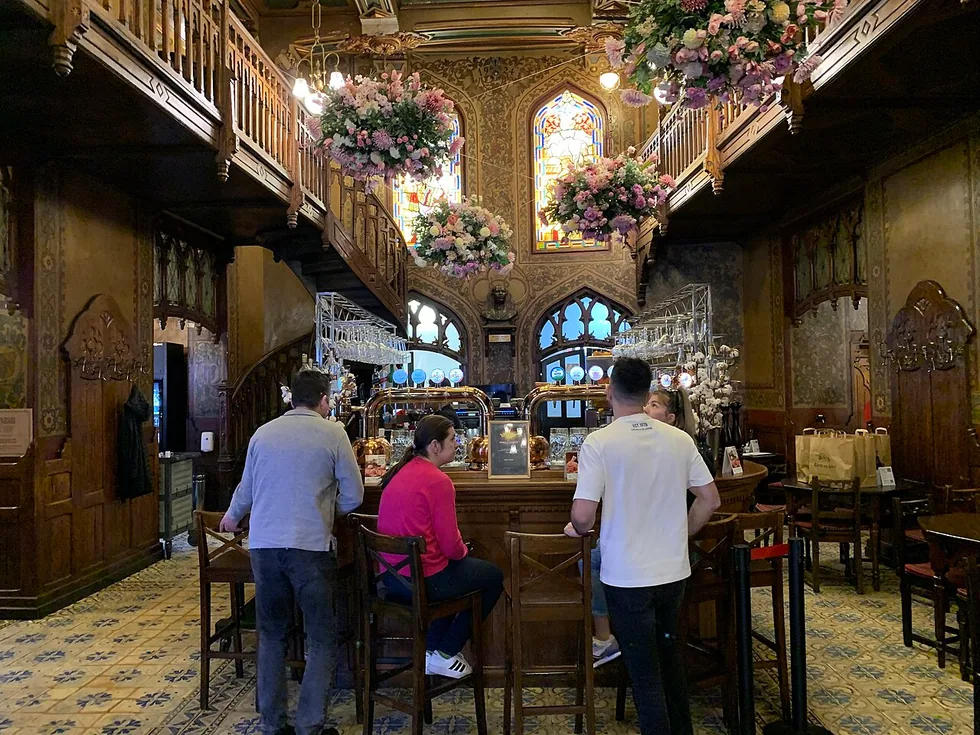
Bucharest eats well, but the trick is knowing that the prettiest addresses are rarely the best value. Go to Caru’ cu Bere once for the room, eat your everyday meals a street or two outside the Old Town where locals actually go, and save one evening for a proper modern-Romanian tasting menu. The range runs from a hot covrig on a street corner to a nine-course tasting menu, and eating well here is mostly a matter of knowing which address earns its bill.
One thing first. For what the dishes actually are, sarmale, mici, ciorba and the rest, see our what to eat in Romania guide. This page is about where to sit down, and the actual pecking order of the capital’s restaurants.
Caru’ cu Bere: go once, for the room
Caru’ cu Bere is the restaurant every first-timer ends up at, and it is worth seeing once. It opened as a beer house in 1879 and moved into its current building in 1899, a soaring Gothic-Revival hall with a spiral staircase, painted vaulted ceilings and glowing stained glass. Folk dancers spin between the tables most evenings. It sits on Strada Stavropoleos 5, a minute from the old National Bank, and it is open roughly 10:00 to midnight daily.
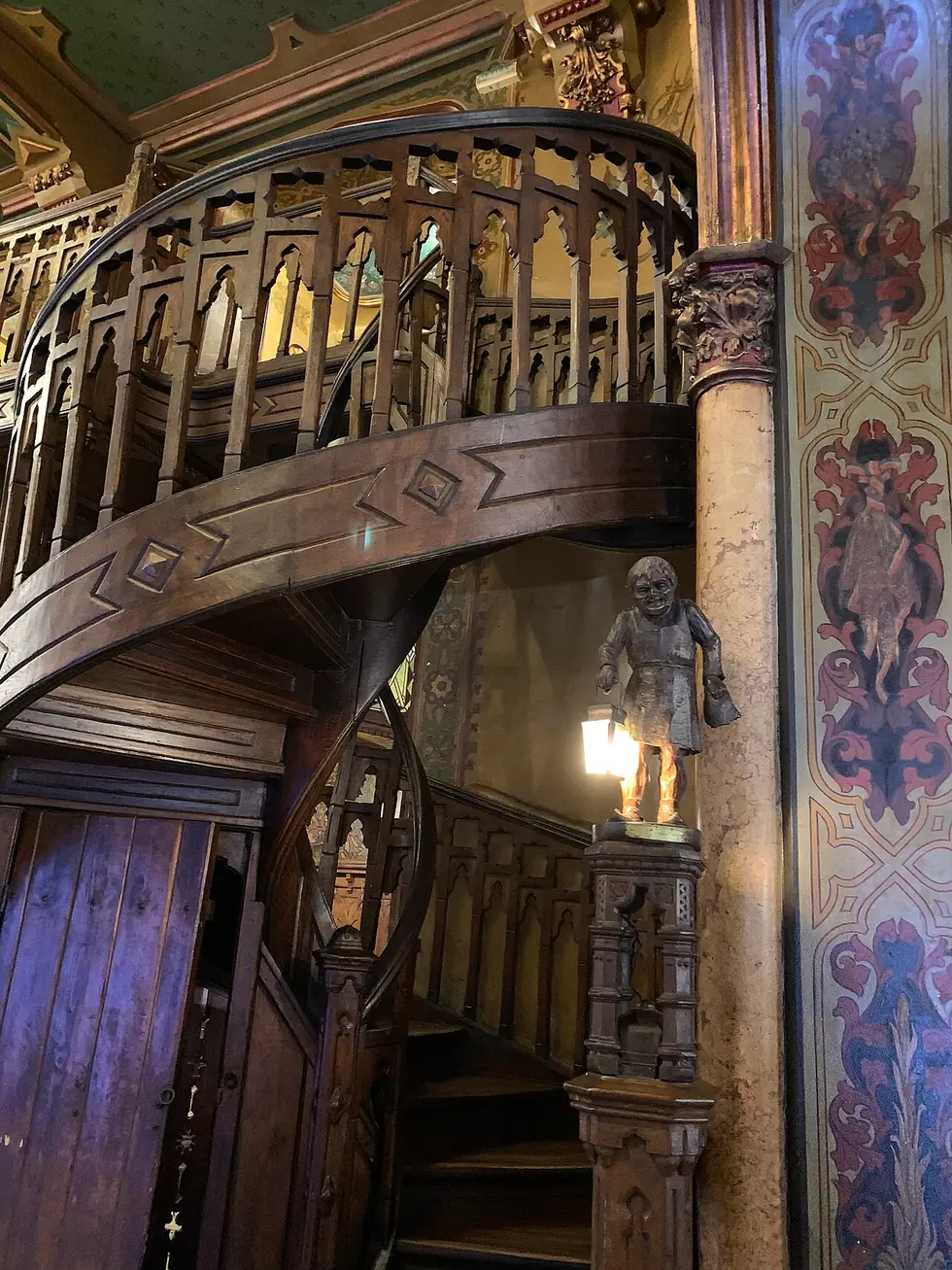
Be clear-eyed about it, though. This is the most famous and most touristy restaurant in the city, the portions are huge, and the cooking is solid rather than dazzling, and it can wobble when the place is packed. Treat it as an experience with a meal attached. Reserve ahead, because walk-ins queue, and order the ciolan (a slow-roasted pork knuckle) or a plate of sarmale, both big enough to share. It’s a beer house at heart, so the house lager pairs better here than a fancy wine list would. Lunch is calmer than dinner if the folkloric show isn’t your thing.
Hanu’ lui Manuc: the courtyard is the point
A two-minute walk south, Hanu’ lui Manuc is the other historic name, and I rate it slightly higher for atmosphere. It is a former coaching inn from 1808, one of the oldest still working in the city, built around a huge galleried timber courtyard that turns into a covered terrace. On a warm evening, with a carafe of house red and live traditional music from about nine, that courtyard is one of the nicest places to eat in central Bucharest.
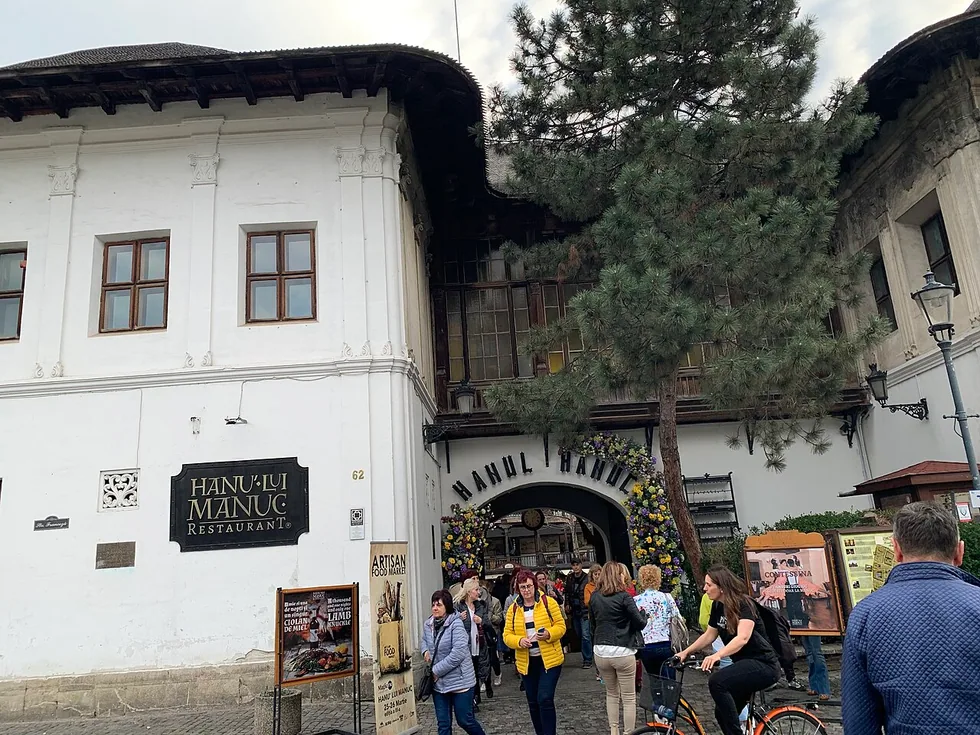
The food is dependable traditional Romanian, the staff are used to visitors, and it comes in cheaper than you might expect for such a set-piece address. Come for the setting and the sarmale, not for culinary fireworks, and you’ll leave happy. Skip it on a grey day, when the covered courtyard loses half its charm.
Vatra: traditional cooking, one street out
Here is the insight most guides bury: the best-value traditional food in Bucharest is almost never on the main Old Town lanes. Walk ten or fifteen minutes out and you pay roughly half for cooking that’s just as good. My default is Vatra, on Strada Ion Brezoianu 19 beside Cismigiu Park, a short stroll west of the Lipscani crush. The room is done up like a 1920s Transylvanian house, the portions are generous, the prices are honest, and there is live folk music some evenings without the full tour-group circus.
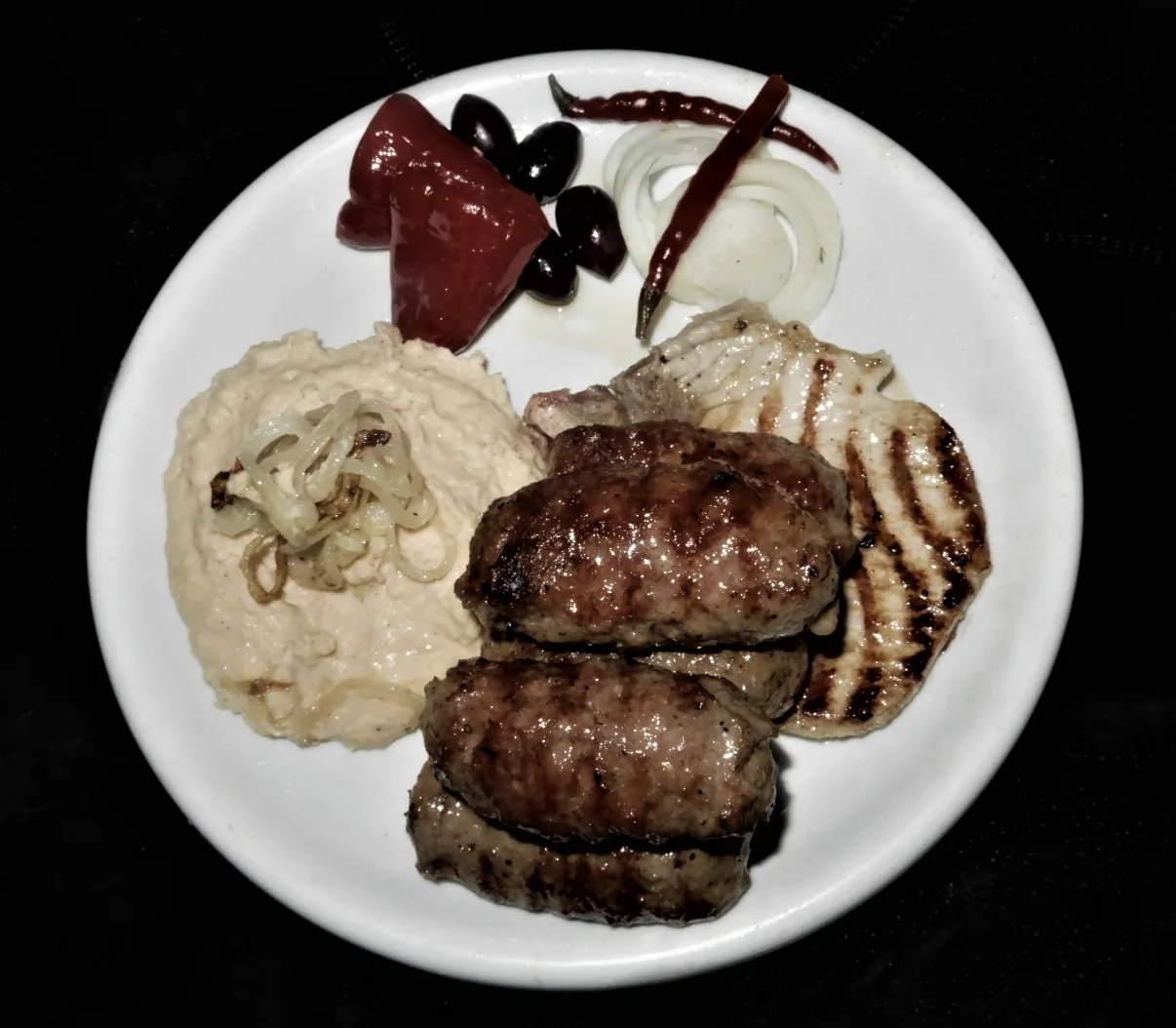
Order the sarmale, a bowl of ciorba (the tripe ciorba de burta if you’re brave, the creamy chicken ciorba radauteana if you’re not), and mici off the grill. It’s the reliable, unfussy Romanian meal that sends you back into the night full and about eighty lei lighter. If you only sit down for one proper traditional dinner in the city, this is the sort of place to do it, rather than the flashiest terrace on the square.
The splurge: a modern-Romanian tasting menu
If you want to see where Romanian cooking is going rather than where it has been, book Kaiamo well ahead. It’s a tasting-menu restaurant north of the centre on Strada Ermil Pangrati, run by chef Radu Ionescu, who spent seven years in London kitchens before coming home to rework Romanian ingredients into a long, inventive sequence of courses served from an open pass. Reviewers routinely call it Michelin-level, and it’s the one place in this guide where the food, not the room, is the whole event.
This is a special-occasion outlay, not a casual dinner, and you commit to a set menu of nine courses or more, so go hungry and unhurried. There is no Dracula kitsch and no folk show here, just serious cooking. If a full tasting menu is more than you want, the same instinct, native ingredients treated with care, turns up at a growing crop of bistros around Piata Romana and Floreasca that are worth a wander.
Cheap and local: the market grills
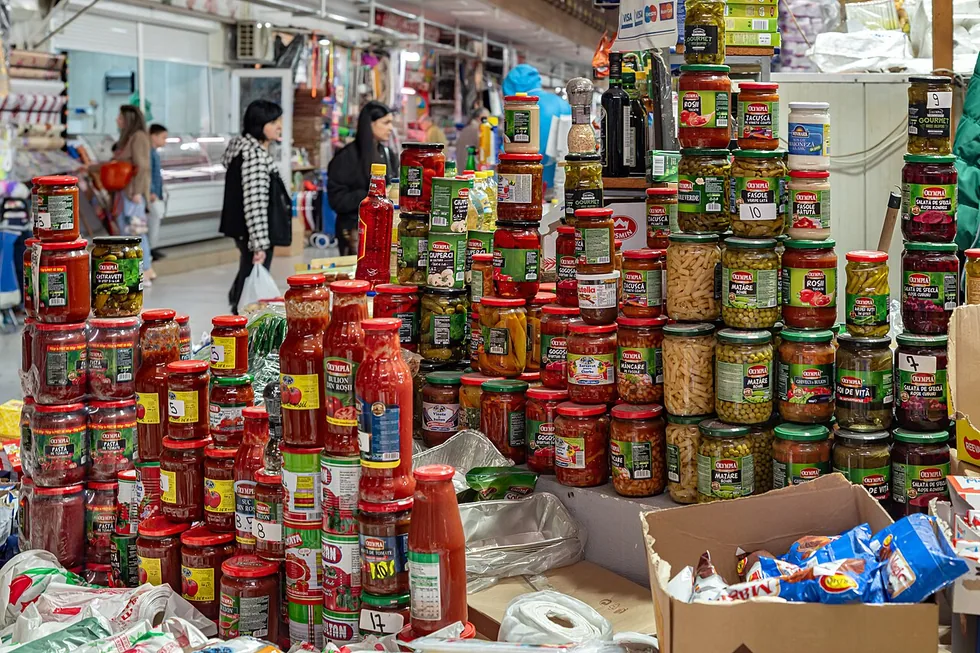
For the food locals eat on an ordinary day, leave the restaurants entirely and head to Obor, the big working market northeast of the centre. The grills here are a genuine Bucharest institution: you queue, you point, and you eat mici by the piece off a paper plate, standing up, for a fraction of any sit-down bill. It’s smoky, loud and cheap, and it’s one of the best cheap meals in the city. Our things to do in Bucharest guide points you to that end of town.
Fill the gaps between meals with street food. Covrigi, hot twisted pretzels dusted with salt, poppy or sesame, sell for small change on corners all over town and are the classic thing to eat on the move. A plate of mici with a smear of mustard and a bread roll runs to around forty-five lei sitting down, and much less bought by the piece at a market grill.
Save room for dessert. The one to hunt down is papanasi, warm fried cheese doughnuts under sour cream and sour-cherry jam, best ordered at an old-school cofetaria (patisserie) or at the end of a traditional meal. Romanian coffee culture is strong too, so a proper espresso in a Lipscani cafe is an easy afternoon pause between sights. For coffee rather than dessert, Origo Coffee Shop at Strada Lipscani 9 roasts its own and is the Old Town’s specialty bar.
What you will pay, and other practical notes
Budget in lei, not euro, because Romania isn’t in the eurozone. In a mid-range restaurant, main courses run roughly fifty to a hundred and twenty lei, and a full meal with a starter, main and dessert lands around a hundred and fifty to two hundred lei per person before serious drinking (checked July 2026, so confirm on the current menu). Market and street food is far cheaper. Cards work in restaurants; carry cash for the market grills and the covrigi stand.
The cheapest way to eat well is lunch. Many restaurants, including good traditional ones, run a “meniul zilei” (menu of the day), a soup plus a main and sometimes a dessert, for roughly twenty-five to fifty lei on weekdays. It’s the same kitchen at a fraction of the dinner price, and it’s what office workers live on.
A few more habits worth knowing. Reserve for Caru’ cu Bere and Kaiamo, especially on weekends, and expect the Old Town to fill up from about eight in the evening, with locals eating later than that. Tipping is around ten percent if service isn’t already on the bill. And trust your instinct on the busiest Lipscani corners: the harder a place hustles passers-by in off the pavement, the more it is banking on diners who will never come back, and the less its kitchen has to prove. If Bucharest is only your first stop and Transylvania is next, the food changes character up there, and our best food in Brasov guide covers the Saxon and Hungarian side of the table. To keep yourself within stumbling distance of all of it, compare places to stay in central Bucharest before the weekend rooms go.
Photos
Read also

Food · 10 min read
Best Food in Constanta & Mamaia: Seafood by the Sea
Verified · August 22, 2026Where to eat in Constanta and Mamaia: Bacaro Port, Muse Port, BonFish, Blue Acqua and Pirouette Bistro, all rated above 4 stars, checked August 2026.

Food · 11 min read
Romanian Wine: Regions, Grapes & Tasting
Updated · July 24, 2026Romanian wine regions explained: Dealu Mare reds, sweet Cotnari, Black Sea Murfatlar, the native grapes to order and how to book a cellar tasting.

Food · 9 min read
Best Food in Sibiu: Traditional & Modern Restaurants
Verified · July 23, 2026Where to eat in Sibiu: cellar cooking at Crama Sibiul Vechi, neo-Romanian at Kombinat, the Marginimea cheeses and Sibiu salami, with prices in lei.

Food · 9 min read
Best Food in Cluj-Napoca: Where to Eat
Verified · July 21, 2026Where to eat in Cluj-Napoca: Roata and Zama for Transylvanian classics, Baracca for fine dining, the veggie scene and Museum Square, prices in lei.