
Timisoara Travel Guide: Banat's Capital
What to do in Timisoara: the three grand squares, the Orthodox cathedral, Huniade Castle, Secession facades and where the 1989 revolution began, in lei.
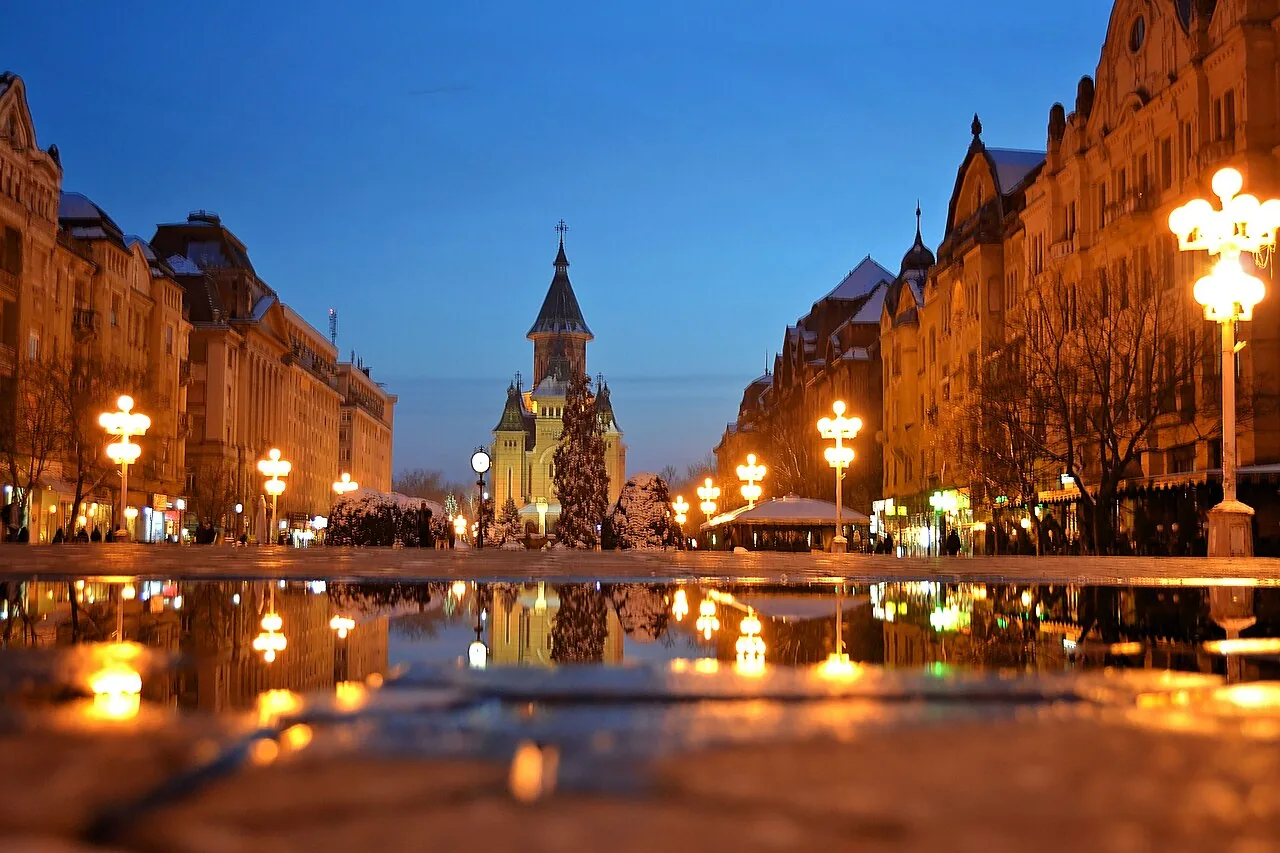
Timisoara is Romania’s third city and the capital of the Banat, a flat corner of the west that feels closer to Vienna and Belgrade than to Bucharest, and it wears that Central European past in three linked squares full of pastel palaces and Secession facades. It was European Capital of Culture in 2023, which paid for a scrub-down the centre badly needed, and it’s the town where the 1989 revolution against Ceausescu actually began. Give it a full day for the squares and a second for the museums and the riverside, and carry cash in lei, because this isn’t the euro.
Here is what a Timisoara visit looks like in practice. The pull is urban and architectural rather than a checklist of blockbuster sights: you come to walk Piata Victoriei, Piata Unirii and Piata Libertatii, eat and drink well on the terraces between them, and read a bit of heavy history at the cathedral and the revolution memorial. It also makes the natural western gateway, an easy first or last stop if you’re flying via Budapest or crossing on to Serbia, and since Romania joined full Schengen in January 2025 those borders no longer slow you down.
Is Timisoara worth visiting?
Yes, if you like handsome cities more than headline monuments, and it’s one of the more rewarding stops most first-timers skip. Timisoara got rich under the Habsburgs, and the money went into the same Secession and eclectic architecture you find in Budapest or Vienna, which is why locals call it “Little Vienna”. The 2023 Capital of Culture year gave the facades a proper clean, so the centre looks better now than it has in decades, and it comes without the crowds or the prices of the more famous Transylvanian towns.
What it isn’t is a medieval fairy tale. There’s no clifftop citadel and no walled old town of the kind you get in Sighisoara or Sibiu; Timisoara sits on the flat Banat plain, split by the Bega canal, and its appeal is elegant and flat rather than dramatic. If you want turrets, look east to Transylvania. If you want three grand squares, good coffee under a hundred-year-old facade, and a real slice of Romanian history, this is a properly worthwhile two days.
What is Piata Victoriei, and why start there?
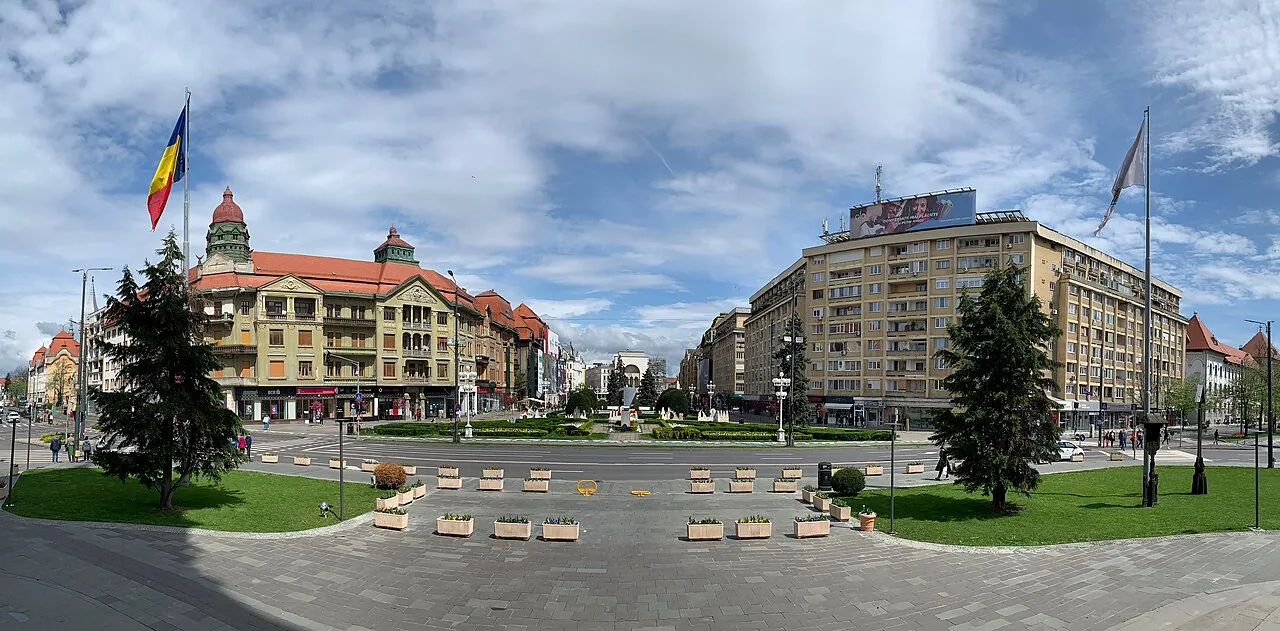
Piata Victoriei (Victory Square) is the heart of the city and the place to get your bearings. It isn’t really a square but a long, wide pedestrian esplanade, a couple of hundred metres of flower beds, fountains and terraces closed at one end by the National Theatre and Opera and at the other by the Orthodox cathedral. The buildings down both sides are the “Little Vienna” ones, a run of early-1900s Secession blocks that people photograph without knowing their names. This is also the square where the crowds gathered in December 1989, and where the balcony speeches of the revolution were made, so it’s the civic stage of the city as well as its prettiest walk.
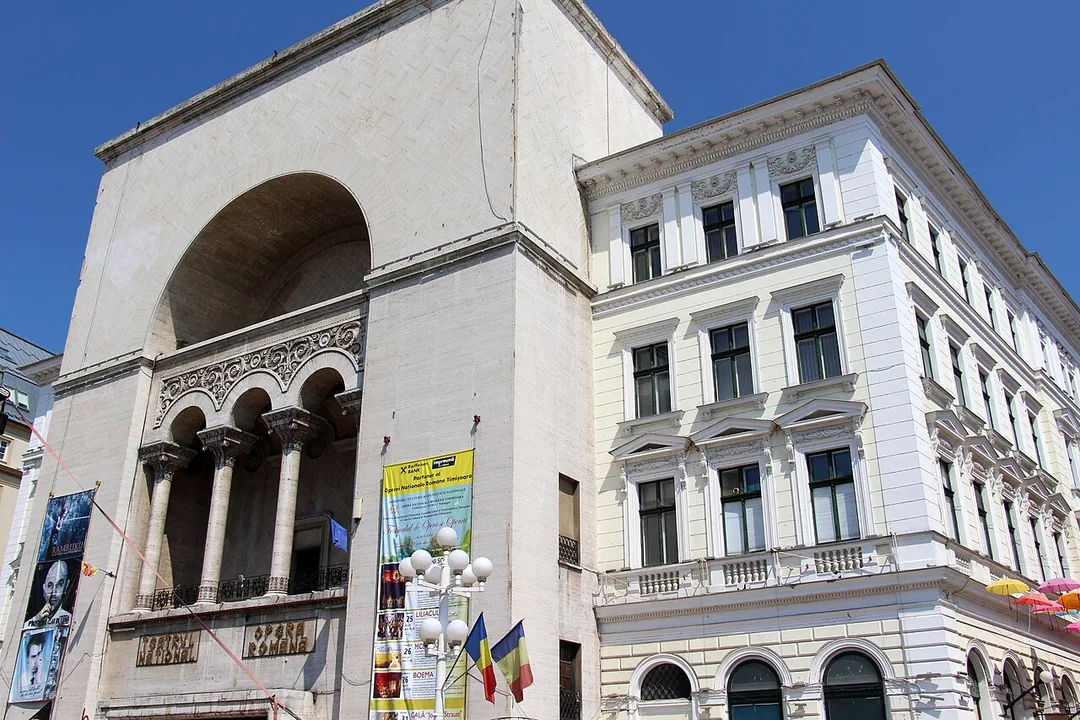
At the theatre end sits the grand home of the Romanian National Theatre and the Timisoara Opera, an eclectic pile that has been rebuilt more than once and still anchors the square. Walk the length of it in the evening when the fountains are lit and half the city is out on the terraces, and you have understood most of what Timisoara is about in twenty minutes.
The Orthodox Metropolitan Cathedral
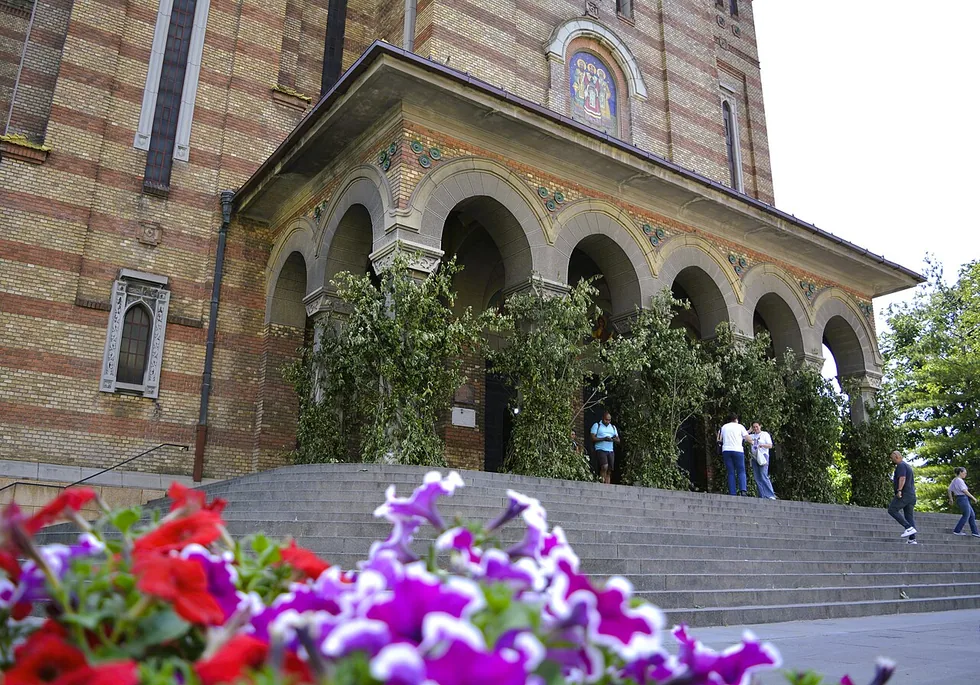
The cathedral that closes the south end of the square is the one landmark you can’t miss, a tall church with a stack of pointed towers and a glazed, patterned roof that stands about 83 metres high, which puts it among the tallest churches in the country. It was built between 1936 and 1940 in a Moldavian-Byzantine style, so it looks older and more northern than it is, and its bells are famous locally. Entry is free and it stays open through the day; step inside for the iconostasis and the cool, and then look at the small monument in the park in front, which remembers the people killed here in 1989.
What is on Piata Unirii, the Baroque square?
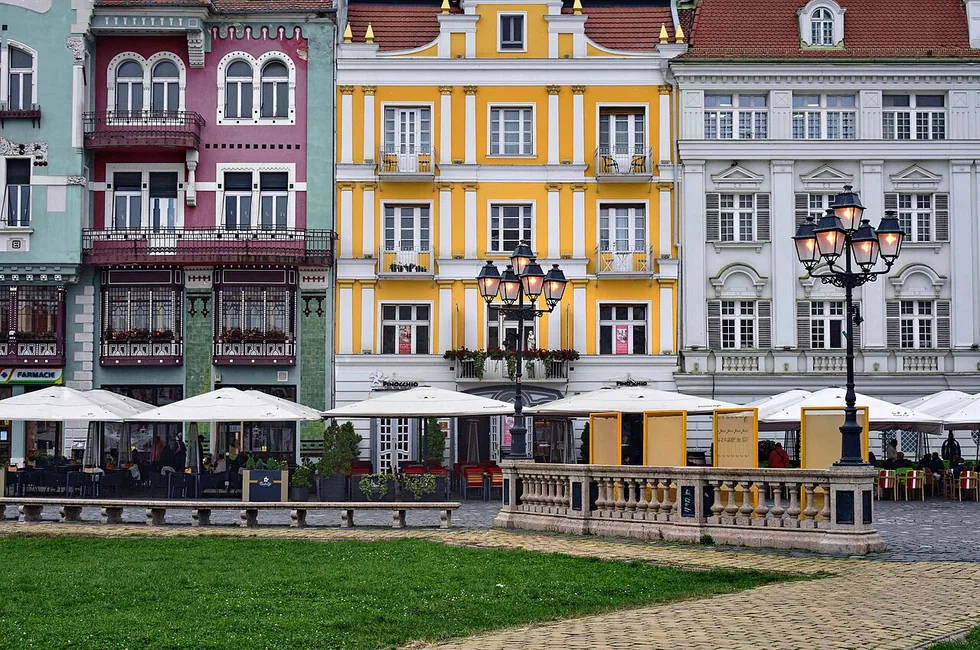
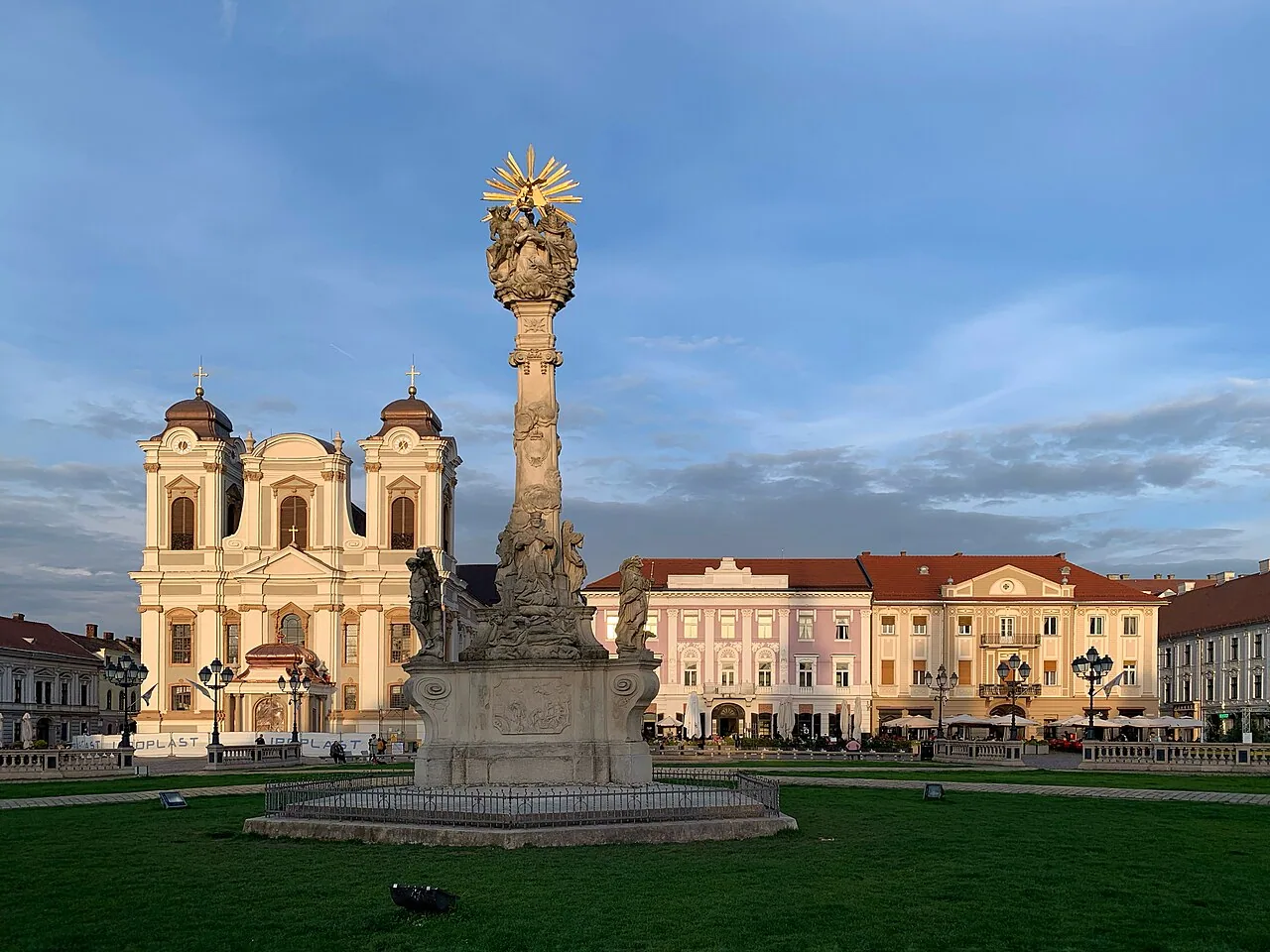
A short walk north brings you to Piata Unirii (Union Square), the oldest and, to my eye, the loveliest of the three, a proper Baroque square ringed by a set of pastel palaces facing each other across a fountain. The two big buildings are religious and rival: the Roman Catholic Dome, the twin-towered Baroque cathedral of St George built between the 1730s and 1770s, and, almost opposite it, the Serbian Orthodox Cathedral, a reminder of how mixed this border city has always been. On the corners sit the Baroque Palace, which holds the Timisoara Art Museum, and the tile-fronted Bruck House, one of the city’s best-loved Art Nouveau corners.
Union Square is where you slow down. The terraces here are the pleasant kind, the buildings are close enough to read in detail, and the whole space was reworked for the 2023 culture year, so it’s at its best right now. Given an hour to sit somewhere and feel the city, sit here.
Piata Libertatii and Huniade Castle
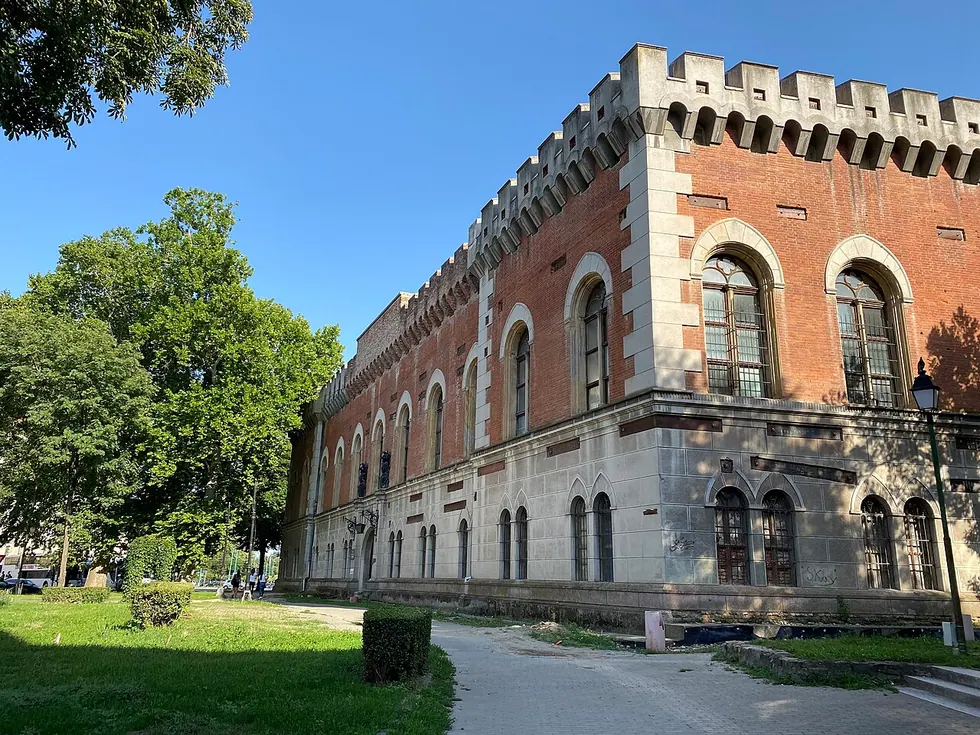
The third square, Piata Libertatii (Liberty Square), sits between the other two and is the plainest of the set: the old civic square, with the former Town Hall and a run of restored fronts around it, worth a pass-through more than a long stop. From here it’s a couple of minutes to the oldest building in the city. Huniade Castle (Castelul Huniade) began in the 14th century and was rebuilt by John Hunyadi, the Transylvanian warlord, in the 15th; it has been knocked about and reworked since, so it reads more as a solid brick block than a romantic castle, but it holds the National Museum of the Banat, the region’s main history and archaeology collection.
One caveat: the museum has been through a long restoration, and opening arrangements and tickets have shifted with it, so check the current situation if you’re planning a visit around it rather than turning up cold. Even from outside, though, it merits the short walk to stand in front of the one truly old thing in a city that otherwise dates from its 1900s heyday.
Where did the 1989 revolution start?
Here, and it’s the piece of history that sets Timisoara apart. The Romanian revolution that toppled Nicolae Ceausescu began in this city in mid-December 1989, when crowds gathered to stop the eviction of a dissident Reformed pastor, Laszlo Tokes, and the protest swelled into an open uprising days before Bucharest followed. The army fired on demonstrators, dozens were killed, and on 20 December Timisoara declared itself the first city free of communism in Romania. If you want the full story, the Memorial of the Revolution (Memorialul Revolutiei) runs a documentation centre and exhibitions with film, photographs and first-hand accounts of those days. It’s a sobering hour, and it explains the monuments and plaques you keep passing in the centre.
The city of firsts: electric light and the Bega
Timisoara collects “firsts”, and one of them is genuinely worth knowing. On 12 November 1884 it switched on electric public street lighting across the centre, 731 lamps strung on nearly 59 kilometres of cable, which made it the first city in mainland Europe to light its streets electrically, not long after New York did it in the world. Look for the pair of old lamps in front of Huniade Castle, kept as a nod to that night. It was also among the first European cities with horse-drawn then electric trams, and it likes to remind visitors of both.
The other thread running through the city is water. The Bega, which slices through the centre, is a canalised river and the only navigable canal in the country, edged with long green promenades that locals cycle and jog. In the warmer months small water buses (the “vaporetto”) run along it as part of the public transport network, which is a cheap and unusual way to see the town from the water; check locally whether they’re running for your dates, because the service is seasonal.
Is the Theresia Bastion worth a look?
If you like your history with a coffee attached, yes. The Maria Theresia Bastion (Bastionul Maria Theresia) is the largest surviving chunk of the 18th-century Habsburg fortress that once ringed the city, a long, thick brick rampart that was saved from demolition and turned into a cultural and eating quarter. Today its vaulted casemates and inner court hold restaurants, bars, craft shops and small museums, so it works as both a monument and a place to have dinner. It’s a five-minute walk from Union Square, and it’s the easiest way to picture the walled garrison town Timisoara used to be before it burst out of its ramparts.
How do you get to Timisoara?
Timisoara has its own airport, Traian Vuia International (TSR), about 12 km northeast of the centre, and it’s well served by low-cost routes across Europe, which is often the simplest way in. From the terminal the Express 4 (E4) bus runs to the edge of the centre and the E4b to the North railway station; the fare is 5 lei, the price of STPT’s 60-minute ticket, and you can pay it by tapping a contactless bank card on the reader on board. On weekdays the E4 runs roughly every 40 minutes, at weekends and on public holidays about once an hour, and the E4b only about a dozen times a day; a taxi or a fixed-price transfer is quick if you land late.
From within Romania, don’t be fooled by the distances. The train from Bucharest is direct but famously slow, crawling around the south of the country for something like ten to eleven hours; the coach is only marginally better. If your time matters, fly the Bucharest leg, which takes under an hour in the air, or build Timisoara into a western loop instead of a there-and-back from the capital. It pairs naturally with Oradea, the Art Nouveau town up the same border, and with the wooden churches of the northwest; our Romania 7-day itinerary shows where a western city fits into a full week, and the lively student city of Cluj-Napoca is the obvious link east.
The last angle is Serbia. Timisoara sits close to the border, and Belgrade is an easy day away by bus or transfer, which makes the city a good springboard for a two-country trip; our guide to Timisoara to Belgrade covers the crossing, which unlike the Hungarian border is a real one, since Serbia is outside the EU. For exactly which area to book, our guide to where to stay in Timisoara weighs Cetate against Fabric, Iosefin and Circumvalatiunii; compare central Timisoara hotels early, and if you’re exploring the flat Banat plain around the city, a rental car earns its keep once you leave the walkable centre.
Photos
On the map
The map loads on click - to keep the page lightweight.
The map didn’t load. Check your connection and refresh the page.
Admission and opening hours
- Admission price
- The Orthodox Metropolitan Cathedral is free to enter. The Banat Museum in Huniade Castle and the Art Museum in the Baroque Palace charge small tickets (a handful of lei), and the Memorial of the Revolution is a modest donation. Hotel rates are orientation only: budget guesthouses from roughly 150-200 lei a night, comfortable mid-range around 300-450 lei, smart hotels 600 lei and up.
- Opening hours
- The centre is flat and walkable end to end; the three squares are a ten-minute stroll apart. The Metropolitan Cathedral is open through the day; museum hours shift with the season and some sites close on Mondays.
Prices and opening times change, and the Banat Museum reopened after a long restoration, so confirm current tickets and hours on the museum sites and visit-timisoara.com before you go. Romania uses the leu (RON), not the euro. Checked July 2026.
Details checked: July 15, 2026
Read also

Cities · 13 min read
Predeal: Romania's Highest Ski Town
Verified · September 3, 2026Predeal sits at 1,030-1,110 m on the Bucharest-Brasov line: Clabucet ski, the town itself, and how it stacks up against Sinaia and Poiana.

Cities · 10 min read
Suceava Travel Guide: Fortress & Bucovina Gateway
Updated · August 25, 2026Things to do in Suceava: Stephen the Great's fortress, the UNESCO Saint John monastery, village museums, and using the city as a base for Bucovina.

Cities · 9 min read
Where to Stay in Sighisoara: Citadel or Lower Town
Verified · August 24, 2026Where to stay in Sighisoara: citadel vs Lower Town, price bands in lei, parking, the medieval festival, and who should sleep inside the walls.

Cities · 11 min read
Where to Stay in Timisoara: Best Areas & Hotels
Verified · August 19, 2026Where to stay in Timisoara: Cetate vs Fabric vs Iosefin vs Circumvalatiunii - who each suits, walk times, prices in lei, and getting in from the airport.