
Where to Stay in Timisoara: Best Areas & Hotels
Where to stay in Timisoara: Cetate vs Fabric vs Iosefin vs Circumvalatiunii - who each suits, walk times, prices in lei, and getting in from the airport.
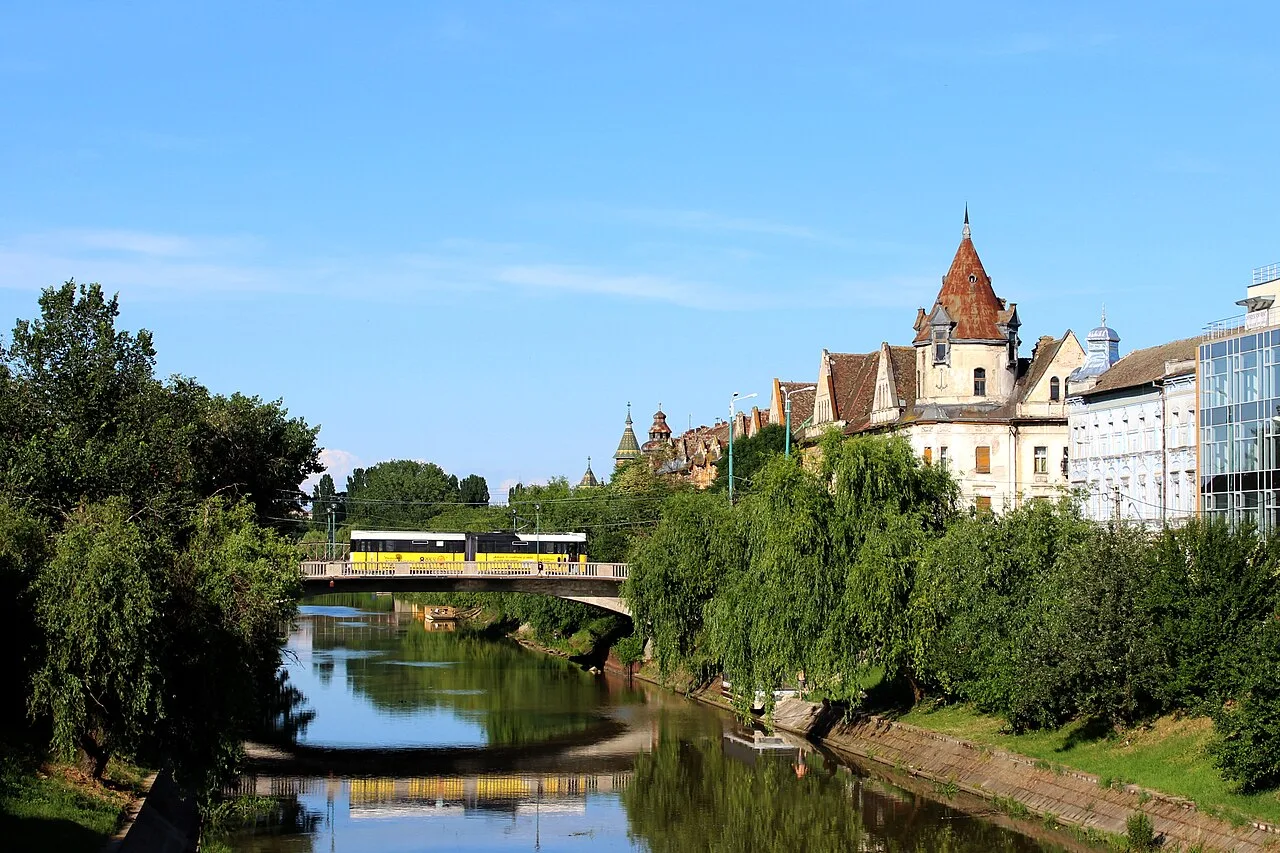
Cetate settles most of this on its own. The old fortress core holds all three of Timisoara’s grand squares within a few minutes of each other, and a room almost anywhere inside it puts everything within reach. That convenience isn’t the only sensible answer, though. Fabric, the old merchants’ quarter across the Bega, is cheaper and more atmospheric, but reaching it is a genuine walk, not a stroll. Iosefin, strung along the river itself, trades a few of those postcard views for quiet nights and Art Nouveau streets, with the train station inside its own boundary rather than a taxi ride away.
Which of those fits you, and where the fourth option, Circumvalatiunii, comes in, depends on how long you’re staying and how much walking you’re willing to do twice a day. Timisoara doesn’t have Bucharest’s traffic or the tourist crush of Transylvania’s bigger names, so getting the area wrong here costs you twenty minutes on foot, not your evening.
Cetate: the squares and the quieter streets behind them
Cetate is the obvious pick for almost anyone staying two or three nights. Piata Victoriei, Piata Unirii and Piata Libertatii sit within about nine minutes of each other on foot - our Timisoara guide covers what’s on each one - and a room anywhere inside that triangle puts the cathedral, the opera and the best terraces close to your door. The district itself is bigger than the postcard shot suggests: walk from its middle to the far edge and you’re looking at closer to twenty minutes, though you’re never more than a few streets from a square.
The trade-off is price and noise. Rooms directly on or overlooking the squares sit at the top of the local range, and a row of terraces under your window means a lively evening whether you asked for one or not. What fewer guides mention is that Cetate also sits inside the city’s most expensive parking zone: Timpark, the municipal operator, runs four pricing tiers, and the historic core sits in the priciest, green zone 0, at 4.07 lei an hour on weekdays (08:00-20:00). Circumvalatiunii and the streets around Piata Traian in Fabric fall into yellow zone II at 1.52 lei - under half the price, and free on weekends and public holidays besides - so a hire car costs meaningfully more to leave in Cetate than almost anywhere else on this list. It isn’t a small gap.
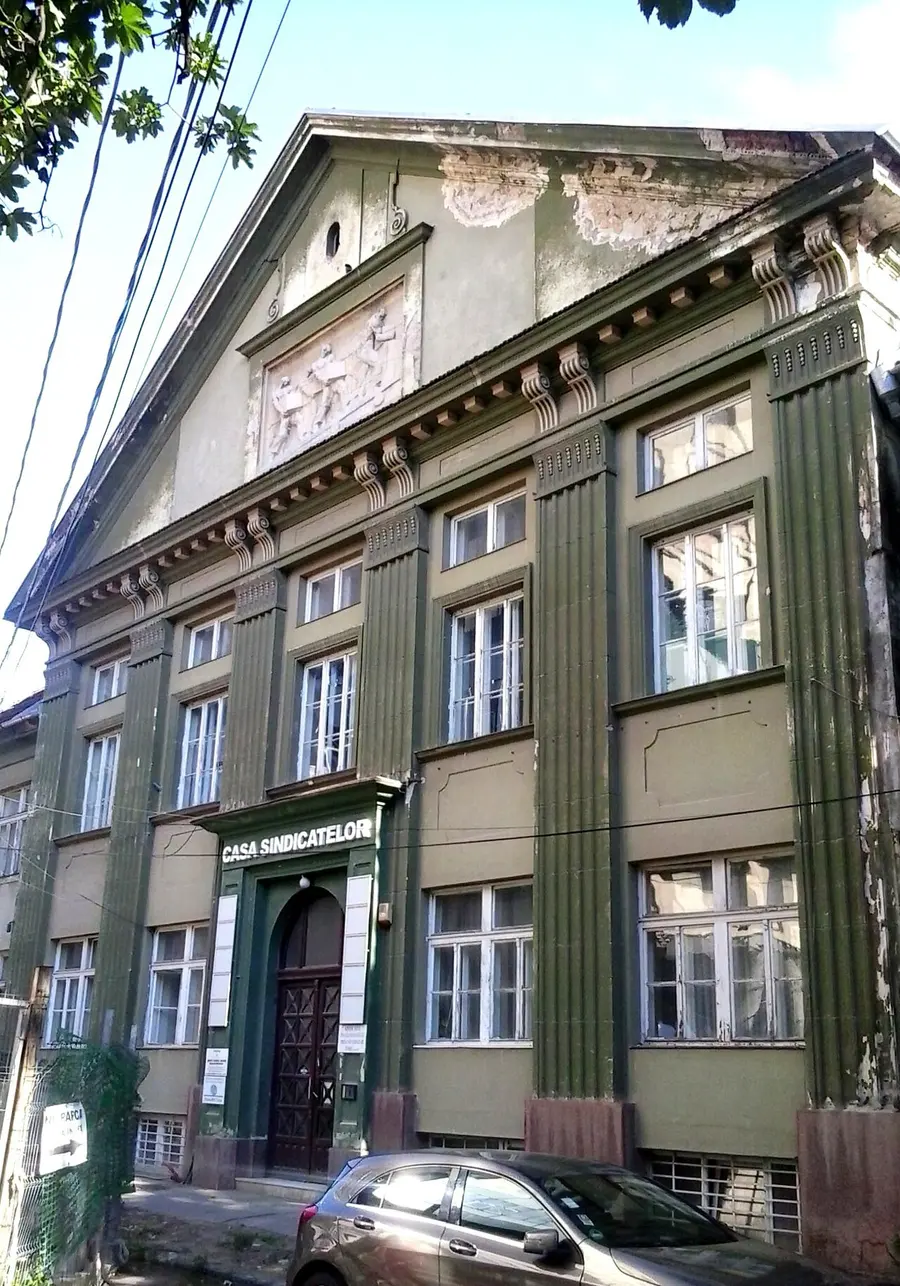
Walk a few streets off Piata Unirii or Piata Libertatii - Casa Sindicatelor, on a residential street 400-600 metres out, is a fair landmark for the idea - and the picture changes: the same walk to everything, a noticeably quieter night, and often a lower rate for an equivalent room. For a named anchor actually inside the old core, the Continental sits among the international chains based in Cetate, while boutique addresses like Atlas Hotel and Old Town Hotel cluster right on the squares themselves. As a rough guide to 2026 citywide prices, budget guesthouses run from about 150 to 200 lei a night, comfortable mid-range hotels sit around 300 to 450 lei, and the smartest addresses climb past 600 lei - Cetate and Fabric hotels tend to sit at the top of that band. Aggregators quote the same room two to three times apart depending on the day you check, so treat any single figure as a starting point, not a quote. Book the square itself if the terraces are the point of your trip. Book the street behind it if you just want the same location for less.
Fabric: history without the tourist crowd
Cross the Bega on Podul Decebal and you leave the polished centre behind for Fabric, Timisoara’s second historic quarter and, oddly, the one fewer visitors bother with. Count Claude Florimond de Mercy founded it in 1744 as an industrial suburb outside the fortress walls - “the merchants’ district” is just its nickname, and the real economy ran on guilds of shoemakers, saddlers, furriers, coopers and fishermen, eight watermills, a cloth factory from 1725, and a brewery from 1718 that’s still pouring two blocks from Piata Traian, the oldest in Romania. Serbs, Germans, Hungarians, Jews and Romanians worked this ground side by side for generations, around what’s now Piata Traian, a proper square that still feels like a stage for that mixed history rather than a backdrop for tourists.
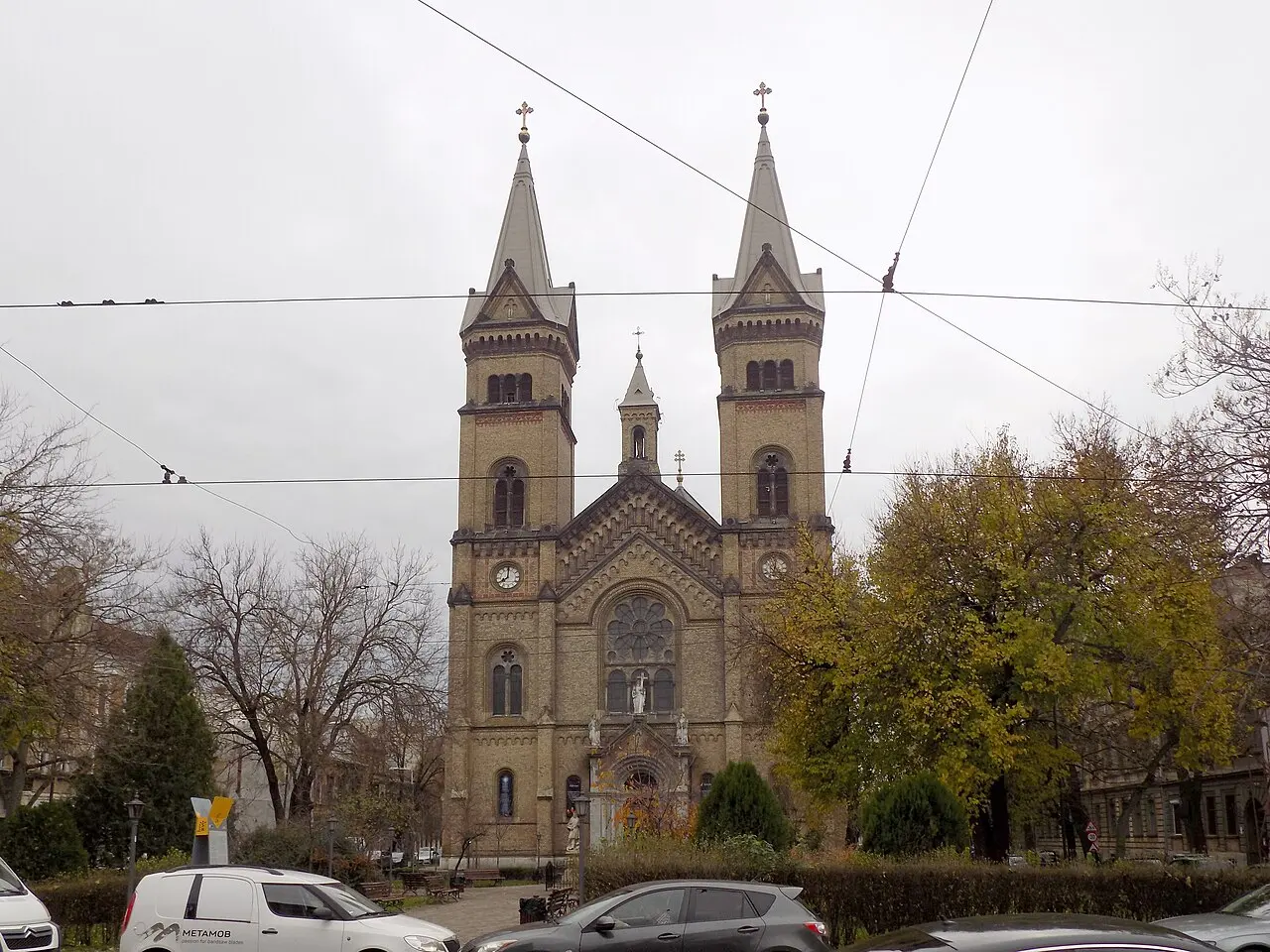
The showpiece is the Millennium Church itself, a soaring twin-towered neo-Romanesque church built between 1896 and 1901 - one of dozens raised across the Hungarian kingdom that year to mark a thousand years since the Magyar tribes settled the Carpathian Basin, not a claim about this particular plain, and still the largest Catholic church in the city.
Fabric is a genuine walk from Cetate: figure on 19 minutes just to reach Podul Decebal, 23 to the Fabric side right across it, and up to 29 if you’re headed all the way to Piata Traian. A tram normally closes that gap in a few stops, but the city has been rebuilding the Piata Traian junction since 3 August 2026 as part of a roughly EUR 34 million regeneration project (PORR is the contractor), and STPT has diverted lines 1 and 2 and swapped line 5 for a replacement bus while it runs - the contractor’s own estimate puts the work through the end of winter 2026-27. If you’re basing yourself in Fabric, check the current routing before assuming the stop outside your door works as normal.
Hotels are genuinely thin on the ground in Fabric. Most visitors who choose it end up in an apartment rather than a hotel room, and prices undercut Cetate by a clear margin. That suits history-minded travellers happy to trade convenience for atmosphere, and anyone staying long enough that a kitchen matters more than a concierge. It’s a poor fit if you’re only in town for one night.
Iosefin: Art Nouveau streets along the Bega
Iosefin runs along both banks of the Bega southwest of the centre, and it’s the district to pick if elegant, slightly faded architecture appeals to you more than postcard squares. Development took off after 1868 and peaked around 1900, which is why the streets here, especially around Bulevardul General Ioan Dragalina, are lined with Secession and Jugendstil facades: ornate stucco, curved window frames, the odd building still carrying a sign for a currency exchange. It isn’t polished the way Cetate is, and that’s rather the point.
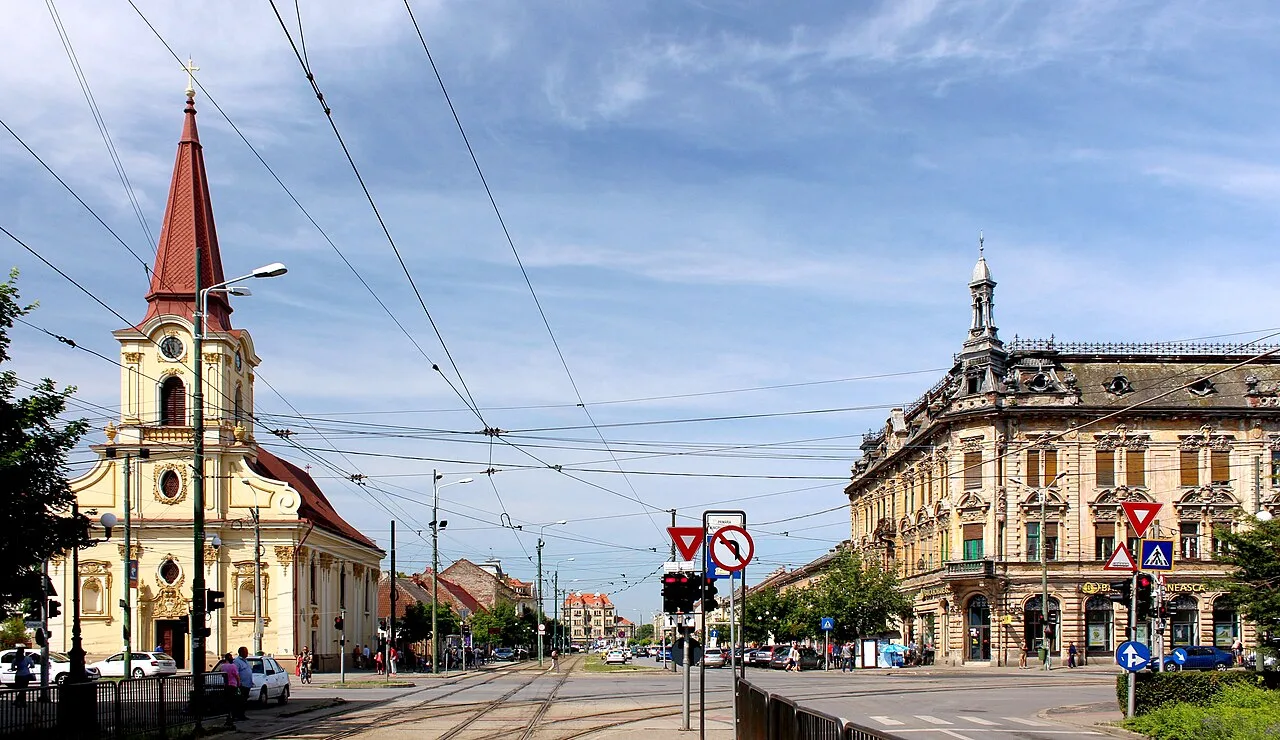
How far you are from the squares depends on which end of Iosefin you land in. Cross the Bega and cut through Central Park, the green strip around the Anton Scudier fountain on the Cetate side, and you’re back on Piata Victoriei in ten to fifteen minutes.
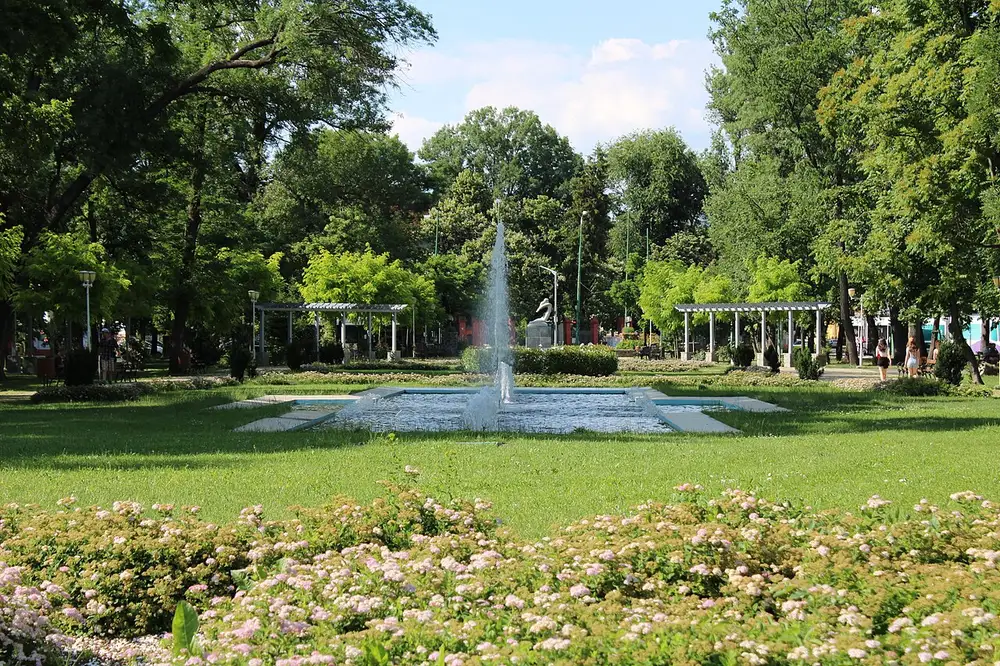
Head instead toward Timisoara Nord, the city’s main railway station, which actually sits inside Iosefin’s own boundary, and you’re looking at closer to 1.6 km and a 20 to 25-minute walk, or a short bus ride. That makes Iosefin the natural pick if you’re arriving or leaving by train and don’t want to drag a bag across town early in the morning.
Iosefin actually has hotels, which is easy to miss if you only search the big chains: Iosefin Residence, on Piata Alexandru Mocioni, and Hotel Casa Palace, on Splaiul Nicolae Titulescu, both sit inside the district boundary, alongside Excelsior. Del Corso, the boutique option that often gets mentioned in the same breath, actually sits just over the boundary in neighbouring Blascovici. Apartments still undercut all of them for a longer stay, and the Nokia campus close by adds a business crowd alongside the tourist traffic.
Circumvalatiunii: blocks, a mall, and longer stays
Circumvalatiunii takes its name from Calea Circumvalatiunii, the boulevard tracing the line of Timisoara’s old fortress walls, and it’s the most modern-feeling of the four areas: blocks of 1970s apartment buildings built for roughly 40,000 people, with the Iulius Town shopping and entertainment complex and the Botanical Park as its main draws rather than any architecture. It has more chain hotels than its reputation suggests: Ibis Timisoara City Center and Mercure Timisoara sit about 800 metres apart on Bulevardul Cetatii, and Hotel President is nearby too. Accor’s own listing for the Ibis calls it “placed next to the historical center”, and the walking numbers back that up: Piata Unirii is about 1 km and 14 minutes on foot, Piata Victoriei about 1.1 km and 15 minutes, both closer than the 1.7 km to Timisoara Nord station. Book Circumvalatiunii if you’re staying a week or more, working remotely, or just happier in a modern apartment with a supermarket downstairs than a boutique room above a restaurant; for a two or three-night trip around the old town, it isn’t the neighbourhood to choose.
Getting in: the airport, the station, and skipping the car downtown
Traian Vuia Airport (TSR) sits about 12 km northeast of the centre. The Express 4 bus runs both useful directions - E4 into the edge of Cetate, E4b on to Timisoara Nord station - for 5 lei a ride, the price of STPT’s 60-minute ticket, which you can pay by tapping a contactless bank card on the reader on board. On weekdays the E4 runs roughly every 40 minutes from about 04:25 to 23:00; at weekends and on public holidays it drops to about one an hour, with a few gaps of up to 100 minutes, from about 05:45 to 22:00. The E4b is the rarer of the two, at about a dozen runs a day. A taxi or a pre-booked transfer suits a late landing better: on STPT’s timetable as checked in October 2026, the last buses leave the terminal just before 23:30 on weekdays and just after 22:00 at weekends and on public holidays. If you’re flying into Bucharest first and connecting onward, our Bucharest to Timisoara guide weighs the short flight against the long train ride.
Once you’re in town, you’ll rarely want a car. Cetate’s core is largely pedestrian and sits in the priciest parking zone besides; Fabric and Iosefin are close enough that a taxi, tram or a determined walk covers the gap; and even in Circumvalatiunii, built around a ring road, most of what you need is within walking distance of the apartment blocks. Save the car, if you have one, for day trips onto the Banat plain, or for pushing on toward the Serbian border - our Timisoara to Belgrade guide covers that crossing and the bus that actually works.
One thing worth flagging before you book near Fabric: the city’s tram works around Piata Traian, running since 3 August 2026, are expected by the contractor to last through the end of winter 2026-27, so check current routing rather than assume the nearest stop runs as usual.
Timisoara’s four areas side by side
Here is the whole comparison in one place, walk times from Piata Victoriei:
| Area | Best for | Walk to the squares | Nightly rate |
|---|---|---|---|
| Cetate | A first visit, 2-3 nights | You are already there | Top of the local range |
| Fabric | History and atmosphere without the crowds | 20-30 min, quicker by tram (check current routing) | Noticeably cheaper, mostly apartments |
| Iosefin | Architecture, quiet nights, arriving by train | 10-25 min depending on the end | Cheaper, a handful of hotels |
| Circumvalatiunii | Longer stays, remote work, a mall on hand | 15-30 min, or a tram/bus | Apartment-friendly, a couple of chain hotels |
None of these choices is complicated once you know what you’re optimising for. Cetate buys convenience and costs you the most. Fabric and Iosefin buy atmosphere and a longer walk. Circumvalatiunii buys space and a supermarket at the cost of feeling like you’ve left the trip behind. Compare hotels and apartments across Timisoara by area before you book, and pick the one that matches how you actually plan to spend your evenings, not just where the postcard photo gets taken.
Photos
Admission and opening hours
- Admission price
- Rough nightly rates, per the July 2026 check in our Timisoara guide: budget guesthouses from about 150-200 lei, comfortable mid-range hotels around 300-450 lei, smart hotels 600 lei and up. Cetate and Fabric hotels sit at the top of that range; Iosefin and Circumvalatiunii apartments tend to undercut it. Aggregators can quote the same room two to three times apart depending on the day you check, so treat any single figure as a starting point.
- Opening hours
- Piata Victoriei, Piata Unirii and Piata Libertatii sit within about nine minutes of each other on foot; Cetate is bigger than the postcard shot suggests, and its far edge runs closer to twenty minutes from the middle. Fabric is a 19-29 minute walk from the squares depending how far into the district you go, Iosefin 10-25 minutes depending which side of the Bega you land on, and Circumvalatiunii 15-30 minutes, or a short tram or bus ride from any of them.
Prices are orientation, not quotes, and move with season and demand. The tram junction at Piata Traian in Fabric has been under reconstruction since 3 August 2026 as part of a city-led regeneration project (PORR is the contractor; STPT has rerouted lines 1, 2 and 5); the contractor estimates the work will run through the end of winter 2026-27 - check current routing before relying on a specific line. Checked August 2026.
Details checked: August 19, 2026
Read also

Cities · 13 min read
Predeal: Romania's Highest Ski Town
Verified · September 3, 2026Predeal sits at 1,030-1,110 m on the Bucharest-Brasov line: Clabucet ski, the town itself, and how it stacks up against Sinaia and Poiana.

Cities · 10 min read
Suceava Travel Guide: Fortress & Bucovina Gateway
Updated · August 25, 2026Things to do in Suceava: Stephen the Great's fortress, the UNESCO Saint John monastery, village museums, and using the city as a base for Bucovina.

Cities · 9 min read
Where to Stay in Sighisoara: Citadel or Lower Town
Verified · August 24, 2026Where to stay in Sighisoara: citadel vs Lower Town, price bands in lei, parking, the medieval festival, and who should sleep inside the walls.

Cities · 12 min read
Vama Veche: Romania's Bohemian Beach Village
Updated · August 8, 2026Vama Veche on the Bulgarian border: its communist-era history as an artists' hideout, the crushed-shell beach, the marine reserve, and getting there.