
Suceava Travel Guide: Fortress & Bucovina Gateway
Things to do in Suceava: Stephen the Great's fortress, the UNESCO Saint John monastery, village museums, and using the city as a base for Bucovina.
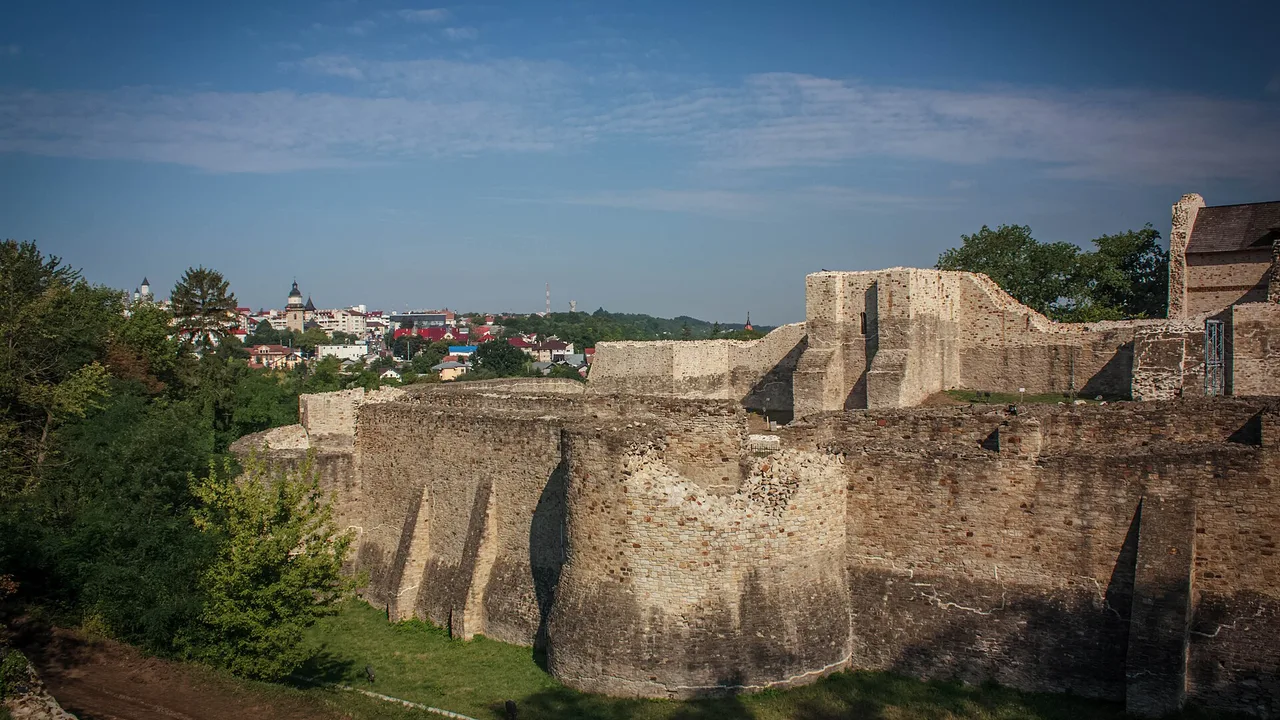
Travellers aiming for Bucovina’s painted monasteries usually land in Suceava first, and the city earns a proper look on its own: Stephen the Great’s rebuilt Seat Fortress, a UNESCO church with exterior frescoes, and an airport that skips the long train from Bucharest. Plan one full day here, then two more for the monastery circuit, and you’ll have the north-east covered without rushing.
Most travellers treat Suceava as a functional stop, which is half right. It isn’t Sibiu or Sighisoara: the centre is a mix of Habsburg-era public buildings, communist blocks and busy boulevards - not a walled Saxon postcard. What you’re buying here is logistics, not a postcard. Gura Humorului and Voronet are under an hour west on good roads, Dragomirna monastery sits just north of town, and the Stefan cel Mare airport (SCV) lets you skip a long train from Bucharest if you fly. Pair the city with the painted monasteries guide and you’ve got the classic Bucovina loop.
Why use Suceava as your Bucovina base?
Because the logistics work. Suceava (population around 84,000 by the 2021 census) sits at the crossroads of the region: the monastery country opens to the west and south-west, Iasi lies about two hours south-east on the train, and the Prislop Pass into Maramures is a half-day’s drive over the mountains if you’re stitching the two northern regions together on a longer loop.
Hotels and restaurants here are cheaper and more plentiful than in the small resort towns around the churches, and you can rent a car at the airport without backtracking through Cluj or Bucharest. The trade-off is noise and traffic in the centre and a skyline that won’t win any beauty contests. Prefer fairy-tale cobbles? Stay in Gura Humorului for the monastery days and treat Suceava as your arrival and departure point. Prefer one base for fortress, museums, airport and day trips? Suceava is the sensible choice.
What is the Seat Fortress and is it worth the ticket?
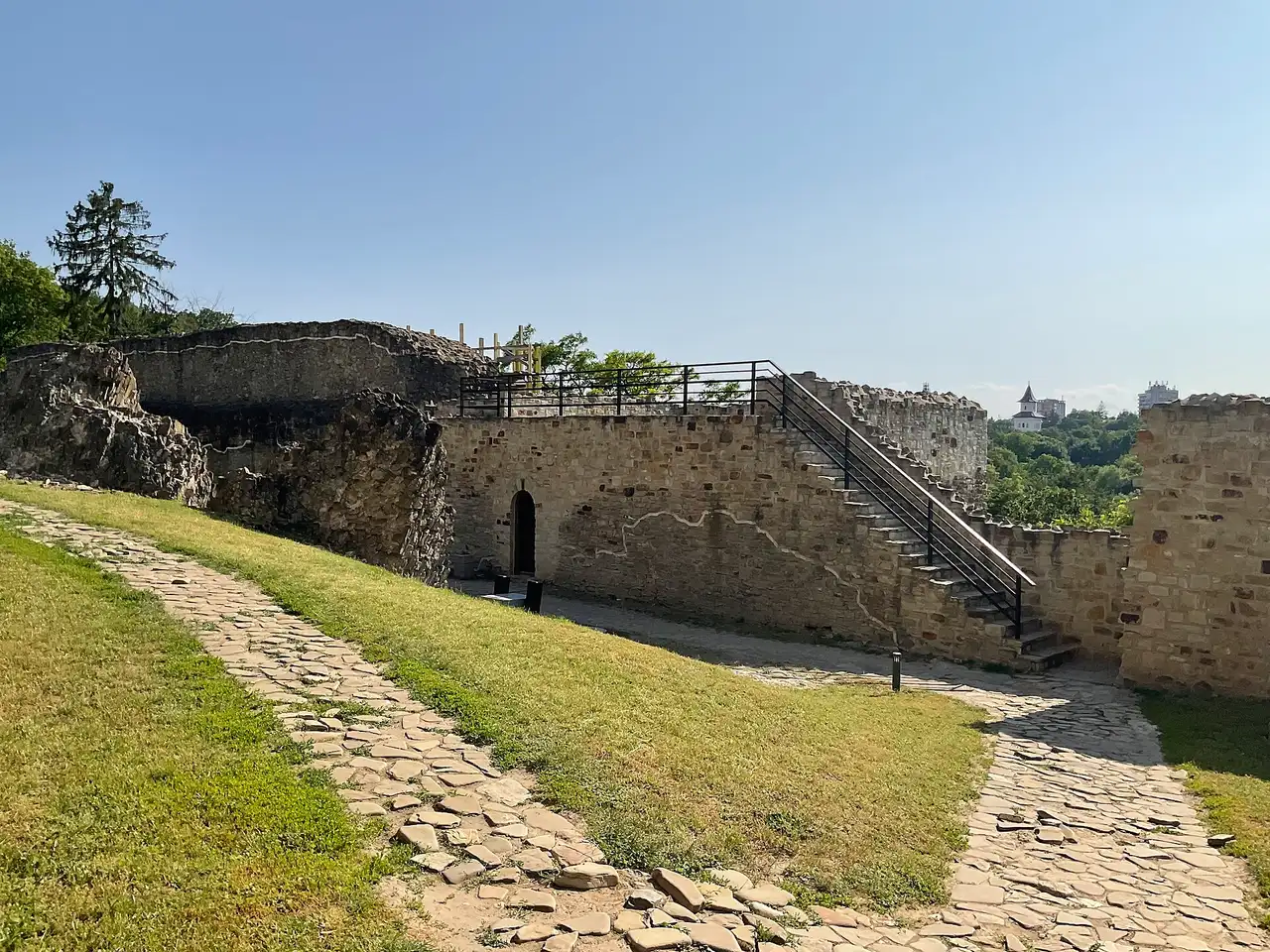
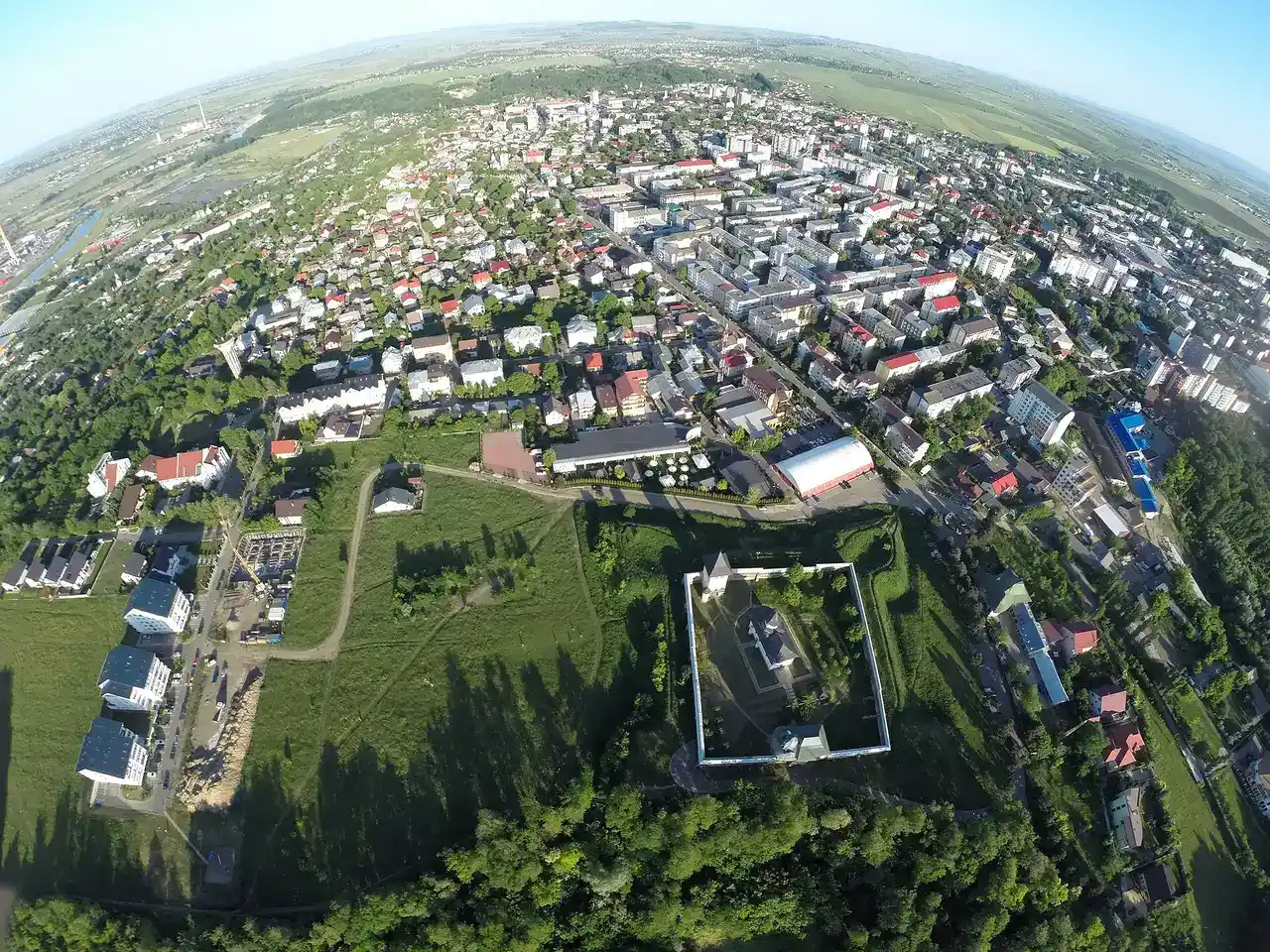
Yes, and allow about two hours. The Seat Fortress (Cetatea de Scaun a Sucevei) crowns Dealul Cetatii, the hill east of the centre, and it’s the reason history-minded visitors come to Suceava at all. Petru I Musat raised the first citadel here at the end of the 14th century when the town became capital of Moldavia (a role it held until 1565). Alexandru cel Bun enlarged it; Stephen the Great turned it into something that could stand up to Ottoman siege guns, adding a moat and walls about 15 metres high measured from the ditch floor.
Mehmed II, the conqueror of Constantinople, brought his army here and failed to take the fortress by force. In 1675 the fortress was demolished on Ottoman orders by Prince Dumitrașcu Cantacuzino, and what you walk through today is a reconstruction funded through EU regional programmes, with exhibition rooms inside the towers and a night video projection over the walls in summer (the museum asks you to schedule a slot for the summer projection). Adult entry to the permanent exhibition is 20 lei, students 5 lei and pensioners 10 lei; a combined ticket with the Bucovina Village Museum next door costs 32 lei for adults. In June, July and August the fortress stays open Monday to Sunday from 09:00 to 22:00 with last entry at 21:00; outside those months Mondays are closed and hours shrink - check muzeulbucovinei.ro for the month you’re travelling.
Which church in town is on the UNESCO list?
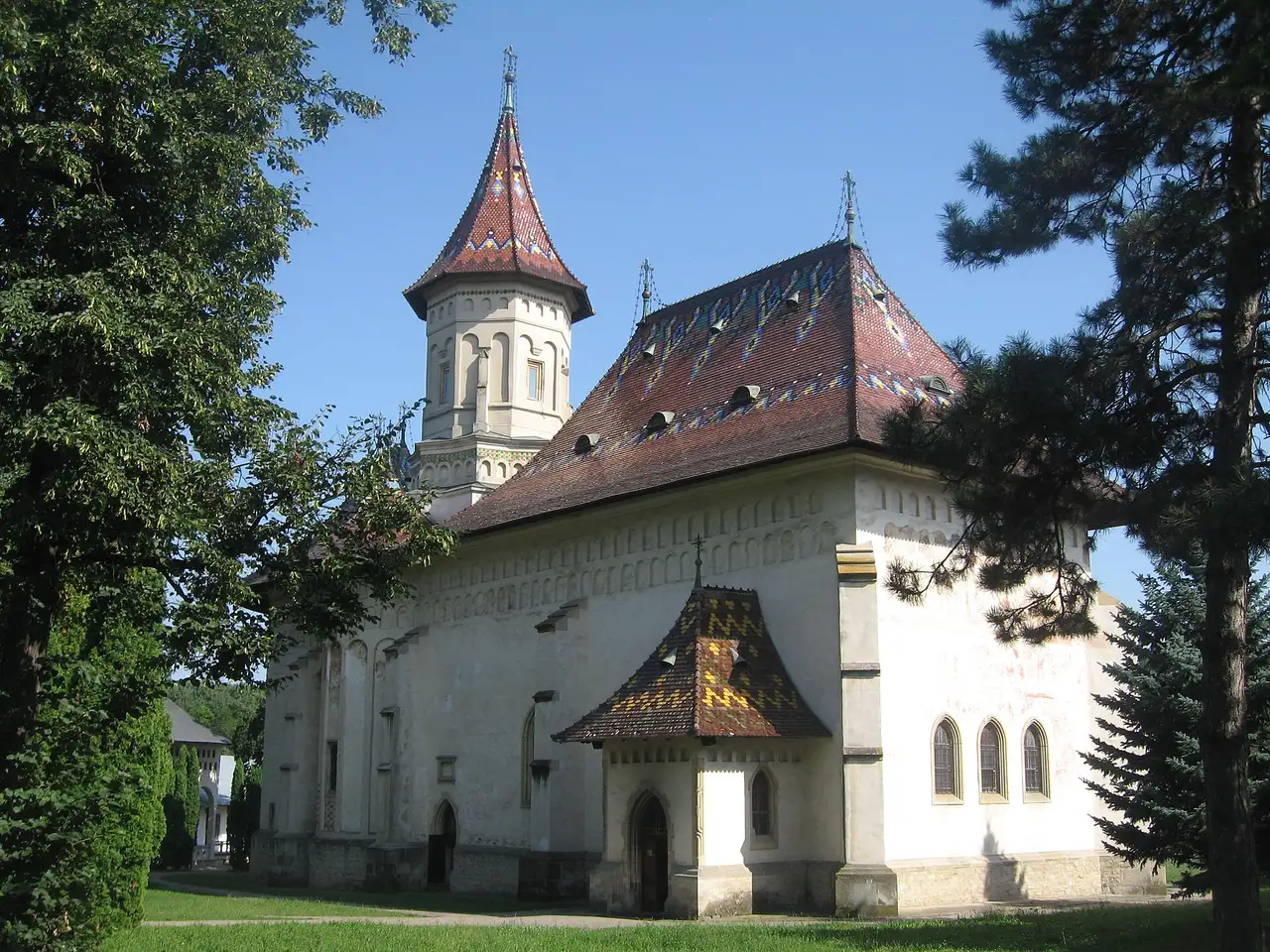
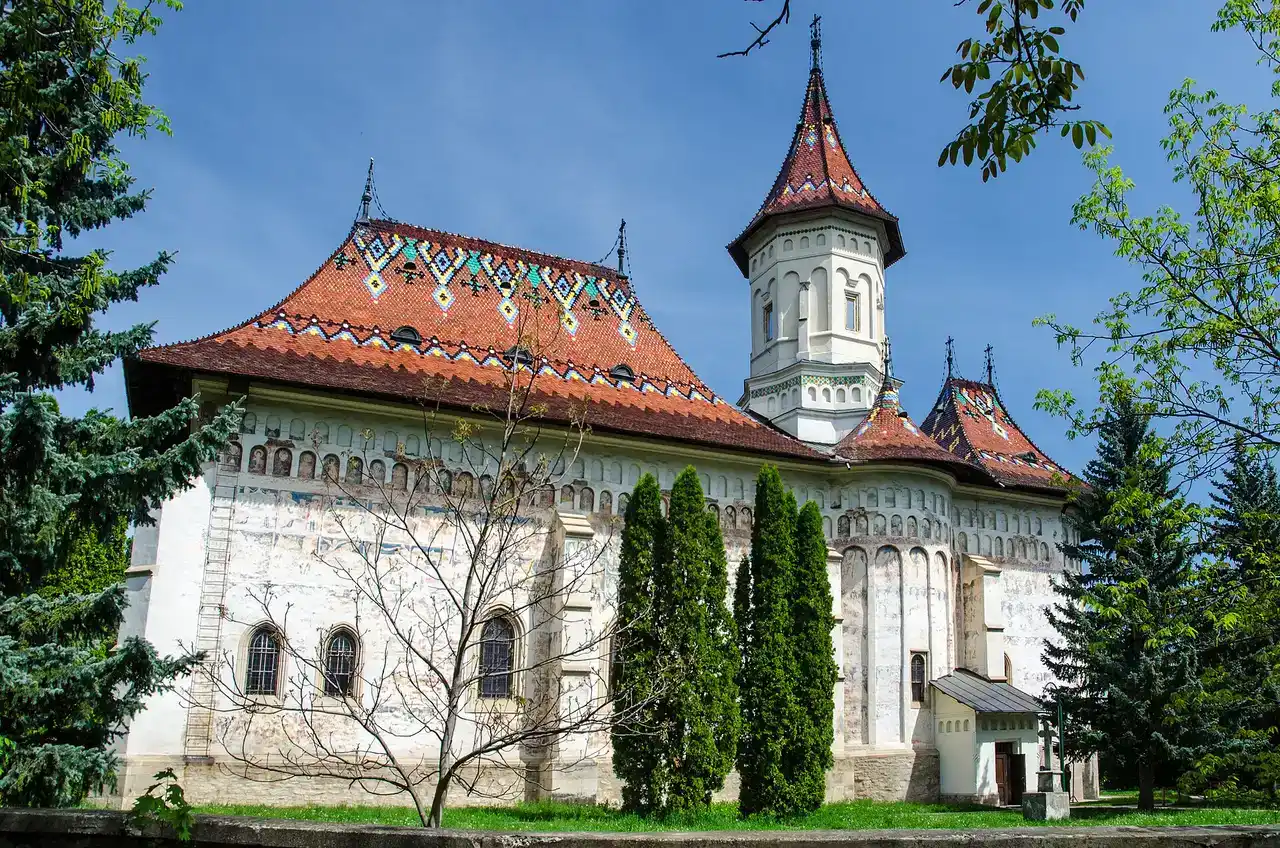
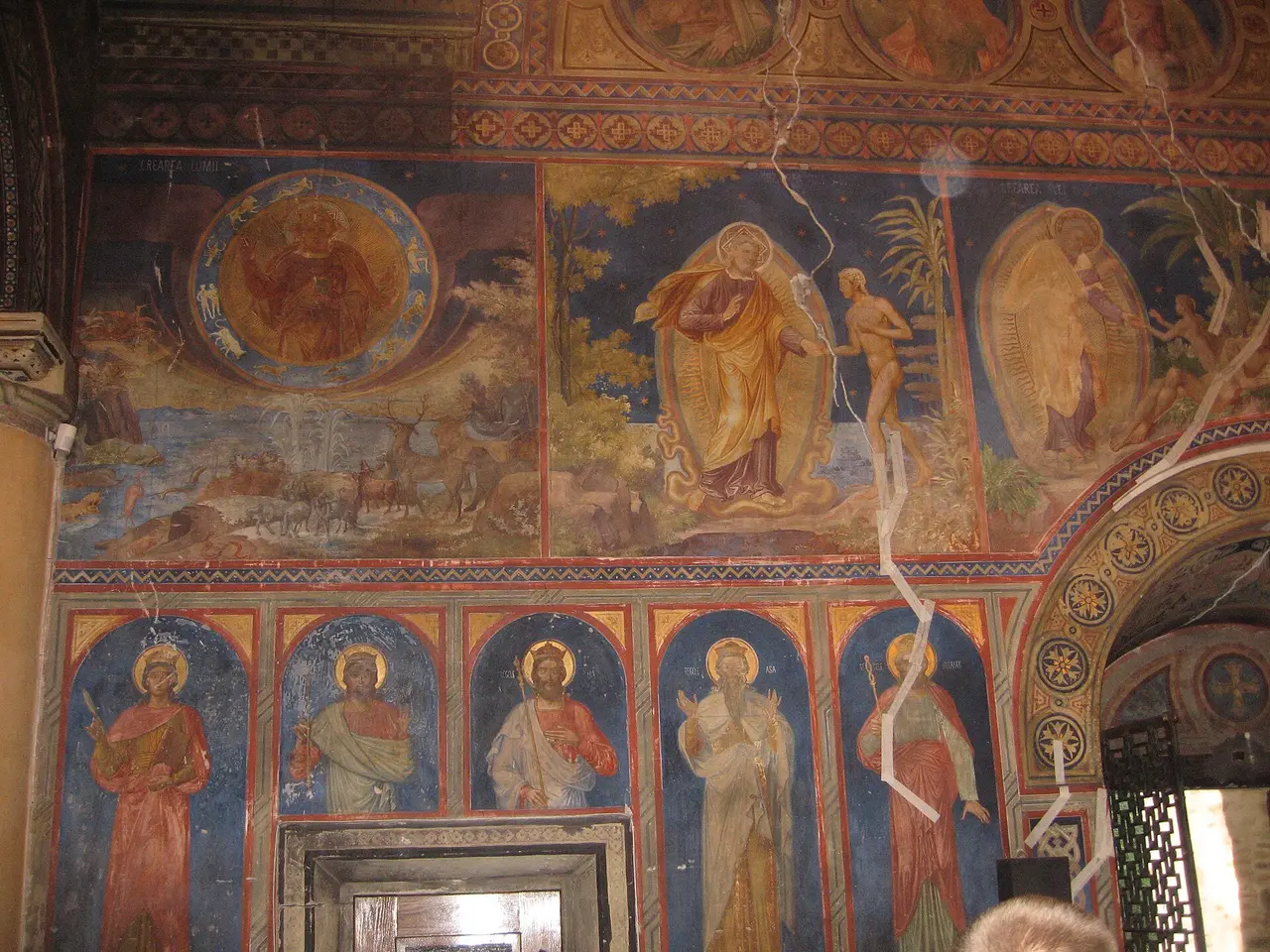
Saint George’s Church at the Monastery of Saint John the New (Manastirea Sfintul Ioan cel Nou), about 15-25 minutes on foot from the fortress hill into the centre (or a short taxi). Bogdan III and his son Stefanita commissioned the church between 1514 and 1522; it served as the metropolitan cathedral of Moldavia until 1677. The relics of Saint John the New arrived in Suceava around 1415 under Alexandru cel Bun (first kept at Mirauti, the then metropolitan church) and were later moved into this complex; the church you walk today was finished a century after that arrival. Petru Rares added the exterior frescoes in 1534, and although they’re more faded than Voronet’s blues, they’re the real thing: biblical scenes on the outside walls, the same tradition as the famous monasteries west of here.
Entry is free, dress modestly, and give the exterior walls a slow circuit even if the paint is patchy - enough fresco survives to preview what awaits in the hills. The monastery has been the seat of the Archbishop of Suceava and Radauti since 1991, so you’ll see active monastic life alongside tourists.
What is Mirauti Church?
The coronation church where Stephen the Great became prince. Mirauti (Biserica Mirauti), founded by Petru I Musat in 1375, is the oldest church in Suceava and held the metropolitan seat until 1522. Stephen was crowned here in 1457 after receiving the bishop’s blessing, which is why Moldavian history buffs make the short walk to Strada Mirautilor even though the building was heavily restored in 1898-1901. It’s small, quiet and easy to miss if you’re only chasing the fortress - worth ten minutes for the link between the citadel on the hill and the prince who built half of Bucovina’s monasteries.
Which museums should you fit in?
Next to the citadel on the fortress plateau sits the Bucovina Village Museum (Muzeul Satului Bucovinei): around 80 traditional buildings moved here from across the region - wooden churches, farmhouses, a water mill from Gura Humorului, workshops - and the quickest way to understand rural Bucovina without driving village to village. On its own it costs 16 lei for adults; paired with the fortress it’s 32 lei, and the museum’s offers tab also bundles it with Hanul Domnesc for 22 lei or all five of its sites for 72 lei.
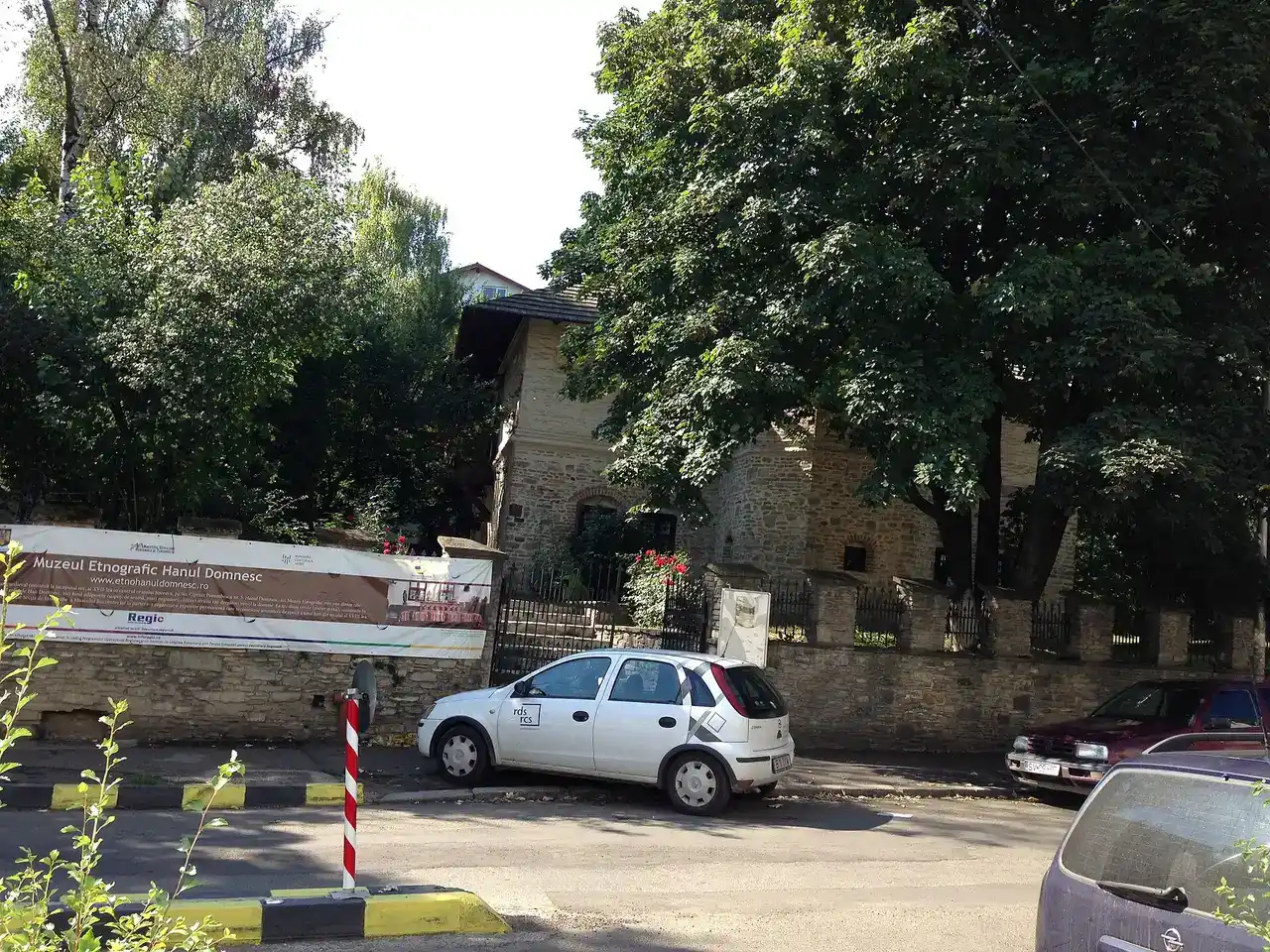
A short walk into the centre, the Princely Inn (Hanul Domnesc) on Strada Ciprian Porumbescu is the oldest surviving secular building in town (17th-century ground floor, 19th-century upper storey) and now houses the Bucovina Ethnography Museum with costumes, farm tools and household objects - 12 lei adults. Five minutes away on Stefan cel Mare street, the Administrative Palace faces the History Museum of Bucovina (16 lei adults), where the Throne Hall reconstruction of Stephen’s court is the headline room. Most city museums close Mondays and keep shorter winter hours; Tuesday to Sunday, 09:00-17:00 or 10:00-18:00 is the usual pattern. From late October to the end of February the Village Museum and Hanul Domnesc shut on Tuesdays as well, running Wednesday to Sunday, 09:00-16:00.
Is Zamca Monastery worth the detour?
If you’ve half an hour and don’t mind a climb, yes. Zamca sits on the western edge of town, an Armenian monastery founded in the early 1600s. The church and 1606 bell tower sit inside star-shaped walls that Polish troops reinforced in 1691 when they used the complex as a command post - the name comes from the Polish word for a fortified place. It’s a different flavour from the Moldavian churches: Armenian stone carving, a walled courtyard, and views back over the city rooftops. Entry is usually free or a small donation; ask at the gate rather than building your day around fixed opening times.
How many days do you need, and what are the best day trips?
One day for Suceava itself (fortress, Saint John, Mirauti, one museum), then two for the painted monasteries. That’s the standard Bucovina allocation, and it works whether you sleep in Suceava or shift west to Gura Humorului after the first night. The painted monasteries of Bucovina - Voronet, Humor, Moldovita and Sucevita - are all within an hour’s drive, and you’ll want a car or a long organized day tour because buses between churches are thin.
North of town, Dragomirna monastery (about 10 km) is the obvious half-day add-on: built 1602-1609 with the tallest fortified walls in the region and no exterior frescoes, so it feels more like a castle than a painted church. Patrauti, another early Stephen the Great church a short drive north, is quieter than the famous four - a good extra stop without the tour-bus crowds.
Coming from the south, many people reach Bucovina through Iasi, Romania’s old Moldavian capital with the Palace of Culture and the Three Hierarchs church - the train to Suceava takes around two hours and lets you combine both cities on one ticket. Coming from the west, the Prislop Pass links Maramures to Bucovina; the Maramures loop route shows how wooden churches and painted ones fit into one northern week if you’re planning farther ahead.
How do you get to Suceava?
Fly if you can. Stefan cel Mare Airport (SCV) lies 12 km east in Salcea and calls itself the gateway to Bucovina on its own website. Summer 2026 (29 March to 24 October): TAROM runs a daily Bucharest Otopeni flight leaving Suceava at 05:20 (about 75 minutes) with the return arriving near midnight; Wizz Air covers London Luton, Rome, Milan, Dortmund, Birmingham and other European cities on various weekdays - check aeroportsuceava.ro for your date because the timetable shifts by day of week. The airport handled about 769,000 passengers in 2025, so it’s a real hub, not a strip of grass.
From Bucharest by land, the train typically takes around five to six hours (check cfrcalatori.ro for your date); driving is similar on the E85/E58 corridor. Iasi airport (IAS) is an alternative if flights to SCV don’t suit you - it’s busier for domestic links, and the road or rail hop to Suceava is about two hours. Once you’re here, base near the fortress or on Stefan cel Mare boulevard so the museums and Mirauti are walkable, and book monastery days with an early start if you’re doing Voronet at opening time before the coaches arrive.
Photos
On the map
The map loads on click - to keep the page lightweight.
The map didn’t load. Check your connection and refresh the page.
Admission and opening hours
- Admission price
- Seat Fortress: adults 20 lei, students 5 lei, pensioners 10 lei (permanent exhibition). Combined fortress + Bucovina Village Museum: 32 lei adults. Village Museum + Hanul Domnesc: 22 lei. All five sites on one ticket: 72 lei. Saint John the New Monastery church: free. Bucovina Village Museum alone: 16 lei adults. History Museum: 16 lei adults. Ethnography Museum at Hanul Domnesc: 12 lei adults.
- Opening hours
- Fortress: Jun-Aug Mon-Sun 09:00-22:00, last entry 21:00; other months closed Mondays (hours shrink in winter). Village Museum and city museums typically Tue-Sun 09:00-17:00 or 10:00-18:00; from late October to end of February the Village Museum and Hanul Domnesc also close Tuesdays, Wed-Sun 09:00-16:00. Confirm on muzeulbucovinei.ro.
Museum prices and fortress hours are seasonal and change without notice. The fortress runs a night video projection that needs booking. Carry cash in lei for tickets and monastery photo fees outside town.
Details checked: August 25, 2026
Read also

Cities · 13 min read
Predeal: Romania's Highest Ski Town
Verified · September 3, 2026Predeal sits at 1,030-1,110 m on the Bucharest-Brasov line: Clabucet ski, the town itself, and how it stacks up against Sinaia and Poiana.

Cities · 9 min read
Where to Stay in Sighisoara: Citadel or Lower Town
Verified · August 24, 2026Where to stay in Sighisoara: citadel vs Lower Town, price bands in lei, parking, the medieval festival, and who should sleep inside the walls.

Cities · 11 min read
Where to Stay in Timisoara: Best Areas & Hotels
Verified · August 19, 2026Where to stay in Timisoara: Cetate vs Fabric vs Iosefin vs Circumvalatiunii - who each suits, walk times, prices in lei, and getting in from the airport.

Cities · 12 min read
Vama Veche: Romania's Bohemian Beach Village
Updated · August 8, 2026Vama Veche on the Bulgarian border: its communist-era history as an artists' hideout, the crushed-shell beach, the marine reserve, and getting there.