
Poenari Castle: Vlad the Impaler's Real Fortress
Poenari Castle - Vlad's real fortress above the Arges: 1,480 steps, tickets 30/20 lei, hours 10:00-18:00, and how to reach it on the Transfagarasan.
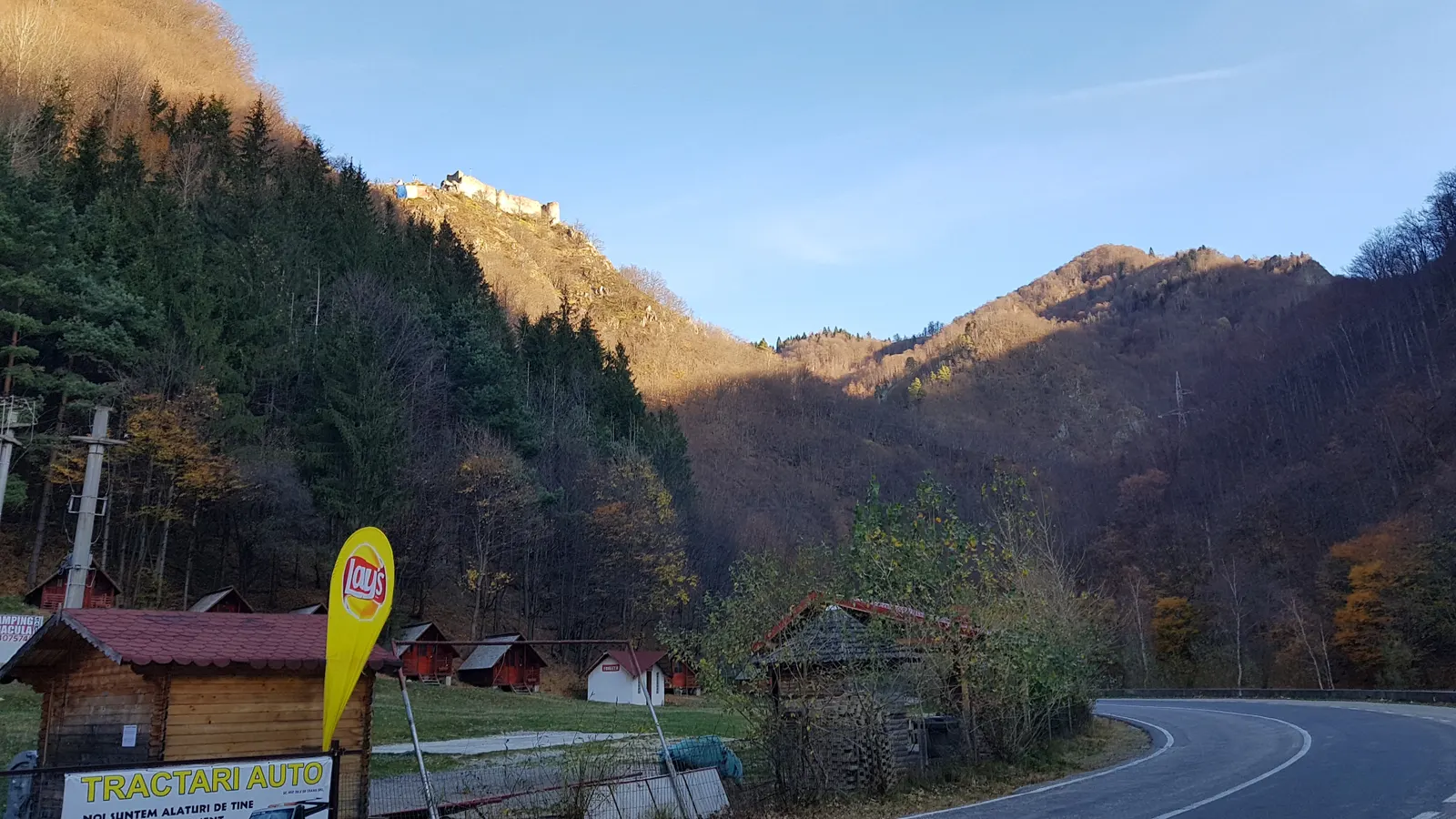
Poenari Castle is the fortress Vlad the Impaler actually held: a ruined citadel on a ridge above the Arges valley, reached by climbing about 1,480 concrete steps. It sits in Capataneni (Arefu commune, Arges County), roughly 25 km from Curtea de Arges and right on the southern approach of the Transfagarasan. If you came for the historical Vlad rather than the Bran souvenir trail, this is the stop that earns the climb.
The site is run by the Arges County Museum. As posted by the county council in August 2026, tickets are 30 lei for adults and 20 lei for pupils, students and pensioners, the gates run daily 10:00-18:00, and the last ascent starts at 17:00 so you have time for the stairs before closing. Confirm both numbers on the day - operators change them, and temporary safety rules (bears, works) sometimes squeeze how you go up.
The climb is the visit
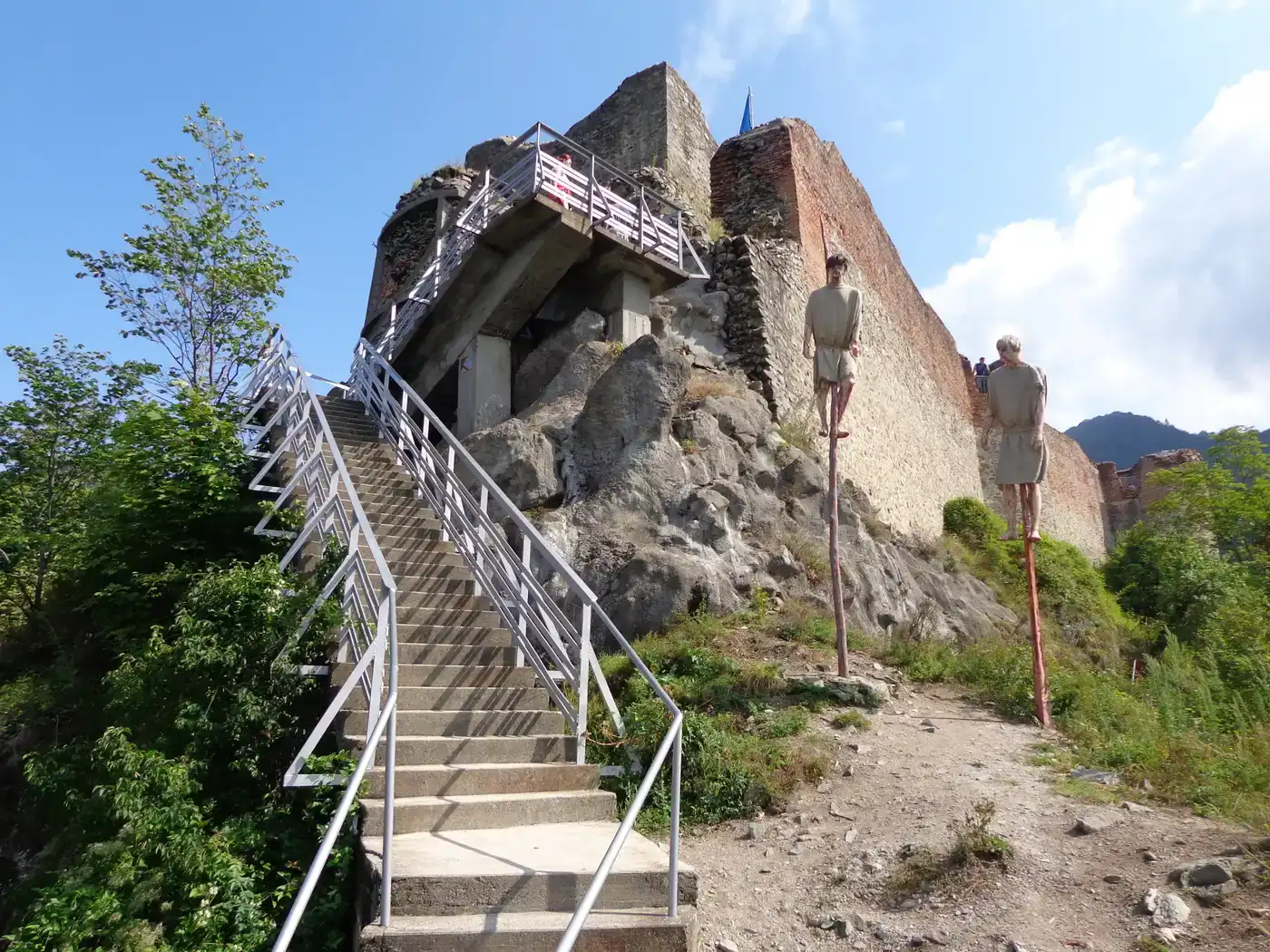
You don’t drive to a gate and stroll in. From the roadside parking on DN7C you take a long concrete stairway that switchbacks through dense beech forest up Mount Cetatuia. The county page and the museum’s own site both put the count at 1,480 steps. The museum quotes a climb of 30 to 45 minutes depending on pace, with rest spots along the way; slower walkers or a hot afternoon can push past that. There is no lift, no golf cart and no wheelchair route - if stairs are a hard stop for you, the viewpoint from the road is as close as you’ll get.
That climb is why Poenari stays quieter than Bran even in July. Tour buses can dump people at Bran in five minutes; here every visitor pays in calf muscle. Wear shoes with grip, carry water, and don’t start the stairs at 16:50 hoping to “just peek” - staff cut the last climb at 17:00 for a reason.
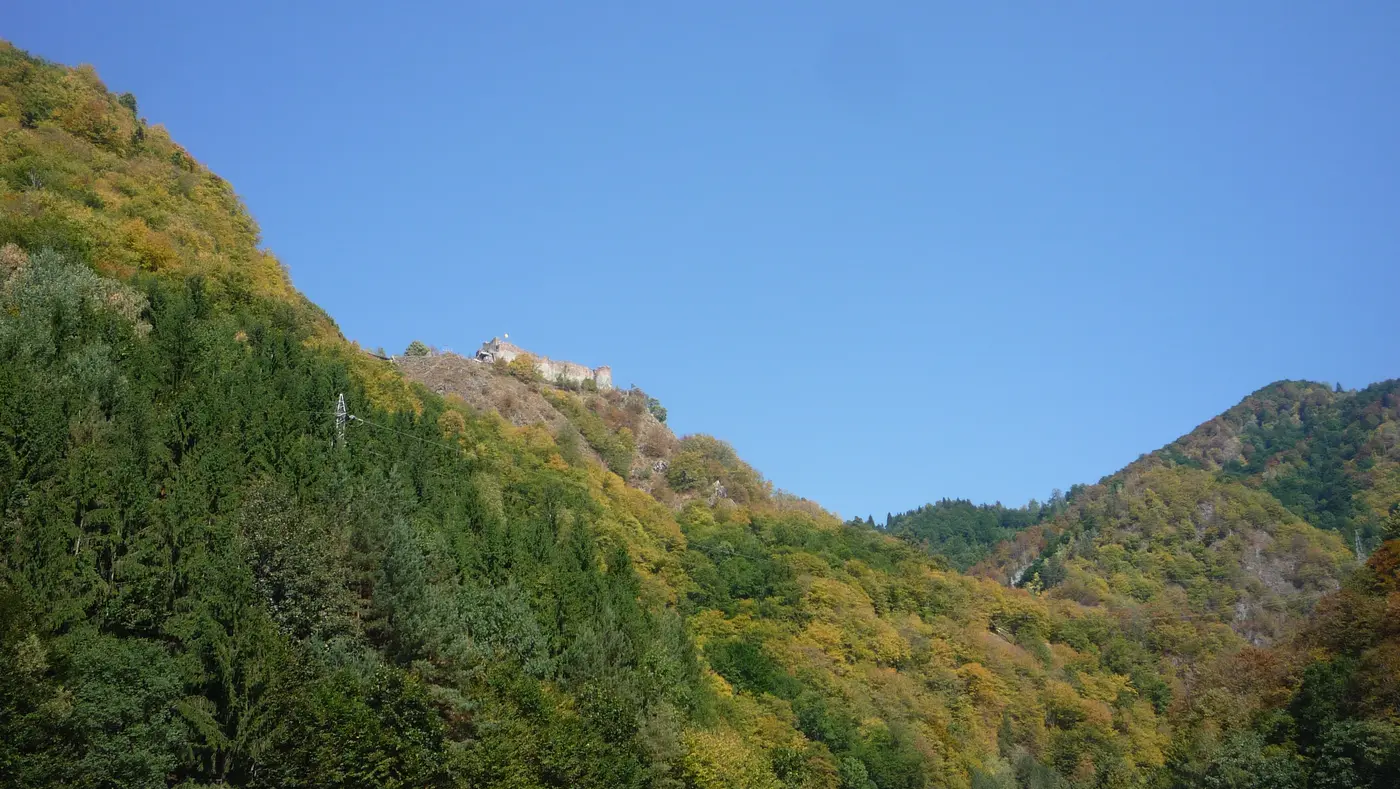
One practical wrinkle worth checking the morning you go: the museum site sometimes posts temporary access rules after wildlife sightings near the stairs. On the day this page was checked (14 August 2026), a press note there asked visitors to go up in organised groups of about 15-20 people after a bear was reported in the area. That kind of rule can appear and disappear within days, so treat cetateapoienari.ro as live status, not a brochure. Checking that page from your phone before the climb needs local data - a Romania data plan (eSIM) covers it.
Tickets, hours and what you get
Buy the ticket at the base or online through the Arges Tourist Pass linked from the county page. Adult entry is 30 lei; reduced tickets for pupils, students and pensioners are 20 lei. Those figures come from Consiliul Judetean Arges (the county council page for Cetatea Poienari), not from a travel blog - still, recheck before you budget a whole group, because printed prices lag.
Hours on the same official page: Monday to Sunday, 10:00 to 18:00, with the last climb at 17:00. Arrive closer to opening if you want cooler air and fewer people on the stairs; arrive after mid-afternoon and you’re racing the cutoff. Off-season and bad-weather closures happen - the stairs ice over and the ridge is exposed - so a winter day trip needs a fresh check, not last summer’s screenshot.
What waits at the top is a ruin, not a furnished palace. The citadel sits around 850 m on Mount Cetatuia. County materials describe an elongated fortress with thick walls (about 2-3 metres), five towers (four round, one prismatic), first documented in 1453. Vlad Tepes enlarged an earlier outpost into a secondary residence and anti-Ottoman stronghold; later it sheltered rulers, the treasury and, less pleasantly, boyars locked up for treason. Earthquakes and a landslide in 1913 tore chunks into the river below; further quakes in 1940 and 1977 damaged what remained. A recent conservation project rebuilt access paths, railings and visitor safety gear, so the walkways feel more secure than the old photos suggest - but you’re still walking broken stone on a knife-edge ridge.
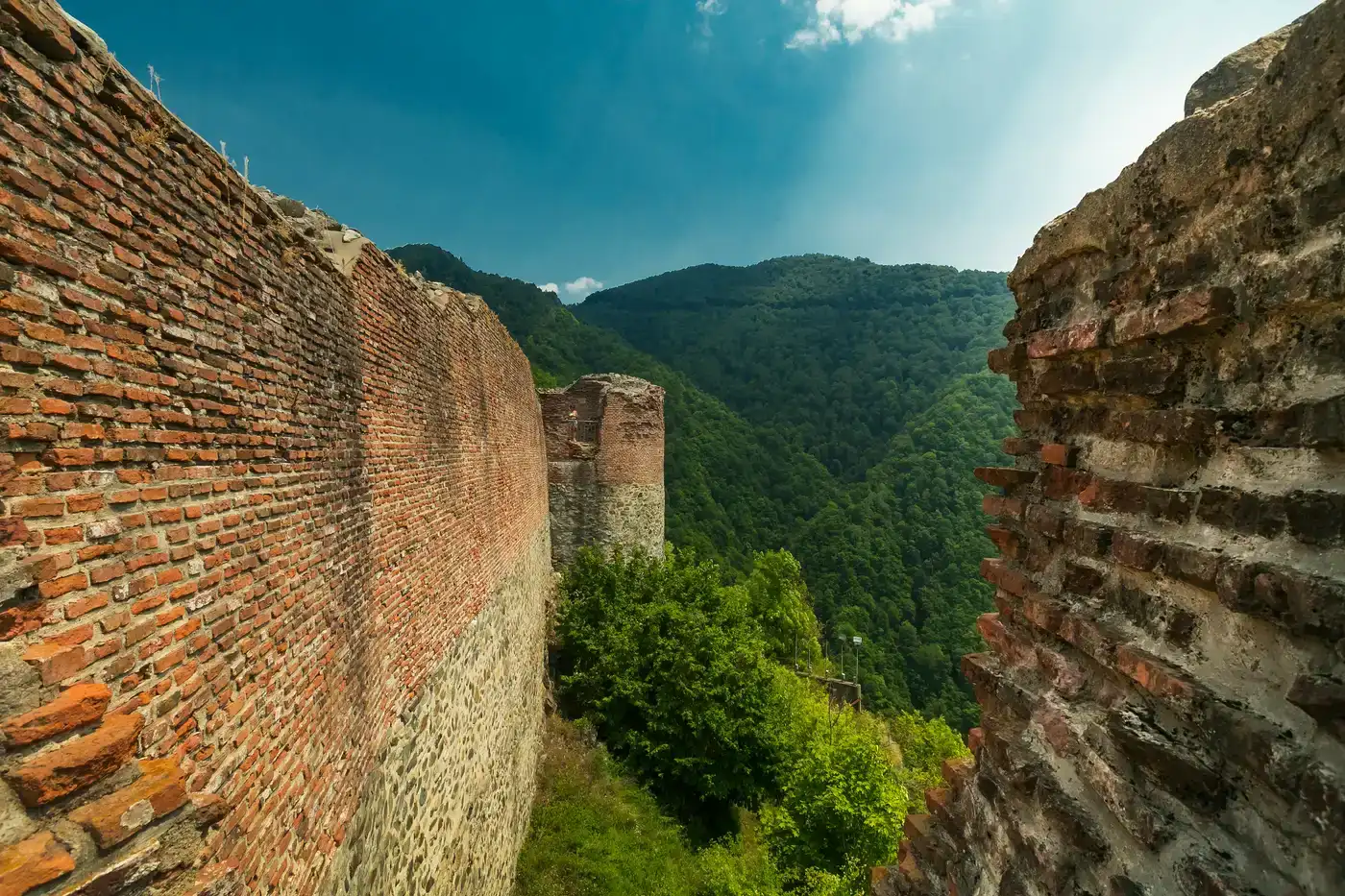
From the walls you look down the Arges gorge toward Lake Vidraru and across to the Fagaras peaks when the cloud lifts. That’s the payoff people remember more than any exhibit panel. The “museum” here is the setting.
Poenari vs Bran (and why both can stay on the map)
Bran is the castle on every postcard and every coach timetable. Poenari is the one Vlad actually used. If you want the longer thread - how the novel, the nickname “Dracula” and the tourist trail got tangled - our Dracula in Romania page sorts the history from the brand. This page stays on the fortress itself: stairs, tickets, access, what you stand on when you get there.
Honest trade-offs. Bran is easy, indoor, crowded and short on real Vlad. Poenari is hard, outdoor, thin on crowds and thick on atmosphere. You don’t need to pick a winner for the whole trip. Plenty of travellers do Bran from Brasov on one day and fold Poenari into a Transfagarasan drive on another. If you’re ranking buildings by history and effort rather than Instagram polish, Poenari also sits in our Romania castles ranked list for exactly that reason.
How to get there
Self-drive is the clean option. Poenari sits on DN7C, the Transfagarasan, on the southern side near Vidraru Dam and Capataneni. From Bucharest you typically go via Pitesti and Curtea de Arges, then north on the mountain road; from Sibiu or Brasov you cross the high pass when it’s open and drop south past Balea Lake to the dam and the stairs. Our Transfagarasan road guide covers season dates, the 07:00-21:00 gate hours and the fuel trap - fill up before the alpine section, because there’s nothing reliable at the top.
Public transport to the base is painful enough that most visitors without a car book a day tour or a private transfer instead of trying to chain local buses. If you’re hiring for the mountain day, rent a car and treat Poenari as a timed stop between Curtea de Arges and the pass rather than a standalone pilgrimage from Bucharest with three changes.
Park at the roadside pull-offs near the stairhead - there’s no road up the crag. Lock the car, take valuables, and start the climb with enough daylight for the descent as well as the ascent. Thunderstorms roll through the Arges gorge fast in summer afternoons; wet concrete steps are a typical slip risk here, not vampires.
Timing, kit and a sane half-day
Best months line up with the Transfagarasan high section: roughly July to September, the safest months on the pass, when the stairs aren’t iced. June and October work if the weather holds and you’ve checked both the castle hours and the road barrier. Pairing the fortress with Vidraru Dam and a partial Transfagarasan run is the usual half-day from the south; trying to bolt Poenari onto a Bran morning from Brasov makes for a very long day of driving.
Pack light but serious: water, sun hat, rain shell, and shoes you’d trust on a wet forest path. There’s little shade on the upper ridge and nowhere to buy a cold drink once you’re halfway up. Phone signal can drop in the gorge - download an offline map pin for the parking before you leave Curtea de Arges.
If you only have energy for one “real Vlad” site out of Bucharest, make it Poenari and leave Bran for a separate Brasov base day. The stairs weed out the souvenir crowd, the ticket is cheap in lei, and the view from the broken walls is the closest thing Romania offers to standing in the warlord’s actual lookout. Just don’t treat the 17:00 last climb as a suggestion - miss it and you’re photographing the ridge from the car park.
Photos
On the map
The map loads on click - to keep the page lightweight.
The map didn’t load. Check your connection and refresh the page.
Admission and opening hours
- Admission price
- Adults 30 lei; pupils, students and pensioners 20 lei. Buy at the site or via the Arges Tourist Pass online. Confirm before you go - prices move.
- Opening hours
- Daily 10:00-18:00; last climb up at 17:00 (CJ Arges). Check cetateapoienari.ro the morning you visit - temporary safety rules can change access.
Operator: Muzeul Judetean Arges (cetateapoienari.ro). The climb is ~1,480 concrete steps through beech forest, typically 30-45 minutes. Good shoes and water are not optional. Checked 14 Aug 2026 against CJ Arges.
Details checked: August 14, 2026
Read also

What to see · 11 min read
Marginimea Sibiului: Shepherd Villages Near Sibiu
Verified · September 5, 202618 shepherd villages west of Sibiu: Rasinari, Sibiel glass icons, Saliste, Paltinis bus fares, and how a day out of town works.

What to see · 9 min read
Prejmer Fortified Church: UNESCO Near Brasov
Verified · September 3, 2026Prejmer fortified church 15 km from Brasov: Greek-cross plan, 275 wall rooms, UNESCO hours for 2026 and how a visit actually works.

What to see · 11 min read
ASTRA Museum Sibiu: Romania's Great Open-Air Village
Verified · August 29, 2026ASTRA Museum near Sibiu: 50-lei tickets, hours by season, how to get there, and which of the 400+ buildings across 96 hectares to see first.

What to see · 10 min read
Bucegi Sphinx & Babele: Cable Car from Busteni
Updated · August 26, 2026Ride the Busteni cable car to the Sphinx and Babele: 2026 return fare 199 lei, hours from 08:30, and how to pair it with Peles or Cantacuzino.