
Transfagarasan & Transalpina: 2-3 Day Loop
Drive both Romanian alpine roads in one loop from Sibiu: Transalpina via Ranca, Curtea de Arges and Balea Lake, with the seasons and gate hours.
Romania’s two highest paved roads - the Transfagarasan (DN7C) and the Transalpina (DN67C) - both sit above 2,000 m, both close for half the year, and both reward a loop instead of a rushed day trip. This 2-3 day itinerary starts and ends in Sibiu, runs the Transalpina first through Rânca, drops to Curtea de Arges, then climbs the Transfagarasan to Balea Lac and returns north. As of 27 August 2026, CNAIR has both alpine sections open daily 07:00-21:00 (Transfagarasan since 12 June, Transalpina since 29 May). You’ll need a rental car - there is no useful public transport across either pass - and you’ll want to read our Transfagarasan road guide for cable-car prices and the driving in Romania primer on the vignette before you pick up keys.
The short version: give it three days if you can, two if you’re disciplined, never attempt either pass outside the summer window without checking barriers first, and do Transalpina before Transfagarasan so the famous hairpins land as the finale rather than the appetiser.
Transalpina or Transfagarasan first?
Most international traffic goes straight to the Transfagarasan because Top Gear filmed there. The Transalpina is Romania’s highest road (Urdele Pass at about 2,145 m versus Balea at roughly 2,042 m), rebuilt as the “King’s Road” in the 1930s, and on a typical August weekday you’ll share it with a fraction of the coaches choking the Fagaras crossing. It also lacks a lake-side circus of cabanas, which makes stops feel wilder if less convenient.
Driving both in one trip, the geography pushes you clockwise from Sibiu: head south-west to Sebes, join the DN67C, and climb Transalpina toward Rânca and Novaci before dropping into Wallachia. That saves backtracking and puts Curtea de Arges at the foot of the Transfagarasan’s southern ramp - the natural place to sleep before an early assault on Balea Lac. Flip the order and you’ll either cross the Fagaras twice or add a long detour on the DN1.
| Leg | Distance (approx) | Driving time | What you’re trading |
|---|---|---|---|
| Sibiu to Rânca (Transalpina) | 170 km | 3 h 55 | Mountain pace, not motorway speed |
| Rânca to Curtea de Arges | 150 km | 3 h | Descent through Gorj/Olt valleys |
| Curtea de Arges to Balea Lac | 80 km | 2 h | Steady climb past Vidraru Dam, drawn down for a refit through 2026 |
| Balea Lac to Sibiu | 90 km | 2 h | North descent via Cartisoara |
Day 1: Sibiu to Rânca on the Transalpina
Leave Sibiu with a full tank. There’s no fuel on the high Transalpina section, and the 30 km/h limit isn’t a suggestion - it’s enforced because the verge is soft and the drop is real. From Sebes the DN67C climbs through pasture where shepherds still move flocks; in 2026 the Rânca-Curpăt sector runs 07:00-21:00 through August, and vehicles over 3.5 tonnes aren’t allowed on the summit stretch.
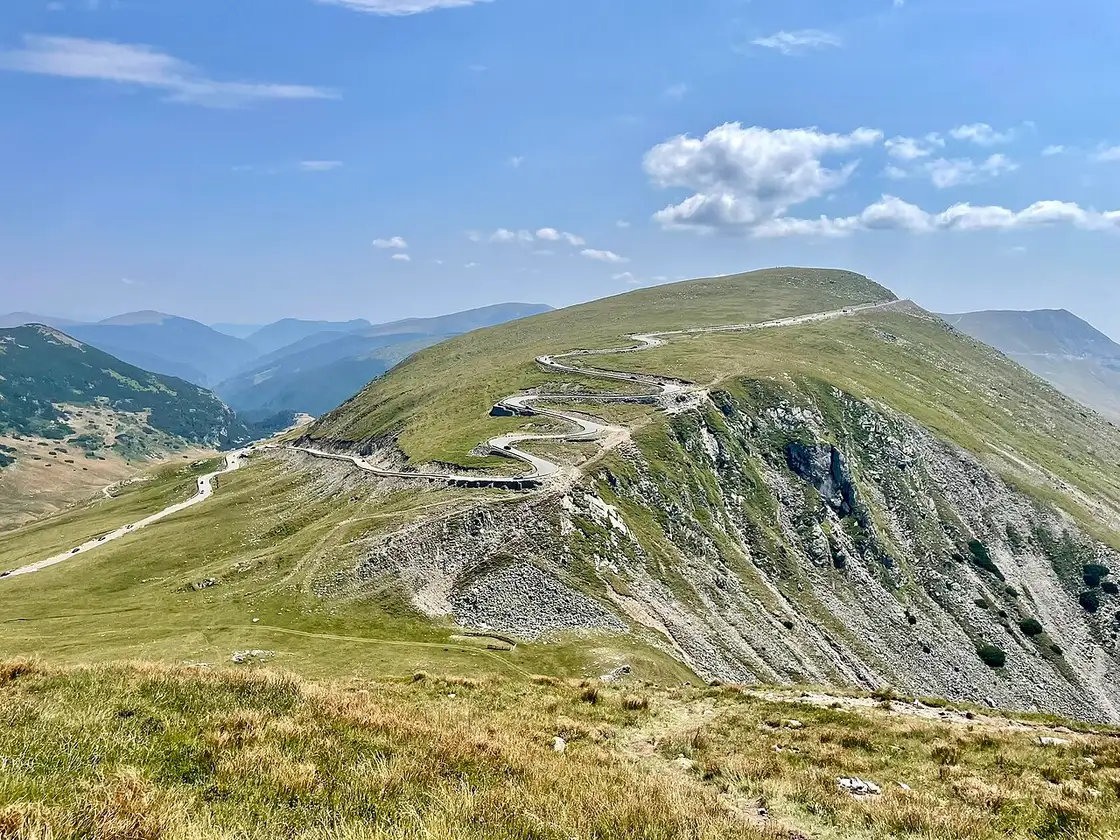
Rânca itself is a ski resort that looks half-asleep in summer, which is exactly why it works as a lunch stop: parking exists, views open south over the Parang, and you won’t queue for a terrace table. Push on if you’re aiming for Curtea de Arges the same night, or sleep in Novaci or Rânca if Day 1 ran long - the loop doesn’t punish an extra hour at altitude the way the Transfagarasan does with its strict gate times.
Overnight options: Curtea de Arges puts you at the bottom of tomorrow’s climb (recommended), or a guesthouse along the Olt valley if you prefer flat land and an earlier start. Book ahead in August - Romania’s mountain roads are no longer a secret, and small towns fill on weekends.
One detail drivers miss: the Transalpina’s summit section is a one-lane-with-passing-bays feel even where the asphalt is fresh. If a hay truck appears around a blind bend, you’ll reverse - so leave space and use the marked widened spots. Sheep and cattle crossings are common near Rânca; honking doesn’t help, waiting does.
Day 2: Curtea de Arges and up the Transfagarasan
Start south of the pass while you’re fresh. Curtea de Arges Monastery - Byzantine-influenced stone with carved doors and grey lead domes - is worth forty-five minutes before you touch the DN7C. From here the road climbs past Vidraru Dam (a good leg-stretch) into the alpine section that reopened on 12 June 2026 between Balea Cascada and Piscu Negru.
This is the day you’ll tell people about. The northern hairpins are tighter, the drops steeper, and the traffic heavier - aim to reach Balea Lac before 10:00 if you’re travelling in August. Coaches from Bucharest and Brasov start late but arrive in packs; an 07:30 departure from Curtea de Arges buys you an hour of relative calm. There’s still no petrol at the lake, and the tunnel beside the tarn marks the road’s high point.
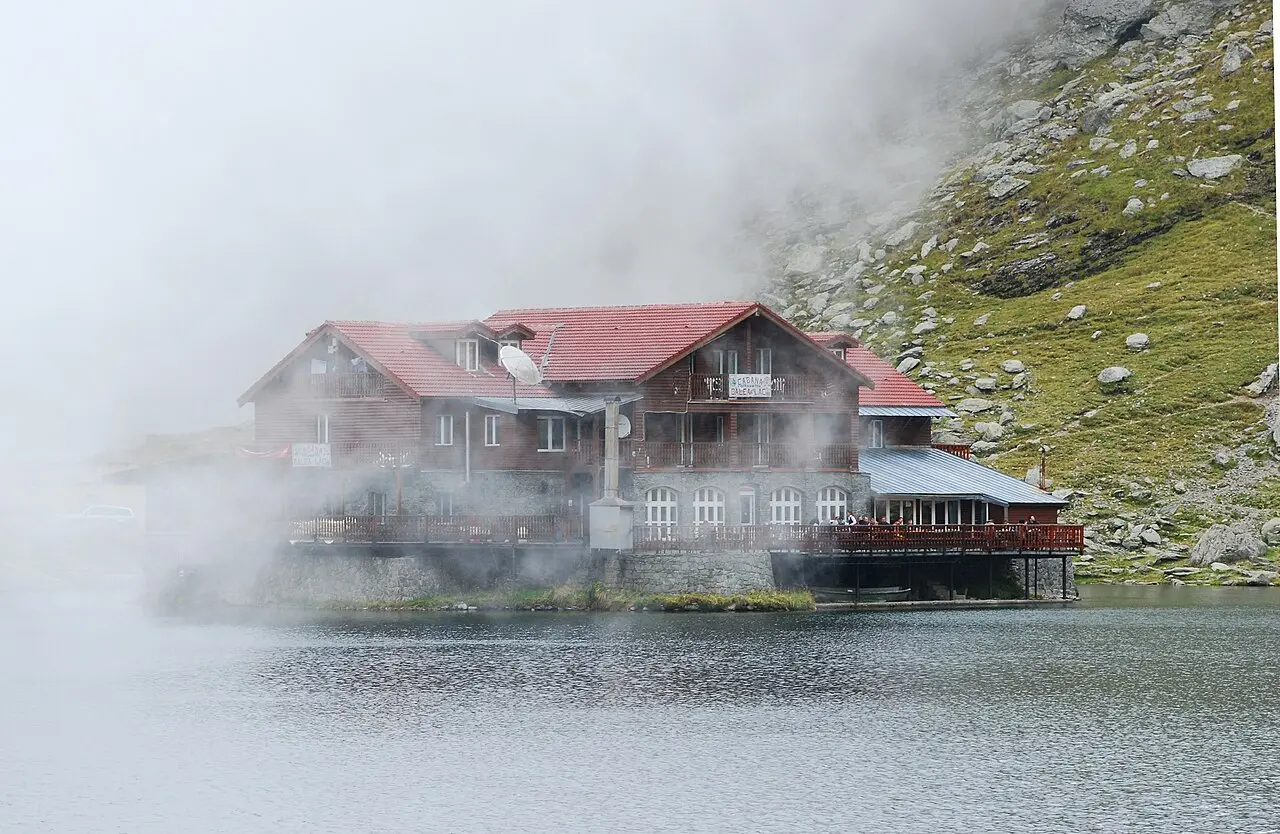
If the barrier is down when you arrive, don’t argue with it - weather closes the pass with no drama and no refund on your hotel. Infotrafic and CNAIR post same-day notices; the Transfagarasan status page in our corpus tracks the seasonal pattern even when today’s gate decision differs.
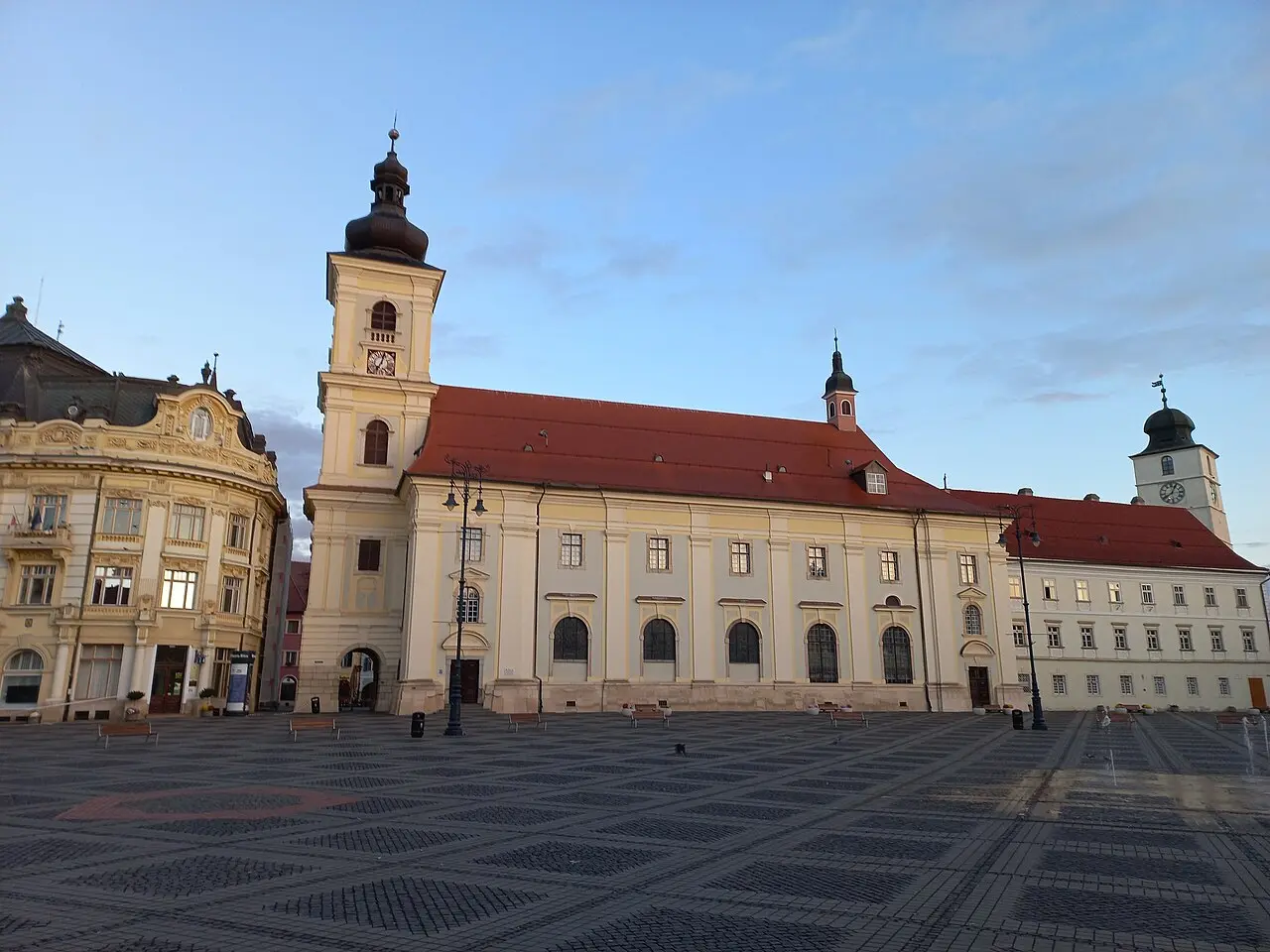
Descend north through Cartisoara and rejoin the DN1 toward Sibiu. You’ll reach the city by late afternoon if you left Balea by 14:00. Drop the car or stay another night - the Large Square at dusk is a softer landing than driving straight to Bucharest.
Day 3 (optional): slow Sibiu or a Fagaras hike
If you’ve got a third day, resist the urge to add another castle. Sibiu rewards slow walking: the Liars’ Bridge, the towers, the Brukenthal if you like museums. Alternatively swap the car for boots - the Fagaras ridge above Balea is serious alpine territory, and our Carpathian hiking guide covers hut-to-hut options that start where this road ends. Bears exist on both passes; don’t feed them, don’t leave food in the car at pullouts, and don’t hike alone off the marked paths.
What it costs (rough guide)
A compact manual from Sibiu through Localrent runs from about 120-180 RON/day in summer plus fuel (250-350 RON for this loop, depending on car size). Add the electronic rovinieta vignette (see the driving guide for 2026 emission-class prices). Guesthouses in Curtea de Arges or Sibiu run 150-300 RON/night for a double in August if you book a week ahead; last-minute weekends cost more. Budget about 900 RON per couple for two nights and the car, excluding meals - the loop is free to drive, which is the best bargain in the itinerary.
Before you go
- Dates: The two roads do not share a season. DN7C (Transfagarasan) can be shut by rule any day between 20 October and 30 June - it opened on 12 June in 2026, and last year’s closure landed right on 20 October. DN67C (Transalpina) runs a longer season, roughly mid-May to mid-October. CNAIR sets both dates each year on the snow, so treat these as the pattern and check before you commit. A July or August window is the safest on paper; hail or snow in September has closed the Transfagarasan overnight before.
- Hours: the gate really shuts. Look up the current window on Infotrafic the morning you drive, and plan to be off the summit section half an hour before it closes.
- Car choice: A small diesel handles the grades; large SUVs and campervans over 3.5 t can’t use the Transalpina summit. Automatic is fine; manual gives more control on hairpins if you’re rusty.
- Documents: UK/US/EU licences work for short stays; see the rental guide for IDP edge cases and deposit holds on credit cards.
This loop is the answer when someone asks “which mountain road?” - the honest reply is both, in this order, with a night in Wallachia between them. Pack snacks for the Transalpina - services are sparse above Rânca - and keep a wind layer in the footwell even when Sibiu was hot. For the wider Transylvania context (Bran, Brasov, Sighisoara), see the Transylvania road trip hub; this page is just the alpine spine.
Route day by day
- Days on the road
- 3
- Distance
- ≈470 km
- Budget from
- 900 RON
- Best season
- July, August, September
The route at a glance
-
Sibiu (start)
Route startstop ≈90 min
Pick up the rental and fill the tank. The Large Square is worth an evening if you arrive the night before - parking is easier at the edge of the old town.
Photo: Asurnipal / Wikimedia Commons, CC BY-SA 4.0 ( source) -
Rânca (Transalpina)
130 km from the startstop ≈120 min
Ski resort on the DN67C near Urdele Pass (about 2,145 m). Good lunch stop and the quieter of the two legendary roads - fewer coaches than the Transfagarasan.
Photo: Olgierd Rudak / Wikimedia Commons, CC BY-SA 4.0 ( source) -
Curtea de Arges
280 km from the startstop ≈75 min
Wallachian town at the foot of the Fagaras. The 16th-century monastery with carved doors is the natural break before you climb the Transfagarasan from the south.

Photo: Andrei Catalin Duta / Wikimedia Commons, CC BY-SA 4.0 ( source) -
Balea Lac (Transfagarasan)
360 km from the startstop ≈90 min
Glacial lake at about 2,034 m and the high point of the DN7C. Start early - coach traffic builds from mid-morning. No fuel up here.
Photo: Andrei Stroe / Wikimedia Commons, CC BY-SA 3.0 ( source) -
Sibiu (return)
470 km from the startstop ≈0 min
Drop through Cartisoara and back to Sibiu on the DN1. Budget about two hours from Balea without long photo stops.
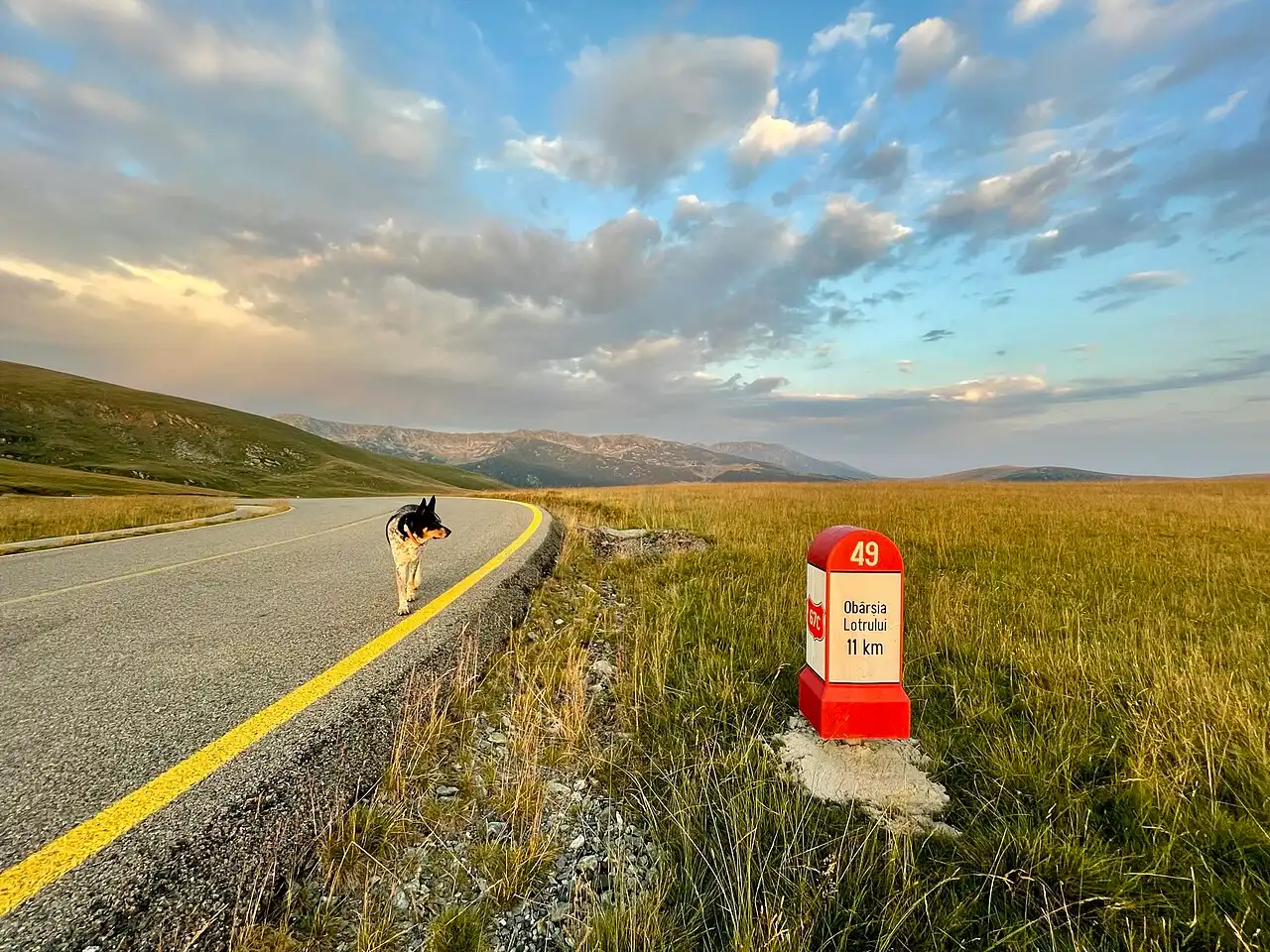
Photo: Olgierd Rudak / Wikimedia Commons, CC BY-SA 4.0 ( source)
Route map
The map with stops loads on click - to keep the page lightweight.
The map didn’t load. Check your connection and refresh the page.
Admission and opening hours
- Admission price
- Both mountain roads are free to drive. Cave/cable-car extras at Balea are separate - see the Transfagarasan road guide.
- Opening hours
- Both high sections are gated to daylight hours and closed overnight. CNAIR sets the window and moves it through the season: on the Transalpina it ran 09:00-20:00 until 1 July and 07:00-21:00 from 1 July to 31 August, with nothing published yet for September. The Transfagarasan window has been 07:00-21:00 since it opened. Check Infotrafic for the current one rather than trusting any figure printed in a guide. Either road can shut same-day for weather - check CNAIR or Infotrafic before you leave.
Transalpina: max 30 km/h and 3.5 t weight limit on the alpine section. Season dates shift every year. Status checked Aug 2026 - confirm on travel day.
Details checked: August 27, 2026