
Vama Veche: Romania's Bohemian Beach Village
Vama Veche on the Bulgarian border: its communist-era history as an artists' hideout, the crushed-shell beach, the marine reserve, and getting there.
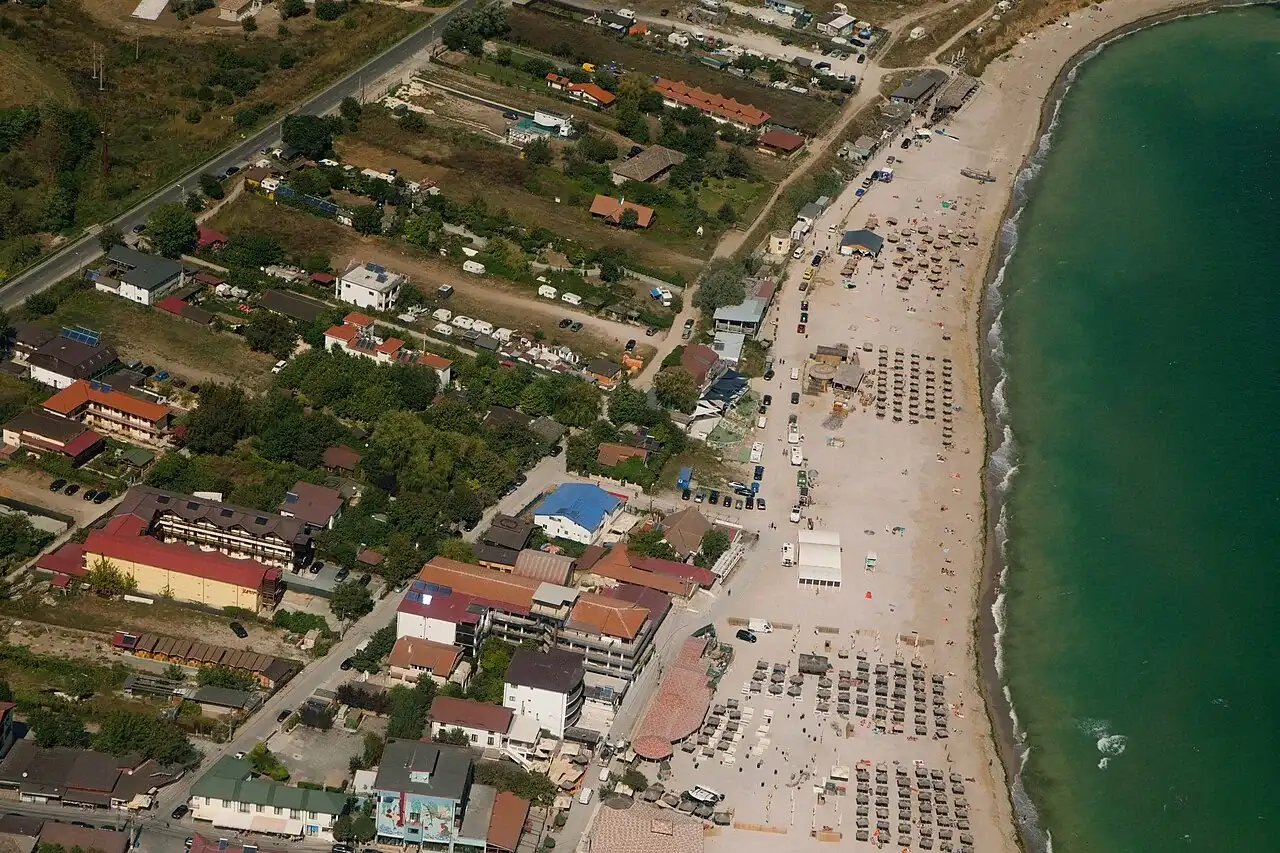
Vama Veche sits at the very southern tip of Romania’s Black Sea coast, hard against the Bulgarian border, and it has never looked or felt like the resort towns north of it. There’s no strip of high-rise hotels, no water park, no boardwalk lined with souvenir stalls - just guesthouses, a beach that’s packed shoulder to shoulder every July, and a village that spent the communist decades as an informal hideout for artists and dissidents. That history still shapes the place: Vama Veche stayed small on purpose, and the people who love it fight hard to keep it that way.
What you get instead of a casino or a cable car is sand made of crushed shells, a genuine border post you can drive straight through into Bulgaria, and one of the few stretches of this coast where the party still runs out of a driftwood shack rather than a beach club chain.
What makes Vama Veche different from Mamaia or Constanta?
Scale and attitude, mostly. Constanta and Mamaia, about an hour north, give you Roman ruins, a restored Art Nouveau casino and eight kilometres of hotel-lined beach built for volume tourism. Vama Veche is a village of a few hundred permanent residents (367 at the 2021 census, more than double the 178 counted in 2002) that swells hugely every summer, with almost nothing rising above two or three storeys and no international hotel chain in the village. If Mamaia is Romania’s answer to a proper seaside resort, Vama Veche is what a handful of artists and misfits built when they wanted the opposite. Our Black Sea and Danube route links Constanta and Mamaia into a wider coastal trip if you want both moods on one holiday.
Where does the bohemian reputation come from?
It starts with the border. The village was founded in 1811 by Gagauz families under the name “Ilanlik” and only became Romanian territory after 1913, when Southern Dobrogea passed to Romania; the name Vama Veche itself means “old customs post,” a nod to the checkpoint that once stood here. The 1940 Treaty of Craiova handed the region back to Bulgaria for good - the 1947 peace treaty confirmed it - and pushed the frontier right up against the village again, and it’s around this period that Balchik, the interwar Black Sea haunt of Romanian artists and royalty, was lost to Bulgaria too. Vama Veche became the replacement.
Through the 1960s, 70s and 80s it kept that role. Artists, students and assorted nonconformists came down to camp in tents or rent rooms from local fishermen, and Ceausescu’s regime largely left them alone, most likely because a militarised border zone was already restricted enough that a scruffy artists’ colony wasn’t worth the trouble. It wasn’t total freedom - there were Securitate raids and revoked permits from time to time - but compared with the rest of the country, a beach bonfire in Vama Veche was as close to open conversation as you could get.
What happened after communism?
The village got discovered, and that came with a price. From the late 1990s, land here started selling to outsiders who built guesthouses and bars, and by the mid-2000s a “Save Vama Veche” campaign had formed specifically to fight overdevelopment and push back against plans to pave and build up the coastline. It’s a pattern that plays out in bohemian enclaves everywhere: the counterculture appeal draws money, and the money slowly prices out the culture that made the place worth visiting.
The clearest marker of that decade is Stufstock, a free alternative-music festival that started in 2003 as a grassroots response to the changes. Reported attendance for those early years varies a lot depending on who’s counting - anywhere from around 10,000 to over 30,000 in the first summer alone - but organisers and the local press were both describing tens of thousands of people by the mid-2000s, which is a lot of festival for a village this size. These days the coast’s big organised beach festival runs further north at Costinesti instead - Beach, Please! now fills the resort for five days every July - and Vama Veche’s own scene has settled into something smaller and less centralised - a strip of bars and driftwood-built beach shacks that keep the music going all summer without one single mega-event anchoring it.
What’s the village actually like today?
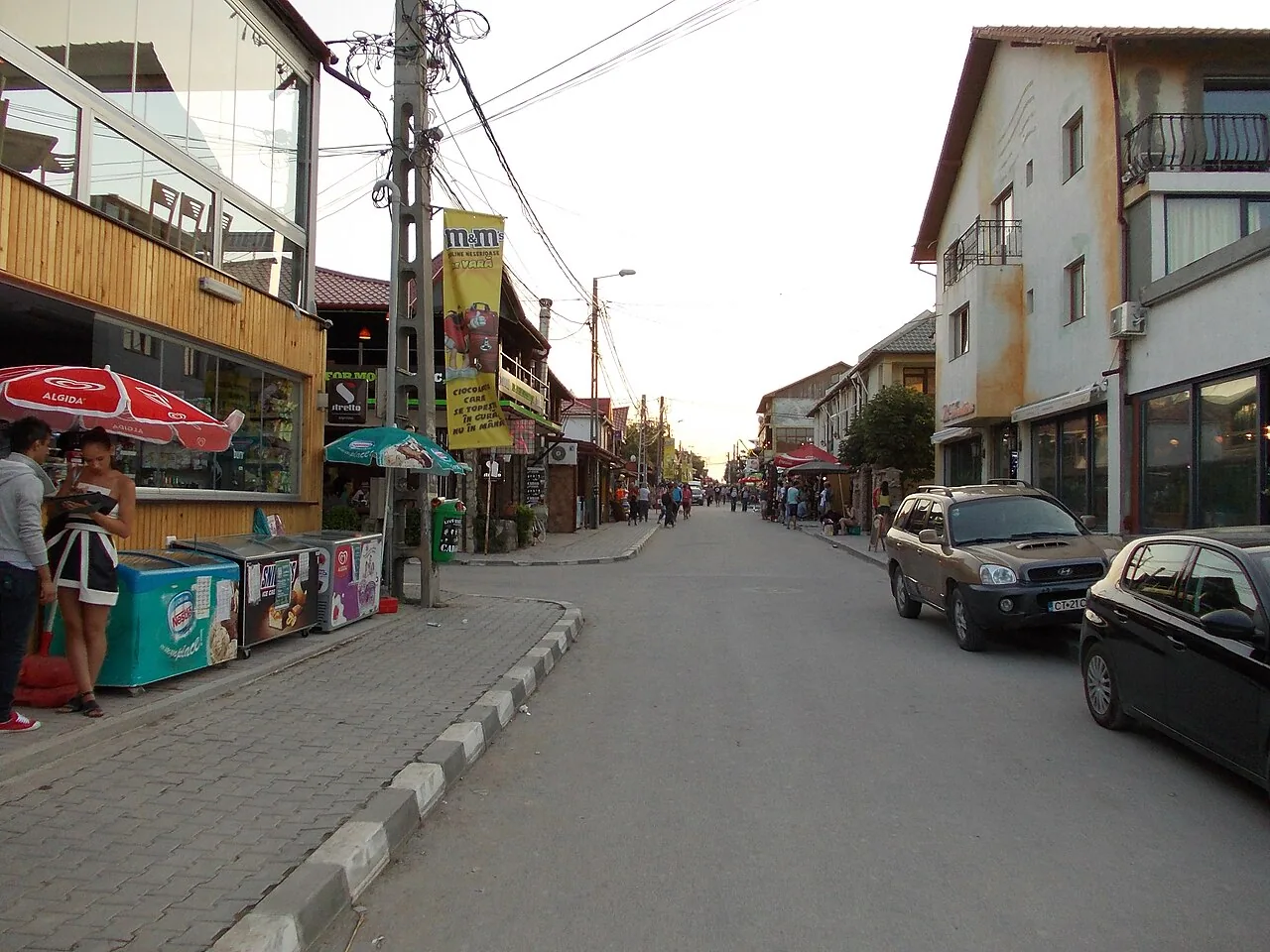
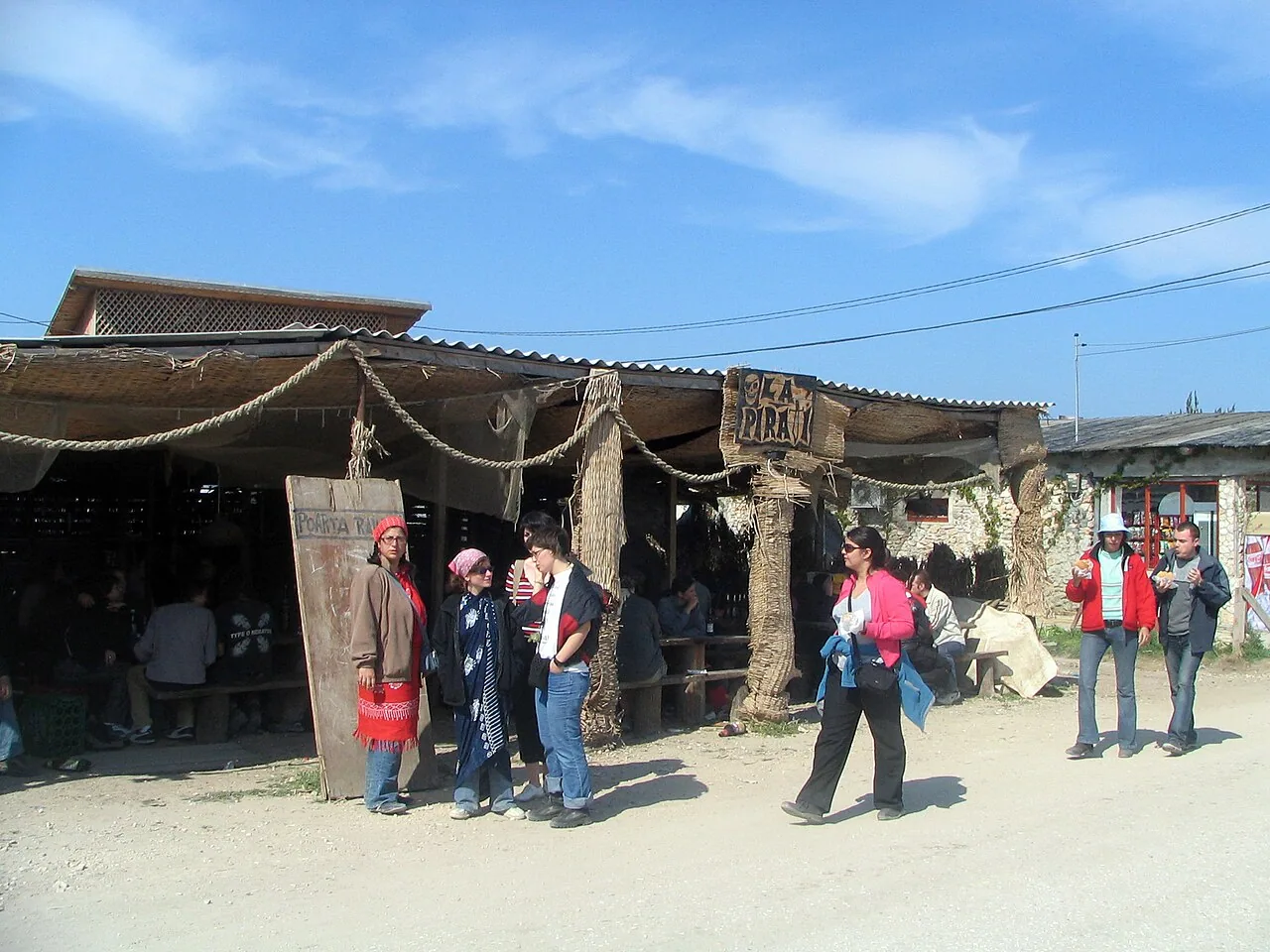
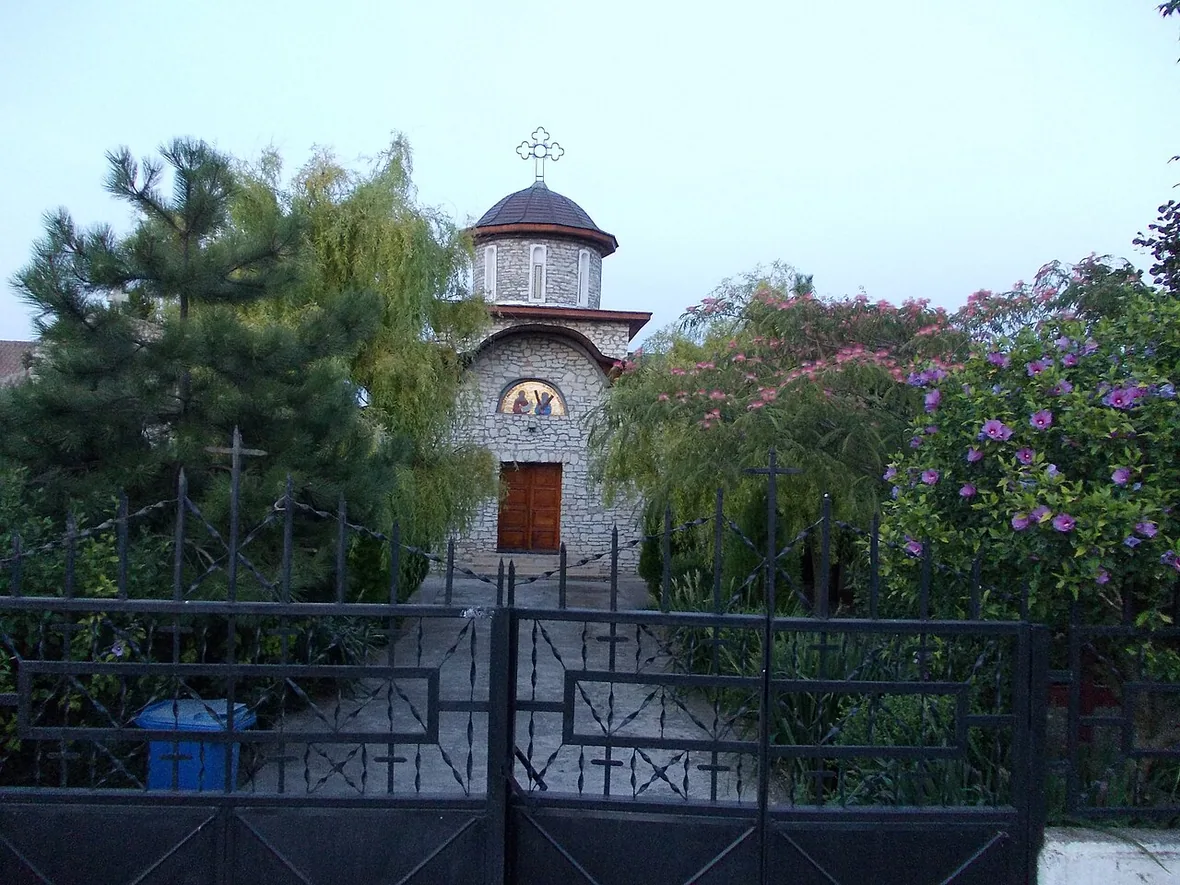
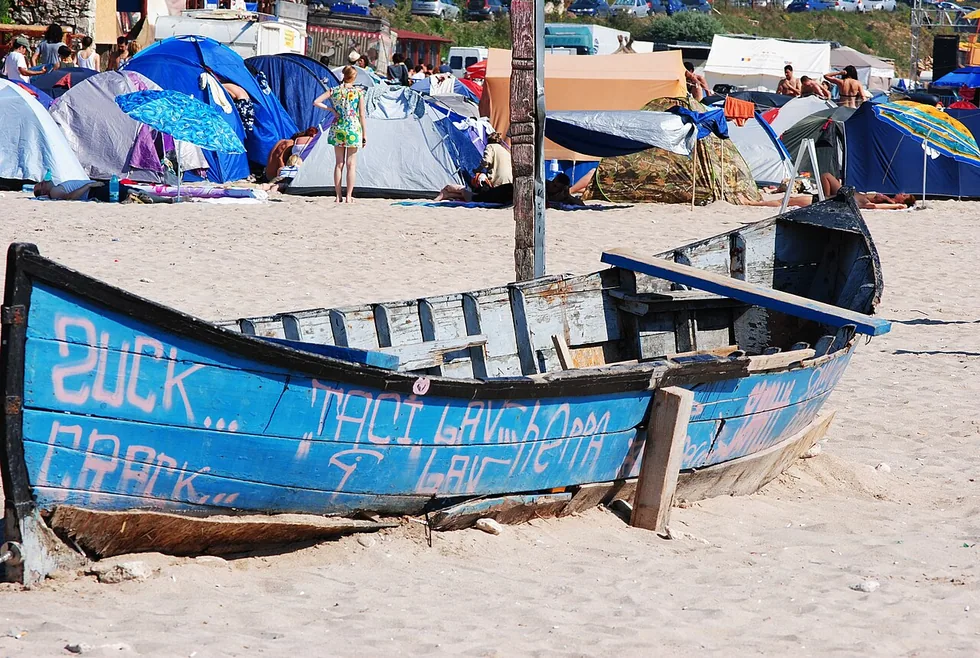
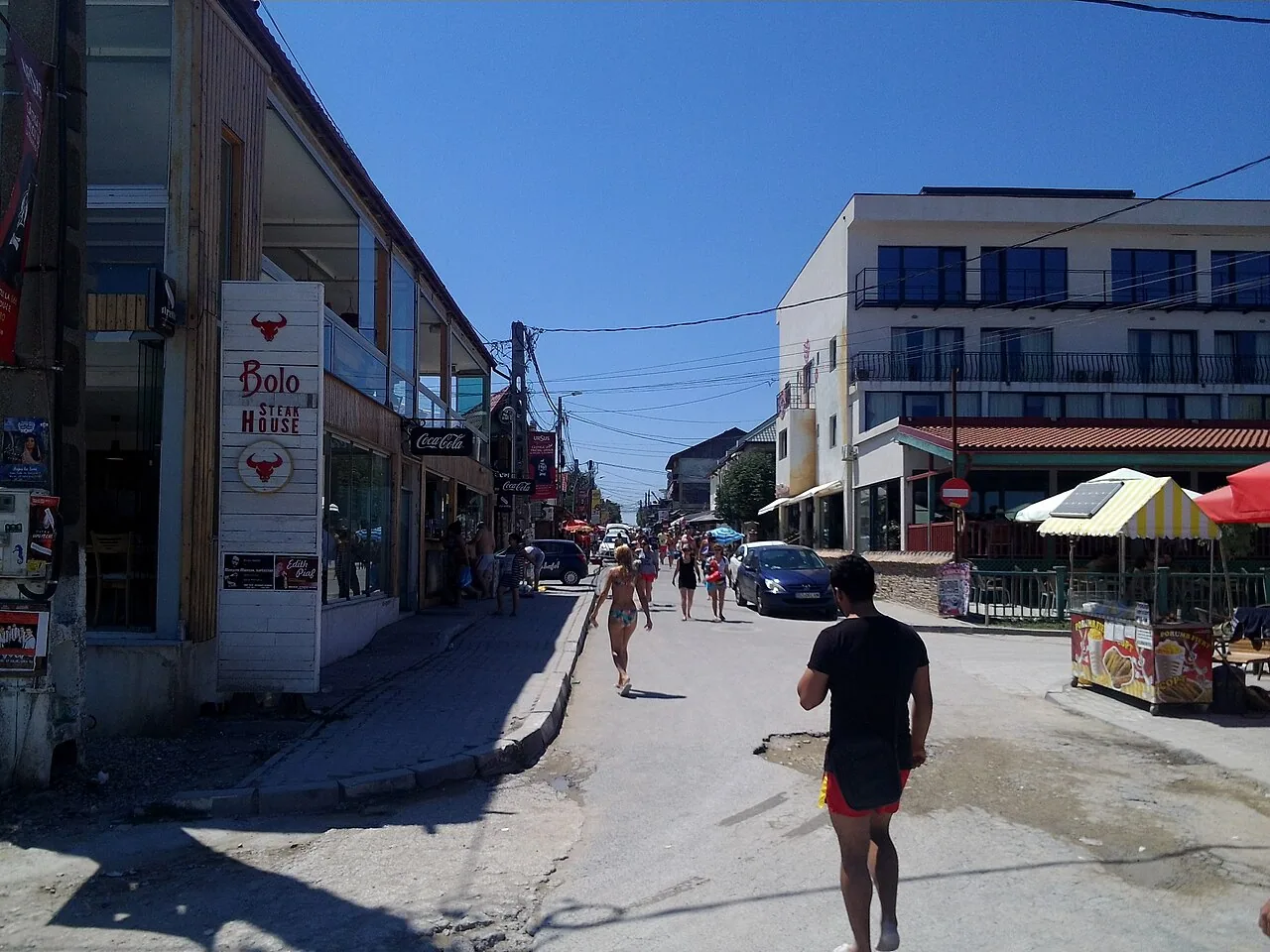
Small, and still fairly scruffy by design. The centre is one main street running back from the beach, lined with guesthouses, seafood grills, souvenir stalls and a handful of shops, and it fills with a slow-moving crowd of sunburnt visitors most summer evenings. There’s a modest Orthodox church a short walk from the main strip, and beyond the last row of guesthouses the village just stops - sandy tracks, scrubland, and the fence line that marks Bulgaria. Don’t expect polish: pavements are patchy, buildings are a mix of old fishermen’s houses and hastily built guesthouses, and that rough-edged look is exactly what regulars would tell you not to fix.
Is the beach any good, and is it really a nudist beach?
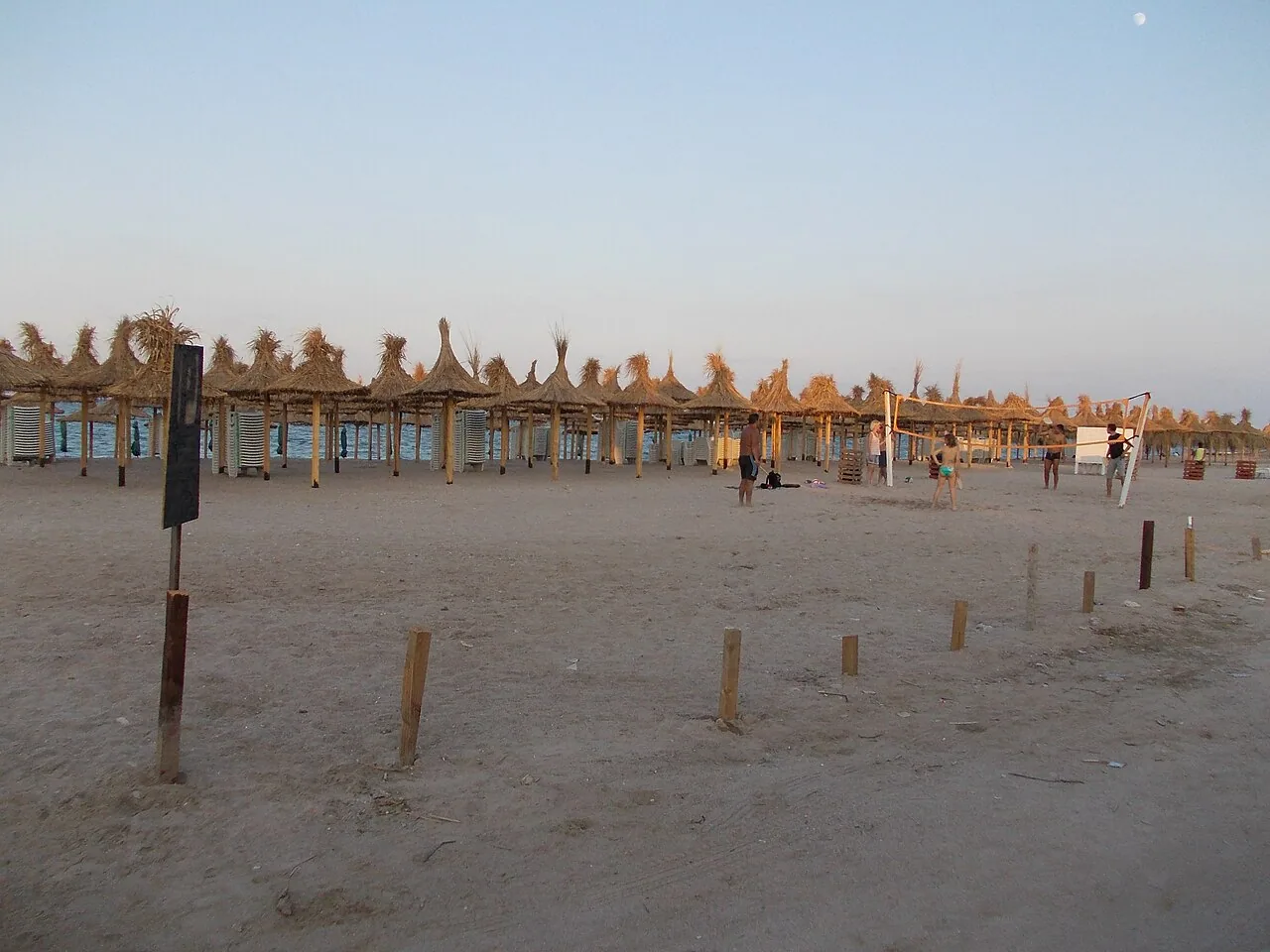
The sand itself is unusual - it’s made largely of crushed shells rather than the finer sand you get at Mamaia, which keeps it cool underfoot even at midday. It’s a working beach rather than a manicured one: sunbeds and umbrellas cluster around the bars and guesthouses in the centre, and the northern end is one of the few stretches on the coast where nudism is actually allowed - the 2026 beach rules permit it only in the established, signposted zones at Vama Veche and Costinesti and ban it everywhere else - though the zone has been squeezed into a narrow strip as sunbeds spread north. If you want nudism as the default for the whole beach rather than one marked zone of it, 2 Mai, the next village north in the same Limanu commune, is close to entirely nudist and sits about halfway between Vama Veche and Mangalia. Sea temperatures follow the rest of this coast - genuinely warm only in July and August - so our best time to visit Romania guide is worth a look if beach weather is the whole point of your trip.
Can you actually cross into Bulgaria from here?
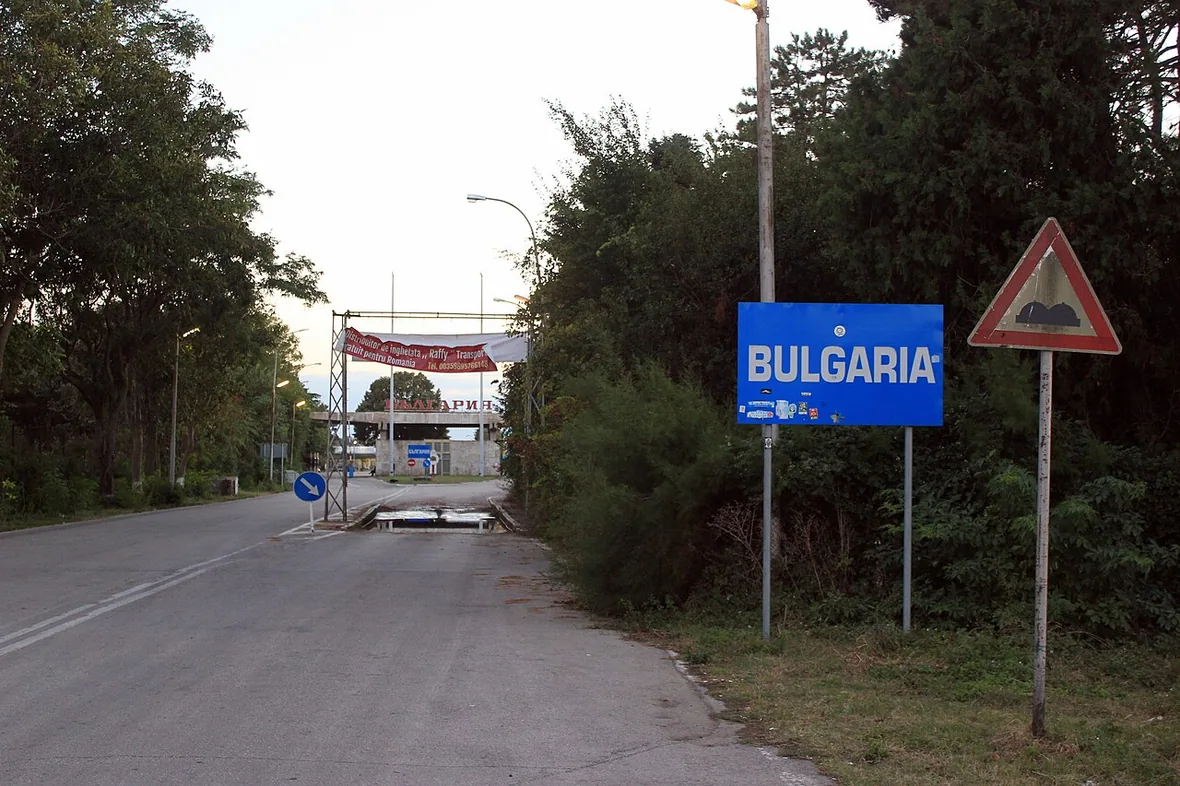
Yes, and it’s one of the odder things you can do on a Romanian beach holiday. The Durankulak-Vama Veche crossing sits right at the edge of the village, a full road border post rather than a footpath, and it’s the southernmost land crossing on this stretch of coast. Since Romania and Bulgaria both joined the Schengen area in full on 1 January 2025, systematic passport checks at this crossing were formally dropped, though carrying ID or a passport is still the sensible move, since border police retain the right to check. If you’re weighing up entry rules for the wider trip rather than a quick look over the fence, our Romania entry requirements guide covers what UK, US, Canadian and EU travellers actually need.
What about the marine reserve next door?
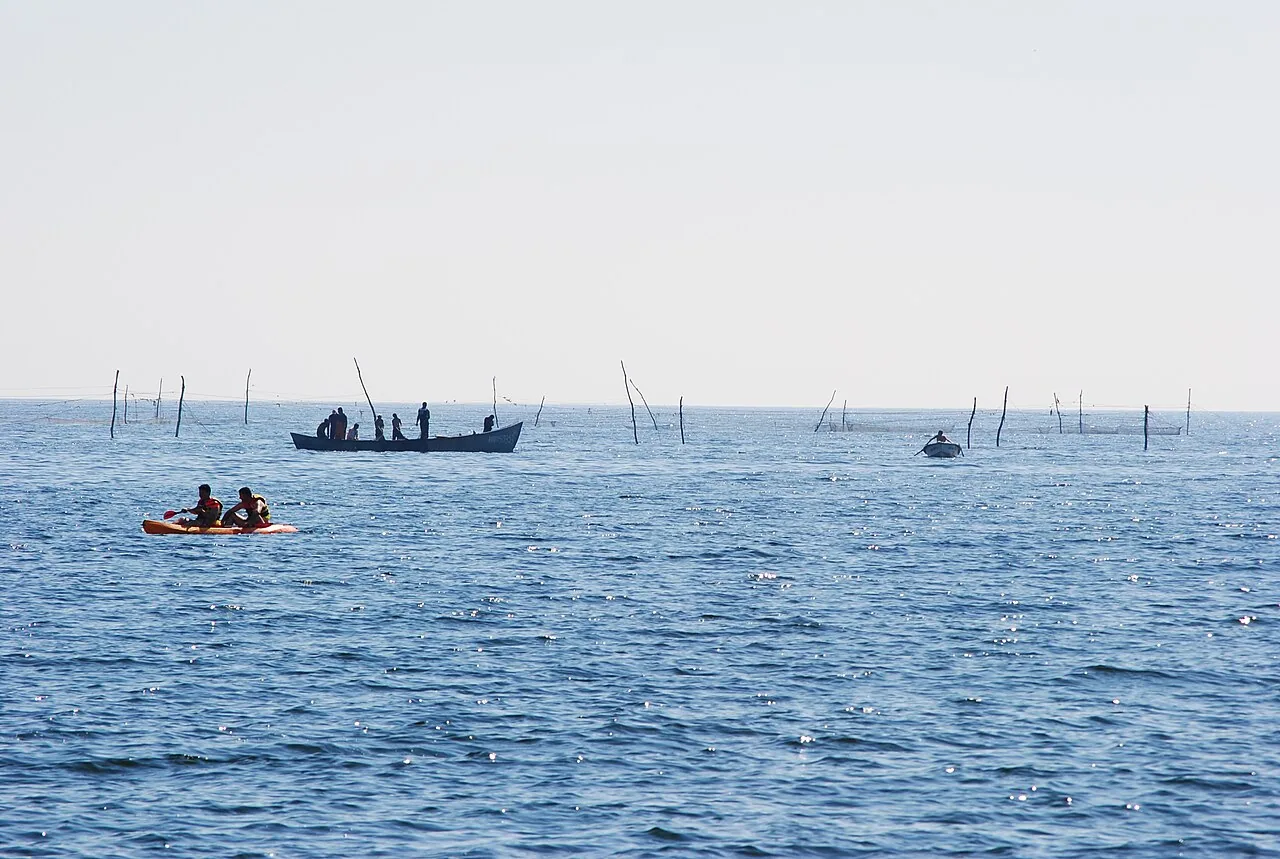
This is the part most visitors never hear about. The waters off Vama Veche and 2 Mai form Romania’s only underwater nature reserve, roughly 5,000 hectares running along 7 km of coast out to about 40 metres of depth. It was first protected by a Constanta county council decision back in 1980, confirmed in national law in 2000, and folded into the EU’s Natura 2000 network as a site of community importance in 2011. Romania’s Grigore Antipa National Institute for Marine Research has managed it under renewable custody agreements since 2004, and the reserve is home to all three Black Sea dolphin species - the common dolphin, the harbour porpoise and the bottlenose dolphin - along with around 20 fish species. None of that is obvious from a beach towel, but it’s part of why this particular stretch of coast was left alone for so long in the first place.
How do you get to Vama Veche?
Driving is by far the easiest option, and it’s what most visitors do. It’s roughly 265-270 km from Bucharest, about three hours down the A2 motorway to Constanta and then the coastal E87/DN39 south past Mangalia. Without a car, the closest railway station is Mangalia, served by CFR Calatori trains from Bucharest; check current times and fares on cfrcalatori.ro, since the journey involves a change and can run considerably longer than the direct drive. From Mangalia station it’s another 10 to 12 km to Vama Veche, covered in summer by local minibuses and taxis - fares are cash-only and change with the season, so confirm on the spot rather than trusting an old figure online. If you’re building a longer coastal trip, Constanta and Mamaia make a natural stop on the way down, and where to stay in Constanta covers that end of the coast in detail.
When should you go, and where do you sleep?
July and August are Vama Veche at full volume - warm enough water to swim, every bar open, and the village at its most crowded. The unofficial season actually opens on the 1 May long weekend, when a wave of visitors arrives for the first big party of the year - a tradition strong enough that the village stays busy even in cold, unsettled weather - even though the sea is still too cold for most people to swim in. Outside July and August the village is much quieter and noticeably cheaper, which suits anyone who wants the beach and the border-post novelty without the peak crush.
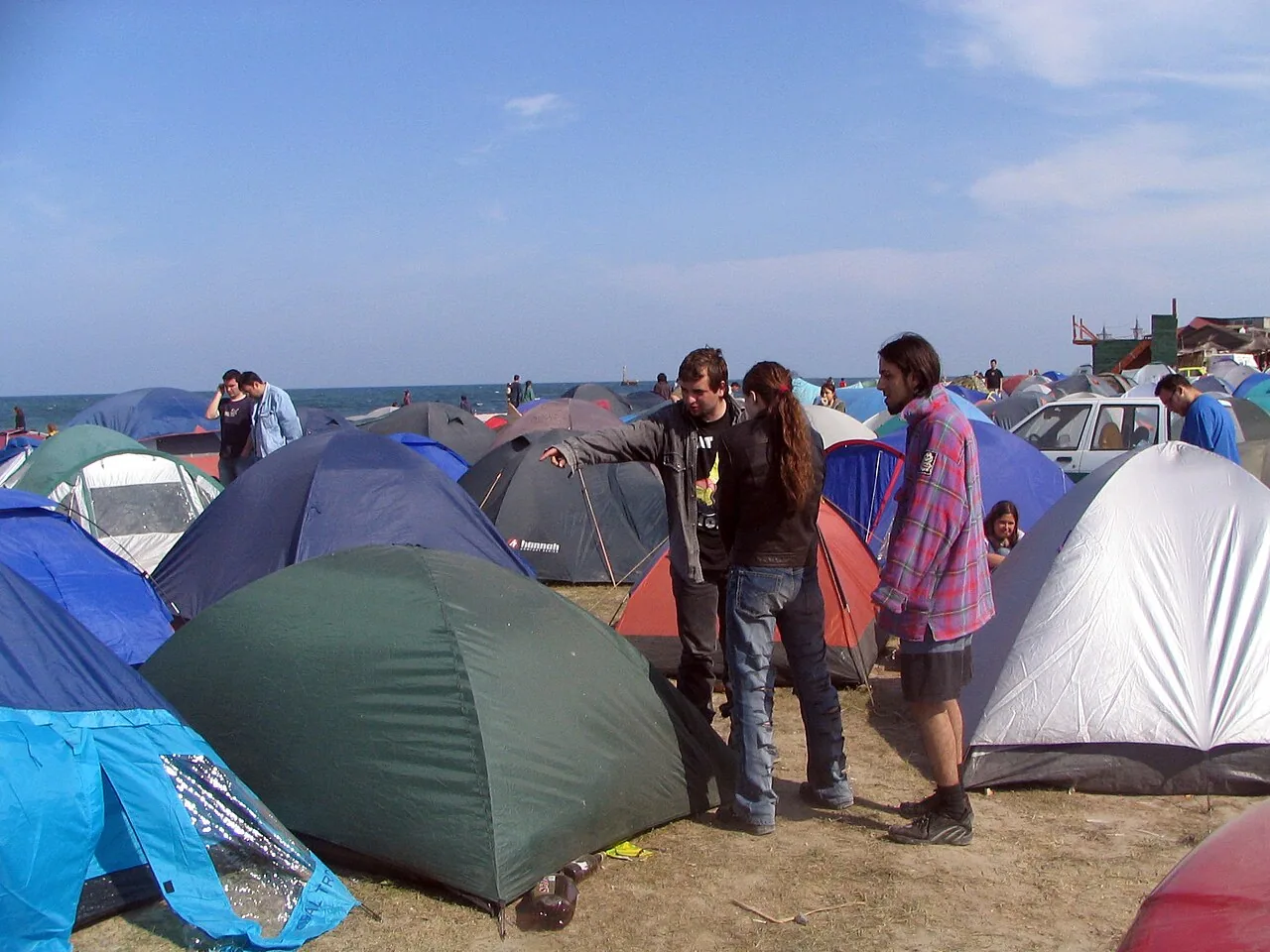
Accommodation runs from budget guesthouses to simple pensions rather than resort hotels. Camping directly on the sand is no longer allowed - the national rules covering the whole Romanian coast in 2026 ban tents on the beach itself, with fines of 500 to 1,000 lei for pitching outside an authorised site - but camping is still a big part of the culture here, just moved a short walk back from the water. Marina Park, about 400 metres from the beach, charges roughly 40 to 55 lei a person a night for a tent pitch in 2026, and a handful of other campsites around the village do the same job. If you’d rather have a bed sorted in advance, especially for a summer weekend, compare places to stay along the coast before you travel. Bring cash: small guesthouses, beach bars, campsites and market stalls in a village this size don’t all take cards, and our money in Romania guide has the wider picture on that. Pair it with a night or two in Constanta for the history and the casino, and you get both sides of this coast in one trip.
Read also

Cities · 13 min read
Predeal: Romania's Highest Ski Town
Verified · September 3, 2026Predeal sits at 1,030-1,110 m on the Bucharest-Brasov line: Clabucet ski, the town itself, and how it stacks up against Sinaia and Poiana.

Cities · 10 min read
Suceava Travel Guide: Fortress & Bucovina Gateway
Updated · August 25, 2026Things to do in Suceava: Stephen the Great's fortress, the UNESCO Saint John monastery, village museums, and using the city as a base for Bucovina.

Cities · 9 min read
Where to Stay in Sighisoara: Citadel or Lower Town
Verified · August 24, 2026Where to stay in Sighisoara: citadel vs Lower Town, price bands in lei, parking, the medieval festival, and who should sleep inside the walls.

Cities · 11 min read
Where to Stay in Timisoara: Best Areas & Hotels
Verified · August 19, 2026Where to stay in Timisoara: Cetate vs Fabric vs Iosefin vs Circumvalatiunii - who each suits, walk times, prices in lei, and getting in from the airport.