
Where to Stay in Bucharest: Best Areas & Hotels
Best areas to stay in Bucharest: Old Town vs Calea Victoriei vs Universitate, who each suits, hotel prices in lei, and where to sleep without the noise.
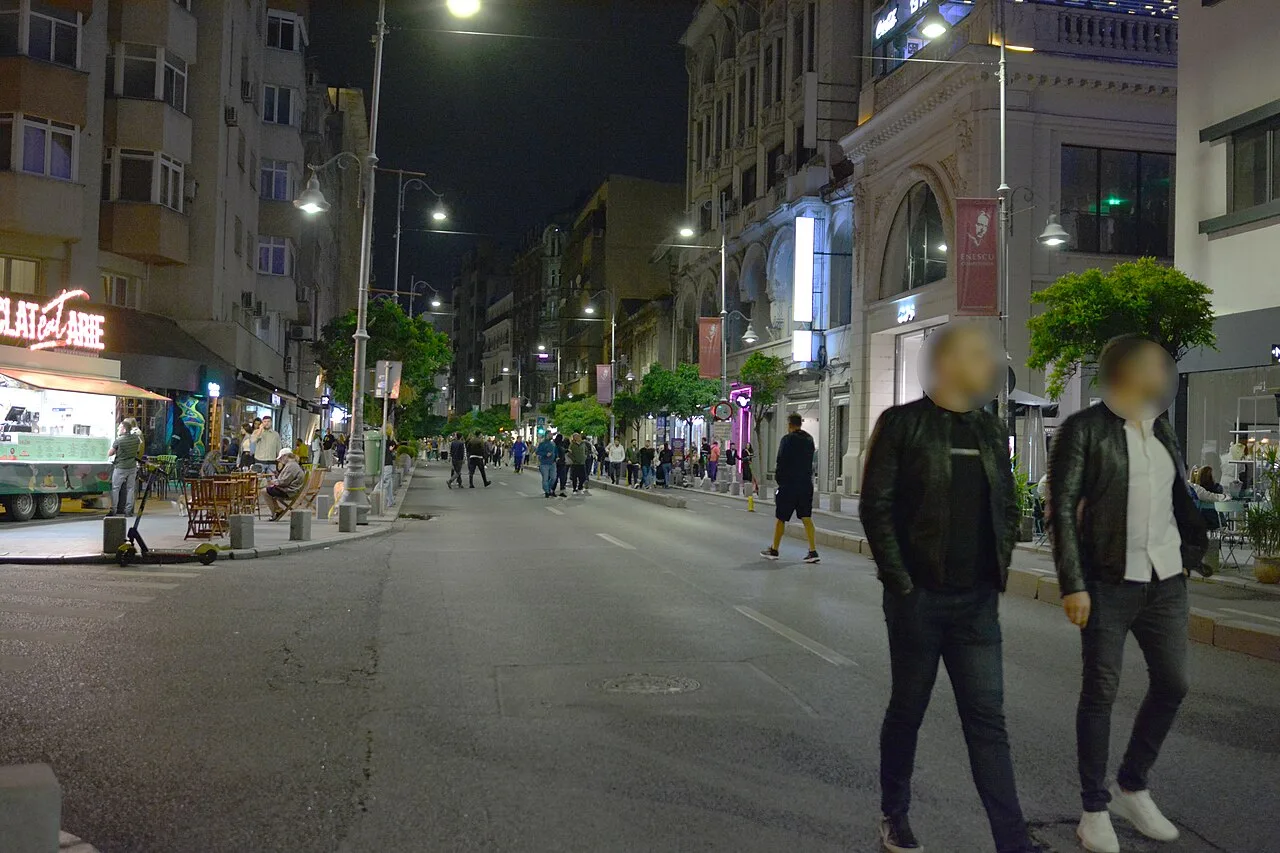
For a first trip, stay along Calea Victoriei or near Piata Romana: you are a short walk from the Old Town, on the metro, in the middle of the best restaurants, and away from the weekend bar noise. Stay in the Old Town (Lipscani) itself only if nightlife is the point and you sleep through anything. Those two calls cover most visitors, and the leu-not-euro pricing means your money goes noticeably further here than in Prague or Budapest.
Bucharest is bigger and more spread out than most European capitals, and the centre is a patchwork of very different moods within a couple of kilometres. Below is how the main areas actually feel to stay in, who each one suits, and rough nightly prices in lei so you can match a neighbourhood to your trip, not the other way round.
Which area is best for a first visit?
Calea Victoriei and Piata Romana are the safe, central answer, and here is why they beat the obvious choice. Almost every first-timer instinctively books the Old Town because that’s what the photos show, then discovers on the first Saturday night that the bars under their window run until four or five in the morning. Basing yourself ten to fifteen minutes north of that, on or around Calea Victoriei, gets you the same walkable core with none of the sleep problem.
The trade-off between neighbourhoods really comes down to three things: how central you are, how lively (or loud) the street is at night, and how much you pay. Get those straight and the choice makes itself. As a rough guide to prices across the city in 2026, a simple 3-star double runs about 150 to 310 lei a night (roughly 30 to 60 euros), a comfortable 4-star sits around 300 to 620 lei (about 60 to 120 euros), and the smart 5-star hotels climb to 770 lei and well beyond. Those bands move a lot with season and demand, so treat them as orientation, not quotes, and always check the live price.
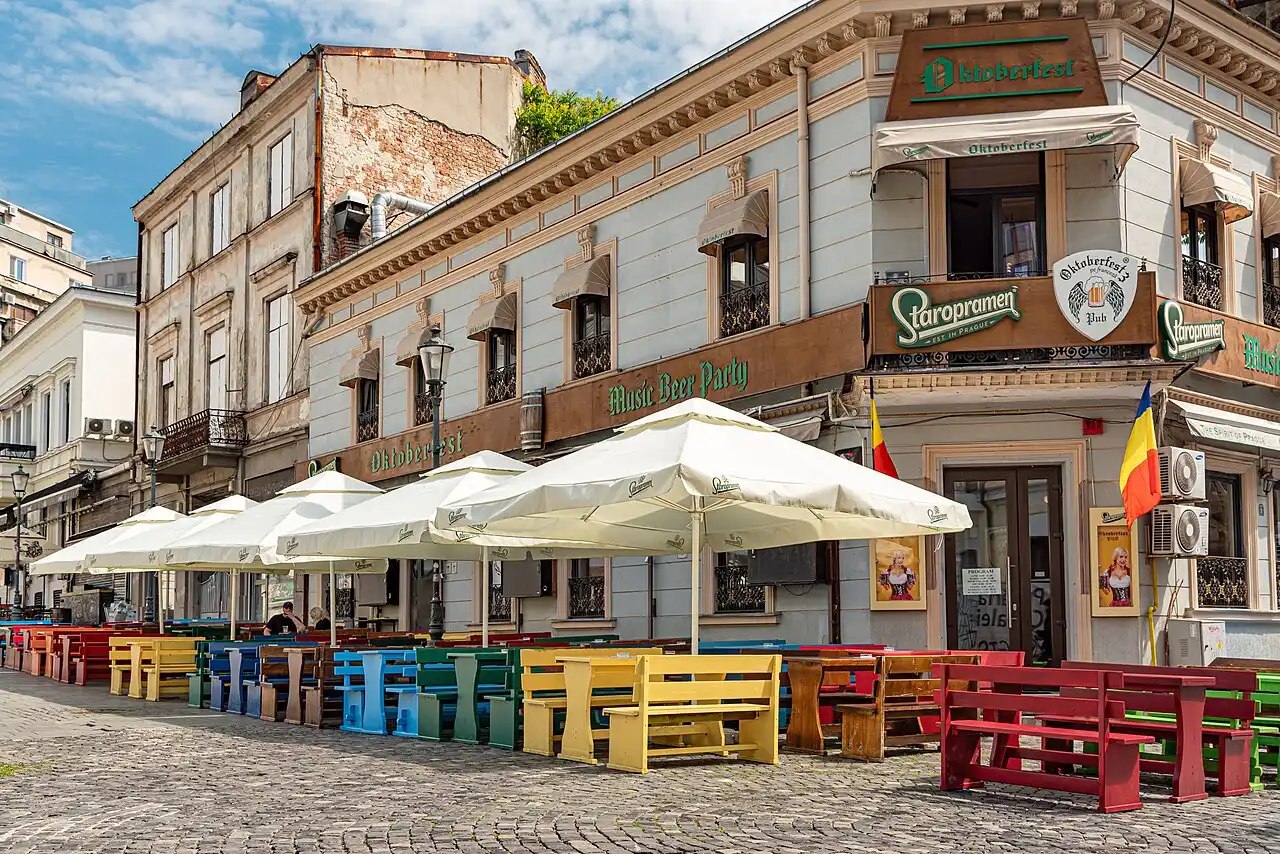
Old Town (Lipscani): the heart of the action
This is the medieval core, a tight grid of pedestrian lanes (Lipscani, Smardan, Franceza, Covaci) crammed with restaurants, cafes, terraces and, above all, bars. It’s the most photogenic and most social part of the city, and if your idea of a good trip is walking out of your hotel straight into the buzz, this is it. Everything worth seeing in the centre, from the things to do in Bucharest list, is within a ten-minute stroll.
The catch is noise. The bars stay open until four or five in the morning at weekends, and if your room faces one of the main streets you will hear every hour of it. There’s also a minor late-night pickpocket risk around the busiest bar corners, which is just normal big-city awareness rather than a real danger. Book the Old Town if you’re here for a short, sociable city break and either want to be in the thick of the nightlife or can genuinely sleep through it; look for a room on a courtyard or an upper floor if you value your sleep at all. Mid-range hotels here tend to run a bit above the city average, roughly 460 to 800 lei a night in season.
Calea Victoriei: elegant and central, without the racket
Calea Victoriei is the grand old spine of the city, a roughly three-kilometre Belle Epoque boulevard lined with palaces, the National Art Museum, the Athenaeum concert hall, boutiques and proper cafes. Staying here gives you the best of both worlds: the Old Town is a short walk south, the metro is close, the restaurant scene is excellent, and yet the street itself is dignified rather than rowdy, so you actually sleep. This is my default recommendation for a first-timer who wants atmosphere without a hangover of other people’s making.
It is not the cheapest strip in town, because a lot of the landmark hotels sit along or just off it, but the range is wide. You’ll find well-run four-star places from the mid-hundreds of lei up, and the big-name hotels along the boulevard climbing into four figures on busy dates. If you want to be central, walk everywhere, and remember your stay fondly, this is the address to search first.
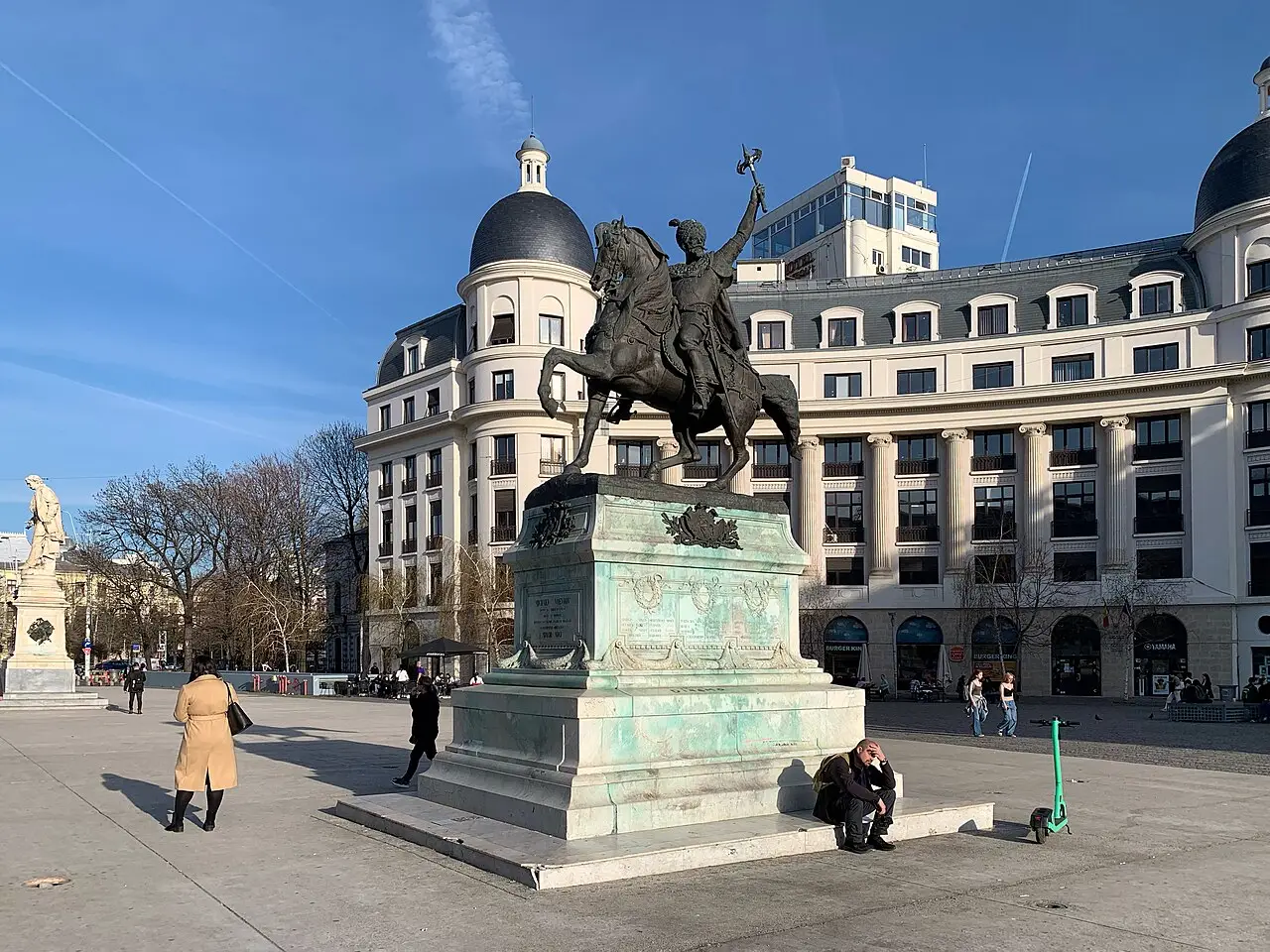
Universitate: lively, central and cheaper
The University district, around Piata Universitatii, is the value pick for staying central. It is a genuinely lively area, with theatres, bookshops, student cafes and a constant flow of people, but it runs a shade calmer and noticeably cheaper than the Old Town right next door. It also sits on top of one of the city’s key metro interchanges, where the M1 and M2 lines cross, so you can reach almost anywhere without changing more than once.
This is the neighbourhood to target if you want to be walkable-central on a tighter budget, or if you’re a younger traveller who wants energy without paying Old Town rates. Rooms here regularly come in below the city average, and the Old Town, Calea Victoriei and the university sights are all a few minutes on foot. The area lacks the postcard prettiness of Lipscani, but for practicality and price it’s hard to beat.
Piata Romana and Dorobanti: quieter, and better for food
Head a little further north and the city calms down without losing its centrality. Piata Romana, about two kilometres and a fifteen-minute walk from the Old Town, is where several of the main boulevards meet, and the streets around it are packed with some of the best restaurants in Bucharest. It’s a strong pick for anyone who plans their trip around eating well: central enough to walk into the action, quiet enough to sleep, and right on the M2 metro line.
Keep going and you reach Dorobanti, the embassy district, all tree-lined avenues, Belle Epoque villas, specialty-coffee places and wine bars. It’s upscale, residential and calm, with arguably the best concentration of good restaurants in the city. Dorobanti suits a return visitor, a foodie with a bit of budget, or anyone who wants a sophisticated base and doesn’t mind a short ride or a longer walk into the historic core. You give up a little walkability and gain a lot of peace and quiet.
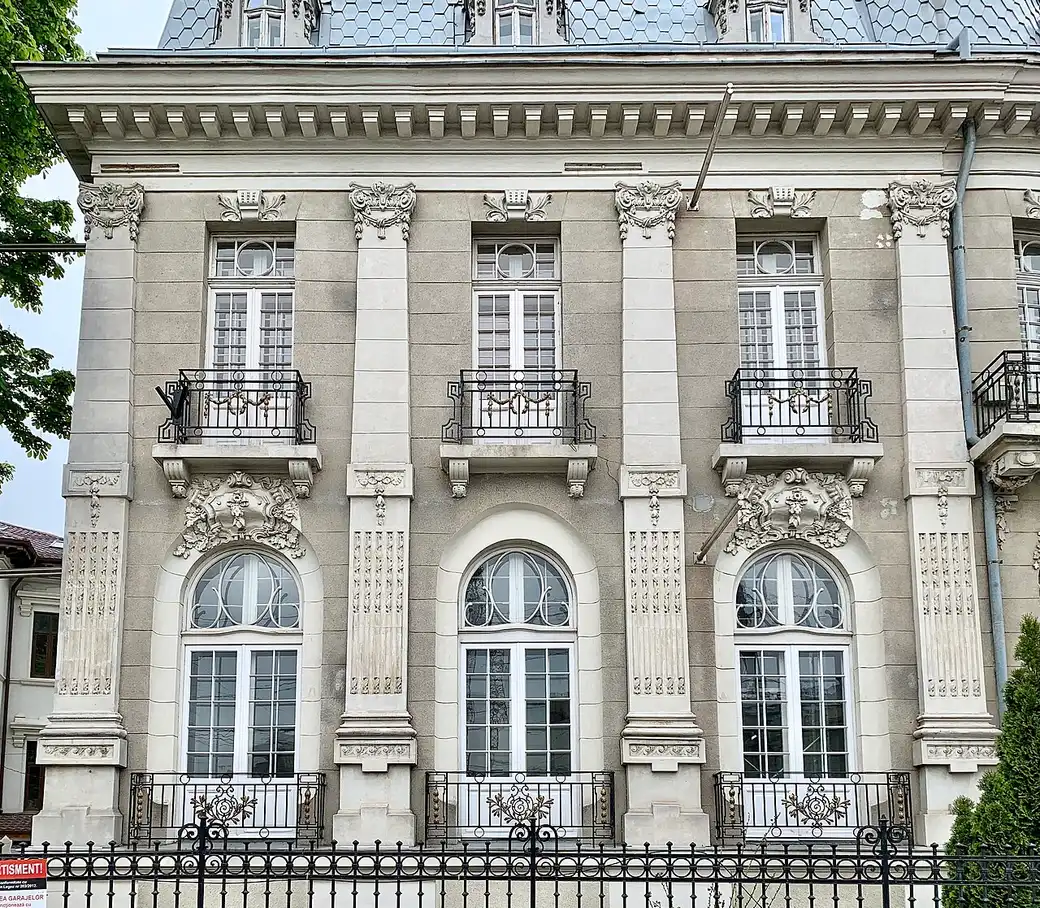
Cotroceni and the quieter residential option
If your priority is charm and calm over convenience, look at Cotroceni, an architectural showpiece west of the centre favoured by academics and doctors. Its quiet, tree-lined streets are lined with art-deco, Neo-Romanian and modernist villas, and the Botanical Garden gives it a green, unhurried feel that the busy centre can’t match. It is one of the oldest and most characterful residential neighbourhoods in the city.
The catch is distance: you’re away from the main sights and the densest metro coverage, so this is a base for a slower, longer stay or a repeat visit rather than a two-night sightseeing sprint. If you want to feel like you’re living in a leafy corner of Bucharest rather than touring it, Cotroceni delivers, and prices reflect the residential setting rather than tourist demand.
How to get around, and where the airport fits
Bucharest’s metro is cheap, quick and the thing that makes a central base worth so much. The single most useful line for visitors is the M2, which runs north-south through the core, linking Piata Unirii, Piata Universitatii, Piata Romana and Piata Victoriei, exactly the string of neighbourhoods most people stay in. A ticket costs only a few lei, and if you base yourself anywhere along that spine you can skip taxis for most trips.
One practical warning for arrival: there’s still no metro to the airport. The line to Otopeni (OTP) is under construction but not due until around 2028, so plan your transfer in from the airport by express bus, train or a ride-hailing app rather than assuming a quick metro hop. If you have not sorted your arrival yet, our guide to which airport to fly into for Romania covers OTP and the alternatives and how to get from each one into town.
The short version
If the whole stay is 48 hours, the district choice matters even more, and our 2-day Bucharest itinerary is built around a base in the centre for exactly that reason. Book Calea Victoriei or Piata Romana for a first trip: central, walkable, on the metro, great for food, and quiet enough to sleep. Choose the Old Town (Lipscani) only if you want the nightlife on your doorstep and can handle the weekend noise. Go for Universitate to stay central for less, Dorobanti for the best restaurants and a calmer, upscale feel, and Cotroceni for a leafy, residential base on a longer stay. Whatever you pick, keep the M2 metro line in mind and carry some cash for the smaller places that still prefer it. Bucharest is the one city here where the wrong street costs you actual sleep, so read the noise notes above twice before you compare hotels across the city - the Old Town’s reputation is earned in both directions.
Photos
Read also

Cities · 13 min read
Predeal: Romania's Highest Ski Town
Verified · September 3, 2026Predeal sits at 1,030-1,110 m on the Bucharest-Brasov line: Clabucet ski, the town itself, and how it stacks up against Sinaia and Poiana.

Cities · 10 min read
Suceava Travel Guide: Fortress & Bucovina Gateway
Updated · August 25, 2026Things to do in Suceava: Stephen the Great's fortress, the UNESCO Saint John monastery, village museums, and using the city as a base for Bucovina.

Cities · 9 min read
Where to Stay in Sighisoara: Citadel or Lower Town
Verified · August 24, 2026Where to stay in Sighisoara: citadel vs Lower Town, price bands in lei, parking, the medieval festival, and who should sleep inside the walls.

Cities · 11 min read
Where to Stay in Timisoara: Best Areas & Hotels
Verified · August 19, 2026Where to stay in Timisoara: Cetate vs Fabric vs Iosefin vs Circumvalatiunii - who each suits, walk times, prices in lei, and getting in from the airport.